Christmas eve eve…

img_2742Surprisingly, a day of calm. It was overcast and rainy. The garden is reasonably well weeded. The berries and peas were picked yesterday.

Tomorrow I will clean the house (because Santa doesn’t visit dirty houses—I’m sure my mother taught me that one), and the peas and berries will need to be picked again, but today there was remarkably little on the to-do list. I’m not sure what happened, because usually the lead up to Christmas is a frenzy, just so I can feel free to take the whole of Christmas day off.

So, I gave myself an early gift—a day of sewing. I managed two new desperately needed t-shirts for myself, and did the finishing by hand while listening to a recording of my far-away family reading A Christmas Carol. Then I picked roses, and played a game with my daughter.

Such a lovely, relaxing day, I hardly need Christmas at all…

You have got to be kidding me…

2016-12-16-15-35-55It frosted Saturday morning. Yeah. It was 30C Friday afternoon, and by Saturday morning it was 2C. It was back up to 30 degrees by Saturday afternoon, and today we went to the pool.

I didn’t even think to check the garden Saturday morning. It never frosts this late in the year. That’s the seasonal equivalent of frost on June 16th, for those of you in the Northern Hemisphere. Even in St. Paul, Minnesota, it never frosted that late. It was a rude surprise when I went out to the garden in the afternoon to pick some vegetables and found the pumpkins and beans blackened.

The plants will survive—it was a light frost and the growing tips of the plants weren’t hit—but it will knock the pumpkins back significantly. They were already behind, because the first planting didn’t germinate, and these plants were my second try at them this year. A frost this late might be the difference between mature pumpkins when the first autumn frost hits or pumpkins that still need a few weeks of growth to reach the right stage for storage.

Unfortunately, the only thing to do at this point is shrug and be thankful the other frost-tender crops weren’t damaged…after the obligatory grumpy farmer complaints are through.

Christmas-lite

2016-11-30-17-31-25-smIt’s beginning to look a lot like Christmas…

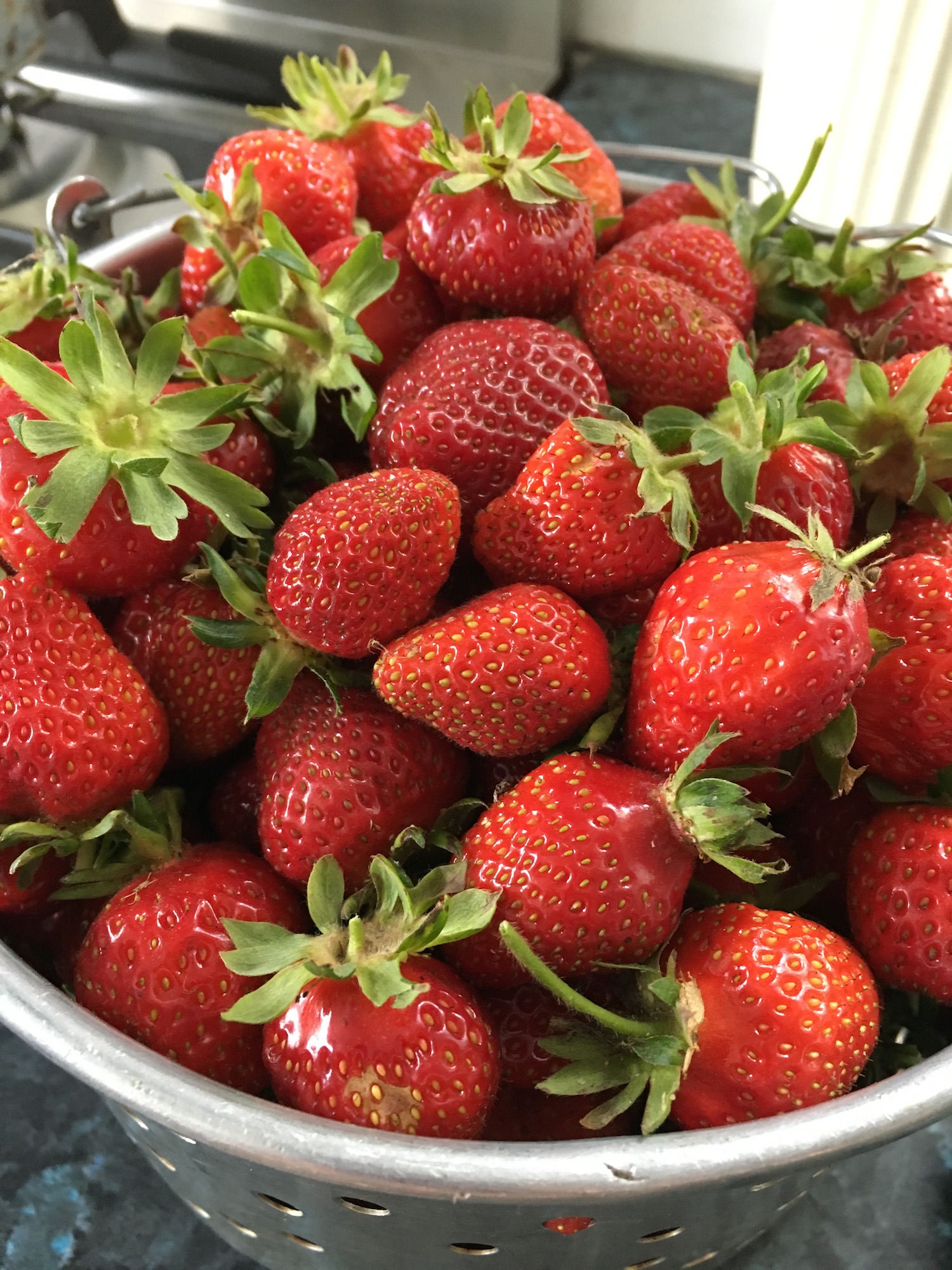
Strawberries, gooseberries, black currants, red currants, cherries, and peas—ah! The signs of Christmas! They’re red and green, just like those in the Northern Hemisphere, but the greens are brighter than pine tree green, and the reds more succulent than holly berries.

They are just as festive as the colours up north, though in a different way. While you look inward, gathering around the hearth on long dark evenings, we look outward, sitting with friends on the beach on long summer days. You dream of white snow, we dream of white sand. You have visions of sugar plums dancing in your heads, we have visions of fresh strawberries dancing in ours. While you sing ‘let it snow’, we sing ‘let us go’ (to the beach).

Now and again I miss the cosy dark of Christmas in the north. And every year, I wish summer gardening, Christmas, and the end of the school year didn’t happen simultaneously. But I’ve grown to appreciate the summer Christmas. I appreciate not having to plan Christmas dinner, but letting it spring from whatever is abundant in the garden. I appreciate being able to sit outside on the porch in the sun after gifts have been opened. I appreciate the barefoot, short-sleeved, nature of Christmas here.

It’s like Christmas-lite.

Counting your Quinces

2016-11-28-16-39-54-smYou know what they say—don’t count your quinces before they ripen…okay, maybe they don’t say that, but they probably should.

I’m pleased to count the little quinces forming this year, though. I know we won’t get to eat all of them, but it’s the most fruit the little quince tree has ever set.

I can almost taste the quince paste now…

I had never encountered quince before coming to New Zealand. It’s an odd fruit. It’s sort of what I imagine pears must have been like before hundreds of years of plant breeding—astringent, hard, and gritty. They’re not a fruit you eat fresh.

But cook them, and all their glorious floral flavours come out. Turned into quince paste, they are one of my favourite foods.

Quince paste is delightfully versatile—pair it with cheese on a cracker for a salty snack or hors d’oeuvres, or spread it on toast for a sweet breakfast treat.

Making quince paste is a lesson in patience. First, you have to wait for the quinces to grow and ripen—they won’t be mature until autumn, and they’re not a fruit you find in the store, even in season. You just have to wait for them.

Then you have to simmer those rock-hard quinces for half an hour until they’re soft enough to mash.

Then you add sugar and cook oh-so-slowly for up to 3 hours, until the mixture turns red.

You pour the hot paste into jars and wait another few hours for it to set.

Finally, you can enjoy your quinces.

So, yeah, don’t count your quinces before they’re paste.

Small Celebration

2016-11-19-16-04-44-smWell, I finally made it. Made it to the day I can look at the vegetable garden and not be overwhelmed with jobs to do.

Everything is planted (except successive plantings of things like carrots, etc.), and most everything is mulched. The tomatoes are tied up and pruned, and the potatoes are mounded. Today, I managed to get all but a few small areas weeded, too.

I walked through the garden this afternoon to survey my work, and managed to get all the way through without feeling the need to pull a weed.

To celebrate, I’ve decided to spend the rest of the day pretending that there aren’t a thousand other jobs waiting for me in other areas of the yard. I’ll tackle those tomorrow.

Pumpkin Cupcakes

2016-11-06-13-47-06-smIt’s been a cupcake sort of week here. I would hesitate to post yet another cupcake blog, but these are so seasonal for many of you, that I will anyway.

While you in the Northern Hemisphere are enjoying the autumn pumpkin harvest fresh, I’m trying to clear out the last of the frozen pumpkin puree from the freezer to make way for the peas that will soon be pouring in.

What better way to use pumpkin than in cake?

This recipe is adapted from a pumpkin cake recipe in King Arthur Flour’s Whole Grain Baking.

1 ½ cups whole wheat flour
1 cup barley flour
1 tsp baking powder
1 tsp baking soda
½ tsp salt
1 tsp cinnamon
1 tsp ginger
½ tsp nutmeg
¼ tsp allspice
1 cup brown sugar
½ cup butter, softened
½ cup vegetable oil
4 eggs
2 cups cooked, pureed pumpkin

Mix the flours, baking powder, baking soda, salt, and spices in a medium bowl. In a large bowl, beat the butter, oil, and sugar until it’s the consistency of mayonnaise. Beat in the eggs, one at a time. Stir in the pumpkin, then the dry ingredients.

Spoon into paper-lined cupcake tins. Bake at 180°C (350°F) for 20 minutes.

Cool completely, then frost with cream cheese frosting and decorate with crystallised ginger.

If you want to bake this as a cake, be sure to line your pans with parchment—the barley flour makes for a very fragile cake—and bake for 30-35 minutes.

Frosting:

1 package (250g/8 oz) cream cheese, softened
85 g (6 Tbsp, 3 oz) butter, softened
1 tsp vanilla
2 cups icing sugar

Beat the cheese, butter, and vanilla until light and fluffy. Gradually add the sugar. If the icing is too stiff, add milk by the teaspoon until it reaches the right spreading consistency (I generally don’t need to add any milk).


Midnight Flowers

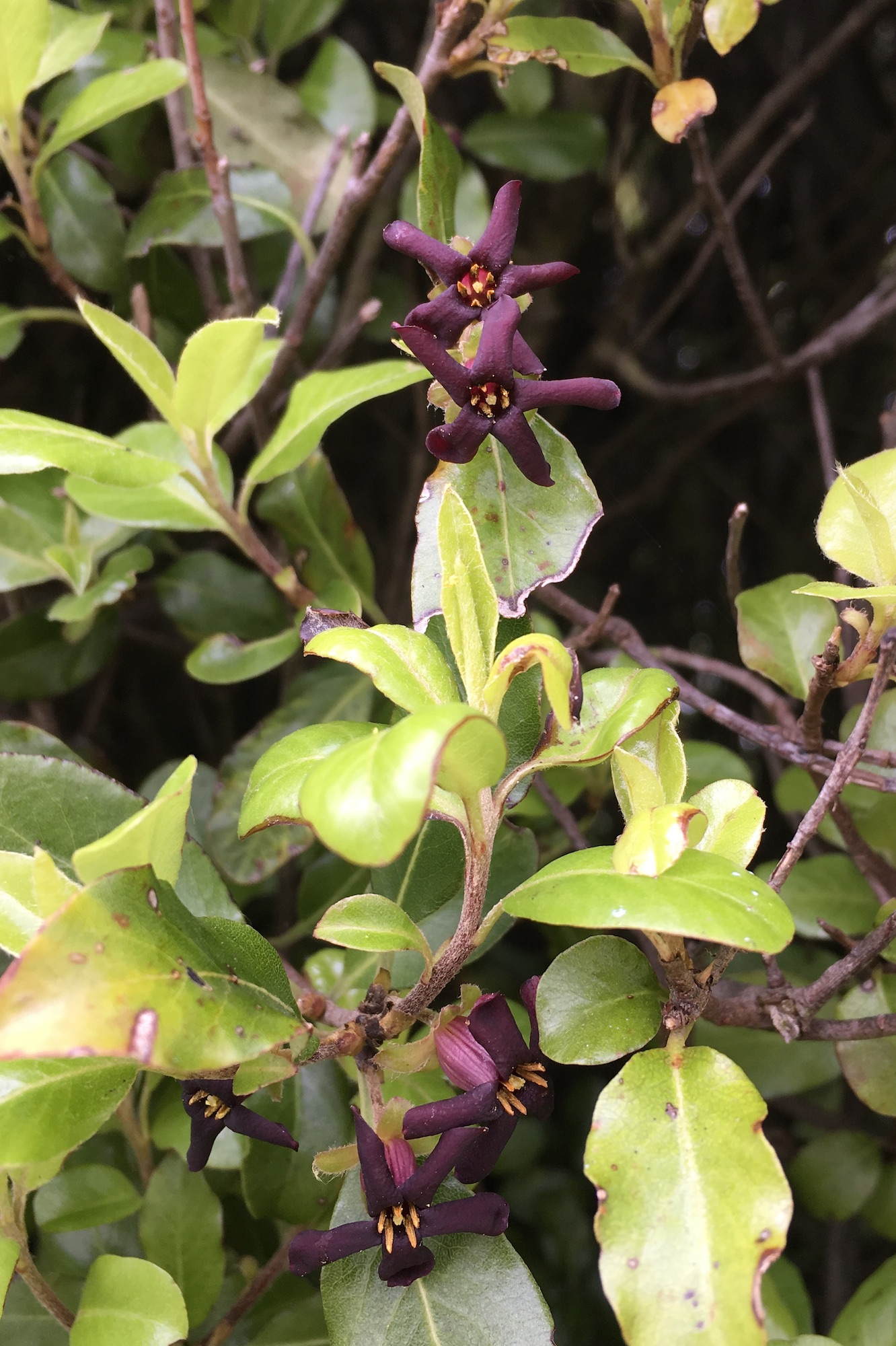
2016-10-26-15-51-31We have several pittosporums around the house, mostly Pittosporum tenuifolium, also known as kohuhu. Kohuhu are nice hedging plants, and form lovely dense shrubs when pruned. They’re a great background plant—like mood music—a lot of nice greenery, but little character.

Until they bloom, that is.

And only at night.

Pittosporum flowers are the kind of blooms that you can walk past a hundred times a day and never see. They’re about the same colour as the branches, and sit nestled among the greenery. They attract no bees or butterflies.

But walk past the same bush in the dark, and you’re practically knocked over by the smell. Heavy and clinging, the smell must attract all the night-flying moths and beetles for miles around.

I’m generally not a fan of smelly flowers, but there’s something marvellously incongruous about pittosporum flowers—so inconspicuous during the day, so in-your-face at night. The smell has become as sign of spring for me, and I always make sure my early-morning chores take me close to one of the bushes at this time of year.


Supreme Spring Salad

2016-10-21-17-49-45-smWe had occasional salads all winter, from the fall planting of lettuces and spinach. We’ve also had several salads from this spring’s lettuce planting. But all these salads have been small, and have required me to scrounge every available leaf to glean even a modest quantity.

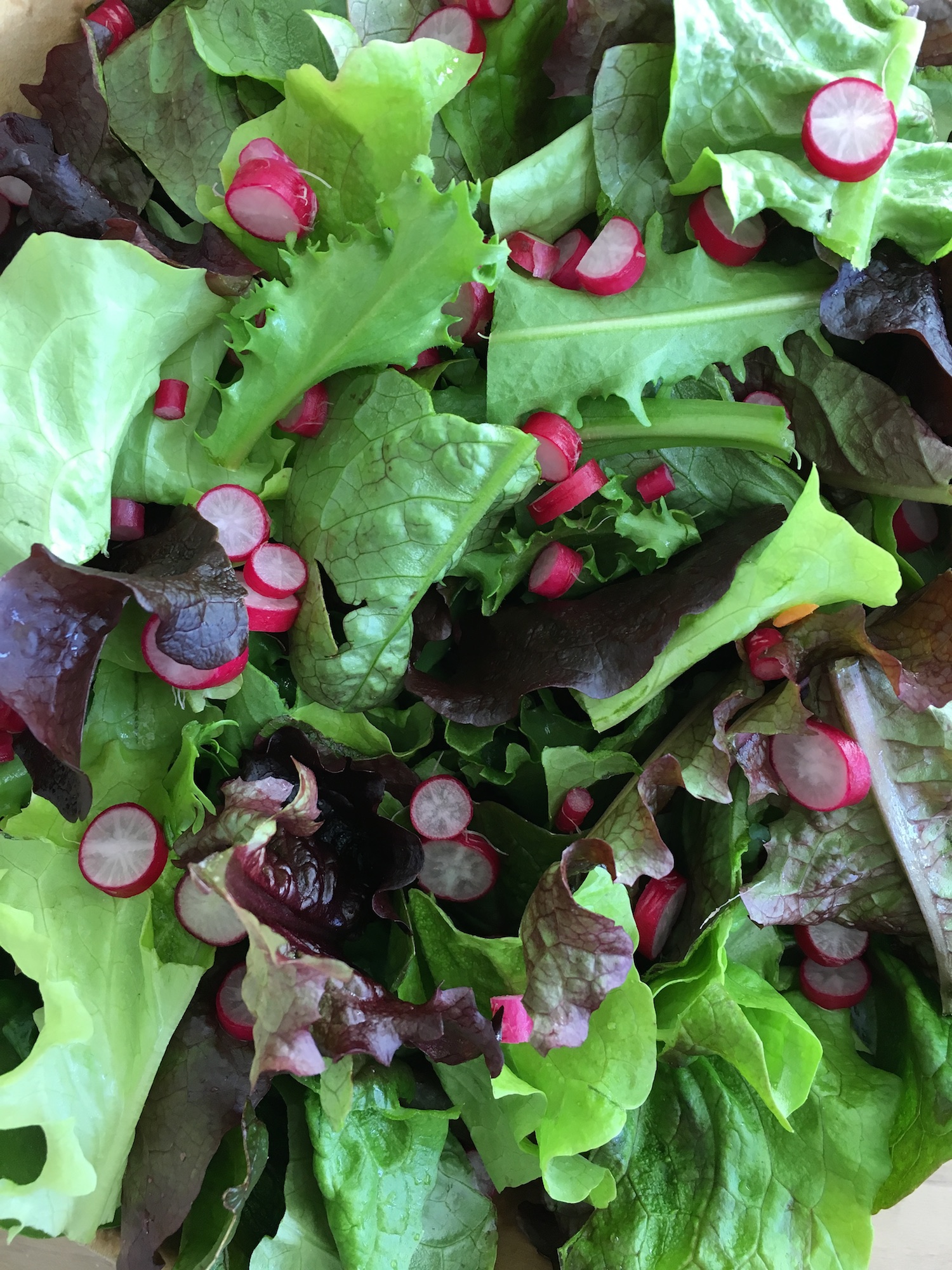
Today’s salad was the first of the Supreme Spring Salads—salads for which I have so much lettuce, I can choose to pick only the best, most perfect leaves, and can adjust the proportions of each variety to perfectly suit the meal. I also had a few lovely radishes from my daughter’s garden to add to the salad, making it even more perfect.

And this was just the first. With luck (and a fair bit of weeding), we’ll have many more Supreme Salads to look forward to in the coming months.


Heating the Greenhouse DIY

greenhouse-waterjugs2-smI wish I had a heated greenhouse. I start my seeds in my office, which has decent light and can be heated at night to help heat-loving seeds germinate and keep tender seedlings from freezing.

But at some point, the plants have to go to the greenhouse or they’ll get hopelessly leggy. Besides, there’s not enough room in the office for all my seedlings, once I really get going in spring.

The greenhouse is great for raising daytime temperatures for the plants and for protecting them from harsh wind. It also protects the plants from light frosts, but sometimes the temperature dips below zero at night, and then the unheated greenhouse can’t protect my plants enough.

If I know the temperature will dive, I can haul all the plants back to my office just for the night, but it’s quite a job—several trips with the wheelbarrow—and always results in some plants getting damaged.

So I’ve gone for passive solar heating in the greenhouse. I had my daughter paint empty 3-litre juice bottles black, and I filled them with water and placed them around the greenhouse. During the day, the water in the bottles heats up, and at night, the bottles slowly release their heat.

Having only one greenhouse, I haven’t been able to scientifically test whether my hot water bottles help, but last year—the first year I deployed the bottles—I was impressed by how well the plants weathered cold nights in the greenhouse. I intend to expand the number of bottles this year, and would love to ring the entire outer edge of the greenhouse with water bottles. If all goes well, I’ll end up with my heated greenhouse, without actually heating my greenhouse.

Here we go again…

2016-10-16-16-04-30It’s a sight to strike fear in my heart.

October 16th and the temperature hit 30°C (86°F) and humidity is 33%.

Thirty degrees is supposed to be a height –of-summer oddity. It’s the day you drop everything and head to the beach, because there are only a handful of days this warm in a summer.

Except that it’s the middle of spring.

And this happened last year.

And the year before.

And it heralds a third year of drought for us.

A third year of deciding which plants will be watered (and survive), and which ones will not (and probably die).

It will be a third year of expensive hay that has to be brought in for the goats, because the grass will brown off in November.

A third year in which the vegetable seedlings grow too fast too early, then struggle to set fruit in the dry heat.

Just thinking about it makes me grim.

But I suppose it also means a summer of incredible hot days at the beach. A summer in which I don’t need a wetsuit to enjoy the ocean. A summer of ice cream and swimming.

I enjoy these things. I really do. It’s a good thing they come along with drought. If I go to the beach, I can ignore the shrivelling garden at home…sort of.