Completing the Cycle

Back in early December last year, I posted an update on the preying mantids on my rosemary bushes that I’ve been following since mid-winter, when they were eggs.

Well, I haven’t forgotten them, and I’m pleased to report that they are all grown up now, and laying eggs of their own.

On the one hand, I’m thrilled (as I am every year) to watch the entire life cycle play out in the garden.

On the other hand, I’m getting a little worried.

Last winter, I didn’t prune the rosemary bushes because the bees depend on their flowers in late winter. Then in the spring I couldn’t prune them because the preying mantids hatched out. All summer I waited and watched the mantids grow. The rosemary plants grew, too, engulfing a bench on one side, and the path on the other.

And now the mantids are laying their eggs on the very branches I need to prune off…

We may soon see just how big rosemary can grow here.

To Burn or Not To Burn

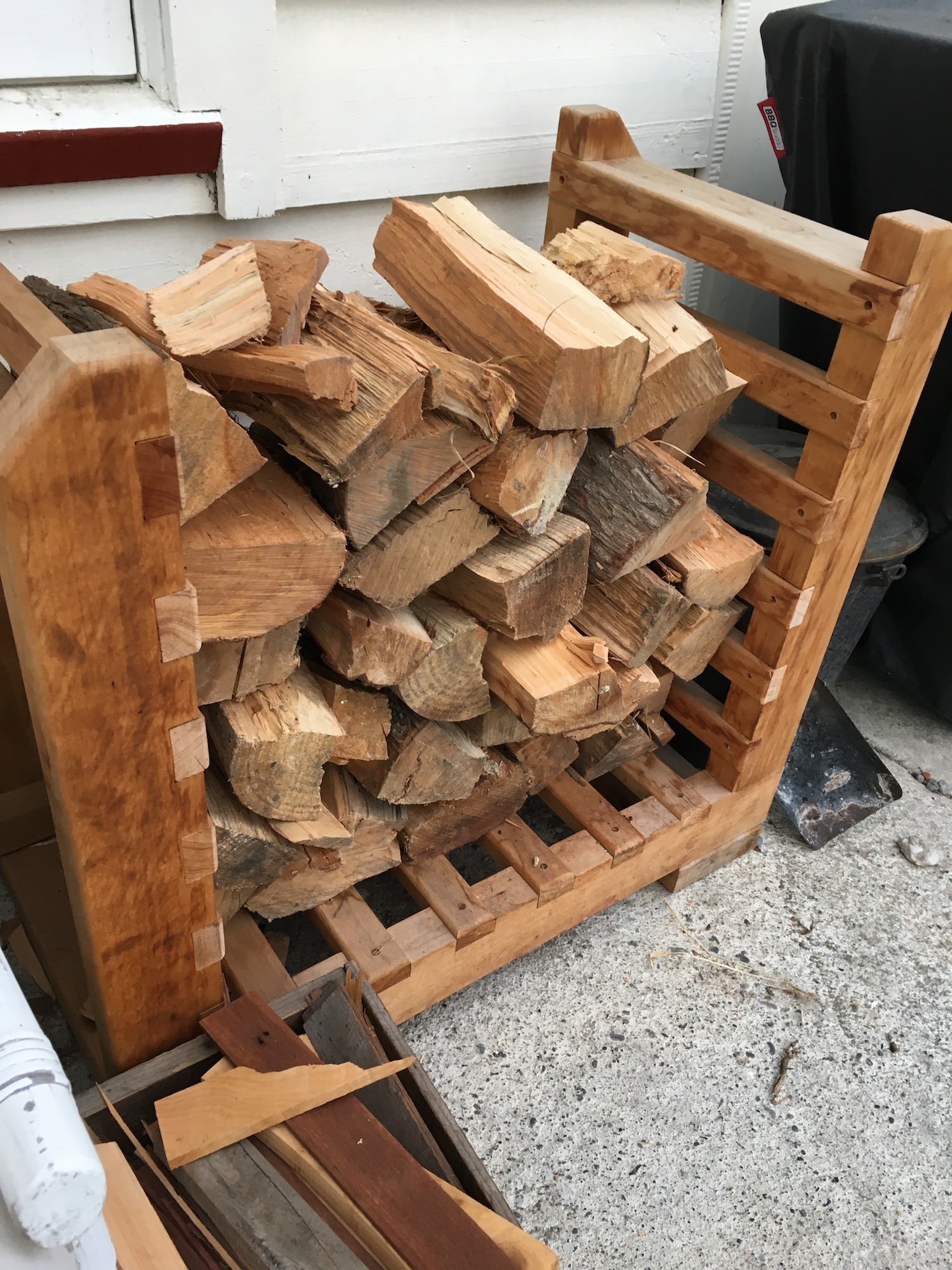
The firewood stands ready to go.

That is the question, on a night like tonight. If we light the fire, it will be the first fire of the season–always a bit momentous, because it’s an admission that summer is over.

Technically, we don’t need a fire tonight. It’s cool, but not terribly cold. We’ve had colder nights already this autumn, and never even considered lighting a fire.

But it’s been raining most of the day. The temperature has been inching downward since morning, and the wind has been picking up. It’s thoroughly unpleasant outdoors this evening.

It’s emotionally cold.

It’s not that I’m not thankful for the rain–we really need it. It’s not that I don’t enjoy hearing it on the roof and against the windows.

But it would sound even better accompanied by the sound of a crackling fire.

It’s not so much a need for warmth, but a need for hygge. A need for comfort.

And so, as a fresh gust of wind rattles the window, I think I’ll close this blog post, put on a pot for tea, and build a fire.

Mushroom Season

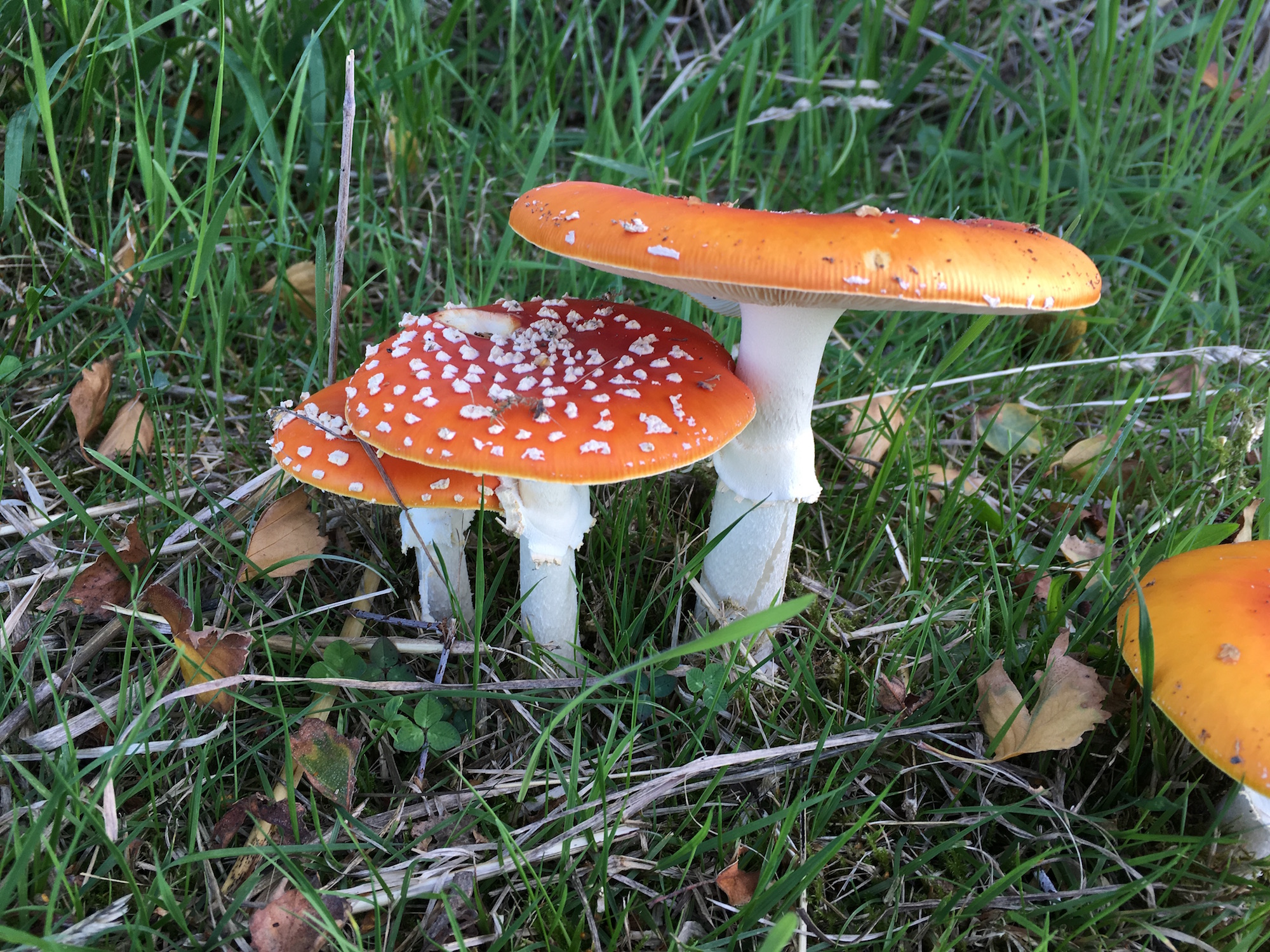
With the arrival of rain and cooler temperatures, the mushrooms have come out. Many fungi fruit in autumn, but this year seems particularly spectacular on our property. I can only guess that, after three years of drought, the fungi are taking advantage of weather that’s finally moist.

The most visually striking ones are naturally the Amanita muscaria–their bright red caps have reached epic sizes this year, and they’ve sprung up in profusion under the birch trees. They’re accompanied this year by three other species of mushroom with large brown caps (Paxillus involutus, Leccinum scabrum and a Russula).

Puffballs dot the lawn, and an assortment of smaller mushrooms have joined them.

The best find so far has been the presence of seven Noddy’s flycaps in the vegetable garden. I blogged about this mysterious fungus several months ago when the first sporocarp popped up. To find this many all at once is quite unusual.

There is another full week of rain in the forecast, and I’m looking forward to what new gems might spring up. There is also the exciting possibility of slime moulds in this weather.

So forgive me if I walk around with my eyes on the ground this week. I’d hate to miss the show.

Water Perspective

“The weather’s been shocking! Where did our sunshine go?”

“I don’t know. All this rain is horrible.”

I listened to this conversation with a mixture of amusement and sadness. Amusement, because, though we’ve had seven days of off-and-on drizzle, it’s not been that bad. It’s not been cold or windy, just overcast with some light rain now and then.

Sadness because the conversation revealed how disconnected the speakers were from the desperate state of Canterbury at the moment. Three years of drought have left our streams dry, our groundwater depleted, and our land tinder-dry. The soil is dry as dust for as far down as you want to dig. This rain hasn’t even begun to bring us back to the soil moisture we should have. It has wet the top few centimetres of soil, no more.

The truth is, we need weeks and weeks of steady rain, just to bring us to where we should be at this time of year, then we need a nice wet winter to top us up.

Beachgoers have been spoiled with three years of clear skies and record high temperatures, but if it continues, there will be dire consequences for the region–a region that depends upon irrigated agriculture to fuel the economy. Not to mention the higher water bills, more frequent wildfires, rising electricity costs (because much of our power comes from hydro lakes), and fewer recreational opportunities.

While those of us involved in growing plants and raising livestock understand this intuitively, the majority of folks, living in town and paying little attention to more than the immediate weather conditions, are completely unaware.

It can’t be good, this lack of awareness. Our planet is facing such catastrophic climate change, that a lack of awareness of larger patterns in weather and climate can only lead to continued lack of action to address the issue, a continued blindness to the changes that to me are so clear and convincing.

Until we all understand that having nothing but beautiful beach days isn’t good, our fight against climate change is going to languish.

Winter Cat

The cat has decided it’s winter. We’ve had a few chilly nights, and some drizzly, overcast days, but the daytime temperatures have been pleasant, even in the rain.

The cat, however, thinks it’s time to hibernate.

He has distinct winter and summer behaviours. In summer, he spends day and night outdoors, coming inside only to eat or for the purpose of irritating us by demanding to come in and go out every three minutes.

In winter, he spends his days sleeping on my daughter’s bed or in my office, and his nights in front of the fireplace, going out only briefly so that he can demand to be let back in again once we’re comfortably engaged in something else.

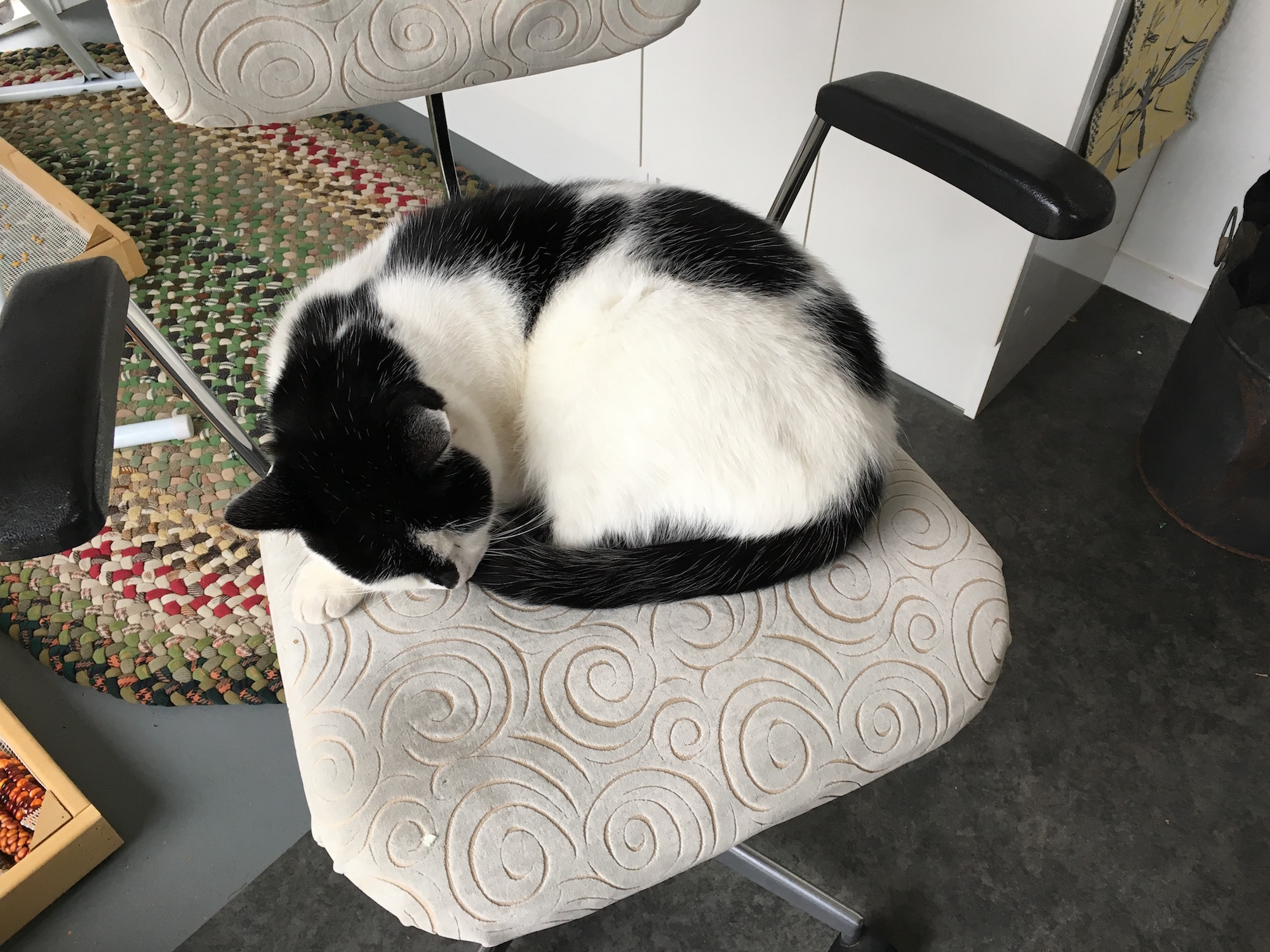
The past few days, he’s been spending time on the couch and, last night, he stretched out in front of the fireplace, though there was no fire. Today, he claimed my office chair before I had a chance to sit down.

Never mind that it’s still warm enough to have the doors and windows open. Never mind we’re still eating summer vegetables from the garden. Never mind that autumn has hardly begun. The cat says it’s winter.

Summer Soups and Stews

One of the nicest things about the end of summer are those autumnal days that make me crave hearty soups and stews–dishes I haven’t particularly wanted to eat in the heat of summer.

To have a chill in the air, but still have a garden bursting with summer vegetables means we can make wonderful warming dishes with the very best of summer flavours.

We’re into our third day of rain, with temperatures hovering around 11°C (52°F), and enjoying the possibilities the weather has offered.

First up was a beautiful tomato soup, made with a king’s ransom of fresh, garden-ripened tomatoes, and handfuls of fresh herbs. It was amazing for dinner and made a wonderful warming lunch the following day, too.

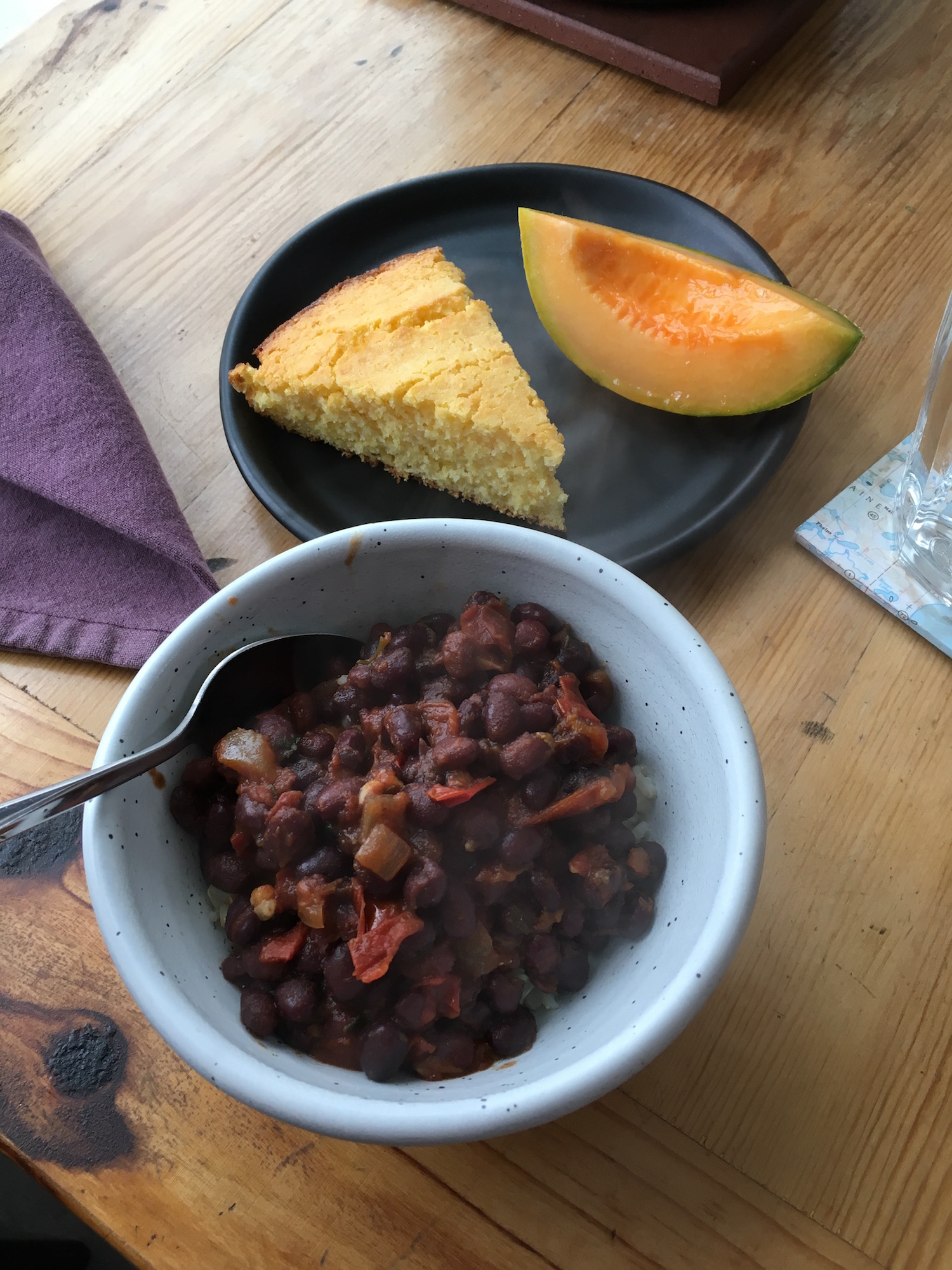
Tonight it was black beans from this year’s harvest, cooked with more fresh tomatoes and herbs, accompanied by corn bread and our own melons.

It makes me look forward to more rainy days to come!


Mysteries of the Pomegranate

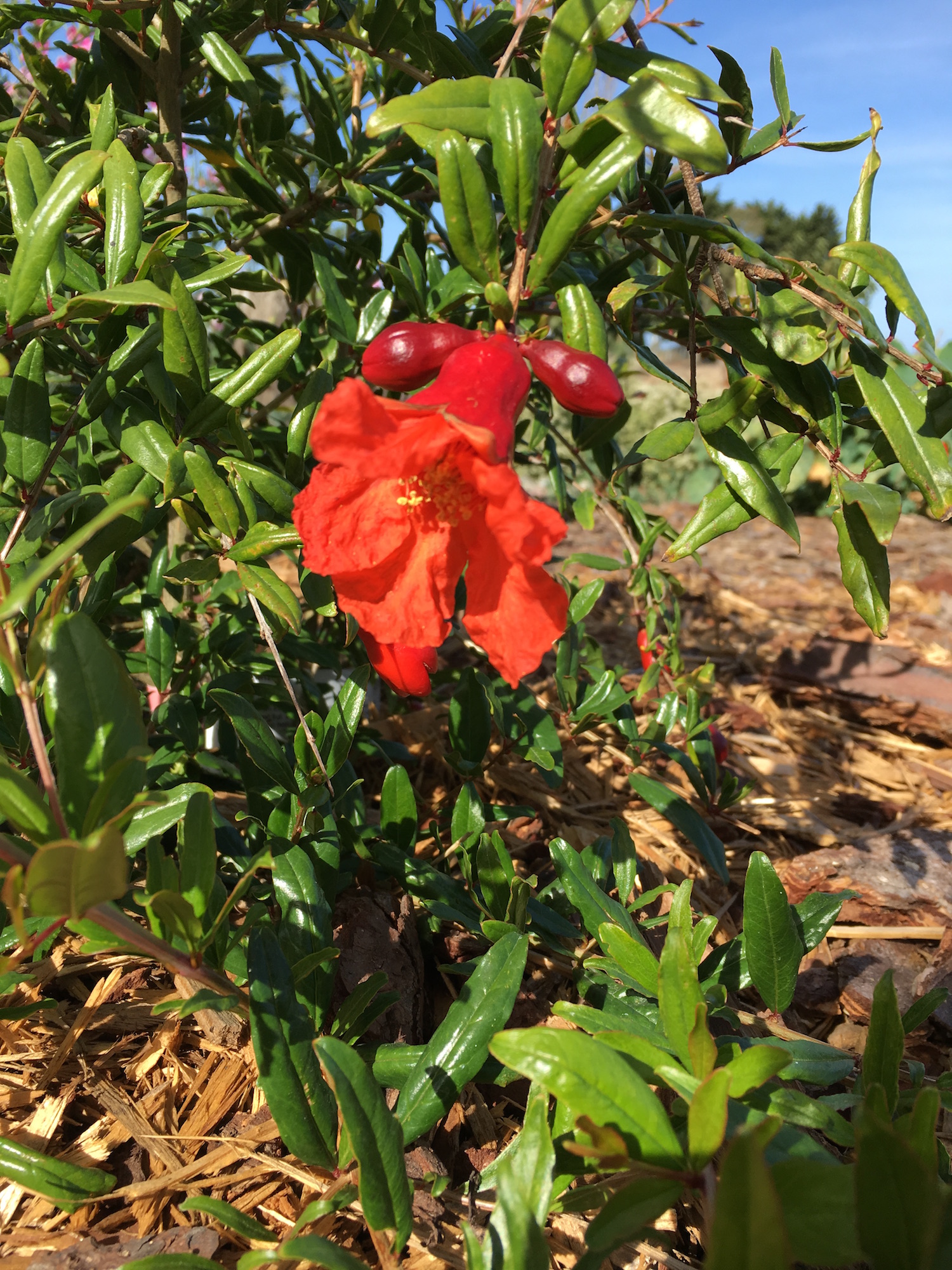
img_3242I know nothing about pomegranates. Sometimes my husband gives me one for Christmas, and I like them, especially in fruit salad. Beyond that, I’m completely ignorant.

So last year, when I saw a pomegranate tree for sale in a local nursery, I naturally bought it.

To be fair, I did do a little research first, just to make sure we had any chance of actually getting it to grow on our property. By the time I brought it home, I knew it had no less of a chance of surviving here than any other fruit tree (all of which prefer more water and less wind than they get here).

So we planted a pomegranate, and a couple of months later it lost all its leaves.

Are pomegranates deciduous, or is it dead? We didn’t even know this much. Turns out, yes, they are. Ours dutifully leafed out again in spring.

Once we knew it was alive, we promptly ignored it again, until a few weeks ago when we noticed little red bulbs on it.

Hey! Fruit! Though we had seen no flowers, we could easily have missed them. For all we knew, pomegranates had small, plain flowers.

Then today, one of those little red bulbs burst, unfurling this stunning big red bloom.

Wow! We had no idea. I’d grow this tree for the flowers alone. They have all the tropical exuberance of a hibiscus (but on a more cold-hardy plant).

I still have no idea when or if those flowers might become fruit (it seems the wrong time of year for any tree to be flowering) but, hey, we know a lot more about pomegranates than we did a year ago. Reason enough to grow something new.

Escape the Heat

2017-03-02-15-12-14I love my office. The northeast and northwest walls are formed almost entirely by large sliding glass doors. I have sunlight in the office all day. On warm days I can throw open the doors and enjoy feeling like I’m working outdoors.

In winter, I rarely have to run my heater–even ten minutes of sunshine can heat up the room. The insulated and windowless south-facing walls keep the room cosy and draught-free, even in howling storms.

That’s all great…for most of the year…but when the outside temperature climbs above 30°C (86°F), all that sunshine becomes too much. No matter how nice the breeze through those open doors, sitting in the sun becomes unbearable. My attention starts to wander. My brain become sluggish. My hourly word count plummets. At some point I have to either give up work for the day or take it elsewhere.

A pool of shade, a grassy seat, and a clipboard, and I’m back in business. It’s officially autumn here, but it’s still hot enough to need to escape the heat. I’m looking forward to cooler days when I can appreciate my office again.

And the Winner Is…

2017-03-01-19-04-27It’s Oscar season in the garden–the time of year when I start reviewing in my head how various crops performed over the summer. I plant a wide variety of vegetables, because some do well and some don’t every year, and not always the same ones.

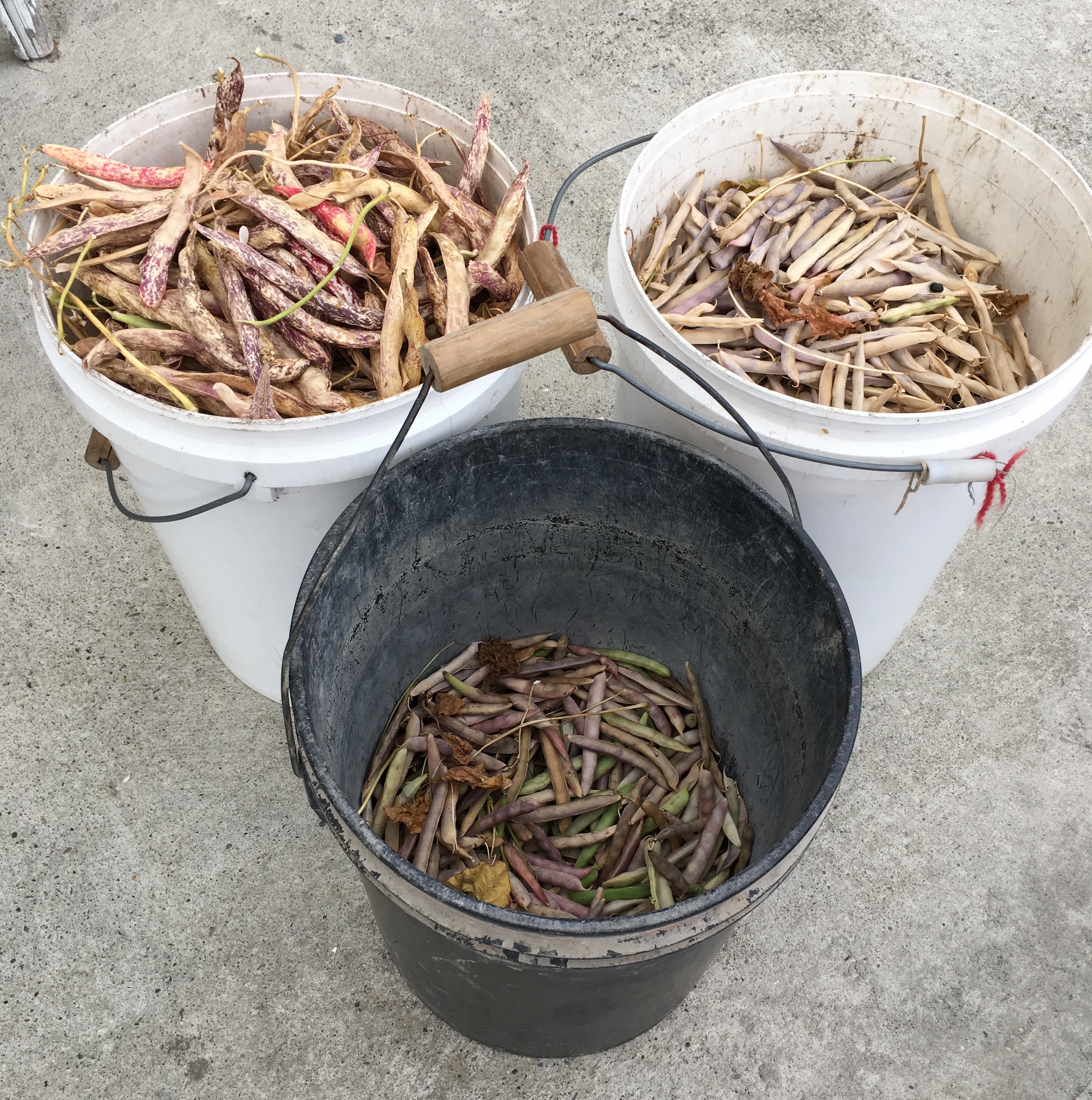
This year, for reasons known only to the plants, the black beans produced spectacularly well. I spent two hours harvesting yesterday and haven’t picked them all yet. I’ve easily got twice as many per square metre as I did last year. Add to that the fact I planted more this year than I did last year, and we’ve got a heap of beans.

You won’t find me complaining about that. Black beans are one of those staple foods for us that I can never produce enough of. I can already taste the burritos, chilli, and plain old beans and rice that will warm our stomachs through the rest of the year.

Of course, shelling them will take ages. I managed to shell about three-quarters of a bucket last night before the boredom got me. My secret to shelling without going crazy is movies. Movies I’ve watched before are best, so I don’t mind having to look away now and again to grab another handful of beans. I can settle in for the whole evening of shelling with a good movie. By the time I get to the final credits, I realise I’ve shelled a bucketful.

Perhaps I should watch Moonlight? Two winners together in one evening.

Ecological Weeding

A parasitised aphid (the bloated brown one), and an unparasitised one (the green)

A parasitised aphid (the bloated brown one), and an unparasitised one (the green)

As much as I enjoy weeding, I can’t possibly keep up with them all. There are always weeds on the property.

In truth, I don’t try to eliminate all the weeds. I take a ‘live and let live’ approach with many of them. I also recognise the utility of many of the weeds on the property–or at least their utility to other organisms.

Except in the vegetable garden where they are, literally, a pain, I allow nettles to reside in the yard. They provide food for our native yellow admiral butterflies and, in a pinch, can be used to make rennet for cheese making. Even in the vegetable garden, I don’t mind seeing them–they hate dry soil, so they’re a good indicator that I’m watering the garden enough for the vegetables.

Weeds like yarrow, clover, and dandelions are good food sources for beneficial insects, so they, too, are allowed to grow wherever they’re not in direct competition with crops.

Weeds are also sometimes good ‘trap crops’, attracting pests to plants (themselves) I don’t mind pulling out and destroying to get rid of the pest.

Sometimes, though, the ‘trap crop’ idea backfires on me. Today I noticed that a sow thistle I’d allowed to grow was covered in aphids–it was a great opportunity to destroy thousands of pests. Except that as I bent to pull the weed, I noticed that a large number of the aphids were parasitised by wasps. I depend upon these wasps to deal with my springtime aphid problems. Short of painstakingly picking off every parasitised aphid and caring for them until the wasps hatch, killing the aphids on the weed is going to kill the wasps, too. What to do?

So the weed has gotten a temporary stay of execution. I’ll keep an eye on it. When the wasps have emerged from the parasitised aphids, I’ll pull it and kill the remaining aphids.