New Year, New Garden

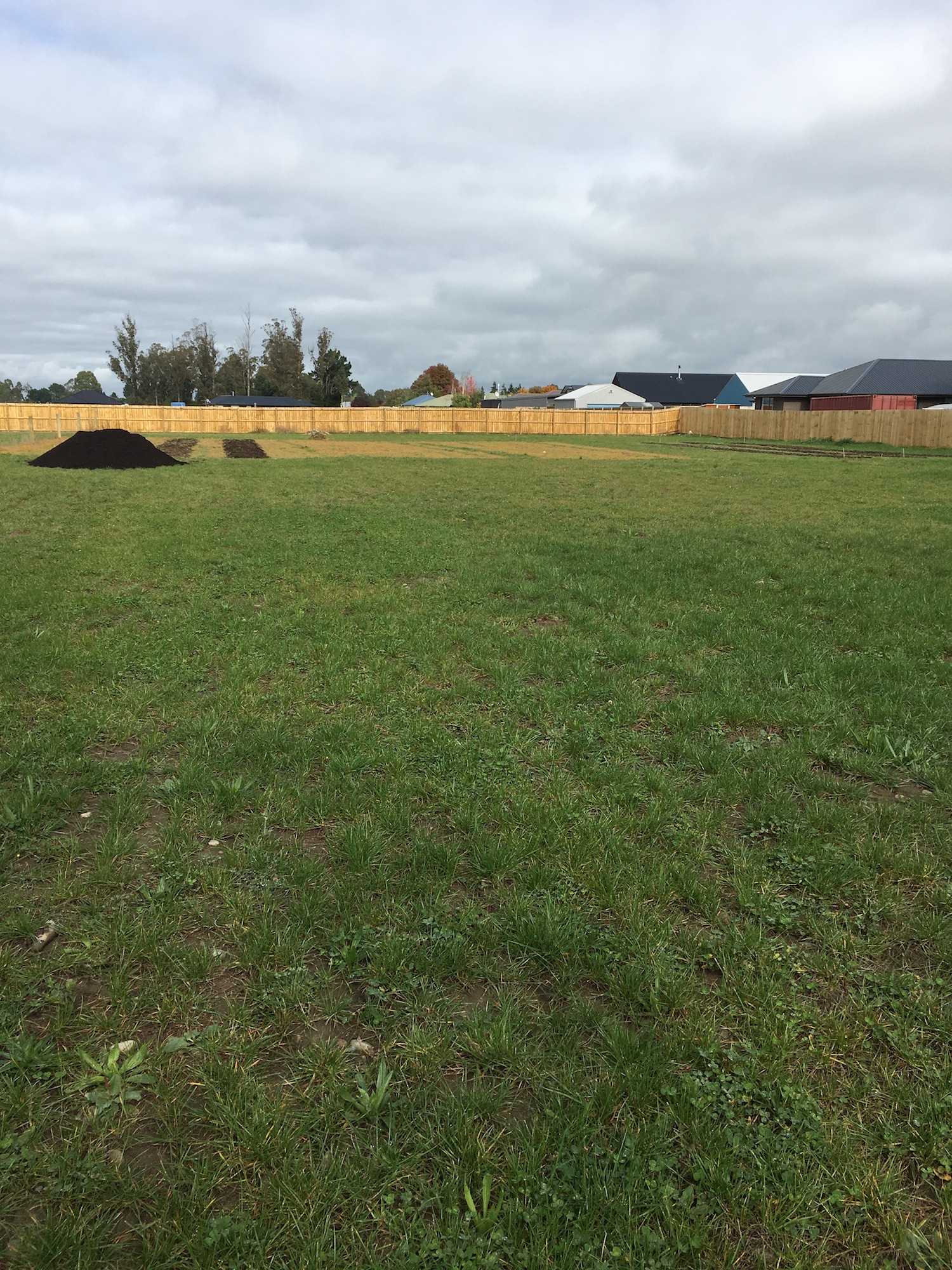
A blank slate for a new garden–10 cubic metres of compost ready to be added to the soil.

Another solstice has passed and we can look forward to more sunlight each day. We celebrated Matariki—the Māori new year—last week, too, so it’s well and truly time to start thinking about the garden for this coming summer.

This year, my garden decisions are more difficult than they’ve been recently. This year we will be moving house mid-summer, assuming all goes as planned with our new build.

We have already marked out and tilled the garden at the new property, and we’ve planted it in green manure crops for the winter, even though the foundation of the house hasn’t even been laid yet. 

But moving mid-summer, it’s hard to know where to plant all the crops. Late-season vegetables like pumpkins and dry beans are easy—they’ll go in the new garden. Early crops like broccoli and radishes are also easy—they’ll go in the old garden.

Unfortunately, a huge number of crops will come on before we move and still be going strong afterwards. I’ll want them at both houses. But the prospect of maintaining two full gardens forty-five minutes apart from one another is daunting.

Add to the challenge the fact that the soil at the new garden is hard clay generously studded with rocks. It will easily take a decade of soil improvements to make the new garden as productive as the old, and it will always be rocky, no matter how much organic material I can build up.

So in my garden planning and calculating this year, I have to lower my expectations. I have had such a glorious garden, with excellent soil, for many years. It will be a challenge to start over, rehabilitating a compacted paddock scarred by years of commercial agriculture and not naturally blessed with loamy soil.

It will mean finding new varieties that thrive in different conditions, pulling out all the tricks I know for improving soil conditions, and learning new ways of working with the soil. I am prepared for disappointment, and excited by the challenge.

Stay tuned …

Reprise: Summer Soup

I usually blog about summer soup when we make it. It’s a major point in the garden calendar and deserves a mention at that time.

I’ve never said a word about it during the winter, but this is when it is most appreciated.

Yesterday we all got home late from work and school. It was dark and cold. We were tired and hungry. I was crashing into a miserable head cold I’d kept at bay all day by sheer force of will.

And there was the summer soup, waiting to welcome us home and usher us into summer, if only for a brief time. I heated up a jar of edible summer, and we sat down to eat within minutes of arriving home.

I took a spoonful and shut my eyes. Tomato, zucchini, green beans, corn and soy … all the flavours of summer soothed my raw throat and pounding head. The heat of sun-ripened jalapeños and Thai chilis warmed my sinuses and eased my congestion. For a short time my winter cold was forgotten in the glory of a summer’s day.

I harbour no illusions—summer soup won’t cure my cold, nor will it lessen its severity and duration. But it certainly can make my illness more bearable.

And so again I sing the praises of summer soup, and am thankful for the family effort that makes it possible to ease a cold and enjoy the summer sun in the heart of winter.

Peter Piper Picked a Peck of Pickled Porcini

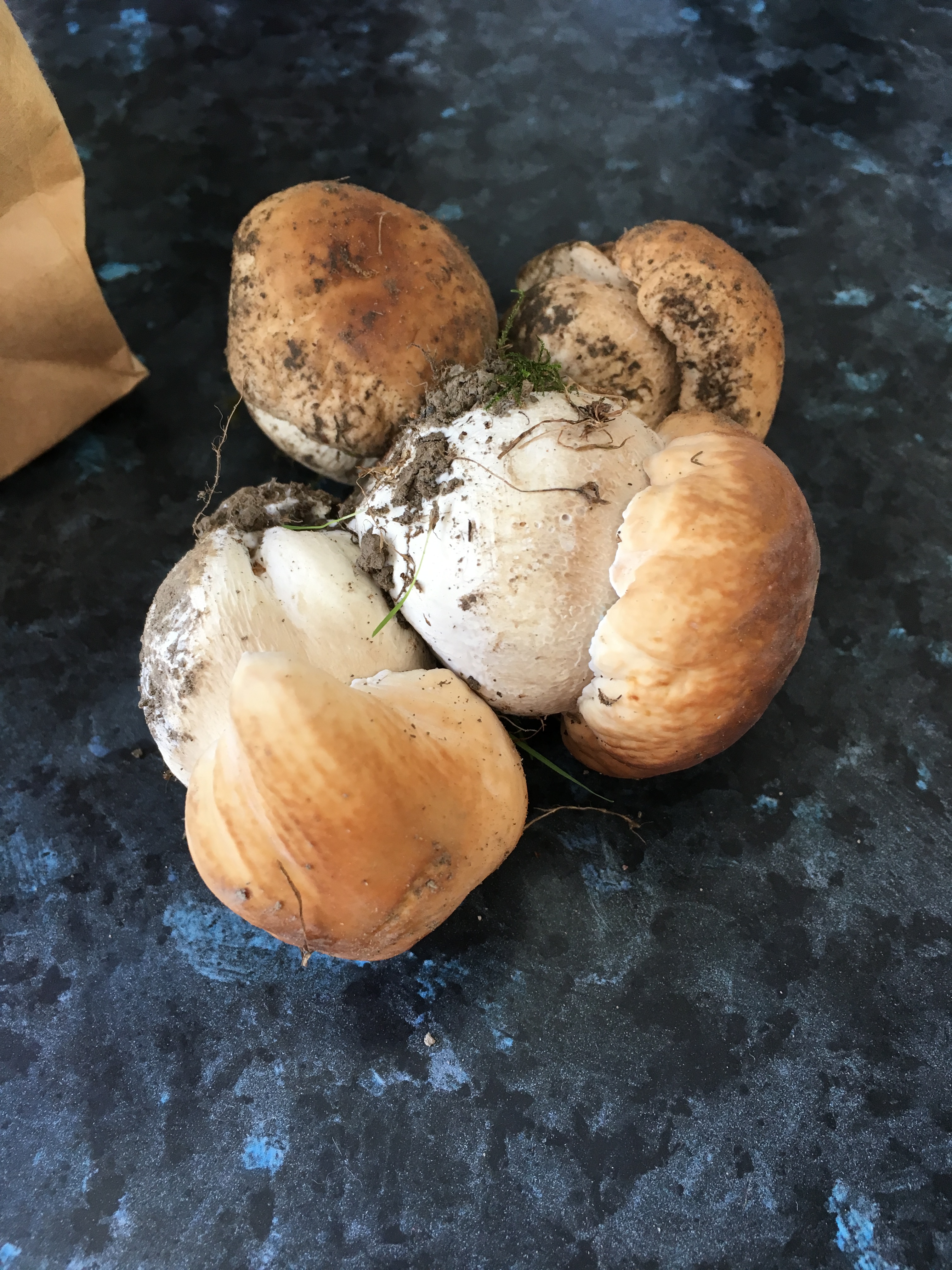
We had excellent porcini gathering this year—we discovered a new foraging location which is apparently overlooked by others. So we were faced with the delightful problem of what to do with so many mushrooms. We dried a lot, ate a lot fresh and still had more.

My husband found a recipe for pickled porcini. I was dubious and encouraged him to make a half-batch, just in case it was no good.

The process was strange—he sliced and salted the mushrooms, patted them dry, boiled them in vinegar, partially dehydrated them, and then packed them in a jar with a flavourful marinade to age.

They looked revolting.

Yesterday we tried them.

I’m not too proud to say I was wrong—totally wrong.

They are amazing—chewy, tangy, and bursting with intense mushroom flavour.

We cut them small and sprinkled them on a potato pesto pizza where they positively sparkled. I can’t wait to try them in all sorts of dishes, or simply slapped whole onto a cracker.

My only regret is that I convinced my husband to make a half-batch.

Music of the Night

Photo: Marcelo Zurita (CC BY-SA 4.0)

One of the pleasures of the short days of autumn is doing morning chores in the dark.

I know that sounds weird. I don’t particularly enjoy tripping over the tools someone forgot on the lawn the day before, nor am I overly fond of the cold wind slicing through my jacket.

It’s the sights and sounds of early morning that I enjoy.

Yesterday morning was particularly spectacular. The sky overhead was clear and star-studded—shimmering glitter strewn across the blackest velvet.

But the stars to the south were blotted out, and lightning flashed and forked far out at sea. The storm itself was silent from my distance, but the surf roared with a storm’s fury.

By the time the sun rose, birdsong, barking dogs and the drone of tractors drowned out the sound of the waves. Sunshine masked the flash of lightning as the storm stalked along the coast. The day dawned serene and mundane.

Other wonders have been revealed to me on my morning chores over the years.

A bioluminescent worm in the chook paddock.

Shooting stars streaking from zenith to horizon.

A bioluminescent sea creature frozen in snow and deposited in the garden.

The aurora australis pulsing green in the southern sky.

Rats tiptoeing along the top wire of a fence (I know, rats, ick. But it was an amazing feat of balance).

Little owls cackling in the treetops and swooping silently overhead.

The graceful undulation of a fence during an earthquake.

The comforting warmth of a goat’s flank on a frosty morning.

The gentle caress of a nor’west gale before it turns violent.

The rhythmic heartbeat of the sea at rest.

The clarity of thought on a crisp dark morning, before the stress of the day intrudes.

Summer’s Final Farewell

I moved the chickens into the vegetable garden last weekend—the final admission that summer is over.

I know it’s been over for weeks, but there have still been eggplants, peppers and tomatoes coming out of the tunnel houses. Before I moved the chooks, I harvested the last of those summer crops. We’ll savour them over the next week or so, and then it will be full-on winter from a culinary perspective, at least.

I’ve stocked up on barley to cook with our dry beans in bean-barley soup. Maybe I’ll add a bit of mushroom stock made from this autumn’s haul of porcini.

I’ve baked up some pumpkins so I have cooked pumpkin on hand for pie or galette later in the week. I’ll add frozen spring peas and summer corn to the galette, and garlic, stored in braids in the shed.

I’m eyeing up the secondary head of cabbage, sprouting from the remains of the summer crop. They’ll make tasty winter salads to complement warming meals.

i’ve planted out the winter crops, too—lettuce, spinach, broccoli, cabbage and cauliflower. They will provide us the late-winter vegetables we’ll crave come August.

So while I farewell summer, I welcome the culinary delights of winter. Not so varied, perhaps, as summer fare, but no less delicious.

The Indispensable Hoe

I was preparing the garden for my winter crops on Saturday when disaster struck. 

Okay, it wasn’t really a disaster, but it did effectively end my work for the day.

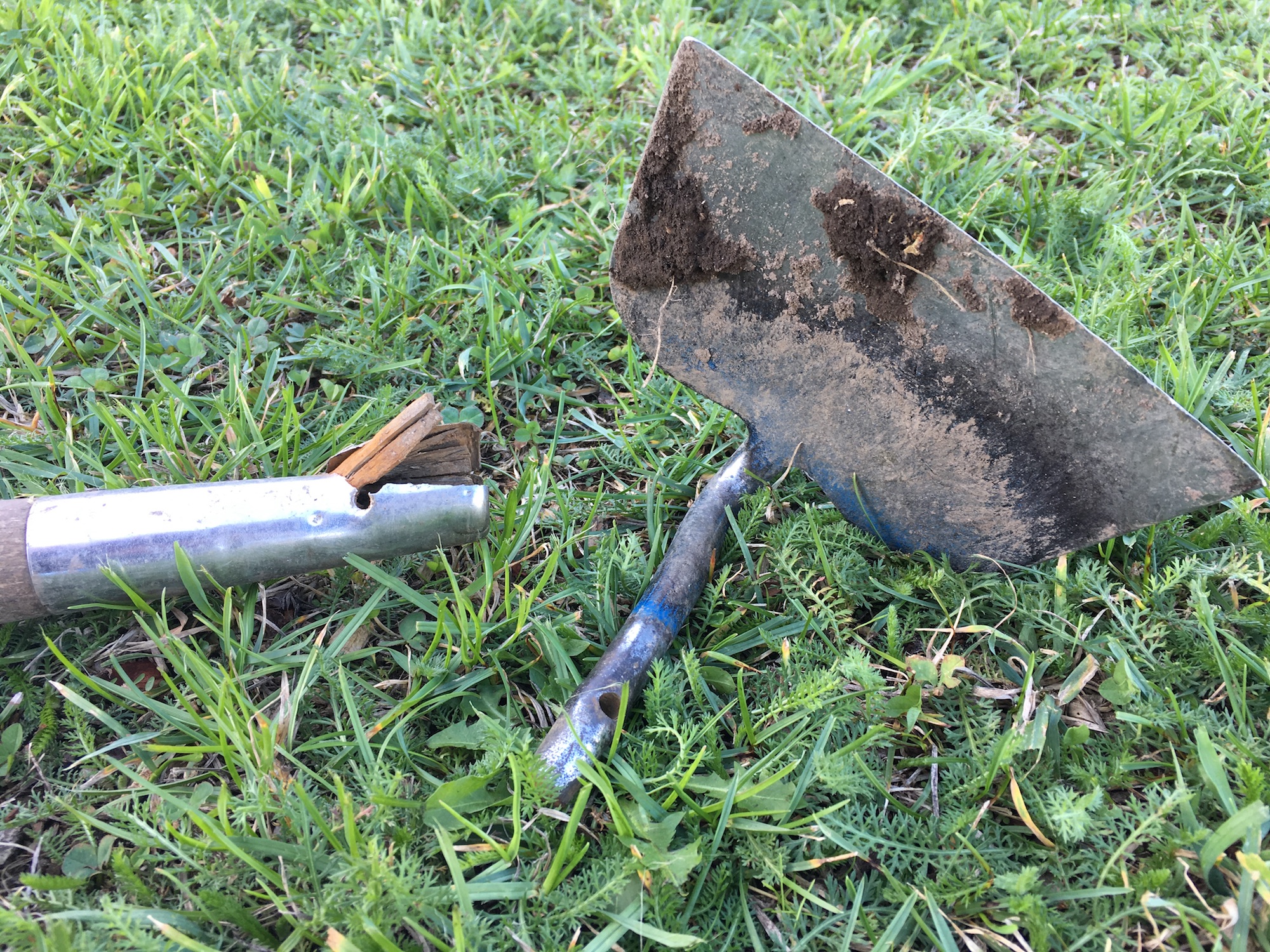
My hoe broke.

This has happened before. This particular hoe has been held together for years by duct tape after I cracked the handle on a particularly difficult clump of grass. Unfortunately, duct tape wasn’t going to fix this failure—this one was terminal, at least for the handle.

A few back-of-the-envelope calculations reveal that this hoe has done about 6,300 hours of work for me over its lifetime. It has measured and prepared garden beds, dug furrows for seeds, removed weeds, cleared paths, and mixed concrete. And it’s done all this with almost no maintenance—some sharpening, some cleaning, a little duct tape.

It’s no wonder the hoe is one of the oldest garden tools. The first evidence of hoes comes from cave paintings made in about 5000 B.C. Although there are many variations in hoe design, the basic idea has changed little for thousands of years; it’s a tried and true design that does the job well.

So this week I’ll find a replacement for my expired hoe. It’s not a tool I can do without.

Embracing Autumn

Our summer has finally turned to autumn. Cooler temperatures and more rain mean the grass has begun to grow again, green shoots sprouting through rain-driven drifts of dead vegetation.

The tomatoes are browning, spent after summer’s excess, and while I mourn their loss, I welcome the fruits of autumn—pumpkin, wild boletes, black beans, apples and a return of leafy greens. I welcome warming soups and casseroles. I welcome the smell of baking pie, simmering beans, and sautéing mushrooms.

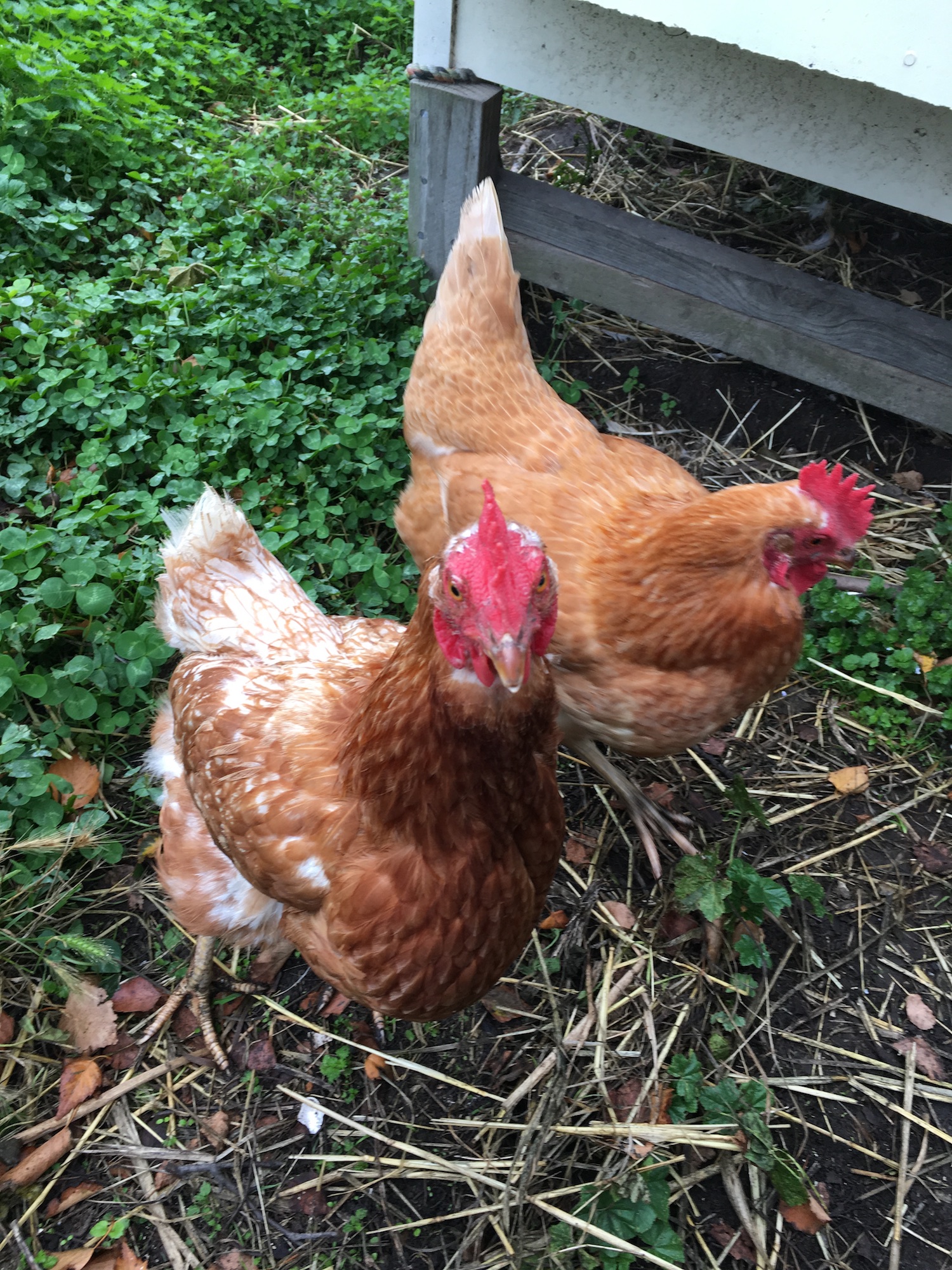
I welcome the reduced workload in the garden, too. There’s still plenty of harvesting to be done, and I’ll be clearing away dead plants throughout autumn and winter, but soon I’ll release the chickens into the garden to keep the weeds and pests in check until spring.

It’s time now to take stock. Plenty of summer soup, pickles and jam in the cupboard; strings of onions and garlic hanging in the kitchen; pesto, peas and corn in the freezer. Jars of popcorn and dry beans line the shelf, and a basket of apples sits in the kitchen. We will eat well this winter, food and effort stored in jars and freezer boxes to be released and enjoyed on dark, cold evenings. 

So I will savour the warmth and sun that remains, but embrace the cold to come.

Nifty Nigella

Late summer is harvest time for all sorts of crops. Nigella might be the most unusual one I harvested this week.

Nigella sativa goes by many names: nigella, kalonji, black cumin, fennel flower, nutmeg seed, onion seed, and black caraway. Added to this mess of often misleading names is Nigella sativa’s ornamental cousin, Nigella damascena, also known as nigella (or love-in-a-mist). You could be forgiven for being confused.

Culinary nigella is a lovely aromatic seed that looks confusingly like onion seed. Its flavour has been described as oniony or oregano-like. I’m not sure how I would describe it—I suppose onion and oregano come close, but the truth is it has its own warm rich flavour. It is traditionally used in naan and string cheese. It’s also apparently great with lentils and other legumes.

Because we rarely harvest much nigella, we’ve only used it in naan, where it imparts a lovely savoury note to the bread. 

But this year, conditions must have been just right for nigella; it grew luxuriantly. Consequently, I have a huge quantity of seeds, so I expect we’ll be trying it out in all sorts of stews and curries. I’m looking forward to the addition to our spicing options.

Summer Soup 2019: proof we really are nuts

The family made our annual Summer Soup on Sunday. 

I think we definitively proved we have no self-control when it comes to gardening or cooking. In spite of me reducing my garden area this year, and despite the knowledge that our son is leaving home in a week (and won’t be around to eat this year’s soup), we managed to make even more than usual.

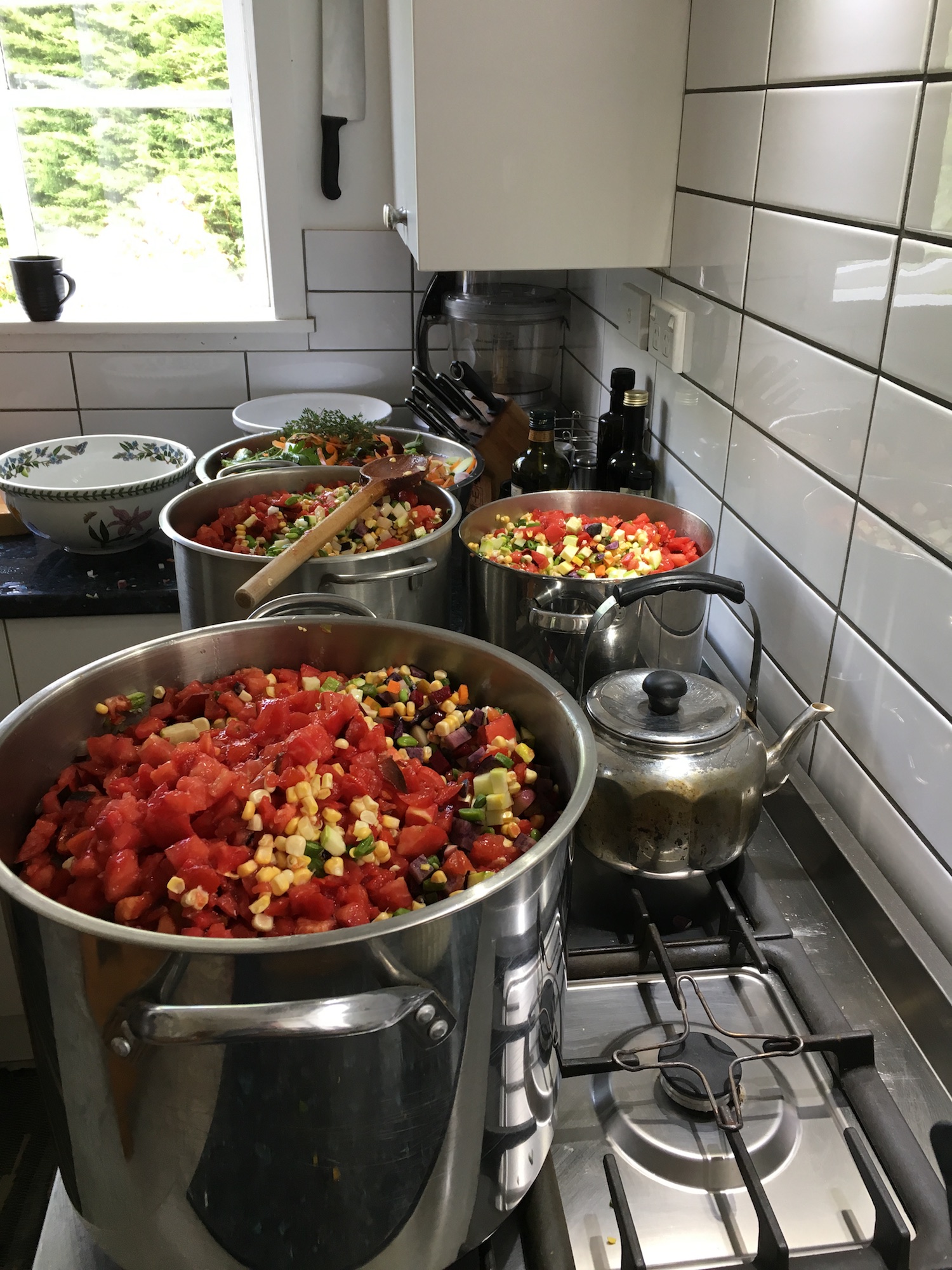
We filled all three of our big stock pots, and it took from 7.30 am to 9.00 pm to pick, chop, and process all that soup.

We had soup for dinner, I put a meal’s worth of soup in the fridge, and there are 28 beautiful quart jars full of soup lined up in the cupboard. 

Summer Soup is full of potatoes, carrots, soy, green beans, zucchini, tomato, sweet peppers, hot peppers, onions, garlic, sweet corn, beet root, basil, oregano, thyme, rosemary, and celery. The only thing not from the garden is the salt. It’s a burst of summer goodness for the cold days of winter. It’s a quick and delicious meal when we all come home late. 

But it’s more than preserved vegetables. It’s a whole-family team building exercise. After a dozen years, it’s a family tradition. Each soup-making session brings back memories of early years, when the kids’ help was more of a hinderance. They took enormous pride in their work those years, reciting the vegetables they’d cut every time we opened a jar.

Now they’re both accomplished cooks, and their help allows us to go way overboard on soup-making. They’re less vocal about it now, but I think they’re still proud of their part in Summer Soup.

As I’ve mentioned before, anyone can make soup, but it takes a family to make Summer Soup.

The Colours of Summer

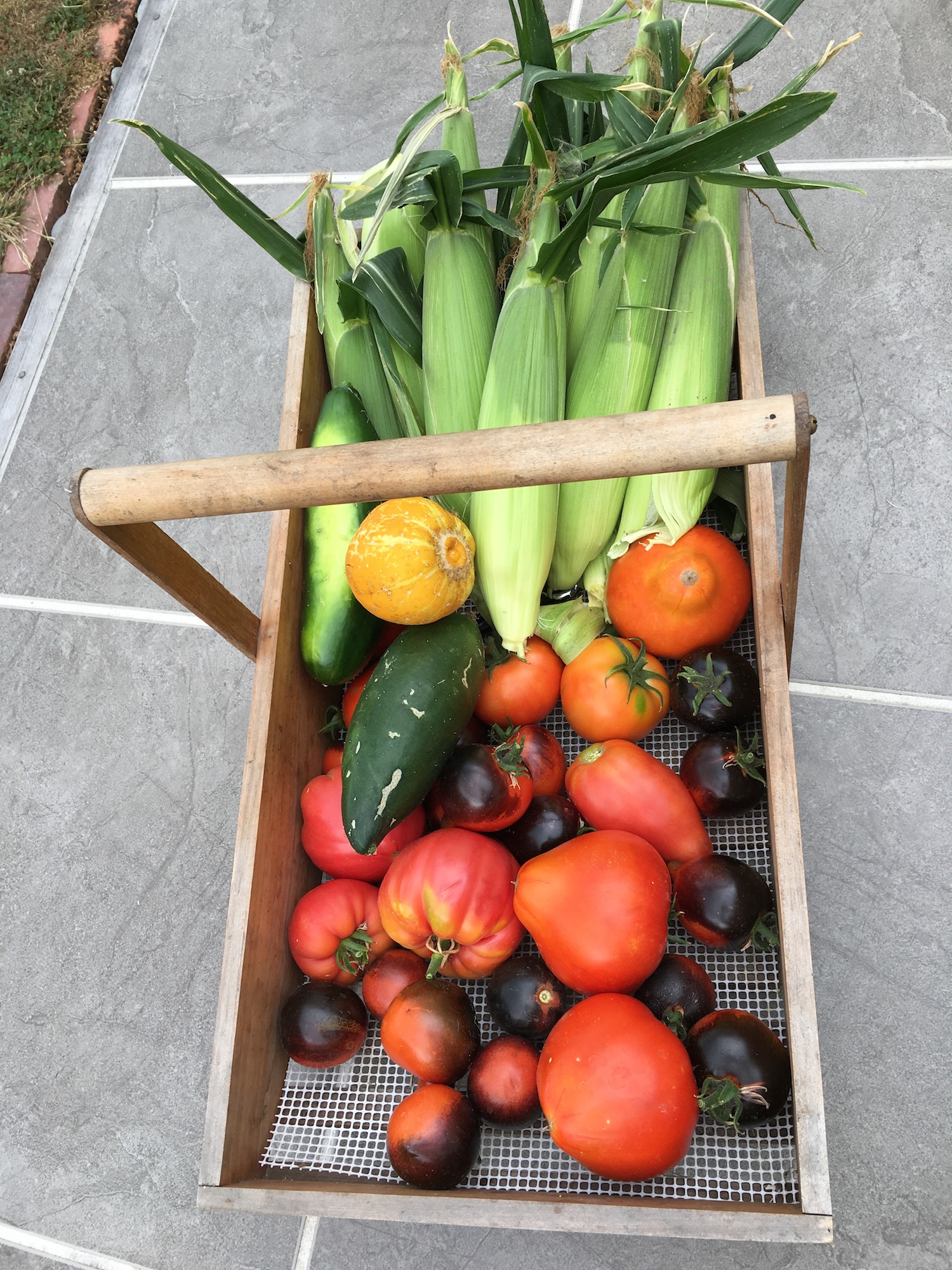
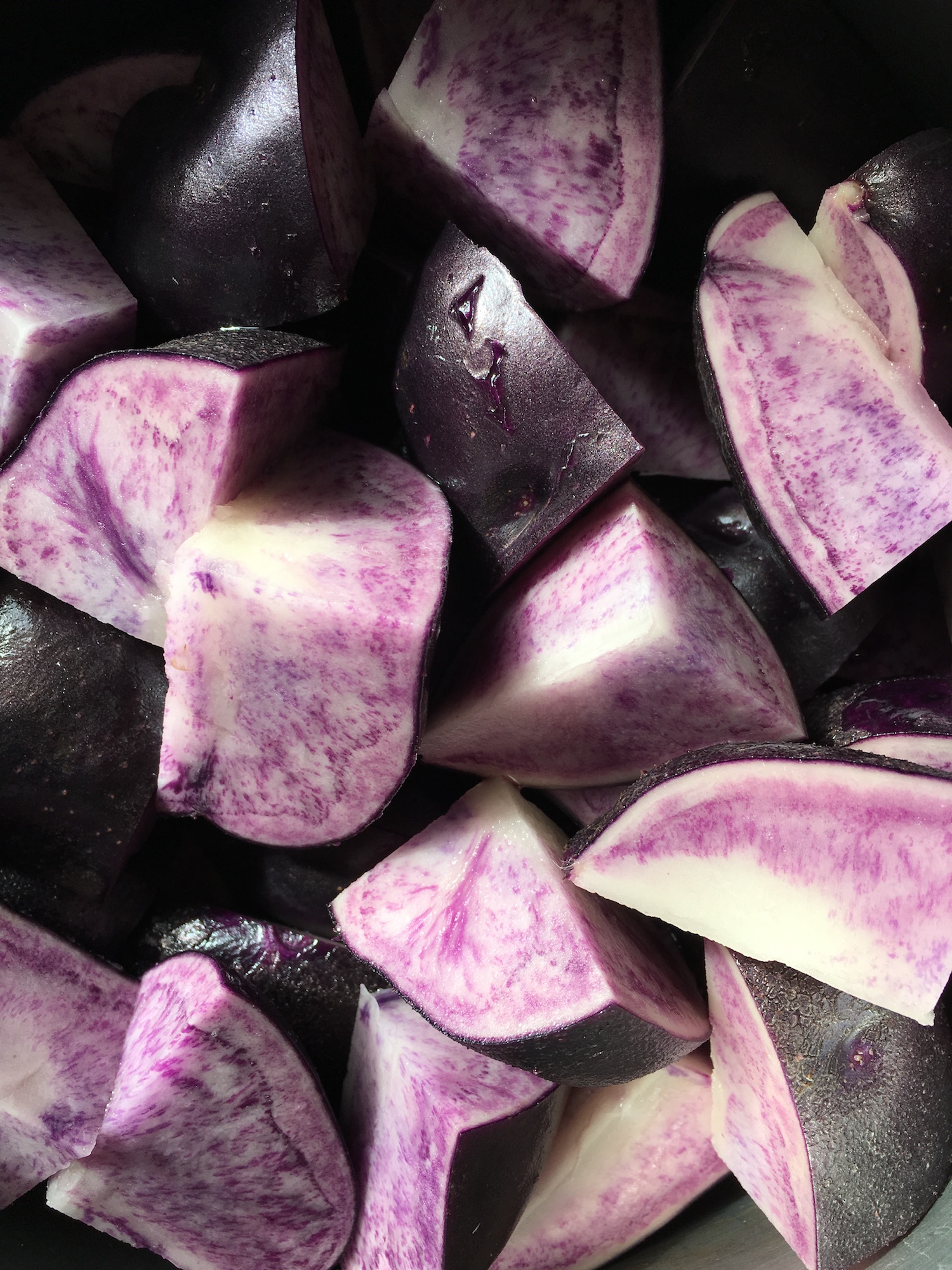
Blue peas, purple potatoes, green beans, yellow zucchini, red tomatoes, orange carrots … The summer garden is full of colour. But it’s not just a feast for the eyes.

In the garden, the colours can serve a purpose—black and yellow tomatoes and red lettuce are overlooked by birds and bugs because they’re not the ‘right’ colours. Blue peas have tough pods that resist birds. And purple basil deals better with dry heat than green.

In the kitchen, the colours create spectacular visual treats—purple mashed potatoes, deep orange braised carrots, bright green pesto, pasta studded with all the colours of the rainbow. Along with the colours come flavours not found in supermarket produce—the rich sweet-tart of an Indigo Apple tomato, the succulent crunch of Scarlet Runner beans, the smooth earthiness of a Zephyr zucchini, the nutty bitter of a Touchon carrot.

A few years ago there was a campaign here to get kids to eat more vegetables. The main message was “Eat your colours.” I agree. Eat your colours. Revel in them. Feast your eyes and your taste buds.