PV=nRT

100_3593 smAnything can become an occasion for a science lesson in our house (much to our children’s dismay, I’m sure). Today it was pumpkin pie.

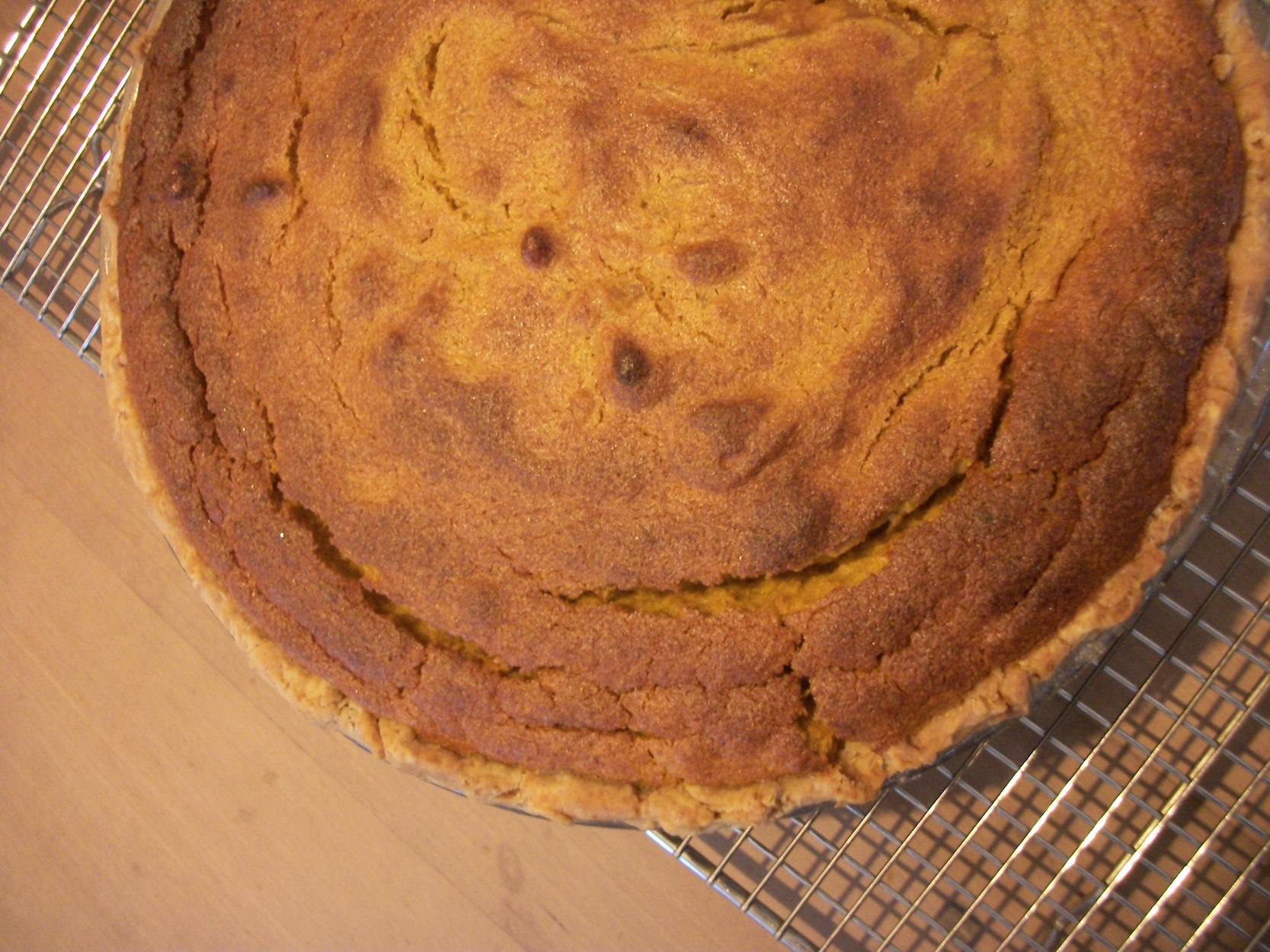
The pumpkin pie recipe I use has stiffly beaten egg whites in it. So, of course, it puffs up dramatically in the oven, coming out looking like a great big orange pillow. As it cools, it falls.

It’s the perfect physics lesson to explain the Ideal Gas Law! And my daughter fell right into it when she asked, “Why does it puff like that?”

If you’re not familiar with the Ideal Gas Law, here it is:

PV=nRT

Where P=pressure, V=volume, n=amount, R=ideal gas constant, and T=temperature of the gas.

From this equation, we can clearly see that, as the air in the bubbles of egg white heats up, the volume of the air will increase (assuming, of course that the bubbles themselves can expand and maintain a relatively constant pressure, which egg white does beautifully), causing the pie to puff. As it cools, the air decreases in volume, and the pie falls.

Proving that understanding thermodynamics is easy as pie!
Moose on the Loose!

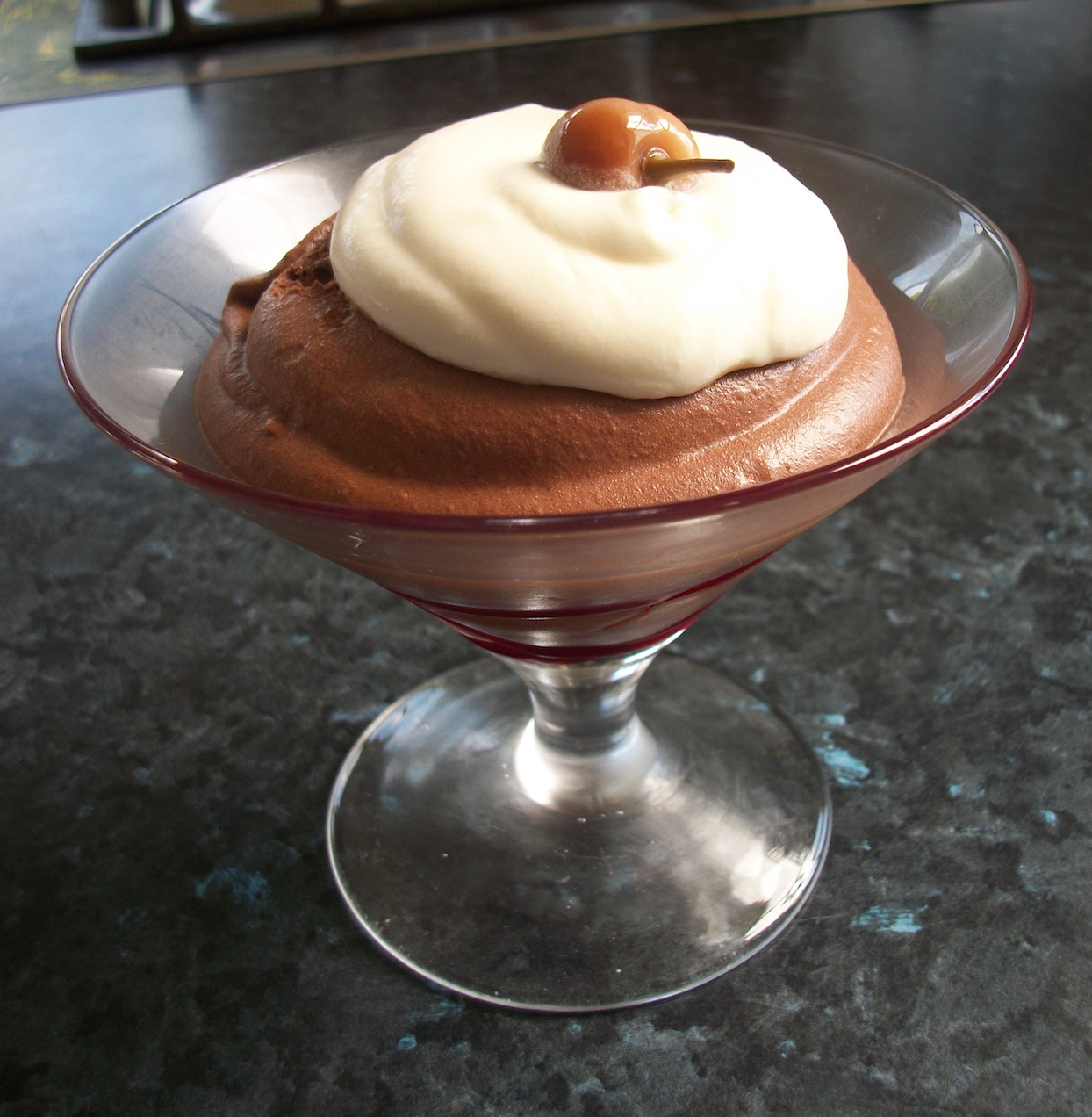
100_3526 smWell, not moose, but mousse. Chocolate mousse!

A friend mentioned mousse the other day, and I couldn’t get it out of my head, so I picked up some lovely dark chocolate and some cream and made mousse this morning.

While I was making it, I remembered why I don’t make mousse very often. Though it’s not necessarily difficult, it dirties an inordinate number of mixing bowls, and involves a lot of whisking!

Still, I enjoy making mousse, just for the chance to play with foams. There are three separate foams in the mousse recipe I use.

First is a cooked egg yolk foam. This robust foam is the first to be mixed into the melted chocolate. Next is a stabilised egg white foam, gently folded in. Then finally comes the delicate cream foam (mixed in, and dolloped on top for serving!).

The result is a divinely fluffy and rich mousse.

A foam is simply a film of proteins surrounding pockets of air. Foams are important in food—the structure of a foam changes the flavour and feel of food, and has a profound impact on how we experience it. Ice cream, fruit smoothies, cakes, soufflés, whipped cream, beer, and fancy coffees rely on foam to make them what they are.

So go ahead and enjoy some foam today, in whatever form you like it!

Oh, what a taste!

Beer, anyone?

Beer, anyone?

You would think that, taste being such a fundamental part of human culture and survival, we would know all about it.

Not so!

When I was a child, we were taught that there were four tastes: sweet, salt, bitter, and sour. Later, scientists discovered the taste, umami—the taste of glutamates, inosinate and guanylate–found in many foods, including meat, vegetables and dairy products, and often added to Asian foods in the form of MSG.

Now, scientists have discovered a sixth taste—oleogustus, or fat. Like bitter, fat is a flavour that, by itself, is disgusting. It is only in mixing with other flavours that fat becomes palatable (think chocolate—by itself, it is almost inedibly bitter, but add sugar and it’s delicious).

This sixth taste makes sense to me. The best foods combine all the flavours, and I’ve always maintained that a little fat goes a long way to making food taste good. Vegetable soup made by simply boiling the vegetables is flat. But sauté the onions first, adding a little fat, and suddenly the soup tastes rich.

The best foods include all the tastes. Think about the worldwide popularity of tomato sauces. Tomatoes are themselves an incredible mixture of sweet, sour and umami. Add to them some sautéed onions for a little fat, a handful of bitter herbs like oregano and rosemary, and a little salt, and you’ve got a sauce that excites all the senses. Serve it with a grating of Parmesan cheese (with fat, salt, and umami), and it doesn’t get much better.

And, of course, it explains why a beer begs for peanuts and pretzels alongside it—the sour and bitter of the beer need the fat, salt, sweet and umami in the peanuts and pretzels to join them!