Astrobiology Fun

Not long ago, I attended a workshop on Astrobiology for teachers. I’m not sure which of my two jobs it was more useful for—teaching or writing.

Cool swag from NASA and Blue Marble Space!

My day job, though ever changing, often involves teaching science across years 3-8. One of the strands of the New Zealand science curriculum is Planet Earth and Beyond, so I regularly teach about our solar system and various features within our galaxy. Last year, I did a fun unit with the year 7 and 8 students in which students had to design spacecraft, habitat modules, and promotional campaigns for a colonising trip to Mars. 

I’ve rarely touched much on astrobiology, and the questions about life elsewhere in the universe, but the workshop made me think about all the ways that questions about life on other planets reflects on life on Earth. How these questions reflect on our actions as human beings—our treatment of other humans, our treatment of the planet and other living things on it. The presenters made a great case for using astrobiology as a way to dive into big philosophical questions about what it means to be alive on Earth today. 

What are our responsibilities to planet Earth and the life on it? What if we are alone in the universe? What if we’re not? Does it change our perspective on our own actions as humans? 

Sanjoy Son, from Blue Marble Science, spoke eloquently about how the teaching of astrobiology can give students valuable perspective on life, and how they can approach questions of personal differences, values, and civic responsibility. The take home message I got from his talk was that we are either the caretakers of the only life in the universe, or we are part of a vast, interstellar network of life. Either way, we are all ambassadors of planet Earth. What a great message for kids. What a great way for them to think about their roles as human beings.

As an author of fantasy and science fiction, of course I soaked up the cool facts about the gazillions of planets there are just in our galaxy, the weird ways life might have to adapt to wildly different conditions on other planets, the surprises that even our own solar system has produced in terms of planets and moons on which life could potentially survive, the physics of travel and communication through space. So many story ideas!

You’ll definitely be seeing more astrobiology creeping into my writing and teaching in the future!

Gems at the Bottom of the Purse

I was cleaning out my purse this morning and noticed I had two notebooks in there. It seemed excessive, even for me. So I paged through them both to see which had more empty pages. As I did, I happened across this little gem of a poem, scribbled down at some point. I don’t remember when. Most of my on-the-road scribbles are just kernels of ideas and need lots of work or fleshing out, but I thought this was pretty good for an on-the-fly poem.

It was certainly better than the sticky old mints that had fallen out of their package and were lying at the bottom of the purse …

So I thought I’d share the poem (the mints went into the rubbish).

Late night on the Interstellar Highway
Twin lights glitter 
Down the long corridor of black
You are not alone, then.
Or you are more lonely than before,
Screaming through the void
Of interstellar space.
The long road trip
Without a yellow line.
Without the neon
Of a late-night diner.
Without a single signpost
Saying Earth 2 million km
Keep left.
You hail the approaching ship--
Regulation words
Generated by your onboard computer,
Acknowledged by the other ship’s computer.
No life forms involved.
You blink and they are gone,
Not even the friendly spray of gravel
To crack your windshield.
And you remember fondly
The stifling days of youth
When you chafed
Under Mum’s touch.
The embraces you shrugged off
Were priceless.
The currency of the traveller
Light years from home.

Book Review: You Are My Sunshine and Other Stories

This collection of short stories by Octavia Cade is a pull-no-punches imagination of a near-future Earth under the influence of climate change, as seen intimately from the eyes of individuals. It is an exploration of our connection to the other living things with whom we share our planet.

At their core, these stories are about the losses we will suffer as the full effects of climate change take hold. In these terse and well-crafted stories, personal loss and environmental loss are mirrors of one another, and sometimes it isn’t entirely clear where one leaves off and the other begins. Some, like You Are My Sunshine and Gone to Earth lean towards horror, with characters whose relationship with the world around them veers into the surreal waters of mental health crises. 

I read this book slowly, needing to pause and digest each story before moving on to the next. I will admit that the drumbeat of despair in the first half of the book made me almost dread what fresh pain the next story would reveal. But the second half focuses more on hope—the hope of those who have felt loss, the hope that we as a species will recognise our place on Earth as kin to all the other living things on the planet, the hope that we will change our ways and create a better future for all life on Earth.

Science is at the core of the book, and the sea is a recurring theme, almost a character, in some stories. Many of the stories are set in New Zealand and draw on places, people and events in New Zealand, but the experiences and emotions of the characters are universal. They will surely resonate with people everywhere. 

If you are looking for a vivid and personal exploration of our possible future, or an examination of loss and the recovery of hope after loss, these stories are a must-read.

From the book blurb: 

Sometimes change can hurt. This collection of short stories traces the growing pains of a new world, beginning with the death throes of our current way of life and ending with a world transformed by science and technology, and by grief, hope, love, and humanity’s will to transform. This is a collection that will both tear you apart and tend to your wounds. Cade’s beautifully wrought stories are informed by science, tracing the biological and emotional threads that bind us, human and non-human alike. Containing a brand new novelette in the Impossible Resurrection of Grief universe, You Are My Sunshine and Other Stories is a promise of what worlds are possible if we allow ourselves to change.

To be released September 2023. Preorder here.

Aftermath: Stories of Survival in Aotearoa New Zealand

Aftermath: Tales of Survival in Aotearoa New Zealand is SpecFicNZ’s new anthology.

The anthology explores Aotearoa in a post-apocalyptic world. Disasters have occurred around the country and the world. New Zealand, in our isolation down under, may have escaped most of what happened around the world, but it was pretty bad out there. As Kiwis are apt to do, though, we’re “getting over it”. You know, she’ll be right …

This is not just an anthology of disaster stories. The pages are filled with hope in the form of short stories, poems, flash fiction and artwork about what comes afterwards. The contributions are exclusively from SpecFicNZ members and reflect the diversity and breadth of this country we love to call home … even if the edges are a bit torn and tattered.

I have had the pleasure of working on this anthology for the better part of the past year as a co-editor with Gary Nelson and Jill Winfield, and I can heartily recommend it.

Pick up your own copy today!

Sir Julius Vogel Award Nominations

New Zealand’s annual Sir Julius Vogel awards recognise excellence in science fiction, fantasy and horror works created by New Zealanders and New Zealand residents.

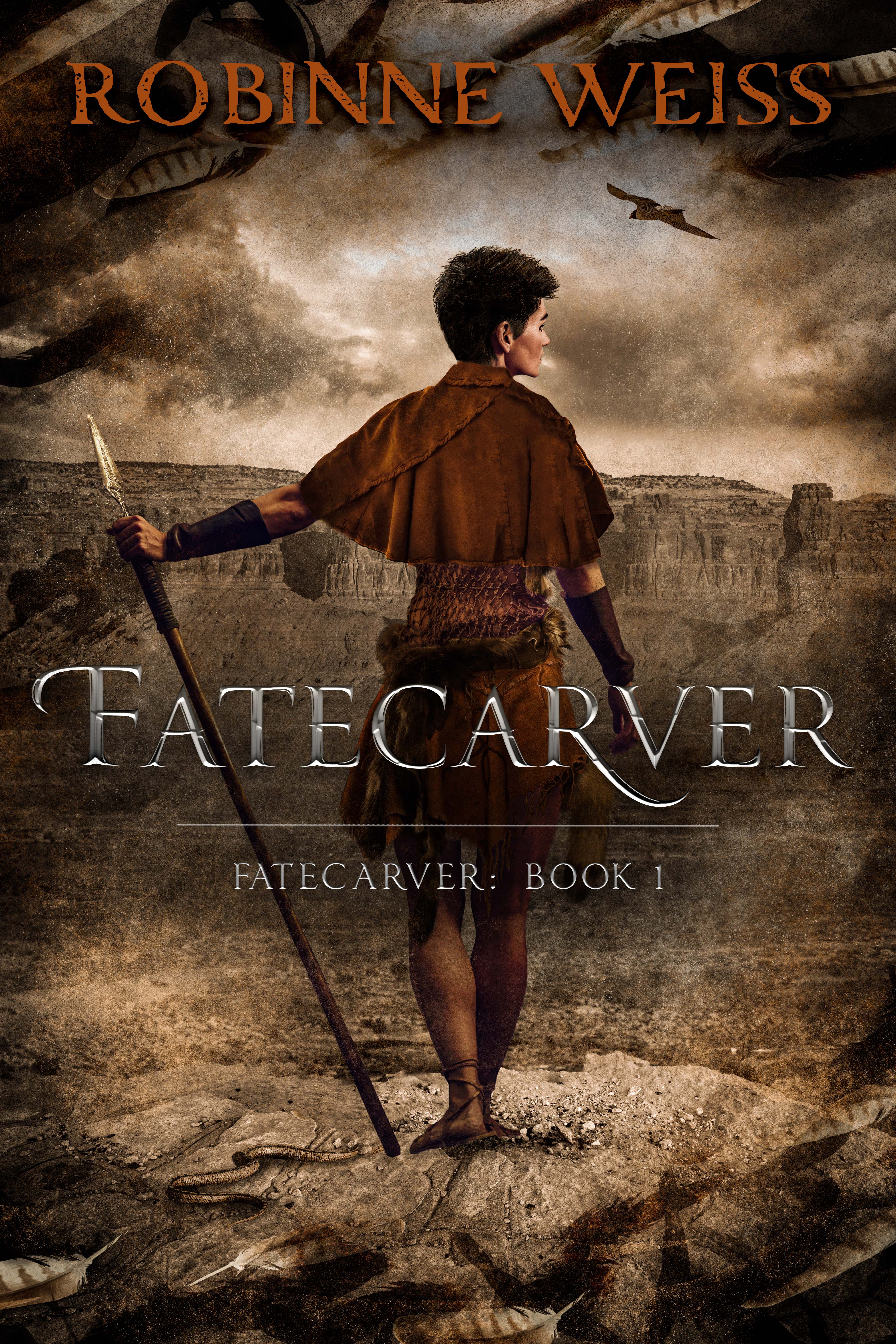
Fatecarver cover

The awards are named after a journalist and politician who was not only the Premier of New Zealand in the 1870’s, but also wrote what is regarded as New Zealand’s first Science Fiction novel—Anno Domini 2000—A Woman’s Destiny) which envisioned a New Zealand of the year 2000 largely run by women (which was quite prescient, given that in 2000 New Zealand’s Head of State, Prime Minister, Governor General, Attorney General and Chief Justice were all women).

The awards are presented annually by the Science Fiction and Fantasy Association of New Zealand in a range of categories. 

To be honest, I haven’t paid much attention to the SJV awards in the past, in spite of their importance to the NZ speculative fiction community. But I was recently notified that my novel Fatecarver has been nominated for Best Youth Novel. 

Of course, I’m chuffed about that. But I know that in order to get onto the shortlist, Fatecarver will have to be nominated more than once, because the number of nominations determines which works move on to the voting round.

Hence this post. Anyone around the world can nominate an eligible work, and it doesn’t cost anything to do so. Now that at least one person has nominated Fatecarver, I’d love to see this book make it to the short list.

And while I’m at it, my short story, Deathventures Inc, which was published in the anthology Alternative Deathiness is also eligible for a SJV award for Best Short Story.

So if you have a moment, I’d really appreciate a nomination or two. Nominations are open until the end of March. The nomination form is here, and information and guidelines for the award are here

Thanks!

Putting the Science in Arthropod Borne Disease

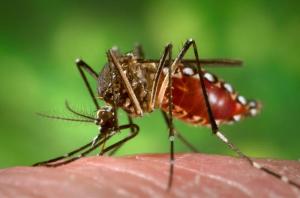
Aedes aegypti (US Department of Health and Human Services)

The slam of a screen door—a quintessential part of summertime in the United States.

But not here in New Zealand. Most houses have no screens in windows or doors.

Why? Because we don’t have arthropod-borne diseases (of humans) here.

The ubiquitous window screens and screen doors in the US are a direct result of the efforts to eliminate malaria in the early 1900s. In some areas, screens were mandated by local government. They caught on, even in areas where they weren’t required, and remain popular today, in spite of the fact malaria is no longer endemic to the United States.
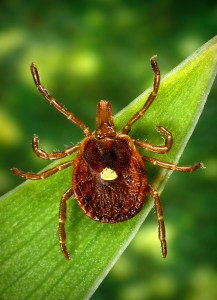
Lone Star Tick–transmits ehrlichiosis and a carbohydrate that can trigger meat allergies. (Centers for Disease Control and Prevention, Dr. Amanda Loftis,  Dr. William Nicholson, Dr. Will Reeves, Dr. Chris Paddock)

Arthropod-borne diseases have shaped human cultures, changed the course of wars, and stymied economic development throughout the world for millennia. Malaria alone kills 400,000 people annually, and hundreds of millions of people worldwide suffer from other arthropod-borne diseases like Chagas disease, yellow fever, dengue and leshmaniasis.

Arthropod-borne diseases are transmitted from one person to another by, you guessed it, an arthropod—often a mosquito, fly, or tick. These arthropods (just the females, in the case of mosquitoes) feed on human blood. They draw up the disease from a sick person with one meal, and transmit it to another person with the next. The disease—a virus, protozoan, plasmodium, flatworm, or other organism—often has a complex life cycle, requiring specific hosts and specific vectors in order to complete each stage of its life. Combating these diseases requires an understanding of every part of the life cycle of both the disease and the vector.

Though humans have been battling malaria for the entirety of recorded history, new arthropod-borne diseases emerge regularly, challenging public-health systems worldwide. With increased air travel, infected people and vectors can quickly spread diseases to new places. And diseases don’t necessarily act the same when transplanted into a different population.

Zika is a great example of the complex interactions between host, vector and disease that make arthropod-borne diseases so scary and difficult to combat. Zika was first identified in humans in 1952, after first being found in monkeys. It was confined to Africa and Asia until 2007. Only 14 cases were documented, though testing indicated people had wide exposure to the virus. Symptoms were usually mild, and it wasn’t considered a major problem.

The first large Zika outbreak occurred on the island of Yap in Micronesia in 2007. Further outbreaks in the Pacific Islands in 2013 and 2014 brought the first information connecting Zika with congenital malformations like microcephaly and severe neurological complications.

Then, in March 2015, Zika appeared in Brazil. Because Zika was unknown in Brazil, the outbreak wasn’t identified as Zika until May. In October, Brazilian health officials reported a dramatic increase in microcephaly, which was linked to the Zika outbreak.

By the end of 2015, Zika outbreaks had been reported all over Central and South America.

In February 2016, the World Health Organization declared Zika a Public Health Emergency of International Concern. Emergency plans were enacted to control the spread of the virus by eliminating the suspected vector mosquitoes, Aedes aegypti, and to study how to manage the complications of the disease.

The disease and our understanding of it moved rapidly throughout 2016. The virus was found in another species of mosquito. It was proven to also be transmitted through sex and through blood transfusions. It was discovered to cause a much wider range of neurological problems than first thought. Vaccine development began. Travel advisories were put in place. Innovative new mosquito control strategies were launched.

Still, Zika spread and infected over 180,000 people. By November 2016, it was clear Zika was here to stay, and needed to be managed on an ongoing basis, not as an emergency. In the space of 18 months, Zika had invaded the world.

The full timeline of Zika can be found on the WHO’s website: http://www.who.int/emergencies/zika-virus/history/en/

The WHO also has great information about other arthropod-borne diseases: http://www.who.int/campaigns/world-health-day/2014/vector-borne-diseases/en/

All the real-life science of arthropod-borne disease can make for exciting fiction. Fancy writing a story? Here are a couple of ideas to get you going:

1. A cluster of people in a small town in Iowa fall ill with an unusual rash that progresses to a deadly autoimmune disease. Doctors are stymied until one of the women mentions she’s just returned from a trip to Africa. Blood tests confirm she is carrying antibodies to a rare arthropod-borne disease not seen outside of Sub-Saharan Africa before.

  • How do researchers try to contain the disease? The first step is usually to quarantine sick people and those who have come into contact with them, but if this fails, control has to turn to other ways of breaking the disease cycle. Strategies may include vaccines, preventive medicine, killing the disease vectors, eliminating the vectors’ habitat, and separating people from the vector (with screens, curfews, etc).
  • Is there a competent vector for the disease in Iowa? In its native range, the disease may be vectored by an arthropod not found in North America, but some widespread arthropods are capable of vectoring many diseases. Arthropods within the same genus of the original vector are most likely to be able to transmit the new virus.
  • How does the progression of the disease in Iowa differ from in Africa, where people have been exposed to the disease for longer, and have developed a measure of immunity. Mild diseases can become deadly in populations never exposed to them before.
  • How does society as a whole react to disease survivors? The social impact of emerging diseases can be as devastating as the disease itself—survivors may still be sources of infection, and some arthropod-borne diseases can also be spread through other means (sexually, in feces or saliva, etc). How does this affect those who survive?

2. A government wants to unleash a new arthropod-borne virus to wipe out a rival nation (Don’t laugh, Japan tried to do this during WWII, breeding up disease in prisoners of war and releasing cholera-infected flies and plague-infested fleas in China, killing more people than the atomic bombs on Hiroshima and Nagasaki).

  • How will they choose a vector and disease to minimise the danger to their own people? Will they vaccinate their own people first? Or chose a disease already present in their country, but not in the target country?
  • How will they deliver live, infected vectors to the intended target?
  • How will they produce enough of the disease organism to infect the vectors?

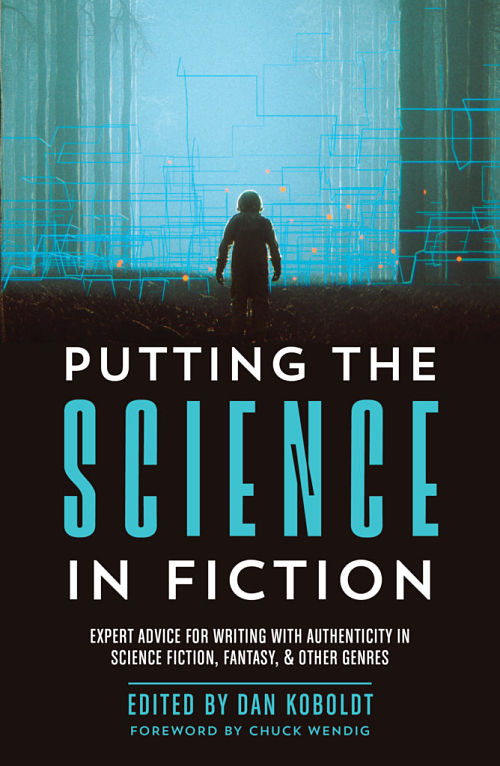
And don’t forget to get yourself a copy of Putting the Science in Fiction, to be released on October 16! This is a great resource you don’t want to miss!

Science and technology have starring roles in a wide range of genres–science fiction, fantasy, thriller, mystery, and more. Unfortunately, many depictions of technical subjects in literature, film, and television are pure fiction. A basic understanding of biology, physics, engineering, and medicine will help you create more realistic stories that satisfy discerning readers.

This book brings together scientists, physicians, engineers, and other experts to help you:

  • Understand the basic principles of science, technology, and medicine that are frequently featured in fiction.
  • Avoid common pitfalls and misconceptions to ensure technical accuracy.
  • Write realistic and compelling scientific elements that will captivate readers.
  • Brainstorm and develop new science- and technology-based story ideas.
  • Whether writing about mutant monsters, rogue viruses, giant spaceships, or even murders and espionage, Putting the Science in Fiction will have something to help every writer craft better fiction.

Putting the Science in Fiction collects articles from “Science in Sci-fi, Fact in Fantasy,” Dan Koboldt’s popular blog series for authors and fans of speculative fiction (dankoboldt.com/science-in-scifi). Each article discusses an element of sci-fi or fantasy with an expert in that field. Scientists, engineers, medical professionals, and others share their insights in order to debunk the myths, correct the misconceptions, and offer advice on getting the details right.

Go in the draw to win a FREE copy of Putting the Science in Fiction