Field of Dreams

If you mulch it, they will come.

When we first bought our property, we started right in on soil improvements where we knew the vegetable garden was going to be, long before we even had house plans finalised. That work was terribly depressing. The topsoil had been stripped off by the developer, and what was left was compacted clay studded with rocks. It barely grew weeds, and the combined effort of a rotary hoe and hand tilling only managed to penetrate about 5 cm into the soil. There were no worms, no beetles—and we later learned, no nutrients either.

I wondered if we’d made a huge mistake buying the land.

Since then, we’ve poured compost and manure into the soil, mulched heavily, and done our best to avoid compacting the soil so painstakingly loosened.

As I began turning beds this spring, I was stunned by the number of worms in the soil—thousands upon thousands of them. The clay is honeycombed by their tunnels, and you can’t dig a hoe in without bisecting a few (sorry!). It is truly astonishing.

Where did all those worms come from? Were they there all along, but hiding deep below the surface? Did the few worms there when we first moved in simply reproduce like mad when we started adding organic material to the soil? I’ll never know, but I begin to have hope for this garden. 

I feel a little like Ray Kinsella (Kevin Costner) in Field of Dreams—create the right conditions, and the players will appear.

Pandemic Poetry–2021 Edition, #5

daffodils in bud
Spring blooms are on their way!

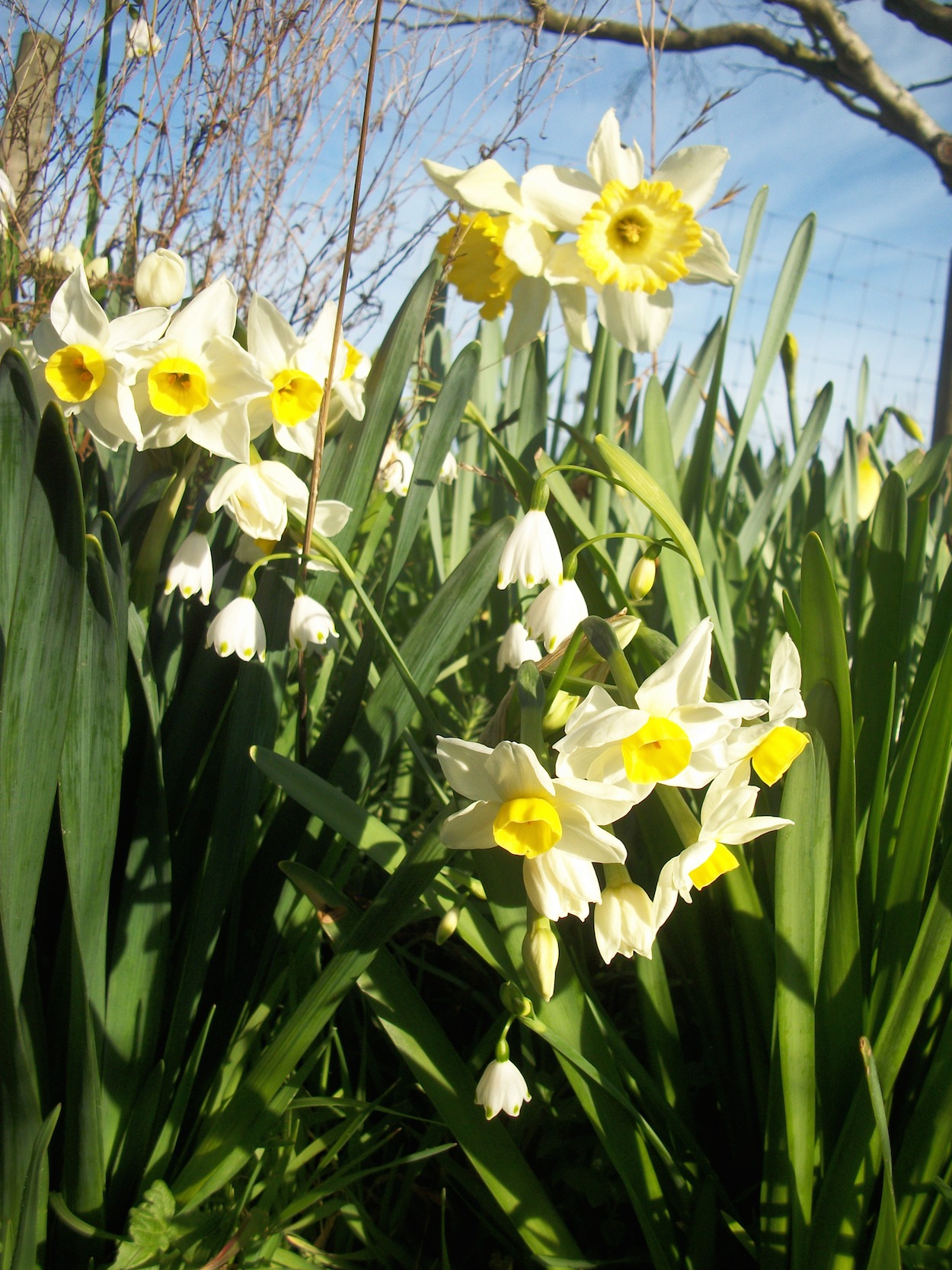
In spite of lockdown, spring continues to show itself. Daffodils are blooming, and tree buds are swelling. I spent yesterday morning planting vegetable seeds, kicking off my gardening season for the year. So life is not all bad, stuck here at home with plants to tend.

The northwest wind cries Spring!
And the magpies, they all start to sing.
It’s hard to be sad
And think everything’s bad,
When nature is having a fling.

Sun’s Return

It’s only a few weeks past the solstice. Nights are below freezing, and the worst of winter is still to come. In shady spots the frost lingers all day.

Spinach seedlings in the greenhouse

But plants are already responding to the increase in sunlight. There is a haze of new green growth in the chickens’ winter-bare paddock, daffodils are poking their shoots out of the flower beds, and the grass will soon need to be mown.

In the greenhouse, the lettuce and spinach seedlings that have been sitting there unchanging for weeks have finally begun growing again. The broccoli in the winter garden has begun thinking about heading up (at least until yesterday when the chickens got in there and stripped the leaves).

I too have responded to the sun. I’ve drawn my garden map for the upcoming season. I’ve assessed my seed needs in preparation for the arrival of the new year’s seed catalogue. I’ve nearly completed incorporating manure into the entire vegetable garden.

The weeks will go quickly. Before I know it, it will be time to start seeds, mark out garden beds and spread compost. Now is the time I should be buckling down to complete winter tasks—sewing, organising, cleaning … But like the plants stretching out their tentative leaves, I can’t help but respond to the sun, reaching for spring and looking forward to the new season to come.

A Warm Winter Solstice

The winter solstice passed this week, cold and rainy. It was also the anniversary of moving into our new house. It was truly a delight not to endure the run-up to the solstice in an unheated, uninsulated shed. To have a warm, dry place to eat and sleep; to have electricity and plumbing—what a luxury!

8 am with the sun barely rising …

Indeed, I still sort of feel I’m living in someone else’s house. Until a year ago, my husband and I had never owned a house less than a hundred years old. Then suddenly we had square corners and level floors. We had double glazing and insulation. We had doors that opened and closed properly, walls without fifty coats of paint, and not a speck of rot anywhere.

It was a bit of a shock.

And now I wonder if I’m going soft. I don’t wake up to a freezing house and have to light the fire. I don’t worry that the roof will leak every time it rains. I don’t have to venture to the attic to empty and re-set the rat traps. I don’t wake wondering if today is the day the water heater, septic system, or well pump is going to die.

Sometimes I miss the character of an old house—a house that is old enough to have a life of its own, a house that tells stories. Sometimes I feel guilty—a new house is such an unnecessary luxury.

But truth is, modern life is pretty good, especially in the cold, rainy days around the winter solstice. So for the moment, I’ll simply be thankful for all those luxuries that make the dark days brighter.

Summer Stocktake

Mid-April, and it’s time to take stock of the summer’s garden. 

Compared with gardens at the old house, this year’s was a disaster—stunted plants that died off early, solanaceous crops decimated by viral disease, and heat and drought that I struggled to combat with irrigation.

But compared with what I expected, the garden was a huge success. I managed to provide the plants enough nutrients and water that they all managed to give us something. We had enough peas, corn and carrots to freeze some. We gorged on strawberries and melons. I gave away heaps of zucchini. The laundry room is piled with pumpkins. We’ve got more garlic and onion than we’ll be able to eat before it starts to sprout. And we’ve had a steady supply of tomatoes, eggplants and peppers. 

The stars of them all have been the carrots. Last spring I blogged about how well my carrots germinated this year—better than they ever had before, which was quite a surprise in the new garden. At the time, I reserved judgement—it was too much to hope the carrots would grow well in heavy clay soil studded with rocks.

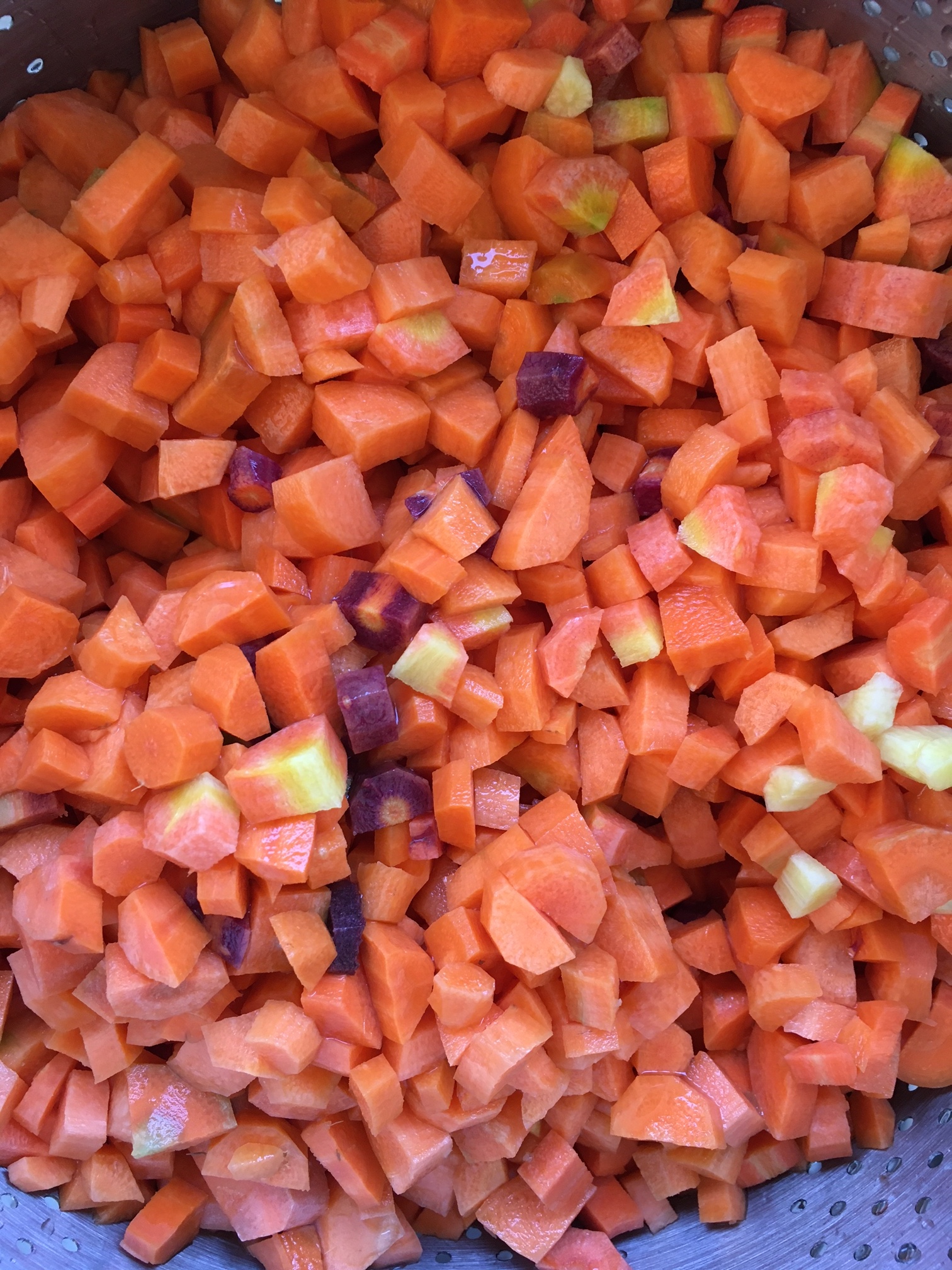
But all summer we’ve been eating beautiful carrots, and last week I harvested everything remaining in the bed, because the slugs and slaters were taking their toll. The fridge is packed with carrots now, and I blanched and froze several kilograms as well.

In spite of everything, it was one of the better years I’ve had for carrots. To be fair, the roots are small, compared to the old garden. Some are bent where they hit a rock, and many broke off when I tried to lift them—if they penetrated too far into the clay, they were nearly impossible to harvest.

But even the purple carrots grew, which is quite an accomplishment for me—in past years, the purple carrots have done well in early spring, but then have been decimated by aphids, so we only ever eat them as baby carrots. Last week I harvested quite a few nice big purple carrots.

Best of all were the Paris market carrots—little, super sweet round roots perfect for lunch boxes and snacks. Their shape made them easy to pick, so there weren’t any left when I harvested the lot last week, but they’ll definitely be in next year’s lineup as well.

Overall, I consider the summer’s garden to have been a success. It’s looking pretty bare out there now, and I’m hauling cow manure from the neighbour’s place and incorporating it into the soil, so by spring I hope to have a few more nutrients available for the plants. I’m already looking forward to next summer.

A Squirrelly Weekend

Dried vegetables don’t look nice, but they’re great for backpacking.

I had a very squirrelly weekend last week. It wasn’t full of bushy-tailed, nut-eating rodents (they don’t live in New Zealand); I was the squirrel in my weekend. Squirrelling away food for later.

Thursday, I addressed an overabundance of zucchini by making zucchini bread. I tucked three loaves into the freezer to eat in the coming weeks.

On Friday, I used more of that zucchini, along with lots of other vegetables from the garden to make a vat of pasta sauce. Some of the sauce was eaten for Friday’s dinner, but most went into the freezer to eat in the coming months.

On Saturday, I shelled dry beans from the garden. Once they’ve fully dried, I’ll pack them in jars to be made into chilli and refried beans over winter.

Later that day, I made six meals worth of veggie burgers to squirrel away alongside the pasta sauce in the freezer.

All weekend, I had the dehydrator running, drying fruit and vegetables for tramping (backpacking) trips over the next year.

On Sunday, I picked, processed and froze the year’s harvest of soy beans.

My husband got into the act, too. He made two large pizzas, two-thirds of which we froze for future meals.

The garden is beginning to empty and the freezer is filling up. It’s a good feeling, in spite of the work involved. Like a squirrel, I’ll be able to curl up in my nest through the winter, nibbling on the food I’ve stored up.

When Everything is a Gift

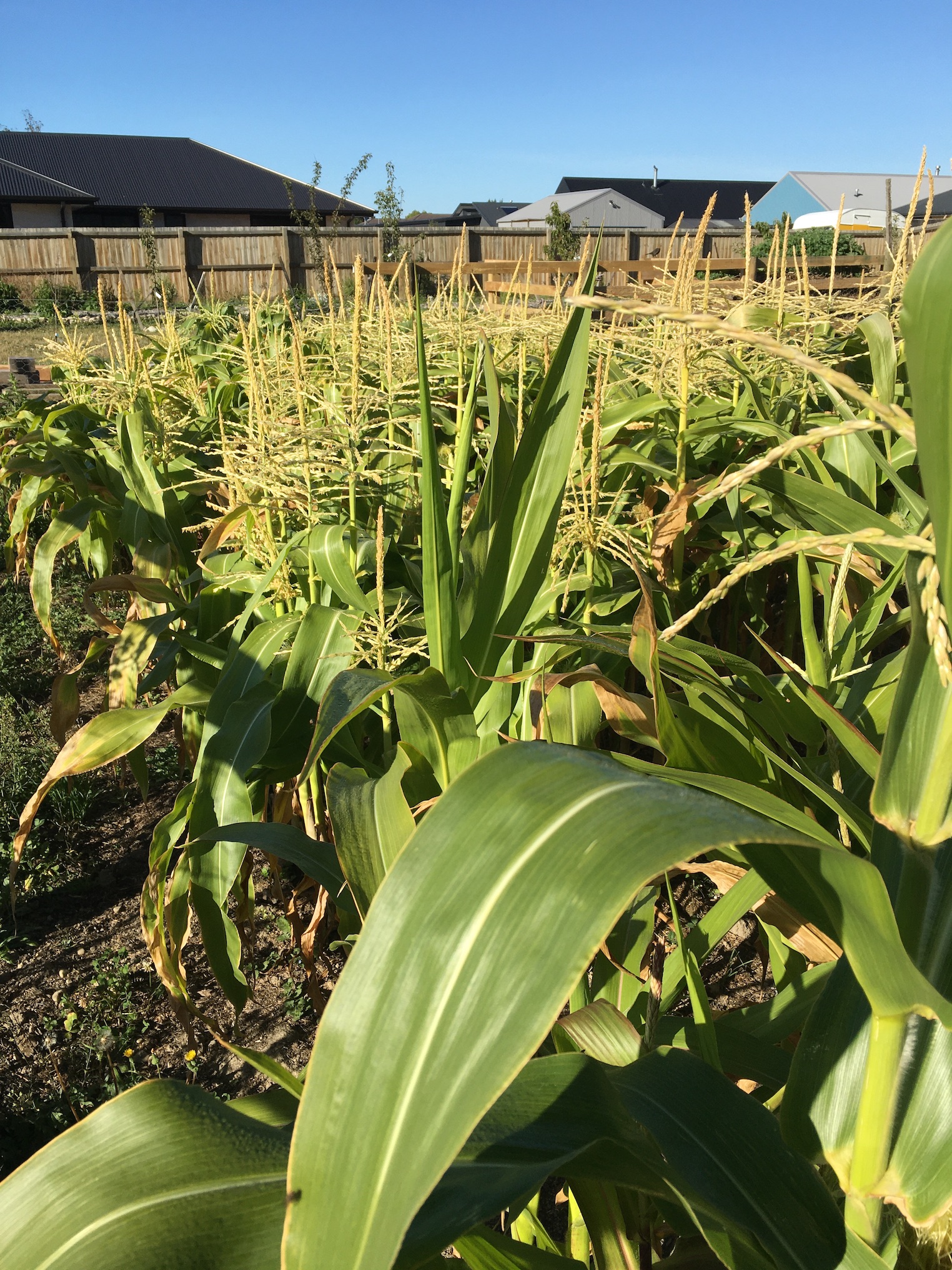
My stunted yellow corn.

I never expected much from this year’s vegetable garden. The soil test revealed a virtually sterile substrate, nutrient-free, stripped by decades of conventional agriculture and then scraped by the developer’s bulldozers. It will take years to improve the soil to the levels of my old garden. In the first year, I figured I’d be lucky to coax a few meals out of the garden.

There’s no question the vegetables I planted are suffering. The plants are half the size they should be, and many are yellow and senescing early for lack of nutrients.

But the compost, manure, and other organic fertiliser I’ve incorporated into the soil have done some good. We have plenty of onions, cucumbers, carrots, herbs and green beans. We are overwhelmed with zucchini. The soy beans and dry beans will all give harvests. Pumpkins swell on their vines. We’ve even eaten a few melons.

Every fruit feels like a gift.

I could be dismayed at the state of the garden—corn only waist high, tomatoes ripening at golf ball size, potatoes decimated by disease … but I know what the plants are up against. I know how hard they’re working to produce anything. I admire their effort and determination.

So, in spite of how pathetic the garden is, I am pleased. I feel blessed at every meal, and I look forward to an even better year next year.

Carrot Surprise

I’m expecting the worst from this year’s vegetable garden. Loosening the heavy clay soil as I prepare beds can feel like chipping at concrete. I fill a bucket with rocks every two square metres. At best, I’m able to loosen the top seven centimetres. And with the soil test having revealed shockingly low levels of NPK, there’s little hope for a bumper crop.

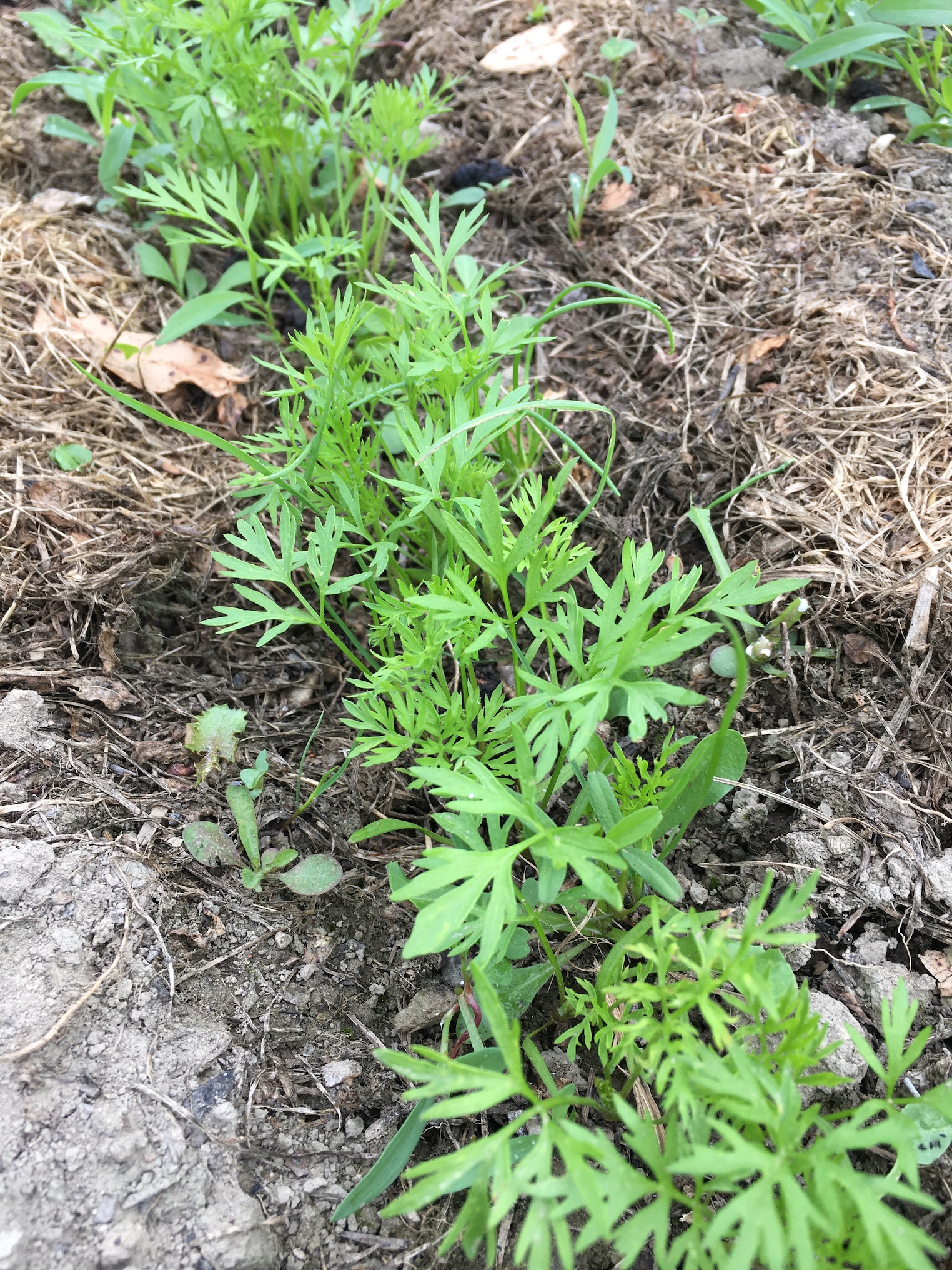
So it was a huge surprise to lift the frost cloth from my carrot plantings to find the best germination I’ve ever had. At the old house, I sometimes had to plant twice because carrot germination was so patchy. Some varieties barely germinated at all.

Now it looks like I’ve grossly over-planted—I swear every seed germinated—all five varieties.

I planted on the same date, with the same care afterwards as I have in the past. The weather wasn’t much different from weather at the old place. The only real difference was the soil. Go figure.

Maybe it was a fluke; I had occasional good years at the old house. And who knows how the carrots will grow now they’ve sprouted.

But it’s nice to have something go better than expected in this sad soil.

Part-Time Ducks

Ordinarily, I’d be annoyed if the neighbour’s livestock made a habit of hanging out in my garden. At the old house, a mob of sheep would occasionally take a detour into the yard while being driven past. And I remember a bunch of cows grazing their way through the vegetable garden once when I was a kid. Those experiences were always destructive.

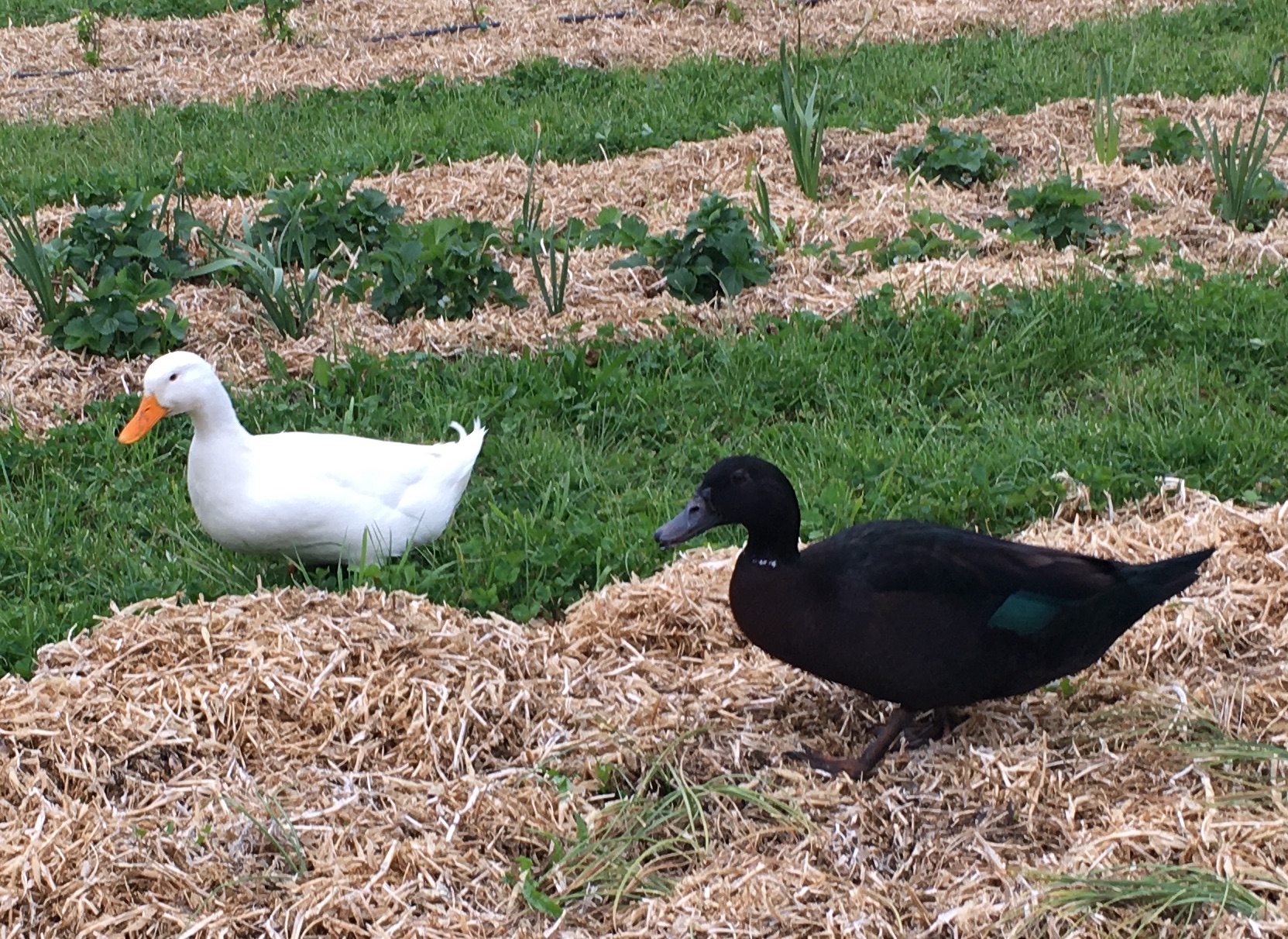
But one of the neighbours at our new place lets her livestock roam the neighbourhood, and I find it quite pleasing. They are a perfect pair of ducks—one all white, one all black (I’ve dubbed them Ebony and Ivory, of course). Watching them cruising the neighbourhood somehow makes me happy. Their owner occasionally comes out to the road to shoo them back home, but most of the time, they roam freely. 

For a long time, they avoided our place, waddling around next door, across the street, down the road … But this week, they discovered the wealth of slugs in our garden. They’ve been spending a few hours every day waddling up and down the rows of perennial crops, probing the mulch and quacking contentedly to one another.

I appreciate their gentle pest control operations in our garden, particularly since they come with no obligations on my part. I’ve seriously considered getting ducks in the past, primarily for slug control, but I never followed through. In the end they were always just more animals to have to care for. So part-time ducks are exactly my sort of livestock. They show up for work, put in a few hours, then head off to someone else’s yard. 

I hope they’re giving their owner lots of eggs.

Welcome Spring!

It’s the first day of spring.

So, naturally, it’s snowing.

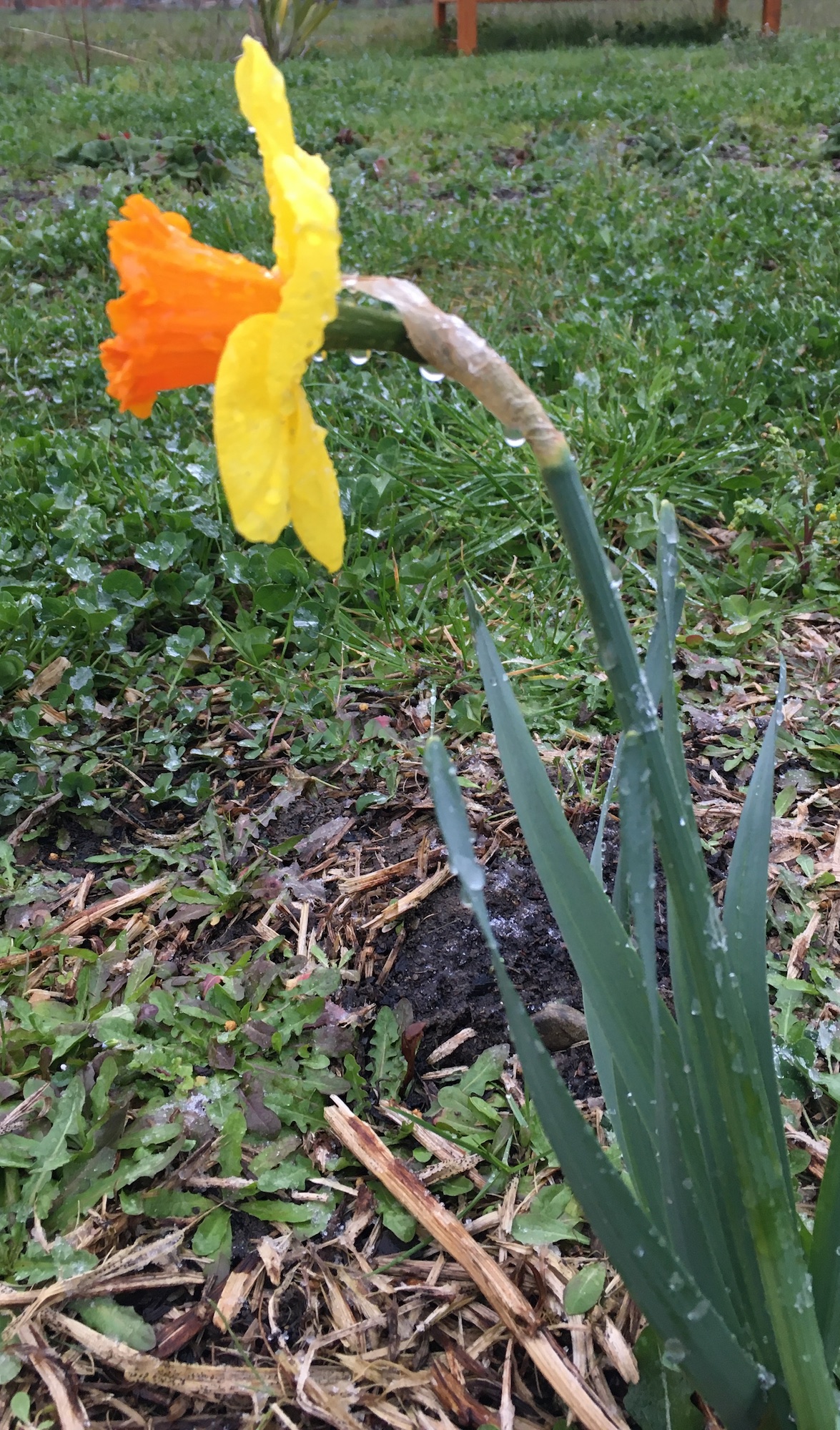
But the daffodils are flowering, the willows are greening up, and pine pollen billows from the neighbour’s trees. Regardless of what the sky is dropping on us, spring is here.

And not a moment too soon. Like most people around the world, we feel like the past six or seven months have dragged on for decades. Can I even remember the TBC (Time Before Covid)?

For us, lockdown began during a glorious Indian summer. Warm sunny days begged for last-chance trips to the beach. Trips we couldn’t take, trapped in our bubbles and stuck on foot.

By the time we were released from lockdown, summer had given way to chill autumn rain and frosty days.

Living in our shed through lockdown, then beyond and well into winter, we felt the season’s bite early and hard. We lived in the cold shed forever, and we would live there always … at least that’s how it felt. Every icy day was a year long.

Finally, we moved into our new house. It was (and still is) glorious—a warm dry refuge from the weather.

But winter was still grinding away outside. With landscaping only partly finished, the yard was a mire of wet clay and puddles. We were still trapped indoors. Even the novelty of a warm dry house wasn’t enough to speed the days along. Time dragged its feet. Winter moved at a toddler’s pace. I couldn’t go yet—it had to get its coat and shoes. Then it lost a glove and spent a month looking for it among a drift of discarded outdoor gear.

So it was a spectacular feeling to boot winter out the door—gloveless still—when I planted the season’s first vegetable seeds last weekend. It was an act of defiance to turn garden beds, and ready the greenhouse for newly-sprouted seedlings.

I look forward to the growing season ahead. Welcome spring!