Where the Sidewalk Ends

2016-09-29-18-24-21There is a place where the sidewalk ends
And before the street begins,
And there the grass grows soft and white,
And there the sun burns crimson bright
And there the moon-bird rests from his flight
To cool in the peppermint wind.

Many years ago, when my husband and I lived in State College, Pennsylvania, before children, we used to take long walks out of the neighbourhood and into a wild patchwork of agricultural fields and scrubby woods that stretched between the University and the sprawling suburbs of town.

At the edge of the neighbourhood, where the sidewalk gave way to a gravel path maintained only by the steps of those who walked their dogs there, someone had poured a small section of concrete containing a brass plaque inscribed with Shel Silverstein’s famous poem, Where the Sidewalk Ends.

Let us leave this place where the smoke blows black
And the dark street winds and bends.
Past the pits where the asphalt flowers grow
We shall walk with a walk that is measured and slow,
Add watch where the chalk-white arrows go
To the place where the sidewalk ends.

State College has no black smoke, and the streets are bright and lively, but the presence of the poem was magical, the sentiment perfect as one stepped away from the cars and buses and the music booming from student flats, and into the fields beyond, where grasshoppers and bees formed the loudest chorus. Town melted away. We could walk for hours, and always returned calm and refreshed.

When I was a student at the University of Michigan, my most prized possession was my bicycle. It was old and ugly, but it was my ticket out of town. When the streets and noise became overwhelming, I would hop on my bike and ride blindly until I reached the edge—the place where the sidewalk ended. Surrounded by fields of corn and wheat, I would throw myself into the grass at the side of the road and listen to the crickets until I regained my equilibrium, until I could face the city again.

Last year, when my daughter had band practice at an awkward time on a Friday—too early to go home after school, too late to go directly from school—we would take walks, always on the periphery of town, seeking those places where the sidewalk ended. We walked residential streets that gave way to sheep paddocks and parks, industrial zones that melted into agricultural crops.

For me, the place where the sidewalk ends is literal—my place for peace and reflection is invariably outdoors, far from cars, buildings, and other markers of civilisation. But I think Silverstein left the door open for the sidewalk to end in other places—places where moon-birds cool themselves in peppermint winds. The sidewalk can end inside us, too—in imagination, in meditation, in the green space we save for ourselves in our own souls. Wherever the sidewalk ends, our spirits refresh themselves—we reflect, we stroll, we find silence.

Where does your sidewalk end?
A New Oven

2016-09-24-12-46-29

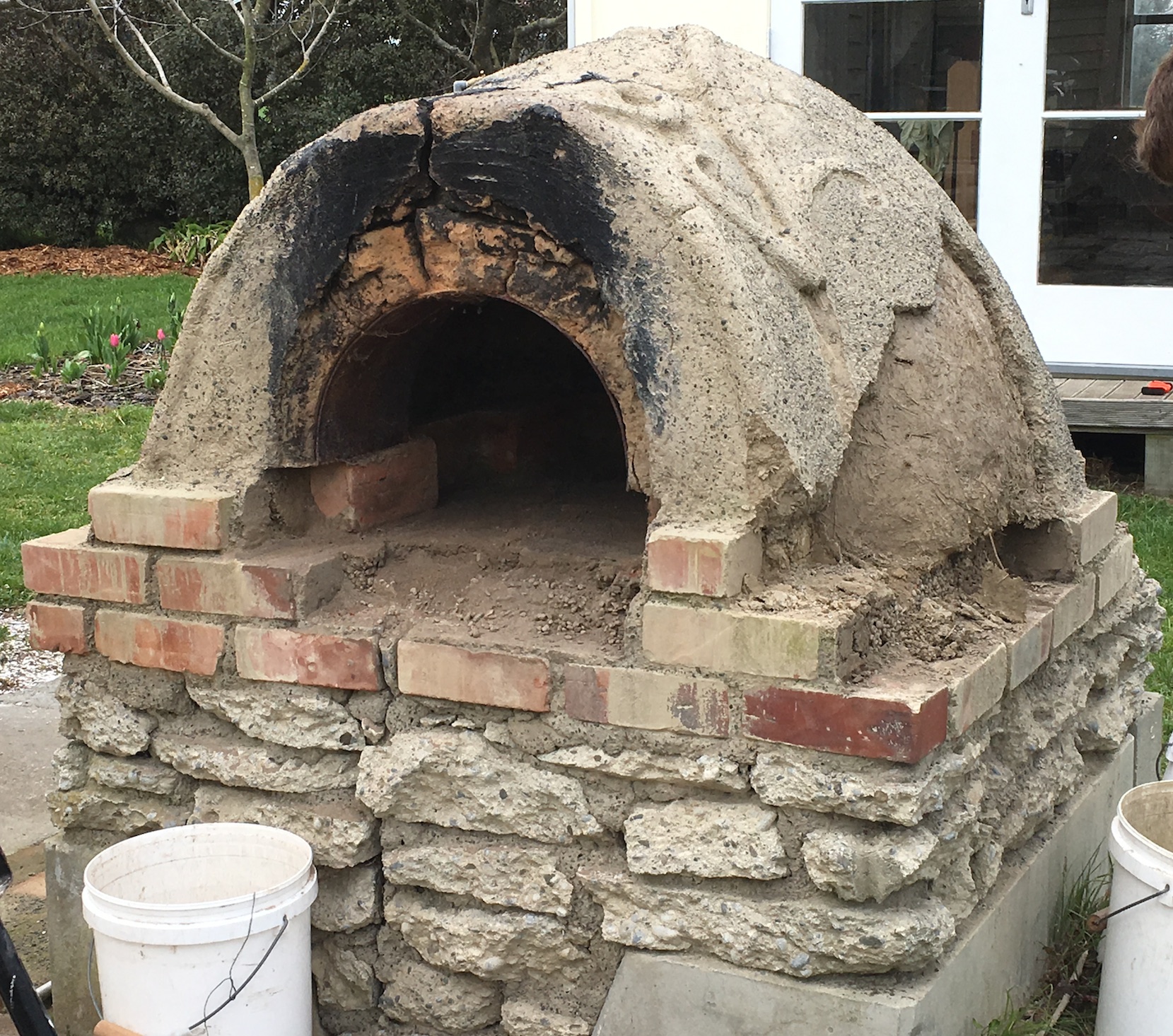
Partly deconstructed old oven.

The old bread oven was almost ten years old. Theoretically, it might have lasted longer, but earthquakes and aging bricks took their toll. A crack split it top to bottom, and we regularly had to pick gravel out of our bread.

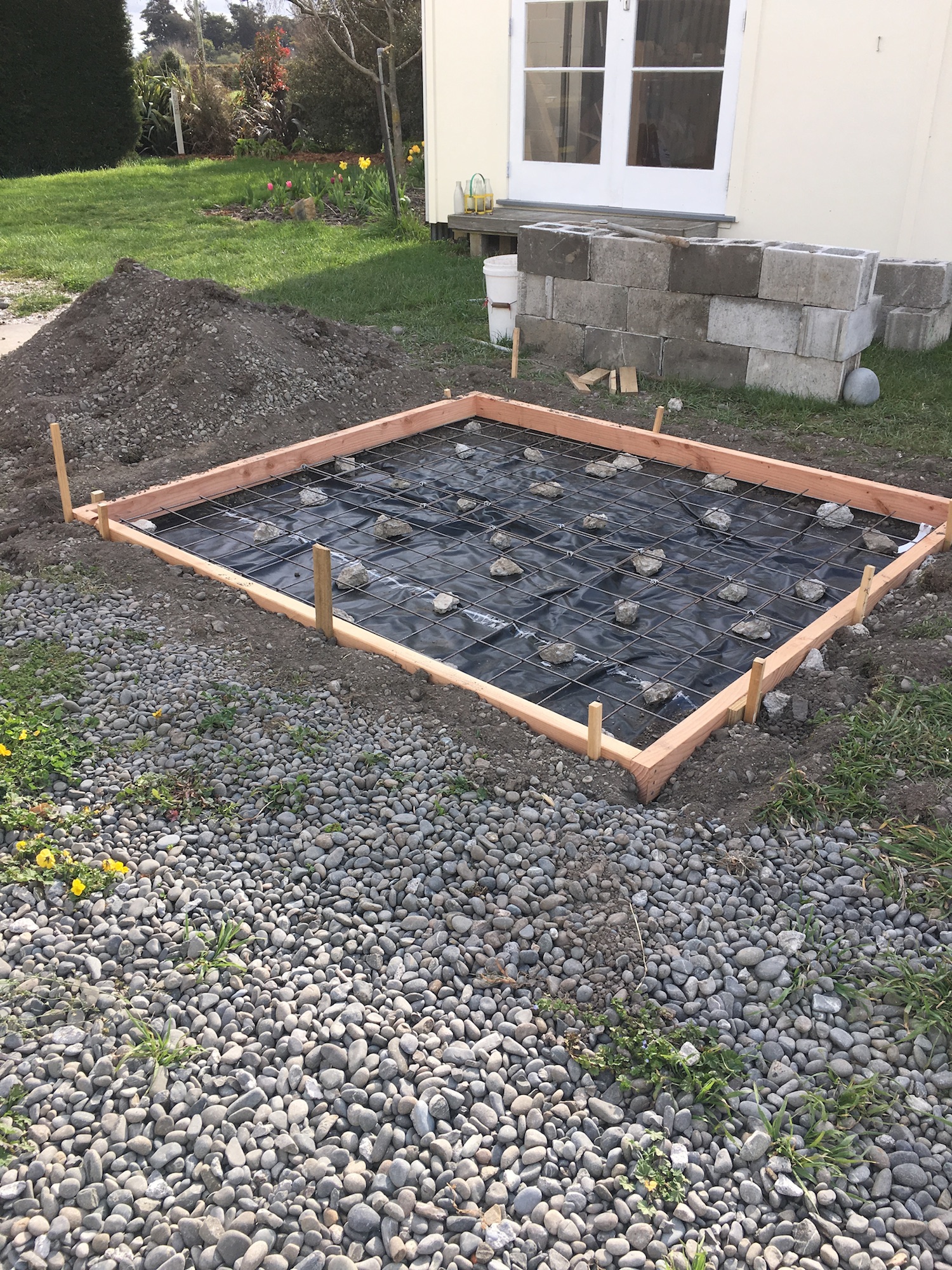
So the kids spent last weekend dismantling the old oven to make way for a new one. This one will be quake-proofed with a reinforced concrete base, and include such luxuries as an ash pit, a chimney, and a roof.

2016-09-28-16-43-21

Ready to pour the new foundation.

The bread oven is my husband’s project—he’s the family builder and the bread baker. But all of us will lend our muscles to the effort. We’ll mix concrete, haul bricks, and provide whatever brute labour is necessary.

And all of us will enjoy the breads, cakes, cookies, and dinners that come out of it.

Mmmm…I can taste them already!

Ruthless

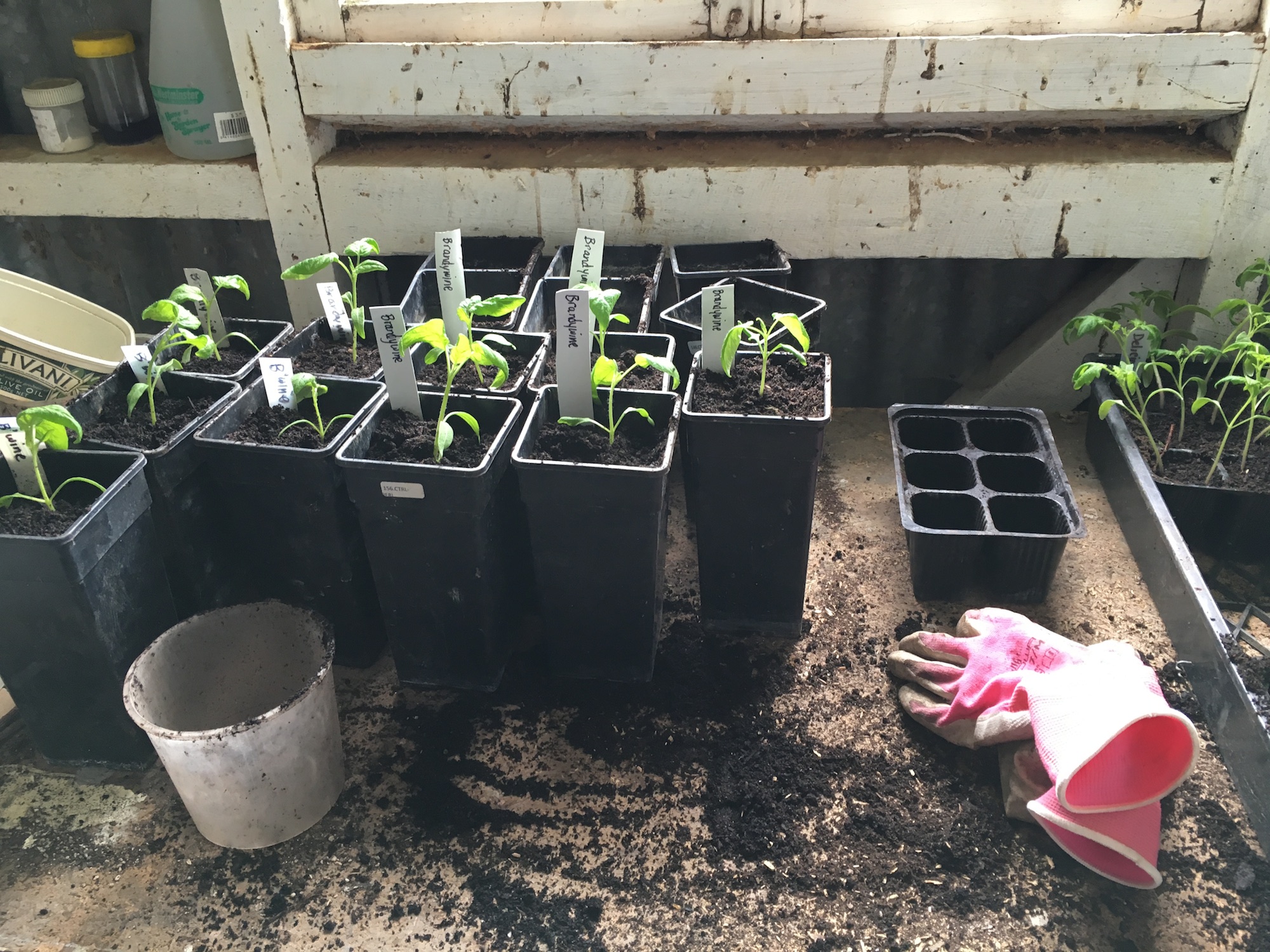
2016-09-26-14-21-42I started potting up the tomatoes today.

I start my tomatoes in six-packs (the plant kind, not the beer kind), planting two seeds per cell, to ensure I get at least six plants out of each six-pack. And truth is that I probably only need six plants out of each six-pack. Having two plants in a cell gives me the opportunity to cull small or weak plants.

Except that, faced with two perfectly fine plants in a cell, I can’t possibly cull one, so I pot them both up separately. I’m just not very good at being ruthless and culling the plants I don’t need.

Which is how I end up, every year, with nearly twice as many tomatoes as I have space for in the garden. I give away quite a few, and always save some to replace the ones that are inevitably killed by a late frost or the neighbour’s overspray. Still, some years I end up throwing a dozen or more on the compost pile after they’ve languished in their pots unplanted until nearly Christmas.

This year, I purposely planted fewer six-packs than I usually do—if the plants aren’t there, I can’t pot up too many, right? But somehow, I still find myself with over a hundred tomato plants. That’s much better than previous years—I have space for 80 tomato plants—but it’s still probably more than I’ll use, even after losses.

With luck, though, I’ll be able to find homes for all the tomatoes, either here or in someone else’s vegetable garden, and I can avoid the annual cull.

Beetsteak

beetsteakI was clearing a garden bed today and pulled out a beet—forgotten in the masses of summer produce—left from last year’s garden. It was the size of an adult’s head, with dozens of sprouts coming from it.

I decided to take it to the goats, who love beetroot. On the way, I showed it to the family—it was impressive, after all.

My husband wouldn’t let me feed it to the goats. He was curious to know just how woody a beet that size would be.

So he made beetsteaks. He used our big pumpkin knife to slice it into giant slabs, then steamed them and grilled them with a spicy marinade.

The result…

Edible…mostly.

But I think I’ll feed any other beets this size to the goats next time.

Order from Chaos

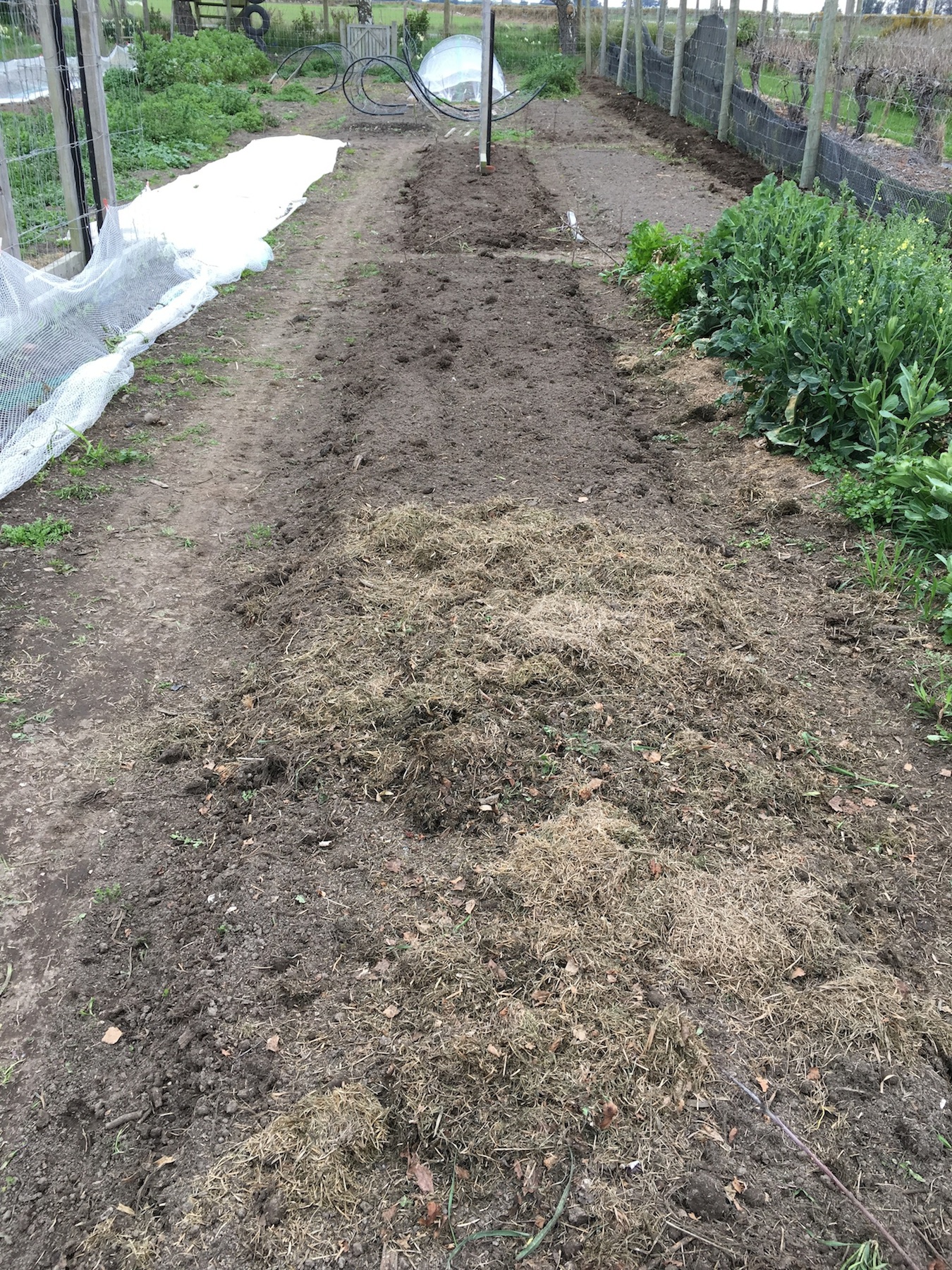
2016-09-24-15-04-00There’s something pleasing about the garden as I start to prepare the beds. I can’t prepare the whole garden at once—it’s simply too big—so I do it bed by bed. Two or four a weekend, until all thirty-two are done.

I’ve planned the garden over winter, so I know what will be planted in each bed. I choose which beds to prepare each weekend based on when each crop gets planted. So I end up with a patchwork of beds—some waist-high in weeds, others beautifully prepared and ready for planting, some already planted. Every weekend, the weeds are fewer and the tidy beds more numerous.

Little by little the work gets done, the garden gets planted, until that magical day in mid-November when it’s all done, and neat rows have replaced sprawling weeds.


North African Salted Lemons

Salty lemons and sweet lemon curd...mmmmm.

Salty lemons and sweet lemon curd…mmmmm.

My husband brought home a grocery bag full of lemons yesterday—a gift from a colleague with a prolific lemon tree.

When life gives you this many lemons, you have to be more creative than lemonade.

The first thing I did was make lemon curd, which is one of my favourite uses of lemon.

But when I was done with that, you couldn’t tell I’d taken any lemons out of the bag.

So I searched around and found a few recipes for salt-preserved lemons.

I was intrigued. We’ve been using more and more lemon in our savoury cooking, and salted lemons should be perfect for that.

It is perhaps the most bizarre recipe I’ve ever made.

Cut the lemons lengthwise into quarters, but not all the way through, so they fan out like a flower. Sprinkle salt on the fanned quarters, then juice them before stuffing the juiced lemon into a jar and pouring the salty lemon juice over it. Repeat with as many lemons as will fit in the jar. Let sit in a warm place for a month, then store in the fridge for up to a year, pulling out lemons as needed.

I’m very curious how they taste, and how we will end up using them.

And now I’m on to baking lemon cake and lemon scones, because I still have half a bag of lemons left…

Ah…Spring…

2016-09-12-08-15-00There’s nothing like springtime…

…to make you realise how filthy the windows are.

Not quite warm enough to have them open, but nice enough that you want to look outside more frequently than you did in winter.

Like most people, I don’t particularly enjoy washing windows. But as cleaning jobs go, it’s one of the most rewarding. Who notices if there’s a little extra cat hair on the rug? But look out the window, and the fingerprints, grime, and mould of winter are painfully obvious.

Unfortunately, springtime is such a busy time for me, I don’t always have time to clean the windows. I have to be strategic about it. My office windows are the first to be cleaned—I spend all day in there, and dirty windows are particularly irritating.

Next are the kitchen windows—I like to look out while washing dishes, but not if there are streaks of bird poo on the windows.

Then come the dining room windows—who wants to look through grime while eating dinner, especially now that it’s light enough to see something outside at dinnertime?

Bedrooms, living room, bathroom…they can all wait—I don’t spend much time in any of those rooms during the day, and I don’t notice dirty windows at night. Maybe someone else will wash them if I don’t.

Haircuts!

2016-09-10-14-02-30-sm

Einstein before

Today was our first shearing of the goats. The boys were pretty shaggy, and having trouble seeing around the mops on their heads.

Our lovely shearer was very patient and gentle with them, and made a point of talking to them and calling them by name as he worked. Newton and Darwin submitted quietly, looking like a bag of wool with hooves as they lay on their backs. Einstein was more indignant—he bleated the whole time, as though he was being tortured.

2016-09-10-14-46-41-sm

Einstein after

Of course, once they were shorn, they didn’t recognise each other, so they had to re-establish their dominance hierarchy. Artemis, the remaining dairy goat (still herd queen, of course), was offended—she spent the afternoon nipping them all on the bottom.

I feel a little bad for the boys—it’s going to be a chilly night tonight—but they seemed relieved to be free of the weight of all that fur.

Now I have two big bags of mohair…I suppose it’s time to learn to spin.

A List of Garden Don’ts

2016-01-16 17.22.14 HDR smAs I head into spring, I always try to bear in mind my list of garden don’ts…

  1. Don’t put the compost pile next to the greenhouse. The rats and mice go straight from the compost to the greenhouse, where they devour everything in sight.
  2. Don’t plant so many zucchinis. No. I mean it. One zucchini plant can feed a small village. Just don’t do it.
  3. Don’t put the pumpkins near a path. You don’t need to do anything to them until long after all the other crops are finished, so tuck them away from heavy traffic areas. Otherwise, they’ll take over your paths. Same goes for potatoes, melons, and broad beans.
  4. Don’t take zucchini to every social function you attend. See point number 2. Even your friends can’t eat all that zucchini.
  5. Don’t plant corn where it will shade the tomatoes.
  6. Don’t freeze your extra zucchini. See point number 2. If you must freeze zucchini, grate it first, and don’t freeze more than what you can use in two batches of zucchini bread.
  7. Don’t plant horseradish. Anywhere. For any reason. It’s fine if you love horseradish. But don’t plant it. Get it from a friend who made the mistake of planting horseradish once ten years ago.
  8. Don’t save extra zucchini in the fridge. See point number 2. There will be more tomorrow, and you won’t eat the ones in the fridge. Get a pig or goat instead and feed the zucchini to it.
  9. Don’t water before you weed. It makes for unpleasant working conditions.
  10. Don’t worry. Your local food bank probably accepts zucchini.