A Messy Life

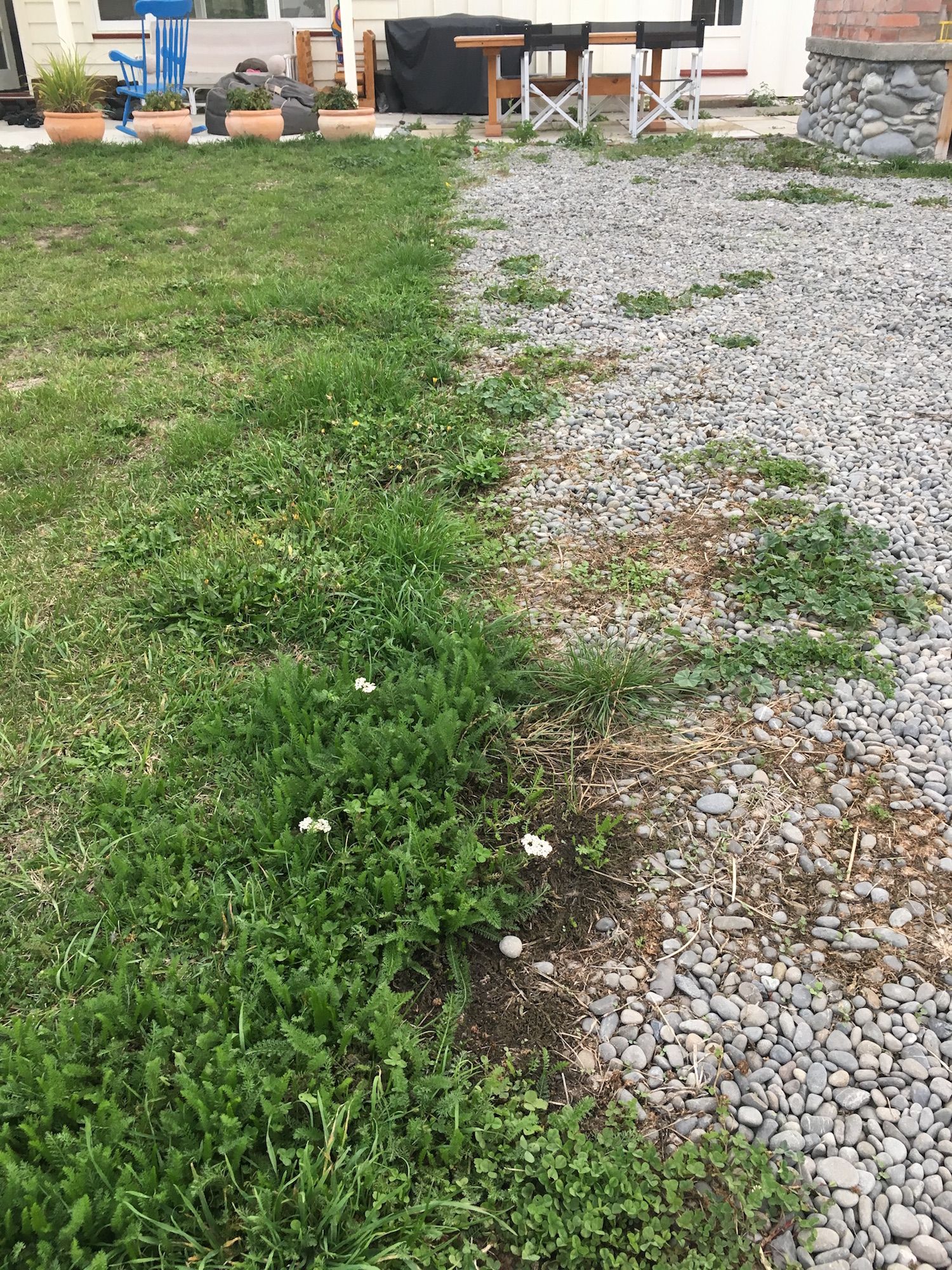
My not-so-straight edges.

I was working in Halswell today, and I went for a walk at lunchtime. I walked through some of the newer subdivisions, and after a time, I realised I had no idea where I was, though I’ve walked those same streets many times. I wasn’t worried. I wasn’t lost, I just couldn’t remember what street I was on.

Walking on, knowing I would find my location at the next street sign, I pondered why I was so lost in a place I knew reasonably well. I looked around me. It wasn’t a cookie-cutter neighbourhood, with row upon row of identical houses, but there was a sameness to every house, every yard. They were all perfect. The lawns were immaculately clipped, with not a single weed in any of them–more carpet than grass. The paths were edged as though with a ruler. The boxwood hedges were precisely cut and perfectly square–they could have been boxes, cleverly painted to look like plants.

Every house had perfect stonework, perfect paint, a smooth driveway leading to a perfectly hung garage door (operated, no doubt, by an electric opener that ran smoothly and quietly).

The houses, the yards, the streets looked like they had dropped straight from an architectural drawing. Devoid of all character, stripped of any indication real people actually lived there. They were sanitary, and soulless.

It’s no wonder I felt lost.

My home is not like that. My home is full of weeds, sprawling hedges in need of trimming, peeling paint and rotting weather boards. It’s full of paths edged by the grass creeping across their surface. Flowers that aren’t deadheaded, trees that need pruning. My home is alive and growing, taking on surprising forms, springing up in unexpected places.

And my life reflects the weedy lawns that make up my world. It is not a neatly clipped hedge, but a wild hedgerow, full of surprises. Sometimes good surprises like ripe blackberries, sometimes bad surprises like thistles. But it’s alive and exciting.

I think about the people who inhabit those sterile houses on sterile streets. Are their lives as neat and tidy as their yards? Are they as forgettable as the houses that all eventually look the same?

The thought makes me shudder. It’s true, my messy yard and my messy life make me work. I don’t often put my feet up. Some days are a struggle, and every day is long and busy. But my messy yard, my messy life is always growing, even in the midst of drought, or in the aftermath of herbicide overspray. There, in the mess are the seeds of something new, something exciting, something tough and resilient.

I did find my way out of the soulless subdivision. It was a relief to leave it behind, and a joy to come home to my rampant weeds, to a messy life in a messy yard, full of surprises, growth and life.
Apple Season

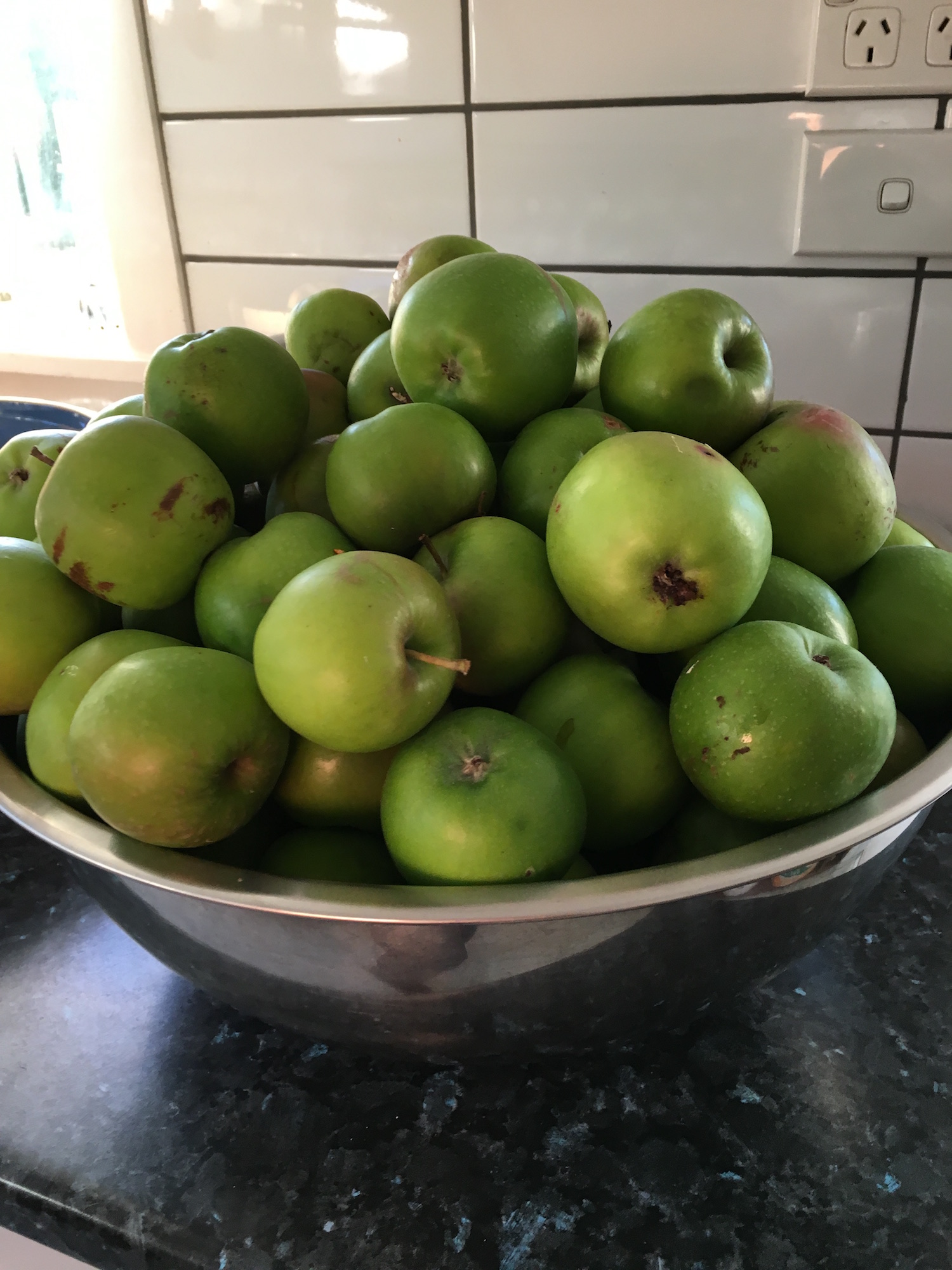
This year’s apple harvest was small, but unlike last year’s, it ripened on the tree instead of being blown off before it was ready, so the quality is good, even if the volume isn’t.

Truthfully, I’m thankful there aren’t too many apples to deal with. We’ve run out of canning jars and freezer space, so I’m not sure what I’d do with them if I had more.

So I’ve been considering how to process the fruits to encourage us to eat a lot of apples.

Naturally, apple pie is near the top of my list. Last year, with vast quantities of apples, I came across a particularly nice apple pie recipe that allows you to pack more fruit into a pie by pre-cooking the apples slightly. The recipe indicated it was a good way to avoid the empty space between fruit and upper crust that’s so common in apple pie, but I took it as an invitation to add more apples. And who could resist a thick, dense apple pie? Maybe with a little whipped cream?

Here’s the recipe, paraphrased from the 1997 edition of Joy of Cooking:

Make your favourite pie crust–enough for a double crust pie.

Roll out half the dough and fit it into a 9-inch (23 cm) pie pan. Roll out the other half of the dough. Refrigerate both until you’re ready to use them.

Peel, core and slice 3 pounds (about 1.5 kg) of apples. The recipe says you want 7 cups of slices–go for 8 cups.

Heat 3 tablespoons (40 g) unsalted butter in a wide skillet until sizzling. Add the apples and toss until glazed with butter. Reduce the heat to medium, cover, and cook, stirring frequently, until the apples are soft on the outside, but still slightly crunchy (5-7 minutes).

Stir in 3/4 cup of sugar, 1/2 tsp ground cinnamon, and 1/8 tsp salt.

Increase the heat to high and cook until the juices become thick and syrupy (about 3 minutes). Spread the apples on a baking sheet to cool to room temperature.

When cool, pour the apples into the bottom crust, add the top crust, cut steam vents, and bake 40-50 minutes at 425°F (220°C). Cool completely before serving.

Water Perspective

“The weather’s been shocking! Where did our sunshine go?”

“I don’t know. All this rain is horrible.”

I listened to this conversation with a mixture of amusement and sadness. Amusement, because, though we’ve had seven days of off-and-on drizzle, it’s not been that bad. It’s not been cold or windy, just overcast with some light rain now and then.

Sadness because the conversation revealed how disconnected the speakers were from the desperate state of Canterbury at the moment. Three years of drought have left our streams dry, our groundwater depleted, and our land tinder-dry. The soil is dry as dust for as far down as you want to dig. This rain hasn’t even begun to bring us back to the soil moisture we should have. It has wet the top few centimetres of soil, no more.

The truth is, we need weeks and weeks of steady rain, just to bring us to where we should be at this time of year, then we need a nice wet winter to top us up.

Beachgoers have been spoiled with three years of clear skies and record high temperatures, but if it continues, there will be dire consequences for the region–a region that depends upon irrigated agriculture to fuel the economy. Not to mention the higher water bills, more frequent wildfires, rising electricity costs (because much of our power comes from hydro lakes), and fewer recreational opportunities.

While those of us involved in growing plants and raising livestock understand this intuitively, the majority of folks, living in town and paying little attention to more than the immediate weather conditions, are completely unaware.

It can’t be good, this lack of awareness. Our planet is facing such catastrophic climate change, that a lack of awareness of larger patterns in weather and climate can only lead to continued lack of action to address the issue, a continued blindness to the changes that to me are so clear and convincing.

Until we all understand that having nothing but beautiful beach days isn’t good, our fight against climate change is going to languish.

Ugniberry

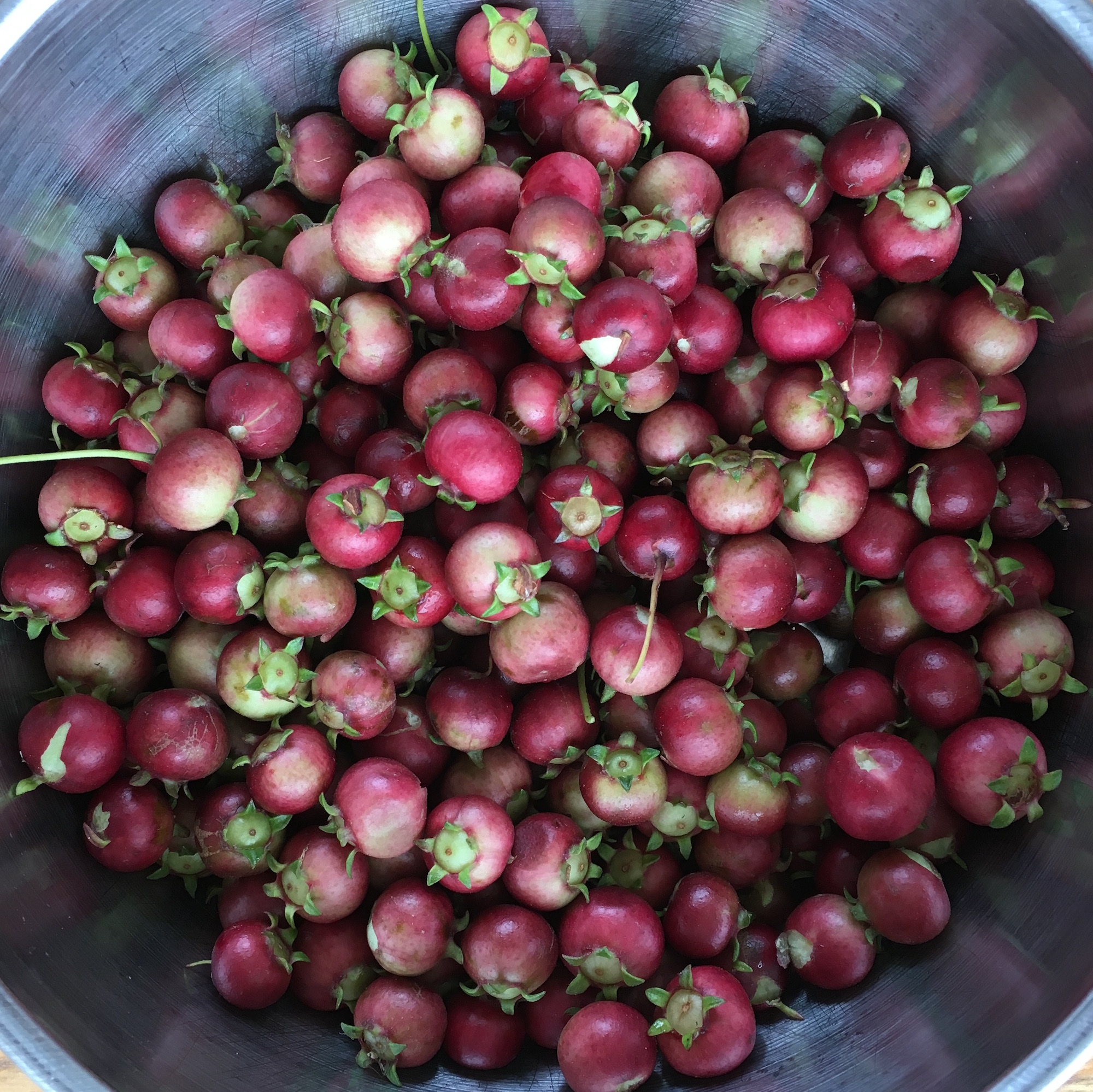
I’ve eaten some strange fruits over the years–sour, gritty nance; agua de manzana that tastes like a rose; the astringent cashew fruit… Few have been so delightful as Ugniberry. Ugni molinae, sometimes called New Zealand cranberry here, is native to South America where it flavours alcohol, is made into jam, and is eaten fresh.

I’ve heard it described as “rapidly addictive”, and I have to agree. Once you’ve eaten one, it’s hard to stop.

The fruit is blueberry-shaped and sized, apple-coloured, and flavoured like fruit salad. The flavour has hints of juniper, raspberry, blueberry, and strawberry. It’s a lingering flavour, changing and maturing, the juniper becoming more pronounced after you’ve swallowed.

The texture takes some getting used to–the skin is tough, with stiff little sepals, and the fruit is seedy. But by the time you’ve eaten three of the things, the odd texture is merely part of the experience.

My husband planted ugniberry a few years ago, and this year we are getting our first sizeable crop. I keep meaning to bake with them, because I think they’d make an incredible muffin, but they never last long enough…

Winter Cat

The cat has decided it’s winter. We’ve had a few chilly nights, and some drizzly, overcast days, but the daytime temperatures have been pleasant, even in the rain.

The cat, however, thinks it’s time to hibernate.

He has distinct winter and summer behaviours. In summer, he spends day and night outdoors, coming inside only to eat or for the purpose of irritating us by demanding to come in and go out every three minutes.

In winter, he spends his days sleeping on my daughter’s bed or in my office, and his nights in front of the fireplace, going out only briefly so that he can demand to be let back in again once we’re comfortably engaged in something else.

The past few days, he’s been spending time on the couch and, last night, he stretched out in front of the fireplace, though there was no fire. Today, he claimed my office chair before I had a chance to sit down.

Never mind that it’s still warm enough to have the doors and windows open. Never mind we’re still eating summer vegetables from the garden. Never mind that autumn has hardly begun. The cat says it’s winter.

Flying Saucers in the Garden!

I’ve mentioned these wee beauties before, but they deserve their own post. This is my third year planting extraterrestrials in the garden. Flying Saucers is an unusually shaped variety of scallopini (aka patty pan squash), developed in 2000. Its exaggerated ribbing gives it a spiky appearance. I’m not sure it’s particularly UFO-shaped, but it is bizarre-looking.

Like all scallopini, Flying Saucers has a lovely, nutty flavour and a firm texture. It does well in stir-fries, soups, pasta–anywhere you would use zucchini.

The ribs are most dramatic on young fruits, so pick them small (5cm/2in diameter), for maximum visual effect. If you pick them small enough, you can cut them in ’rounds’ that look like stars. I’ve also seen them used to great visual effect cut in half, hollowed out, and stuffed, creating beautiful star-like stuffed squash.

The seed catalogues say they are more green, less yellow when nighttime temperatures are high. Our nights are always chilly, so I don’t know if that’s true–mine have just a touch of green on the ends.

Flying Saucers is my scallopini of choice, since I discovered it. How could I resist such a brilliant squash?

Painted Mountain Corn

Last year, I tried planting a coloured corn, but the rats ate it all. This year, with some protection for my seedlings, I managed a crop of Painted Mountain. Though it’s popular for autumn decoration in the US, I’d never grown it myself.

I wasn’t certain it would produce well. The plants are shorter and faster-maturing than sweet corn, and they looked stunted. They were beautiful in the garden, though–deep burgundy-coloured stems and light green leaves. Dark red silk peeking out of the husks.

The beauty didn’t stop in the garden. My daughter and I sat on the porch yesterday evening and husked the harvest, exclaiming as each new cob was revealed. It was like Christmas, never knowing what surprise would be in the next package. The variety of colours and arrangements of colours was amazing. I’d seen all this before, in the “Indian corn” my mother decorated with each fall, but there was something magical about seeing the diversity emerge from one small crop I’d grown myself.

I have no intention of using this corn for decoration. It is beautiful, and I will enjoy it as it dries, but it is destined for more interesting uses. Painted mountain is a starch corn. Once it’s dry, I’ll grind it into cornmeal.

I have visions of beautiful, coloured corn chips, red cornbread, rosy polenta…mmm…can’t wait until it’s dry.

Summer Soups and Stews

One of the nicest things about the end of summer are those autumnal days that make me crave hearty soups and stews–dishes I haven’t particularly wanted to eat in the heat of summer.

To have a chill in the air, but still have a garden bursting with summer vegetables means we can make wonderful warming dishes with the very best of summer flavours.

We’re into our third day of rain, with temperatures hovering around 11°C (52°F), and enjoying the possibilities the weather has offered.

First up was a beautiful tomato soup, made with a king’s ransom of fresh, garden-ripened tomatoes, and handfuls of fresh herbs. It was amazing for dinner and made a wonderful warming lunch the following day, too.

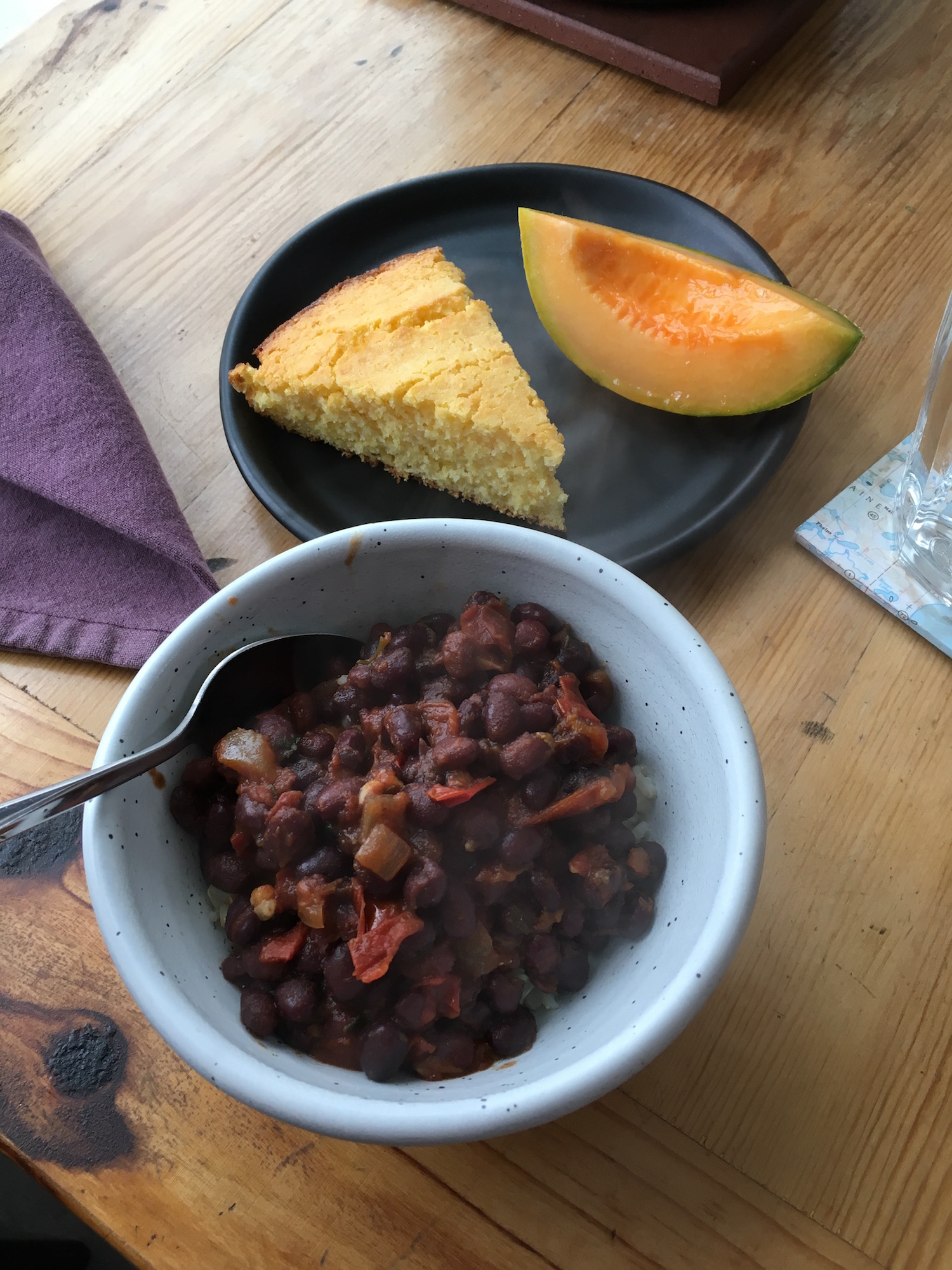
Tonight it was black beans from this year’s harvest, cooked with more fresh tomatoes and herbs, accompanied by corn bread and our own melons.

It makes me look forward to more rainy days to come!


Mysteries of the Pomegranate

img_3242I know nothing about pomegranates. Sometimes my husband gives me one for Christmas, and I like them, especially in fruit salad. Beyond that, I’m completely ignorant.

So last year, when I saw a pomegranate tree for sale in a local nursery, I naturally bought it.

To be fair, I did do a little research first, just to make sure we had any chance of actually getting it to grow on our property. By the time I brought it home, I knew it had no less of a chance of surviving here than any other fruit tree (all of which prefer more water and less wind than they get here).

So we planted a pomegranate, and a couple of months later it lost all its leaves.

Are pomegranates deciduous, or is it dead? We didn’t even know this much. Turns out, yes, they are. Ours dutifully leafed out again in spring.

Once we knew it was alive, we promptly ignored it again, until a few weeks ago when we noticed little red bulbs on it.

Hey! Fruit! Though we had seen no flowers, we could easily have missed them. For all we knew, pomegranates had small, plain flowers.

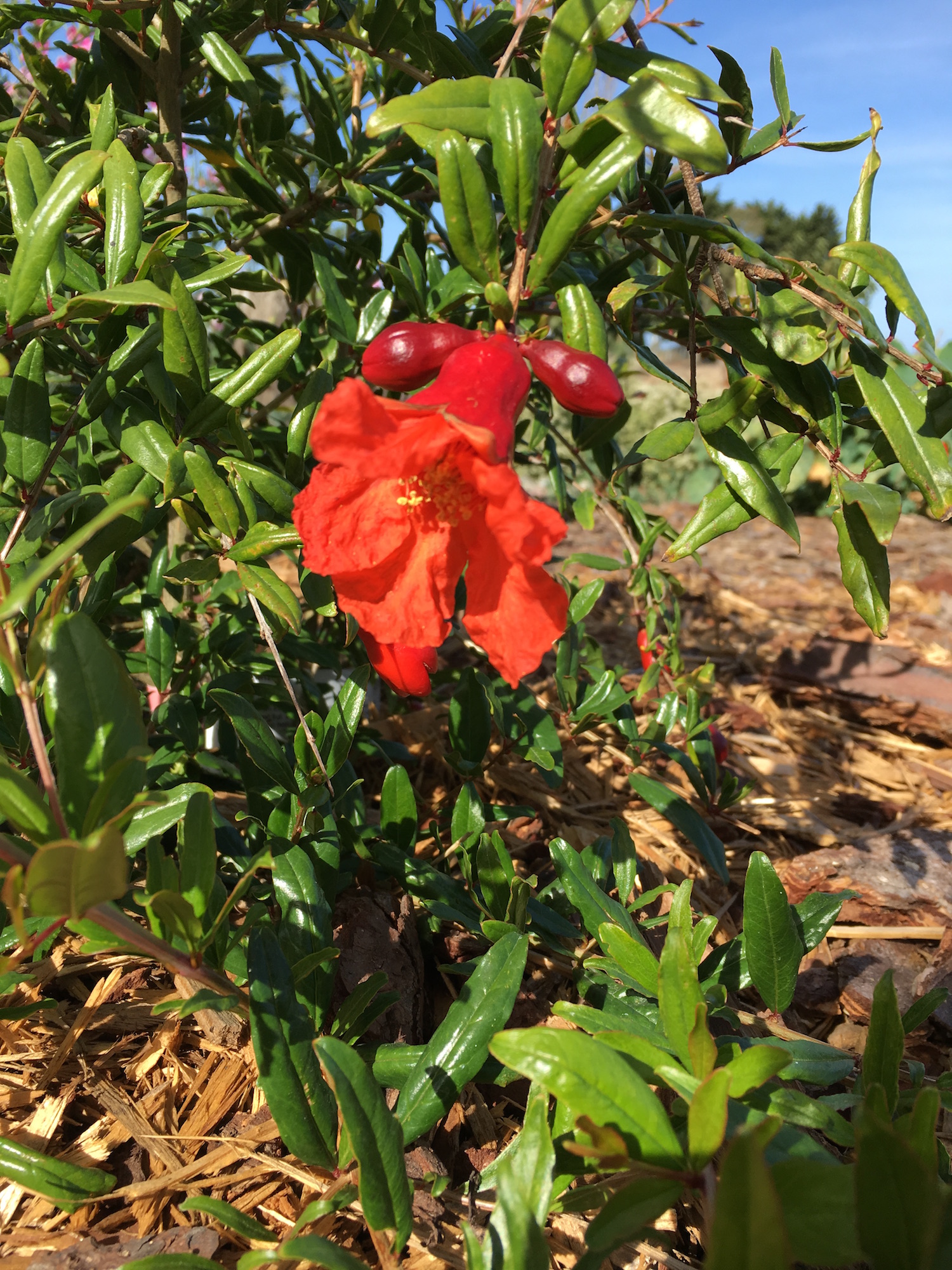
Then today, one of those little red bulbs burst, unfurling this stunning big red bloom.

Wow! We had no idea. I’d grow this tree for the flowers alone. They have all the tropical exuberance of a hibiscus (but on a more cold-hardy plant).

I still have no idea when or if those flowers might become fruit (it seems the wrong time of year for any tree to be flowering) but, hey, we know a lot more about pomegranates than we did a year ago. Reason enough to grow something new.

And the Winner Is…

2017-03-01-19-04-27It’s Oscar season in the garden–the time of year when I start reviewing in my head how various crops performed over the summer. I plant a wide variety of vegetables, because some do well and some don’t every year, and not always the same ones.

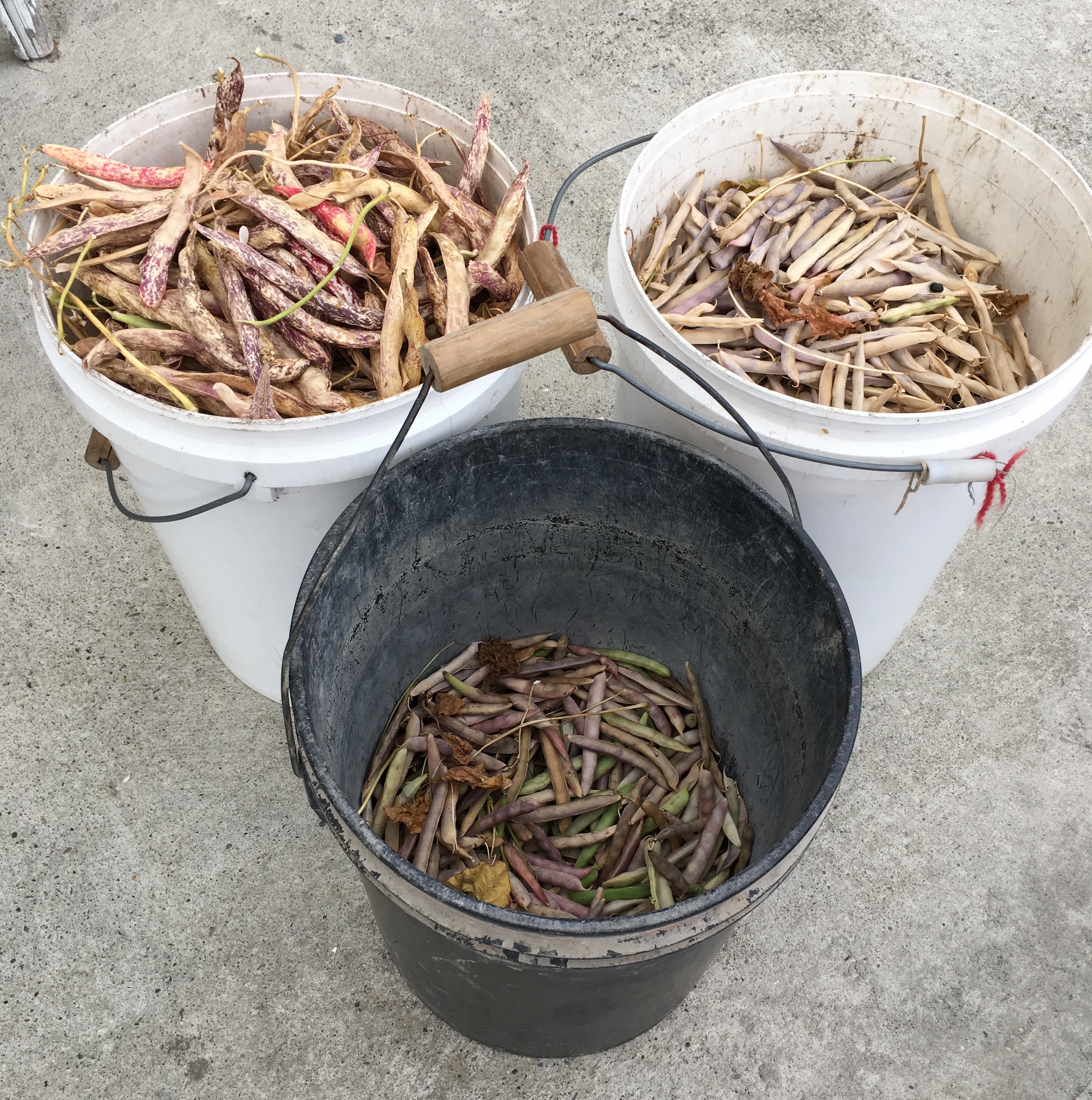
This year, for reasons known only to the plants, the black beans produced spectacularly well. I spent two hours harvesting yesterday and haven’t picked them all yet. I’ve easily got twice as many per square metre as I did last year. Add to that the fact I planted more this year than I did last year, and we’ve got a heap of beans.

You won’t find me complaining about that. Black beans are one of those staple foods for us that I can never produce enough of. I can already taste the burritos, chilli, and plain old beans and rice that will warm our stomachs through the rest of the year.

Of course, shelling them will take ages. I managed to shell about three-quarters of a bucket last night before the boredom got me. My secret to shelling without going crazy is movies. Movies I’ve watched before are best, so I don’t mind having to look away now and again to grab another handful of beans. I can settle in for the whole evening of shelling with a good movie. By the time I get to the final credits, I realise I’ve shelled a bucketful.

Perhaps I should watch Moonlight? Two winners together in one evening.