Who’s Debbie?

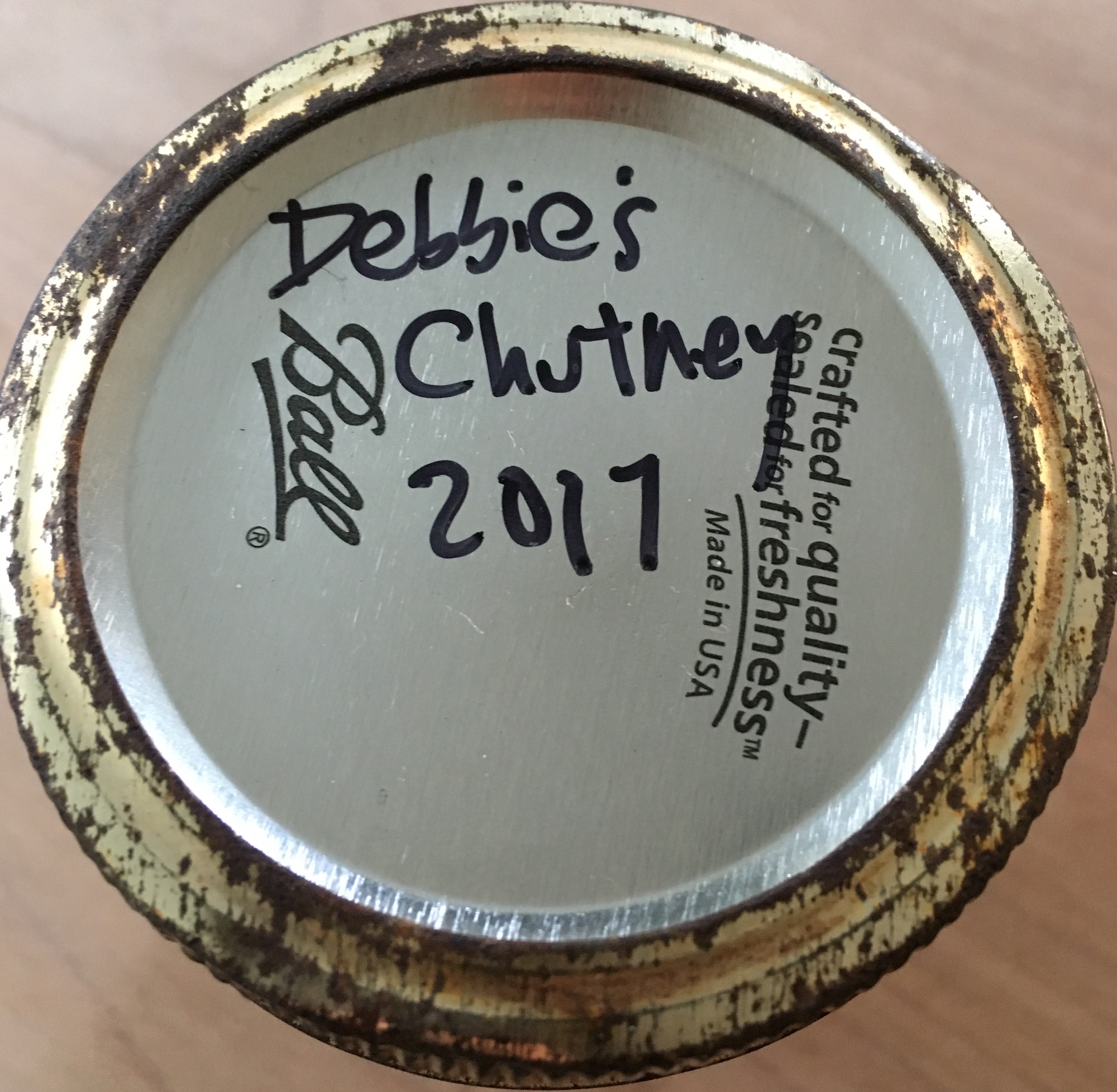
We pulled a jar of chutney from the cabinet a few days ago, and it inspired hours of speculation.

Who is Debbie? My husband made the chutney, and he labeled it, but no one can remember why it’s called Debbie’s chutney. Did someone named Debbie give us some fruit that was used in the chutney? Is Debbie an acronym for something? Delicious black boy [peach] interesting experiment? Is it a description of what’s in it? December berries?

The truth is, no one remembers. Which is a shame—I’m sure it’s a good story.

Many of our preserves and homemade products have names that tell a story, or describe what went into them. Just a few memorable ones:

Strawgooberry Jam—strawberry and gooseberry jam

Brewcurgooberry Jam—black currant, strawberry, red currant, and gooseberry jam.

Windfall Chutney—made from not-quite-ripe apples that blew down in a storm.

Black Daze of May—a dark beer brewed during a May several years ago when it rained continuously.

Baby Butt Bitter—a beer brewed many years ago during the potty training phase of one of the children.

Non-Dillicious Pickles—a batch of dill pickles that I forgot to put dill into (they were actually quite good)

Ginpricot Jam—apricot and ginger jam

Taumutu Squeak—mozzarella cheese that hasn’t quite worked properly and can’t be stretched, but squeaks when you bite into it

And, of course, Summer Soup—soup made of all the late summer vegetables.

So…

Who the hell is Debbie?

Missing My Mix

I planted my first vegetable seeds this weekend. I had planned on planting them last weekend, but when I looked at my garden notebook from previous years, I decided it was a few days too early. So I was doubly eager to get my hands dirty this weekend.

But when I opened one of the bags of growing mix I bought this week, I discovered it was thick with fungal hyphae. They’re saprophytic fungi, to be sure—not technically interested in eating live plants—but in that kind of quantity, they could easily overwhelm my seeds and seedlings. When I opened the second bag of mix, I found it was the same.

I looked at the mountain of seeds I intended to plant, then at the small quantity of growing mix I had left from last year. There was no way I had enough to plant everything. It was already past 1 PM on Saturday—the nearby stores would be closed for the weekend. To get more soil would require a 45 minute drive to the city. Yuck.

So I did triage. Some of the plants I start in August are summer crops that need a long time indoors to get growing (eggplants, peppers, cape gooseberries). These I planted today. Others are spring crops that can go out to the garden as soon as they’re big enough to survive the slugs, birds, and drying winds. Every year I’m in a race with those early crops. They’re always ready before I’ve prepared the garden beds for them. I left many of these for next week.

In the end, the lack of planting mix will probably mean a more pleasant, less stressful spring planting season for me. And if it goes well, I might look back at my garden notebook next August and learn a thing or two about pacing my planting.

A Look at Larvae

They’re just midges. If anyone pays attention to them at all, it’s to note how irritating they are when they swarm by the millions, here near Te Waihora/Lake Ellesmere. They are annoying at times, swarms so thick you can’t breathe without sucking in a few.

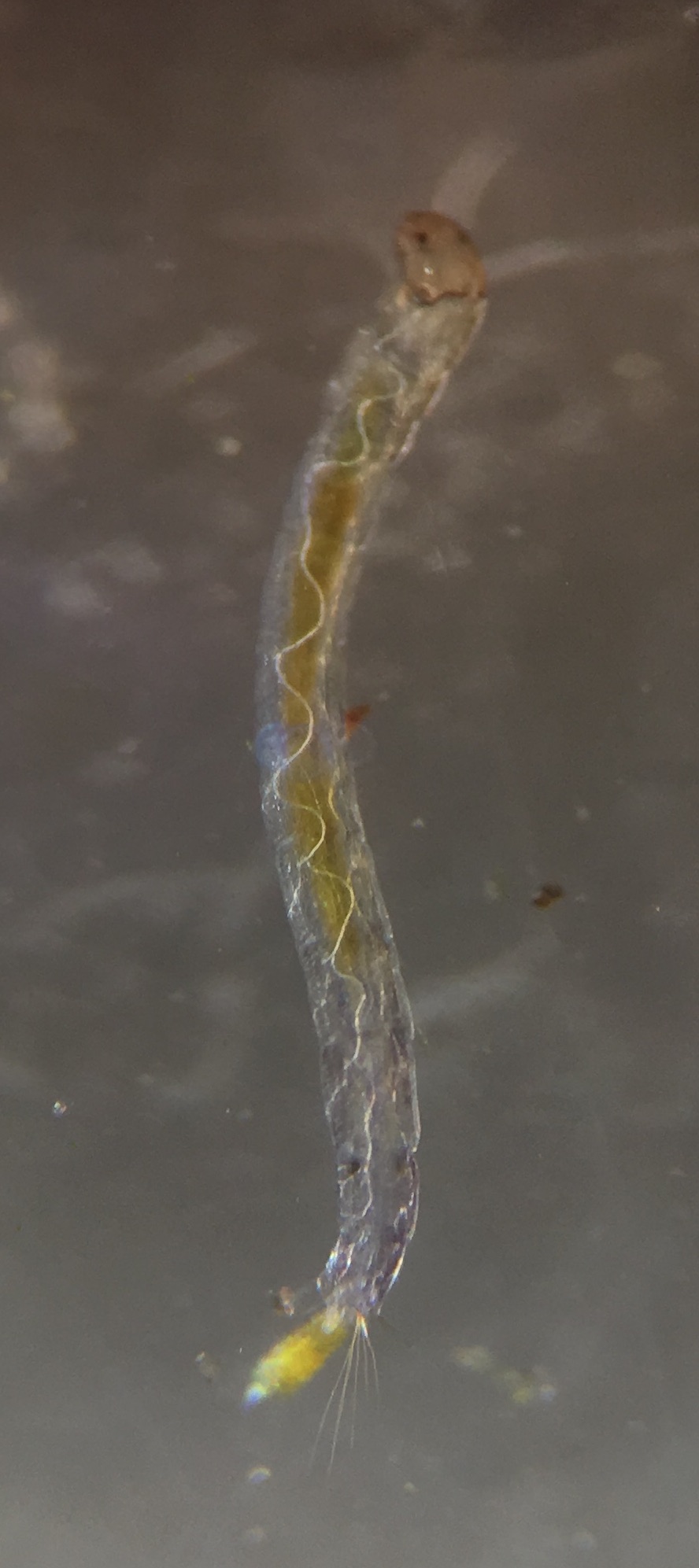
But there are few adults flying at this time of year. Most are still waiting out the winter as larvae underwater. Midge larvae are fun to look at under the microscope, as their exoskeletons are clear, allowing a great view of the inner workings of their bodies.

Seeing the inside of an insect larva helps one appreciate the job a young larva is tasked with—eat. Eat as much as you can and grow as fast as you can. A larva is little more than a mobile digestive system. The brownish streak you can see running the length of this midge larva is the animal’s gut, filled with the algae and other debris it has eaten. At the tail end, you can see, this little larva is having a poo.

Also at the tail end is a wee snorkel of sorts. These midge larvae can survive in low-oxygen water by sucking air from the surface using their snorkel. The silver lines meandering the length of the body are trachea that carry oxygen to all the insect’s cells.

This midge larva was tiny—about two millimetres long—it still has a while to grow before it’s ready to become an adult. But there are lots of other larvae out there getting ready to emerge with the upcoming warm days of spring.

Food, Sleep, and a Good Scratch

I know it’s been a good day of writing when I suddenly realise it’s four o’clock, and I haven’t written a blog post for the day or prepared for tomorrow’s school programme or fed the animals, collected the eggs, filled the firewood box, gotten the mail…

Thankfully, I have an effective alarm to let me know when I’ve gotten too wrapped up in writing and need to stop.

“Maa…”

“Maa…”

“Maaaa…”

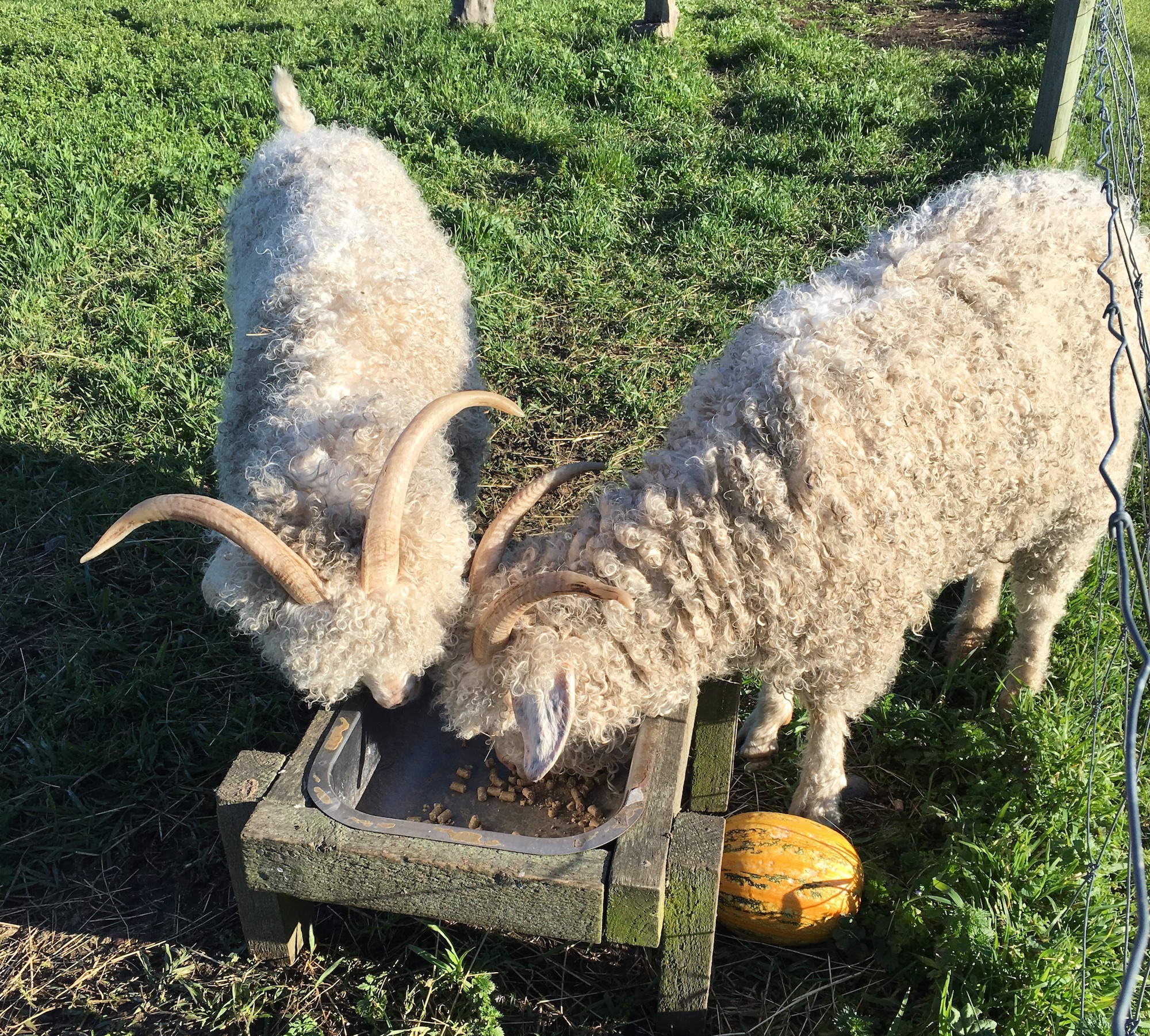
The goats are polite, but insistent. They like their afternoon feed, and let me know when it’s late. Animals are good for that. They don’t get caught up in things going on inside their heads. Life is clear and uncomplicated—food, sleep, a good scratch now and again.

Sometimes it’s important to be reminded of that.

Hedge Fortifications

Our usual route to town has been closed for the past couple of weeks, with the flooding of the Selwyn River. Instead of crossing at Coes Ford, we have to drive upstream and cross at the bridge on Leeston Road. It adds about five minutes to the daily commute, but it gives me an excuse to drive past one of my favourite hedges.

Hedges are important out here on the Canterbury Plains. Winds regularly hit 100 kph (62 mph). If the wind isn’t howling from the northwest bringing hot dry weather, it’s probably gusting from the south, carrying rain.

When we first moved into our house, I wasn’t happy about the tall hedge, no more than five metres from the south western wall, that blocks the view and the evening sun. Luckily, we moved in during winter, or we might have cut down the hedge before we fully understood why it was there. After the first screaming southerly storm, I knew that the only reason the house was habitable in winter was because of the hedge.

Hedges protect buildings, crops, and livestock, and most of them are meticulously maintained. The larger hedges are like fortifications, a dozen metres tall and two metres thick. They’re trimmed with strange-looking machines with huge, terrifying spinning blades.

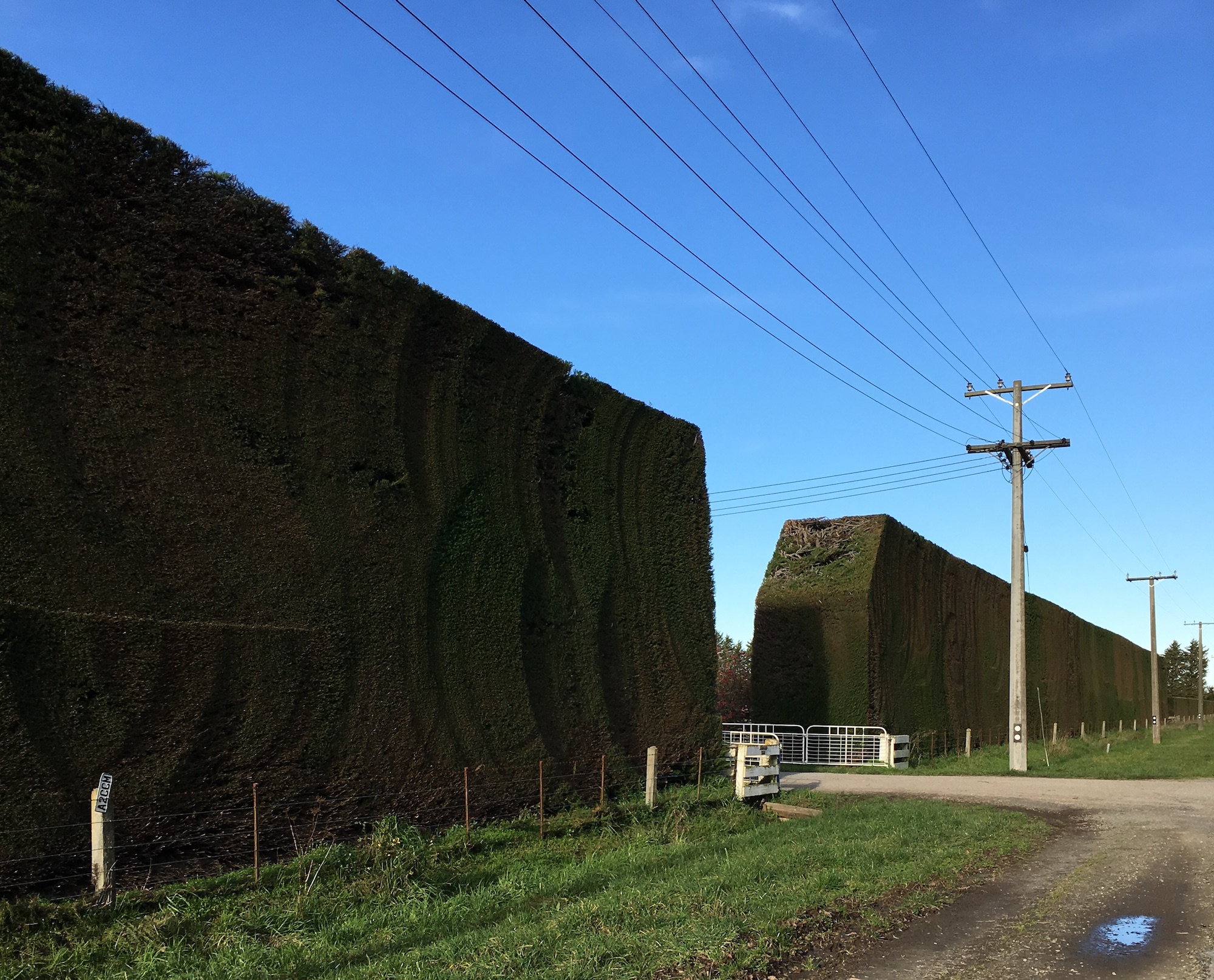
One of my favourite hedges (the one I get to drive past when Coes Ford is closed) is the one in this picture. It is enormous, both in height and length, but I have never seen this hedge looking shaggy, as mine does when it’s in need of a trim. It is always trimmed like chiselled stone. And the marks of the great rotary trimmer blade leave a swirling pattern in the hedge that I find mesmerising. It is almost a work of art.

There are certainly more artistically trimmed hedges–I’ve seen a few clipped into undulating waves, or including graceful archways–but there’s something about this hedge that evokes stone castles. It is artistic in its clean lines and sheer bulk. It’s a hedge to aspire to.


Pre-planting Chore

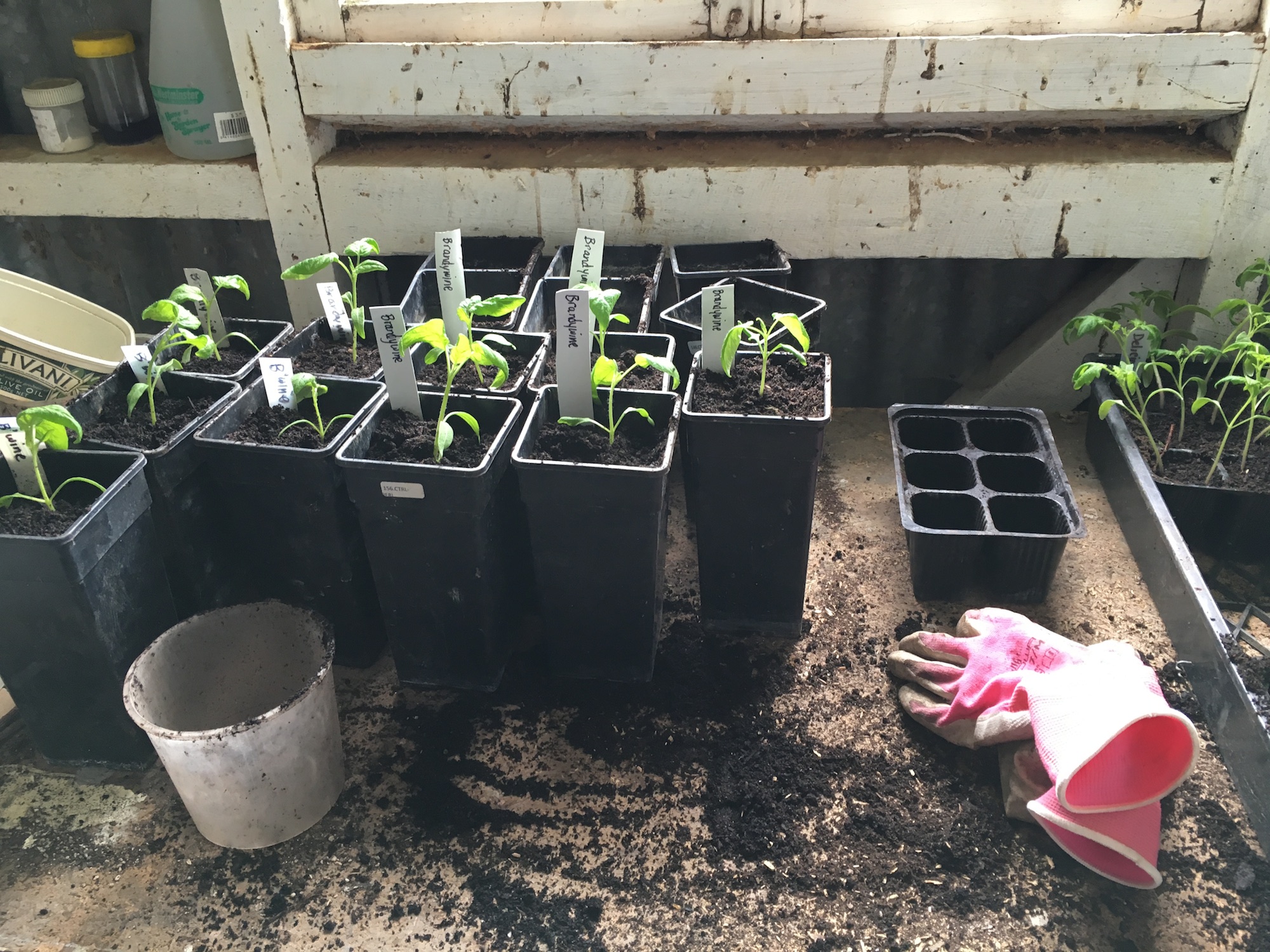
The potting bench in better times…

I suddenly realised today that tomorrow is the first of August. That means just two weeks until I start planting seeds for the vegetable garden!

Two weeks! Woo hoo!

That unalloyed excitement lasted a whole ten minutes, until I stepped into the garden shed.

It’s a scene of utter destruction. All through the autumn and winter, I’ve been walking in, tossing something on (or in front of) the potting bench, and then walking out.

Yeah, yeah…I’ll deal with that later…

Well, later has come.

Later is now.

I have two weeks to whip the shed into shape, or I won’t be doing any planting on the 15th of the month.

I know what’s on next weekend’s to-do list.

Eggsplaining the Difference

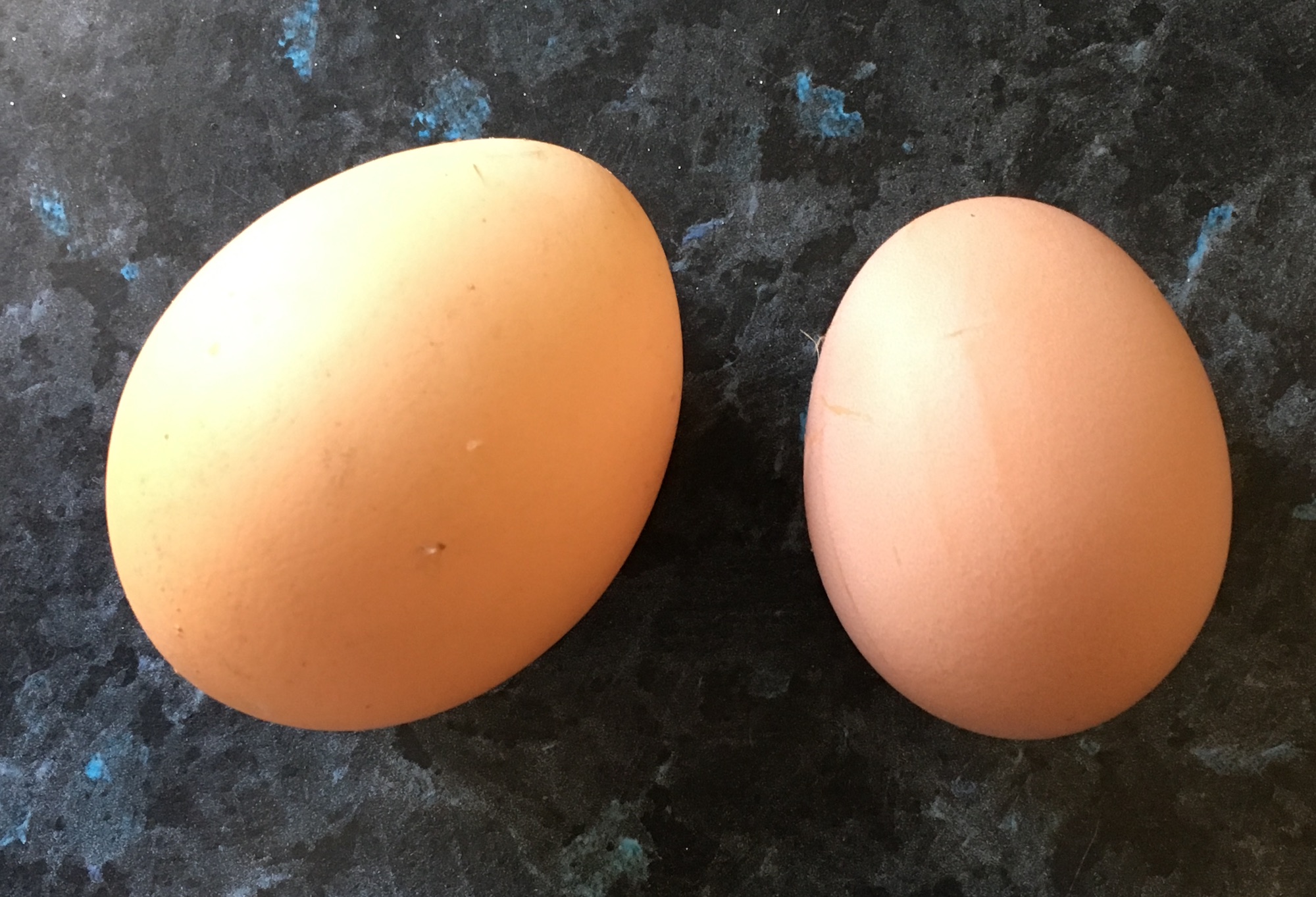
A standard egg at the supermarket weighs 53 grams, large eggs are 62 grams and jumbo eggs are a massive 68 grams.

My new chickens just started laying yesterday, and I smiled at the tiny eggs they laid.

Then I weighed them—far from being tiny, they weigh as much as a standard egg.

Turns out the ‘normal’ egg from my chickens weighs 80 grams or more (I had a 92 gram one last week—I know because it looked big, even to me, so I weighed it).

I’ve known this for some time. My eggs are bigger than the eggs called for in your average recipe. I can usually skimp on the number of eggs I use, with no repercussions. It comes in handy in wintertime, when egg production is down, and I’m often rationing eggs.

But I hadn’t really quantified it before. So, doing the maths, if a recipe calls for four large eggs, that’s 248 grams of egg. Just three of my 80+ gram eggs will do, in that case. That matches my experience with skimping on eggs in a 4-egg cake. In recipes that call for three eggs, I can probably get away with two. Start looking at a genoise cake that may call for 7 eggs, and I should really be using closer to 5.

I can’t tell you why my chickens lay such enormous eggs. I assume it’s a combination of genetics and diet. Coming from the same breeder, I expect my new ones to eventually lay 80 gram eggs, like the older ones do. But if they don’t, that’s just fine. Truth is, those super jumbo eggs don’t fit very well in the egg holder on the fridge door. Sometimes, when I open the fridge, an egg flies out to splat on the kitchen floor. I wouldn’t mind non-ballistic eggs.

What are the Odds?

A winter storm dropped nearly an inch of sleet on us overnight. I crunched through the ice in the dark this morning to feed the animals. After emptying sleet out of the chickens’ feed tray and filling it with pellets, I turned and saw, in one of my footprints, a bright green/blue glowing spot.

Bioluminescence. There was no mistaking the colour. I carefully scooped up the bit of glowing sleet and held it in my hand. I could think of no terrestrial source of the glow. There are no glowworms in my vegetable garden, and no bioluminescent fungi. Besides, this was in the ice, not on the ground.

The spot glowed for a moment between my fingers. Then the ice melted, the light went out, and whatever had made the glow dripped to the ground.

I spent an hour online looking for any reference to bioluminescence in snow, and found none. The only explanation I could come up with for my glowing sleet was that a phosphorescent marine creature was picked up in sea spray four kilometres away, frozen, and then deposited in my garden. My stomping foot disturbed it, and it glowed briefly before, most likely, succumbing to a deadly infusion of fresh water.

What are the odds that organism would be picked up from the sea and whisked four kilometres inland? What are the odds it would land in my garden? What are the odds it would have still been alive when I trekked out to feed the animals? What are the odds I would step on that tiny organism and induce it to glow?

Very, very tiny.

I was given a tremendous gift this morning. One of those gifts that reminds me to always keep my eyes open. You really never know what you might see.

Planning Season

It’s that time of year again, when I eagerly await the seed catalog. The garlic has been planted, and I’ve made a list of the seeds I have and the seeds I need. I’ll determine what seeds I want once the catalog arrives.

I’ve created the garden map for this coming season, but haven’t yet filled in the spaces. I’ll wait for some cold, nasty evening to do that.

I’ve been eyeing the garden itself, too. There’s still clean-up work to be done out there, and there are big mallow plants to be pulled (the chickens manage many of the weeds, but they can’t deal with mallow). I keep telling myself it won’t be long before I can get out there again. It’s a bit of a lie—it’s still six weeks before I can realistically start preparing the garden for spring. But if I keep myself busy with planning, spring will be here before I know it.

That’s my hope, anyway.