Apple and Quince Pie

Sometimes inspiration strikes and it’s glorious.

That’s what happened yesterday afternoon when I decided I had to do something with the remaining apples and quince before they went bad.

I wondered…was apple quince pie a thing?

A quick glance at the internet told me it was, and confirmed my suspicions that the quince needed to be cooked before being put in the pie.

So, making it up as I went, I created this absolutely stunning pie. It was fabulous warm with whipped cream, but I think it was even better at room temperature the following day. More work than your average apple pie, but this isn’t your average apple pie.

4 cups sliced quinces
4 cups sliced apples
1/2 cup sugar
1 tsp cinnamon
1/2 tsp cloves
1/2 tsp nutmeg
2 Tbs flour

Pie dough for a single-crust pie

Topping:
2/3 cup flour
2/3 cup walnuts, finely chopped
2/3 cup brown sugar
1 tsp cinnamon
5 Tbs butter, melted

Place quince slices in a medium saucepan with a few tablespoons of water and cook gently until soft (5-10 minutes). In a bowl, combine apples, flour, sugar and spices. Stir the cooked quince into the apple mixture. Roll out your crust and place it in a pie plate. Combine all the topping ingredients in a bowl and mix with a fork until crumbly. Pour the apple mixture into the pie crust and top with the topping. Bake 50 minutes at 190ºC (375ºF).
The Indispensable Hoe

I was preparing the garden for my winter crops on Saturday when disaster struck. 

Okay, it wasn’t really a disaster, but it did effectively end my work for the day.

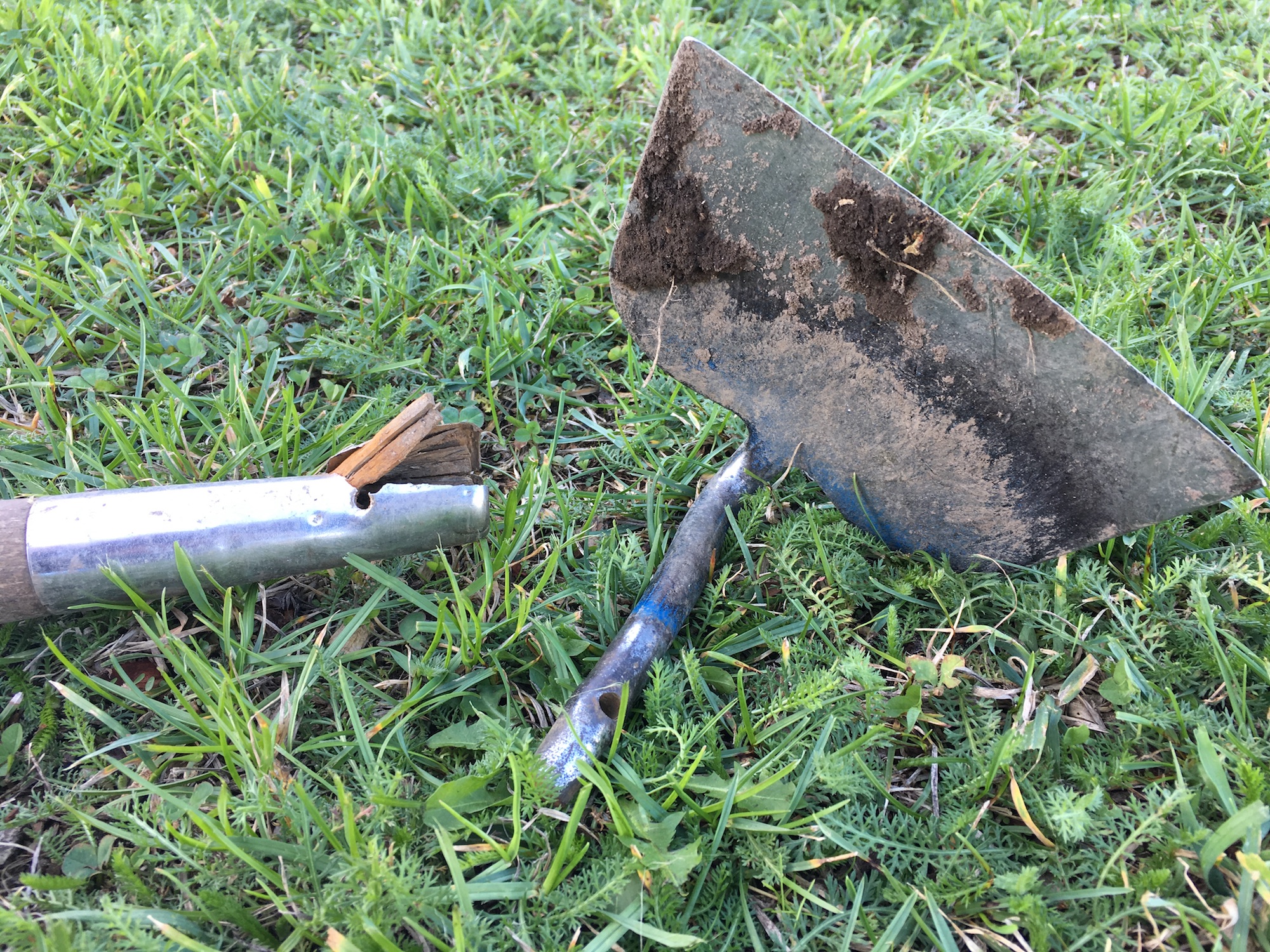
My hoe broke.

This has happened before. This particular hoe has been held together for years by duct tape after I cracked the handle on a particularly difficult clump of grass. Unfortunately, duct tape wasn’t going to fix this failure—this one was terminal, at least for the handle.

A few back-of-the-envelope calculations reveal that this hoe has done about 6,300 hours of work for me over its lifetime. It has measured and prepared garden beds, dug furrows for seeds, removed weeds, cleared paths, and mixed concrete. And it’s done all this with almost no maintenance—some sharpening, some cleaning, a little duct tape.

It’s no wonder the hoe is one of the oldest garden tools. The first evidence of hoes comes from cave paintings made in about 5000 B.C. Although there are many variations in hoe design, the basic idea has changed little for thousands of years; it’s a tried and true design that does the job well.

So this week I’ll find a replacement for my expired hoe. It’s not a tool I can do without.

Vilma’s Eggplant–better late than never

I’ve blogged about Vilma’s Eggplant in the past, but it’s worth repeating a recipe this good.

This year’s eggplants took a long time to get going, and it’s only now that summer is over that they’re really giving well. But it’s never too late for Vilma’s Marinated Eggplant. This stuff could make an eggplant lover out of anyone.

Vilma was the sister of our host mother during Peace Corps training in Costa Rica. She was loud and fiery-tempered, and regularly stayed with our host family when she was fighting with her partner.

When she was with us, she cooked—glorious Italian food she’d learned to make from her partner. Her food was a flavourful gift in a house where vegetables were usually boiled to death and served plain. 

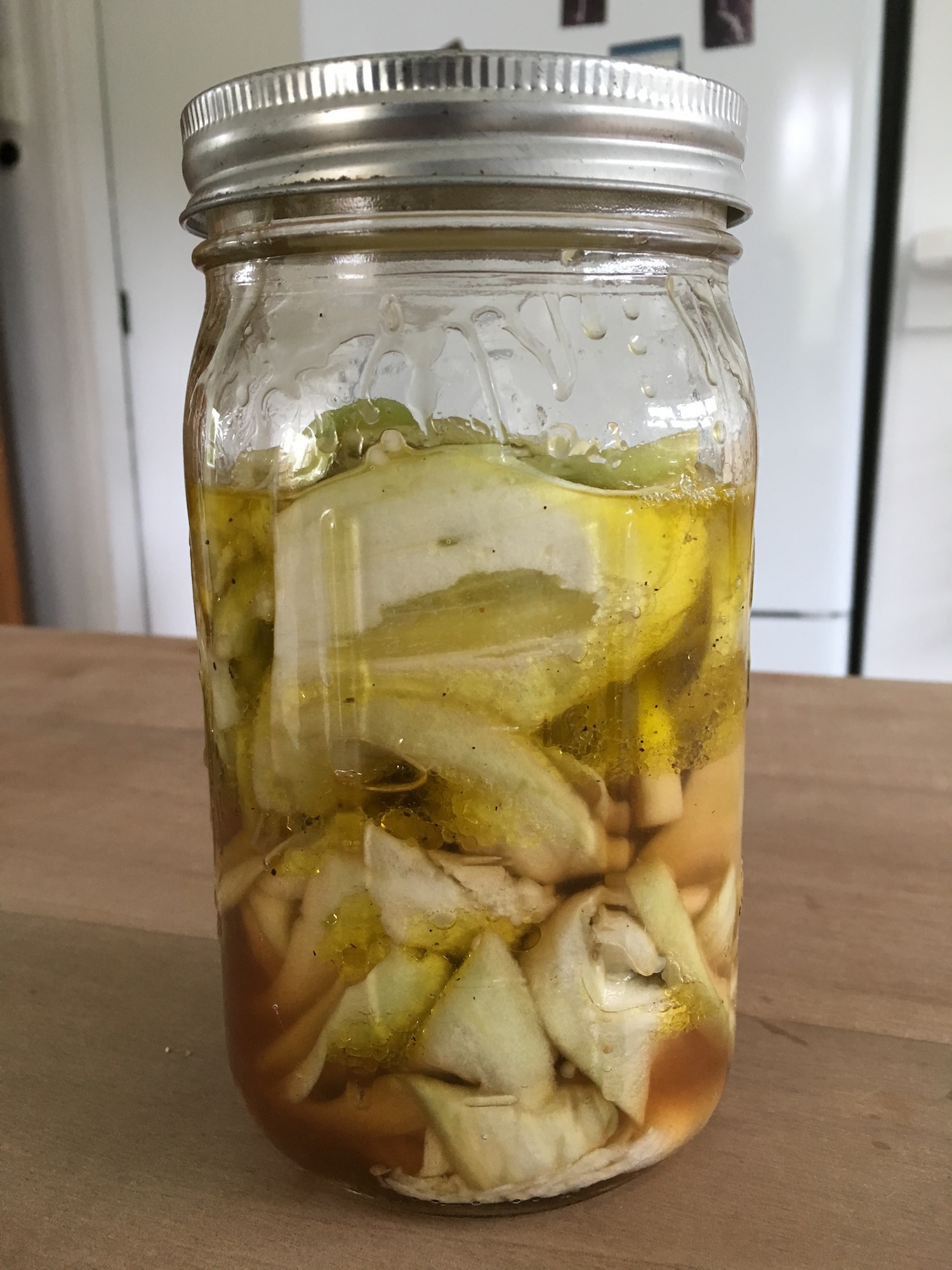
One of the most wonderful things Vilma made was thinly sliced eggplant marinated in garlicky vinegar. She’d leave a jar of it in the fridge when she left, and we would savour it for a week on our sandwiches or with our mushy, flavourless boiled vegetables.

I foolishly never asked Vilma for the recipe, but a bit of trial and error was all it took to recreate Vilma’s marinated eggplant. 

This recipe mostly fills a quart-sized jar. It keeps for a long time in the fridge and makes a lovely addition to sandwiches. Serve it on crackers for party appetisers—it’s not the prettiest food, but after one bite, none of your guests will care.

2 small to medium eggplants
1 clove garlic, crushed
½ cup red wine vinegar
½ cup extra virgin olive oil
salt and pepper to taste

Peel eggplants and slice very thin (1-2 mm). Steam until the slices are tender and limp (but not falling apart completely). Whisk all the other ingredients together in a small bowl, and toss them gently with the hot steamed eggplant. Refrigerate at least an hour before serving (the longer the better, as the eggplant will soak up more marinade).

Embracing Autumn

Our summer has finally turned to autumn. Cooler temperatures and more rain mean the grass has begun to grow again, green shoots sprouting through rain-driven drifts of dead vegetation.

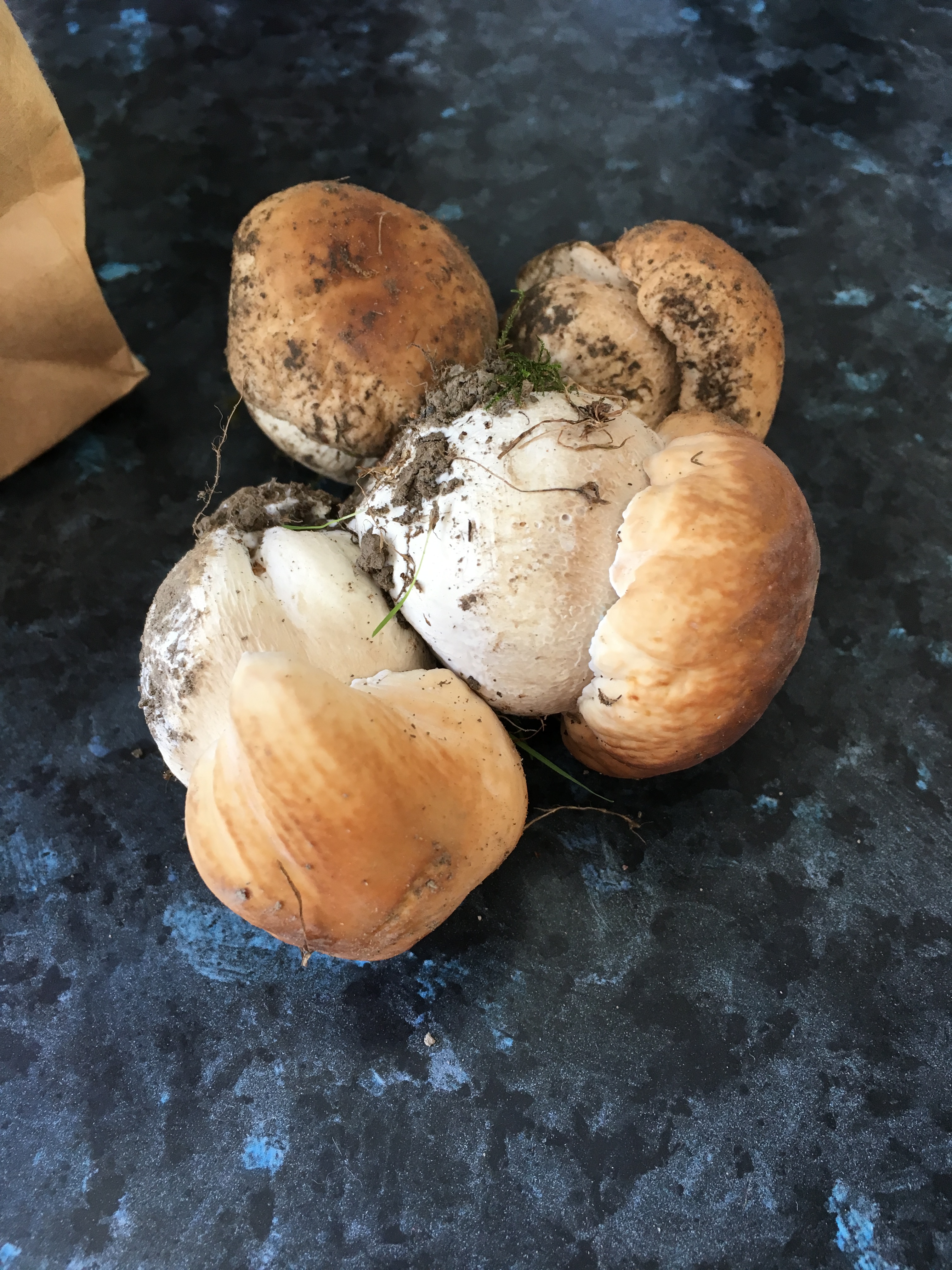
The tomatoes are browning, spent after summer’s excess, and while I mourn their loss, I welcome the fruits of autumn—pumpkin, wild boletes, black beans, apples and a return of leafy greens. I welcome warming soups and casseroles. I welcome the smell of baking pie, simmering beans, and sautéing mushrooms.

I welcome the reduced workload in the garden, too. There’s still plenty of harvesting to be done, and I’ll be clearing away dead plants throughout autumn and winter, but soon I’ll release the chickens into the garden to keep the weeds and pests in check until spring.

It’s time now to take stock. Plenty of summer soup, pickles and jam in the cupboard; strings of onions and garlic hanging in the kitchen; pesto, peas and corn in the freezer. Jars of popcorn and dry beans line the shelf, and a basket of apples sits in the kitchen. We will eat well this winter, food and effort stored in jars and freezer boxes to be released and enjoyed on dark, cold evenings. 

So I will savour the warmth and sun that remains, but embrace the cold to come.

Beach Hangout

We nipped out to the beach after dinner on Saturday. We had a nice walk on our lovely, lonely bit of coastline.

But the beach was busy with youth hanging out (up to no good, probably). Some were alone, and some were in groups, strutting their stuff.

But these youth weren’t your usual crowd of city kids, they were juvenile spotted shags, Strictocarbo punctatus punctatus, also known as spotted cormorants, parekareka, and kawau tikitiki.

Shags were once heavily persecuted as pests. Fisherman believed they destroyed the fisheries, snapping up all the commercial fish and decimating their numbers. Research has shown, however, that their impact on fisheries is minimal. On the other hand, there is some evidence that, in our area at least, shag populations are hurt by commercial fishing. Spotted shag populations on the Banks Peninsula rose from 9,787 pairs in 1960 to 22,123 pairs in 1996 following a reduction in commercial fishing around the peninsula. Illegal shooting can also cause local population declines.

The spotted shag is a marine species, never venturing far from the sea and feeding in deep water up to 16 km from shore. They’re gregarious, breeding and roosting in colonies with up to 2000 birds. The groups of juveniles on our beach were small—a few dozen birds at most. These birds were probably born on cliffs around the Banks Paninsula, and when mature, they’ll head back to those cliffs to lay eggs and rear their young.

So they really were just hanging out on the beach, just like teenagers from Christchurch hang out on the beach on weekends, away from the adults, goofing off and getting takeaways.

Nifty Nigella

Late summer is harvest time for all sorts of crops. Nigella might be the most unusual one I harvested this week.

Nigella sativa goes by many names: nigella, kalonji, black cumin, fennel flower, nutmeg seed, onion seed, and black caraway. Added to this mess of often misleading names is Nigella sativa’s ornamental cousin, Nigella damascena, also known as nigella (or love-in-a-mist). You could be forgiven for being confused.

Culinary nigella is a lovely aromatic seed that looks confusingly like onion seed. Its flavour has been described as oniony or oregano-like. I’m not sure how I would describe it—I suppose onion and oregano come close, but the truth is it has its own warm rich flavour. It is traditionally used in naan and string cheese. It’s also apparently great with lentils and other legumes.

Because we rarely harvest much nigella, we’ve only used it in naan, where it imparts a lovely savoury note to the bread. 

But this year, conditions must have been just right for nigella; it grew luxuriantly. Consequently, I have a huge quantity of seeds, so I expect we’ll be trying it out in all sorts of stews and curries. I’m looking forward to the addition to our spicing options.

Summer Soup 2019: proof we really are nuts

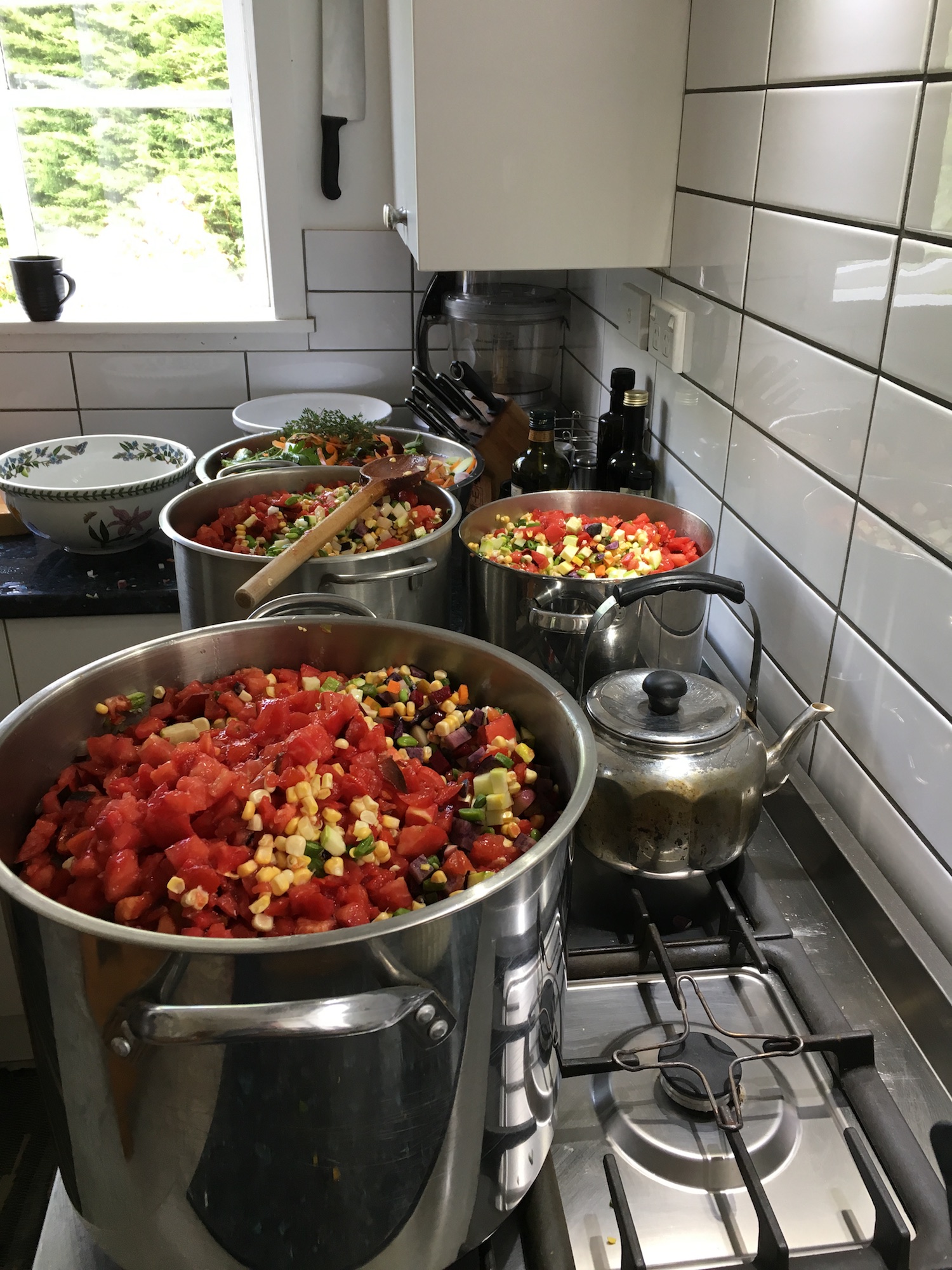
The family made our annual Summer Soup on Sunday. 

I think we definitively proved we have no self-control when it comes to gardening or cooking. In spite of me reducing my garden area this year, and despite the knowledge that our son is leaving home in a week (and won’t be around to eat this year’s soup), we managed to make even more than usual.

We filled all three of our big stock pots, and it took from 7.30 am to 9.00 pm to pick, chop, and process all that soup.

We had soup for dinner, I put a meal’s worth of soup in the fridge, and there are 28 beautiful quart jars full of soup lined up in the cupboard. 

Summer Soup is full of potatoes, carrots, soy, green beans, zucchini, tomato, sweet peppers, hot peppers, onions, garlic, sweet corn, beet root, basil, oregano, thyme, rosemary, and celery. The only thing not from the garden is the salt. It’s a burst of summer goodness for the cold days of winter. It’s a quick and delicious meal when we all come home late. 

But it’s more than preserved vegetables. It’s a whole-family team building exercise. After a dozen years, it’s a family tradition. Each soup-making session brings back memories of early years, when the kids’ help was more of a hinderance. They took enormous pride in their work those years, reciting the vegetables they’d cut every time we opened a jar.

Now they’re both accomplished cooks, and their help allows us to go way overboard on soup-making. They’re less vocal about it now, but I think they’re still proud of their part in Summer Soup.

As I’ve mentioned before, anyone can make soup, but it takes a family to make Summer Soup.

Mystery Maggots

Caterpillar, not maggot–see the six true legs and 10 prolegs?

The weather has been hot here, and all the doors and windows stand open all day. With no window screens, that means an array of bugs (and the occasional bird) pops in and out of the house. It’s not unusual to find flies, butterflies, damselflies, etc. on the windows. 

Still, I did a double-take when I saw maggots on my desk the other day. I knew they hadn’t flown in on their own—they must have been hatched nearby. I checked for unseen dead things on the shelves above, but found nothing. There was another maggot this morning, and I did a second unsuccessful check for the source. Then, while I was away from my desk for fifteen minutes, another appeared.

This time I pulled out the microscope and had a closer look.

It wasn’t a maggot at all. It was a tiny caterpillar.

I could think of no reason for a bunch of caterpillars to be living on my bookshelves and dropping onto my desk.

Then I remembered earlier in the day I’d shooed a wasp out of the office several times.

Bingo!

The wasp was a European tube wasp. These little insects seek out cracks and holes to nest in. They fill their nests with up to 20 caterpillars as food for their larvae and then seal the nest with mud.

That would explain the bits of dried soil that accompanied some of the ‘maggots’.

We’ve seen the same thing with our native potter wasps. Last year I had to put tape over all the screw holes in the underside of the dining table, because potter wasps were stuffing them with paralysed spiders (and the spiders kept falling out all over the floor).

As I write, the wasp has returned. Empty-handed this time, she’s fossicking around for a new place to raise her young. Maybe she’ll find one her caterpillars will stay in this time.

The Colours of Summer

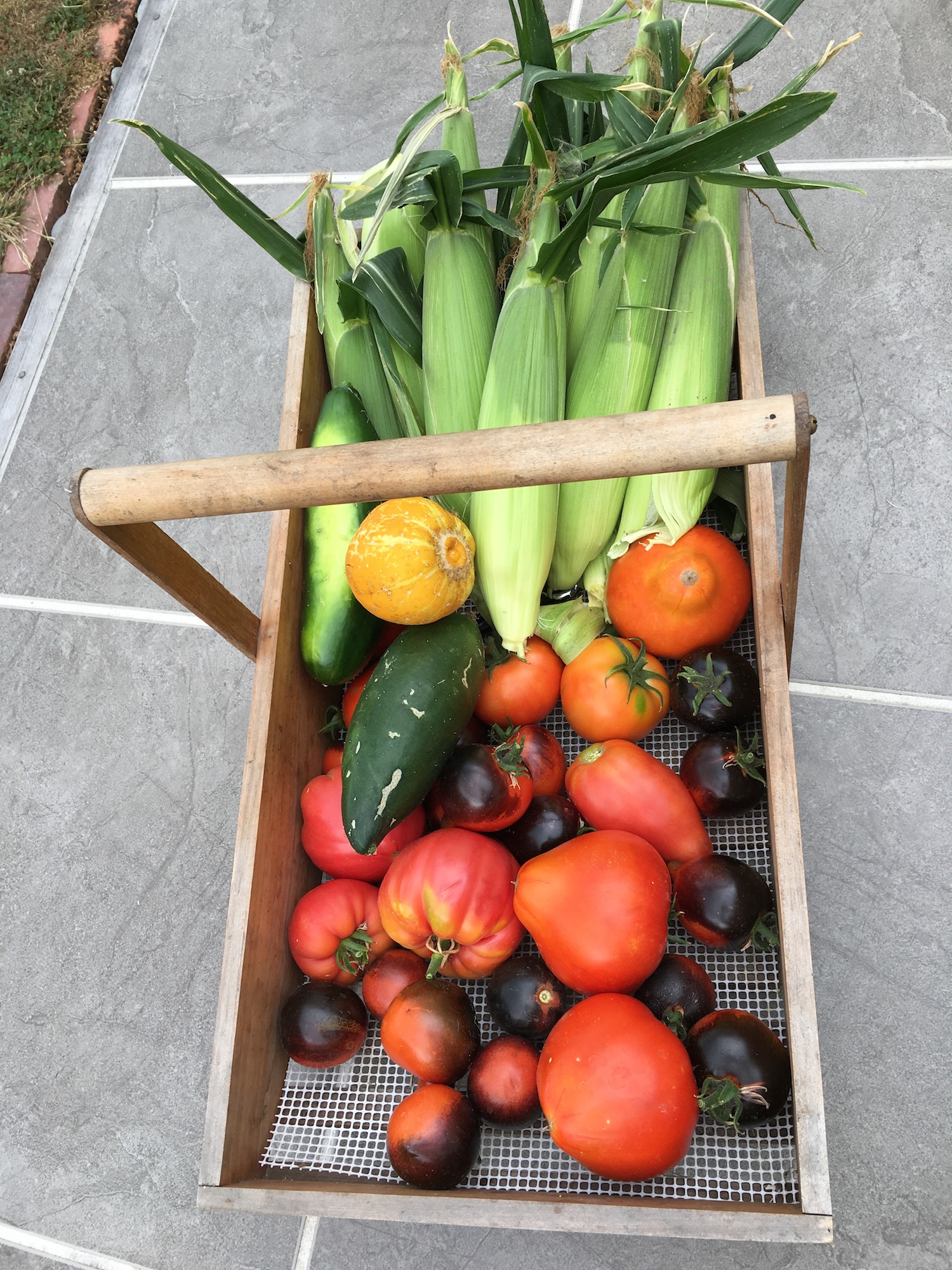
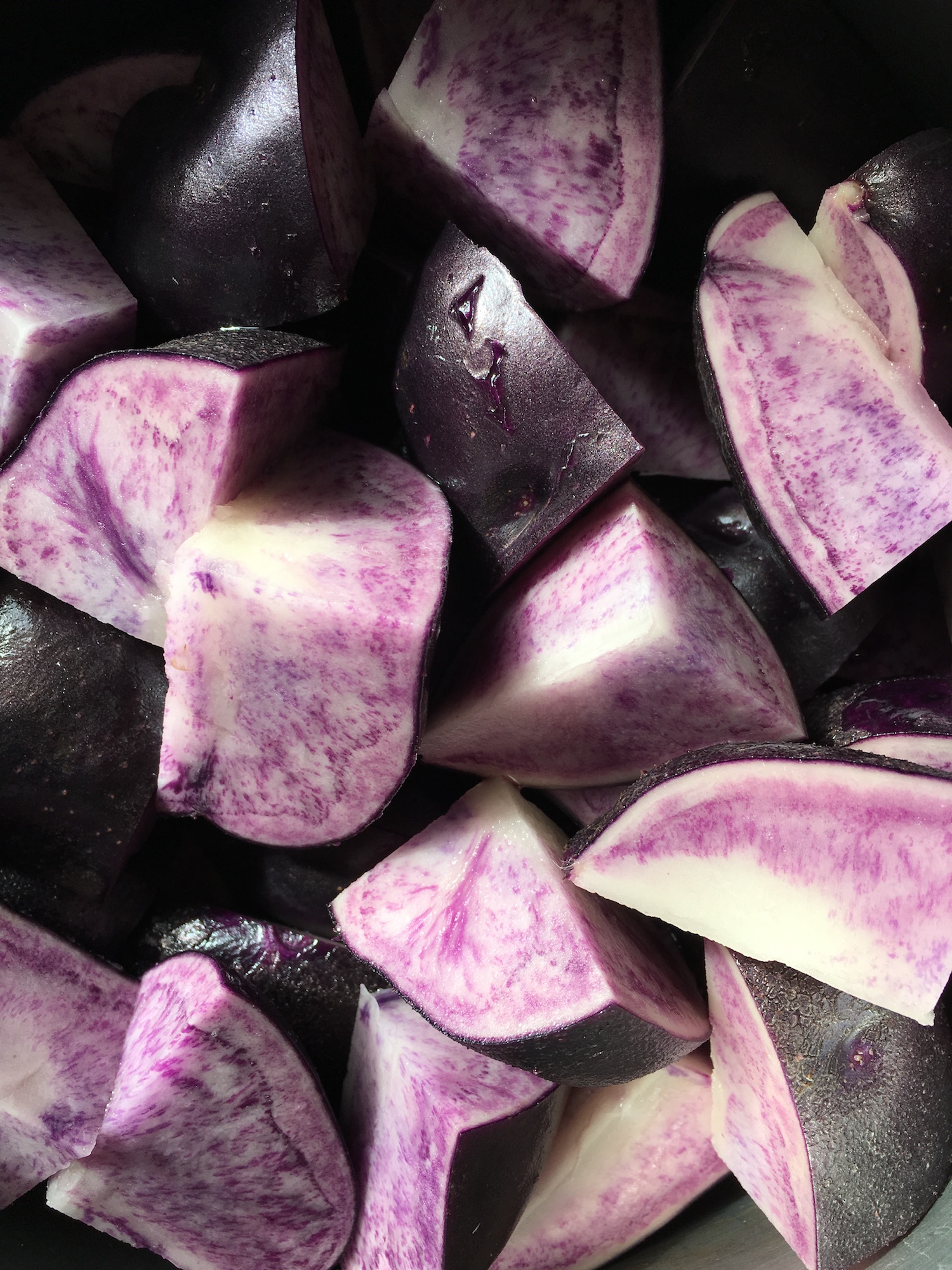
Blue peas, purple potatoes, green beans, yellow zucchini, red tomatoes, orange carrots … The summer garden is full of colour. But it’s not just a feast for the eyes.

In the garden, the colours can serve a purpose—black and yellow tomatoes and red lettuce are overlooked by birds and bugs because they’re not the ‘right’ colours. Blue peas have tough pods that resist birds. And purple basil deals better with dry heat than green.

In the kitchen, the colours create spectacular visual treats—purple mashed potatoes, deep orange braised carrots, bright green pesto, pasta studded with all the colours of the rainbow. Along with the colours come flavours not found in supermarket produce—the rich sweet-tart of an Indigo Apple tomato, the succulent crunch of Scarlet Runner beans, the smooth earthiness of a Zephyr zucchini, the nutty bitter of a Touchon carrot.

A few years ago there was a campaign here to get kids to eat more vegetables. The main message was “Eat your colours.” I agree. Eat your colours. Revel in them. Feast your eyes and your taste buds.

Gazpacho–Cool Food for a Hot Day

Gazpacho depends on good quality tomatoes. Only use the best.

While many of you in North America are shivering in the cold, we’re sweltering in the heat here. Our daily highs are in the mid-30s (the mid-90s F). After dripping sweat all afternoon, the idea of cooking is unappealing.

So we resort to hot-weather foods. Fortunately, the garden makes this easy. One of my favourite cool dinners is gazpacho—a cold vegetable soup. I think there are as many variations on gazpacho as there are cooks, but here’s my version. Serve with crusty bread and butter for a more substantial meal.

5-6 medium tomatoes (about 10 cups, chopped)
2 medium cucumbers
1 small red onion
handful fresh basil
1 clove garlic
1/4 cup red wine vinegar
1 tsp salt
black pepper to taste

Peel and coarsely chop the cucumbers. Process in a food processor until finely chopped (not pureed). Remove to a large bowl.

Core and coarsely chop the tomatoes. Process in a food processor until finely chopped. Remove to the bowl with the cucumbers.

Finely chop the onion and basil (I find this easiest by hand, but it can also be done in the food processor). Add to the bowl.

Crush the garlic and add to the bowl, along with the vinegar, salt, and pepper.

*Optional—add a finely chopped jalapeño or a dash of hot sauce.

Mix all ingredients together and chill 2 hours before serving. If you’ve got no time to chill it, add crushed ice to the soup.