Ginger Scones

Ginger cream scones are a classic, but I rarely have cream on hand. So Sunday morning, with a hankering for ginger scones, I made up a new recipe.

Taking inspiration from an excellent ginger muffin recipe, I included oats in the scones. A touch of vanilla rounded out the flavours for a thoroughly delicious breakfast. In fact they were so good, they all vanished before I thought to take a photo of them. (the photo here is of some previous scones I made–honestly they look just like the ginger scones.)

Here’s what I did, in case you’d like to try it too.

1 1/2 cups all purpose flour
1 cup quick cooking rolled oats
1/2 tsp salt
3 Tbs brown sugar (next time I’ll use just 1 1/2 Tbs—this was a bit too sweet for my taste)
2 tsp baking powder
100 g cold butter
1/2 cup crystallised ginger, finely chopped
1 egg
1/2 cup + 1 Tbs milk
1 tsp vanilla

Combine the flour, oats, salt, sugar and baking powder in a large bowl. Cut the butter in with a pastry knife until the mixture looks like coarse meal. Stir in the crystallised ginger.

Whisk together the egg, milk and vanilla in a small bowl, and then combine with the flour mixture. Knead gently a few times until the dough comes together in a ball. On a floured surface, pat the dough into a disk about 1.5 cm thick.

Bake at 210℃ for about 15 minutes until nicely browned.

Butter, Butter … and more butter

I checked out a cookbook from the library last week called Butter, Butter, by Petra Galler. I was sold on it before I even opened the book—the subtitle is ‘Sometimes more is more.’ The photography is dark and sensual, with lots of dripping honey, and hands smeared with berries and icing. Who could resist?

Indeed, I’ll be looking for this book next time I’m in the bookstore—it’s one I’d like to have on hand permanently, not just for a few weeks.

I want to try everything in this book. Petra is a Jewish New Zealander, and her recipes combine traditional Jewish dishes with modern Kiwi flavours in a way I find intriguing.

Yesterday I tried her recipe for Mandelbrot, a twice-baked cookie similar to biscotti, but higher in fat, so it has a more delicate texture. 

As you would expect from a book titled Butter, Butter, these cookies are rich—full of butter, eggs, nuts, and chocolate. Although they take some time to make, they’re not difficult, and the end result is beautiful and delicious.

I haven’t had a chance to make anything else from this book yet, but next on my to-bake list is Tahini Shortbread with Salted Chocolate Ganache, then Almond Butter Brownies, then Miso and Roasted White Chocolate Cookies, and then … Seriously, I need to go purchase a copy of this book. You do too. Here’s the Mandelbrot recipe, but don’t stop there. Buy the book. And a few blocks of butter …

390 g plain flour
2 tsp baking powder
1 tsp flaky salt
1 1/4 tsp ground cinnamon
1/4 tsp ground nutmeg
245 g butter, melted and cooled
200 g caster sugar
2 tsp vanilla paste
1/4 tsp almond extract
zest of 1 lemon
zest of 1 orange
3 eggs
180 g dark chocolate, roughly chopped
100 g walnuts, roasted and roughly chopped

For dusting:
30 g caster sugar
1/4 tsp ground cinnamon

In a medium bowl, combine all the dry ingredients, mixing well.

Place the butter, sugar, vanilla, almond extract and zests in a large bowl and whisk with a mixer until combined. Add the eggs one at a time and mix until thick and pale; about 2-3 minutes.

Working by hand, gently fold the dry ingredients into the wet until just combined. Add the chocolate and walnuts, and mix well. Cover the bowl and refrigerate 1-2 hours until firm.

Preheat the oven to 175℃ fan-bake. Grease a large baking sheet.

Turn the dough out onto a lightly floured surface and divide into two pieces. Form each piece into a log about 33 cm long and 5 cm wide. Place on the prepared tray and bake for 25 minutes.

Allow to cool for 10-15 minutes. Reduce the oven temperature to 130℃ fan-bake. Then cut the logs diagonally into 2 cm thick slices. Sprinkle both cut sides with the cinnamon/sugar mix, and bake them, cut side up for 20 minutes. Flip the slices over, then bake another 20 minutes. 

Allow to cool completely on the pan.

Lazy Lemon Cake

Sometimes you want cake, but don’t want to work for it.

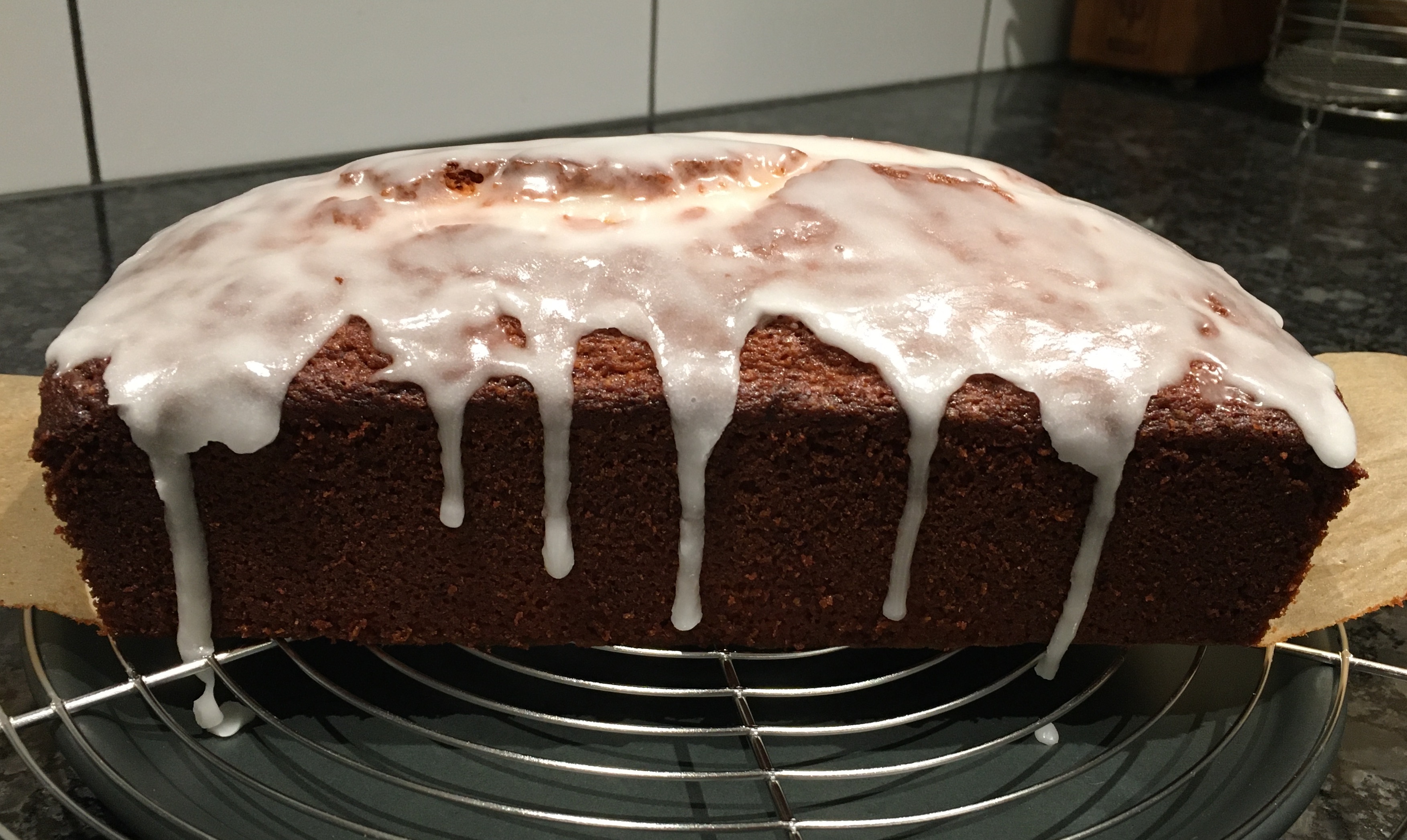
A head cold this past week has left me craving cake, but without the energy to do much baking. Consoling myself with cookbooks from the library, I came across a recipe for Greek Lemon-Yoghurt Loaf Cake that was so easy, I couldn’t resist. Nothing else really caught my eye in the Great British Bake Off cookbook this came from, but I think this one is a keeper.

Here’s the recipe, in case you’re feeling lazy …

150 g plain flour
2 tsp baking powder
pinch of salt
50 g ground almonds
200 g caster sugar
finely grated zest of 1 lemon
3 medium eggs (I used 2 large)
125 ml Greek-style yoghurt
125 ml mild light olive oil (I used a mix of canola and extra-virgin olive oil, because I didn’t have light olive oil)

for the glaze:
125 g icing sugar, sifted
finely grated zest of 1 lemon
1 – 1 1/2 tbsp Greek-style yoghurt

Sift the flour, baking powder, salt and almonds into a mixing bowl (tip in any almonds remaining in the sieve). Stir in the sugar and lemon zest.

Combine the eggs, yoghurt and oil in a measuring jug and beat well with a fork. Pour into the flour mixture and stir until well combined.

Pour into a greased loaf pan lined with a strip of baking paper. Bake at 180℃ for 55-65 minutes until golden brown. When the cake is ready, cool in the pan for 5 minutes, then run a knife around the edges of the pan and lift the cake out by the lining paper and allow to cool on a rack.

Make the glaze by sifting the icing sugar into a bowl. Mix in the lemon zest and then add just enough yoghurt to make a smooth, shiny glaze with the consistency of double cream. While the cake is still hot, spoon the glaze over the top.

I have lots of ideas for variations on this cake—using a blackcurrant glaze, replacing half the flour with barley flour, stirring in frozen blackcurrants … it’s a recipe that invites you to make it again and again. 

Cheese and Quince Tart

Our quince tree gave its first harvest ever this year, which is exciting. I picked them today, and my husband went looking for some new (to us) recipes that use quince.

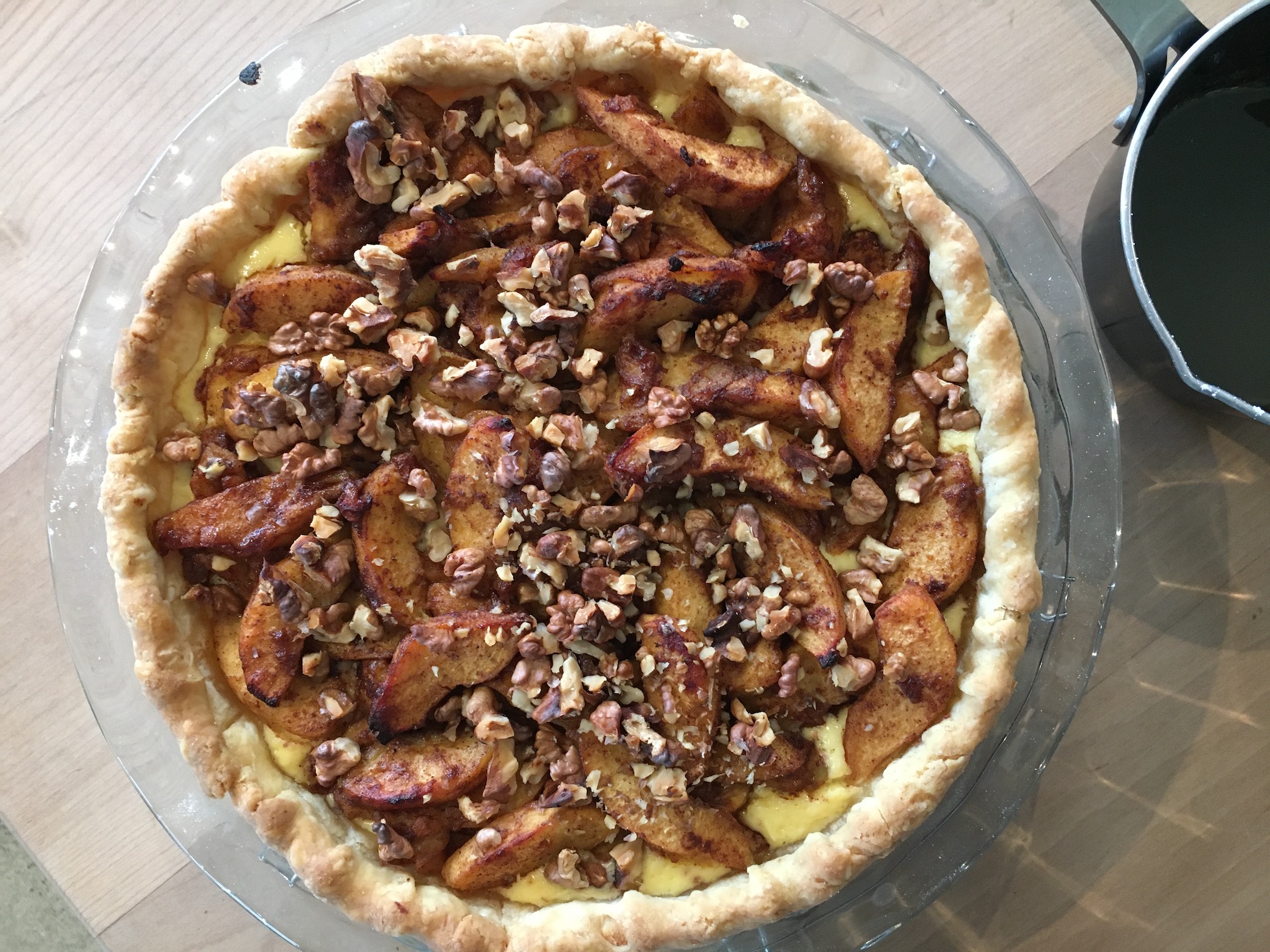
He came across Tarta de Queso y Membrillo con Almíbar de Cardamomo—Cheese and Quince Tart with Cardamom Syrup. How could I resist? 

It’s been a while since I followed a recipe in Spanish, so there was an added level of adventure for me making this recipe. I don’t think I ever bought or used azúcar flor (icing sugar) when we lived in Panama, so I had to look that one up.

Even in your native language, this is not a tart you whip out quickly—nothing using quince is, and this has lots of different things to prepare—but it is delicious! It’s essentially cheesecake with caramelised quince in a pie crust. What’s not to like?

I modified the recipe slightly—here’s my version, in English.

Cheese layer:
1 package cream cheese
1/2 cup unsweetened yogurt
2 Tbs honey
1 egg
1 Tbs fresh lemon juice

Quince layer:
3 large or 6 small quince
1/4 cup brown sugar
25 g butter
1 Tbs cinnamon

Enough pie dough for 1 crust (see my pie dough recipe here)

1/2 cup chopped walnuts

Cardamom syrup:
3/4 cup icing sugar
3 Tbs fresh lemon juice
3 cardamom pods

Make your pie crust and refrigerate until needed.

Mix the ingredients for the cheese layer with a handheld mixer until well combined. Set aside.

Peel, core, and thinly slice the quince (you should have 7-8 cups of fruit). Place the quince, butter and brown sugar in a large skillet and cook on low heat for about 10 minutes, until the quince has softened. Stir in the cinnamon.

Roll out the pie dough and line a pie or tart pan with it. Pour the cheese mixture evenly over the bottom of the crust. Layer the caramelised quince on top, and sprinkle with chopped walnuts.

Bake at 190℃ for 40-45 minutes.

While the pie is baking, make the sugar syrup. Place the icing sugar, lemon juice and cardamom pods in a small saucepan and boil gently for 8 minutes. Remove from the heat and let cool. Drizzle over the pie when serving.

The recipe I used said to serve the tart warm, which is how we ate it this evening. But I’m looking forward to a second piece tomorrow, because I think it’ll be even better cold. 

Next time I make this (because there will no doubt be a next time), I’ll crush the cardamom pods so that the syrup is more strongly flavoured. I also think it would be even more spectacular with a cup of ugni berries (Chilean guava) tossed into the quince mixture.

If you don’t have quince, this tart would be lovely made with apple or pear, too.

Zucchini and Tomato Tart

We’re in the bountiful days of summer right now. And while I’d like to be sitting in a chaise lounge enjoying that bounty all day, someone’s got to pick it and process it. At the moment, the processing mostly involves making pickles and chutneys, but there’s a lot more to come. Then there’s the necessary watering, weeding, tying up of tomatoes, planting of winter crops (because as John Snow says, winter’s coming)…

zucchini tomato tart

But at the end of each day, we do get to enjoy the fruits of the season. Last night I made one of my favourite mid-summer meals—zucchini and tomato tart.

The beauty of this tart belies its simplicity—just tomato and zucchini, embellished with a little parmesan cheese, garlic and basil. 

Back when I had dairy goats, I’d spread a layer of chevre on the bottom, too, which was divine. It also had the bonus of preventing the crust from getting too soggy. These days, without an unlimited supply of goat cheese, I put up with a soggy crust—the tart is still amazing.

This tart relies on having the best tomato and zucchini possible—it’s not a dish to make with out-of-season vegetables—so if you’re in the Northern Hemisphere, hang in there and enjoy this gem in July and August instead.

Download the recipe here.

Black Currant Icing

bowl of black currant icing

I made chocolate cupcakes yesterday and wanted to make use of some of the last of the fresh back currants in them. Instead of tossing a handful of black currants into the batter (which would have been lovely), I used the fruit to make a black currant icing—tart, sweet, and shockingly pink! 

You could do this with frozen currants, too, and it’s not difficult. The result is worth the bit of extra work.

100 g softened butter
3/4 cup fresh black currants
1 cup icing sugar

Place the black currants in a sauce pan and cook until soft—3-5 minutes. Press them through a sieve to remove seeds and skins. Set the puree aside to cool to room temperature.

Beat the butter until fluffy. Add 3 tablespoons of the black currant puree and beat until uniformly mixed. Sift the sugar over the butter mixture and beat until smooth. Adjust by adding more sugar or puree until the icing is spreading consistency.

Biscuit Stars (a.k.a. Starry Scones)

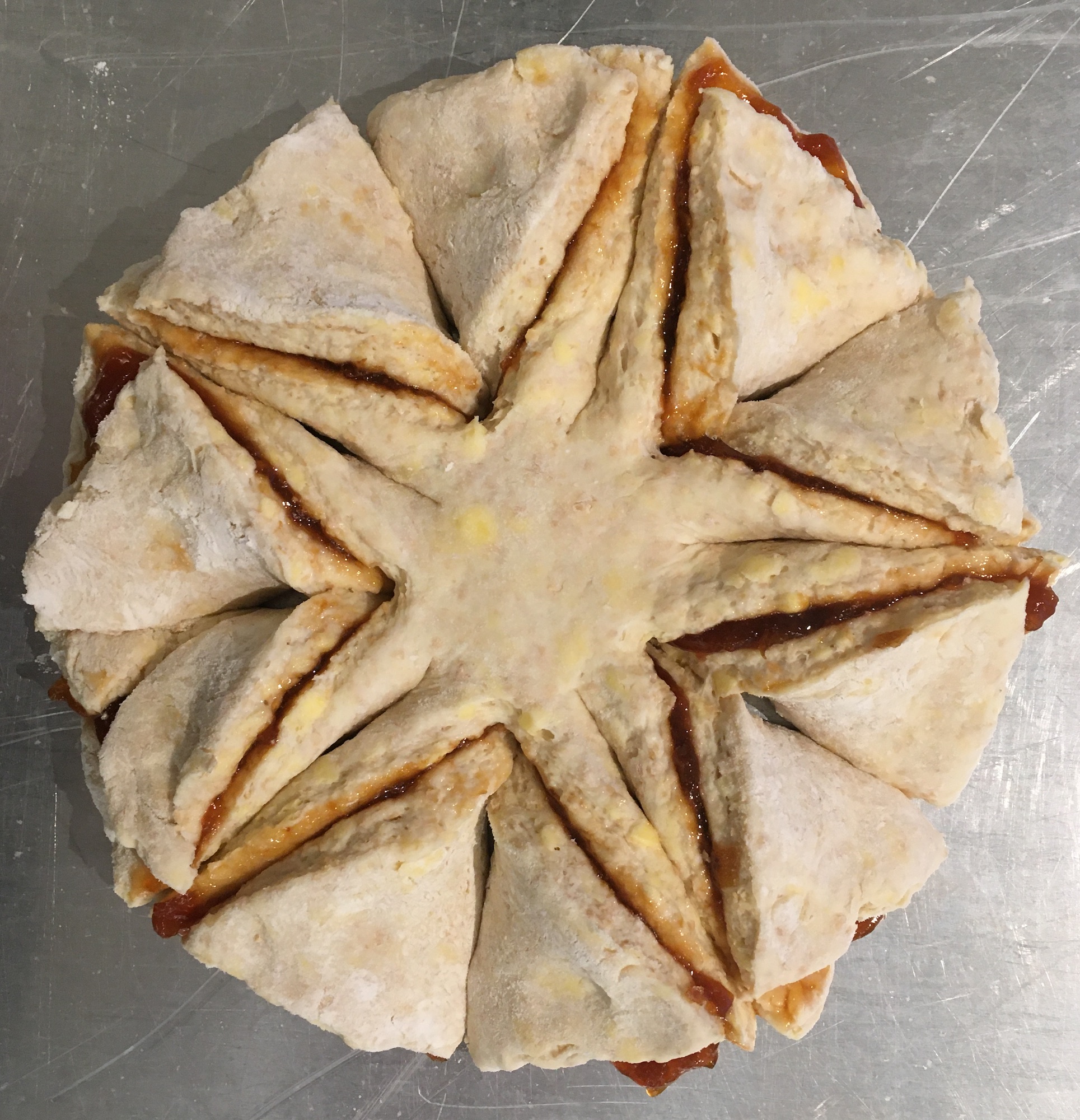
It’s been a long time since I blogged about biscuit stars (or Starry Scones, as I call them here in NZ, since ‘biscuits’ are cookies here). It’s been a while since I made them, too.

I was feeling whimsical on Sunday morning, though, and whipped one up for breakfast. As usual, it turned out beautifully and took minimal effort. It struck me as the perfect ‘fancy’ breakfast for the coming busy holiday season.

Try making one of these yourself—everyone will ooh and aah over your amazing culinary skills, and you never have to let on that it’s dead easy (I won’t tell …). 

Here’s the recipe. Enjoy!

Accidentally Perfect

I didn’t set out to make a spectacular cake.

lemon cake with blackcurrant puree

I actually set out to whip out something simple and quick—a Covid cake—because I had little energy for baking last week as I recovered from the virus.

So I chose a tried and true recipe. My favourite lemon cake is a recipe I came up with years ago when my daughter asked for a lemon birthday cake. It draws on components of a good lemon scone recipe, an orange cake recipe, and a coconut cake recipe. 

It’s a recipe I’ve honed over the years, and one I could probably make in my sleep.

And this iteration of it was one of the best cakes I’ve ever made.

The butter was at the perfect temperature to whip up light and fluffy. And maybe I gave it a little extra time with the mixer, because I was bored of Covid isolation. And because I wasn’t up for much work, I added a little extra liquid to the batter to make the egg whites easier to fold in.

The recipe always makes a cake with good texture, but this one was a step up from the usual. Whether it was perfectly whipped butter or a wetter batter, something worked in my favour, and the finished cake’s texture was positively sublime—soft and fluffy, but with body like a good butter cake should have.

When it came time for a topping, I took the lazy way out. I topped and filled the cake with black currant puree I happened to have in the fridge. No measuring, and no additions to it—I simply spread it between the layers and poured it over the top. The puree spread out thickly, dripping down the sides and drying to a shiny, soft, fruity layer. Not only did it look great (and appropriately bloody-looking for Halloween), but the tart, unsugared black currant was the perfect foil for the sweet cake underneath.

It was a cake I could have served to anyone.

Unfortunately, because we were in isolation, only my husband and I got to enjoy this perfect cake, but I’ll definitely be trying to replicate it in the future.

Strawberry Cupcakes

Every now and again, you come across something that is as delicious as it is easy. The other day I wanted to make a cake involving strawberries, because it’s that time of year. I looked at lots of recipes online that involved making a strawberry reduction first, but it seemed like an awful lot of work. I was really looking for simple. 

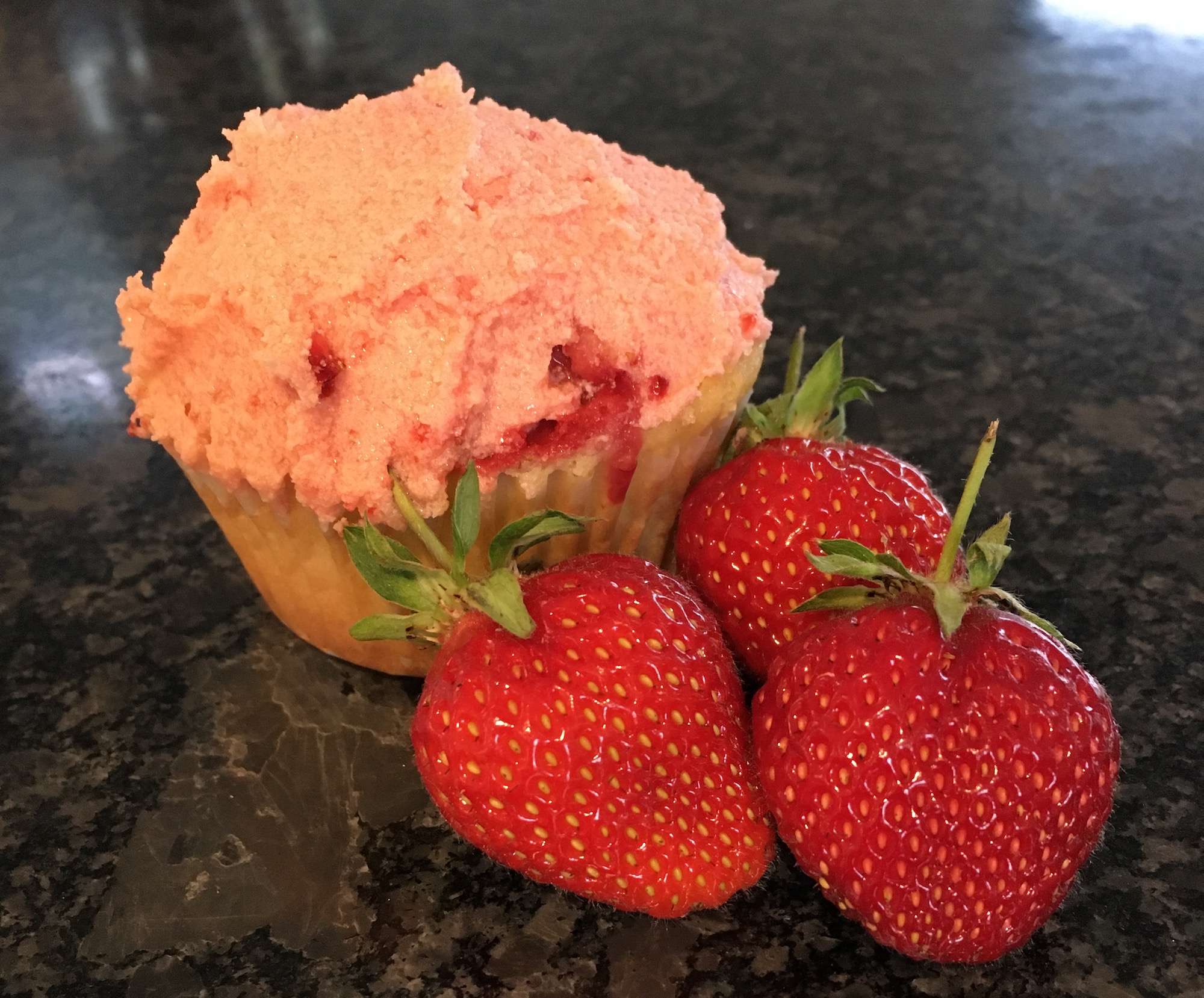
So, ignoring everything I’d seen online, I modified a basic vanilla cake recipe from the Mennonite Community Cookbook, adding sliced fresh strawberries, and whipped up a quick strawberry icing. I baked the cake as cupcakes, as I often do to keep our portion sizes down (because you know I can’t resist cutting a huge slice of cake …).

The result is exactly what I wanted—an easy cake that highlights fresh strawberry flavour. I’ll definitely be making this one again.

Strawberry Cupcakes

3/4 cup butter, softened
1 1/2 cups sugar
3 eggs, separated
3 cups all-purpose flour
1/2 tsp salt
3 tsp baking powder
1 cup milk
1 tsp vanilla
1 1/2 cups fresh strawberries, sliced

Cream the butter. Add sugar gradually and beat until fluffy. Add egg yolks and beat until well incorporated. Sift flour, salt and baking powder together in a separate bowl. Add flour mixture alternately with milk and vanilla, beating well after each addition. Fold in stiffly beaten egg whites, then fold in the strawberries.

Fill cupcake papers, and bake at 175ºC (350ºF) for 25 minutes. Allow to cool completely on a rack before frosting.* Makes 24.

Strawberry Frosting **

60 g (1/4 cup) butter, softened
1 cup icing (confectioners) sugar
1/2 tsp vanilla
3 Tbsp pureed fresh strawberries
Puree strawberries in a blender (I had to puree about a cup and a half of berries in order to have enough volume for the blender to work with—just save the extra puree. There are hundreds of delicious uses for it). Cream the butter. Sift the sugar over the butter and continue to beat. Add vanilla and strawberry puree and beat until well blended. Adjust the icing by adding more sugar or strawberries until it is a spreading consistency. 

* It was a warm day, and I was a little worried my strawberry icing would weep if it sat at room temperature with the cupcakes. Instead of frosting them all, I frosted only what we were going to eat right away, storing the remainder in the fridge, to spread on the cupcakes as we eat them. Alternately, you could store your iced cupcakes in the refrigerator. Mine is currently stuffed full of zucchini and green beans—no room for cake.

** Double this frosting recipe if you want to ice all 24 cupcakes. I put half the cupcakes in the freezer unfrosted, since I haven’t got kids at home to devour them at the moment, so I only made a small batch of frosting.

Black Currant Pie

I have blogged about black currant pie before, but it’s worth doing again. This year’s black currant harvest was overwhelming, not just because it came in the two weeks on either side of Christmas, but also because it was huge. It didn’t help that the red currants also gave a hefty crop at precisely the same time. For two weeks, I felt like all I did was pick and process currants.

Well, and eat them, too.

We use currants in ice cream, crisps, cobblers, fruit salads, and smoothies, but my favourite way to eat them is in pie.

Black currant pie is not for the sour-averse—it is a full-bodied, knock-your-socks-off type flavour. To me it is the flavour of summer. And because it works equally well with frozen berries, I always try to save enough so I can make black currant pie on the winter solstice and dream of long summer days in the chill and dark of winter. 

So revel in the intense flavours of summer and enjoy a slice of black currant pie. You can download a pdf of this recipe here.

Crust:
¾ cup all purpose flour
¾ cup wholemeal flour
¼  tsp salt
60 g butter
60 g Olivani
3-4 Tbsp ice water

Filling:
4-6 cups black currants
½ cup sugar
2 Tbsp flour

Topping:
2/3 cup flour
2/3 cup finely chopped walnuts (or rolled oats)
2/3 cup brown sugar
1 tsp cinnamon
75 g butter, melted

Crust:
Whisk together the flours and salt in a medium bowl. Cut in the butter and Olivani with a pastry knife until the largest chunks of butter are the size of small peas. Sprinkle the ice water over the flour mixture and combine with a fork until evenly moistened. Knead lightly, just until it forms a coherent dough (it will be crumbly). refrigerate while you prepare the filling and  topping.

Filling:
Combine sugar and flour in a small bowl. Mix with stemmed, washed black currants and set aside.

Topping:
Combine the flour, walnuts, sugar and cinnamon in a medium bowl. Stir in the butter with a fork until evenly moistened and crumbly.

Roll out the crust and place in a 23 cm pie pan. Pour the filling into the pan and sprinkle evenly with the topping. Bake at 200°C for 30 minutes, then reduce the heat to 170°C and bake another 30 minutes.

Serve with a generous dollop of whipped cream.