Oh boy! Oh boy!

DSC_0005 copyEvery crack in my hands is stained purple. My fingernails have turned a dark grey. The floor, walls and cupboards in the kitchen are splattered magenta. There is a sticky splotch on my big toe that looks remarkably like a terrible wound.

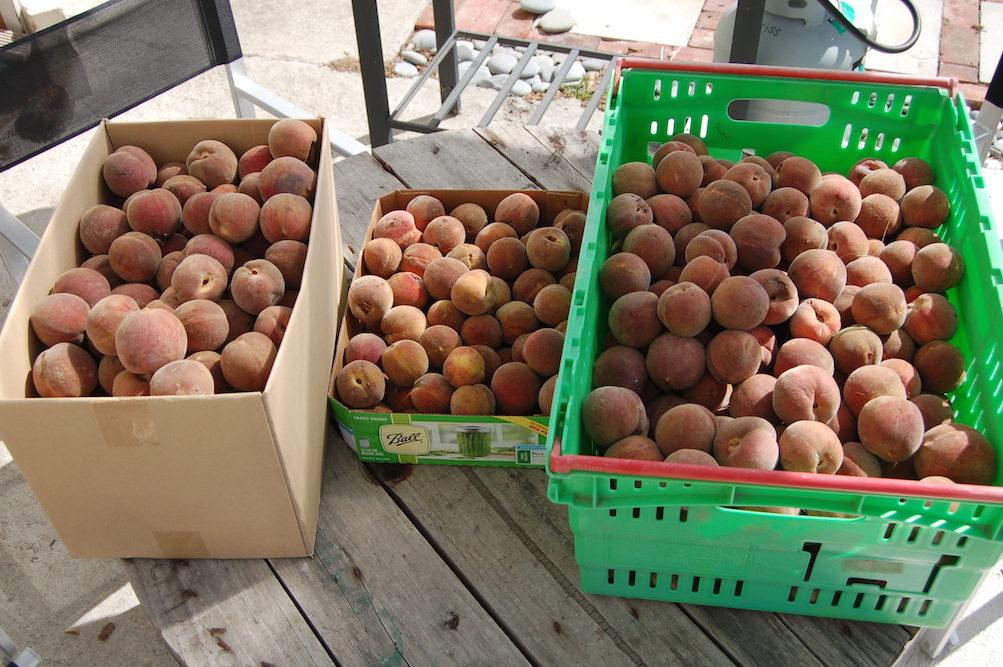
These are the inevitable result of working my way through the better part of 40 kg of black boy peaches.

The dentist called mid-week to say he had a box of peaches for me; I should call in at the office and pick them up (this is the gardening dentist I mentioned in a previous blog). Along with the 10 kg box of peaches was an invitation to coffee (and more peaches) this morning. We came home with a veritable carload of peaches (more than 30 kg, though I haven’t weighed them all). The first 10 kg became 10 pints of spiced peach butter. Then I filled up my remaining quart jars (14) with canned peaches, and made enough peach crisp for a generous dessert tonight and breakfast tomorrow morning.

There are still about 12 kg left. I’m out of jars, out of freezer boxes. Hmm…I suppose that means we’ll have to eat peach pie, peach cobbler, peach shortbread, peach muffins, peaches on granola, and just plain old peaches all week. Darn. 🙂
In praise of the freezer

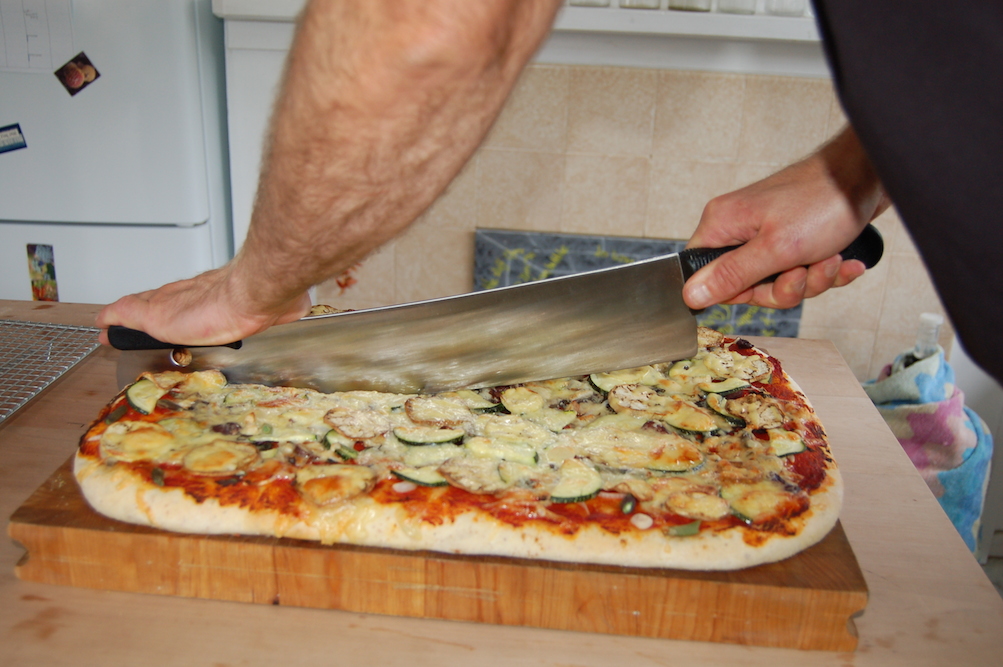
Hurrah for the freezer that allows us to enjoy hot homemade pizza in 15 minutes!

Hurrah for the freezer that allows us to enjoy hot homemade pizza in 15 minutes!

This evening, the kids have a piano recital. But first, we will stay late at school for band practice, and Ian will come home late from work because of a meeting. There will be precious little time between the day’s events and the evening’s event to cook and eat a meal.

Thank God for the domestic freezer (or perhaps I should thank the dozens of inventors who worked on developing and refining refrigeration technology since 1755). Despite the tight schedule, we will eat well this evening. A homemade pizza awaits us in the freezer. Fifteen minutes in the oven is all it will take to turn that icy block into a delicious meal.

This is our first year with a chest freezer, and we are singing the praises of modern refrigeration technology (at least until the power goes out for four days, which has been known to happen in this shaky land). In the past, we’ve not been able to freeze vegetables, because the little freezer space we had was needed for the 24 loaves of bread Ian makes every two or three weeks. We resisted getting a chest freezer for a variety of reasons—space constraints, cost, the frequency with which the power goes out (5 times so far in the month of March)—but after the cheese fridge died, we decided to give the chest freezer a try (it could sit where the cheese fridge had been, after all, and the cheese…well, we’d figure out where that was going later).

In the heat and bustle of summer, it was lovely to be able to quickly prepare fruit for freezing, rather than laboriously canning it and steaming up the kitchen. It was delightful to be able to plant as many peas as I had space for, knowing I could freeze the excess. I was thrilled to be able to freeze the extra corn, rather than watch it dry out on the plants. And when the pumpkins start to rot in late winter, I’ll be able to bake dozens of them at a time in the bread oven and freeze the flesh so we don’t lose them.

So, thank you William Cullen, Oliver Evans, Jacob Perkins, Alexander Twining, James Harrison, Ferdinand Carré, Nathaniel Wales and many, many others who have refined this technology over hundreds of years and brought us the modern freezer.

Life as a Squirrel

pumpkins2 smHaving recently crossed over into the dark side of the year, I am naturally looking ahead to the winter to come. The days are growing short, the nights cool.

As I sneak a late-night snack of almonds and raisins (though I’m not particularly hungry), I begin to wonder…Am I like a bear, eating extra food, building up fat in order to hibernate all winter?

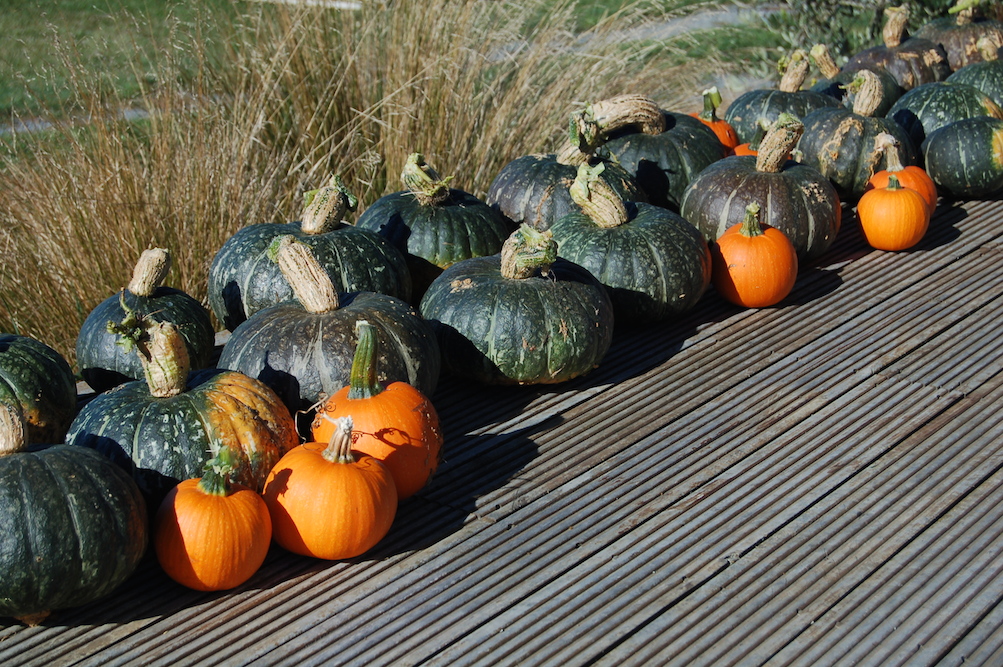
Then I harvest the beans, corn and pumpkins and store them away in cupboard, freezer and shed, and I believe I am like a chipmunk, filling its larder with autumn’s bounty so I can huddle inside munching on the fruits of my labour all winter.

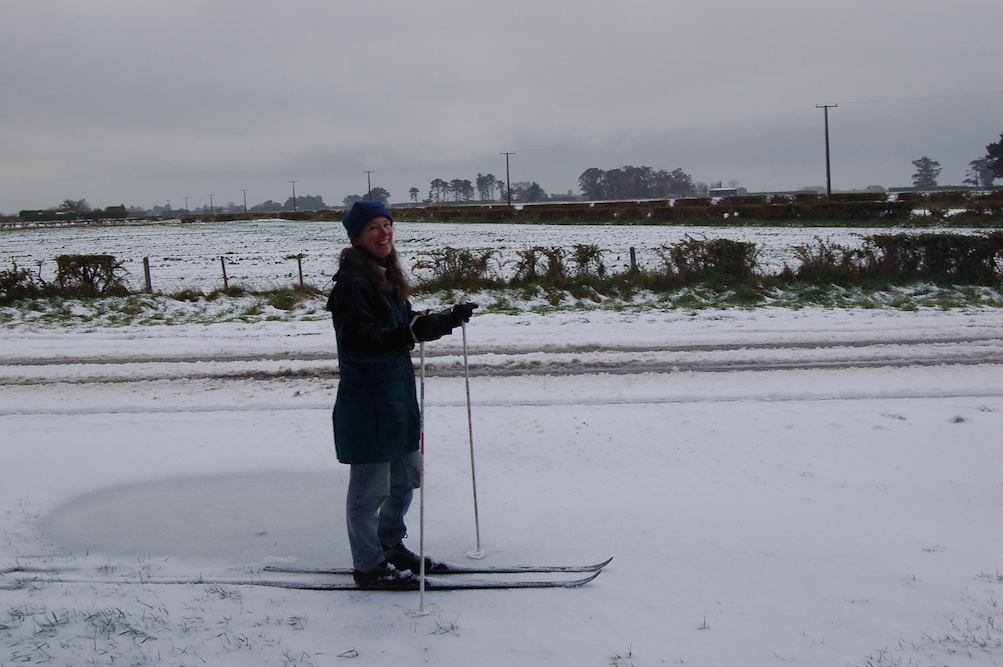
Our last snow--in 2011. We rarely get snow to frolic in, but it's nice to frolic when I can.

Our last snow–in 2011. We rarely get snow to frolic in, but it’s nice to frolic when I can.

But that’s not quite right, either, because I’m truly more like a squirrel. I hunker down in my winter nest during the worst weather, but on fine winter days I like to frolic outdoors, to scamper around searching out the little tidbits I’ve stashed here and there. The chard I left growing on the compost pile, the lettuces in the greenhouse, the last of the potatoes and carrots still in the garden, the cabbage and broccoli that hang on through the cold months. Sometimes, squirrel-like, I forget where I’ve hidden something—the last jar of artichokes, in the back of the cupboard, perhaps, or the leeks, quietly growing without my noticing until one day they are ready to eat.

I’m sure that, for a squirrel, fine winter days are a frantic race to stave off winter starvation, but for me, winter frolicking is just that—a little light weeding, gathering in the meagre winter crops, and enjoying the release from the hard labour of summer.

I still have a month or more to go before I can rest from summer labours, but on this tired end of the year, I look forward to my squirrely winter days, curling up in my nest and eating from my food caches.

The Well-sharpened Knife

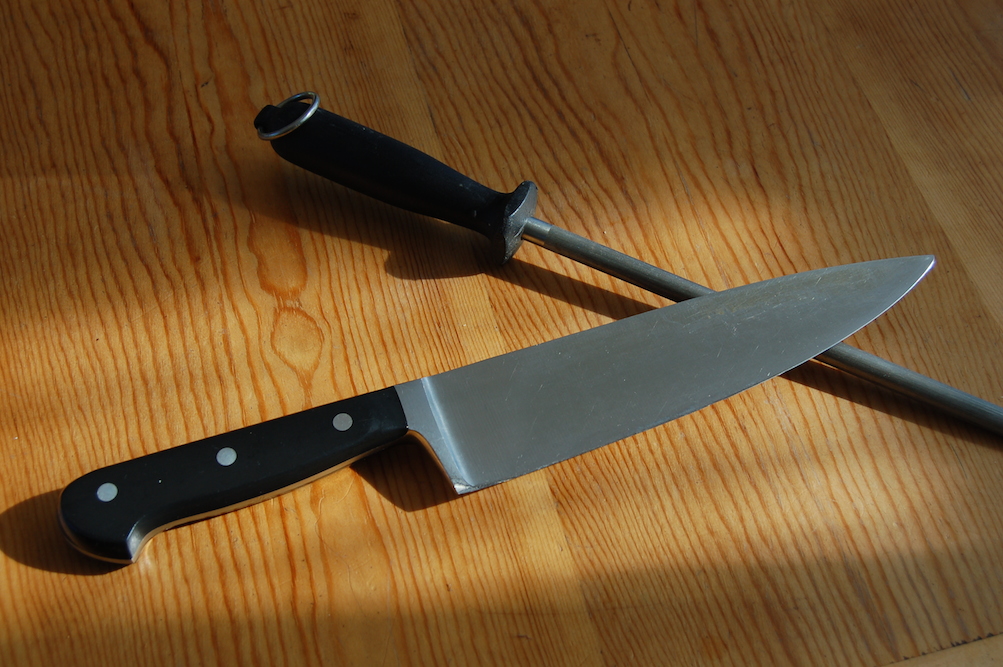
knife_sharpenersmTomatoes are always good for our knives. There’s nothing like a tomato to show you how dull a knife is, and the knives get sharpened more during tomato season than they do all the rest of the year. Last weekend, I sharpened my favourite tomato knife twice as I chopped 18 kilos (40 pounds) of tomatoes for pasta sauce. Then I sharpened it again the next day before slicing a tomato for lunch.

Years ago I saw a knife salesman demonstrating his wares. He cut a tomato to show how good his knives were. The knife sliced cleanly through the fruit, without squishing it, or tearing at the skin. It would have been an impressive demonstration, except that I know all about tomatoes and knives. The best knife in the world will destroy a tomato if it’s not well sharpened. The knife salesmen count on that. Their knives might be the cheapest, lousiest knives out there, but because they sharpen them before a demonstration, they’re guaranteed to cut better than any knife in the average domestic kitchen.

A well-sharpened knife is a pleasing tool (and much safer than a dull one). It’s too bad it takes a bushel of tomatoes to remind me to sharpen them.

Some Like it Hot

DSC_0003 copyWhat do you do with 3 kg of hot peppers? I don’t know, but you’ll need lots of water on hand!

I planted Thai Super-Chilli, my reliable, high-producing hot pepper this year, and I also tried a new variety—Jalapeño Early. Ordinary jalapeños take so long to produce that they’ve barely flowered before the frost kills them off. I didn’t expect much from Jalapeño Early, but I hoped we’d at least get a few. They’ve been tremendous! We’ve been eating them for weeks, and I finally had a chance to go out and properly pick—close to 3 kilos, and more still on the plants (I quit picking when my colander was full). That’s a kilogram of fruit from each plant–way more than I ever expected!

Unfortunately, they’re milder than an ordinary jalapeño, but I’ve pickled them with a few Thai Super-Chillies in each jar, to spice them up a notch. They should be great with the black beans I harvested a few weeks ago—warm us right up on a cold winter evening!


Sitting ‘Round the Cauldron

tamalesboilingBubble, bubble, toil and trouble

Fire burn and cauldron bubble!

It’s the third weekend in a row I’m standing over my 20 litre stock pot filled to the brim with something to be canned or frozen. Maybe I need a proper cauldron…

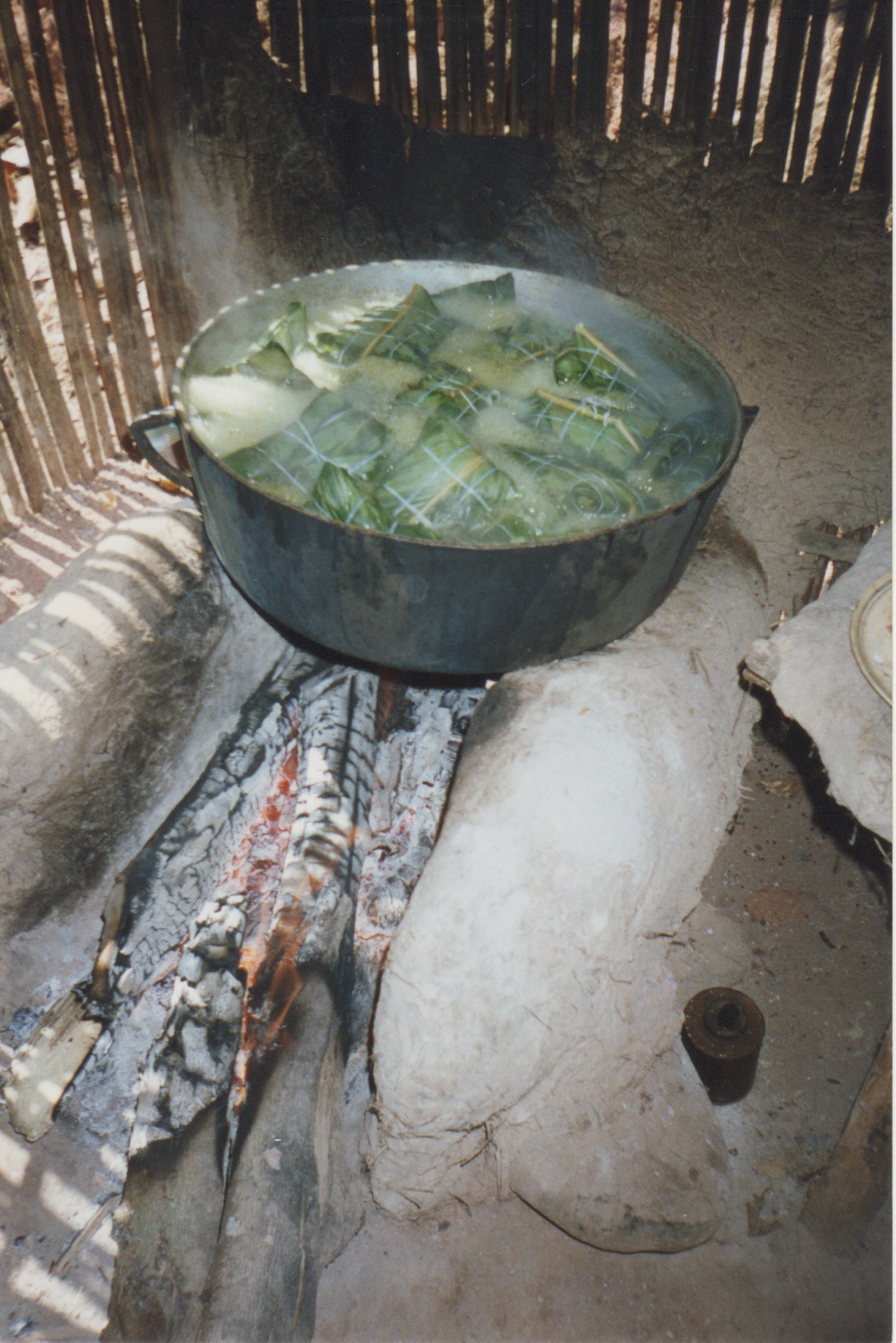
The women I worked with in Panama had incredible cauldrons. Cauldrons that made my 20 litre stock pot look like a mere saucepan. The big cauldrons didn’t necessarily get used every day, but they came out for the making of tamales when the corn was ready.

MakingtamalesAnaMagallonandLaurianaSoto'sdaughterPaulaTamales were a favourite fundraiser for the Amas de Casa group I worked with. We’d gather at one of the women’s houses, each bringing ingredients. We’d spend the whole day grinding corn, plucking chickens, cutting vegetables, and forming the tamales. Tamales are a mixture of meat, onions, and “guisos” (flavourful things like celery and cilantro), surrounded by a thick corn mash. The mass is wrapped in a leaf and boiled to set the corn into a dense, polenta-like cake. That’s where the making tamalesSebastianagiant cauldron came in. We’d cook dozens of tamales at once in one of those vast pots, set over a raging fire.

Once the tamales were finally in the pot, one of the women would produce a small bottle of seco (distilled from cane sugar, and clocking in at 70 proof), and pass it around. It was the only time I ever saw the women drink—sitting around watching the big cauldron boil.

Hmm…now there’s an idea! Sure would make stirring this tomato sauce more pleasant…

There Will Be No Blog Today…

DSC_0001 copy4.26 pm.

I sit, finally, to blog.

Do I blog of the cheese I made this morning, pressing on the kitchen counter? Do I describe the magical beauty of liquid milk congealing to a smooth, firm solid? The hours of tedious stirring? The firm, almost live feel of a new cheese?

Do I blog of the ten quarts of tomatoes, onions, peppers, tomatillos and spices I boiled down into ketchup today? Do I write of the bees that swarmed the kitchen when the vinegar was added, inexorably drawn to the sharp, spicy smell?

Do I blog of the corn and soybeans still awaiting me in the garden? Of the hours of steaming pots, and dirty dishes that still await me today?

No. I am weary of the kitchen. I am sick of its tantalizing fragrances and its steamy dishwater. I am irritated by the bees, who, once inside, can’t find their way out, and force me to watch every step for fear of ending my day with a trip to the hospital.

So there will be no blog post today, of the lingering smell of cloves and allspice, no detailed description of the art of cheese, no reminiscing of childhood afternoons shelling soy with my sister.

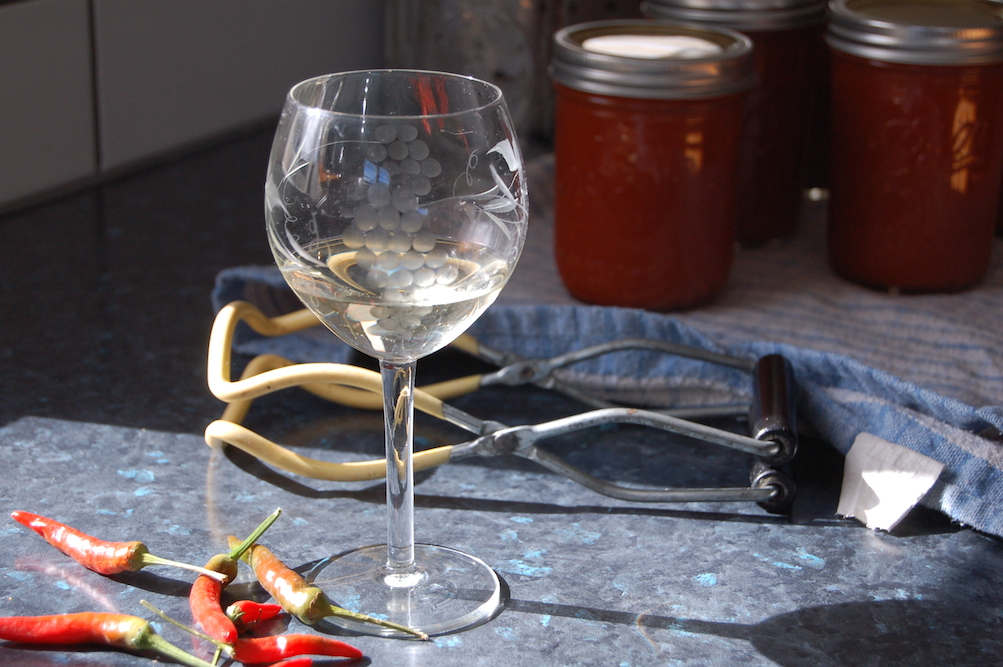
No. Instead, there will be 15 minutes of rest. A glass of wine. And then back into the fray.

The Harvest Hangover

The morning after

The morning after

I woke this morning with a headache. It was one I recognised—the Harvest Hangover. It’s a combination of fatigue and dehydration that comes after a day of picking and preserving vegetables.

Back in the years B.C. (Before Children), I used to lose 10 pounds during harvest season. I’d forget to eat and drink as I picked and processed mountains of tomatoes, zucchini, eggplant, beans, etc. Ironic, eh? After a night of canning, I’d wake with a Harvest Hangover. I’d stumble to work grumpy and groggy, as though I’d been out carousing all night.

As I age, I’m more moderate in my preserving. Instead of weeks of late-night canning sessions, I do two or three a year. It helps that I can’t grow the quantity of tomatoes I used to during the hot summers in Pennsylvania, but I’ve also rationalised my preserving. Here, where winters are mild, I can grow cool-weather crops year round, so winters aren’t the fresh vegetable desert they are in a harsher climate. If I don’t have 50 quarts of tomatoes in the cupboard for winter, it doesn’t matter—we can eat something else instead. I preserve only what I know we’ll eat, so I’m not throwing away old canned goods every summer. I’ve learned to better manage my planting so that I’m not completely overwhelmed with any one crop (usually). And I allow myself to simply give away extra produce when I am overwhelmed.

Perhaps it’s a sign of aging that I don’t wake with Harvest Hangovers very often any more, but I like to think of it as a sign of wisdom. As they say, know your limits!