Happy New (Garden) Year!

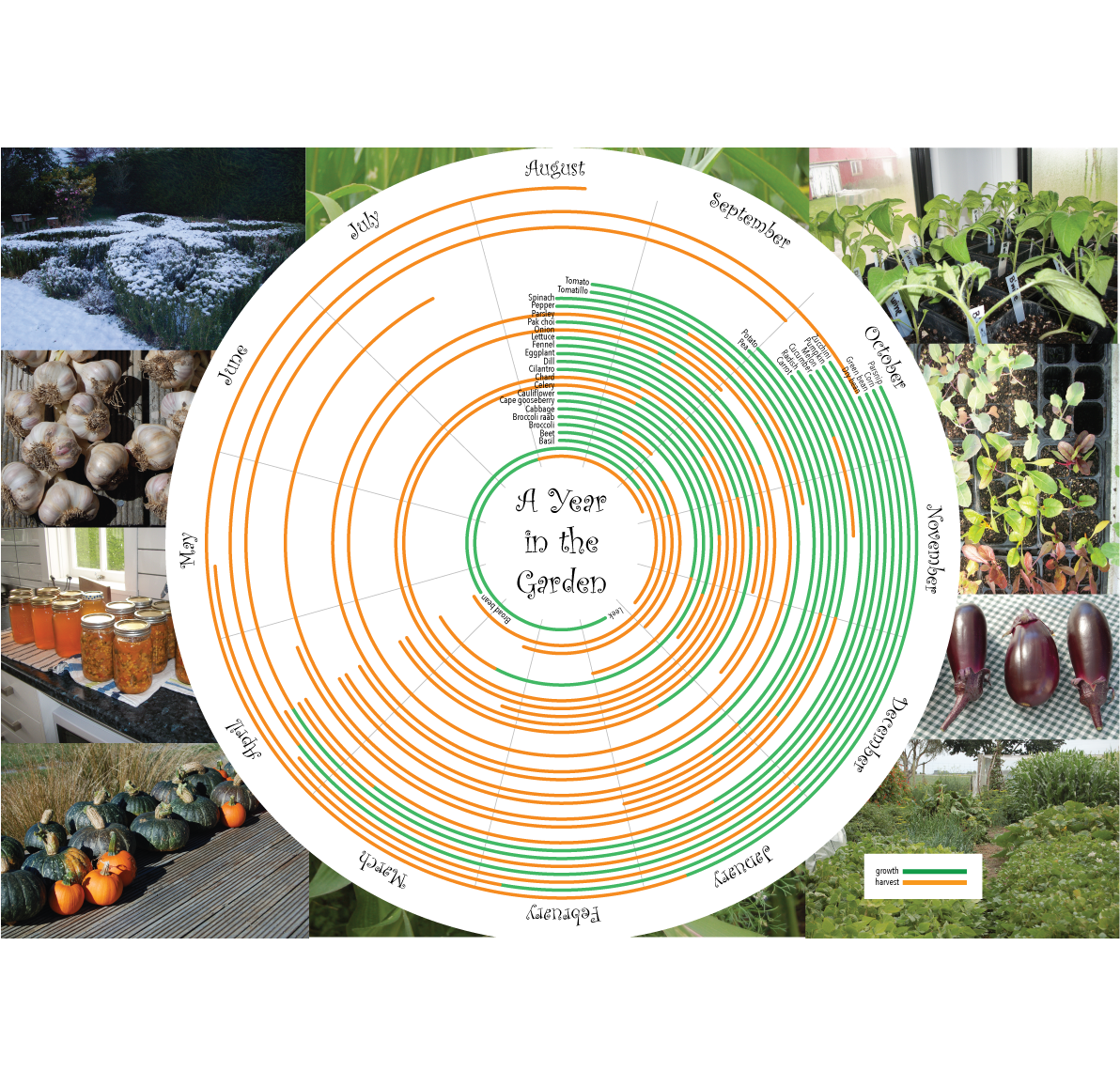
I love the month of July; it’s the beginning of the garden year in my mind, because it’s the month I plan the garden and order my seeds. It’s been a few years since I blogged about my garden year, so I figured it was time to do it again. I unearthed this little graphic my husband helped me create a few years back, showing my annual planting and harvesting schedule. It has changed a little since then, and I notice some crops, like garlic, are missing from it, but it’s still a fairly good indication of my year in the garden.

I struggled the first few years here. Coming from the Northern Hemisphere, I had no idea when I should plant things. And the idea of growing vegetables over winter was foreign to me, too.; gardening in Minnesota and Pennsylvania is sharply seasonal. It’s seasonal here, too, but much less dramatically so.

Instead of growing a ton of spinach over the summer and freezing it for winter, I learned to simply plant small quantities regularly throughout the year, for a perpetual supply of fresh greens. Same with lettuce, chard, broccoli, cabbage, and cauliflower.

Today my garden year ebbs and flows, but there is never a down time in the garden. There is always something to plant, weed or pick. The end of last year overlaps with the beginning of this year, so while I plan my seed order, I’m harvesting the lettuces, broccoli, leeks and other late crops planted in the autumn, and I’m weeding the garlic and broad beans that will be harvested in the coming spring and summer.

Sometimes I miss the complete downtime of gardening in Minnesota—the winter lull when there’s no need to go out and weed in the cold. But only sometimes. The never-ending garden year here has its perks in garden-fresh vegetables year-round.
Self-control … yeah, right.

Now that we’re on the upside of the winter solstice, I’ve planted my garlic—108 cloves, which should yield about 100 heads, assuming my usual success rate.

That’s absolutely too much garlic.

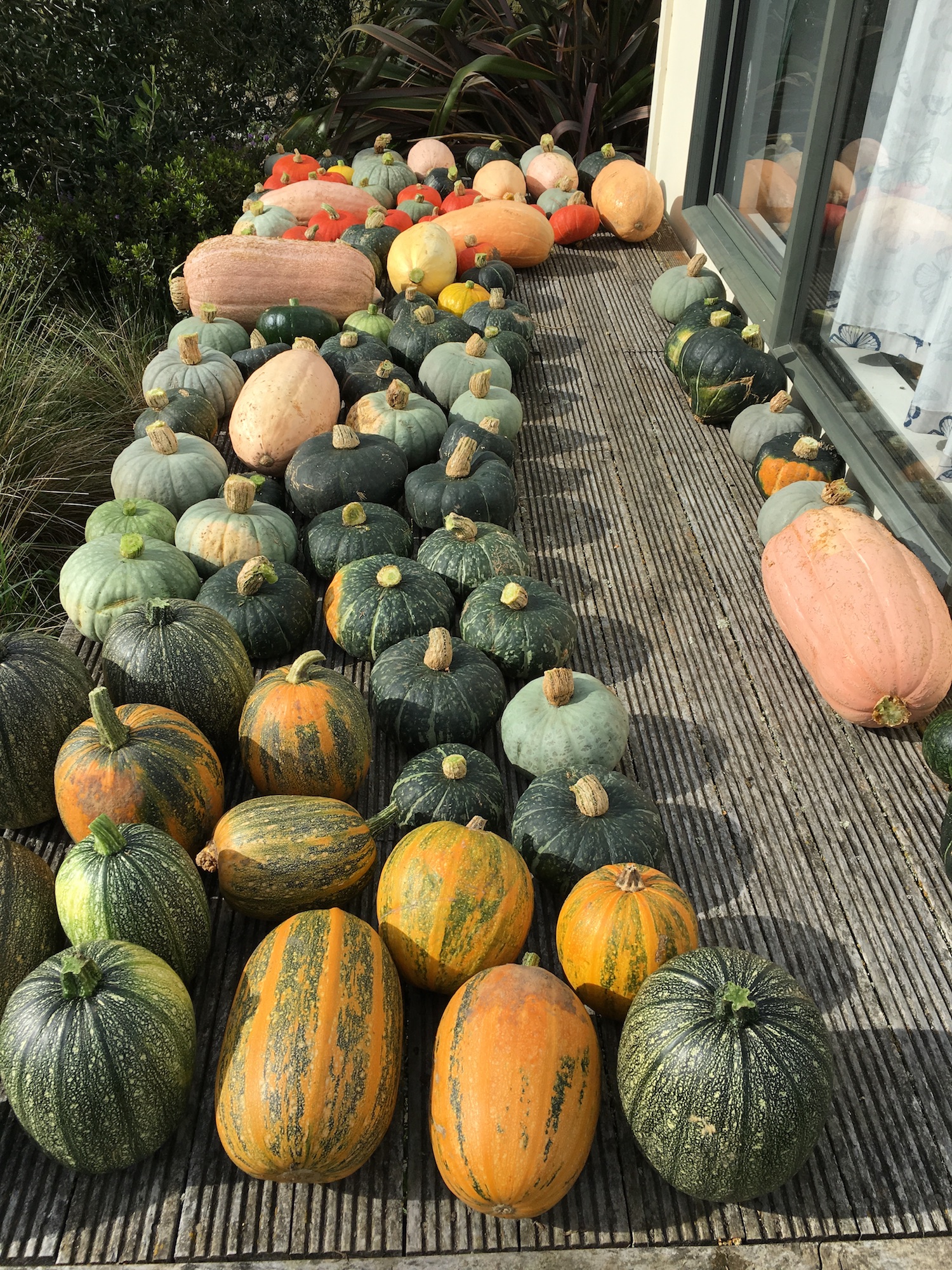
It’s a bad omen. I drew up my garden plan this morning—a garden roughly three-quarters the size of the one I’ve planted for the last decade. Hopefully it won’t yield 200 pumpkins and 80 kilos of pickling cucumbers next year when my teenage son won’t be around to eat them all.

But, plan or not, if I plant other crops with the exuberance with which I planted garlic today, I’ll end up with a garden every bit as big as past gardens. Some time in the next two weeks, before this year’s seed catalogue arrives, I need to get control of my gardening urge.

Wish me luck.

Can’t Stand the Heat?

Chilli peppers are one of the prettiest plants in the garden. It’s no wonder there are so many varieties grown largely for their ornamental value.

But I appreciate my chillies for their kick as well as their glossy leaves and cheerful fruit. Unfortunately, chillies are tropical plants, and many varieties need a longer, hotter growing season than I can provide here, even under cover.

Two varieties, however, regularly produce well.

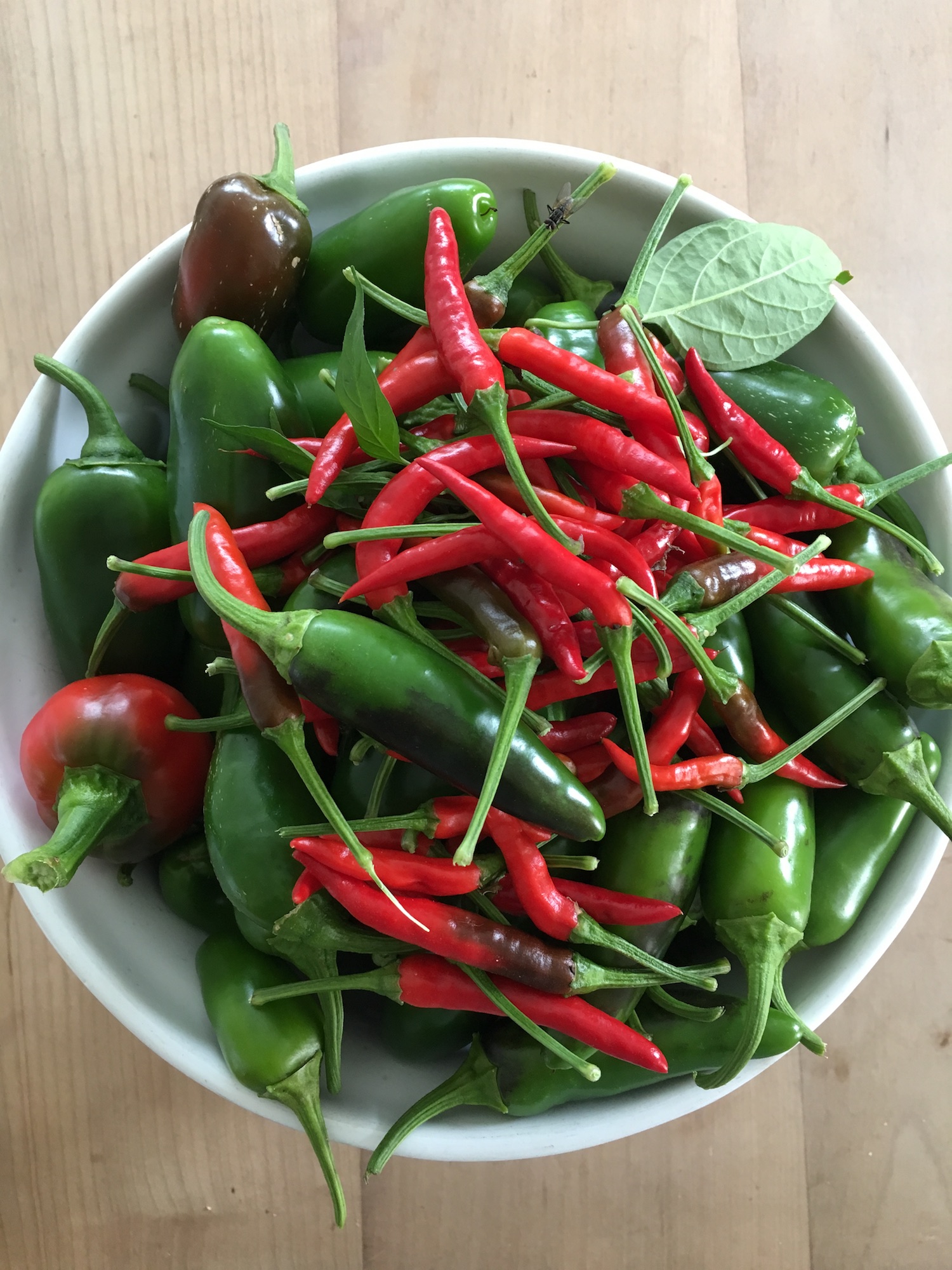
Jalapeño Early—I can’t grow normal Jalapeños, but this variety is a week or two quicker to produce, and that’s enough. One of my favourite chillies because its low heat level (2,500-8,000 Scoville Heat Units) means you can load a dish with them and enjoy the other flavours they impart along with the heat.

Thai Super Chilli—At 40,000 to 50,000 Scoville Units, these peppers are significantly hotter than Jalapeños. Just one of these little gems gives a nice kick to a dish. I particularly like these chillies because they dry well in beautiful strings hanging in the kitchen. They’re easy to grow and preserve, and they lend beauty to the garden and the kitchen all year.

A couple plants of each of these peppers is plenty to grow a year’s supply of spicy goodness, but you know I can’t stop there. I usually plant at least one other mildly spicy pepper. this year, it was Cherry Large Hot. Similar to Jalapeños for heat, these chillies really serve no purpose for me except as a beautiful red contrast to the green Jalapeños in salsas and pickled peppers. Good enough reason for me to plant them!

Double Cherry Pie

I picked eight cups of cherries from our tiny sour cherry tree the other day. I was thrilled I’d gotten enough for two pies from a tree not much taller than me! I decided to make them all up into pie filling—I’d make one pie right away, and freeze half for later.

But when it came to filling the pie dough, I poured all eight cups in! Yikes! There was no way to take it back out, and I knew it was going to boil over and be a disaster in the oven.

I shrugged—nothing to do but see what happened—and slipped the pie into the oven (with a tray beneath it to catch drips.

An hour later, I pulled the most glorious pie out of the oven…

It had dripped a little, but no more than every other cherry pie I’d ever made.

And it looked plump and delicious. Each slice was thick and wonderfully overloaded with fruit. Truely decadent!

I’m not sure I’d recommend making a pie with eight cups of cherries—it really could end up a disaster in the oven—but it certainly was a delicious mistake.

Advent List

It’s the silly season, with end-of-the-school-year stuff piling up with Christmas, summer vacation, and garden stuff.

Once again, lists take centre stage for me. The general to-do list gave way to a ‘before Christmas’ to-do list. That list has now been refined into a day-by-day list, a sort of sadistic Advent calendar counting the days to Christmas.

I’m afraid ‘write blog’ didn’t make it onto today’s list. It was bumped off when I failed to complete ‘pick and process peas’ on yesterday’s list, due to the unexpectedly large harvest.

So, I’m off to blanch and freeze peas. Hope you’ve all had a lovely day and completed everything on you to-do list. Just two more weeks, and we’ll get a day off!

The Things We Do for Love

I’m not fond of pickled onions.

To be fair, I haven’t tried pickled onions since I was a kid, so who knows what I think of them today.

But I would never have planted, watered, and weeded pickling onions; I would never have spent a day prepping, brining and canning them for myself. 

No, all that work was for my son. 

He’s never had pickled onions, but I think he will adore them. He eats the garlic cloves from the bottom of the dill pickle jars, and loves onions in every form. 


So the pickled onions are for him. I’ll be curious to try them myself—maybe I’ll like them, too. Seeing how pretty they are in the jars, I wouldn’t mind an excuse to make them again next year. 

A Cook’s Evolution

It’s a piece of cake…

I made quiche for dinner tonight. Not unusual on a Wednesday.

Not these days, anyway.

There was a time when quiche was a weekend meal. I made the crust, and my husband made the filling. It was a big deal. It certainly wasn’t a task for one person after a full day at work.

There are a lot of meals like that. Meals that used to be daunting, but now are regulars at any time of week.

Part of that is due to my 5-second commute. If I quit work at 5:00, I’m home at 5:00 (provided I’m not distracted by the weeds between my office and the house). I have more time to cook than when I had an hour-long drive to work.

But most of it is the evolution of my cooking skills. Things like pie crusts, homemade noodles and homemade tortillas used to be difficult and apt to cause me frustration by being too wet or too dry. I’ve made them so many times now, I don’t even pull out a recipe anymore. And I’ve refined the recipes so that they’re always the right consistency.

I have an intuitive feel for what needs to be done to cook a meal, so that I work efficiently, taking the opportunity of a minute here or there while something cooks to prepare another dish.

I know when to think ahead, too—putting beans on to soak at breakfast time so making refried beans at dinner is quick and easy, making a pie crust the evening before so that a quiche is as simple as cooking vegetables and tossing them in the pie, making a double batch of labour-intensive dishes so that there are leftovers for the freezer for instant gourmet meals, preserving garden produce in exactly the right quantities and forms so it’s easy and quick to use in our favourite dishes.

The evolution has been slow, and it’s only now and again that I notice it. When I do, I’m always surprised. “When did this become so easy?” By the time I notice, I’ve almost forgotten how difficult it used to be. There are a lot of past hours of stress and frustration behind every beautiful quiche, or stack of tortillas, or homemade ravioli that I casually whip up today.

It’s a good reminder, for those times I see someone else effortlessly doing something I find difficult or impossible. It may be effortless today, but you can bet a whole lot of effort and evolution has gone into making it that way.

‘Tis the Season

And So It Begins…

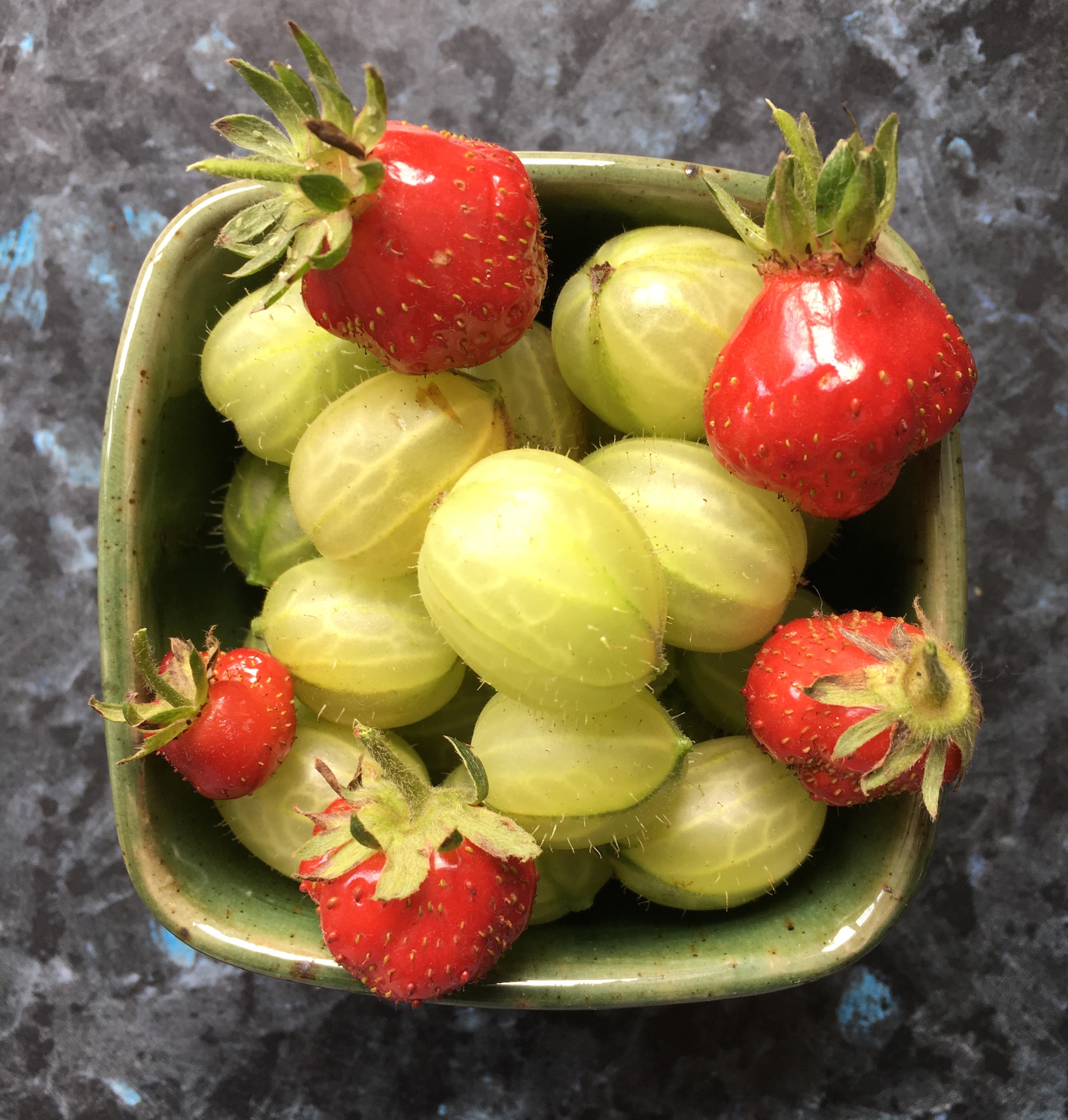
We’ve been watching the berries for weeks, and the signs have been promising. The gooseberry bushes are dripping with fruit. The currants, too, promise a good harvest. In spite of a viral infection, even the strawberries are managing a crop. The raspberries are humming with bees, attracted to a plethora of flowers.

The first harvest was tiny—a handful of berries—but it marks the beginning of my favourite season on the property. The season of fresh fruit. It begins with strawberries and gooseberries, moves on to currants, cherries and raspberries, and ends with apricots and plums. Watermelons, apples, and peaches come late in the year, and they’re lovely, but nothing compares to the early summer fruits. Their season is short, but bountiful. It’s the season of jams, fruit pies, and fruit ice cream. The season of gooseberry fool, strawberry-smothered waffles, and apricot upside down cake. It is the season of plenty.

In festive red and green, ’tis the season, indeed.

An Abundance of Artichokes

It’s a terrible thing, having excess gourmet vegetables. We are in our usual springtime artichoke excess. It’s not unusual for us to eat eight or nine artichokes five days out of seven.

A quick online search shows artichokes currently selling for anywhere from US$3 to 10 per pound (that’s NZ$9-31/kg). Given we easily eat a kilo per meal…Well, you get the idea. If we had to pay for them, we couldn’t afford them.

Of course, the problem remains–what do you do with that many artichokes? We preserve quite a few for use at other times of the year, but that still leaves plenty to enjoy during the season.

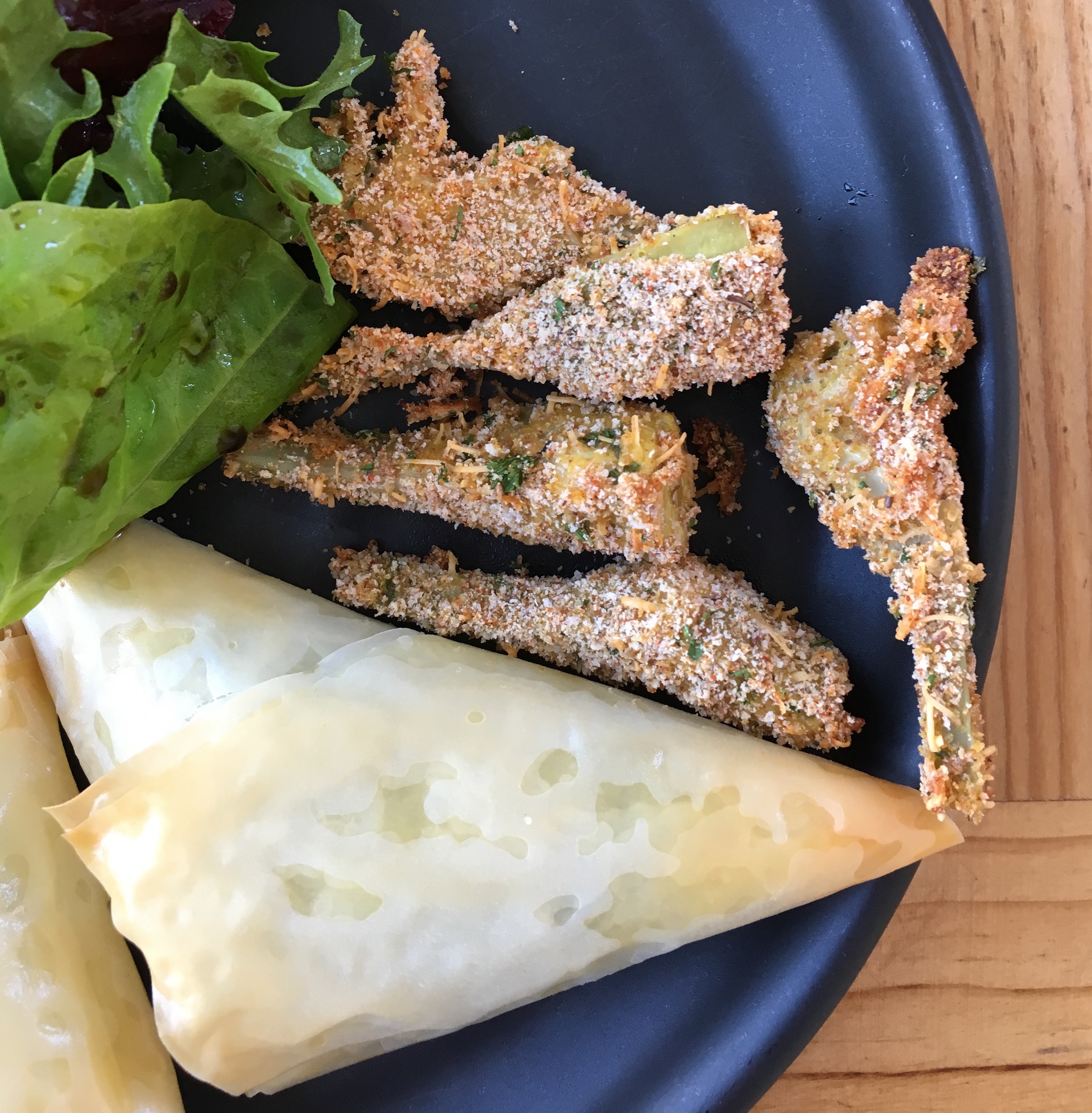
We eat a lot of artichokes in risotto, pasta, pizza, and gratins. The other day, I tried a new way of preparing them–crusted with parmesan and baked.

It’s simple, if a bit time-consuming (it would be trivial if you simply bought canned or frozen artichokes).

First, prepare the artichokes: snap off the outer leaves, peel the base and stem, trim off the top 1/3 of the leaves, remove the choke and any spines on the inner leaves, and cut the remaining heart into wedges. Drop wedges into a bowl of lemon juice and water as you go to avoid browning. Drain and steam for 3-5 minutes, until just tender, but not falling apart.

Then prepare the breading: mix in a medium bowl 1 cup bread crumbs, 1 cup grated parmesan cheese, 1/4 cup finely chopped parsley, 1 tsp salt, 1 tsp paprika, 1/8 tsp cayenne, and black pepper to taste.

In another bowl, beat two eggs.

Dredge the artichoke wedges first in the egg, then in the breading to coat thoroughly. Arrange in one layer on an oiled baking sheet. Bake for about 20 minutes at 190°C (375°F) until brown.

I served them plain, but they would be lovely with a dipping sauce like aioli or skordalia. They made a delicious accompaniment to the tiropitas (spinach and feta triangles) and salad that rounded out the meal.

Apple Season

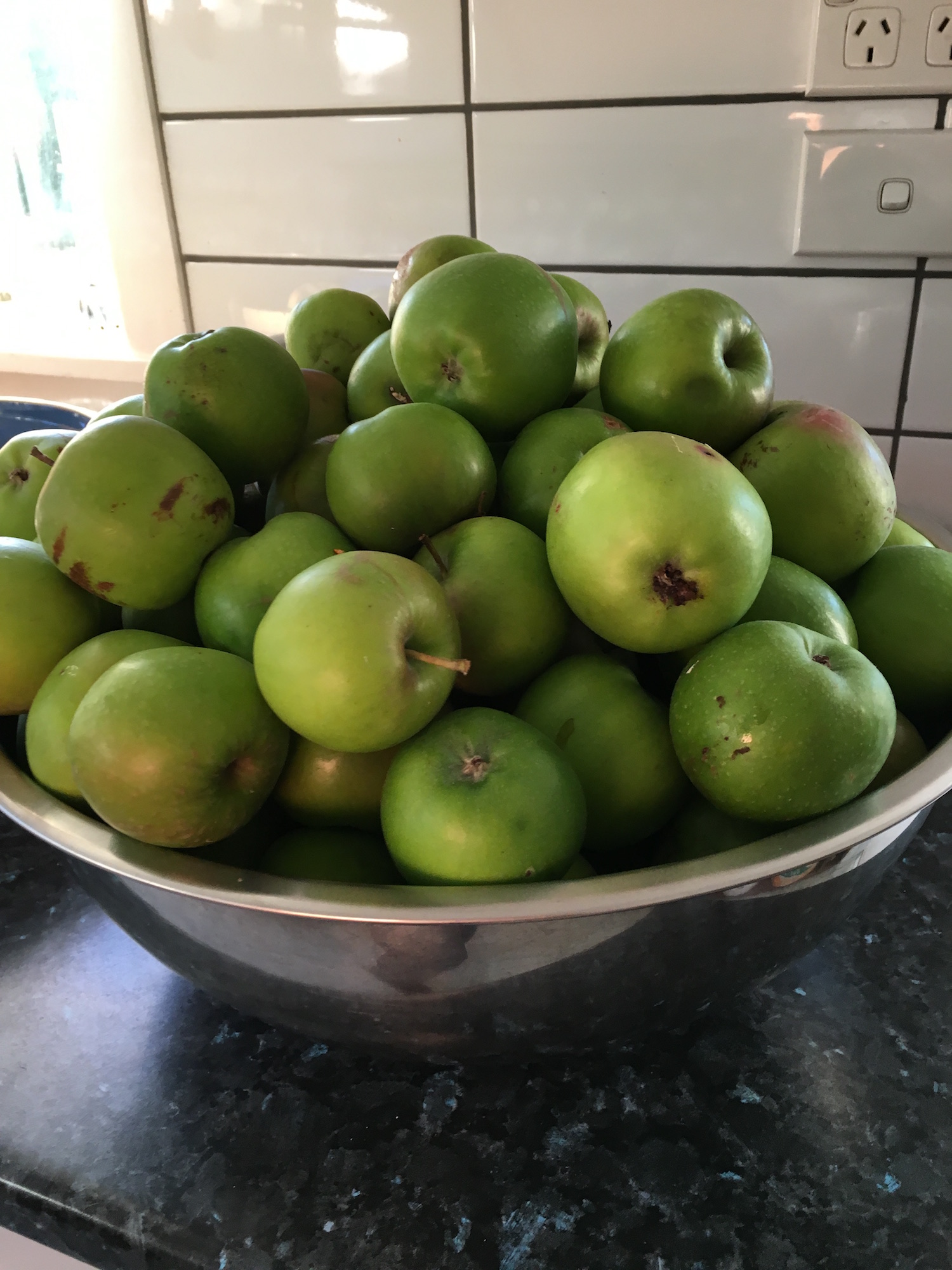
This year’s apple harvest was small, but unlike last year’s, it ripened on the tree instead of being blown off before it was ready, so the quality is good, even if the volume isn’t.

Truthfully, I’m thankful there aren’t too many apples to deal with. We’ve run out of canning jars and freezer space, so I’m not sure what I’d do with them if I had more.

So I’ve been considering how to process the fruits to encourage us to eat a lot of apples.

Naturally, apple pie is near the top of my list. Last year, with vast quantities of apples, I came across a particularly nice apple pie recipe that allows you to pack more fruit into a pie by pre-cooking the apples slightly. The recipe indicated it was a good way to avoid the empty space between fruit and upper crust that’s so common in apple pie, but I took it as an invitation to add more apples. And who could resist a thick, dense apple pie? Maybe with a little whipped cream?

Here’s the recipe, paraphrased from the 1997 edition of Joy of Cooking:

Make your favourite pie crust–enough for a double crust pie.

Roll out half the dough and fit it into a 9-inch (23 cm) pie pan. Roll out the other half of the dough. Refrigerate both until you’re ready to use them.

Peel, core and slice 3 pounds (about 1.5 kg) of apples. The recipe says you want 7 cups of slices–go for 8 cups.

Heat 3 tablespoons (40 g) unsalted butter in a wide skillet until sizzling. Add the apples and toss until glazed with butter. Reduce the heat to medium, cover, and cook, stirring frequently, until the apples are soft on the outside, but still slightly crunchy (5-7 minutes).

Stir in 3/4 cup of sugar, 1/2 tsp ground cinnamon, and 1/8 tsp salt.

Increase the heat to high and cook until the juices become thick and syrupy (about 3 minutes). Spread the apples on a baking sheet to cool to room temperature.

When cool, pour the apples into the bottom crust, add the top crust, cut steam vents, and bake 40-50 minutes at 425°F (220°C). Cool completely before serving.