Setting Goals, Celebrating Achievements

We all love it when we get that sense of accomplishment—the feel-good sensation when we can step back and say ‘I did that.’

But sometimes that feeling is hard to come by. When we have lofty goals or a big job ahead, it can feel daunting. The grinding slog to your goal might never end—or at least it feels that way.

I know a lot of people who have started on some project or creative pursuit, but have given up partway, because they felt they’d never reach their goals.

I’ve certainly felt the same from time to time.

But I’ve come to realise that there’s a difference between goals and dreams, and by defining the difference, we can keep ourselves motivated to continue those massive projects.

Dreams are the big-picture goals. For example, one of my dreams is to be able to support myself with my writing. Another is to be able to produce all the food my family consumes.

It’s possible (okay, probable) I’ll never reach those dreams, for lots of reasons. I should probably give up on both of them. But then I’d never reach them, for certain.

Here’s where goals come in. Goals are achievable steps towards those dreams. Businesses and organisations use goals all the time to measure their progress. A charity might have the dream (or mission, in organisational speak) of eliminating child poverty. Are they likely to actually accomplish that? No. So they turn to smaller, achievable goals to measure their progress—number of meals handed out, number of families housed, etc.

I do the same thing in both writing and gardening.

This week, I am working on my quarterly plan for July – September. This is my road map. My 3-month to-do list. Modified from a report form I was required to file as a Peace Corps Volunteer 30 years ago, I’ve been using these quarterly plans for decades now. 

Each quarterly plan includes goals for that quarter. Goals are actions I can take. Things within my control. For example, I never include a goal like, ‘publish four short stories in literary magazines’, because I have no control over whether a literary magazine accepts my story. Instead, my goal might be to ‘submit short stories to ten literary magazines.’ This is something I can accomplish. And if I keep doing it, eventually I’ll end up with those four short stories published in literary magazines. But as the rejections pile up, I won’t feel as though I failed to meet my goal, provided I did actually submit to ten literary magazines. Likewise, sales goals might include attending a certain number of markets during the quarter, but wouldn’t include goals as to number of books sold at those markets. Because I can’t control how many people show up to the market, or whether the people at the market are interested in buying books on that day. Of course, over time, I’ll learn which markets are worth attending, and how many books I can reasonably expect to sell at a particular market. But my goals will always centre on attendance at those markets, because that is the only thing I can realistically control.

And every time I accomplish one of those goals (and mark that satisfying tick in the DONE column of my plan), I get to celebrate. At the end of each quarter, I can look back at my plan and say, ‘look at all the things I’ve accomplished.’ Have I reached my dream? Yeah, nah. Have I taken concrete, useful steps towards it? Absolutely.

I do the same when I’m gardening, although it’s a more seasonal activity. When I survey the garden and consider all there is to do in order to grow enough to feed us, it’s easy to get overwhelmed. So late each winter, I make a plan that includes achievable goals for each week. All of those goals add up to plants in the ground—an excellent accomplishment. Of course, there’s nothing I can do about the weather—if there’s a drought, or weeks of rain, or excessive heat … I still might not reach my dream. But I have still accomplished my goals and given myself the best chance I can of reaching that dream.

And, honestly, that’s all we can ask of ourselves. Everything we want to achieve—those big dreams we have—include aspects that are out of our control. Luck, the decisions or actions of others, the weather, the economy, pandemics, earthquakes … you can’t pin your sense of accomplishment on the outcome of events like that.

So set yourself some achievable goals, then celebrate your accomplishments. You’ll find the journey to your dreams much more rewarding.

Planning Obsession

How many varieties of tomato are too many? Do I need green and purple broccoli? Can I fit a sixth variety of carrot into my garden plan? Should I try a new type of runner bean?*

These are just some of the many questions I tackle each winter. July is a relatively quiet month outdoors, so I turn my garden energy to planning this month.

My husband laughs at me every year, because I am obsessive about planning and documenting the garden. 

In July, before the new year’s seed catalogue arrives, I create a garden map. Consulting last year’s map to be sure I’m rotating my crops from bed to bed, I mark out where each crop will be planted. That way I’m sure not to plant the potatoes next to the tomatoes (because the potatoes will no doubt sprawl into the tomatoes and make it hard to pick them), or plant my popcorn and sweetcorn next to one another (they’ll cross-pollinate and I’ll get odd corn that’s not particularly sweet and doesn’t pop). It ensures I think about how to make the most of my space. It also ensures I don’t fill up all the space with early crops, leaving no room for the later ones.

Additionally, because I know what’s going into each bed, I can easily assess which beds need to be prepared each weekend in the spring so they’ll be ready in time to receive their crops. 

Then I assess my seed situation. I keep a spreadsheet (don’t laugh—I have a lot of seeds) detailing how many seeds of each variety I have, and the plant by date (or harvest date if they’re seeds I’ve saved) of each. With all the seeds catalogued, I can make notes as to what I need to purchase.

In theory, this prevents me from spending a lot on seeds I won’t use.

The reality? I still end up with a large seed order every year. But at least I know I NEED those seeds … or something.

When it comes time to planting, I record all the seeds I plant in a garden notebook, noting how many I planted, when and how (direct seed or in pots). Later, I can then mark which seeds had poor germination or didn’t grow well. These notes get written in red pen, so I can easily locate the information when I’m deciding what varieties to plant the following year and what seeds to throw away.

And if that all sounds excessive, then you can relax—it means you don’t have a gardening problem like I do. 

And now, if you’ll excuse me, this year’s seed catalogue arrived today—I need to go choose some seeds.

* The answers to these questions, in order: you can’t have too many, yes, yes, and yes.

Planning the Next Novel

While I wait for my beta readers to read Fatemaker, I’ve been planning the sequel to Demonic Summoning for the Modern Woman. I’ve spent a lot of time the past two weeks staring off into space while I think, researching really weird things, and taking long walks while I sort out ideas.

I do my planning on paper, with a pencil, because it helps my creativity.

I’ve learned a lot about planning a novel since I made my first, aborted (and truly dreadful) attempt at one. 

I’m definitely a planner, rather than a pantser when it comes to writing novels. I find writing the first draft difficult, and have learned that the better I plan, the easier the first draft is to write. I thought I had a pretty good system in place, but when I sat down to write Fatemaker I found my planning completely inadequate, because there were so many threads to draw together in the final book of an epic fantasy series. So I wrote a chapter by chapter plan of the book, summarising what had to occur in each chapter in order to wrap up everything by the end of the book. It probably took a week to create that summary, but by the end of the week, I had a detailed guide for my story, and I could focus on it chapter by chapter as I wrote, without worrying that I was forgetting something. I wrote the first draft in three weeks, rather than my usual six to eight weeks.

So I’m following the same process for the second book of the Rifton Chronicles, even though this book is not overly complex. Hopefully it will make the first draft fly onto the page.

My current planning process looks like this:

  1. Develop the basic premise for a book.
  2. Establish the world in which the story will take place. This includes creating a timeline of any historical events that impact on the story and details of any magic systems I’ll use.
  3. Develop the characters who are best suited to be my protagonists and antagonists. This includes not only their personal background, but also their ancestry, relationships, strengths, weaknesses, and habits. I never concern myself with physical characteristics unless they have a direct bearing on the plot. If you asked me what my characters looks like, I couldn’t tell you.
  4. Create a 1-page outline of the major plot points. Usually I do this in the form of a story mountain—yeah, primary school stuff, but it works for me. This outline includes key events—inciting incident, try-fail cycles, climax and conclusion, and puts them all on a specific timeline, so I know details like what season it is when I am writing.
  5. Determine the story arcs of each of the main characters. Usually this is a couple of paragraphs per character, which I add to the character descriptions.
  6. Write the blurb. I know this seems counterintuitive—how can you write the blurb before you’ve written the story? I used to struggle writing blurbs, because there were so many story details in my head, I didn’t know what to highlight in the blurb. The blurb needs to convey the genre, conflict, and just enough detail to hook readers into picking up the book. I’ve found it is MUCH easier to write this when that’s all I know about the book. When I’m not sick of the bloody story after weeks of writing, months of editing. When the story is still as shiny and new to me as it will be for potential readers. It also gives me a touchstone as I’m writing and editing—am I delivering what I said I would in the blurb? Is my story still conveying the awesome ideas I started off with?
  7. Write a chapter by chapter summary of the story. I know my books tend to run about 30 chapters, so I divide the story into thirty chunks, then start placing the major plot points and filling in the details. When I did this for Fatemaker, I had a couple of blank chapters near the end, but also had the feeling some of the chapters were going to need to be split into two once I started writing. In the end, I had 34 chapters, so it deviated a bit from my plan, but only in volume, not substance. For the second Rifton Chronicles book, I know I will have six historical ‘interludes’, so I’ve spread these evenly through my chapters, and am building the modern part of the story between them.

Oh, yeah, and there’s the staring off into space, researching bizarre things, and taking walks—those are critical components of every step in the planning process.

Garden Transformation

vegetable garden

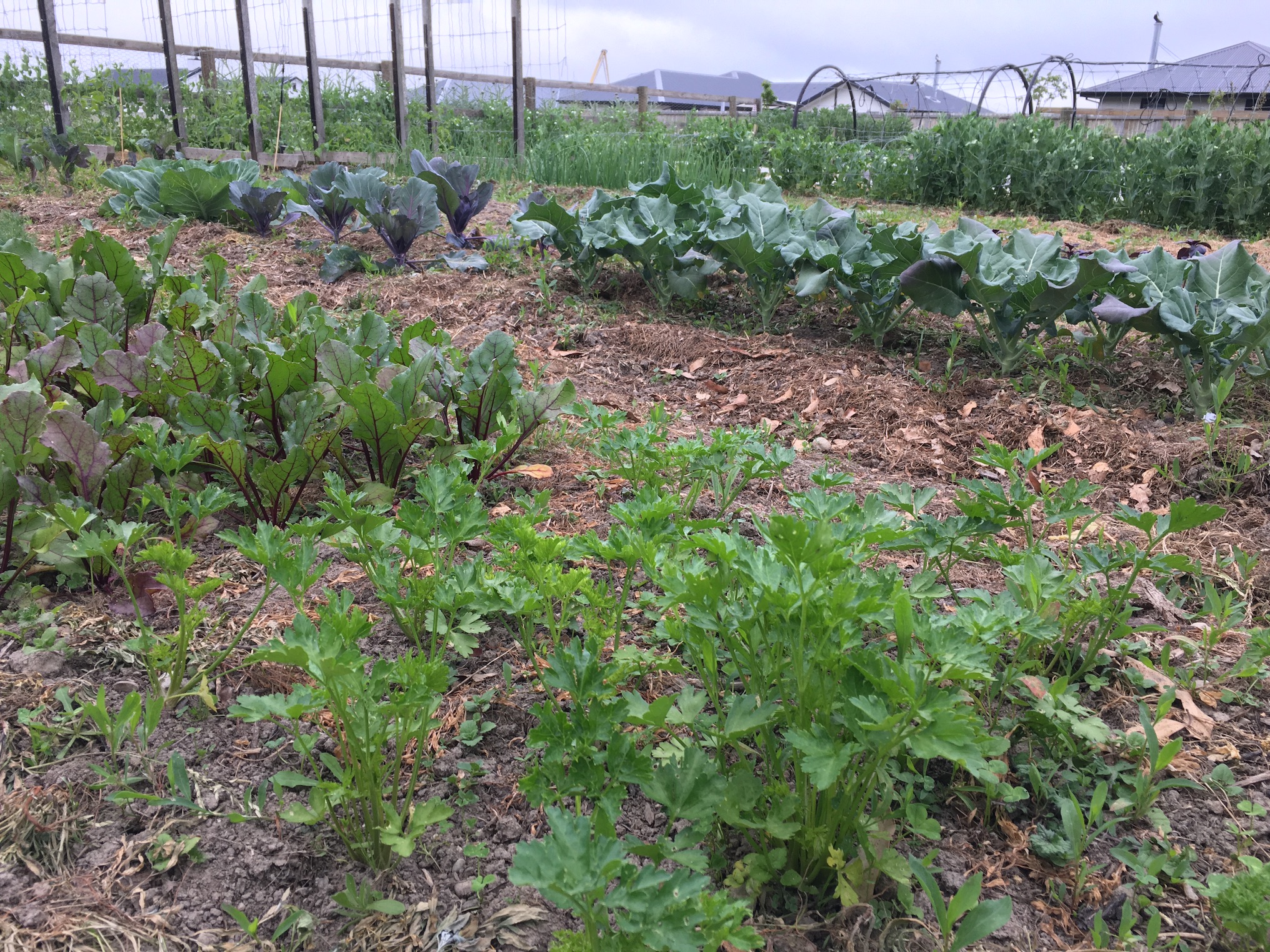
The weather forecasts have been good and the garden beds are all prepared, so in the evenings after work this week, I’ve been planting out vegetable seedlings.

On Tuesday, as I left the garden at dusk, I turned to close the gate behind me. I smiled as my gaze swept the scene. My work had transformed the garden from a weedy patch sporting a few vegetables to a vegetable garden with a few weeds. The transformation had taken months, but my shift in perception was like a switch being thrown.

The coming long weekend will complete the transformation, with all the remaining seedlings filling in the gaps. But the switch in my perception means the weekend planting will be an enjoyable challenge. It won’t feel like an insurmountable hurdle.

This is where my obsessive-compulsive garden planning pays off. All the tasks I’ve crossed off my list since mid-August come together this weekend in a tidy, fully-planted garden with the potential to feed us for the year.

People ask if I have plans for the long holiday weekend.

“Just gardening,” I answer. 

They think it’s work. And no doubt I’ll spend long hours on my knees. I’ll sweat. My back will ache. My feet will protest the hours encased in gumboots. 

But the work I will do this weekend is more a celebration than a chore. At its end is a sense of accomplishment and well-being nothing else can provide.

And as every gardener knows, at its end is the beginning of a new set of tasks—the weeding, watering, and other ongoing care that fills the summer calendar.

So this weekend I will plant and celebrate, and next weekend I will weed.