A Messy Life

My not-so-straight edges.

I was working in Halswell today, and I went for a walk at lunchtime. I walked through some of the newer subdivisions, and after a time, I realised I had no idea where I was, though I’ve walked those same streets many times. I wasn’t worried. I wasn’t lost, I just couldn’t remember what street I was on.

Walking on, knowing I would find my location at the next street sign, I pondered why I was so lost in a place I knew reasonably well. I looked around me. It wasn’t a cookie-cutter neighbourhood, with row upon row of identical houses, but there was a sameness to every house, every yard. They were all perfect. The lawns were immaculately clipped, with not a single weed in any of them–more carpet than grass. The paths were edged as though with a ruler. The boxwood hedges were precisely cut and perfectly square–they could have been boxes, cleverly painted to look like plants.

Every house had perfect stonework, perfect paint, a smooth driveway leading to a perfectly hung garage door (operated, no doubt, by an electric opener that ran smoothly and quietly).

The houses, the yards, the streets looked like they had dropped straight from an architectural drawing. Devoid of all character, stripped of any indication real people actually lived there. They were sanitary, and soulless.

It’s no wonder I felt lost.

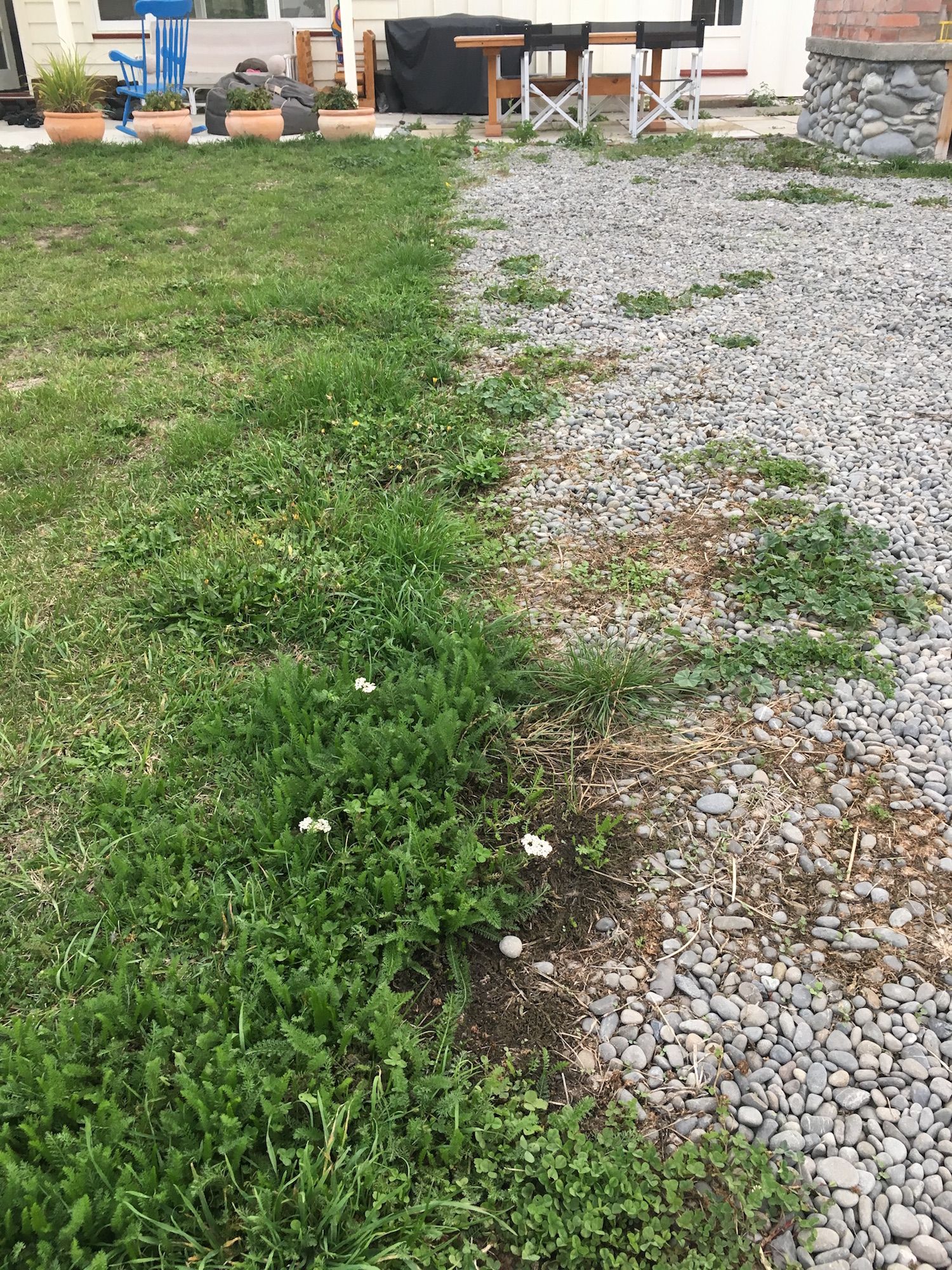
My home is not like that. My home is full of weeds, sprawling hedges in need of trimming, peeling paint and rotting weather boards. It’s full of paths edged by the grass creeping across their surface. Flowers that aren’t deadheaded, trees that need pruning. My home is alive and growing, taking on surprising forms, springing up in unexpected places.

And my life reflects the weedy lawns that make up my world. It is not a neatly clipped hedge, but a wild hedgerow, full of surprises. Sometimes good surprises like ripe blackberries, sometimes bad surprises like thistles. But it’s alive and exciting.

I think about the people who inhabit those sterile houses on sterile streets. Are their lives as neat and tidy as their yards? Are they as forgettable as the houses that all eventually look the same?

The thought makes me shudder. It’s true, my messy yard and my messy life make me work. I don’t often put my feet up. Some days are a struggle, and every day is long and busy. But my messy yard, my messy life is always growing, even in the midst of drought, or in the aftermath of herbicide overspray. There, in the mess are the seeds of something new, something exciting, something tough and resilient.

I did find my way out of the soulless subdivision. It was a relief to leave it behind, and a joy to come home to my rampant weeds, to a messy life in a messy yard, full of surprises, growth and life.

Taking Life Seriously

These hands were made for walkin’

Life is full of serious stuff. Hard work, difficult decisions, earthquakes, fires, death, politicians, lawyers, and accountants…it’s easy to be overwhelmed by it all, and to walk through life with a frown.

So I’m thankful for those who can show us the proper way to take ourselves seriously…

Like the fellow in front of me at Farmlands this morning, who was buying fence posts.

“Anything else?” the clerk asked.

“Yeah, I’d like matching holes to put them in.”

Or the man I once caught stealing a marker flag off a research site. Surprised in the act of untying the flag from the tree, he smiled impishly, shrugged, tied it back on and walked off.

Or the awesome women I see around town with their hair dyed fuchsia, peacock blue, or lime green.

So, In an effort to take life as seriously as these leaders in the field, I’ve decided to tackle an issue that has bothered me for many years.

Handstands.

Yep. The important issue of our time–our orientational and gravitational challenges.

Oh, I can do handstands, and I can walk on my hands for half a dozen steps, but I lack control and finesse upside down. It bothers me that I can’t just stay on my hands for as long as I want, like I do on my feet. Eventually, I lose my balance. That shouldn’t happen. I should be able to remain in a handstand long enough to sing every last verse of Ratlin Bog. Long enough to read the entire front page of the New York Times (which would probably seem much less serious from that perspective). Long enough to do the bunny hop around the room. Long enough to thoroughly embarrass both my teenage children. Long enough that they deny they’re related to me, or that they’ve ever even met me.

So if you find me upside down at odd hours of day and night, please understand I’m just doing my best to take life seriously.

Failure

2017-01-21-09-23-03smI’ve been in a veritable frenzy of pickling the past couple of weeks. Before that, there was a good stint of jam-making. I’ve had a brilliant run. I’ve been able to run a full canner-load almost every time, every jar has sealed, and the jam has been the perfect consistency.

Until two days ago, when a jar of dill pickles exploded when it was lowered into the canner. Then yesterday, I ran fifteen jars through the canner, and FIVE of them didn’t seal. What? FIVE? I never have that sort of failure rate. I did what I always do though, upon reflection, maybe my lids or jars weren’t quite as hot as they should have been, because I was doing two batches at once, and my attention was divided.

Today I reran the five unsealed jars, making sure they were nice and hot, and they all dutifully sealed.

But it made me think about failure and my response to it.

I fail a lot. I have hundreds of rejections of my writing from agents and publishers. I’ve thrown away entire rounds of cheese that just didn’t work properly. I’ve made loaves of bread that could be deadly projectiles. I’ve made birthday cakes that didn’t look anything like what they were meant to be. I’ve taught lessons that have flopped completely. I’ve made clothes that have gone immediately into the rubbish upon completion. The list of my failures goes on and on.

When we fail, we have a number of options.

Option 1: We can pout, blaming our failure on the weather, the phase of the moon, the person next to us, the wrong tools, millions of illegal immigrants, or whatever. This might make us feel good, because it allows us to pretend our failure was not our own fault. But it doesn’t make us likely to succeed next time.

Option 2: We can get angry, blaming our failure on our own stupidity, clumsiness, incompetence, or lack of innate ability. We can believe that, because we failed, we are a failure. This is an easy response, because it allows us to justify not trying again. “I’ve tried that, and I can’t do it.”

Option 3: We can critically analyse what went wrong. Maybe it was poor tools–I’ve had cheese fail when a thermometer was inaccurate. Maybe we got sloppy–I’ve ruined garments by rushing to finish them. Maybe we didn’t understand enough about what we were doing–the first time I taught preschoolers, they chewed me up and spit me out, because I had no idea how they related to the world. Analysing our failures takes time. It requires a willingness to critique ourselves in an honest and constructive manner. It requires us learn new things. It requires us to get back on that bicycle and try again.

It’s hard.

But it’s the only option that leads to success.

Love, Life, and Fart Jokes

Thank you to the World Busker’s Festival for allowing me to forget for a few hours what was happening in my homeland today. The fart jokes, the sexual innuendo (which my son now gets…oh dear), and lots of flaming torches being juggled at altitude were exactly what I needed.

It reminded me that daily life will go on these next four years. What that daily life looks like, and how it will change remains to be seen. The possibilities fill me with anxiety.

But there will also be love, life, and fart jokes. I, for one, will be clinging to those, and sharing as much of all three as I can, to help us all through what promises to be a rocky four years.

So, here’s your light-hearted interlude for today:

What do you call a person who never farts in public?

A private tutor.

Forget the President

dsc_0064-2-smI promised myself I wouldn’t post anything political on my blog. And I won’t. But this US election season has me thinking a lot about human beings and how we fail over and over again to behave in ways that lead to greater wellbeing for everyone.

And the rhetoric is so focused on who will lead the country, that I feel like we’ve almost lost sight of the fact that the president is just one person. Is the president going to make everything right in the world? Not a chance, no matter who is in office.

Now, don’t get me wrong. I’m not saying you shouldn’t vote. Do vote. I sent my absentee ballot in a couple of weeks ago. It is important to choose the best leader possible.

But what I’m saying is that you and I have as much responsibility, and probably more power than the president, to create the world we’d like to live in. Who has the most influence over your days? Your friends, family, co-workers, boss, and teachers. Not the president. Collectively, we have far more power to do good than the leader of any country. We can make the difference between a world of hate and inequality, and one of peace and well-being.

So here is my five-step plan to better humanity…

  1. Be kind and polite. To everyone. Even (and perhaps especially) to people you don’t like. Raise the bar of behaviour—give up your seat on the bus, let that person out of the side street in heavy traffic, give a sympathetic smile to the woman whose baby is screaming in the checkout line. Remember that you have no idea what others are dealing with in their lives—that sullen and inattentive waitress you want to scream at might be going through a divorce, or caring for a dying parent. Make her life easier, not harder. Same goes for all your on-line interactions—just because they can’t see you doesn’t mean you shouldn’t be kind and polite.
  2. Say thank-you. To your spouse. To your children. To the waitress at your favourite café. To the woman who cleans the toilets at work. To the bus driver. Everyone around you has the ability to make your life miserable, thank them for, instead, making it better.
  3. Be thankful. Saying it is one thing, feeling it is another. But the more you say thank-you, the more you will notice things to be thankful for. Embrace those things. Focus on them. That’s not to say you shouldn’t address problems when they arise, but don’t let them dominate you.
  4. Surprise the world with your love. Your friends and family expect you to love them. Strangers don’t. Surprise them. Provide a meal to a homeless person. Make toys to give to foster children. Help a refugee. Compliment a stranger’s children. Smile as you walk down the street. Practise random acts of kindness. Be the person you’d want to have as your best friend. And not just towards your best friend, but towards everyone. Yep. Everyone. You’re going to have to leave your racism, sexism, homophobia, and other –isms and -phobias behind.
  5. Right the wrongs whenever you can. Even little things make a difference. Pick up litter. Refuse to engage in the casual sexist and racist banter you hear every day. Call out people who engage in such banter—politely, of course (see step number 1). Pay attention to where the things you buy come from, and the social and environmental costs of them. Buy fair trade products when you can. If you have money, give some to charity. If you invest, invest in socially and environmentally responsible companies. Don’t be greedy. Give of yourself. Engage with your community, and become active in the issues it faces. Strive to make a positive difference.

So whatever happens in this year’s US presidential election, I’m going to be implementing my 5-step plan to better humanity.

Random Acts of Kindness

2016-10-17-08-54-55I noticed this article in the news today, and thought it was worth sharing as an antidote to all the hate that’s on the news.

http://www.stuff.co.nz/travel/themes/adventure/85392553/How-kind-acts-by-strangers-renew-faith-in-peoples-goodness-the-world-over

In it, the author writes about several instances in which the kindness of strangers renewed her faith in humanity. Most the experiences she relates happened while she was travelling, and the kindness she was shown often required sacrifice and bravery.

I had a similar experience in Panama one day while waiting for the bus in Panama City. My husband and I were staying in a seedy part of town—Peace Corps volunteers have little money, so we stayed in the cheap hotels when we had to go to the city. We were headed from the hotel to the Peace Corps office, and waiting for the bus on a busy street.

We were wary, and prepared for pickpockets and the like, but we both froze when a huge man stalked over to me. A good 30 cm taller than me, he came right into my personal space and hung over me. Didn’t say a word, but glared at me with bloodshot eyes, his whole body screaming murder.

I blinked at him for a moment, waiting for him to say something, threaten me, whatever. When it was clear he wasn’t going to, I smiled and said good morning to him. This elicited a grudging good morning back, but didn’t soften his stance.

On the busy street, the confrontation didn’t go unnoticed. A pair of policemen began to saunter toward us. The situation was about to get ugly.

That’s when the little old lady selling lottery tickets on the sidewalk took matters into her own hands. Though she was easily another 15 cm shorter than me, she picked up her umbrella and began whacking the threatening man with it, scolding him for giving Panama a bad name.

She couldn’t possibly have been actually hurting him, but he withered under her attack, shrinking away and looking ashamed of himself, and finally slinking off.

The bus came, and we quickly hopped on. Life on the busy street returned to normal.

I’ve blogged before about other experiences I’ve had giving and receiving kindness from strangers. Whether the gesture is little or big, random acts of kindness make everyone feel good.

We could use a little more of it, by the sound of the news these days. Go ahead. Practice a little random kindness today.

The Spotted Owl

2016-10-05-16-43-05Back in the late 1980s, during the time when I was going to university, there was a great deal of controversy around the Northern Spotted Owl. Conservationists were trying to use the bird as a tool to limit logging of old growth forest in the Pacific Northwest by encouraging its listing as an endangered species (it was listed as threatened in 1990). It was a hot topic in conservation at the time.

Home for Christmas one year around that time, I was presented with a gift specifically from my grandfather.

That was odd. It was the women of the family—grandma and mom—who shopped for gifts. What could Grandpa have for me?

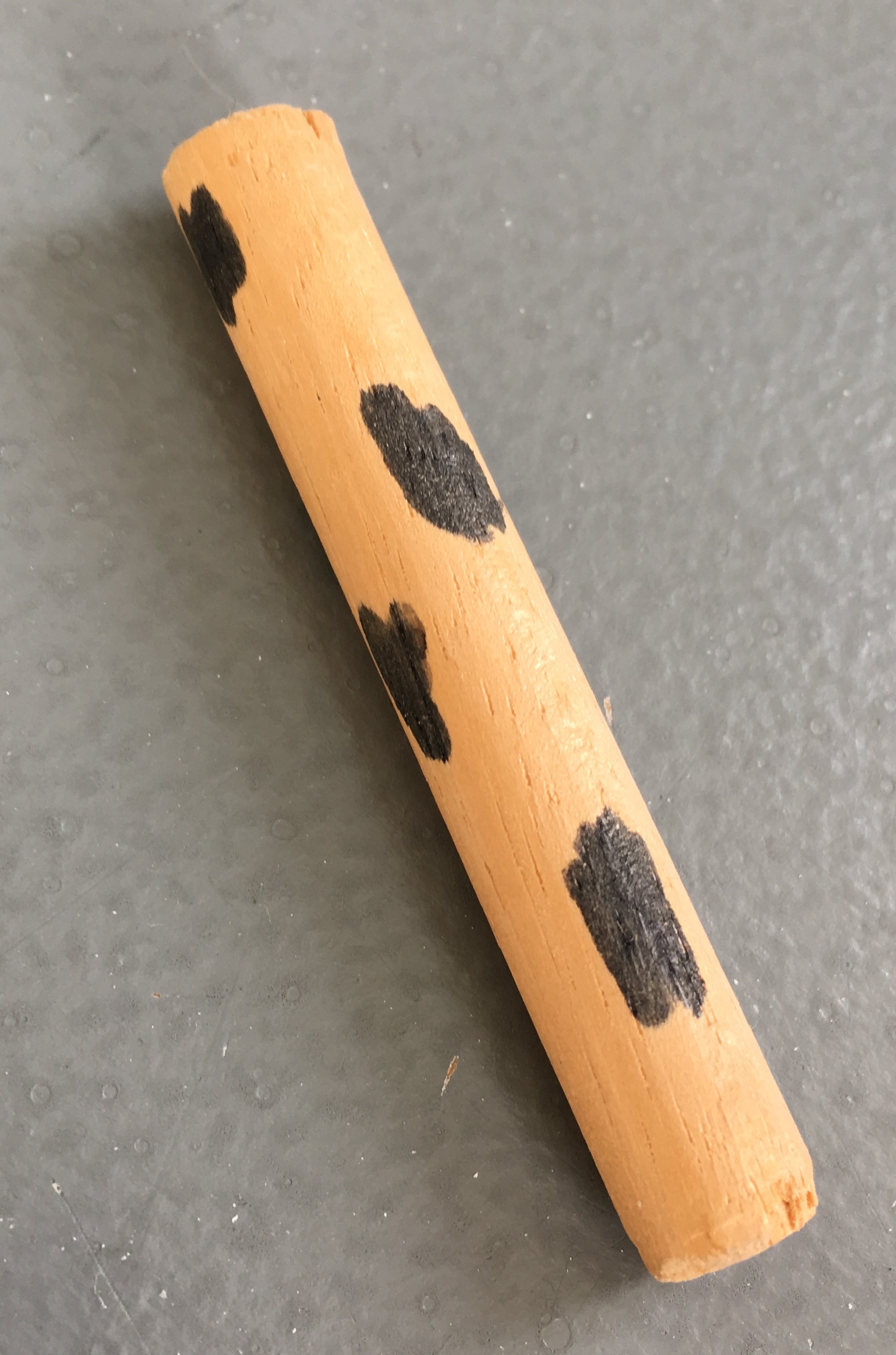
It was a small box. Inside, nestled in tissue paper was a small piece of wooden dowel with crude blotches drawn on it with a marker.

He watched me unwrap it, clearly struggling to hide a smile.

I pulled it out of the box and turned it around in my fingers. I was obviously supposed to figure out what it was. I wracked my brains. What was this spotted stick supposed to be?

It never occurred to me that it was a joke. I finally had to ask.

“It’s a spotted dowel!” Grandpa said, breaking into a grin.

I have no idea what other gifts I got that Christmas. No doubt, whatever they were, they’re long gone from my life.

But the spotted dowel has it’s own special place—its own little drawer in a small-parts organiser that holds all my buttons and beads and other odds and ends. I often run across it accidentally while looking for something else, and it still makes me smile.

Where the Sidewalk Ends

2016-09-29-18-24-21There is a place where the sidewalk ends
And before the street begins,
And there the grass grows soft and white,
And there the sun burns crimson bright
And there the moon-bird rests from his flight
To cool in the peppermint wind.

Many years ago, when my husband and I lived in State College, Pennsylvania, before children, we used to take long walks out of the neighbourhood and into a wild patchwork of agricultural fields and scrubby woods that stretched between the University and the sprawling suburbs of town.

At the edge of the neighbourhood, where the sidewalk gave way to a gravel path maintained only by the steps of those who walked their dogs there, someone had poured a small section of concrete containing a brass plaque inscribed with Shel Silverstein’s famous poem, Where the Sidewalk Ends.

Let us leave this place where the smoke blows black
And the dark street winds and bends.
Past the pits where the asphalt flowers grow
We shall walk with a walk that is measured and slow,
Add watch where the chalk-white arrows go
To the place where the sidewalk ends.

State College has no black smoke, and the streets are bright and lively, but the presence of the poem was magical, the sentiment perfect as one stepped away from the cars and buses and the music booming from student flats, and into the fields beyond, where grasshoppers and bees formed the loudest chorus. Town melted away. We could walk for hours, and always returned calm and refreshed.

When I was a student at the University of Michigan, my most prized possession was my bicycle. It was old and ugly, but it was my ticket out of town. When the streets and noise became overwhelming, I would hop on my bike and ride blindly until I reached the edge—the place where the sidewalk ended. Surrounded by fields of corn and wheat, I would throw myself into the grass at the side of the road and listen to the crickets until I regained my equilibrium, until I could face the city again.

Last year, when my daughter had band practice at an awkward time on a Friday—too early to go home after school, too late to go directly from school—we would take walks, always on the periphery of town, seeking those places where the sidewalk ended. We walked residential streets that gave way to sheep paddocks and parks, industrial zones that melted into agricultural crops.

For me, the place where the sidewalk ends is literal—my place for peace and reflection is invariably outdoors, far from cars, buildings, and other markers of civilisation. But I think Silverstein left the door open for the sidewalk to end in other places—places where moon-birds cool themselves in peppermint winds. The sidewalk can end inside us, too—in imagination, in meditation, in the green space we save for ourselves in our own souls. Wherever the sidewalk ends, our spirits refresh themselves—we reflect, we stroll, we find silence.

Where does your sidewalk end?

Making Music

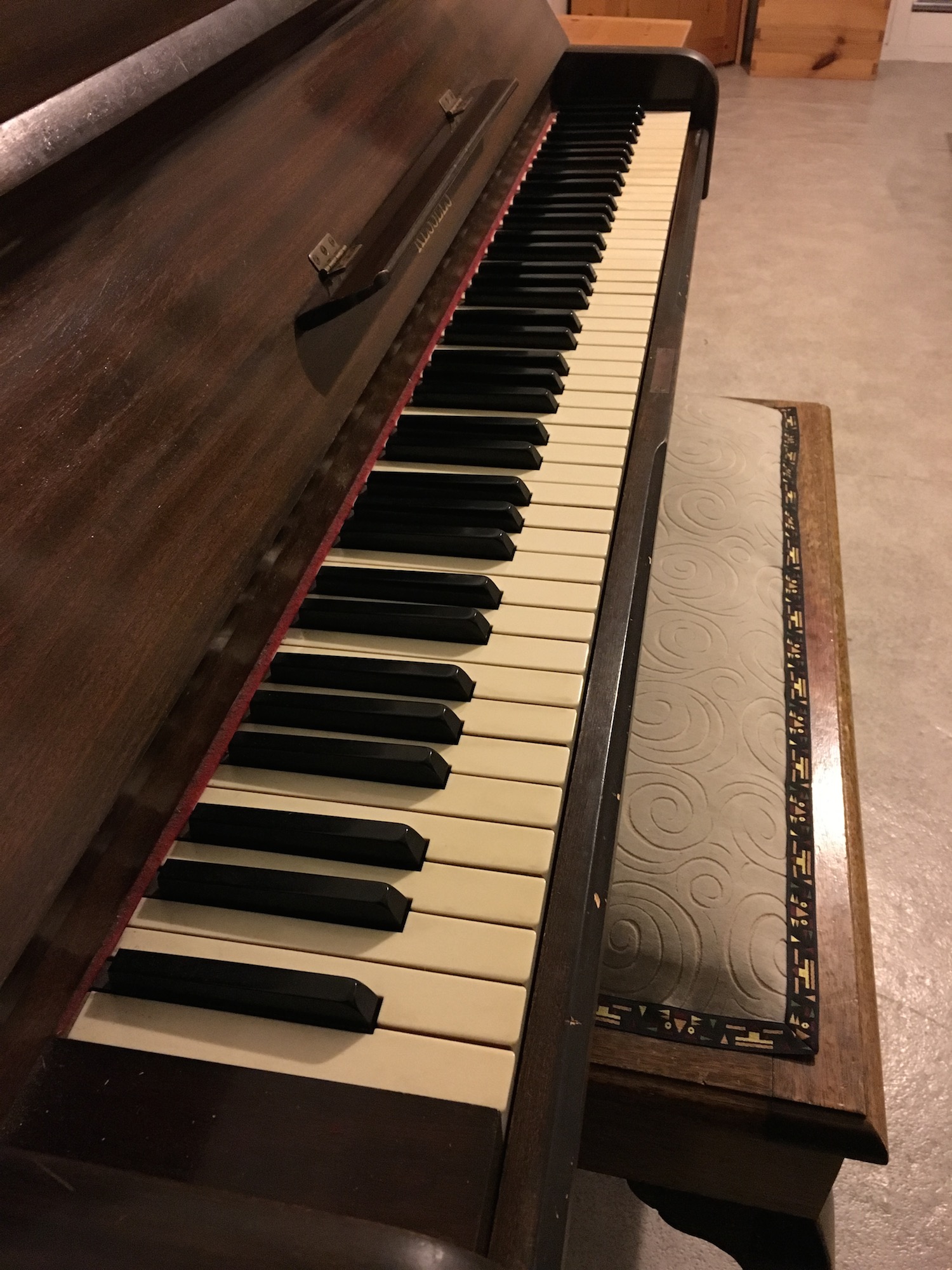
file-8-09-16-7-34-10-pmI attended another high school music programme this evening and was struck once again at how important making music is to human culture.

Not listening to music, though that is nice, too.

Making music.

I have always loved music—classical, rock, country, folk, hip-hop, jazz—doesn’t matter what it is. If I could live my life inside a musical, I would. In fact, some days you could be forgiven for thinking I do, the number of times my husband or I break out in song.

Young people seem to understand this need to make music—kids sing on the playground when they’re younger, and gather with friends and a few guitars when they’re teens.

They make up songs about their high school teachers. The one we heard tonight was loving; some of the ones I remember singing with my friends in high school were not so kind.

They beat drums, tap silverware on the table, clap their hands and do beat boxing. They write music, they play music, they make it their own. They use it to say the things they cannot speak. They use it to be the people they want to be.

And somewhere along the line, they stop making music.

Somewhere along the line, music becomes something that ‘professionals’ do.

They start to believe that making music is embarrassing, a waste of time.

They start to believe that music must be performed for an audience.

Gatherings no longer include the guitars. Beat boxing gets rolled eyes instead of an on-the-fly rap to go with it. Show tunes no longer feature in everyday conversation.

Oh, there are adults who still do this, for sure. But usually they have a reason for doing it—they’re in a band, or music is part of their work. The average adult with 2.5 kids, a mortgage, and a job doesn’t.

It is a loss.

A loss, not just to the individual, but to society as a whole. We lose our ability to express the things we cannot say. We forget to be the people we want to be. Celebrities become demi-gods, because we forget that we can all make music—we don’t need a recording contract, a gig, an audience, or even an ounce of musical ability. We can make music because we are human. We need to make music to remain so.

Waiting

2016-01-25 20.44.42 smFor the week before our trip to the U.S. I got almost nothing done. I was mentally occupied, with the trip—waiting for it to begin.

When we returned, we were just a week and a half from my husband leaving for a trip, and I got little done that week, either—waiting for him to leave.

While he was gone, I did almost no writing. I was distracted, I was working in odd places at odd times around the extra tasks that fell to me while he was gone. I was waiting for him to return.

Now he’s back, and I feel stuck in the habit of waiting.

I fear I’m stuck in the Waiting Place, as Dr. Seuss so eloquently described it:

“…for people just waiting.
Waiting for a train to go
or a bus to come, or a plane to go
or the mail to come, or the rain to go
or the phone to ring, or the snow to snow
or waiting around for a Yes or No
or waiting for their hair to grow.
Everyone is just waiting.”

Yep, I’m stuck in the waiting place.

It can be a hard place to get out of, but I learned many years ago that waiting rarely brings what you want.

It was in Peace Corps in Panama. My husband and I had been out with our local Corregidor (mayor), FermĂ­n, and were returning to our village by bus. As we waited for the bus, it started to pour. We waited for hours, and when the bus finally came past, it didn’t even stop—it was too full already. The next bus might be hours, or might not come at all, so we decided to just walk, in spite of the rain. Fifteen minutes later, when we were thoroughly soaked, we heard another bus coming up behind us. FermĂ­n smiled and said, “If you don’t walk, the bus won’t come.”

I took that as an important life lesson.

And now, I need to step out into the rain and stop waiting.