Astrobiology Fun

Not long ago, I attended a workshop on Astrobiology for teachers. I’m not sure which of my two jobs it was more useful for—teaching or writing.

Cool swag from NASA and Blue Marble Space!

My day job, though ever changing, often involves teaching science across years 3-8. One of the strands of the New Zealand science curriculum is Planet Earth and Beyond, so I regularly teach about our solar system and various features within our galaxy. Last year, I did a fun unit with the year 7 and 8 students in which students had to design spacecraft, habitat modules, and promotional campaigns for a colonising trip to Mars. 

I’ve rarely touched much on astrobiology, and the questions about life elsewhere in the universe, but the workshop made me think about all the ways that questions about life on other planets reflects on life on Earth. How these questions reflect on our actions as human beings—our treatment of other humans, our treatment of the planet and other living things on it. The presenters made a great case for using astrobiology as a way to dive into big philosophical questions about what it means to be alive on Earth today. 

What are our responsibilities to planet Earth and the life on it? What if we are alone in the universe? What if we’re not? Does it change our perspective on our own actions as humans? 

Sanjoy Son, from Blue Marble Science, spoke eloquently about how the teaching of astrobiology can give students valuable perspective on life, and how they can approach questions of personal differences, values, and civic responsibility. The take home message I got from his talk was that we are either the caretakers of the only life in the universe, or we are part of a vast, interstellar network of life. Either way, we are all ambassadors of planet Earth. What a great message for kids. What a great way for them to think about their roles as human beings.

As an author of fantasy and science fiction, of course I soaked up the cool facts about the gazillions of planets there are just in our galaxy, the weird ways life might have to adapt to wildly different conditions on other planets, the surprises that even our own solar system has produced in terms of planets and moons on which life could potentially survive, the physics of travel and communication through space. So many story ideas!

You’ll definitely be seeing more astrobiology creeping into my writing and teaching in the future!
Technology Woes

It’s been a difficult week for me and technology. On day two of my two-week break from my day job, my ten-year-old laptop died. I’d hoped to finish the first draft of the novel I’m working on during my break. No such luck.

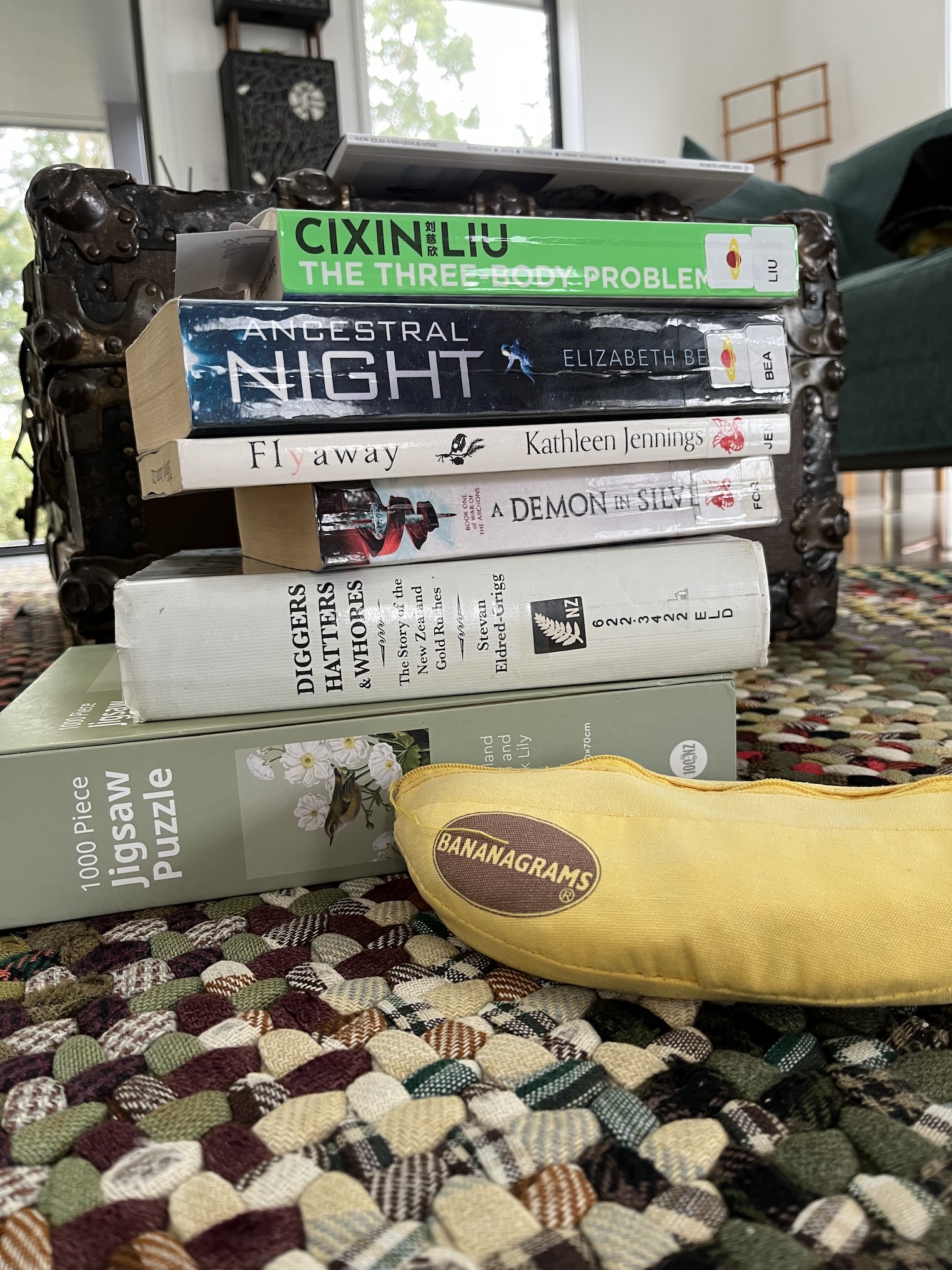
This week’s entertainment.

On the same day that my laptop died, my phone had to be recharged four times, because the battery was draining completely every couple of hours, even when I wasn’t using it.

So it’s been a very expensive and frustrating week, and now I have a new phone and a new laptop. I will admit it is nice to not have to carry an extra battery for the phone with me all the time, and it’s nice to have a computer with a fully functioning keyboard, but the upgrades have been quite disturbing, too.

Having not updated my devices for a decade, all my apps were old versions. The new ones have a zillion more features than I’m used to. Almost none of the new features increase the apps’ functionality. The ‘upgrades’ are primarily aimed at urging me to consume more advertisements on my device and making it easier for me to spend money. I find it quite depressing.

The rebellious part of me has decided that, in response to the upgrades, I’m going to do my best to spend even less time on my devices. The computer is pretty well unavoidable, because of my occupation, and I’ve never been one to spend personal time on the computer. But the phone tends to be what I grab during my leisure time. I admit, I have six different e-reader apps on the phone, and I read tons of ebooks, which is what occupies most of my phone time. But I also play a couple of games on the phone, and I read the news. I’m easily sucked into social media on the phone, too. So there’s lots of room to limit my phone use.

First job was to delete the games. I’d already deleted one, several weeks ago, because I realised I was using it to procrastinate, and I didn’t even really like it. I haven’t missed it at all. So the other two games have now gone.

Then, while I was out and about this morning, I stopped by the library. I checked out an armload of books, and also a jigsaw puzzle. Books are fantastic, but I do need the brain rest that those games on the phone or scrolling social media provide. Jigsaw puzzles will serve the same purpose, with the bonus that a jigsaw comes without advertisements and auto-play videos, and invites others to join in the fun. 

I also need to remember my love of playing solitary Bananagrams. It’s not as fun as facing off in a frenetic game with my daughter, but I enjoy coming up with different challenges. Last night I tried making the densest board I could, with nearly every letter forming part of two words. Way more rewarding than scrolling through Facebook trying to find posts by my actual friends between drifts of advertisements.

Will I still read the newspapers on my phone? Yep. And I’ll still carry it with me, in order to stay in touch with my family and take photos. And I’ll maintain my presence on social media (not that I use it much in the first place). But I reject my new apps’ insistence that I share more information with them so they can feed me advertisements. I reject Apple Pay. I reject the notion that my phone is there for the purpose of selling me more and more and more things I don’t need. I reject the assumption that I will blindly agree to be nothing but a source of income for corporate executives.

My entertainment is going analog.

Will my stand have any impact on the Mark Zuckerbergs of the world? Nope. But it will have an impact on me.

Why Garden?

“Gardens are fashioned for many purposes with many different tools, but all are collaborations with natural forces. Rarely do their makers claim to be restoring or rebuilding anything from the past; and they are never in full control of the results. Instead, using the best tools they have and all the knowledge that they can gather, they work to create future environments.
If there is a lesson it is that to think like the original inhabitants of these lands we should not set our sights on rebuilding an environment from the past but concentrate on shaping a world to live in for the future.”

–Charles C. Mann (1491: New Revelations of the Americas before Columbus)

Many years ago, I wrote this quote into a sticky note on my laptop. I look at it regularly, and it resonates with me every time. It expresses a mindset my husband and I employ on our little plot of land.

As I sit here on the porch on a warm summer afternoon, I can’t help but think back to what this section was like when we bought it—a bare paddock so devoid of nutrients that even the weeds were sparse. Sitting here today, I am surrounded by a mix of food crops, beautiful flowers and native plants. Five years ago, this plot of land could barely sustain the scraggliest of grass. Today it feeds us, provides food and shelter for native insects and birds, and is a welcome escape from all the ills of modern life. In time, as plants grow, it will hopefully become more sheltered, more resilient to temperature and rainfall extremes. In time, it will hopefully take less effort to maintain. In time, perhaps we will see native bellbirds and tūī as often as we see non-native blackbirds and starlings in the garden.

This is what we aim for. But, as Mann said, we’re not in full control. 

Native skinks seem to have disappeared from the garden, despite the abundant food and shelter we’ve provided. Perhaps the influx of domestic cats is at fault. Or maybe some other factor outside of our control. Unwanted weeds continue to invade from neighbouring properties. Plant diseases take advantage of favourable conditions to decimate crops from time to time. Hail, floods, droughts, and wind all take their toll. 

So the resulting garden is a compromise. What can we reasonably grow this year? What needs to be abandoned, either temporarily or permanently? What new opportunities are presented by quirks of nature or chance?

Guiding every decision is the question, what do we want the place to look like next year? In five years? Because, as Mann said, we’re shaping a world to live in for the future.

Incidentally …

If you haven’t read 1491, do it. It will shatter all those Eurocentric views of the world you’ve been steeped in since birth and change your whole attitude towards the history of the Americas.

Frost Heave–Moving Mountains

Sometimes it’s the littlest things…

I enjoy winter hiking—I enjoy the crisp air, the opportunity to hike without sweating too much, the snow on the peaks. 

One of my favourite winter phenomena is frost heave. This is when moisture in the soil freezes. Since water expands when it freezes, the ice crystals push soil and rocks upward. We get frost heave at home, but in the mountains, where there is both more water and colder temperatures, the phenomenon can be spectacular.

On a cold Matariki morning a few weeks ago, I snapped a photo of five-centimetre-long ice needles near Foggy Peak. Each needle was topped by gravel—the whole top centimetre or more of the sloping surface lifted. As the sun rose and melted the ice, every rock fell a few centimetres downhill from where it started. I imagine this process happening daily all through winter—a slow-motion conveyor belt shifting the mountain downhill. 

Meanwhile, higher up on the mountain, water seeping into the cracks in rocks and then freezing shatters them day by day into smaller fragments to be added to the icy conveyor belt.

It is such a small thing, frost heave. But its slow action has a big effect. 

The Southern Alps are rising at a rate of 10 to 20 millimetres per year—some of the fastest rising mountains in the world. If no erosion had ever occurred, the mountains would currently stand over 20 kilometres tall. Our tallest mountain, Aoraki Mount Cook, is 3754 metres tall. 

Of course, when we think of erosion, we think of the big events like landslides and rock avalanches. These events can be spectacular. 

On 14 December 1991, a rock avalanche on Aoraki lowered the summit by 10 metres over the course of a few hours. Fourteen million cubic metres of rock and ice tumbled down the mountain at speeds of up to 300 kilometres per hour. The shock waves from the landslide were recorded on seismographs as far as 58 kilometres away.

But without frost heave, the 1991 Aoraki rock avalanche might never have happened. Frost heave slowly weakened the rocks, slowly snapped them into smaller and smaller pieces, slowly shifted their weight. Centimetre by centimetre, those little ice needles brought the mountainside down.

I like to think of frost heave as a metaphor. Each of those tiny ice crystals, by itself, can move a pebble, and together they bring down mountains.

The Stories We Live By

I’ve been thinking a lot lately about the stories we tell ourselves.

Specifically, the stories we tell ourselves about ourselves. 

I’ve listened to a lot of friends’ and family members’ stories recently, and it’s got me thinking about the power of the narratives we build about ourselves in our own minds. Those stories can turn almost anything into the truth, because we live the life we believe to be true about ourselves.

That’s a lot of power to give a story.

I’ve seen that power at work in my own life. There have been times when I’ve spun a narrative about myself in my head that was true, but depressing. It’s easy to find those sorts of stories to tell ourselves, because of course, bad things have happened to all of us, we’ve all made bad decisions, we’ve all experienced loss. 

But by focusing on the victim/fool/bereaved narratives in our lives, we give power to those stories. Those stories become who we are. 

As a survivor of multiple sexual assaults whose career has been derailed over and over by the classic forces of gender bias in our society, I could narrate a bitter and dissatisfied story for myself. Sometimes I’ve fallen into that trap, and it has led only to anger, depression and despair. It has given immense power to those negative experiences of the past.

It is better by far to narrate a story of resilience, support, love, and surprising opportunities. Because those things have been a part of my life too, and they make a much better story to live in. By building a positive story in my mind, I wrest power away from the negative. I actually increase my happiness and my strength by reminding myself that it’s always been there, even at the worst of times. My internal narrative can include those bad things, but focus on how they helped me grow, how I used the negative as inspiration for change, how the negative highlights the positive in life.

It’s not that I believe we shouldn’t tell those stories of injustice or pain in our own lives. As a society, we can’t shove that stuff under the rug and not address it. We can’t pretend it doesn’t happen.

But as an individual, I can acknowledge all the shit of life and still build a positive narrative to tell myself about myself. 

Is it easy? No, not always. But it’s easier if I focus on the present. It’s easier if I look to the future. It’s easier if I focus on the things that are within my scope of influence. It’s easier if I refuse to label myself in any way—labels so often come with negativity or expectations that we may or may not want to meet. Labels encourage defeatism—oh, I’m just X, so there’s nothing I can do about it.

So in my story about myself, I am not a middle-aged woman. I am not a mother. I am not a wife. I am not a writer. I am instead, a person with certain skills, likes and dislikes who engages in many different activities which bring me joy. I am a person who is still learning and growing, and my story focuses on my core values and how I live them. 

And every morning I get up and live my story.

What story do you tell yourself about yourself?

Crisis and Creativity

They say that necessity is the mother of invention, but I contend that actually it’s crisis that’s the real mother of invention.

Lately I feel like I’ve hit one crisis after another—getting Covid during the busiest season in the garden, having book sales completely tank in the lead-up to Christmas, having a critical component of a week-long science lesson be unavailable anywhere last week …

In the garden, I cut corners, laying compost on top of the soil rather than incorporating it as I usually do, in order to save time and limited physical energy. It’s something I hoped to be able to start doing, but figured I still had years of breaking up clay before it would work. Surprisingly, while the soil is a little harder than I’d like it to be for planting, it’s not terrible. If the plants do okay, I may have just changed my garden routine for good, saving me lots of work.

For my books, I’ve taken a step back from the ‘usual’ marketing techniques that have been costing me more than they’ve been bringing in. I’ve analysed what I’m good at, what I enjoy doing, and how I can incorporate those things into my marketing strategy, rather than banging my head against marketing strategies I’m no good at and hate doing. It will take a while to implement my new plan, and even longer to know if it works, but I’m having a great time working on marketing at the moment, rather than dreading every second of it as I usually do.

In the classroom, with less than 24 hours until my science lesson, I launched into preparations for plan B—activities I hadn’t run in 30 years. I felt completely unprepared, and kept realising things I’d forgotten to prepare or forgotten to do—each time I looked around at the resources to hand and got creative. The result was a set of fabulous lessons that didn’t look at all like I’d planned, but which worked well and were fun for everyone.

I really hope next week isn’t as full of crisis as the past several have been, but if they are, I’m pretty sure that as long as I keep moving forward, creativity will blossom and I’ll end up in better shape than before.

Here’s to crisis and creativity!

Welcome to the Light

We have now officially tipped over to the light half of the year. All green and growing things know it, as do the birds and the farmers and gardeners.

And for this first day in which the day is longer than the night, Canterbury’s weather has decided to celebrate—clear skies and warm sunshine with a hint of a cool breeze to remind us where we’ve come from.

A bumble bee drones by as I sit on the porch eating lunch in the sunshine. A guttural croak overhead draws my eye to a white-faced heron gliding like a modern-day pterodactyl to its nest. A jumping spider lurches across the warm pavers at my feet, leaving behind a glittering silk thread that marks her passage. Flies swirl in jerky spirals, describing their micro-territories within a cloud of lekking insects.

Days like today remind me to slow down and feel the motion of the earth.

I pluck a fresh mint leaf and chew on it. The flavour brings back summer memories of Mrs Cassel’s mint tea, sipped from frosty glasses clinking with ice. 

A bellbird whistles from somewhere in the neighbourhood. Enjoying the nectar of someone’s flowering kōwhai, no doubt. I close my eyes and remember the sound of the dawn chorus in Westland National Park.

Days like today remind me that the most memorable things in life never involve the daily grind, but only happen when we step off the treadmill and into the world.

Sitting on the porch of a tramping hut while a weka tries to steal my socks.

Fording an icy river, turquoise from glacial runoff.

Watching jumping spiders’ strange semaphore dance on the windowsill.

Biting into the first tomato of summer, warm from the garden.

Following a starfish’s slow glide across the bottom of a tide pool.

Reaching the top of a mountain to find rank upon rank of peaks stretching out ahead, begging to be summited, drawing you on to new adventures.

So, welcome to the light. Step into the world and enjoy the sunshine.

Do Something Scary

Do one thing every day that scares you.

Paper! Never needs a new operating system.

I heard this bit of advice years ago, and while I wouldn’t say I do something scary every day, I do try to push myself out of my comfort zone when I have an opportunity.

Yesterday, I did something that for me was scary.

I updated my computer system.

I know that sounds pathetic, but I’d put off any updates for years, because I had a host of expensive software that would be rendered useless if I upgraded. The software worked well for me—why would I upgrade and have to spend thousands of dollars to replace it? 

The reason why came to a head as I tried to publish Fatewalker last week. My software was no longer supported by the upload algorithms at Amazon, which meant my e-book wasn’t uploading properly. It was the last straw in an increasingly frustrating game of eking out my old software for as long as possible.

So I spent some time over the last week searching out alternatives to my expensive old software and emotionally preparing myself for the inevitable frustration of a new operating system and new software, which may or may not be able to read files created by the old software. 

Yesterday morning I made two complete backups of my computer.

Then I clicked on the dreaded button to install the latest operating system.

My computer flashed up warning after warning, asking me if I was sure I wanted to do this. 

Yes, I said. I’m ready. 

The screen went black.

A progress bar told me it would be about four million years until it was finished.

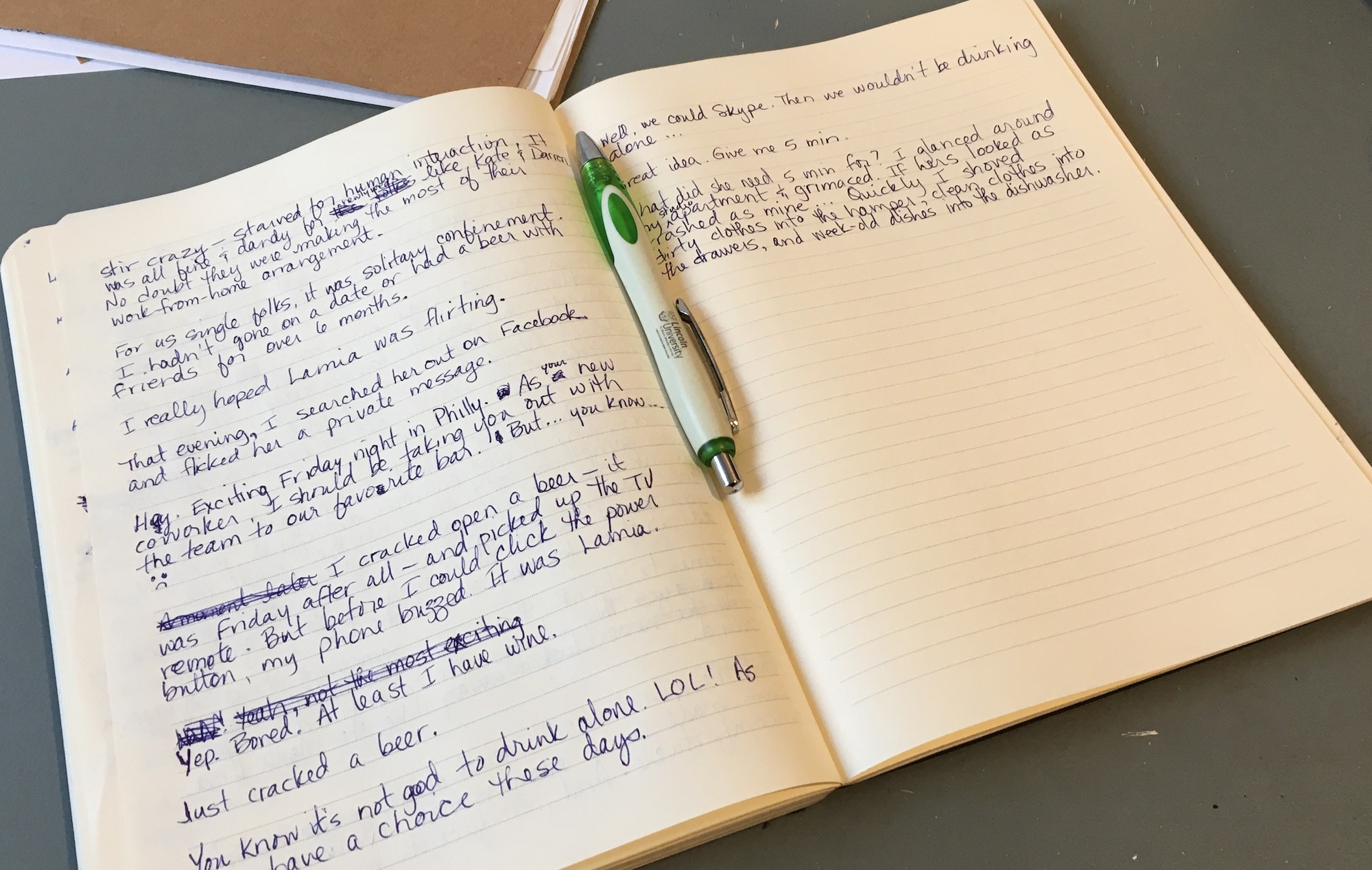
I spent my afternoon trying not to glance at the still-black screen, writing a short story in a notebook, enjoying the beauty of analog writing.

I brainstormed titles for my current work in progress, revelling in the scratch of pencil on paper while ignoring the whine of my computer’s cooling fan.

I took a long break with a cup of tea.

Finally, light returned to my screen. I was relieved to see the update had been successful. None of my software worked, but all my files were there. 

I pulled out the credit card and bought new software. I purged the old, useless software from my applications folder. On a whim, I downloaded some free software that looked useful (software I couldn’t have run before). 

The process was almost fun, in a nail-biting sort of way.

There will be a learning curve, of course (and no doubt some swearing involved). I have lots of new systems to master. But I uploaded a fully functional version of Fatewalker today to replace the cobbled-together one I uploaded last week—not a single warning or error message to be seen. And I played around with some new software, just to see how it worked, and was pleasantly surprised at how intuitive it was. Then I got down to work, and added over 3000 words to my work in progress. 

It was a good day. Scary thing conquered.

What scary thing have you done recently?

Cauliflower Power

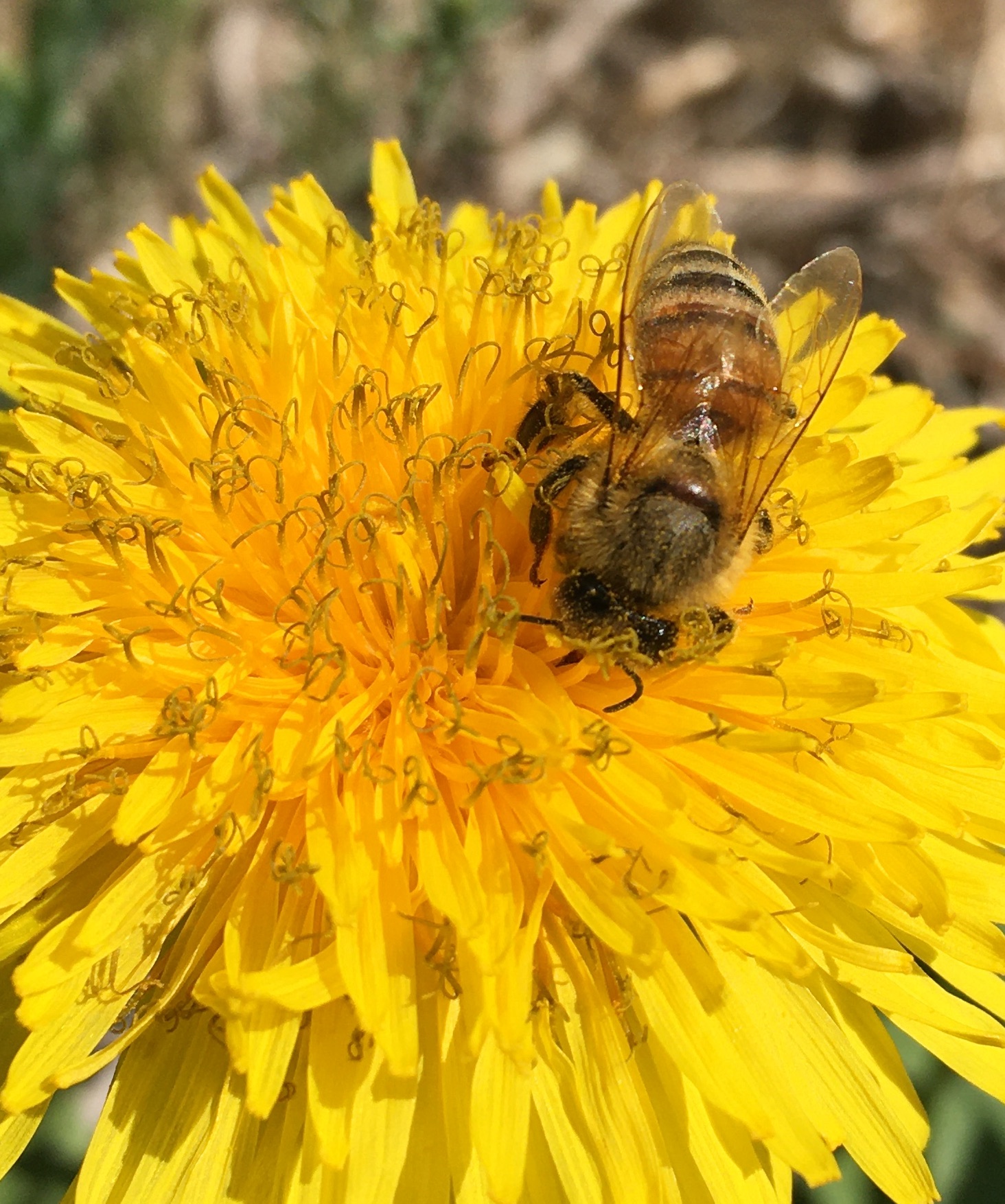
head of cauliflower

A while back, I was searching online for something new to do with cauliflower for dinner. I found plenty of recipes, and nearly every one of them went on and on about how few carbs or calories cauliflower has.

Some of the photos looked delicious, and I’m sure most of the recipes are. But I was so turned off by the low calorie/low carb drumbeat, I lost my appetite.

I love cauliflower. But I love it for its sweet, nutty flavour. I love it for its crunch and the way it breaks into pretty little florets. I love it for its ability to grow year-round here and provide fresh, local produce even in the depths of winter. 

I don’t love it for its lack of carbs and low calorie count. Eating it for those reasons diminishes its value, reduces it to the sum of what it lacks. Here in Aotearoa, you might say it reduces its mana—its spiritual power or strength.

That’s no way to treat food.

I grow vegetables and purchase foods on the basis of what they are, not what they aren’t. Flavour, texture, nutrient content, protein content, and yes, those wonderful starches as well. Even colour is important. My family eats a glorious mix of richly flavoured and textured foods that nourish and satisfy. We celebrate what we eat, because food is what gives us life.

Maybe I’m prejudiced against the relentless messages telling us we must count calories and watch our weight. Raising an anorexic child will do that to you. But my discomfort runs deeper than that, because the focus on calories and carbs speaks to a real disconnect between people and the plants that sustain them. And I can’t help but think that disconnect exacerbates the growing incidence of obesity in modern society.

Counting calories and carbs reduces food to fuel—pump it in, make sure you don’t overfill the tank.

But food is part of our social network, our cultural history, our daily routines. It’s a way to show love and to care for one another. It is part of who we are as humans. And when we acknowledge that, we find ourselves not wolfing down some prepackaged insta-meal while scrolling on our phones, but taking time to make a meal and share it with others. We find ourselves gravitating to foods that make us feel good—foods that nourish our emotions as well as our bodies. We find ourselves reaching back to our ancestors for foods that define who we are.

And we forget about carbs and calories and learn instead to love food for what it provides, not what it withholds.

Christchurch Quake, 10 years on

My 9 and 10-year-old students filed into the room today. 

“Where’s William?” one asked.

“He’s gone to the earthquake memorial,” I answered.

“What earthquake?”

I explained about the series of quakes Canterbury had endured, starting in September 2010 and including the one on 22 February 2011 that killed 185 people. These children had been babies at the time, or not even born yet.

“People died?” Fear shone in the girl’s eyes.

“Was it scary?” asked another child.

I paused, the memory of that day and the days after it playing through my mind.

“Yes. It was scary.”

“Even more scary than Covid? More scary than lockdown?”

Well … different.

These children were born into a quake-damaged city. A broken Christchurch is all they’ve ever known. They do not understand the ‘before’ and ‘after’ we adults do. They grew up in a landscape slowly settling into quiescence, and don’t know the sudden rupture of the solid foundation of life beneath them.

Or perhaps they do. Covid has shaken their world as much as the Canterbury quakes shook ours ten years ago. Perhaps they are not as physically rattled as we were, but their lives are disrupted, and life as they knew it is gone.

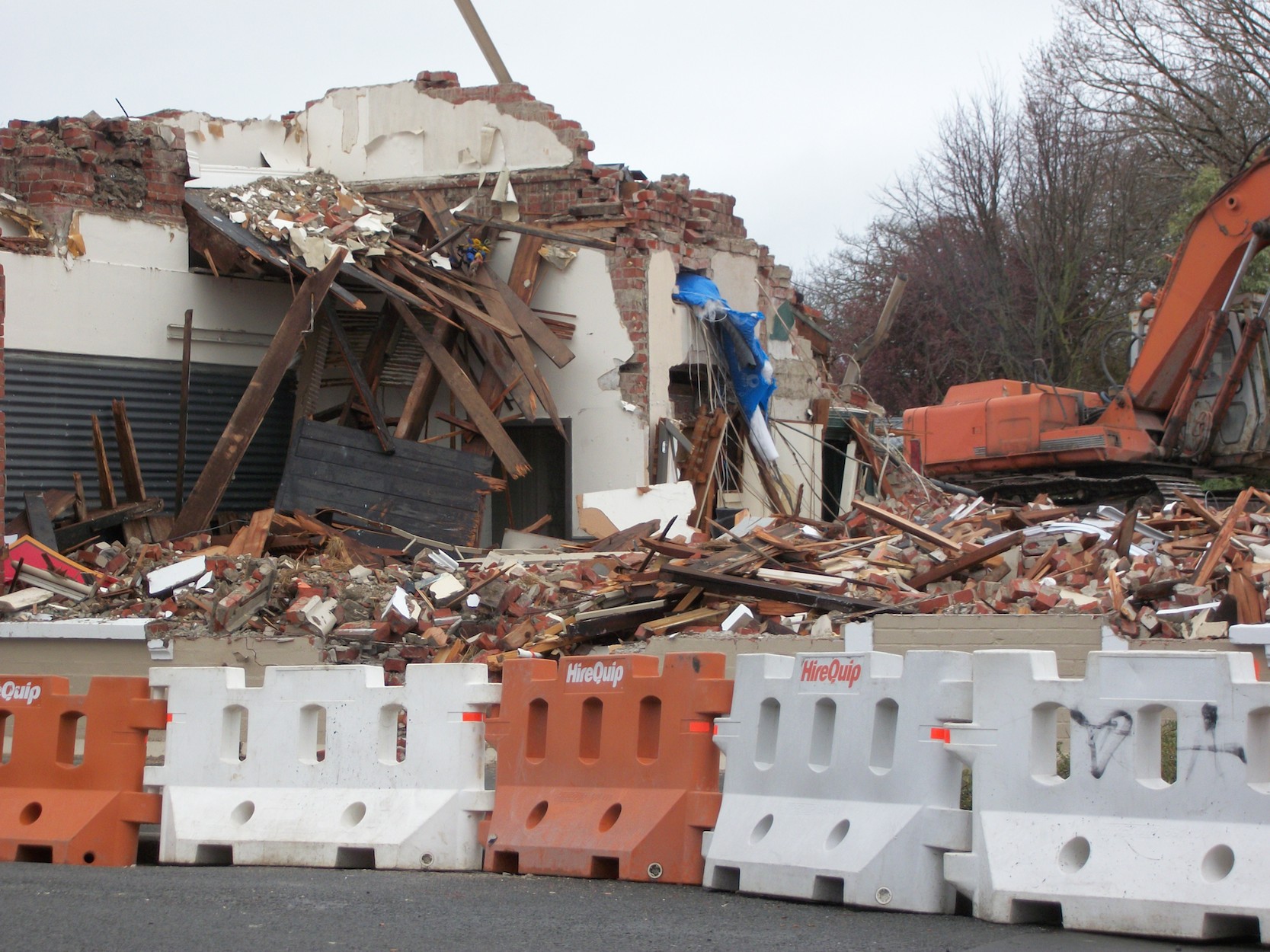
Ten years on from the quakes, the city’s scars are still visible. Empty lots remain where buildings once stood; the cathedral stands half-collapsed; in some places, shipping containers still protect passersby from the risk of building collapse.

But the quakes gave us opportunities to rethink the city. We now have more green space along the river. We have a spectacular central library that serves as a community hub. We have the Margaret Mahy playground, the High Street eateries, pocket parks, art and community spaces that didn’t exist pre-quake. We’ve got the Dance-O-Mat!

Covid hasn’t brought down our physical structures, but it has devastated social structures worldwide. It has shone a light on our ‘essential’ workers, highlighting that many are the most underpaid and overexploited people in society. It has emphasised the critical roles played by schools and preschools, whose staff are historically underpaid and poorly supported. It has highlighted the importance of local communities, science-based decision making, and disaster planning. It has reminded us painfully of the imbalance in gender roles and expectations in our society.

We need to allow Covid to change us as much as the earthquakes did. We need to let it drive us to rethink our values, our society, our expectations. Encourage us to find new ways to live our lives, to reflect upon those things we should be valuing more.

In the days and weeks after the February quake, help poured into Christchurch, much of it grassroots efforts by individuals or small groups. As a community, we remembered what we had perhaps forgotten in our daily rush and bustle. What is the most important thing in the world? He tāngata, he tāngata, he tāngata! The people, the people, the people.

Disaster allows us to rise again, remade. Let us remember the lessons of the past as we move forward and envision a post-Covid world in which we remember what is most important.