Too Late

Newly sprouted, out-of-season apple leaves.

Newly sprouted, out-of-season apple leaves.

The weather finally turned last night. After five days of hot, gale-force winds, after seven months of summer weather, we finally got a hard southerly storm. Three centimetres of rain, a bit of hail, and howling winds—a proper ‘winter’ storm.

But it’s too little too late. By yesterday afternoon, half a dozen shrubs around the property had simply given up in the heat and dry. The apple trees, having lost their leaves to drought six weeks ago, had already flushed again with the unusually warm weather. Those leaves will almost certainly be killed by frost, if not tonight, than another night soon. The trees will struggle to leaf out in the spring, because of their wasted effort now.

The lawn is little more than dirt in patches. If anything resprouts, it will be weeds, not grass. And the winter crops in the garden had already bolted from the heat.

I’m thankful for the rain. I’m pleased to have a full rainwater tank, and the early spring crops that are just now putting on growth will benefit from the water now.

But for the sake of the groundwater, I hope it keeps raining, because we need a lot more.


The Beginning of the End

Pumpkins are filling out and beginning to harden off.

Pumpkins are filling out and beginning to harden off.

March 1—first day of autumn here. It is appropriately autumnal today, with a grey sky and brisk, cool wind.

But it didn’t take a cool day, or the calendar to tell me summer was coming to a close. I have been milking in the dark for weeks—a sure sign the equinox is coming. Last week, the first of the elm leaves crunched brown and crisp underfoot. The poplar trees are looking sparse. The dry beans have started to senesce—pods bleaching, yellow leaves plopping to the ground.

The coming weekend will be full of harvest activities—no time for the beach, regardless of how hot it is. Soy beans, dry beans, and corn will all need harvesting. We’ll make the year’s summer soup. I’ll make another batch of pesto for the freezer before the basil is finished. I’ll dry some tomatoes.

There will be plenty more hot days, and likely a few trips to the beach. There will be many more tomatoes, eggplants, beans, and melons. Summer’s not really over. But it’s beginning to pack its bags and get rid of whatever it can’t take with it when it leaves for the Northern Hemisphere.

Colours in the Garden

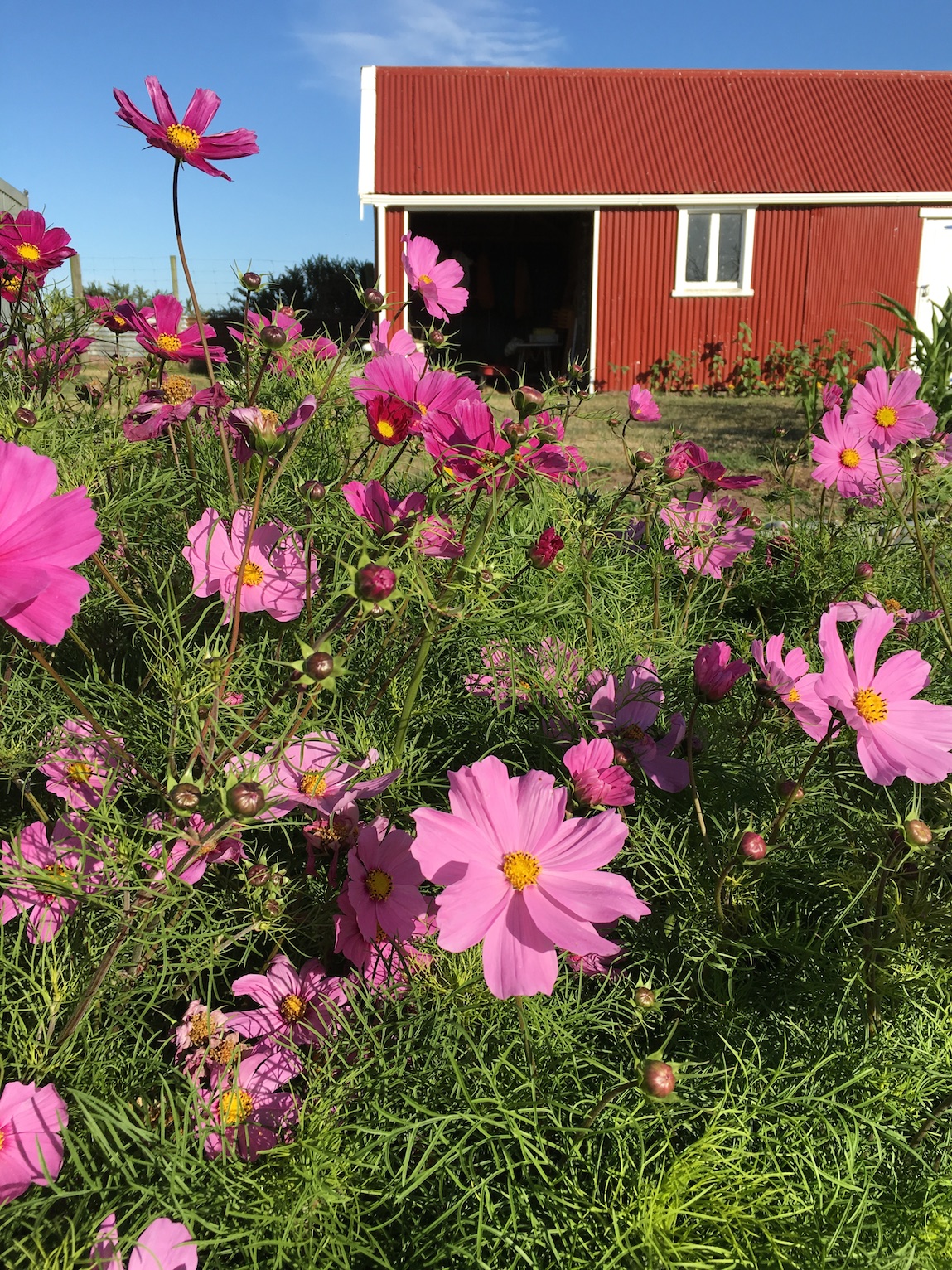
2016-01-12 08.31.38 smJanuary can be a pretty brown month, and it is especially brown this year, with the El Niño induced drought. So I’ve been appreciating the flowers in the garden even more than usual.

When I wandered through the garden this morning and saw this view, I had to capture it.

But why do I enjoy these bright colours? Why not appreciate the brown?

There is a great deal of speculation about our colour preferences. Some people believe that our colour preferences are evolutionarily based. The most popular colours are blue and green. These would have been important colours for our ancestors to focus on—the blue of clean water and clear skies, the green of plants.

But as far as I can tell, there’s no good data to support that theory.

And many of us like colours other than blue and green, too.

A research paper published in 2010 by psychologists Stephen Palmer and Karen Schloss at UC Berkeley found that people’s attitudes toward colours were based on their experiences with objects that were normally associated with those colours. Basically, if you like sunny days, you’ll like the colour blue. If you like tomatoes, you’ll like the colour red. (But if you like sunny days, you won’t necessarily like blue tomatoes, because you don’t expect blue to be associated with tomatoes.)

And, as you would expect, they also found that those preferences were culturally influenced, and people from different cultures had different colour preferences.

So there’s probably no evolutionary advantage to me loving this garish juxtaposition of pink, green, red and blue. I just love it because I love the garden.

Aphids

20151127_125023710It’s aphid season here. Lettuce, strawberries, dill, parsley, and roses are covered in the little green girls.

I used to fret about aphids—they can certainly cause a great deal of damage, particularly to young plants. But I’ve learned to live with them. Here are a few of my aphid strategies:

  1. When I plant out, I check every plant carefully, and squish any aphids—knocking back these early individuals goes a long way to limiting damage.
  2. If a plant is heavily infested, I turn my hose on jet and blast the aphids off. This technique doesn’t get them all, but it does knock the population back to manageable levels.
  3. I allow some plants to get covered. In my garden, my early dill always gets nailed by aphids. I accept this. I don’t kill the aphids, either. The aphids on the dill attract ladybugs, lacewings, and parasitic wasps that eat aphids. Lots of aphids on the dill means lots of predators later in the season.
  4. I plant purple varieties of crops, which are usually less attractive to aphids.
  5. I accept aphids as a source of extra protein and vitamin B in our diets. We eat aphids. They’re good for us.
  6. I have patience. By midsummer, the aphids have all but vanished, decimated by the predators I cultivated in springtime.
  7. I admire aphids’ abilities and beauty—parthenogenic reproduction (that is, the females clone themselves—no need for males), dainty legs and antennae, and a remarkable ability to survive.

Parsley

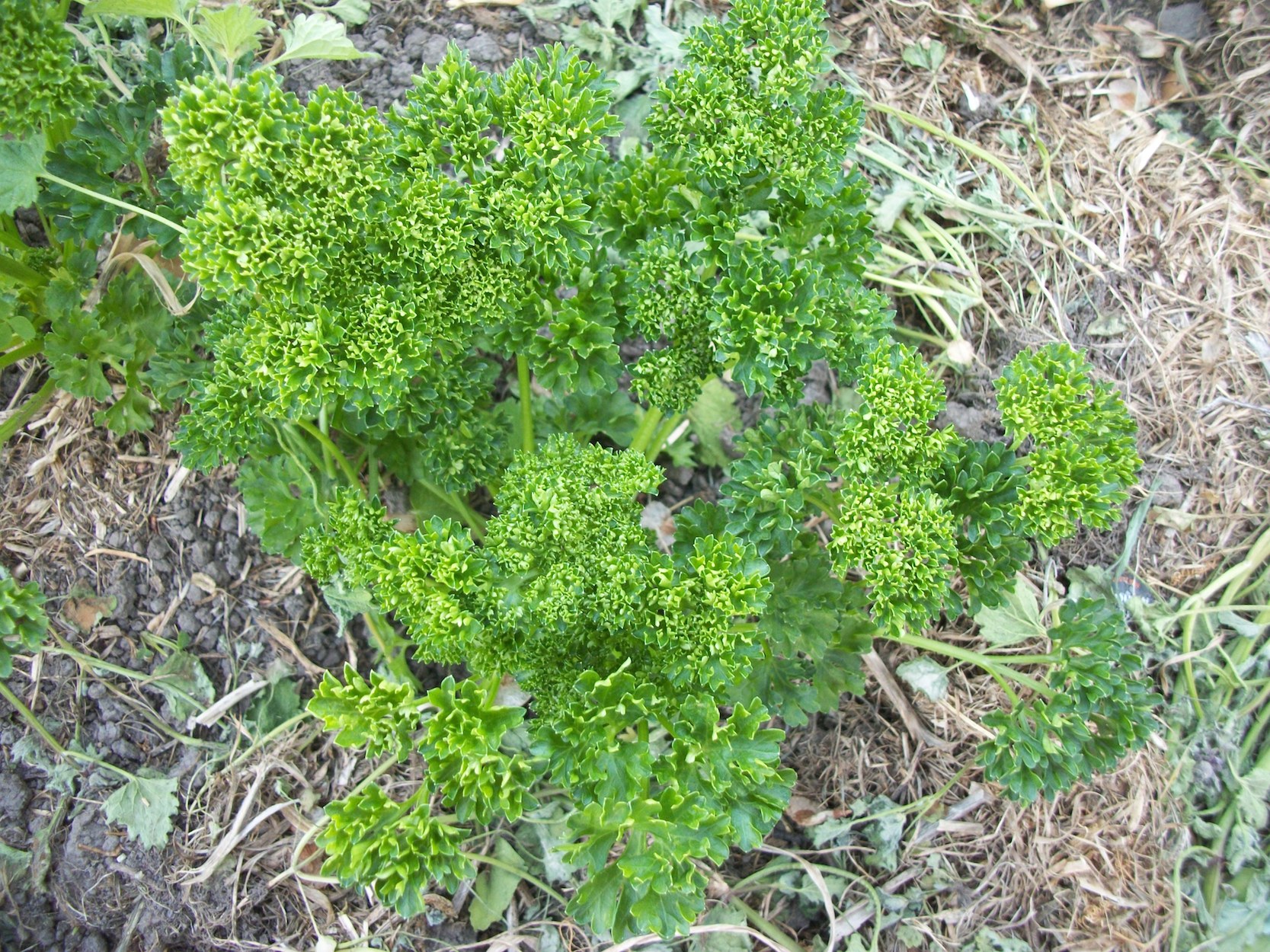
100_4036 smParsley is a ubiquitous herb, easy to overlook, easy to undervalue.

It is said its seeds must go to the devil and back seven times before germinating. I don’t think it takes quite that long, but parsley is slow to germinate.

Once up, though, parsley is tough and long-lasting. The plants I start in August will survive spring frosts to flourish through the heat and drought of summer, and continue flourishing through the cold wet winter, to be finally pulled out in October of the following year, when they begin to bolt, to make room for new plants.

We eat parsley by the handful (none of this Tablespoon stuff), and love it in risi e bisi, soup, potatoes, and gratins.

We grow both the Italian flat-leaf and the curly varieties (because, why not?), and enjoy the flat-leaf parsley fresh in salads (or just standing up in the garden as we pass by). We also enjoy parsley mixed with other fresh herbs to make a non-basil pesto that is lovely on pasta or as a topping for polenta crostini.

Of course, the best reason to grow parsley in much of the world is to attract the beautiful swallowtail butterflies, whose caterpillars specialise on parsley and related plants, incorporating the toxins from the plants into their exoskeletons to serve as defence. Unfortunately, we have no swallowtails in New Zealand, but the flowers of parsley attract bees, flies, and our native butterflies in large numbers.

An Apartment in Town

100_4017Some days make me want to live in an apartment in the city.

Today was one of them.

As I mentioned in a previous post, I planted out all the frost-tender plants last weekend.

Earlier this week, it frosted. In spite of my efforts to save them, I lost nearly 200 plants. I saved hundreds more, so I tried to make the best of it. I replanted what I could.

When it looked like it was going to frost again last night, I covered everything I could.

But it didn’t just frost last night. It froze.

When I tried to spray the plants down in the morning to save what was left, my hoses were frozen. I managed to get a sprinkler going eventually, but when I came back half an hour later, the water it had sprayed had frozen solid.

I won’t know until tomorrow, but I expect I have now lost all of my frost-tender crops, except the few plants that fit in the greenhouse.

After the plant disaster, I headed to the goat paddock to do the milking and noticed that one of my yearlings was scouring badly. The result of worms, no doubt (she was the one goat I didn’t manage to dose the last time I drenched them). Treatable, but in a goat so small, I worry—they can go down fast once they start scouring. I gave her an injection of Dectomax, but like the plants, I won’t know until tomorrow what the outcome is.

So I rushed around trying to save lives this morning before driving an hour into the city to take the kids to school…makes that apartment in town look really attractive.

Spring

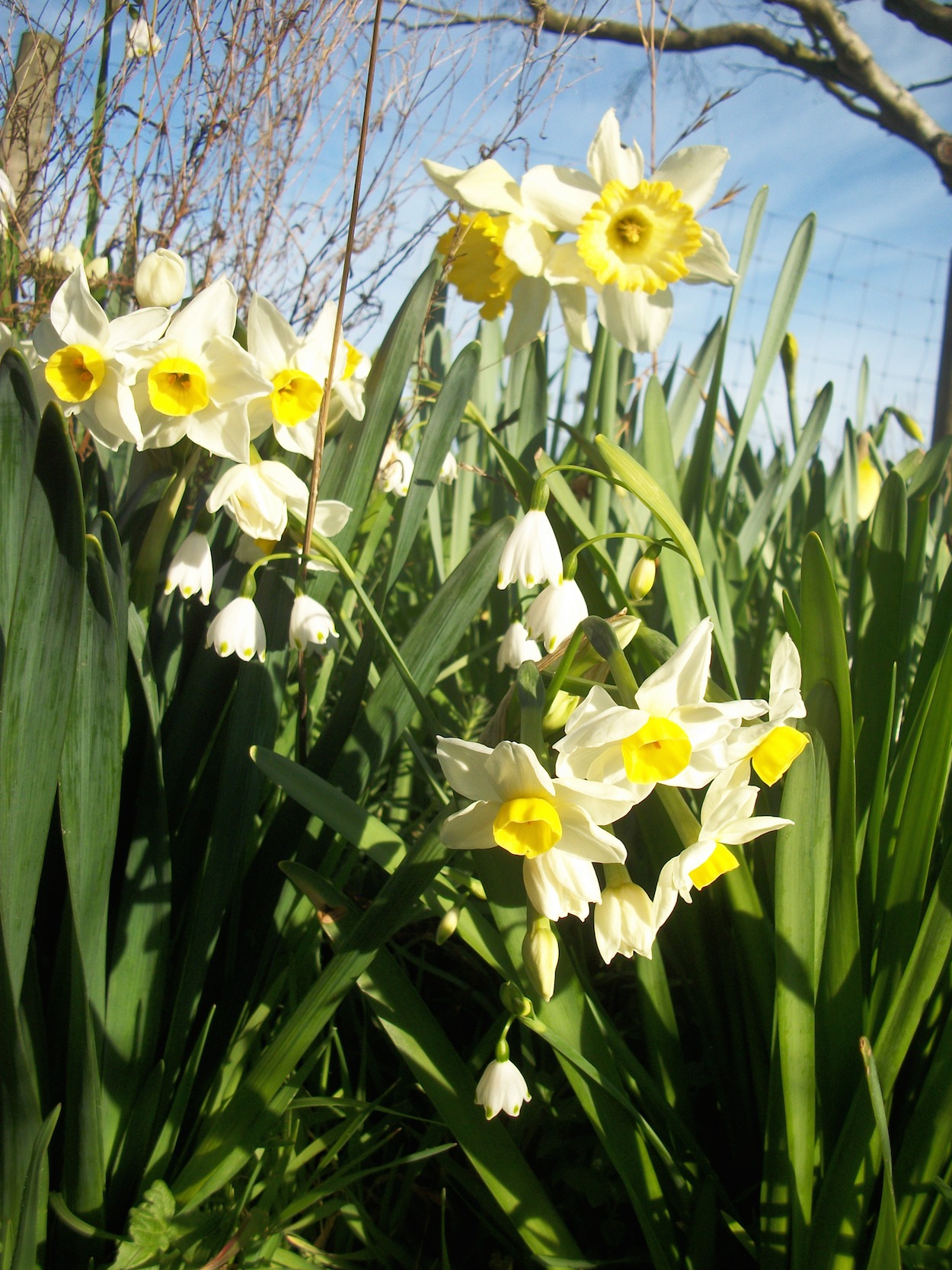
100_3654 smYesterday was the official start of spring, though the plants have known it for weeks. The crocuses are all but over. The daffodils and snowdrops are blooming. The willow trees flushed green last Thursday. The grass needs mowing.

So, naturally, it’s been cold and rainy for five days.

But cold and rainy at the beginning of September is fundamentally different from cold and rainy in July.

It may be twelve degrees in the house in the morning, but I don’t feel the need to light the fire—it feels warmer than it is.

The sky is light at 6 am.

The sky is still light at 6 pm.

The magpies tussle on the lawn and sing in the early morning darkness.

The plovers run in fits and starts across the paddocks.

We are all restless to be outside, regardless of the weather.

Weeds seem to spring up overnight in the garden.

Yes, it is spring.