Summer Heat, Autumnal Vibes

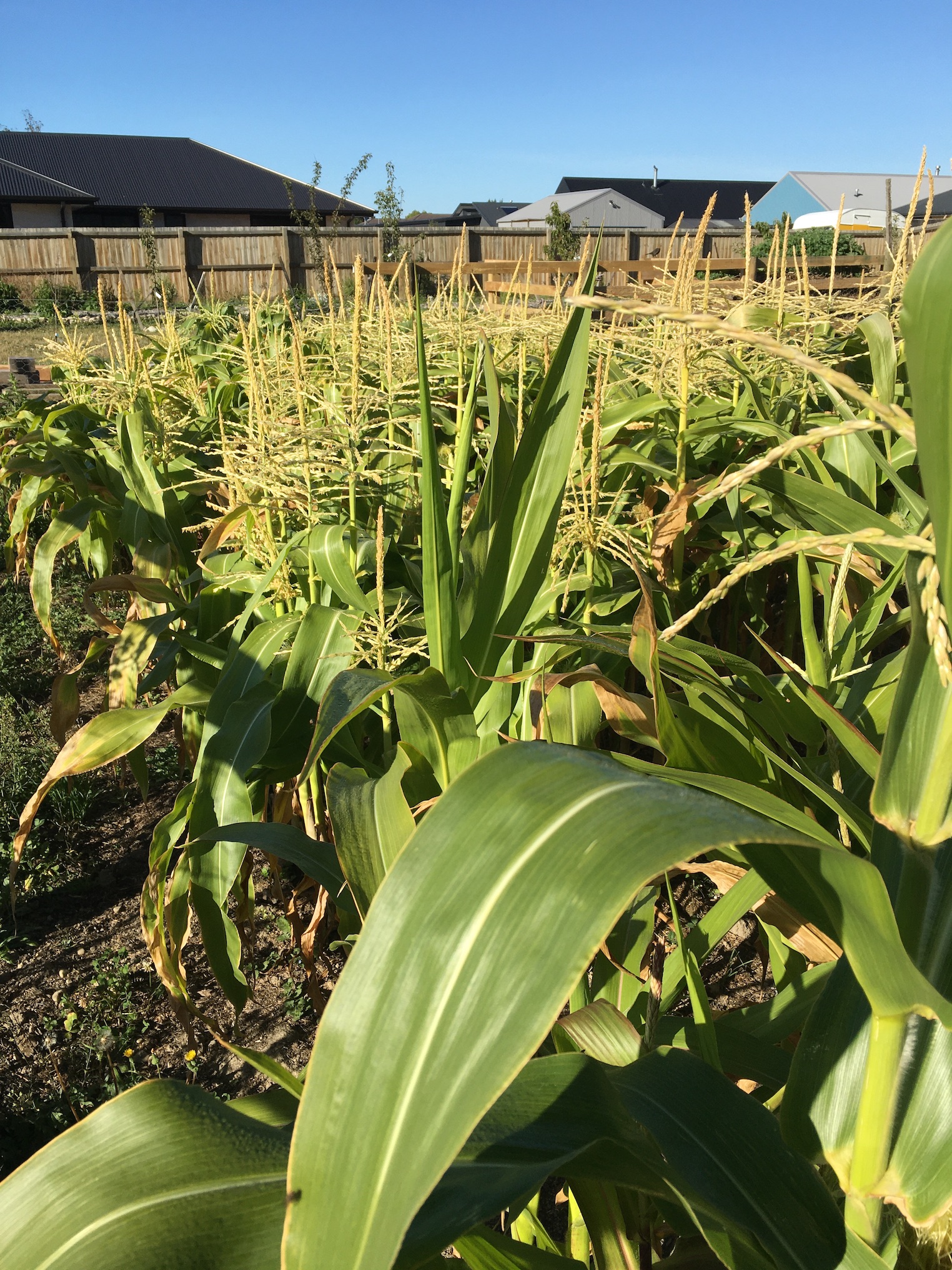
It’s been hot here lately, with blue skies and temperatures in the upper 20s most days—summer at its height.
But when I wake at five in the morning it is dark, and there is no working in the garden until nine in the evening anymore, unless it’s by head torch. The days are growing shorter, and there’s a feel to the air that speaks of the autumn to come. 

The cricket chorus has grown over the past few days—the summer’s crop of insects maturing to mate and lay eggs before winter. The early apples have been harvested, and pumpkins are swelling on the vines. I harvested most of my dry beans last week, too. 

Of course the summer crops—tomatoes, zucchini, eggplants, peppers, and beans—are still going strong, and will be for a while.But the seasons are turning.

I love it.

My husband and I lived for two and a half years in Panama back in the early 1990s, so we got to experience living almost on the equator. The daily temperature variation in Panama is greater than the yearly variation, and the day length variation is virtually imperceptible. The only seasonality is in rainfall—it rains from mid-March to mid-December, then stops entirely until mid-March again.

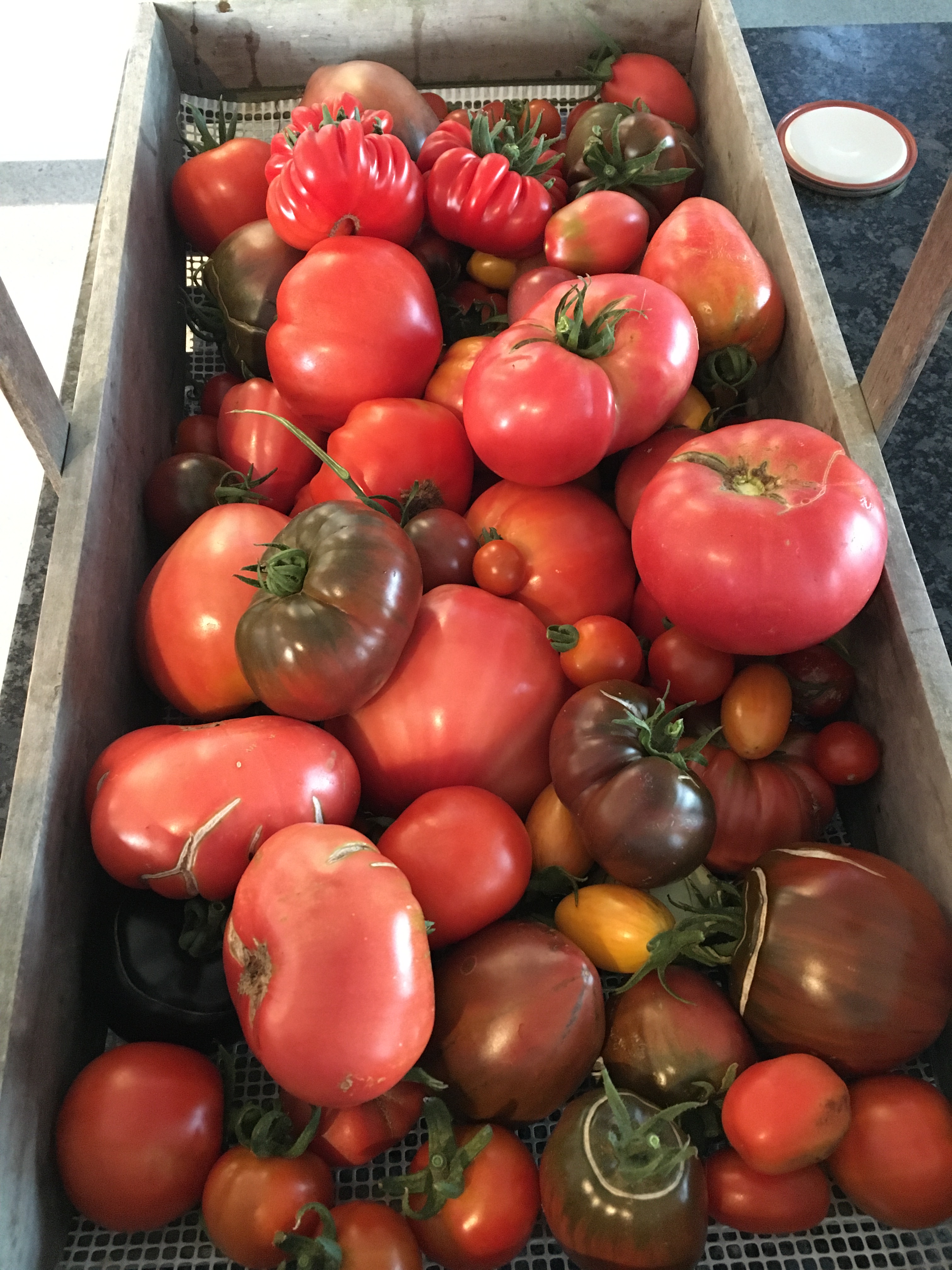
Tomato sauce made from yesterday’s harvest

After living in Pennsylvania, Michigan and Ohio for the first 22 years of my live, Panama was … well … boring from a seasonal perspective. I missed the annual markers of the Earth’s progress around the sun. Of course we had heat, but I missed the long days and drawn out sunsets of a high-latitude summer. In Panama, the sun leaps into the sky in the morning and drops like a stone below the horizon in the evening, and it does so with such precision and consistency, you can practically set your watch to it.

I missed the cold of winter, the dark days and long nights perfect for curling up with a book or sitting by the fire (though to be fair, Panama nights sometimes seemed long, because we had no electricity, one small table to sit at, and only a lopsided wooden chair and a tree stump to serve as seating).

I missed spring, for its slow unfurling of green, rising from the herbs on the forest floor to the tops of the trees as the season progressed. I missed autumn for its splash of yellows, oranges, and reds, the rime of frost on crisp mornings. I missed the bite of icy wind, the smell of snow.

New Zealand doesn’t get the extremes of seasonality I enjoyed in the northern United States. Our climate is heavily moderated by the vast Pacific Ocean in which we sit. And our native plants are largely evergreen, so green is the dominant colour all year round. But where I live, at a similar latitude to St. Paul, Minnesota (but of course on the other side of the equator), we have decent seasonality, and I love the changes throughout the year. People often ask what my favourite season is, and I have to say it’s all of them. Each season has something new and exciting to offer, and there’s no point in mourning the loss of long summer evenings, because they’ll be back. Instead, I welcome the short days, the excuse step away from the garden in the evenings. I look forward to bringing in the autumn harvest and filling the pantry with the fruits of summer. 

So bring on the shorter days. Variety is the spice of life, after all—time for some spice.
Pandemic Poetry–2021 Edition, #20

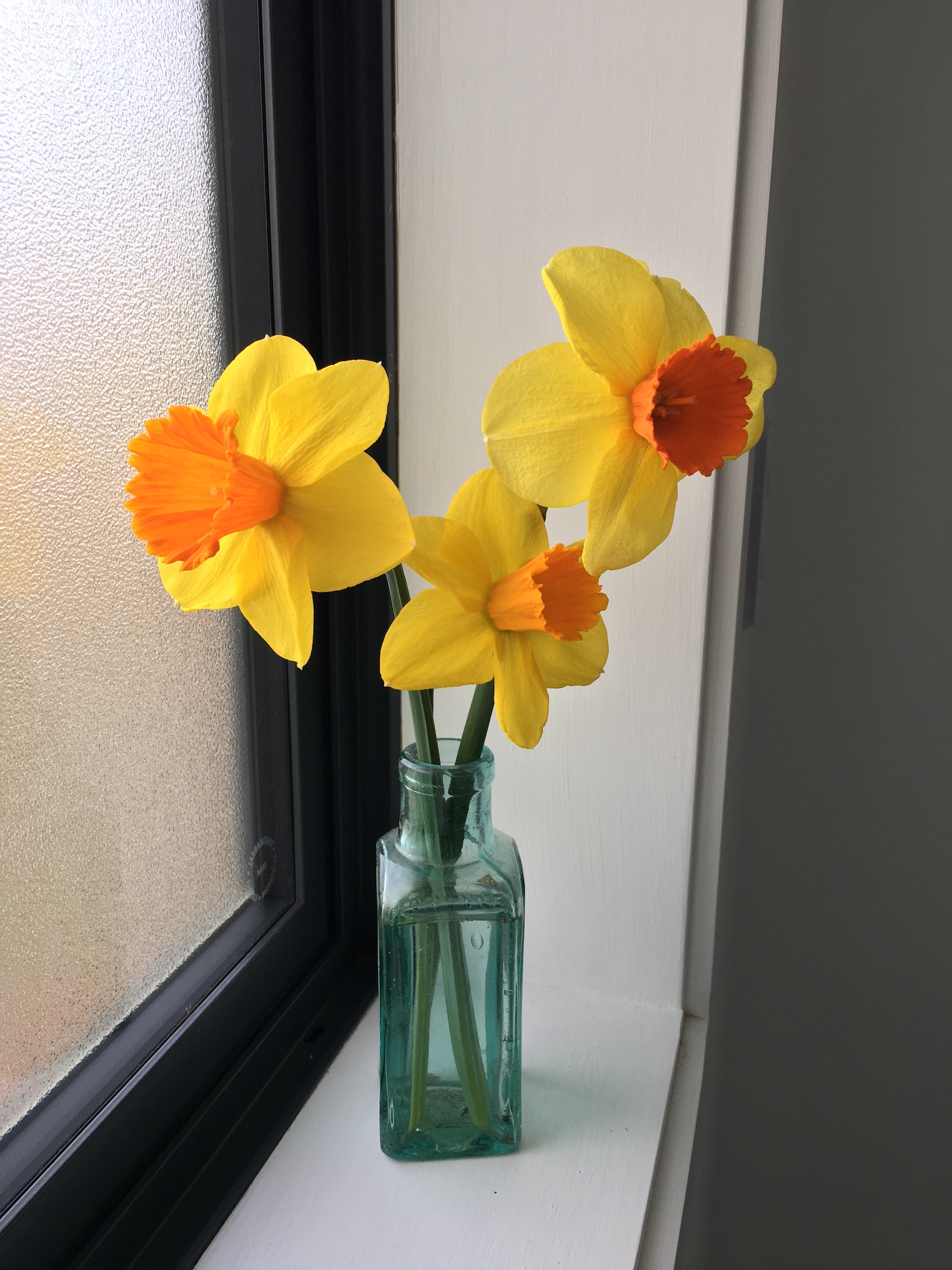
daffodils in a vase

A few days of warm wind, and it seems like the plants have all woken up. The pines across the road certainly have—everything is covered in gritty yellow pollen. 

Springtime’s chorus
The magpies’ warble
A chittering of sparrows
The buzz of bees
Among the pansies
The distant drone
Of a lawnmower
The quiet chirp
Of frogs after dark.

Pandemic Poetry–2021 Edition, #5

daffodils in bud
Spring blooms are on their way!

In spite of lockdown, spring continues to show itself. Daffodils are blooming, and tree buds are swelling. I spent yesterday morning planting vegetable seeds, kicking off my gardening season for the year. So life is not all bad, stuck here at home with plants to tend.

The northwest wind cries Spring!
And the magpies, they all start to sing.
It’s hard to be sad
And think everything’s bad,
When nature is having a fling.

Sun’s Return

It’s only a few weeks past the solstice. Nights are below freezing, and the worst of winter is still to come. In shady spots the frost lingers all day.

Spinach seedlings in the greenhouse

But plants are already responding to the increase in sunlight. There is a haze of new green growth in the chickens’ winter-bare paddock, daffodils are poking their shoots out of the flower beds, and the grass will soon need to be mown.

In the greenhouse, the lettuce and spinach seedlings that have been sitting there unchanging for weeks have finally begun growing again. The broccoli in the winter garden has begun thinking about heading up (at least until yesterday when the chickens got in there and stripped the leaves).

I too have responded to the sun. I’ve drawn my garden map for the upcoming season. I’ve assessed my seed needs in preparation for the arrival of the new year’s seed catalogue. I’ve nearly completed incorporating manure into the entire vegetable garden.

The weeks will go quickly. Before I know it, it will be time to start seeds, mark out garden beds and spread compost. Now is the time I should be buckling down to complete winter tasks—sewing, organising, cleaning … But like the plants stretching out their tentative leaves, I can’t help but respond to the sun, reaching for spring and looking forward to the new season to come.

When Everything is a Gift

My stunted yellow corn.

I never expected much from this year’s vegetable garden. The soil test revealed a virtually sterile substrate, nutrient-free, stripped by decades of conventional agriculture and then scraped by the developer’s bulldozers. It will take years to improve the soil to the levels of my old garden. In the first year, I figured I’d be lucky to coax a few meals out of the garden.

There’s no question the vegetables I planted are suffering. The plants are half the size they should be, and many are yellow and senescing early for lack of nutrients.

But the compost, manure, and other organic fertiliser I’ve incorporated into the soil have done some good. We have plenty of onions, cucumbers, carrots, herbs and green beans. We are overwhelmed with zucchini. The soy beans and dry beans will all give harvests. Pumpkins swell on their vines. We’ve even eaten a few melons.

Every fruit feels like a gift.

I could be dismayed at the state of the garden—corn only waist high, tomatoes ripening at golf ball size, potatoes decimated by disease … but I know what the plants are up against. I know how hard they’re working to produce anything. I admire their effort and determination.

So, in spite of how pathetic the garden is, I am pleased. I feel blessed at every meal, and I look forward to an even better year next year.

Christmas on the Heaphy Track

Our pre-Christmas tramp this year took us to Kahurangi National Park to walk the Heaphy Track. The trip was simultaneously spectacular and miserable.

The Heaphy Track follows the path of a proposed road, and as such is gently graded—it’s a technically easy walk. So easy it’s almost boring. But it passes through some spectacular landscapes teeming with remarkable flora and fauna.

Day 1 began for us at 5.30 am when we awoke in the Collingwood Campground to our tent being blown flat by the wind and rain. We quickly decamped and retreated to a shelter to wait for the rain to let up before starting our hike.

Unfortunately, the rain outlasted our patience, so we started out under a heavy fall that had us soaked within minutes. The steady climb was largely unremarkable. The rain eventually cleared and we reached Perry Saddle Hut under a sunny sky.

Day 2 was more eventful, with two endangered species sightings by 7 am. The first was a takahe browsing the grasses just outside the hut as we finished breakfast. This critically endangered bird, the world’s largest rail, was presumed extinct for 50 years. Its population now numbers just 445.

Minutes down the track, with rain setting in again, we nearly stepped on our second endangered species of the day—a Powelliphanta snail—a fist-sized carnivorous snail. Without the rain, we never would have seen these nocturnal, moisture-loving animals. We counted ourselves lucky.

Under increasing rainfall, we made our soggy way across Gouland Downs and then the weird and wonderful Mackay Downs. We explored caves and admired huge glacial erratics tossed like giant bowling balls over the landscape. Weka (another endemic rail) with chicks in tow scurried around our legs every time we stopped for a break, waiting for us to let down our guard so they could make off with a snack.

We reached Mackay Hut drenched, but the worst of the rain was yet to come. Half an hour later, the sky opened up and the wind rose. The torrent sheeted down, spilling off the hut roof like someone was tossing buckets of water over the edge. It didn’t let up until nearly 4 am the following day.

Again we set out in the rain, this time into a landscape scoured and still gushing water. But again the rain held delights—another giant snail, sundews lining the track, enormous 700-year-old southern rata trees, waterfalls in all directions, sprays of flowering bamboo orchids dripping from tree trunks, a mistletoe with scarlet flowers … That evening—Christmas eve—drying out in Heaphy Hut, we composed a New Zealand tramping ballad as a family:

T’was the night before Christmas, and all ‘round the hut
I sure wasn’t stirring; I was sitting on my butt.
A cup of tea nestled warm in my hand.
I ate lots of scroggin, expanding my waistband.
Out on the porch, the weka did play,
Hauling our shoes and our stockings away.

When up on the roof there arose such a clatter
I limped from my bench to see what was the matter.
The sun on the roof of the dunny nearby
Made me shade my eyes as I peered up to the sky.
And what to my wondering eyes did appear
But a trio of cheeky, mischievous kea.
With can opener beaks and curious minds
The birds tore apart everything they could find.
When done on the roof they moved on to our packs
Eating their fill of our Christmas Day snacks.

With our stockings all gone and no snacks to eat,
We still had a Christmas that couldn’t be beat.

Christmas morning dawned and the last ragged storm clouds blew away, leaving brilliant blue skies and blooming rata trees for our last leg along the coast under dense stands of nikau palms.

We ended with a quick dip in the Kohaihai River (very quick—it was ice water) and the long drive home. A most enjoyable Christmas!

New Garden Challenges

We’re nearing the end of September and the garden work is ramping up. It’s exciting watching the new garden come together, even if it is moving more slowly than I’d hoped.

Everything is new this year, and it’s no surprise problems are cropping up. I’ve already lost most of my first tomato planting to frost, because I don’t have a heated indoor place to start my seeds anymore. I could have prevented the loss and brought the plants indoors for the night, but I haven’t had to worry about that for years … I’ve learnt now, so hopefully won’t get caught out again.

I’ve created my garden plan based on planting at the old house, but as I start to plant out peas, lettuce and spinach, I’m finding the need to adjust. How does one convert a set of six to seven metre long beds and a few odd-shaped ones to a rank of 3-metre and 8-metre ones? Add to that the fact the soil is dramatically different at the new place, and I don’t know how all the plants will respond to it and to the amendments I’ve added (cow poo, organic fertiliser, compost, green manure). Will my carrots be harvesting size before the zucchinis sprawl across their bed? Will the lettuces grow quickly enough to self-mulch? After fifteen years at the old place, I knew intuitively how each crop grew, how to get the most from the space I had by timing plantings and spacings, which varieties did best.

This year, I’m starting practically from scratch. I will plant as I am used to planting, because it’s a place to start, but I’ll be taking copious notes. Next year, I’ll have more information to go on, and the following year I’ll have more … and some day, planting at the new place will be as second-nature as it was at the old place.

Weeding Magpies

Photo: Eric Weiss

We’re still getting to know the local wildlife at the new house. The marauding sparrows are pretty much the same—devouring young lettuce and chicken feed in large flocks. The black-backed gull’s evening flights to their nightly roos on the gravel banks of the Waimakariri River are also familiar—though at the old house, the birds were headed to the sea.

The magpies are also familiar, but I’ve noticed some intriguing behaviour here that was absent at the old house.

The magpies here are weeding my garden.

Well okay, not really. Not on purpose. But they’re doing a nice job of it, regardless.

Our yard and garden here are cursed with wire weed. This aggressive plant’s long tough branches sprawl up to a metre or more from a strong central tap root. They tangle in the lawnmower and garden tools, and can trip the unwary. Their only saving grace is that, at least in our lousy soil, their foliage is small and sparse—they may tangle all through my crops, but at least they don’t smother other plants entirely.

And apparently, they make superior magpie nesting material. For weeks, the local magpies have been avidly stripping wire weed from the garden and hauling it to the tops of the pine trees across the road. They started with the easily obtained dead plants that I’d pulled out and left lying about. But now they’re ripping up live plants and taking them away by the beakful.

All the more reason to love these feisty feathered thugs.

First Fruits

The new property isn’t quite gushing berries like the old, but it’ll get there.

The family spent much of last Sunday gardening at the new property. It had been several weeks since I’d worked in the garden there, and the weeds had been busy. The list of weed species on the property continues to grow, with cleavers and field madder the newest unwelcome volunteers. I found convolvulus too, scrambling along the perimeter fence through a clutch of gorse seedlings. At least the convolvulus will have pretty flowers.

There were nice surprises, too. The artichokes we transplanted are growing well. And nearly all of the cuttings of gooseberry, red currant, black currant, and blackberry have survived and are flowering. The strawberries have done well, too. One of them even offered me a ripe berry—the first fruit of the new property. It wasn’t the best strawberry ever, but it was the flavour of possibilities, the flavour of things to come.