The Carrot Conundrum

I love carrots. I love them cooked into everything from pasta sauce to burgers, and I love them raw in my lunch box. As a snack to get me through the day, they are unparalleled—crunchy, juicy and sweet, but not so sweet that they give me a sugar crash. And homegrown carrots are a million times more flavourful than commercial carrots, so growing good carrots is important to me.

Unfortunately, I rarely have luck with my carrots. Last year, I planted three times and got, maybe six carrots. This year, after my first planting failed entirely, and my second mostly failed, I decided to get serious about carrots. 

First, I evaluated why my carrots so often fail. It’s not just one problem that nails them. First, I probably plant my carrots a little too early. Not that they won’t grow at the cooler soil temperatures of early spring, but they take longer to germinate, leaving the seeds at risk of my other two problems: pests (mostly slugs and slaters) which eat the seeds and freshly germinated seedlings, and drying out.

Finally, even once my carrots germinate, they struggle with the heavy clay soil of my garden. If I lighten the soil by adding lots of compost, the slugs and slaters just eat the carrots before they can establish.

So, to try to address all these issues, I started by asking my husband to build me a raised bed. Into the bed we poured a commercial garden mix (half soil, half compost), combined with a sack of garden sand.

I watered the bed well before planting. Then I made my furrows deeper than necessary, so that even after covering the seed, the rows were lower than the surrounding soil. My hope was that the rows would stay moist longer after watering or rain if they were furrowed. 

I watered well after planting, then generously sprinkled the bed with slug bait (I use Quash (iron EDTA), which is also very effective against slaters, but is safe for most everything else). Then I mulched between the rows with grass clippings, and covered the whole bed with feed sacks laid right on the surface.

With the feed sacks on the surface, I didn’t need to water daily, but I watered every other day (with extra waterings on hot days).

Ten days later, I have excellent germination on my carrots!

Was my raised bed necessary? Maybe not, but by making the bed, I focused my effort on a smaller area than I usually plant in carrots. It gave me an excuse to work really hard in that small area to make it work.

Will it work again next year? I’ve had bumper carrot crops in the past, so I know that success one year doesn’t necessarily mean success every year. But I’m hopeful that I’ve hit on a technique that works consistently for me. Only time will tell. 

In the meantime, I’m doing my best to keep my newly sprouted carrot seedlings moist and free of pests. I can taste the carrots already…
2024–Year of the Rat?

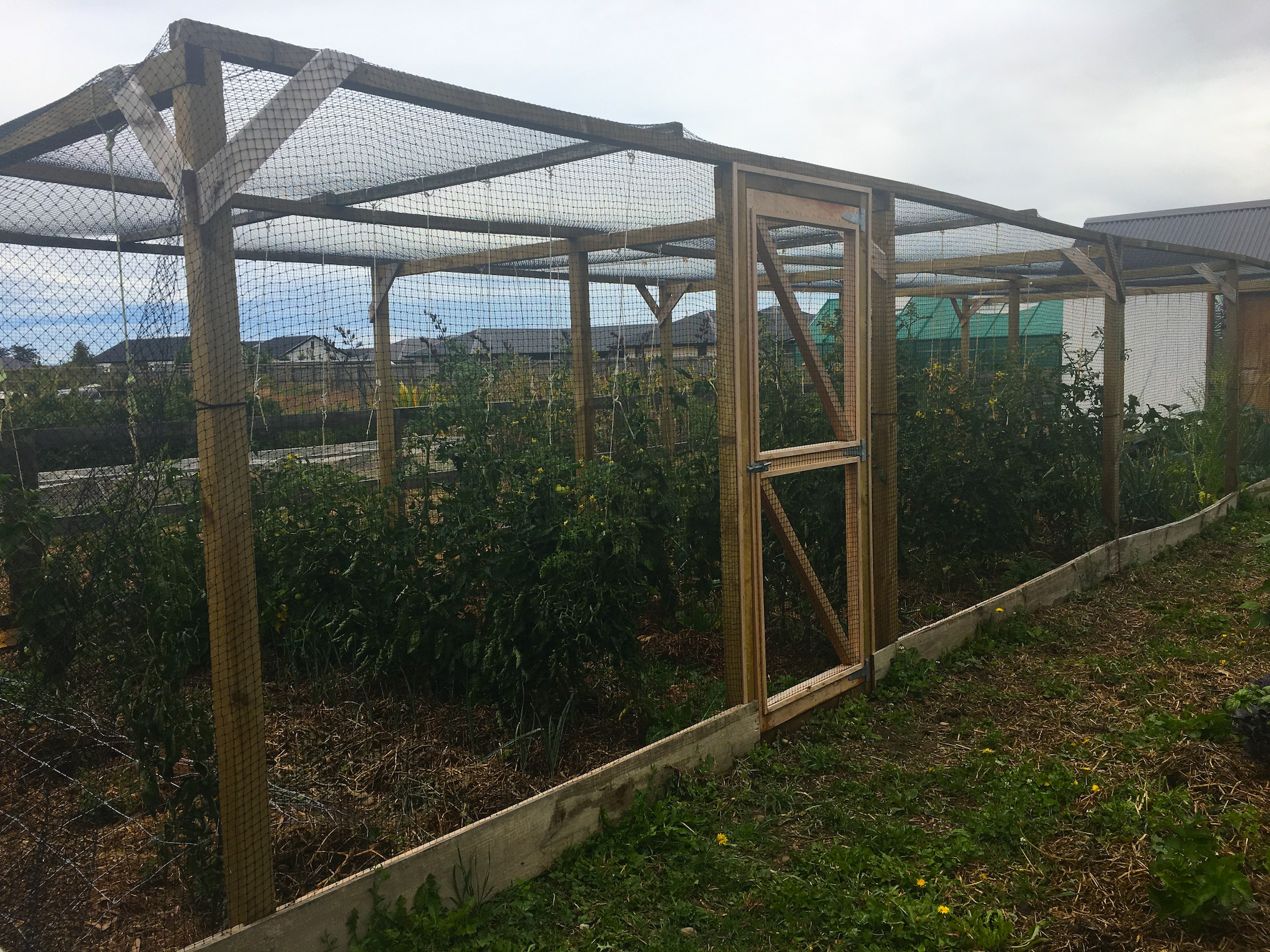
The netted ‘room’ is excellent at keeping birds out, but does nothing to thwart rats.

With a third of my garden protected with permanent bird netting this year, I was pretty smug about pests this spring. Silly me …

2023 may have been the year of the rabbit in the Chinese Zodiac, but in my garden it was year of the rat, and it seems to be continuing in 2024.

In the spring, rats ate all my pea seedlings … twice … On one of those occasions, they plundered the seedlings in the three hours the tray sat in the garden before I planted them out. I was working (planting other things) just metres away while the rat collected all the seedlings and tucked them away in its nest (I found them later when I uncovered the nest).

The rats also did good work on my first planting of corn, melons, cucumbers, and pumpkins, eating the seeds and uprooting the seedlings.

I went through three cheap rat traps (none of which actually caught a rat, and all of which quickly broke), before spending an excessive amount of money on a DOC 200 trap. This terrifying stainless-steel beauty caught its first rat within 24 hours. It has nabbed 3 rats, a hedgehog, and an English sparrow in the three months I’ve had it, which I’m quite pleased about.

Unfortunately, it has not solved my rat problem. Last week I discovered a rat (or rats) had tunnelled straight down my potato bed, eating nearly every potato in the entire bed, and damaging some plants so badly they were dying. Yesterday, I went to pick a gorgeous Black Brandywine tomato that was ripening on my now bird-protected tomato plants. I found the tomato on the ground, half eaten by little rat teeth.

I’m beginning to wonder if I will get anything off the garden this year. So far, the rats don’t seem to like courgettes or cucumbers, but my beans are planted right next to the compost pile where the rats seem to nest. Once they start plumping out, they’ll be primo rat food. And the corn? You know those rats will be scampering right up the plants to gnaw at the ears. Makes it hard to lure them to a trap when the garden is a smorgasbord of delicious food.

Makes me wish I still had a cat—the rats didn’t start to become a real problem until he was gone.

I’ve also got my first ever infestation of whitefly this year. Pretty embarrassing for someone whose Master’s degree was on greenhouse pest management. Whitefly wasn’t even on my radar, so I missed early signs of the infestation. They’re not only in the greenhouse, but outdoors as well. The key to effective integrated pest management is paying attention and catching infestations before they’re a problem, and I failed spectacularly at it. Now I’m playing catch up. My only consolation is that it looks like lots of other people are, too, because both suppliers of whitefly biocontrol agents in New Zealand are sold out. Serves me right, I guess.

So as we enter 2024, officially year of the Dragon, I’m wondering if there’s a dragon that eats rats …

It was the best of times. It was the worst of times.

Spring is a season of contrasts. Not just the weather, which can change on a dime from cold and rainy to dry and hot, and then back again, but the spring gardening season has more ups and downs than other seasons.

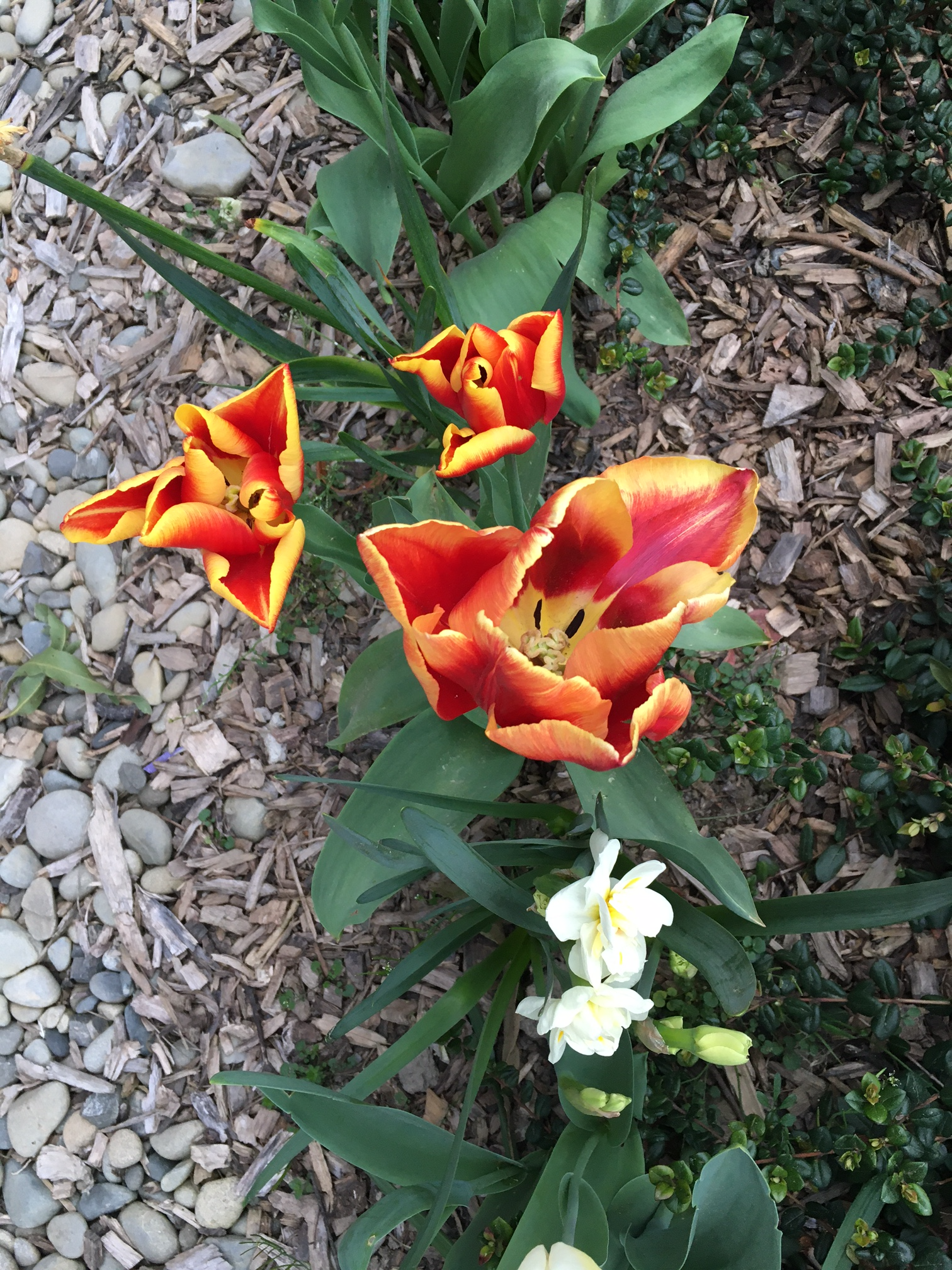
Take the past two weeks, for instance. The fruit trees are in bloom, daffodils and tulips are flowering, the asparagus is up, and the berries are leafing out—the garden is green and lush, a real delight! The seeds I’ve planted over the past month are growing well, and I’ve begun planting out the frost-tolerant crops. The sun has warmed the soil, and the worms are going crazy, incorporating all the manure I added to the garden over the winter. It’s the best of times.

On the other hand, when I put the freshly sprouted peas in the greenhouse to grow for a week before planting them out, the rats and mice got into them and ate about a quarter of them. Disappointing, but to be fair, when it came time to plant them out, I had the perfect quantity for the area I had prepared, so no harm done. I set some rat traps, and planted my second planting of peas in a tray indoors.

Saturday morning, I set the new tray of beautifully sprouted peas in the greenhouse, just until afternoon when I planned on planting them out.

By the time I was ready to plant, a rat had eaten them all. Yes, during the day, while I worked just a few metres away in the garden. Gutting, especially after two weeks of having the sneaky rodent eat the bait out of my rat traps without getting caught. Grr! To add insult to injury, when I removed the pile of bricks I knew the rat was nesting under, I found a huge stash of peas and wilted pea sprouts—the little stinker wasn’t even eating them all—he was stockpiling. I have since ordered a DOC200 trap—I’m gonna get this guy one way or another before he eats more peas. 

On Sunday, we experienced a typical springtime nor’wester—warm dry wind racing across the plains at 100 kph or more. Just after lunch, a particularly violent gust blew two panels out of our new greenhouse, including one panel we’d lost in a previous wind and had reinforced so it wouldn’t happen again. Later gusts tore a third panel out as well. This greenhouse was advertised as being designed in New Zealand for New Zealand conditions. Clearly they didn’t test the thing on the Canterbury Plains. Arg! It’s the worst of times.

In spite of the delights of spring, it seems there’s always another pest, another problem to deal with. By summer, I know that most of the problems will be either solved, or abandoned as a lost cause, but in springtime, hopes run high, and disasters feel truly disastrous.

I complain, even though I know that the springtime garden disasters are fixable (for the most part). But I suppose part of why I enjoy gardening so much is the challenge. Outsmarting pests; growing crops out of season; battling poor soil, wind, drought, flooding … sometimes I think that’s half the fun.

So I look to the weather forecast for the next 24 hours—severe wind warnings and a high of 20 today, followed by snow tomorrow—and buckle up for the roller coaster ride.

Pest Management: Control

Yesterday I wrote about strategies for preventing pest problems. If you’ve taken all the measures you can to prevent pests, but the pests arrive anyway, there are different questions to ask:

Centipedes are predators of many garden pests.
  1. Do I need to worry? Low levels of pests aren’t a big deal. A few aphids, a caterpillar here or there, the odd bite out of a leaf—these things aren’t going to have a big impact on the quality or quantity of your harvest. Just keep an eye on them to be sure the problem doesn’t get worse.
  2. Can I physically remove them? I’m a huge fan of squishing and hosing pests off plants. For example, I have problems every spring with aphids on my roses. If I do nothing, the plants become completely covered, and the blooms are destroyed. So in spring, I keep an eye on the plants, and once the aphids start reproducing, I hose the plants down once a week, knocking off most of the aphids. Usually I only have to do this about three times before the aphids’ natural enemies build up enough to keep them under control without my help.
  3. Can you disrupt a critical part of your pest’s life cycle? Is there a life stage that can be easily killed, or has specific requirements you can disrupt? For example, I keep a close eye on my brassica seedlings, looking out for cabbage white butterfly eggs on the undersides of the leaves. All it takes is a quick swipe of the thumb across the bottom of each leaf to squash the eggs and eliminate future problems with caterpillars. Another example is my recent problems with slaters in my greenhouses. Discovering that the slaters are congregating between cement blocks stacked beside the greenhouse, I’ve started regularly checking and squashing all the slaters in those blocks. (I could also have moved the blocks, to eliminate the slaters’ shelter, but since the population was quite high, I thought squishing a whole lot of them would be more effective for now. Later I will probably move the blocks to make the area around the greenhouse less attractive to slaters). 
  4. Can I make use of them? Pest-covered plants, grass grubs and slugs all get thrown over the fence to my chickens, who turn them into beautiful eggs for me and save me from the disgusting task of squishing the bugs. 
  5. Can I pull out badly infested plants? If there’s a couple of plants badly infested, but the pests haven’t spread much, rip out those infested plants and destroy the pests on them. You’ll lose a few plants, but you’ll protect the rest of your crop.
Pest-gobbling chickens.

In an IPM system, you don’t consider any sort of chemical control until you’d exhausted all the possibilities above. In practice in my garden, I almost never need anything else. Occasionally, if I’ve missed an aphid infestation on a crop that can’t handle a strong spray of water, I’ll use a soap solution to kill aphids. That’s the extent of my chemical control. But if you do need to resort to chemicals, it’s important to choose the right one. The more specific it is to your pest, the better. Many modern pesticides are narrowly focused, and target specific pests, and that’s great. With a narrow target, the pesticide is less likely to kill beneficial insects or harm people and pets. Stay away from broad spectrum pesticides. Also, if you do use pesticides, be sure to follow the label directions carefully, wear protective gear, and dispose of leftover product and empty containers properly. 

Pest Management: prevention

It’s nearly spring, so naturally my thoughts turn to the subject of pests. Our big pest-related project in the garden this year is bird netting a third of the vegetable garden, so we don’t lose most of our tomatoes and peas to the feathered rats.

Aphids–the one on the right is healthy, the one on the left has been parasitised by a wasp, one of the many natural enemies that keep aphids under control in the garden.

As an entomologist whose research focused on Integrated Pest Management, I always have a lot to say about pests. And it’s an important topic—globally, 30-40% of crop yield is lost to pests (interestingly, this figure didn’t change with the advent of chemical pesticides—insect pests are incredibly quick to evolve pesticide resistance). That’s a lot of wasted food!

For home gardeners, fighting pests is a daily task. Every place I’ve gardened has its own unique pest problems. Growing up in Lancaster Country, Pennsylvania, I remember the rabbits munching through the garden. In State College, Pennsylvania it was flea beetles that shot so many holes through my eggplants’ leaves they never had a chance to grow, and the squash bugs that clustered in masses under the leaves of my zucchinis. In Panama, leaf cutter ants could strip a plant bare in no time. 

In my first garden in New Zealand, aphids and rabbits were my main problems. When we first arrived on the property, there were so many rabbits I wondered if I’d be able to grow anything. A rabbit-proof fence was the first garden project there.

In my current garden, birds are my worst enemy—mostly English sparrows and European blackbirds. They strip seedlings bare, eat tomatoes, pull out onions, and scratch away mulch and soil, leaving plant roots to dry out (never mind the amount of chicken feed they snarf down every day!). 

Fortunately for me (and unfortunately for the pests), my masters degree focused on Integrated Pest Management (IPM), so I’m well-armed when it comes to tackling pest problems.

IPM is often called common sense pest control. In IPM, the goal isn’t to eliminate pests, but to minimise the damage pests cause, while choosing the most environmentally-friendly control methods that do the job.

To successfully use IPM, you must first know your enemy. What conditions does it like? What’s its life cycle? What are its natural enemies? How does it find your plants, and how does it travel? Books and the internet can tell you a lot, but careful observation of the pests in your garden is key. The particular conditions in your garden will affect how pests behave, and where their weaknesses are. If you know exactly where pests are and what they’re doing in your garden, you can begin to tackle them more effectively. For example, I know that in my current garden, there are particular varieties of squash the aphids like. By keeping an eye on those particular plants, I can catch aphid infestations early and deal with them before they spread to more plants.

Bird netting protecting pea seedlings

Once you know your pest’s habits, you can begin to consider control methods. Questions to ask:

  1. Can you time your plantings to avoid the damaging stage of the pest’s life cycle? For example, I don’t grow brassicas during the summer here—I have an early spring crop and a winter crop. By avoiding brassicas in summer, I eliminate bad problems with cabbage white butterflies, which tend to reach damaging levels around Christmas. I still have to be on the lookout for butterfly eggs on my seedlings, but once the plants are growing, they easily stay ahead of the caterpillars.
  2. Can you exclude the pests from your crops during critical time periods? For example, psyllids can transmit disease to potatoes and tomatoes, leading to poor growth and damaged tubers. By covering the plants with a fine mesh cloth, I can keep the psyllids out for most of the summer (until the plants are too big for the covers, by which point the psyllids don’t seem to be much of a problem). I do the same for my peas and lettuces—netting out birds until the plants are large enough to handle losing a few leaves. I also net my berry crops and olives before the fruits start ripening, so the birds don’t pick them before I do.
  3. Can you plant varieties the pests don’t like as much? For example, I plant mostly red varieties of lettuce, because the aphids take longer to discover them than they do the green ones. Usually, by the time the aphids find my red lettuces, they’re bolting and ready to pull out anyway.
  4. Can you plant a ‘trap’ crop that the pests like more than your favourite vegetables? I haven’t done this explicitly, but as I mentioned earlier, there are certain varieties of plants I know are particularly tasty to pests, and I closely monitor them and kill the pests on them before they can spread to other crops. A true trap crop is something you’re willing to pull out entirely when it is infested by your pest, in order to destroy the pest.
  5. Can you prevent pests from finding your crop? Interplanting different crops can help disrupt the spread of pests, because they struggle to find new plants to feed on. It can also help you make the most of the space in your garden. For example, I sometimes plant summer lettuces in the shade of my sweetcorn—not only does the shade help prevent the lettuce from bolting, it also seems to hide the lettuce from aphids.
  6. Can I encourage the pests’ natural enemies? Many pest insects are preyed upon or parasitised by the larvae of beetles , flies and wasps. The adults often eat pollen and nectar, so planting herbs and flowers is a great way to encourage many pests’ natural enemies.

All six of the questions above will help you avoid a pest problem in the first place. They are changes in the way you plant or grow your crops that make it less likely you’ll have pest problems. Tomorrow, I’ll look at what you can do once you’ve discovered pests in your garden.

Asparagus, Asparaguses, Asparagi?

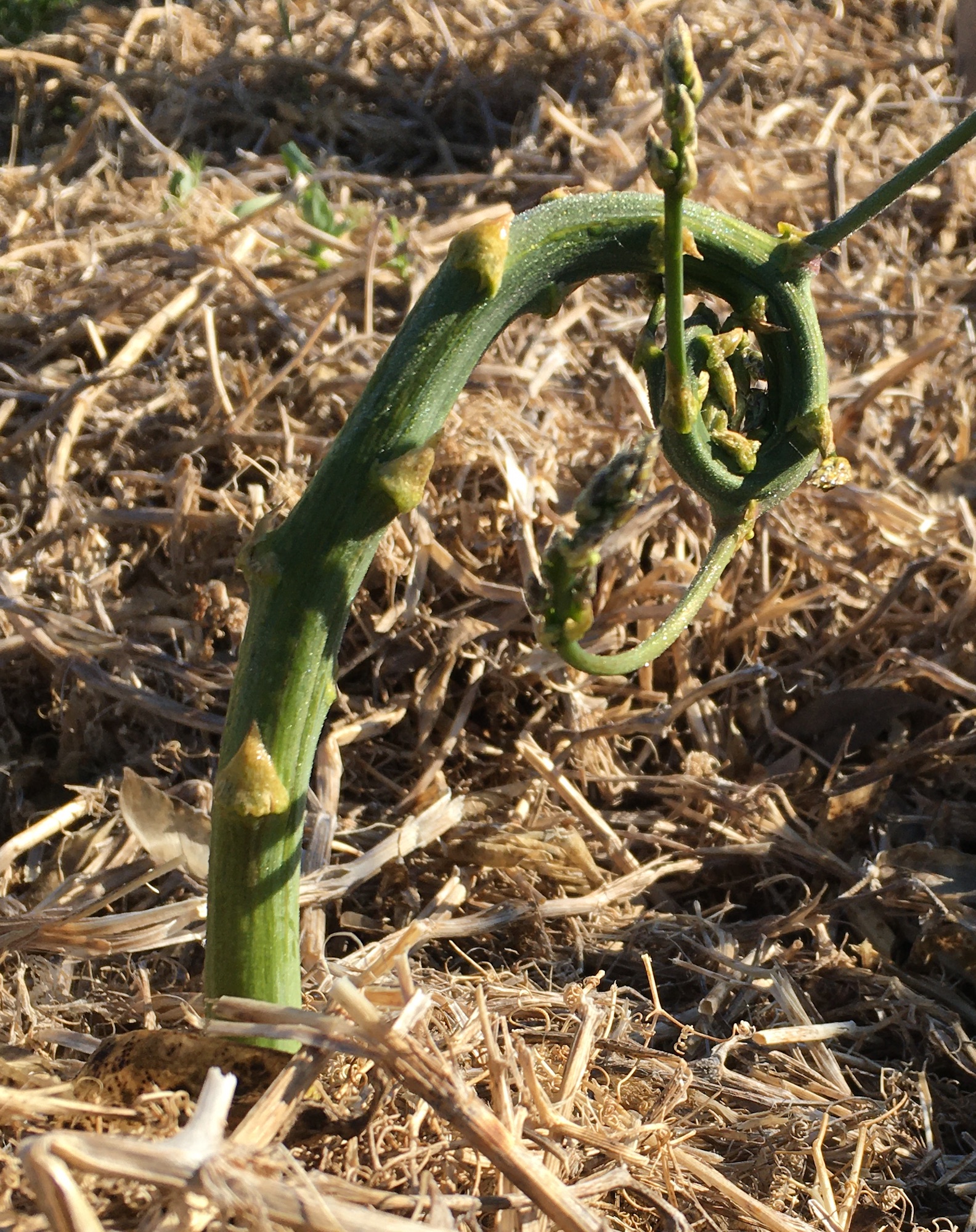
asparagus spear infected with phytophthora
Asparagus spear infected with phytophthora

It’s asparagus season, and we are enjoying spears from our own plants, though not as many as we’d like.

We moved crowns from our old house to the new, and have had rather mixed luck. Some didn’t survive transplant. Others grew poorly last year, and did not show their faces this year. Still others sprouted this year, but have been succumbing to phytophthora infection—a new challenge for us.

Phytophthora asparagi is an oomycete. Its long-lived spores overwinter in the soil and infect asparagus roots and spears. Phytophthora infection interferes with water transport in the stem, causing shrivelling and a ‘shepherd’s crook’ curl to the spears.

Oomycetes were once thought to be fungi, because their growth forms can be similar. They are, however, genetically distinct and are now known to be more closely related to kelp than fungi. Many oomycetes are plant pathogens, and some, like late potato blight, sudden oak disease, and Phytophthora asparagi are of economic importance.

We never had trouble with phytophthora at the old place—our well-drained soil with excellent nutrient levels kept it at bay. But at the new property, the heavy clay soil devoid of nutrients provides perfect conditions for phytophthora growth. 

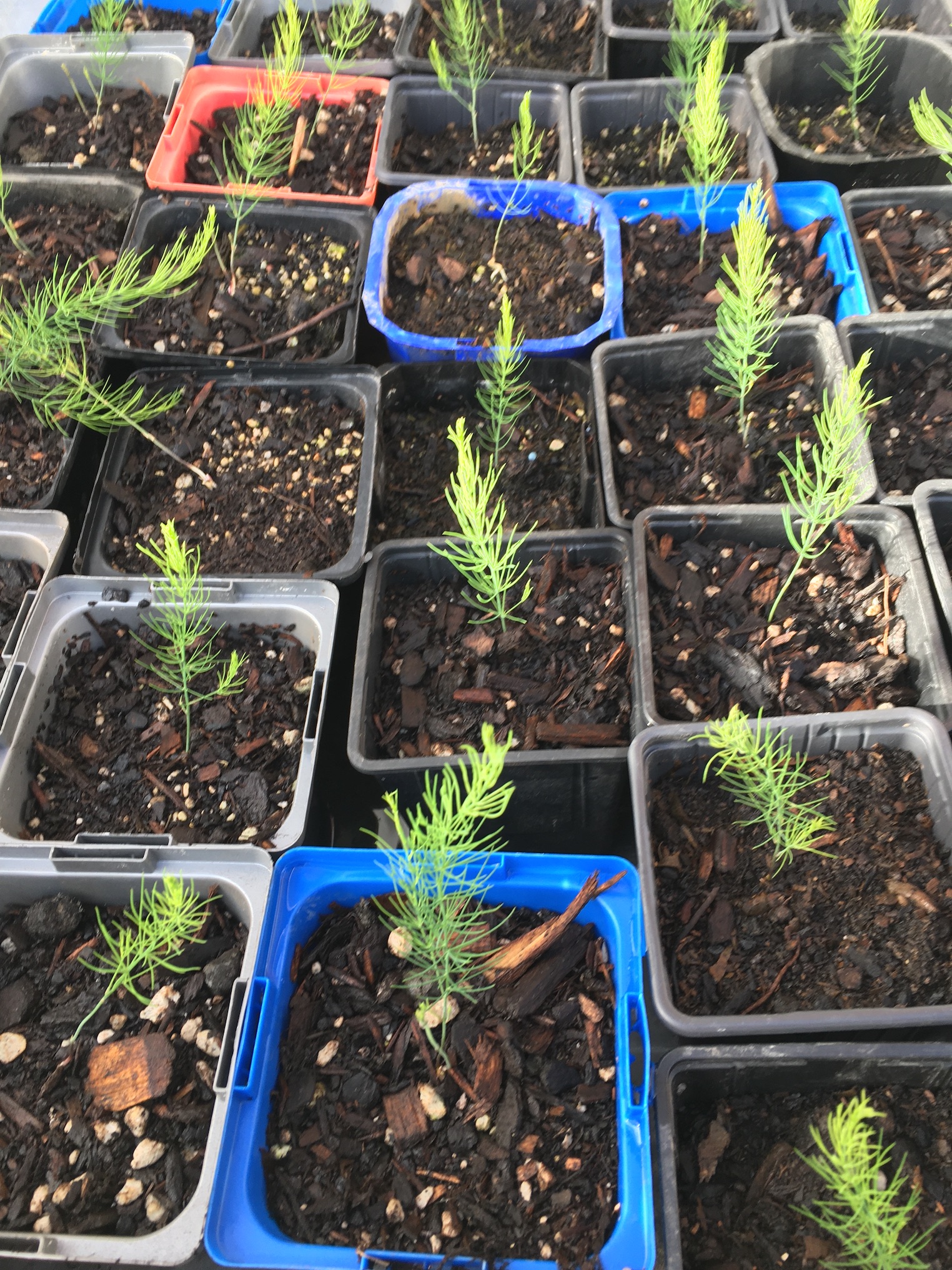
Two months ago, before we’d identified phytophthora, I planted a packet of asparagus seed. I wanted to fill in the gaps in the asparagus bed, where our transplanted plants had died. Now, with 38 beautiful asparagus seedlings in the greenhouse, I’ve got a different plan for them.

Michigan State Extension recommends fungicide and careful selection of planting site to control phytophthora. I’d like to avoid the fungicide, but I can manage the soil, at least a little.

asparagus seedlings

My little seedlings will need about 18 months in pots before I can plant them out. That’s plenty of time to prepare a special raised bed for them, filled with compost, sand, and soil for high-nutrient, well-drained growing conditions. In the meantime, we’ll enjoy the asparagus we are getting, and do our best to keep the old plant alive until the new ones can be harvested.

And, just so you know, the plural of asparagus is asparagus.

Nature Red in Tooth and Claw

Photo: Eric Weiss

It’s not often you witness outright thuggery in nature. Predators hunt prey—they have to, because otherwise they starve. Predation is never pretty, but it is what it is. 

Sitting at my desk, procrastinating … er … writing this morning, I saw brutality, pure and simple. 

A pair of magpies was chasing a starling. They caught it and brought it to the ground. Standing over it, they pecked at its eyes. At first, I thought they were trying to kill and eat it. But after a few minutes, they got bored. The starling managed to fly off. The magpies followed, caught it and brought it back, only to repeat the eye pecking routine. Three times while I watched, they allowed the starling to escape, then brought it back to peck at it. Always at the eyes.

Eventually, they bored of the sport. They wandered away from the hapless starling to forage in the lawn nearby. After a few minutes, starling and magpies flew off in opposite directions.

I suppose it shouldn’t come as a surprise. Australian magpies have a reputation as aggressive, intelligent birds that like to play. They brazenly steal food from the chickens, fighting right back when a chicken lunges at them. And I’ve watched as gangs of juvenile magpies have tormented my cat, swooping low over him as a team, trying to get a peck in while he swats at them. And I’ve been on the receiving end of magpie parents defending their nests with noisy dives at my head.

In general, magpies eat invertebrates—they were originally introduced to New Zealand to help control crop pests. Research on their effects on native birds indicates they only rarely kill other birds, and their aggressive pursuit of larger predators like harriers may even provide some protection to smaller birds.

Still, I can’t help thinking magpies are the bullies of the playground. They’re fine as long as you’re not their target. Fascinating for me as an armchair naturalist, but I’m thankful I’m not a small songbird.

Summer Stocktake

Mid-April, and it’s time to take stock of the summer’s garden. 

Compared with gardens at the old house, this year’s was a disaster—stunted plants that died off early, solanaceous crops decimated by viral disease, and heat and drought that I struggled to combat with irrigation.

But compared with what I expected, the garden was a huge success. I managed to provide the plants enough nutrients and water that they all managed to give us something. We had enough peas, corn and carrots to freeze some. We gorged on strawberries and melons. I gave away heaps of zucchini. The laundry room is piled with pumpkins. We’ve got more garlic and onion than we’ll be able to eat before it starts to sprout. And we’ve had a steady supply of tomatoes, eggplants and peppers. 

The stars of them all have been the carrots. Last spring I blogged about how well my carrots germinated this year—better than they ever had before, which was quite a surprise in the new garden. At the time, I reserved judgement—it was too much to hope the carrots would grow well in heavy clay soil studded with rocks.

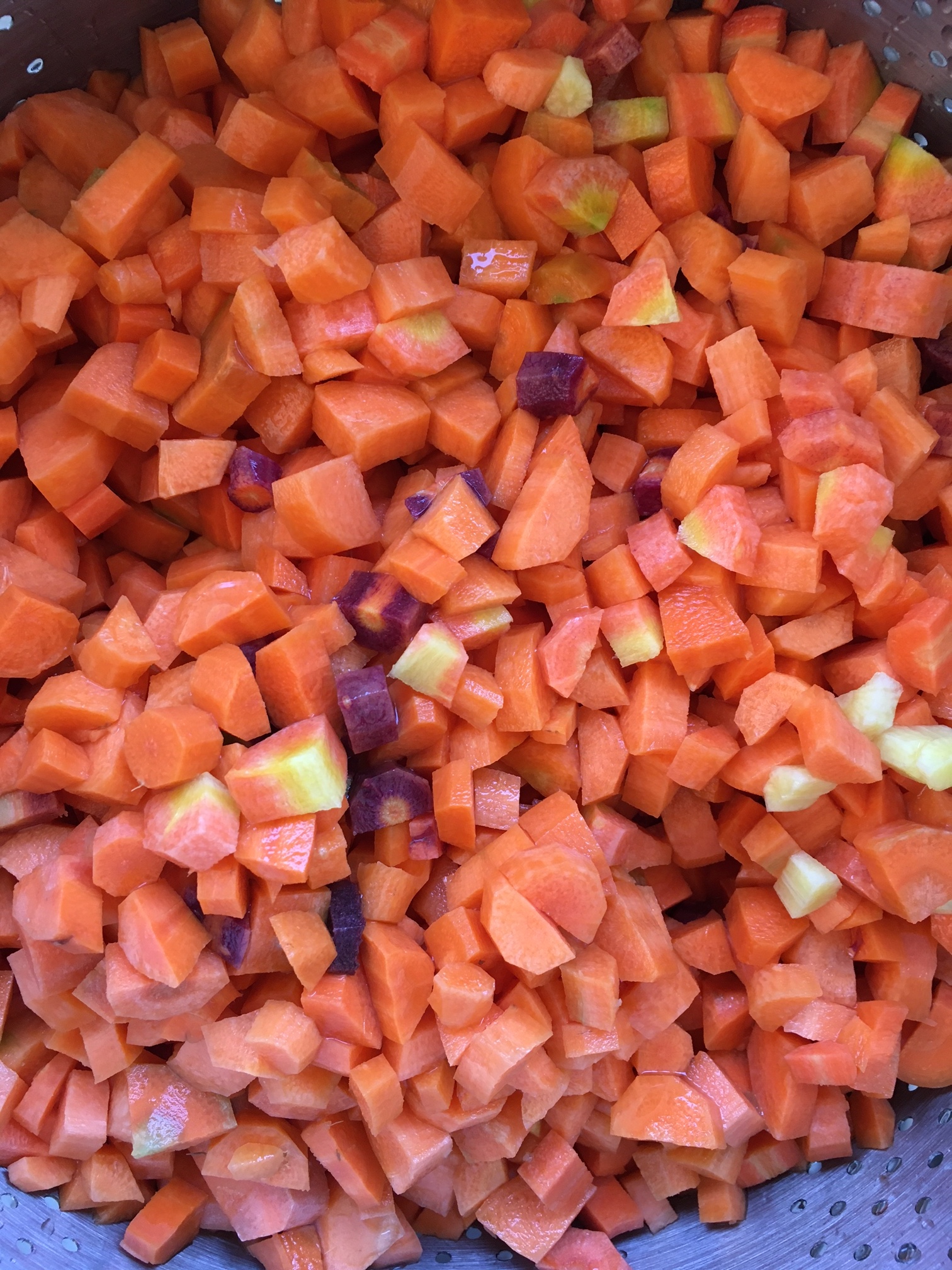
But all summer we’ve been eating beautiful carrots, and last week I harvested everything remaining in the bed, because the slugs and slaters were taking their toll. The fridge is packed with carrots now, and I blanched and froze several kilograms as well.

In spite of everything, it was one of the better years I’ve had for carrots. To be fair, the roots are small, compared to the old garden. Some are bent where they hit a rock, and many broke off when I tried to lift them—if they penetrated too far into the clay, they were nearly impossible to harvest.

But even the purple carrots grew, which is quite an accomplishment for me—in past years, the purple carrots have done well in early spring, but then have been decimated by aphids, so we only ever eat them as baby carrots. Last week I harvested quite a few nice big purple carrots.

Best of all were the Paris market carrots—little, super sweet round roots perfect for lunch boxes and snacks. Their shape made them easy to pick, so there weren’t any left when I harvested the lot last week, but they’ll definitely be in next year’s lineup as well.

Overall, I consider the summer’s garden to have been a success. It’s looking pretty bare out there now, and I’m hauling cow manure from the neighbour’s place and incorporating it into the soil, so by spring I hope to have a few more nutrients available for the plants. I’m already looking forward to next summer.

Problem or Inspiration?

The other day I planned on making roast potatoes for dinner. I brought in a colander full of spuds from the garden—more than enough for dinner.

Unfortunately, when I started cutting them I found many of them infected with zebra chip (caused by the bacterium Candidatus Liberibacter solanacearum), which turns the flesh brown. My planned dish of potatoes was looking pretty empty.

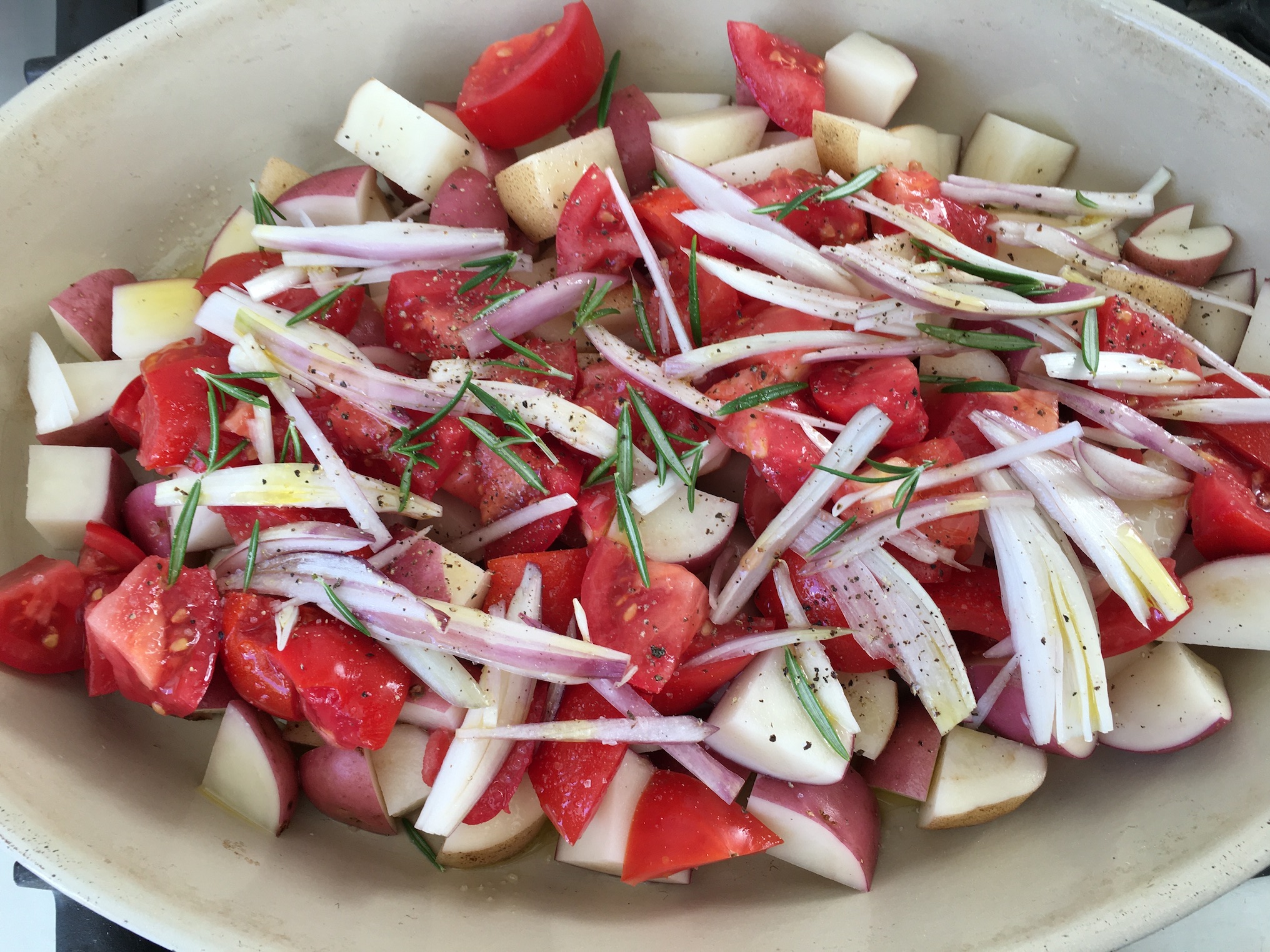
I could have gone out for more potatoes, but instead I took advantage of the resources on hand in the kitchen. I added a shallot and a few chopped tomatoes, sprinkled it with salt, pepper and rosemary, and popped it into the oven (at 210ºC for about 40 minutes for anyone interested).

The result was utterly satisfying and arguably better than the plain roast potatoes I’d originally planned. Instead of a problem, the rampant zebra chip became delicious inspiration.

Now, if I can only remember that for all the other problems in life …

Beach Hangout

We nipped out to the beach after dinner on Saturday. We had a nice walk on our lovely, lonely bit of coastline.

But the beach was busy with youth hanging out (up to no good, probably). Some were alone, and some were in groups, strutting their stuff.

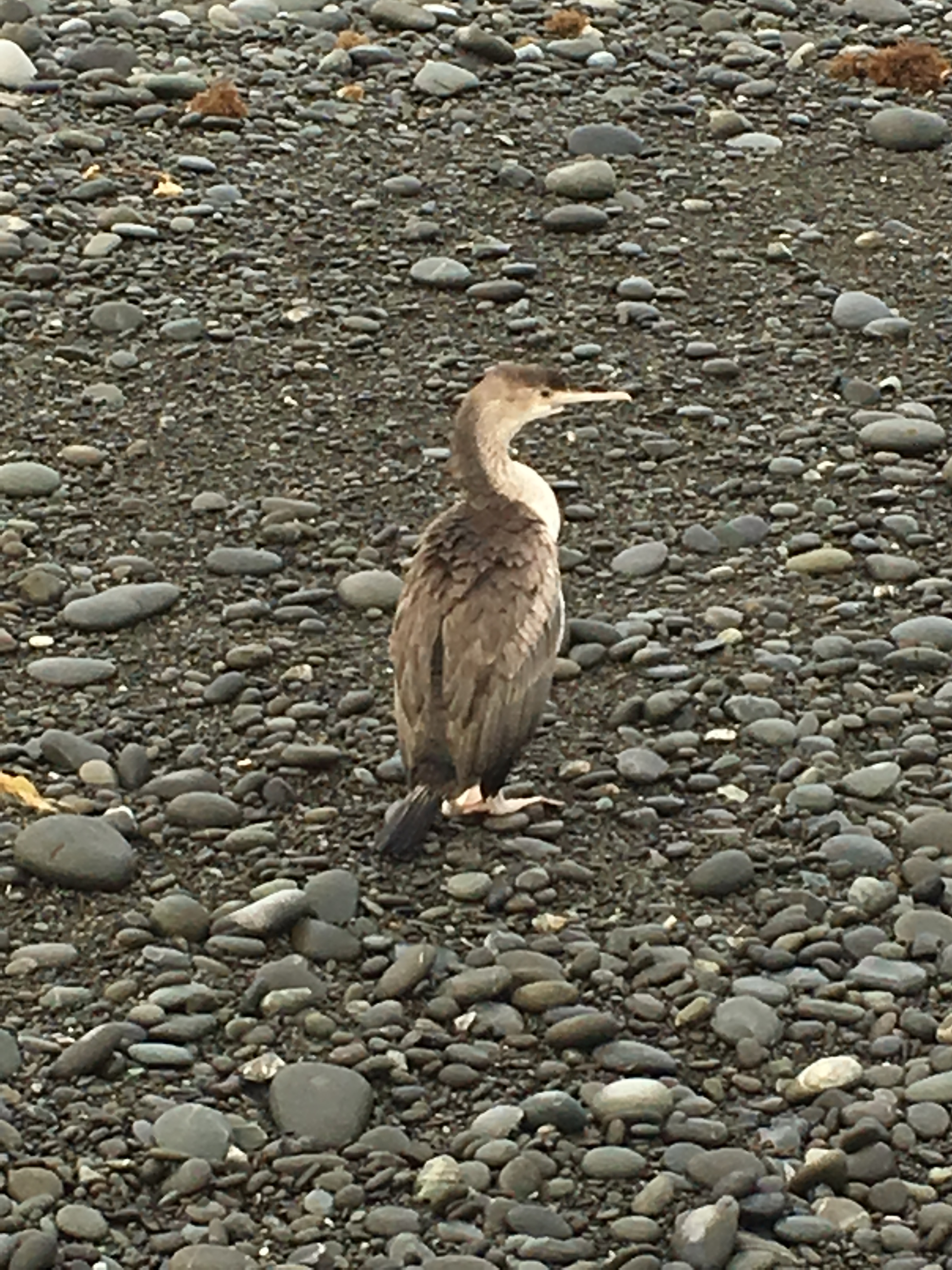
But these youth weren’t your usual crowd of city kids, they were juvenile spotted shags, Strictocarbo punctatus punctatus, also known as spotted cormorants, parekareka, and kawau tikitiki.

Shags were once heavily persecuted as pests. Fisherman believed they destroyed the fisheries, snapping up all the commercial fish and decimating their numbers. Research has shown, however, that their impact on fisheries is minimal. On the other hand, there is some evidence that, in our area at least, shag populations are hurt by commercial fishing. Spotted shag populations on the Banks Peninsula rose from 9,787 pairs in 1960 to 22,123 pairs in 1996 following a reduction in commercial fishing around the peninsula. Illegal shooting can also cause local population declines.

The spotted shag is a marine species, never venturing far from the sea and feeding in deep water up to 16 km from shore. They’re gregarious, breeding and roosting in colonies with up to 2000 birds. The groups of juveniles on our beach were small—a few dozen birds at most. These birds were probably born on cliffs around the Banks Paninsula, and when mature, they’ll head back to those cliffs to lay eggs and rear their young.

So they really were just hanging out on the beach, just like teenagers from Christchurch hang out on the beach on weekends, away from the adults, goofing off and getting takeaways.