Vilma’s Marinated Eggplant

vilmas eggplantsmVilma was the sister of our host mother during Peace Corps training in Costa Rica. Her partner was a tall Italian with as fiery a temper as Vilma’s; they argued a lot, and Vilma regularly came to stay with her sister when she and her partner weren’t on speaking terms.

While at her sister’s, Vilma would cook, and Ian and I loved her for it. Our host mother’s cooking was often only barely edible. She believed in cooking vegetables well, and in saving time by boiling several days of vegetables at one time, and just keeping them in the pot on the stove. They got mushier and mushier every day, until it was all we could do to choke them down.

Vilma must have learned some culinary skills from her partner, because she made wonderful Italian food. One of her specialties was marinated eggplant. She brought a jar of it with her almost every time she came, and while it lasted we were in heaven.

We never thought to get the recipe from her, so we spent years afterwards trying to recreate that eggplant. Eventually we managed, and now Vilma’s marinated eggplant is a summer staple in our kitchen. It’s simple to make, and tastes great on bread or crackers.

2 small to medium eggplants

1 clove garlic, crushed

½ cup red wine vinegar

½ cup extra virgin olive oil

salt and pepper to taste

Peel eggplants and slice very thin (1-2 mm). Steam until the slices are tender and limp (but not falling apart completely). Whisk all the other ingredients together in a small bowl, and toss them gently with the hot steamed eggplant. Refrigerate at least an hour before serving (the longer the better, as the eggplant will soak up more marinade).
Coffee

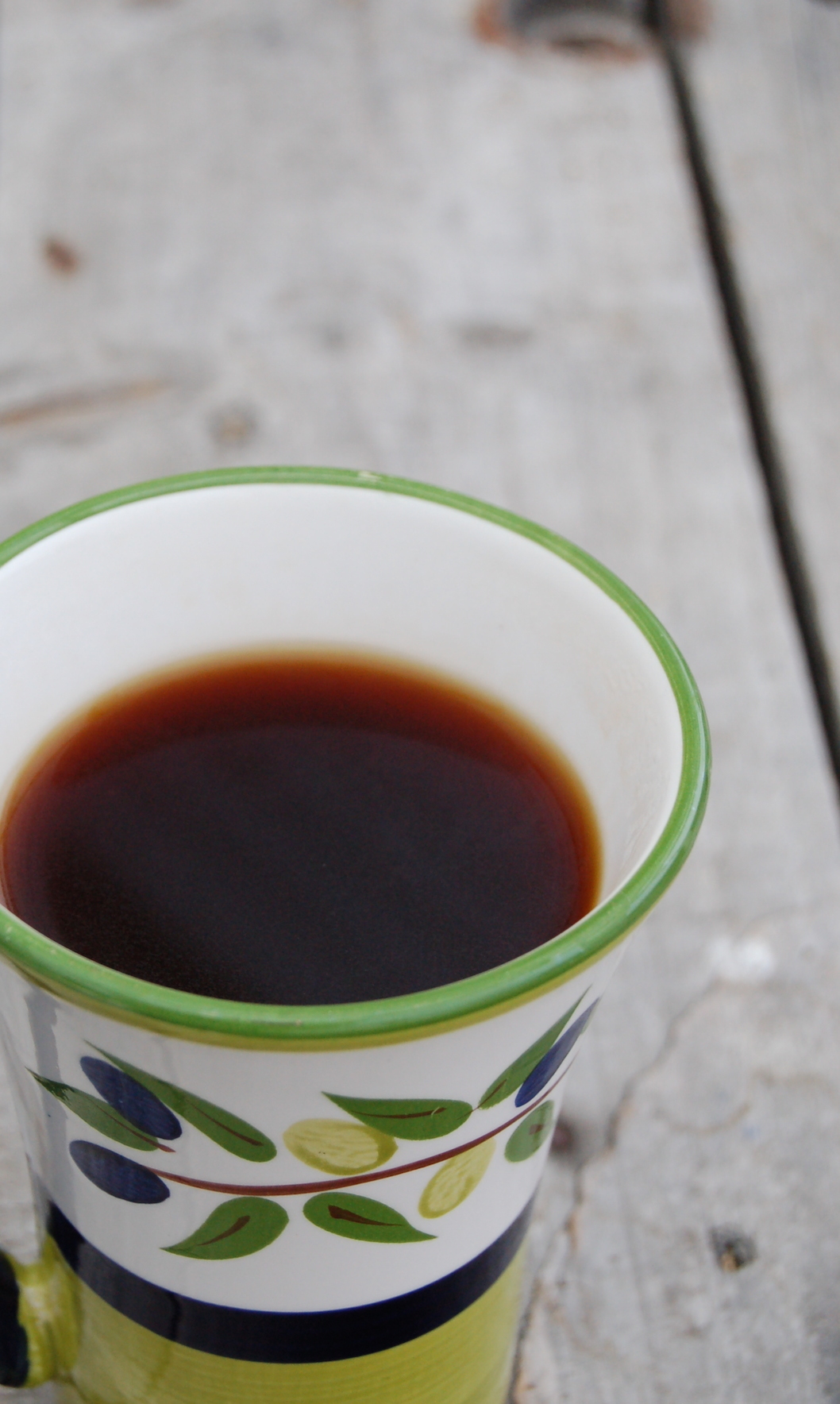
Coffee3 crop2 smI don’t know what his real name was; everyone called him Tio Chon (Uncle Chon). And everyone knew Tio Chon—he made the best coffee in El Valle.

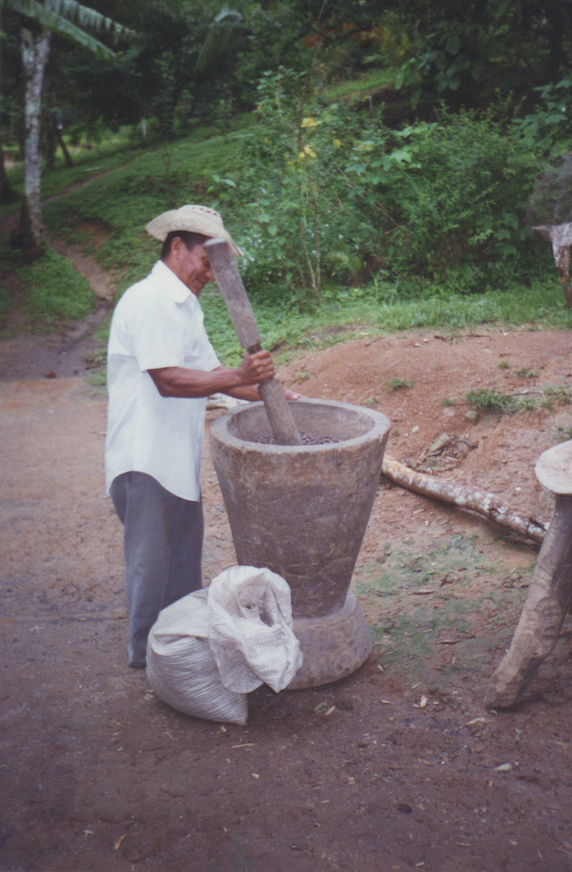
When I say made here, I really mean it. He grew the beans, roasted them and ground them. He mixed his coffee with an ethereal combination of spices—anise, cloves, a hint of cinnamon, and who knows what else (he sold his coffee, but wouldn’t divulge his secret spice mix). I don’t like “flavoured’ coffee, but Tio Chon’s was truly magical.

Coffee was an important drink in Panama, though we didn’t agree with Panamanians on how it should be prepared. Coffee in Panama is almost saturated with sugar. Indeed, it’s so sweet, it attracts ants, which die in the hot liquid and float on the surface of every cup. You learn to strain them out with your teeth, and always toss the last ant-laden splash on the ground.

Julian grinding coffee.

Julian grinding coffee.

Our landlord and friend, Julian, was a frequent evening visitor. He always accepted a cup of coffee, and he always laughed at me when I added the sugar. “More! More!” he would say. “I don’t know how you drink it without sugar. It’s so plain!” (he actually used the Spanish word simple here, for which there isn’t a good English translation—plain, boring, flavourless, without character, lacking pizzazz—the word encompasses all these ideas). Julian was amused by our cultural differences.

Coffee illuminated some of those differences. The farmers we worked with believed that you shouldn’t drink a cold drink when you are hot—it would make you sick, they said. So instead of taking water to the fields, they took coffee, which they considered a refreshing drink after hot work. I accepted the coffee, but carried a water bottle with me, too.

Though we tend to think of coffee as an adult beverage, in Panama everyone drinks it, adults and children alike. And, surprisingly, kids don’t tend to drink hot chocolate. I only had hot chocolate once, prepared for me by our neighbour, Maria, from her own cacao pods. It was oily and bitter; it’s no wonder the kids prefer coffee.

I learned to drink coffee in Panama, and I can’t drink it without thinking of the people and places we left behind there—the laughter and conversation always accompanied by a cuppa. Coffee is one of the few links left to that incredible time and place.