I love the progression of flowers through spring and summer, especially the bulbs. I look forward to each one as it makes an appearance.
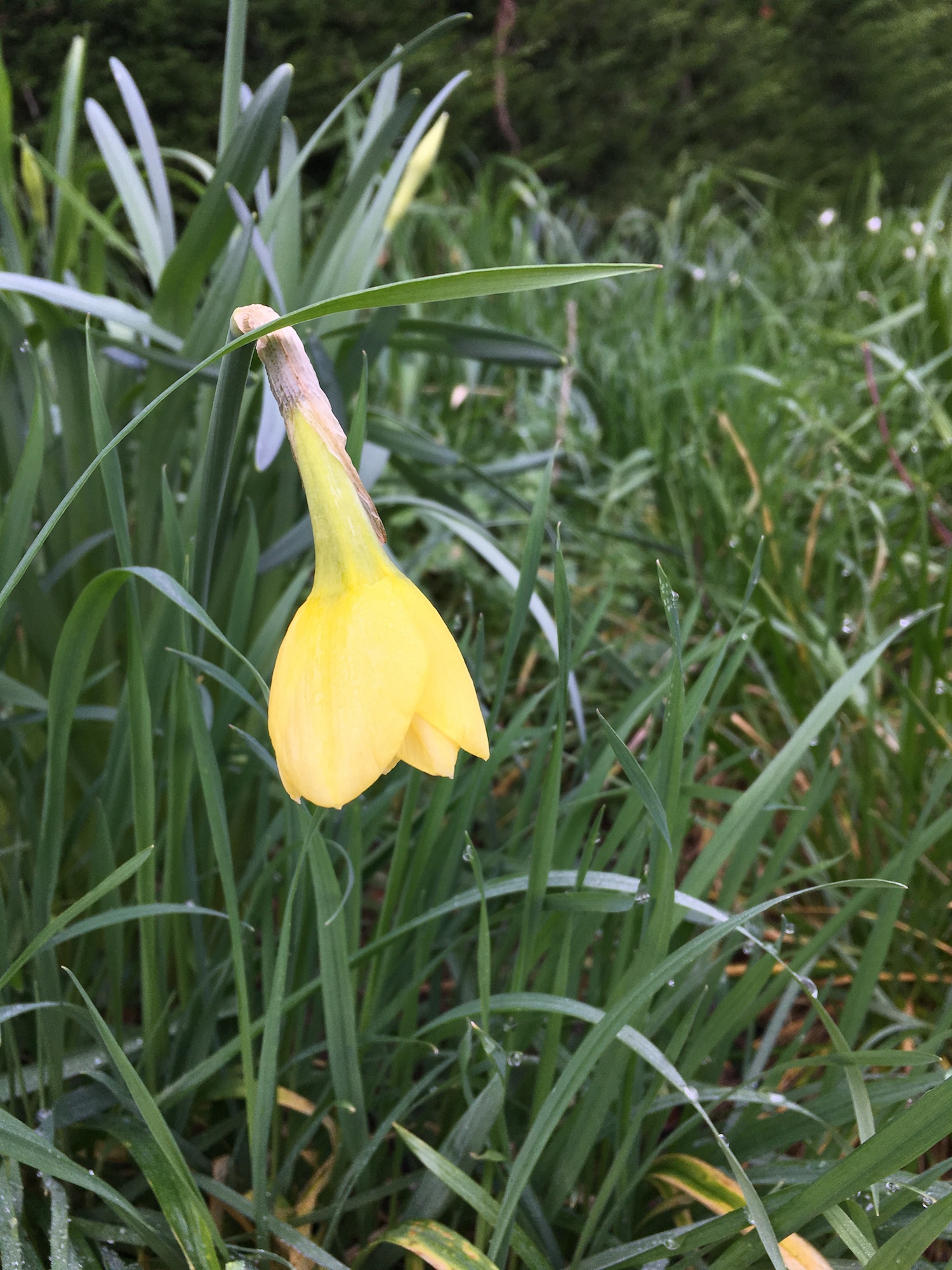
Daffodil pokes Its yellow head Into the air Is it safe yet? Snowdrop nods. Yes. Come out! The weather’s fine. Gladiolus grumbles And pulls the mulch Up to its neck. I’ll sleep in.
Hard to be upset about lockdown when the weather is beautiful. In fact, I was a bit disappointed I was asked to go into work today. I would have jumped at the opportunity on a rainy lockdown day, but today … well I would rather have been in the garden.
Spring has sprung It’s time to plant Your vegetables and flowers.
The birds are busy In the trees with Twiggy nests and bowers.
Hoe in hand I soon forget The viral threat we’re under.
With bright warm sun And growing things The season’s full of wonder.
When we first bought our property, we started right in on soil improvements where we knew the vegetable garden was going to be, long before we even had house plans finalised. That work was terribly depressing. The topsoil had been stripped off by the developer, and what was left was compacted clay studded with rocks. It barely grew weeds, and the combined effort of a rotary hoe and hand tilling only managed to penetrate about 5 cm into the soil. There were no worms, no beetles—and we later learned, no nutrients either.
I wondered if we’d made a huge mistake buying the land.
Since then, we’ve poured compost and manure into the soil, mulched heavily, and done our best to avoid compacting the soil so painstakingly loosened.
As I began turning beds this spring, I was stunned by the number of worms in the soil—thousands upon thousands of them. The clay is honeycombed by their tunnels, and you can’t dig a hoe in without bisecting a few (sorry!). It is truly astonishing.
Where did all those worms come from? Were they there all along, but hiding deep below the surface? Did the few worms there when we first moved in simply reproduce like mad when we started adding organic material to the soil? I’ll never know, but I begin to have hope for this garden.
I feel a little like Ray Kinsella (Kevin Costner) in Field of Dreams—create the right conditions, and the players will appear.
Another day, another … day. The good news is I’ve gotten work done in the garden around the rain we’ve had the past few days. I cracked open the compost pile, and the final product is excellent—always like Christmas when you discover you’ve got six cubic metres of compost to play with!
Unfortunately, it looks like the rain is going to hang around for a few more days, so any more work out there may have to wait.
Rain, rain, go away So we can go out and play. Covid’s got us stuck at home. Lockdown means we cannot roam. Because we’re tired of being lazy Rainy weather makes us crazy.
Another glorious spring-like day today. I suspect it will require me to spend the afternoon in the garden again. If I’m not careful I’ll get ahead of schedule for my springtime prep. Or maybe I just won’t end up behind schedule like usual.
The garden is weeded and clean. We’ve read all the books we can borrow. We’ve polished the floors to a sheen. Now what will we do tomorrow?
In spite of lockdown, spring continues to show itself. Daffodils are blooming, and tree buds are swelling. I spent yesterday morning planting vegetable seeds, kicking off my gardening season for the year. So life is not all bad, stuck here at home with plants to tend.
The northwest wind cries Spring! And the magpies, they all start to sing. It’s hard to be sad And think everything’s bad, When nature is having a fling.
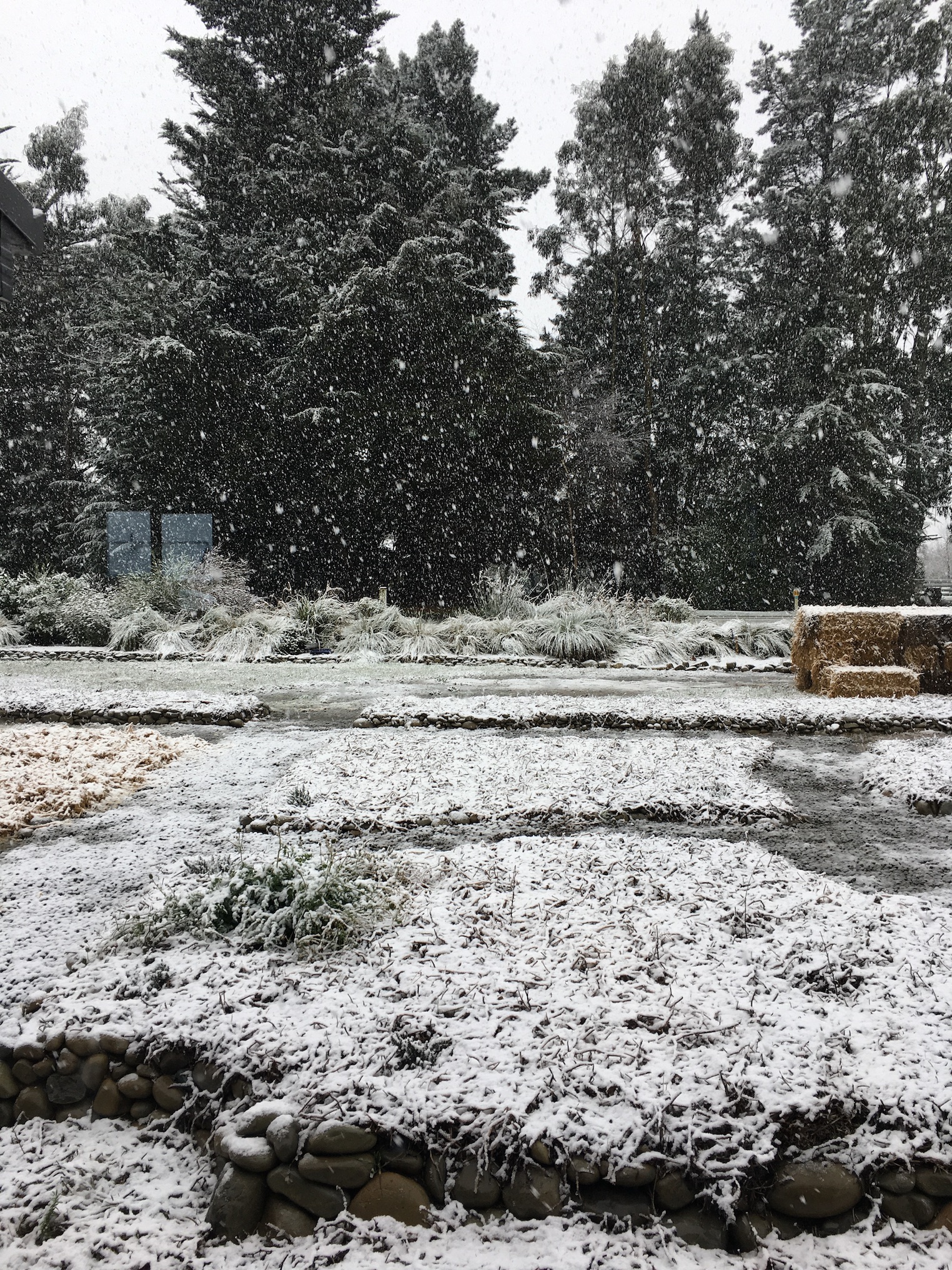
I find myself pacing the living room floor, gazing out the window at the swirling snow.
par
Stop. She’ll be fine.
My daughter is snowed into a cabin in the mountains. Porter’s Pass is closed and I cannot reach her by any means. I cannot supply her with the food I know she does not have for the 24-48 hours it will be until she can escape.
She is with friends. I know the cabin they’ve holed up in—it is warm and dry. There is water and even electricity.
She’s probably having a blast. No doubt they’ve pooled their food and are concocting some strange dinner tonight from instant soup packets and half a package of pasta of unknown provenance and indeterminate age left in the cabin by a previous inhabitant. It won’t be enough, but they’ll make do.
I know this because I remember my own adventures as a young adult. A day of hiking fuelled only by a pair of bananas purchased from a family in a small mountain village. A trek across the isthmus of Panama that involved an ill fated bus, hitching a ride in the back of a pickup, sleeping on the concrete floor of the police station in an unknown village, hiring a villager and his canoe, and begging meals and accomodation in another unknown village. Cowering in a tent as tornadoes ripped through the forest nearby. Carrying a chicken to a friend, on foot, three hours distant. … The list is long.
Every one of those adventures involved hardship—hunger, exhaustion, fear, danger. My mother would have freaked out had she known what I was doing.
Just as part of me wants to freak out right now.
But I know what those adventures did for me as a young adult. I can’t imagine having not had them. They’ve woven their way into the fabric that is me today. They are who I am.
My husband and I have taught our children how to prepare for adventure, how to be safe, how to face the inevitable difficulties, how to enjoy the hardships. The most important thing we can do now is trust that we’ve taught them well, and keep our own worries to ourselves so they don’t dim our children’s sense of adventure.
So I will pace the room, but never tell her I did so. I can’t wait to hear all about her adventure when she returns.
It’s only a few weeks past the solstice. Nights are below freezing, and the worst of winter is still to come. In shady spots the frost lingers all day.
Spinach seedlings in the greenhouse
But plants are already responding to the increase in sunlight. There is a haze of new green growth in the chickens’ winter-bare paddock, daffodils are poking their shoots out of the flower beds, and the grass will soon need to be mown.
In the greenhouse, the lettuce and spinach seedlings that have been sitting there unchanging for weeks have finally begun growing again. The broccoli in the winter garden has begun thinking about heading up (at least until yesterday when the chickens got in there and stripped the leaves).
I too have responded to the sun. I’ve drawn my garden map for the upcoming season. I’ve assessed my seed needs in preparation for the arrival of the new year’s seed catalogue. I’ve nearly completed incorporating manure into the entire vegetable garden.
The weeks will go quickly. Before I know it, it will be time to start seeds, mark out garden beds and spread compost. Now is the time I should be buckling down to complete winter tasks—sewing, organising, cleaning … But like the plants stretching out their tentative leaves, I can’t help but respond to the sun, reaching for spring and looking forward to the new season to come.
The winter solstice passed this week, cold and rainy. It was also the anniversary of moving into our new house. It was truly a delight not to endure the run-up to the solstice in an unheated, uninsulated shed. To have a warm, dry place to eat and sleep; to have electricity and plumbing—what a luxury!
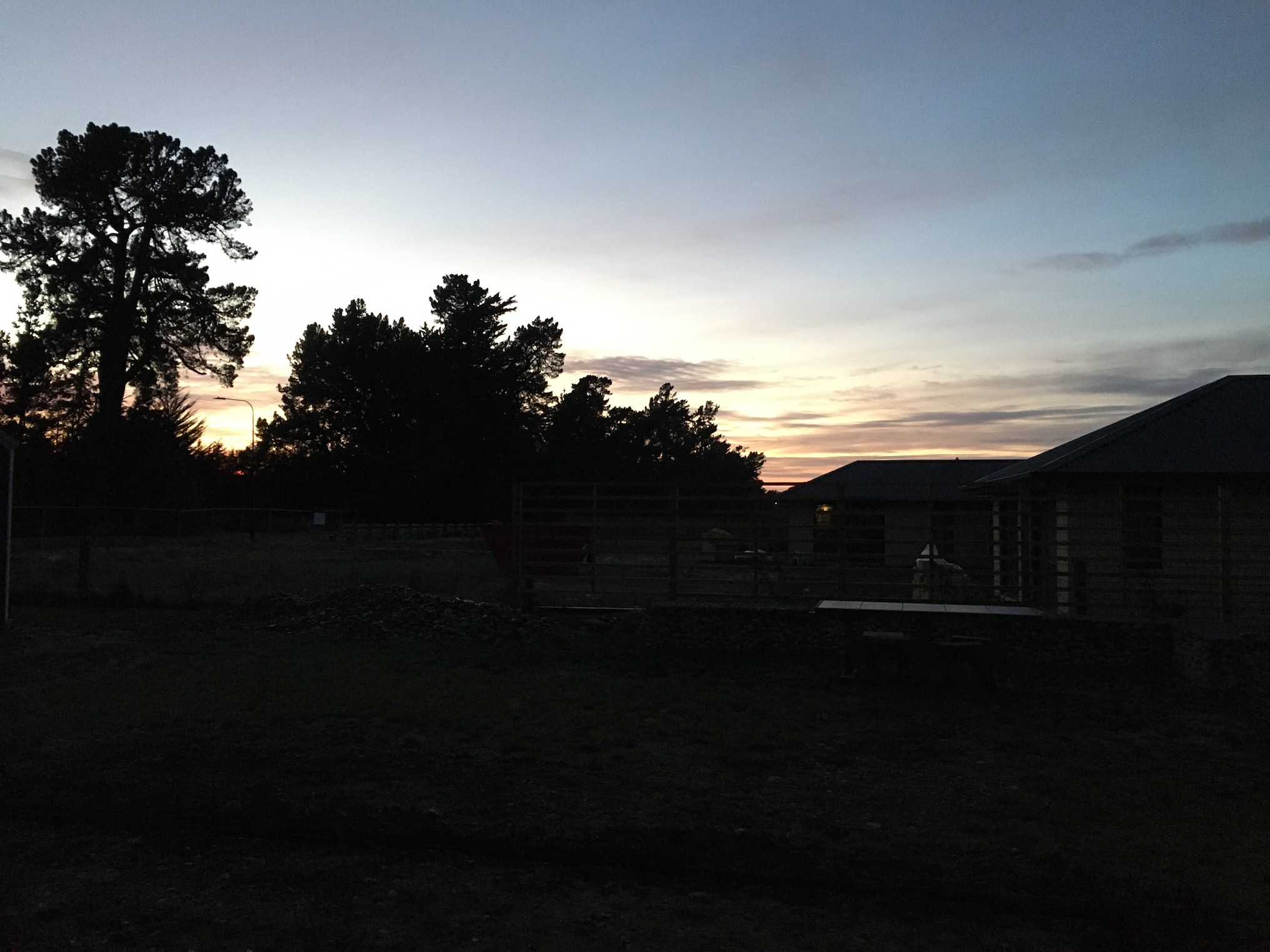
8 am with the sun barely rising …
Indeed, I still sort of feel I’m living in someone else’s house. Until a year ago, my husband and I had never owned a house less than a hundred years old. Then suddenly we had square corners and level floors. We had double glazing and insulation. We had doors that opened and closed properly, walls without fifty coats of paint, and not a speck of rot anywhere.
It was a bit of a shock.
And now I wonder if I’m going soft. I don’t wake up to a freezing house and have to light the fire. I don’t worry that the roof will leak every time it rains. I don’t have to venture to the attic to empty and re-set the rat traps. I don’t wake wondering if today is the day the water heater, septic system, or well pump is going to die.
Sometimes I miss the character of an old house—a house that is old enough to have a life of its own, a house that tells stories. Sometimes I feel guilty—a new house is such an unnecessary luxury.
But truth is, modern life is pretty good, especially in the cold, rainy days around the winter solstice. So for the moment, I’ll simply be thankful for all those luxuries that make the dark days brighter.





 Robinne Weiss