A Hobbit Adventure

As a writer of fantasy and adventure novels, it’s important to me to get out and have my own adventures. My adventures provide the inspiration and the gritty details for my characters’ escapades. I especially enjoy true wilderness adventures—the less sign of human impact, the better.

view from Mt Isobel
The view from atop snowy Mount Isobel

Of course, not every adventure can be a wilderness experience. Sometimes you want some fun with a little more luxury.

My husband and I recently spent a lovely weekend in Hanmer Springs. While the town is known for its hot pools, we’re not the hot pool type. What we appreciate about Hanmer Springs is the ability to step out the front door of your holiday home, climb a mountain, and end the hike at the pub a few blocks from the holiday home.

It’s hardly a wilderness experience, especially given that Hanmer Springs is surrounded by pine plantations, rather than native bush, but on a winter weekend during the rainiest month on record, it’s just right.

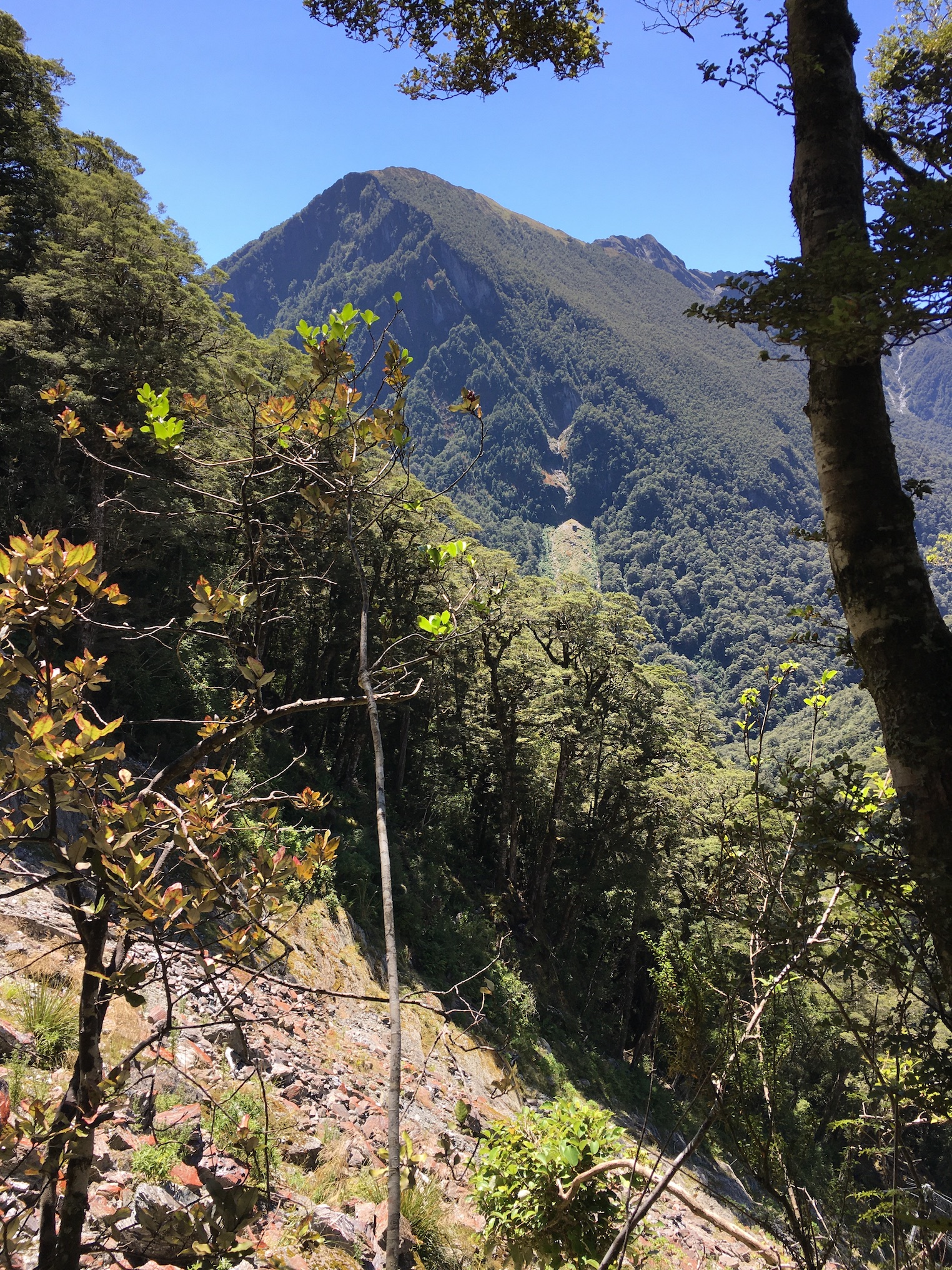
Our main hike for the weekend was up Mount Isobel. This wasn’t our first winter trip to the peak, but it was the first time we’d followed the ridge from the peak in order to descend via Jollies Pass. The last time we were on Mount Isobel, the wind was so fierce, there was only enough time to race to the top, snap a photo or two, and race back down before we froze. This time was entirely different.

It snowed the previous day, so we hiked through a winter wonderland. Light wind and full sun made it a stunning hike. The snow was an easily hikeable fifteen centimetres deep on the ridge—just enough to ensure our feet and lower legs were thoroughly soaked by the end.

There was nowhere dry to stop for lunch, so we ate in short snatches standing up. That was really the only downside to what was a delightful seven-hour hike.

And when your hike ends in Hanmer village, with beer and good food on offer, and a roaring fire at the holiday home to warm your toes, it’s hard to complain about anything. I think of it as a Hobbit adventure—a bit of fun without skipping second breakfast.
Planning Time

We’ve turned the corner on the seasons—the days are getting longer now, and we’re in the second half of the year. The seed catalogue will be arriving within the next couple of weeks, so now’s the time for garden planning.

As someone obsessed with organising, creating my garden plan each winter is a highlight of the year. It’s the time to take stock of the previous year’s successes and failures and to dream about next year’s abundance.

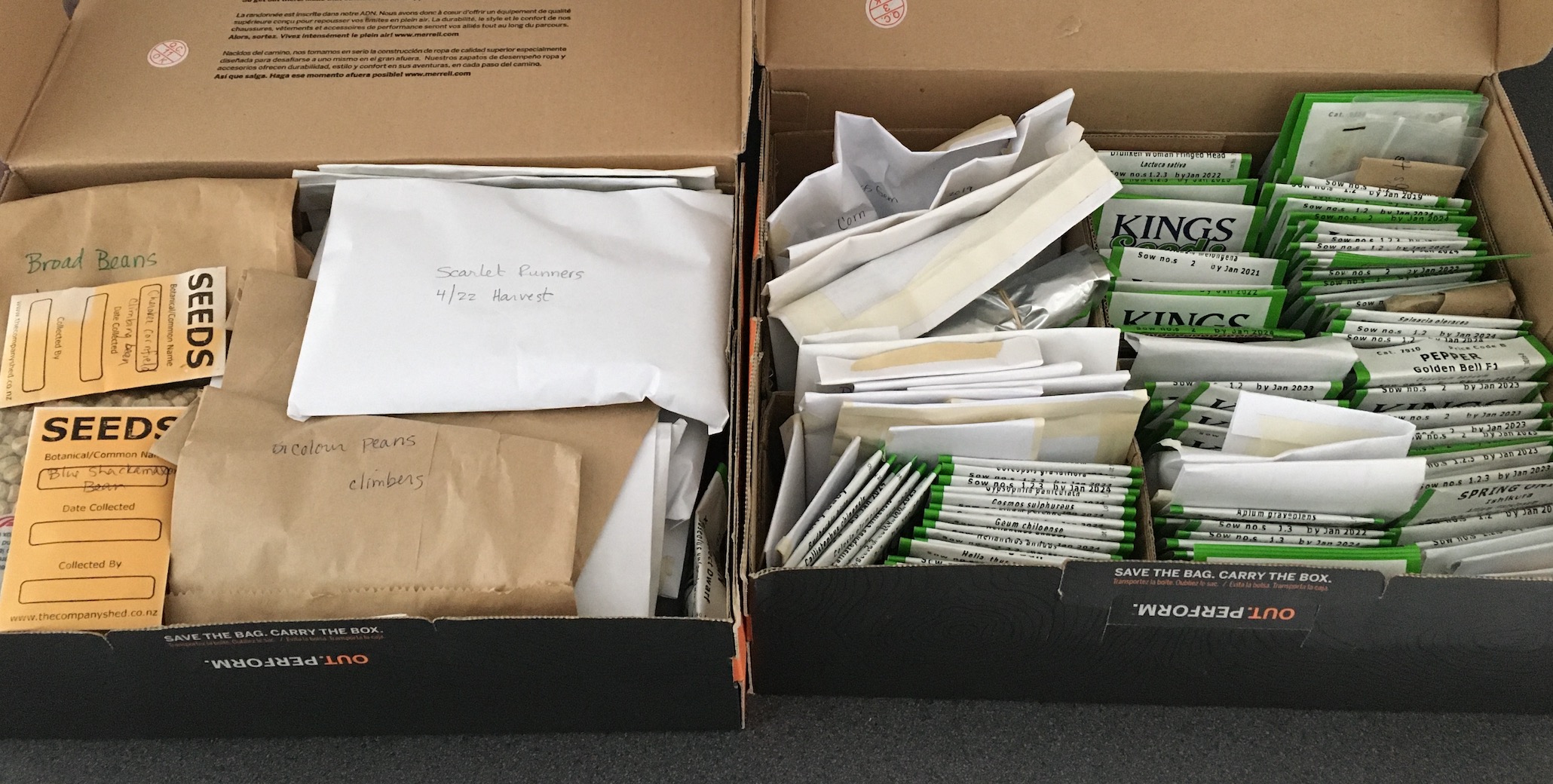
For me, planning starts with taking inventory of my seed stock. Two large shoe boxes barely manage to contain most of my seeds (the broad beans never fit). Small vegetable seeds are arranged alphabetically. Large-seeded peas and beans get their own shoe box, and are less well organised. 

My inventory is kept on a spreadsheet that I update annually, so I can see at a glance what I’ve got in stock. As I update the inventory, I cross-reference my garden notes, tossing out seeds that had low or no germination the year before. When I find seeds I know I need more of, I make a note on the spreadsheet. When the seed catalogue arrives, I can quickly determine what I need to buy. (Note that this doesn’t actually save me any time in getting my order in—I still page through the entire catalogue, because you never know what new things you’re going to absolutely NEED, based on a pretty photograph and a two-sentence description).

Once I’ve got my seed needs identified, it’s time to plan where all those plants are going to go in the vegetable garden.

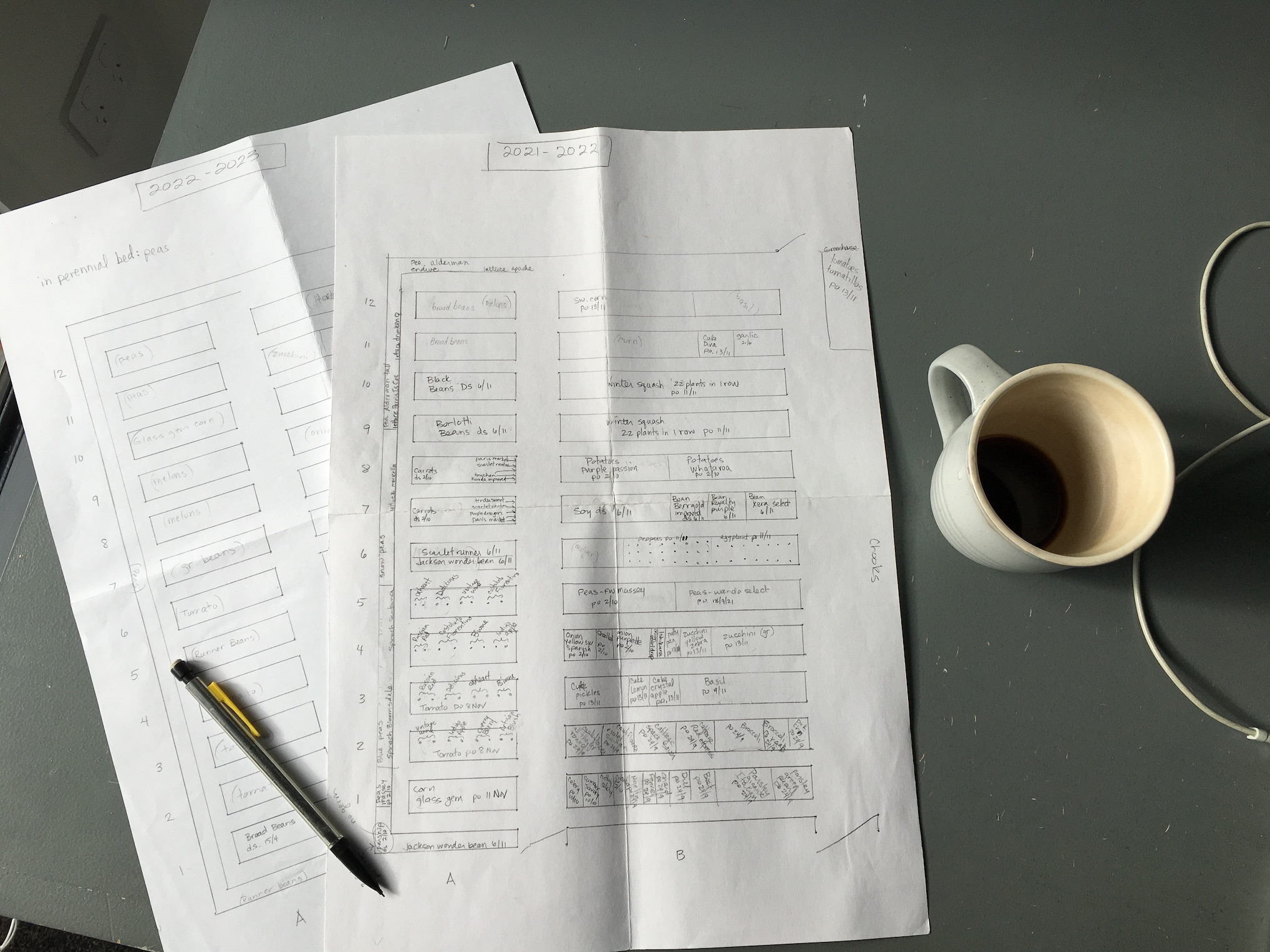
Every year I draw a map on a large sheet of paper. The map includes all the vegetable beds plus the greenhouse and any ‘overflow’ space I happen to have that year in perennial beds. I give each bed a grid reference—columns labeled with letters, rows with numbers—so I can refer to them easily when I start mapping out my weekly tasks later in the year.

With last year’s map as a reference, I tentatively write each crop into the beds I want to plant in, careful to rotate crops to avoid pathogen build up. As I plant each crop later on, I’ll mark a date on the map to tell me when it was planted.

By planning ahead, I avoid mistakes like planting sprawling winter squash next to low-growing herbs that will be overrun by the squash. I can also plan for large plants to sprawl into space vacated by early crops, or tall crops to shade cool-loving crops and extend their season.

Equally importantly, by planning in advance, I can control myself when it comes time to actually plant seeds—preventing problems like having to deal with 50 kg of zucchini every day in February. Planning goes a long way toward making each garden year a success.

Pro tip: Garden planning is best done on a really cold, nasty day, with a cup of coffee or glass of wine in hand. 🙂

Matariki Hike–Tiromoana Bush Walkway

Nature pulled out all the stops last weekend for Matariki. All three days of the long weekend were stunners, with temperatures more like mid-autumn than mid-winter.

On Saturday I worked in the garden in a t-shirt, and we had all the doors and windows open for most of the day. On Sunday, with both kids home for the holiday, we headed out for a hike.

Avoiding the snowy mountains and crowded ski fields, we headed to an unlikely spot—the Kate Valley Landfill.

Well, okay, not the landfill itself, but the restoration area next to it on Transwaste land.

Tiromoana Bush Walkway wends through a patchwork of restoration planting, old paddocks, plantation forestry and regenerating bush. An active predator trapping programme has clearly done its job, and the air teems with bellbirds and pīwakawaka.

Access to the beach cuts through a steep valley between limestone cliffs busy with welcome swallows. The beach is narrow and overshadowed by actively crumbling cliffs of limestone and clay—definitely not a place you want to be during a storm, but quite fascinating on the blue-sky day we enjoyed.

The hike was only about three hours long, leaving plenty of time to enjoy the beach, even on a short mid-winter day.

We had relatively low expectations of the hike when we started out, but it ended up being quite a pleasant mid-winter outing. Not very strenuous, but with enough ups and downs to be interesting, and with some intriguing landforms along the coast.

Come to the Dark Side … we have cookies

With our switch back to standard time last weekend, we’ve most definitely entered the darker half of the year. My husband and I took our first evening walk in full dark yesterday, and we can expect months more of the same.

fig and date cookies

Part of me mourns the loss of hot sun and long days. I certainly feel the dwindling abundance of the summer garden as plants die off. But I also enjoy the darkness.

Summer is bright, noisy and frenetic. Everything is in motion. I’m in motion. Long days mean more tasks on the to-do list—an expectation to ‘make hay while the sun shines’. Summer gardening can start as early as 6 am and continue past 9 pm. It feels wrong to lay about in bed when the sun pops up at 5 am, and who wants to go to bed at 10pm, before it’s even dark?

The bonus of all that work is abundant fruits and vegetables, weed-free gardens, clean gutters, tidy lawns …

But it gets exhausting after a while.

About the time we go off Daylight Savings Time, my body has had enough. That extra hour we gain isn’t enough to make up for the post-summer exhaustion, and I find myself going to bed by 9 pm, happy that it’s dark long before then.

In addition to the extra sleep, I appreciate the calm of night. A walk in the dark is an entirely different experience than a walk during daylight hours. The chatter of sparrows and starlings is absent. Magpies are silent. Neighbourhood dogs are indoors instead of barking at passersby. Quieter sounds come to the fore—the zit-zit of katydids, or the trill of a frog. A lone sheep maa-ing in a distant paddock. The gurgle of the local water race. There is peace in the darkness that is difficult to find during the day.

In the morning, I feed the chickens in the dark. They are groggy and slow—instead of racing toward me as soon as I enter the paddock, they wander my way, muttering their greetings. 

Although there are too many streetlights near our new house that obscure the fainter stars, I still take time every morning to greet the night sky—moon, planets and constellations.

I am comfortable in the dark—it is a soft velvet cloak wrapped around my shoulders.

And when I choose to come inside in the dark of longer nights, there is the warmth of the light. The smell of cooking. The rows of pumpkins stashed on top of the cupboards. Summer’s bounty stored up for winter.

During the dark half of the year, I have extra time to spend on baking—I can make fiddly cookies, cakes with cooked frostings, fancy decorated cupcakes. I have more time for sewing, spinning, and other crafts. I can sit and read a book without feeling guilty about wasting daylight.

So while there is some sadness to the end of summer, there is also joy in the darkness. And there’s the knowledge that summer will return and I will miss the books and baking of the dark side.

Autumnal Buzz

As an entomologist, I love early autumn. Insect numbers are at their peak, and most insects are adults—their most active and visible life stage.

As a kid growing up in rural Pennsylvania, early autumn nights were nearly deafening with the cacophony of cricket and katydid chirps. Days buzzed with the sounds of cicadas and grasshoppers.

New Zealand is quieter, but autumn still has its distinct voices. Our katydids’ sharp ‘zit zit’ seems to echo from their favourite ake ake trees. Crickets twitter in the grass on sunny days. Cicadas and grasshoppers buzz from trees and bushes.

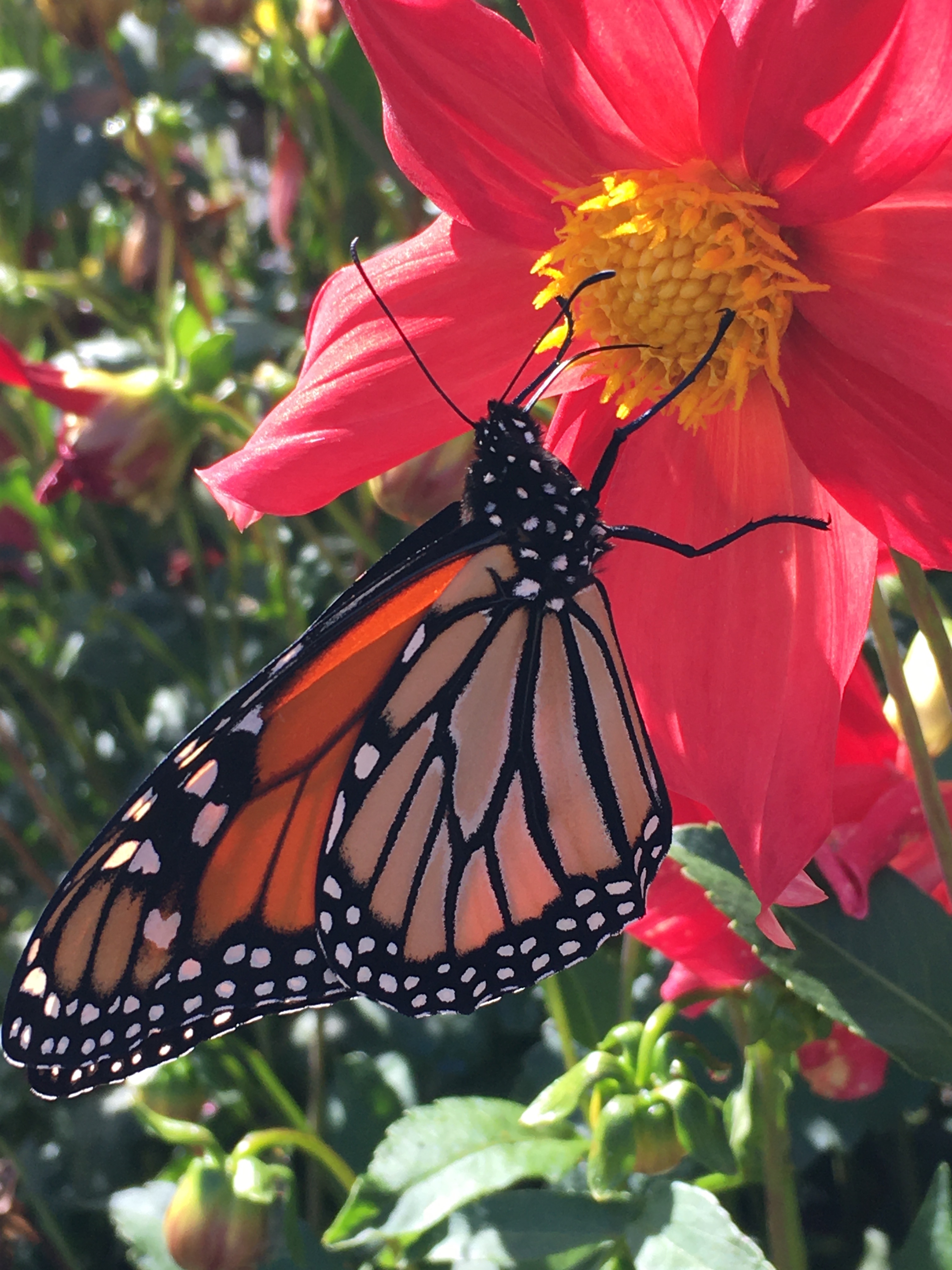
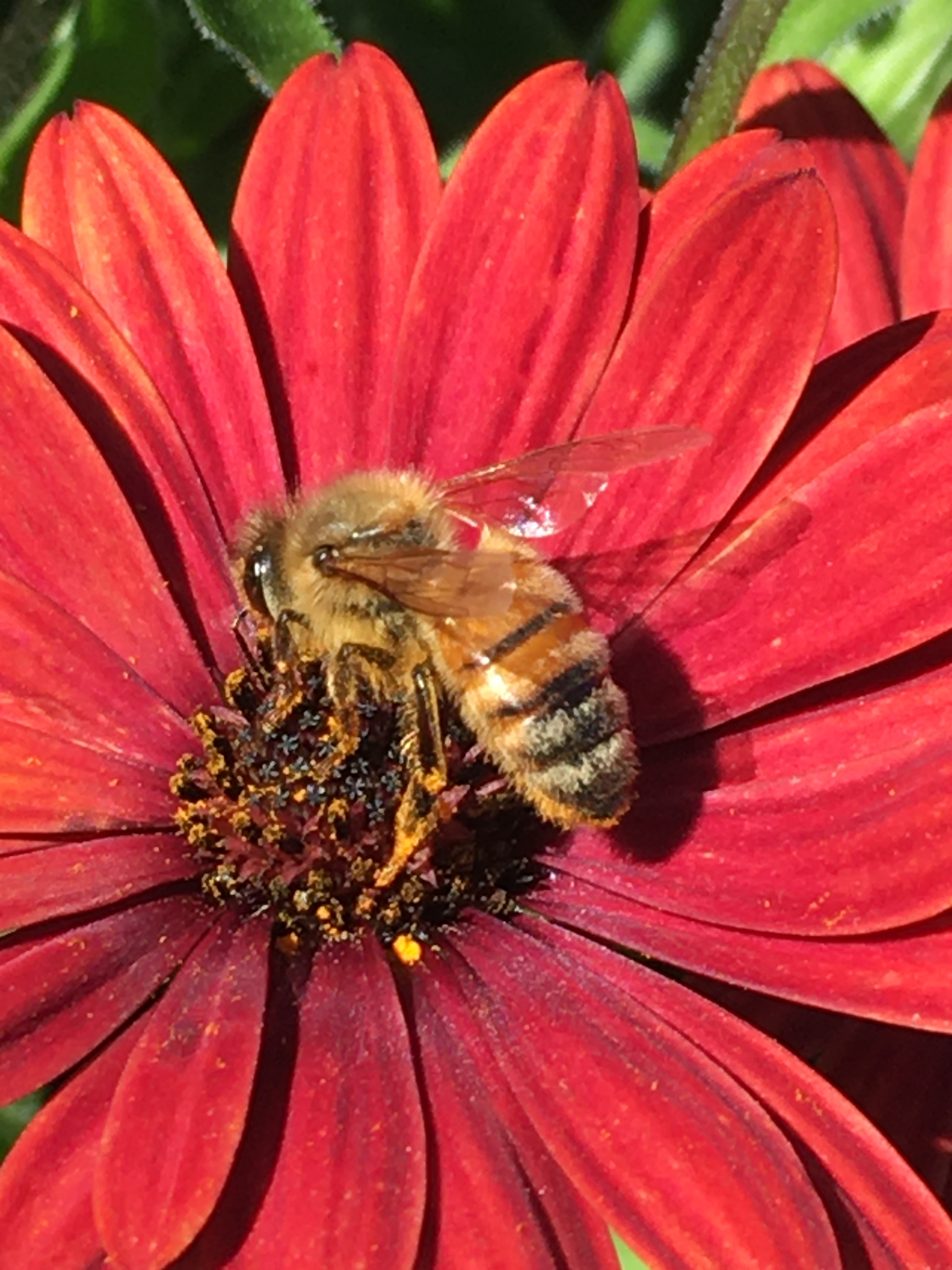
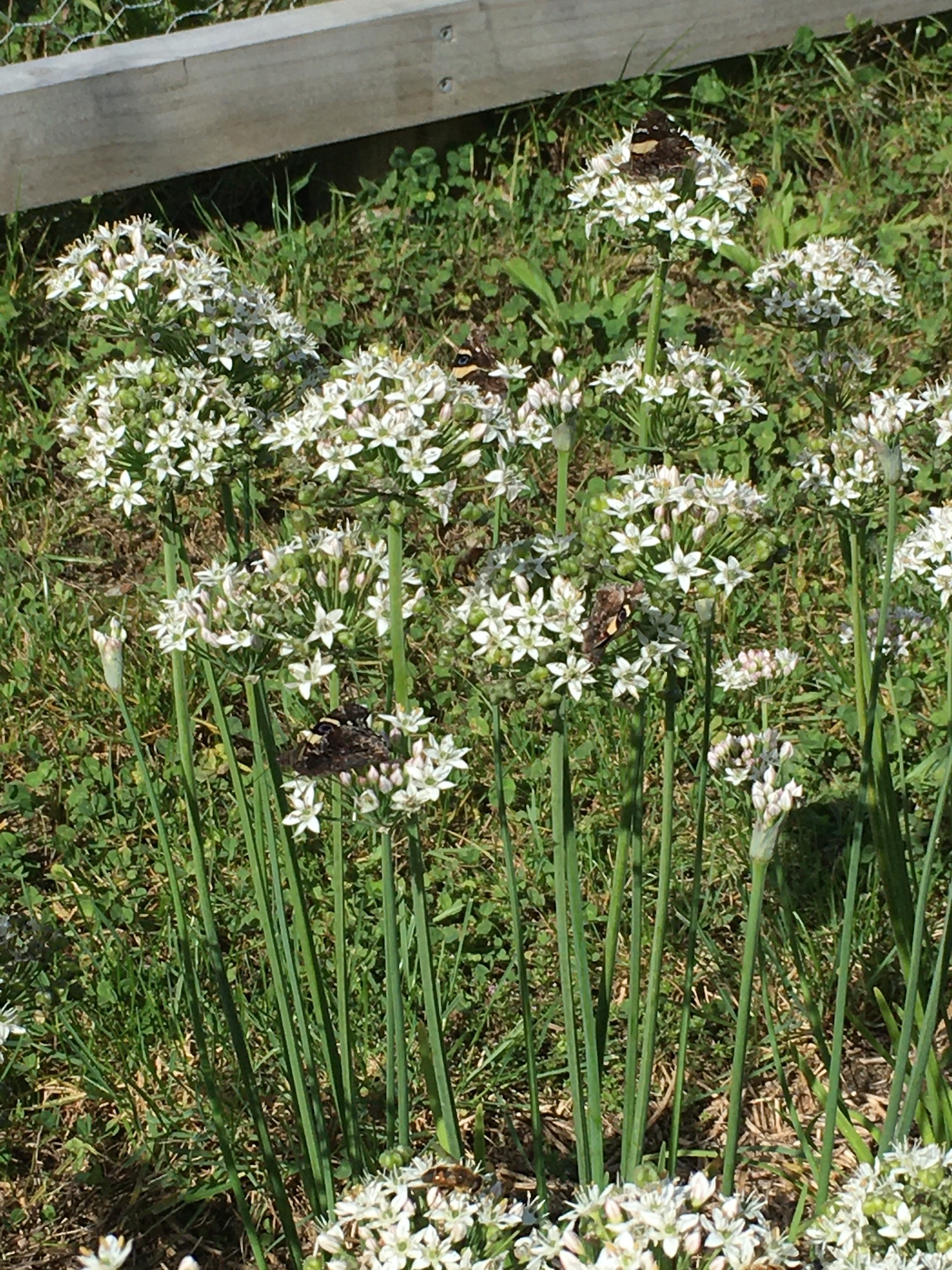
Bees and butterflies are particularly active on autumnal blooms. Many of our showy butterflies overwinter as adults, so they can be seen flitting about on warm days into late autumn.

Of course the clouds of invasive cabbage white butterflies on the brassicas and the German wasps swarming the compost pile aren’t terribly welcome. But still, I enjoy the leggy hum and flutter of the season.

Autumnal Assessment

It’s been just two weeks since I blogged about a late summer garden, and now autumn has truly set in.

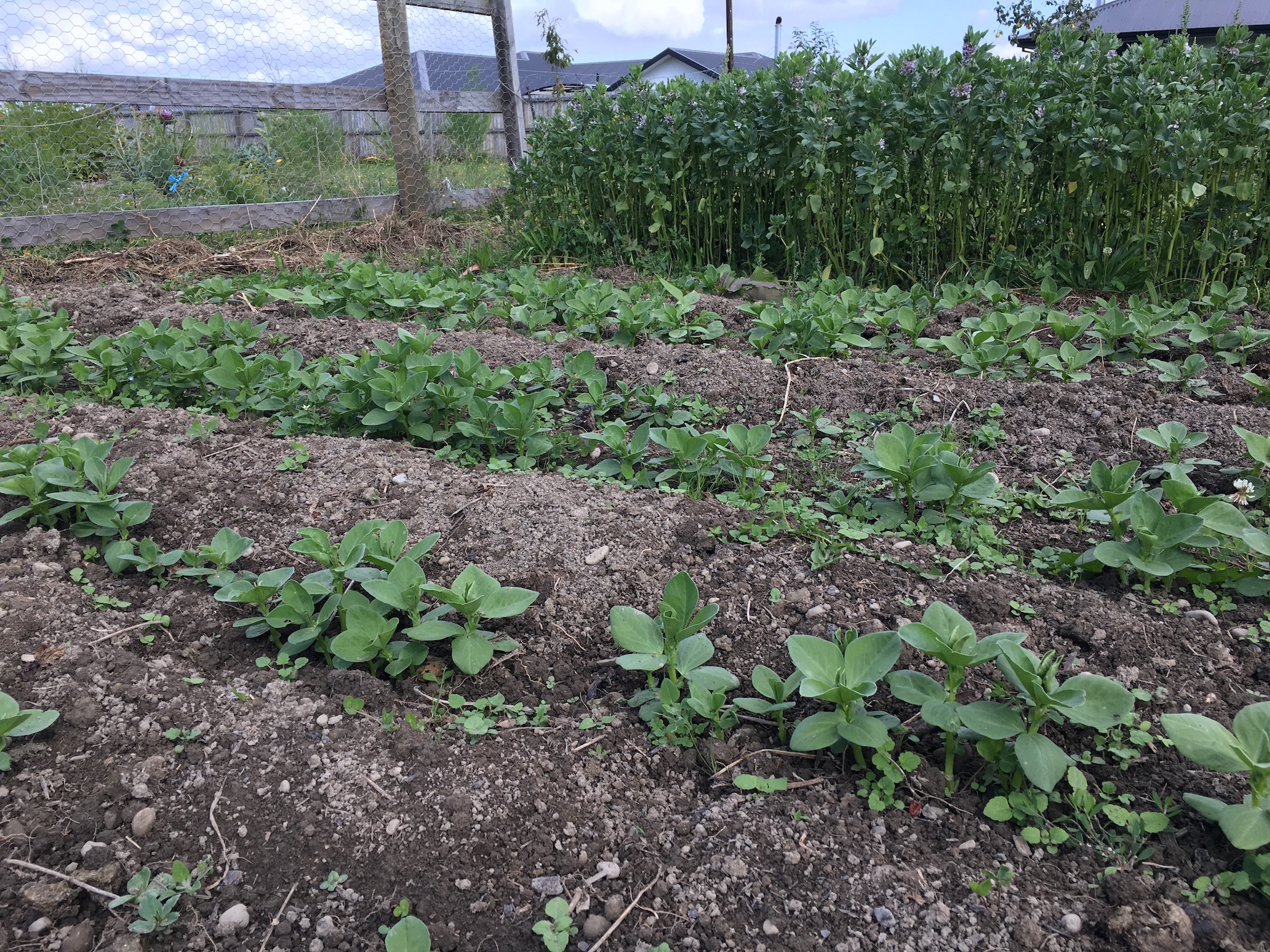
tick bean in freshly fertilised garden beds
Tick bean green manure planted next to furrows filled with cow manure.

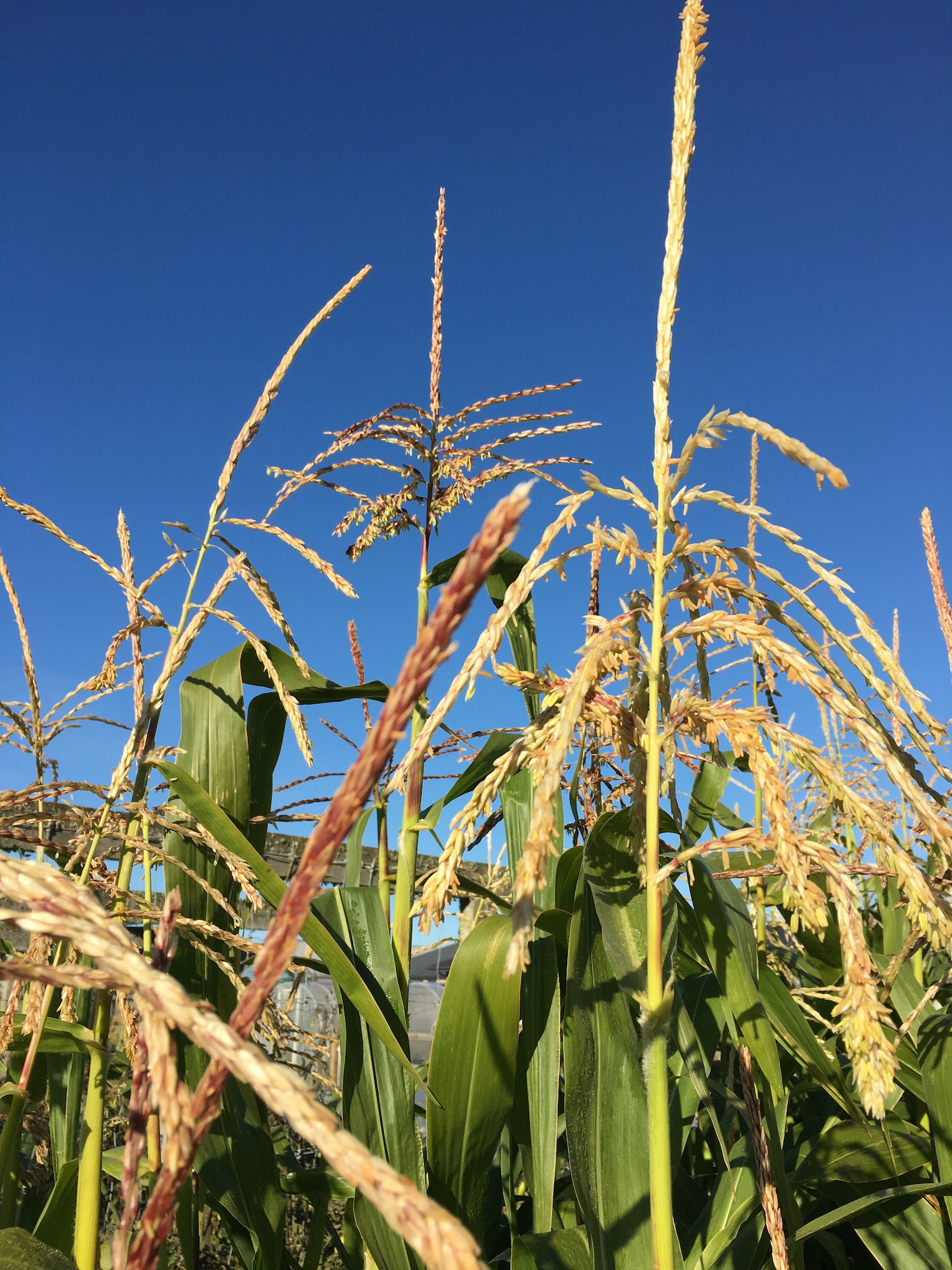
I harvested much of the remaining sweet corn, and it is now in the freezer. The pumpkin vines are beginning to die off, as are the tomatoes, cucumbers and basil. We’ve been eating lovely melons, but their days are numbered.

It is cool and drizzly today—feels like autumn.

Taking stock of how things have grown this year, it’s clear that the cow manure I incorporated into the garden over winter did amazing things. Overall, this year’s crops produced much better than last year’s. Corn in beds that got manure is twice the height of corn in beds that got none. I’ve come quite a ways from the practically nutrient-free clay I started with two years ago. 

There’s still a long way to go, though. All the plants are showing nutrient deficiency at this point of the year, and none have grown as well as they did in my old garden.

So I’ve started fertilising early this autumn. As crops have finished, I’ve been clearing garden beds and incorporating manure. With luck, I’ll be able to incorporate poo into all the beds this winter (I ran out of time last year because my weekly manure supply is limited to the production of the neighbour’s two cows.)

I’ve also included a lot of manure in this year’s compost pile. By spring, I hope to have a good six cubic metres of nutrient-rich compost to add to the garden as well. It feels good to be reclaiming this stripped paddock, restoring the mauri (life force) of the soil. I can’t wait to see how things grow next year.

Late Summer Garden

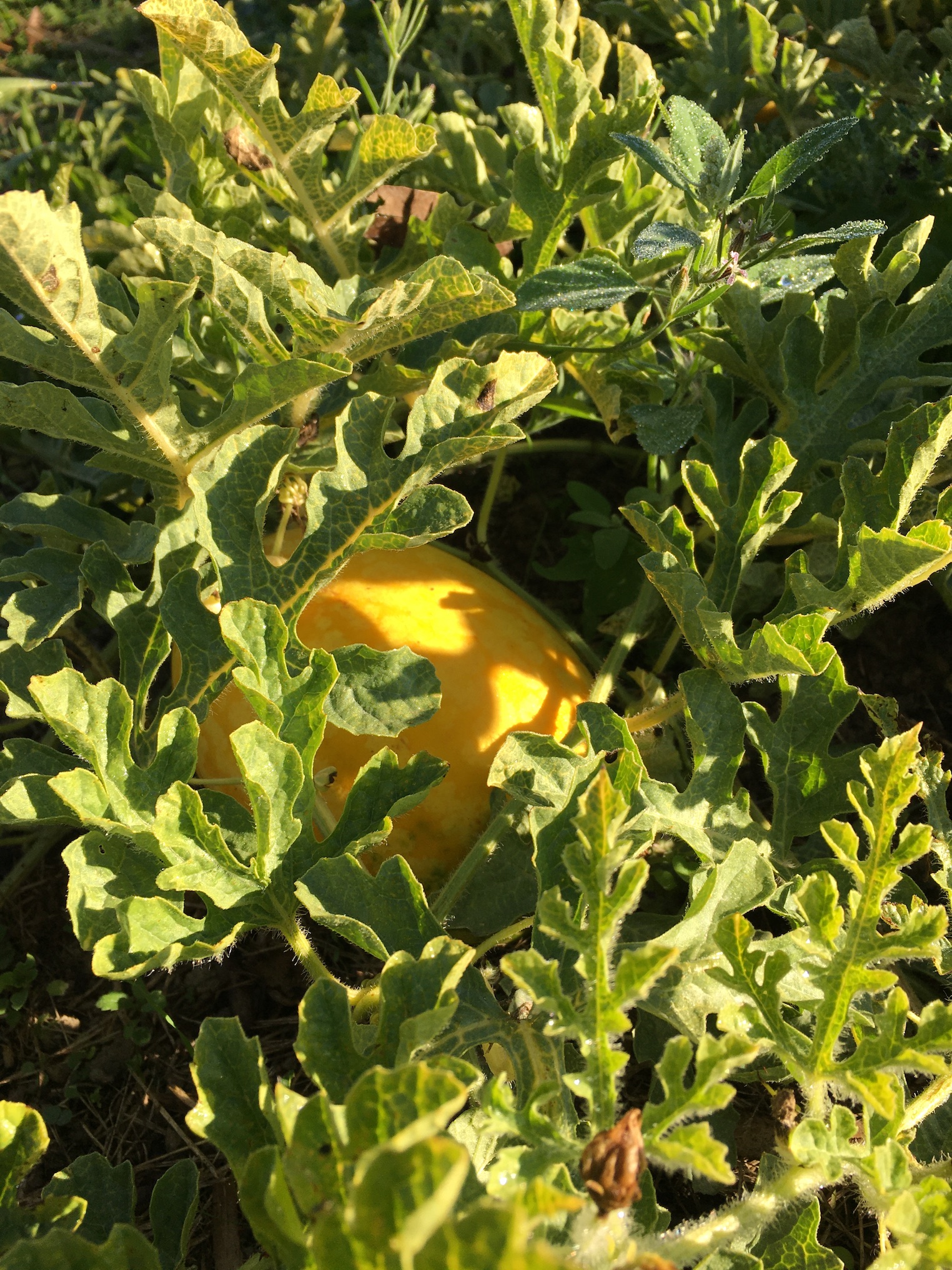
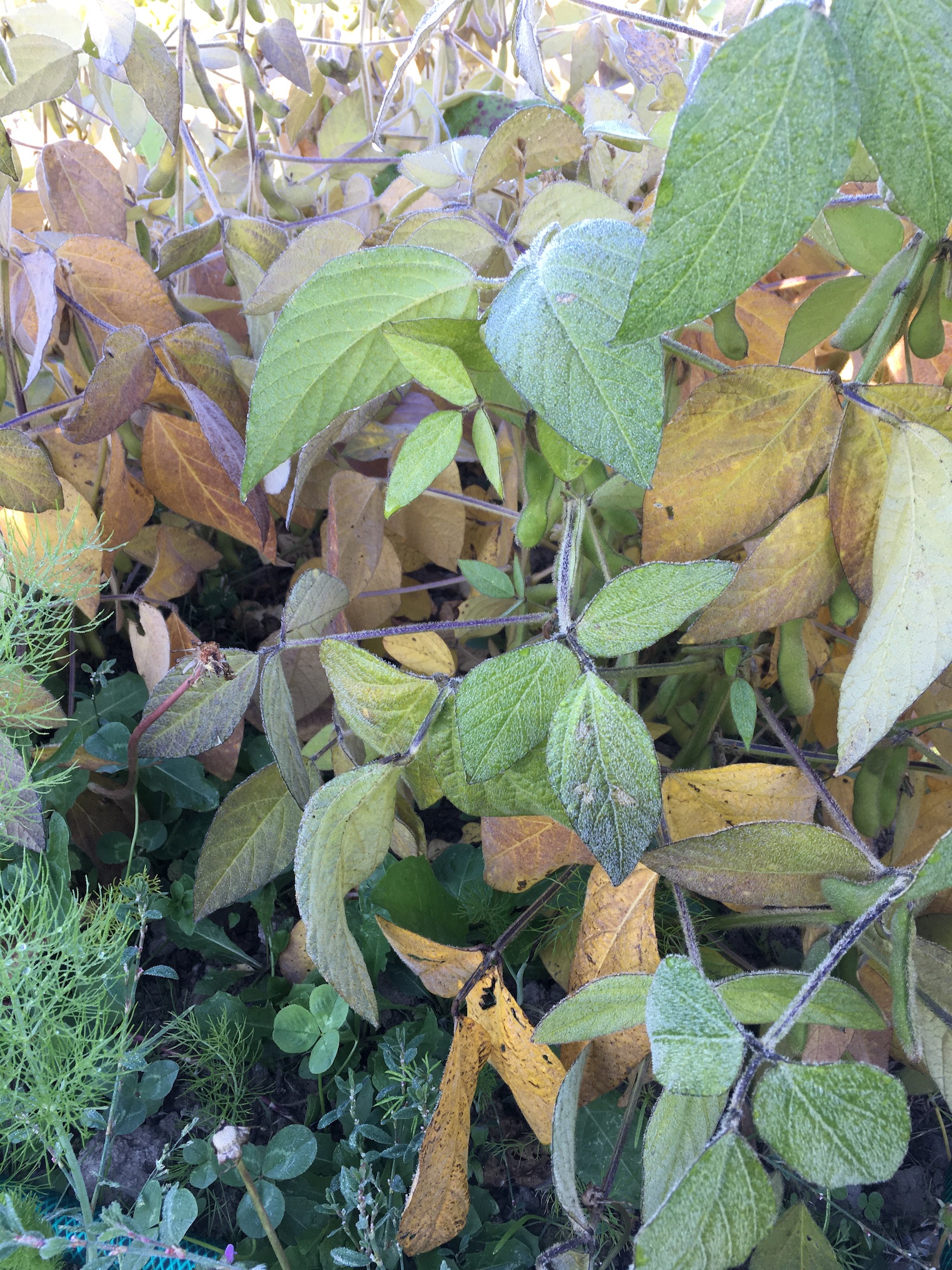
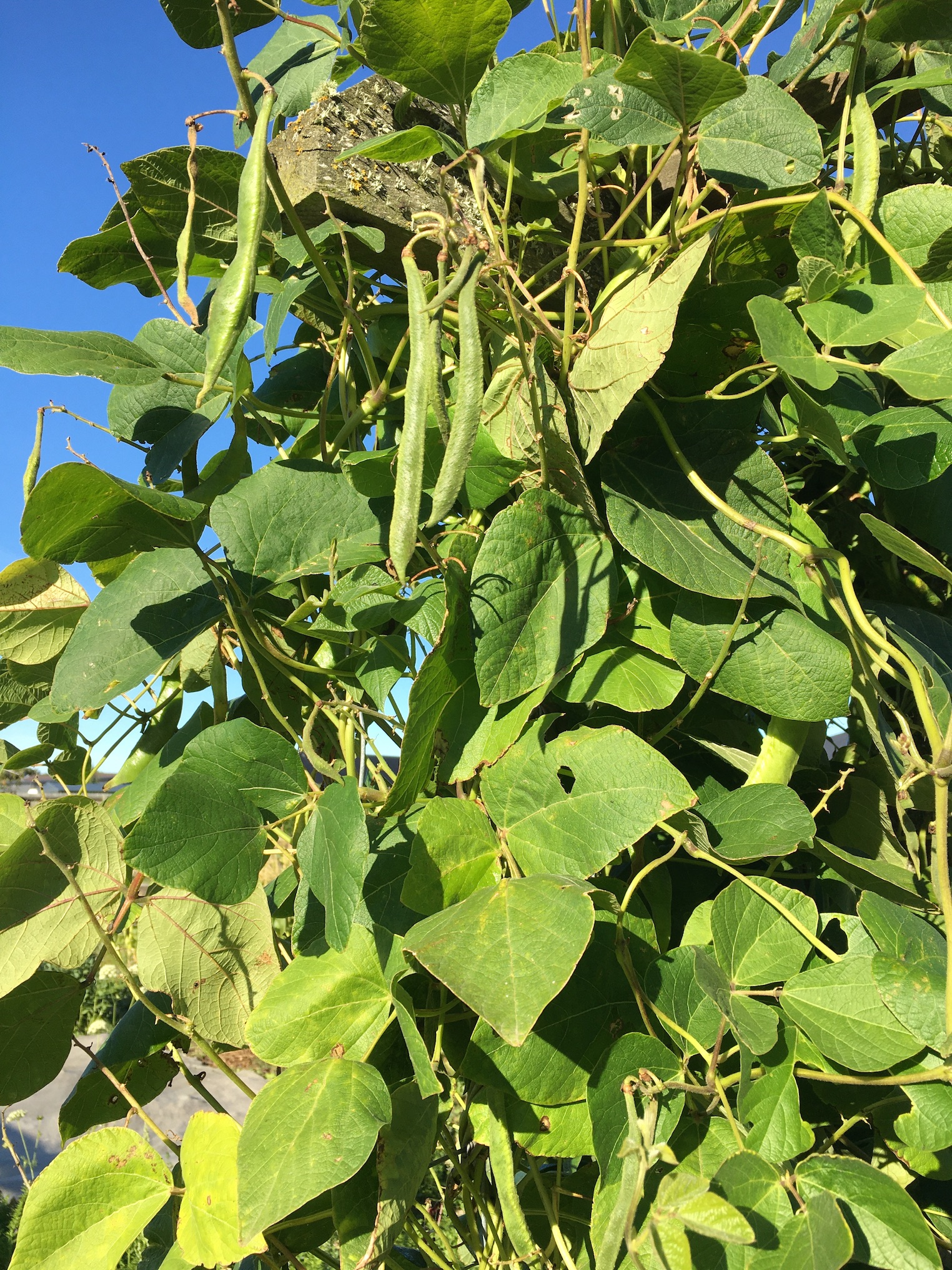
March first is considered the start of autumn here in New Zealand. As far as the garden is concerned, it’s still late summer. It’s been a cool, wet February, which has delayed crops like tomatoes, peppers, and eggplants. The extra moisture has meant bigger watermelons, though they’re ripening slowly. Sweet corn is coming on, and we’ve had some lovely meals of it, along with the first of the melons. I’ve harvested the potatoes, dry beans, and most of the soy. The pumpkins are looking gorgeous, and I’m sure we’ll have more than we can eat this winter. 

Overall, I’ve been pleasantly surprised with the garden this year. Plants are showing nutrient deficiency, for sure, but they’ve done remarkably well, considering where I started two years ago. It’s clear my applications of manure and compost are having a positive effect. And it’s just as clear it will take quite a few years to build this soil up to full productivity. 

I thought I’d treat you to a selection of images from around the garden on a beautiful crisp early autumn day. It may not be as productive as I’d like, but it’s still glorious.

Feathered Friend

The vast majority of the birds in our yard are non-native invasive pests—English sparrows, European starlings, blackbirds, goldfinches and song thrushes wreak havoc in the garden. They eat fruits and vegetables, dig up seedlings, spread mulch all over the lawn, and strip young plants of leaves. If I could net the entire yard to keep them all out I would.

But some of the avian visitors to our place are welcome. The fantails that flit in and out of the house snapping up flies are a delight. The silvereyes picking aphids off the trees are both adorable and helpful. And the magpies may be noisy and aggressive, but they are quite entertaining as they dive bomb the cat or squabble with each other.

The tall trees across the road from our place are home to a host of white-faced herons. They croak and grumble among the branches like modern pterodactyls, and I love to watch them winging home in the evenings, landing awkwardly before settling down for the night. 

They rarely give our yard a second glance, but for the past week, a young heron has taken a liking to our porch and front garden. 

There’s something wrong with him. I say that not because of his interest in our porch—it is a nice place to hang out—but because his legs are oddly splayed and he wobbles when he walks. Still, he seems to be holding his own, and he has no trouble flying out of range of the cat when he comes stalking. It’s possible his flight is impaired as well, and that’s why he’s foraging close to home in our garden. Or maybe he’s discovered our soil has lots of worms to offer. Either way, I wouldn’t mind if this bird stuck around.

From Haast to Haast Pass

My husband and I spent the past four days on the West Coast. I was helping him with some field work involving a lot of bush bashing on steep slopes.

The trip also involved a lot of driving–all the way from Greymouth to Haast, and then over to Wanaka before heading north again. It being the West Coast, the road crossed many creeks, each one named by a small road sign. After a particularly waterway-rich stretch of highway, where  we crossed a creek every 50 metres or so, we began to note ALL the creek names. At some point I began writing them down—they were strangely poetic.

I’ve taken a section—State Highway 6 between Haast and Haast Pass—and have written a poem that uses each creek name, in order starting in Haast, and evokes South Westland. The creek names are the only words capitalised.

you swish through the Grassy paddock
to take a Snapshot,
then fossick for Greenstone
on the beach amidst the strewn blossoms
of southern rata, that seasonal Myrtle
Harris says brings out the colour of
your eyes when he tucks a bloom behind your ear.

ankle deep in the Glitterburn
on a tuesday that sparkles with gold
you fire a text to Roy and Joe,
knowing they are stuck in Dismal london,
while you grow Dizzy trying to track
the flitting movement of a tomtit
in the undergrowth, its Gun Boat grey
blending into the shadows, white breast
winking like a Cron command,
Dancing to its own irregular beat.

and deep in the forest, the Roaring Swine
fill the Gap in the silence and find
the Chink between birdsongs.

your Cache of wonder sits at the Depot,
its Square Top a fitting seat
for Orman,
the Imp with Mossy eyes.
his Eighteen Mile hike on Gout swollen feet
has not dampened his spirits.
he recites MacPherson’s translations,
mixing the ancient gaelic with
lines you’re certain came from Douglas adams.

the Serpentine path you wander tumbles
over boulders soft with moss like grandma Evans’ arms
when she would pull you into those hugs you
hated as a teen, when you and your cousin Chelsea
walked the tired streets of town—
three blocks, then Pivot to retrace
the entirety of main street—hoping
for some excitement.

now it is Solitude you crave.
as Douglas said—space is Big—
surely there is enough of it that you
can carve out your own piece of it
here, among the ancient footprints
of Moa, tangled in a Briar,
imagining Haast eagles soaring overhead.

Diana would have been your goddess,
in this wilderness of rain where The Trickle
of water is more like a roar and
liquid is a Cutter of stone.

you would stay here for decades
like Robinson crusoe, study the
ants at your feet as though you
were e. o. Wilson.

instead you Cross the river
and stand dripping and shiny
as a nugget of gold on the other side.

10 Garden Hacks

A few days ago on an online group I’m part of, someone asked about people’s life hacks.

I thought about it for a while and realised that I spend so much time in the garden, that my ‘life’ hacks are mostly garden hacks.

So here is a list of 10 of my many garden hacks:

  1. Cut up empty milk bottles to use as plant tags.
  2. Give your chickens the run of the vegetable garden during winter—they’ll keep pests and weeds down and make springtime garden prep easier.
  3. Recycle old cotton sheets and clothes, and raffia baskets as biodegradable plant ties.
  4. When picking carrots, water well about an hour beforehand—the soft soil will make the carrots easier to pull.
  5. When thinning carrots, remove the largest plants first—the small ones will grow, and you’ll be able to eat your thinnings.
  6. Instead of tossing empty juice bottles in the recycling bin, fill them with water and line them up in the greenhouse—they’ll store heat during the day and release it at night. Paint them black for even more heat absorption.
  7. Fill plant pots with cement to use as weights for things like bird nets and row covers. Give them wire handles threaded with a short section of irrigation pipe so they’re easy to move around.
  8. Whenever you cook something, like pasta, that is boiled and drained, save the boiling water and pour it on weeds to kill them instead of sending it down the drain.
  9. Plant summer lettuces in the shade of tall crops like corn to keep them from bolting too quickly.
  10. Plant rangy crops like pumpkins next to early crops like brassicas—by the time the pumpkins grow large, the brassicas are gone and the pumpkins have space to sprawl.