Promise of Spring

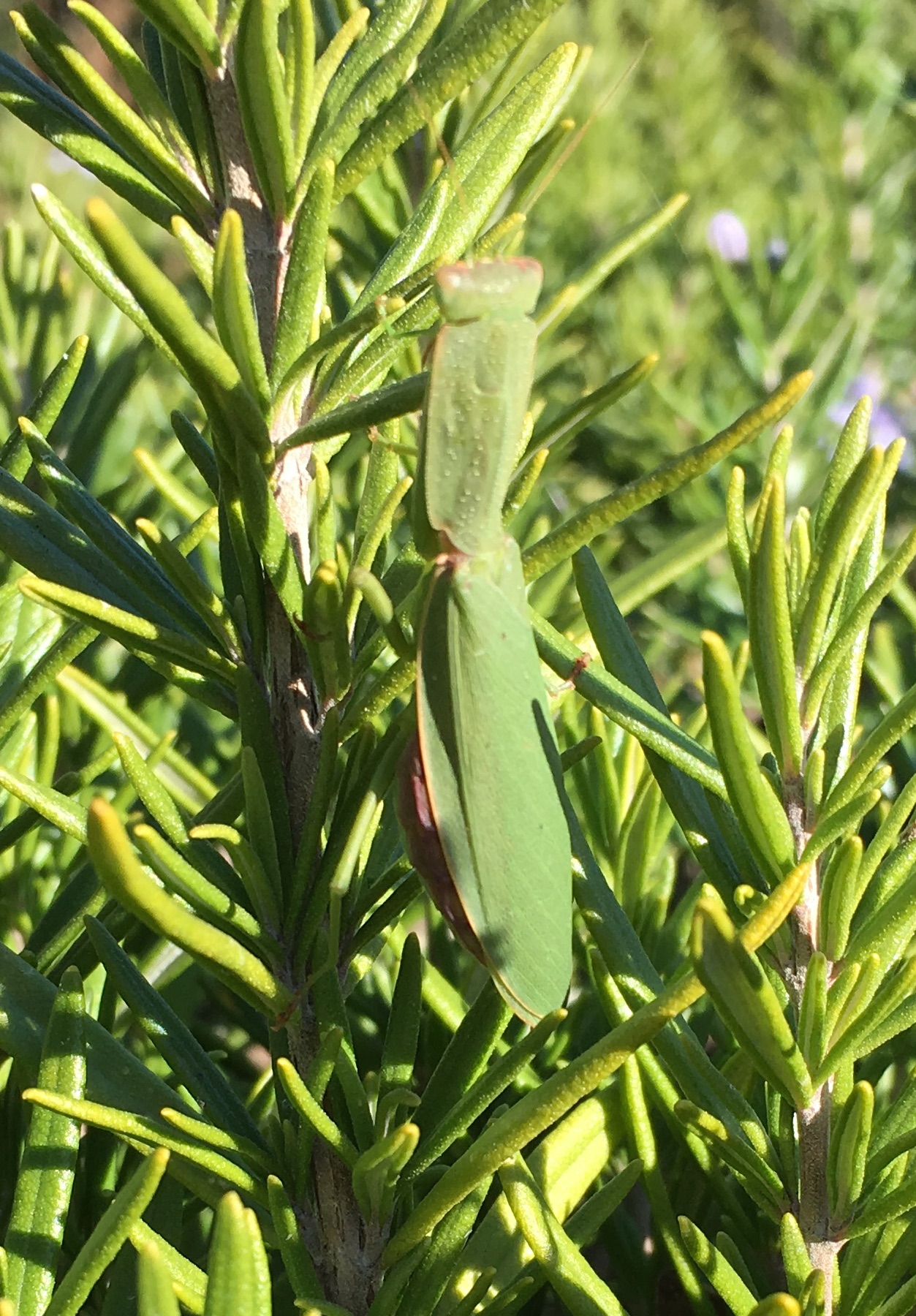
2016-05-27 12.53.09Tomorrow’s forecast is rather wintery, but I’ve been fortified today. The preying mantises must know their time is short—that one of these storms is going to do them in for good—because over the past couple of days, they’ve been laying eggs all over the place.

There are new clusters on the fence posts, on the rosemary, and even on my office deck.

Though the adults will succumb to the weather, their eggs will rest snug all winter in their cosy egg capsules—a promise of the spring to come.


Pass Me a Brick, Hold the Mayo

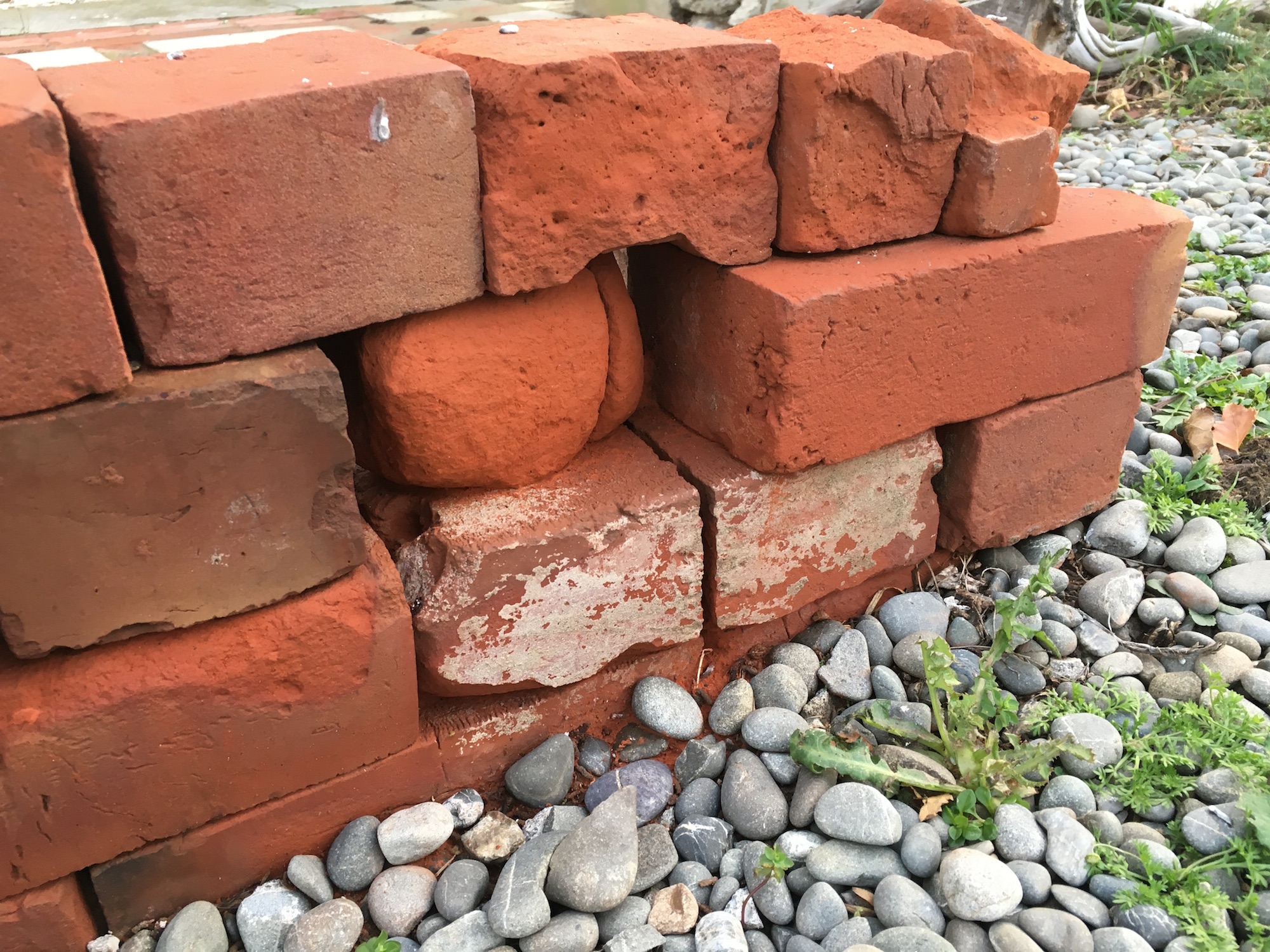
The one in the middle used to fill its space...

The one in the middle used to fill its space…

I’ve mentioned the pest birds at our property more than once in this blog. Today I was musing on them again, as I watched a whole flock of them descend upon our brick fire pit.

Yes, our fire pit.

It was the bricks they were after.

Whether for the grit or the nutrients, I don’t know, but I’m inclined to think the latter. The clay for the bricks came from some other location, so it’s bound to contain nutrients our property doesn’t.

As it turns out, this is a worldwide issue with sparrows and finches—they love bricks and mortar. It’s not a particular problem for us—the fire pit isn’t exactly an essential structure. The only bricks that really matter on our property are the ones in the chimney, and the birds don’t seem to like those.

In fact, they’re quite selective about the bricks they eat. Perhaps they go for the softest ones, or perhaps there are subtle differences in the nutrient levels in different bricks. The birds aren’t telling, and as far as I can tell, no one has ever felt the need to study the issue in detail.

Regardless, they’ve foolishly chosen to focus on a brick in the centre of the fire pit. One of these days, they’re going to break through it, and the bricks on top are going to fall on their heads.

A very slow form of pest control?

Stalking the Wild Tardigrade

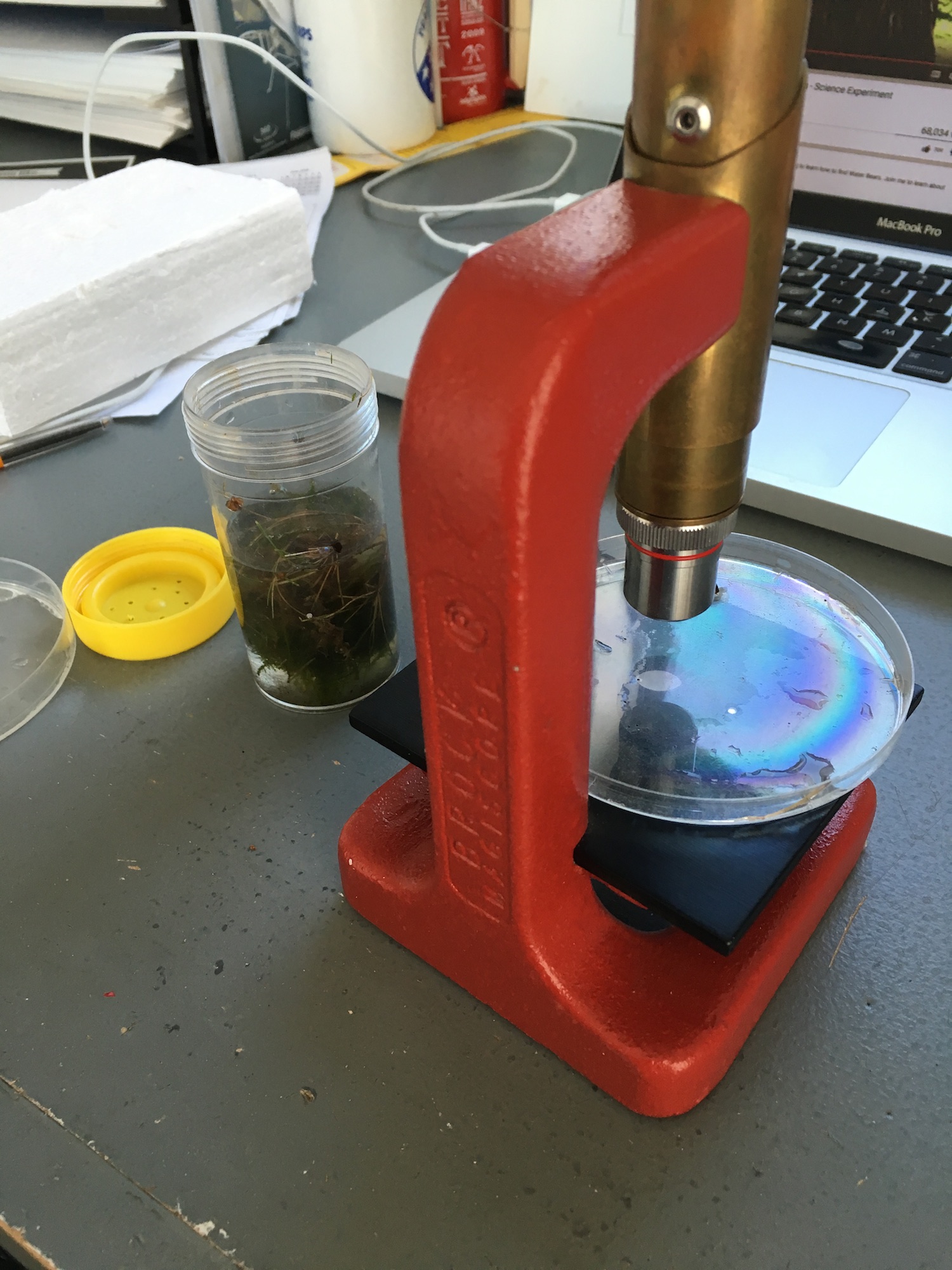
2016-05-25 14.50.00The recent rain has got me thinking about tardigrades. Tardigrades are, of course, one of the most awesome creatures of the animal kingdom–able to survive freezing, desiccation, radiation, intense pressure, and the vacuum of outer space, just to name a few. I mentioned them in a sci-fi short story I wrote over the summer, and have been meaning to go looking for them ever since.

Well, the moss is nice and wet now, so I figured it would be a good time to find some. I collected some moss, soaked it, squeezed out the water and, voila!

I found springtails,

And mites,

And paramecia,

And nematodes,

And some things that looked and acted like microscopic leeches…

But no tardigrades.

I peered down the microscope until my eyes crossed. I squeezed out more water from my moss.

No joy.

No tardigrades.

Of course, that just makes them all the more exciting. Now I have a challenge—stalking the wild tardigrade.

Stay tuned…

Sew Lovely It’s Raining

2016-05-24 16.22.48One of the best things about finally getting some rain is the excuse to spend my weekends and evenings sewing, rather than working in the garden. Not that I don’t enjoy working in the garden, but I enjoy sewing, too.

And with all the nice weather, the sewing projects have been piling up.

2016-05-24 14.07.14With the help of the wet weather this past weekend, I managed to complete a garden holster (to hold the hand tools I’m always losing among the weeds), and a new set of curtains for the office.

Next up are some new clothes for me—some jeans, a couple of shirts, and probably a new jersey…

Here’s hoping for more rain!

A Cat and His God

2016-05-22 20.32.46 smI’m so thrilled.

It has rained and rained and rained the past couple of days.

There is a puddle in the little slough out front.

It is cold and windy.

Sleet pings on the window.

The rain barrel is full.

The ground squishes when I walk.

Fire crackles in the log burner.

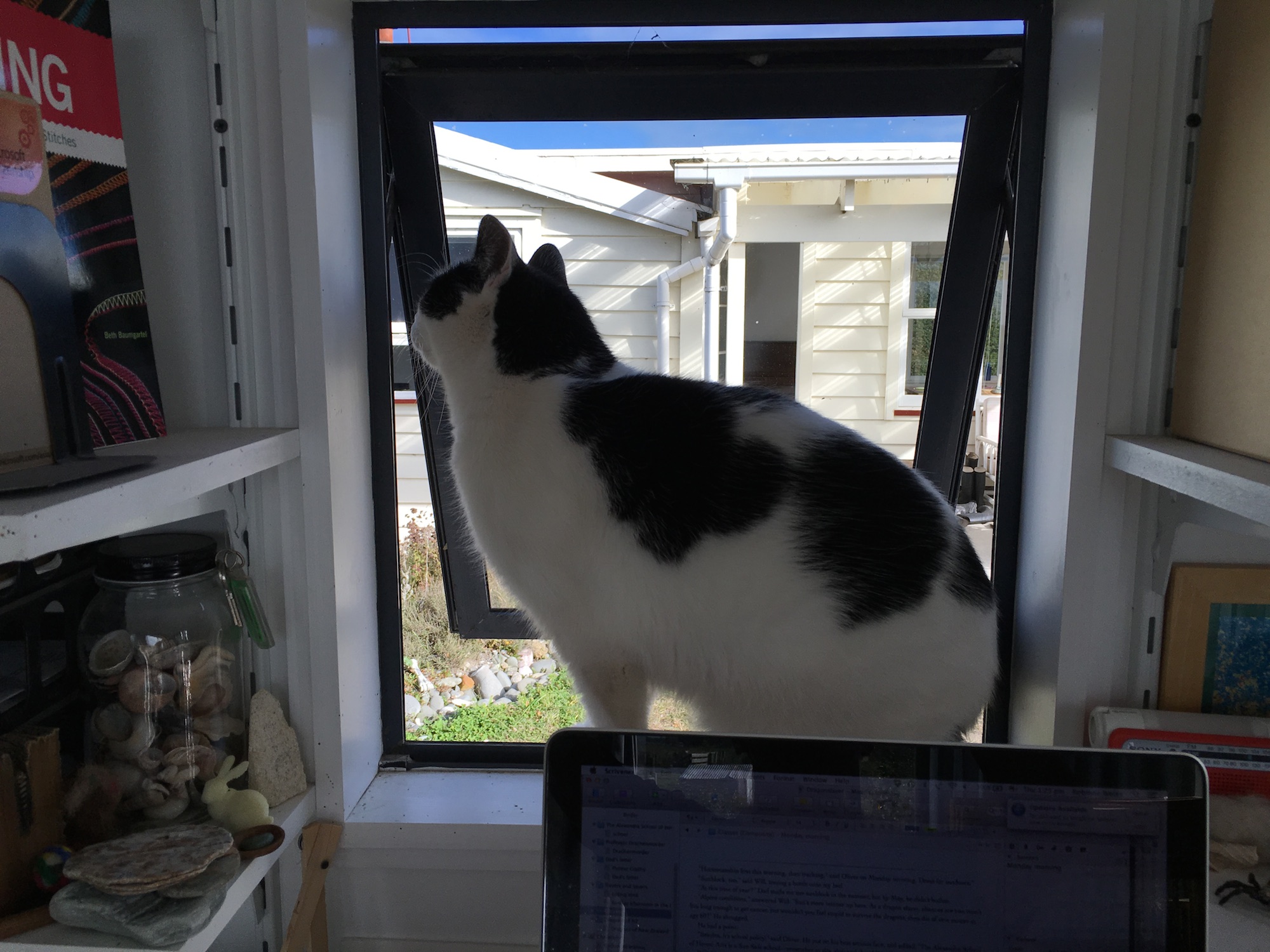
The cat purrs on the alter of his god.

The seasons are back in their rightful places (at least for now).

The Winter Staff Have Arrived

Some of the girls, enjoying what's left of the peas and eyeing up the newly planted broad beans, protected by netting.

Some of the girls, enjoying what’s left of the peas and eyeing up the newly planted broad beans, protected by netting.

I don’t know whether I appreciate my chickens more for their eggs or for their winter garden maintenance.

I turned the girls out into the vegetable garden for the winter today, and was happy to see them rooting around for grass grubs, which were a serious problem this year, and eagerly grazing on weeds.

I used to injure myself every spring when it was time to clear the winter’s weeds and prepare the garden beds. Now I employ the chickens in the garden all winter, and my springtime bed preparation is a breeze (comparatively speaking, anyway).

They keep the weeds down and reduce the pest populations, and the love the rich foraging the garden offers, as their summer paddock is practically bare by now.

Of course, there’s always a risk—now and again the chickens will get into the winter crops—but the benefits are worth it.

The chickens think so, too.


One of the Herd

He wants to be a goat and a writer...

He wants to be a goat and a writer…

My daughter and I have been feeding the new goats by hand every afternoon, to help them become more friendly.

But it seems everyone wants to get in on it now.

Of course, Artemis, my remaining Saanen, is quite jealous of the attention ‘the boys’ get, and feels the need to eat the majority of the food, or at least keep the other goats from getting it. She alternates between gobbling up as much as possible, and beating the stuffing out of the others.

That’s no surprise, really. Artemis is a goat, after all.

But today, the cat decided he needed to get in on the feeding, too. He meowed from outside the paddock for a few minutes, and when we didn’t come out, he came in.

He and Artemis have always had an adversarial relationship—she’s been known to tear after him if he gets in her way as she’s going to the milking stand. But the new goats, after a few rather curious sniffs and head-butt feints, seemed to accept him as just another goat, albeit a rather odd one.


Predictability

She's occupied the same plant for weeks. Her neighbour, on the next plant over, is equally predictable.

She’s occupied the same plant for weeks. Her neighbour, on the next plant over, is equally predictable.

There isn’t a huge body of research on why people don’t like insects and spiders, but the studies that have been done have concluded that one of the main problems people have with creepy crawlies is their unpredictability. They could jump, bite, sting, run, fly…and most people can’t predict what an insect will do next.

But I’ve come to realise that insects and spiders are, in fact, highly predictable.

For three years (its entire adult life) there was a metallic green ground beetle underneath the goats’ water barrel. It was there every time I looked, and I came to depend upon it to be there for Bugmobile programmes (along with two or three others whose ‘addresses’ I knew).

Until age and winter claimed her, I had an Australian orb weaver who I would pluck from her hiding place in the morning, take to a bug program, and return to her home in the afternoon—day after day, week after week.

A bee or wasp will always be the first insect to fly out of a sweep net, so you can quickly let them go before seeing who else you’ve caught.

If you put two adult male crickets together in a cage, they will always chirp.

A ladybug will always climb up an object, and fly away when it gets to the top.

A bee will not sting unless it feels threatened.

Most spiders will quickly rappel to the floor when frightened.

In fact, because insects and spiders behave largely out of instinct, they are incredibly predictable.

But, of course, you have to spend time with them to know that. You have to pay attention to them, instead of just stomping on them when you see them. You have to learn their ways. You have to behave predictably around them, in order to note that they are predictable themselves.

Somewhere, there is an insect research project going on to try to figure out why insects are so frightened of people. I suspect the bugs will find it’s because we’re so unpredictable.


Feeling Bad? Consider the Barnacle

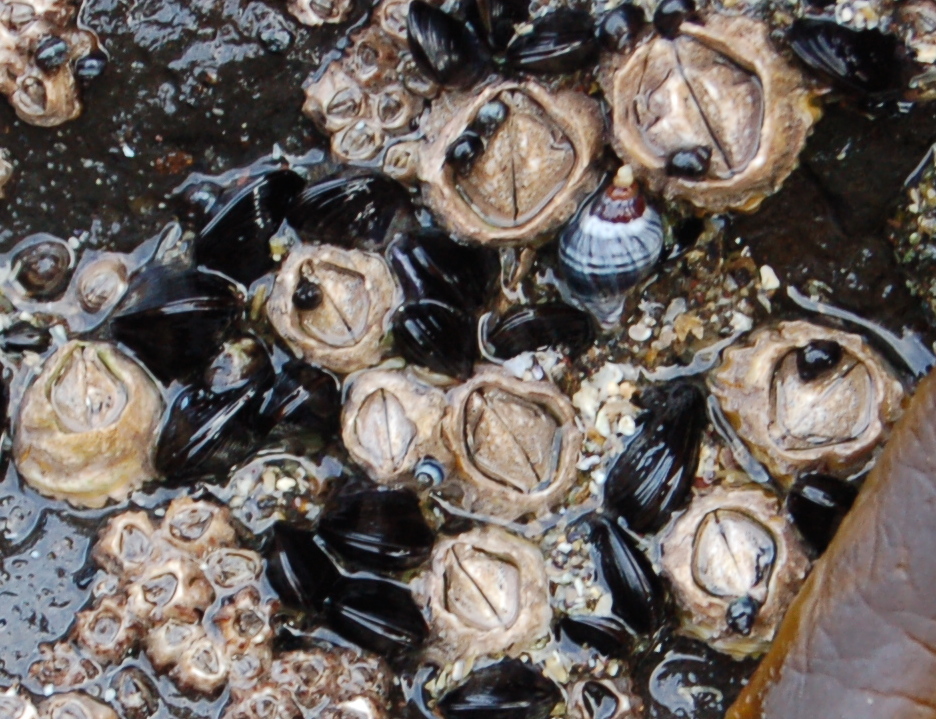
DSC_0027 cropThe lowly barnacle is well-known. Most people can point to one and say, “that’s a barnacle.”

Well done, but how many people know exactly what a barnacle is?

“It’s this…thing…that lives on rocks at the beach.”

“Don’t they grow on whales?”

“Ships get covered in them.”

As an entomologist, I know a bit about barnacles, because they are Arthropods, just like insects, spiders, millipedes, crabs, and lots of other creepy crawlies. In fact, they are crustaceans, closely related to crabs and crayfish.

Wait, you say. Don’t Arthropods have ‘jointed legs’—that’s what the word means, after all—but barnacles don’t have legs.

Or do they?

Barnacles are perhaps the strangest of the Arthropods. The free-living larva is a weird, tiny, spiky creature with one eye. It goes through a metamorphosis, like insects do, in which it changes shape dramatically. In its last larval stage, it finds a nice place to spend the rest of its life, presses its forehead against it, and secretes a calcium-rich cement from near the base of its antennae that permanently affixes its head to the spot.

In its adult form, a barnacle grows a protective shell, complete with a clever two-part ‘door’ that it can snap shut to conserve water at low tide, or to protect itself from predators. Its legs grow long and feathery, and act as tentacles to waft particles of food to its mouth.

As you can imagine, adult barnacles don’t have much of a social life. Most species are hermaphroditic, meaning individuals are both male and female. Surprisingly, though, self-fertilisation is rare. Like other arthropods, most barnacles have what’s euphemistically known as ‘internal fertilisation’—that is, the male has a penis, and he deposits his sperm inside the female. How does an animal glued by its head to a rock get together with another to mate? The answer is a very long penis.

So the next time you feel like your life is rough, be thankful you’re not a barnacle.

Too Late

Newly sprouted, out-of-season apple leaves.

Newly sprouted, out-of-season apple leaves.

The weather finally turned last night. After five days of hot, gale-force winds, after seven months of summer weather, we finally got a hard southerly storm. Three centimetres of rain, a bit of hail, and howling winds—a proper ‘winter’ storm.

But it’s too little too late. By yesterday afternoon, half a dozen shrubs around the property had simply given up in the heat and dry. The apple trees, having lost their leaves to drought six weeks ago, had already flushed again with the unusually warm weather. Those leaves will almost certainly be killed by frost, if not tonight, than another night soon. The trees will struggle to leaf out in the spring, because of their wasted effort now.

The lawn is little more than dirt in patches. If anything resprouts, it will be weeds, not grass. And the winter crops in the garden had already bolted from the heat.

I’m thankful for the rain. I’m pleased to have a full rainwater tank, and the early spring crops that are just now putting on growth will benefit from the water now.

But for the sake of the groundwater, I hope it keeps raining, because we need a lot more.