Waiting

2016-01-25 20.44.42 smFor the week before our trip to the U.S. I got almost nothing done. I was mentally occupied, with the trip—waiting for it to begin.

When we returned, we were just a week and a half from my husband leaving for a trip, and I got little done that week, either—waiting for him to leave.

While he was gone, I did almost no writing. I was distracted, I was working in odd places at odd times around the extra tasks that fell to me while he was gone. I was waiting for him to return.

Now he’s back, and I feel stuck in the habit of waiting.

I fear I’m stuck in the Waiting Place, as Dr. Seuss so eloquently described it:

“…for people just waiting.
Waiting for a train to go
or a bus to come, or a plane to go
or the mail to come, or the rain to go
or the phone to ring, or the snow to snow
or waiting around for a Yes or No
or waiting for their hair to grow.
Everyone is just waiting.”

Yep, I’m stuck in the waiting place.

It can be a hard place to get out of, but I learned many years ago that waiting rarely brings what you want.

It was in Peace Corps in Panama. My husband and I had been out with our local Corregidor (mayor), Fermín, and were returning to our village by bus. As we waited for the bus, it started to pour. We waited for hours, and when the bus finally came past, it didn’t even stop—it was too full already. The next bus might be hours, or might not come at all, so we decided to just walk, in spite of the rain. Fifteen minutes later, when we were thoroughly soaked, we heard another bus coming up behind us. Fermín smiled and said, “If you don’t walk, the bus won’t come.”

I took that as an important life lesson.

And now, I need to step out into the rain and stop waiting.

It’s All About Perspective

IMG_5709 sm
We headed to the mountains this morning in the hopes of snow. We were disappointed in that—there was no sledding to be had, but we did have a lovely walk at Kura Tawhiti/Castle Hill instead.

Kura Tawhiti, with its fabulous limestone formations and huge boulders, is one of our favourite quick day trips and a regular stop-off on our way to other places. For all our visits, though, we have never actually gone to the top of Castle Hill. So today, that was our destination (with many boulder-scaling detours along the way, of course).

The best part of the top of Castle Hill was the massive boulder jutting up from near the summit (I really think they should have put the trig marker on top of that rock—it really is the summit, more so than the ground below). Though I didn’t measure it, I’d guess the rock adds a good seven metres to the height of the hill. It dwarfed us all as we stood in its shadow.

It was a lovely walk to the top, though we were disappointed that we couldn’t actually make it to the top of that big rock. After a few minutes on top, we made our way down the other side of the hill.

Later, looking back toward the summit from a neighbouring ridge, that massive boulder looked tiny.

“The lesson,” my husband said, “Is that until you reach them, all your problems will seem insignificant. It’s only when they’re upon you that you’ll realise how utterly insurmountable they are.”

It wasn’t exactly the lesson I took (I was thinking that big problems, safely in the past, look small), but it’s a valid point. Sometimes we take on challenges or make decisions we know will lead to challenges in the future. At the time, those challenges might look manageable, but when we finally face them down, they could be huge.

Thankfully, we rarely have to face life’s problems alone unless we choose to do so. In fact, many of the big challenges that matter a great deal to us—raising kids, dealing with illness, facing loss—are really only manageable when shared. Sometimes, the hardest part is asking for help.

And then, once you’re past, the problems look smaller again. They look more manageable, because you did manage them.

So, don’t be afraid of those big challenges. They may be bigger than you think, but once you’ve made it past them, you’ll be able to look back from a distant ridge and say, “Well, maybe that wasn’t so bad after all.”

Going bananas

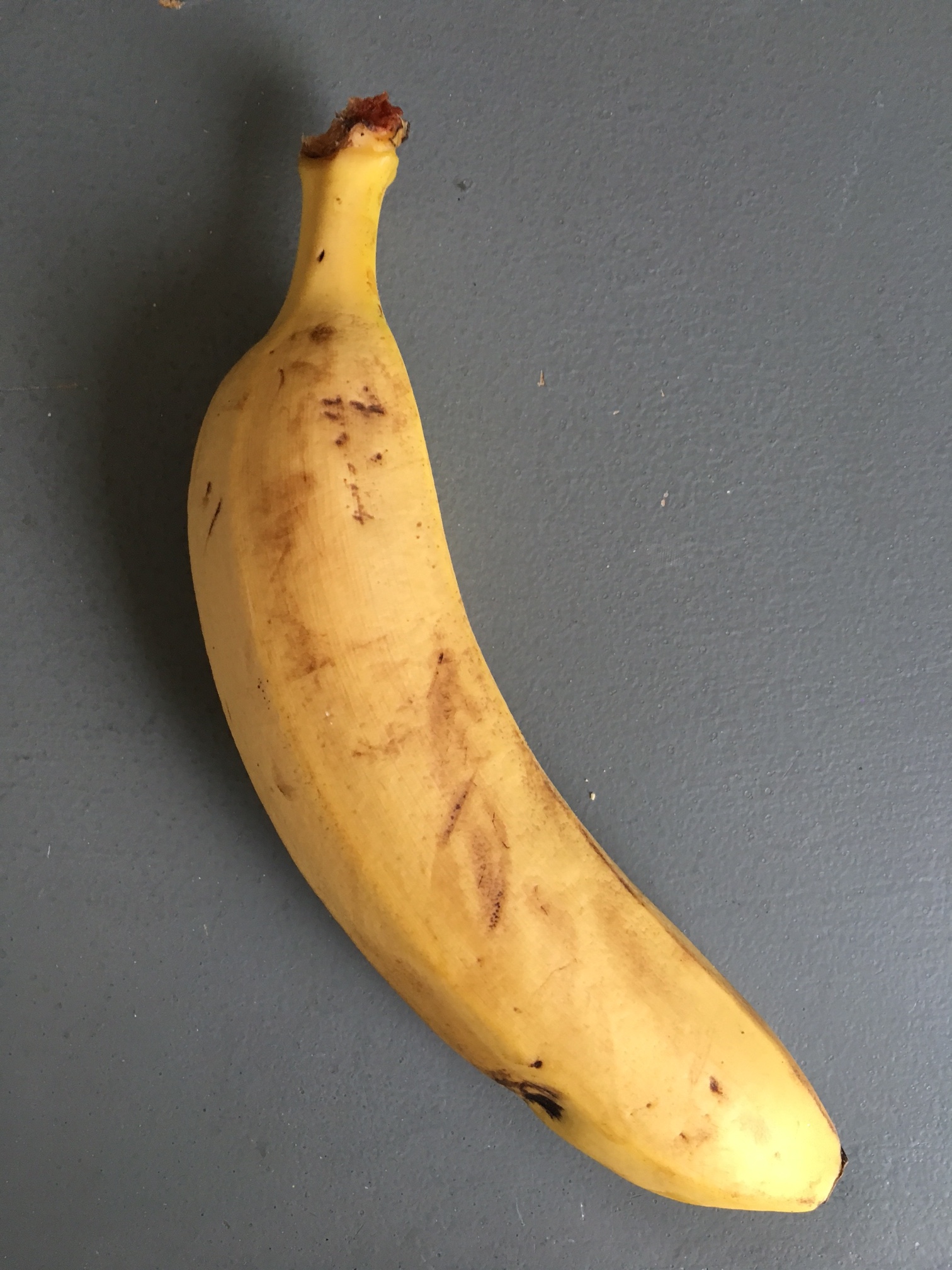
bananaOver 100 billion bananas are eaten globally every year, making bananas the fourth most important food crop in the world. Most bananas are consumed locally—only 15% are exported. Almost all the bananas grown for export are a variety known as Cavendish. New Zealand is said to have the highest per-capita consumption of Cavendish bananas in the world, at 18 kg per person per year.

The Cavendish was named for the Duke and Duchess of Devonshire—whose family name was Cavendish. Their head gardener imported a plant from Mauritius in 1830 and grew it in the family’s hothouse. The banana flourished and provided the duke’s guests with fresh bananas to eat. The Cavendish banana grew so well, the duke was able to supply two cases of plants to a missionary in Samoa. Those bananas were the start of the banana industry in Samoa.

Missionaries spread the Cavendish throughout the Pacific, but it wasn’t until the 1950s that the variety became popular commercially.

Until the 1950s, the most important banana for export was the Gros Michel, but in that decade, it was almost wiped out by a fungus known as Panama disease.

The Cavendish—smaller and not as flavourful as the Gros Michel—was immune, so growers switched largely to the Cavendish.

Almost all commercially grown bananas today are Cavendishes—clones of the plant grown by the Duke and Duchess of Devonshire.

Panama disease didn’t sit idly, though. By 1992, a strain evolved in Southeast Asia that was able to attack the Cavendish. And since the plants are all genetically identical, they are all susceptible to the new strain of the disease. At least 10,000 hectares of Cavendish bananas have been destroyed, and more will certainly fall as the fungus spreads.

For many of the nations that export bananas, it will be an economic disaster. For those of us who enjoy bananas…who knows?

There will likely be a time in which bananas become more expensive, even hard to find in our grocery stores.

But having lived in Panama, I know there are many banana varieties (about 1000, worldwide). And every single one I’ve eaten is better than the Cavendish. The Cavendish’s main selling point is its ability to survive transport, not its flavour.

In our village in Panama, everyone grew bananas. They came in many sizes, shapes, and colours. Some were more starchy, some were sweeter. Some tasted so much like banana, they seemed almost fake. Others tasted like a fruit salad, with tangy citrus overtones to the banana flavour.

I have to believe that as growers develop a replacement for the Cavendish, they will naturally end up with something more flavourful than the bland Cavendish. If we’re really lucky, they’ll develop more than one variety, providing greater insurance against the future evolution of Panama disease and more variety in our supermarkets. That has to be a good thing in the long run.

Want to know more? Visit the Panama Disease website.

Frozen

2016-08-10 10.08.08 smFive degrees below zero.
Grass
stiff with frost.
Pipes
frozen.
Pond
iced over.
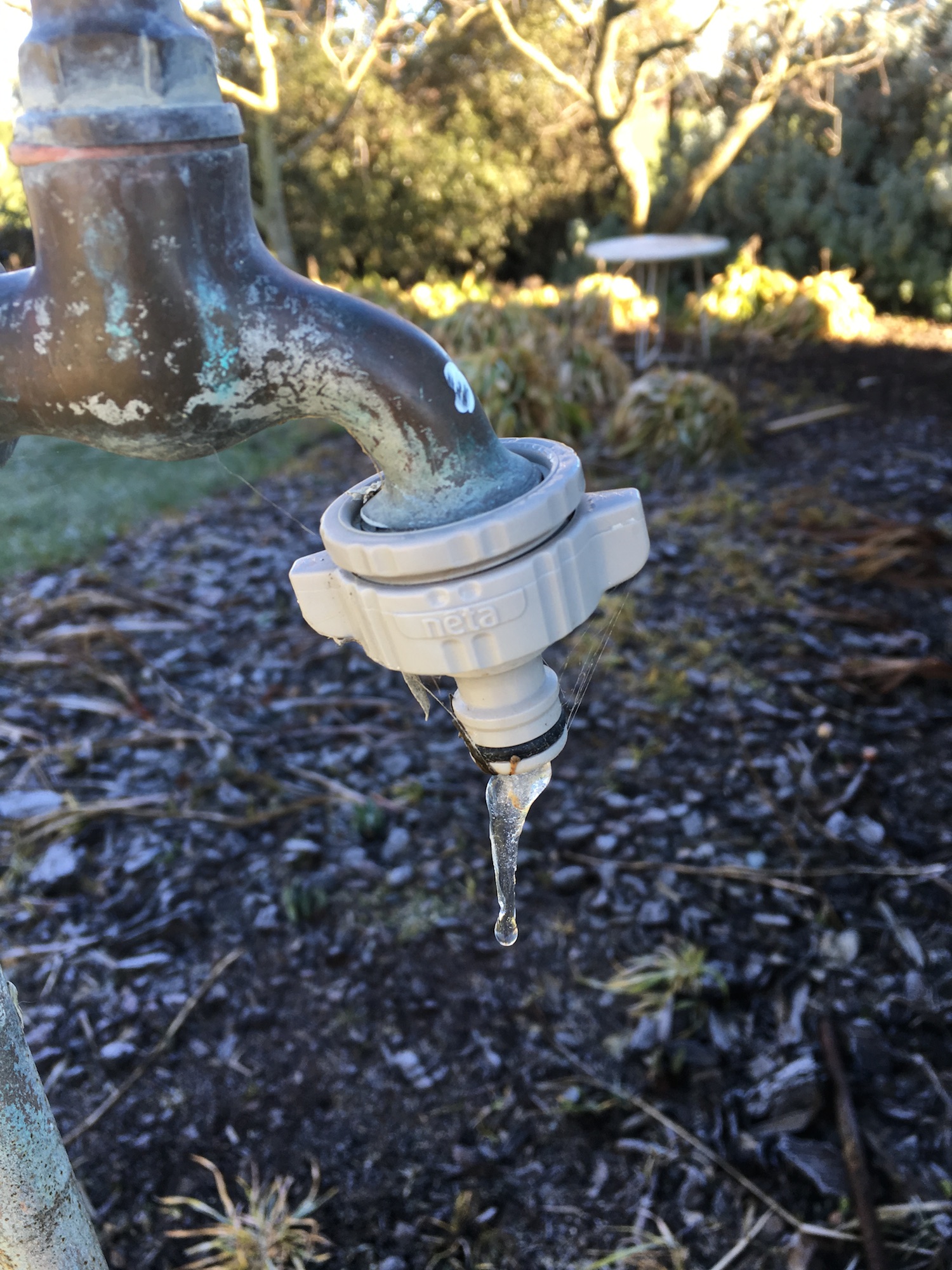
Broken tap
paralysed mid-drip.
Nothing moves in the pre-dawn darkness
Except the stars,
shimmering in a black-ice sky.


Risk

The stilts nearing completion.

The stilts nearing completion.

When I was about ten, my dad built me a high bar in the back yard so I could practice gymnastics at home.

My mom hated it. She refused to watch as I flipped and swung and tumbled through the air, with no crash mat below me. I used that bar a lot. Never once did I injure myself or even come close (the blisters don’t really count).

What mom didn’t know was that before the bar, I did my aerial work in the woods across the road—flipping and swinging around tree branches that bounced and swayed under me, with branches below to whack into if I should fall. I once found two branches that were the perfect distance apart to serve as uneven parallel bars. I couldn’t resist, though the branches were a little to big around for me to get a great grip on them. And they were at least twice as far off the ground as a real set of bars.

I stuck to moves I was comfortable with, but one involved being completely airborne and catching the upper bar.

But that upper branch was just too big. My hands slipped. I only just managed to dig the nails of one hand into the bark and hold on while I scrabbled around with my feet to find the lower branch (at this point, my mother, who reads my blog, is cringing and thinking she should have just locked me in my room instead). I admit that I clung to that branch for five minutes before I could bring myself to let go enough to climb down.

I write this as one who is now the mother of an equally adventurous daughter, not to scare other parents into locking their children away from trees, but to point out that children will find adventures. They will find ways to challenge themselves. By enabling our children’s adventures, we have an opportunity to manage those adventures.

Maybe mom didn’t like the high bar, but it was a heck of a lot safer than the tree branches.

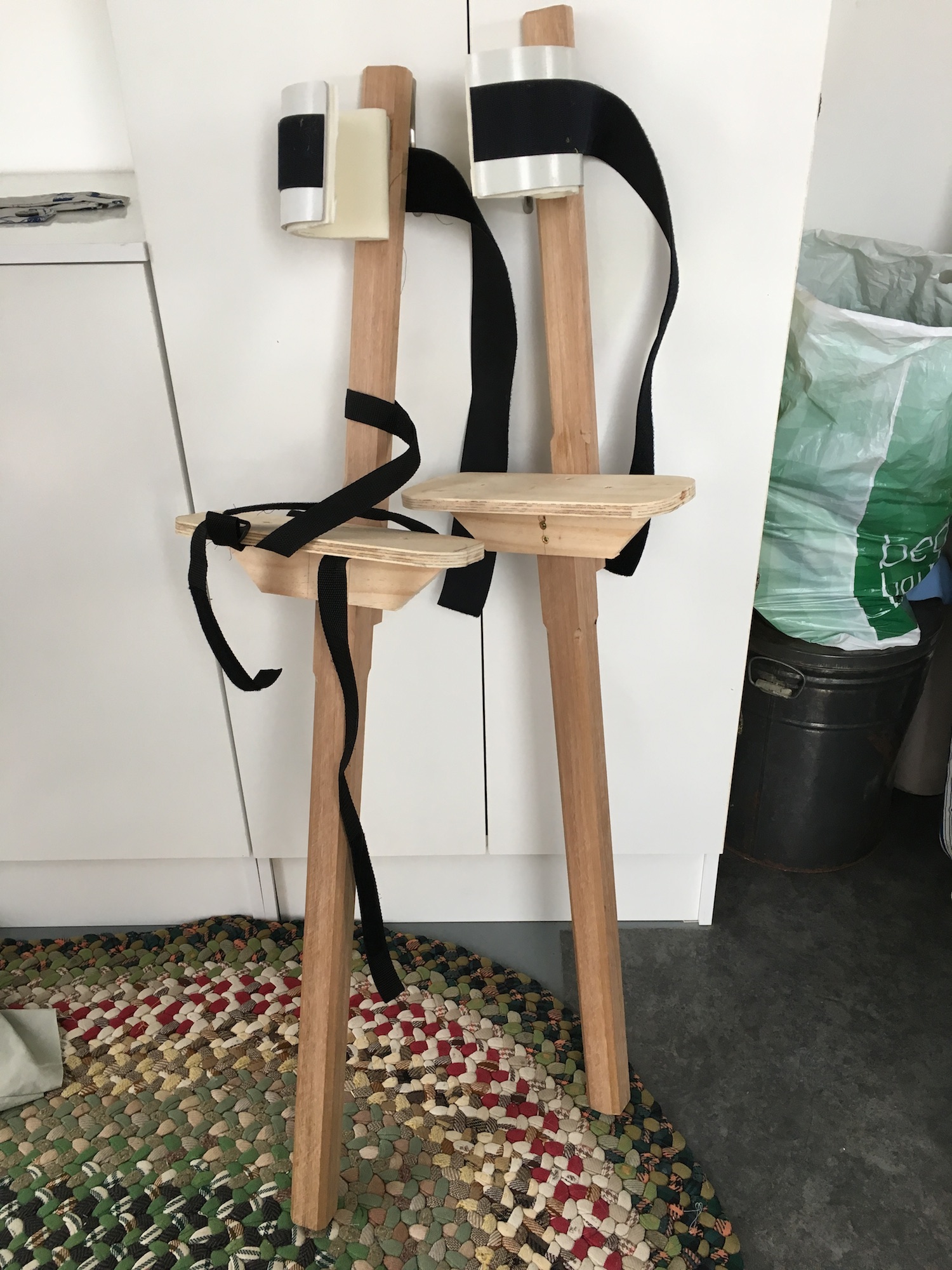
My daughter is currently building herself a set of strap-on stilts, with the help and advice of both her parents. These stilts will replace the ordinary stilts we helped her make years ago, when she felt her first pair of (rather short) stilts weren’t challenging enough anymore. I was terrified by the tall stilts when she first got up on them. She fell again and again, but soon had them on their tallest setting and was playing soccer in them.

Now she wants to be able to juggle while walking on stilts. Her first idea was to tie her regular stilts to her legs. Not a good idea. Her father suggested she make purpose-built strap-on stilts.

I’m worried about the strap-on stilts—the only way to get off them is to fall—but because we are helping her address her need for more physical challenge, we are managing the risk. Elbow, wrist, and knee pads and a helmet will reduce the damage when she falls. Parental guidance on construction will ensure the stilts are strong enough to take the forces she’ll put on them.

It will be tempting to close my eyes the first time she gets up on them. But I owe it to the girl on the high bar to watch.

Spinning House, Spinning Life

Photo: OMI International Arts Center; http://artomi.org/page.php?Alex-Schweder-Ward-Shelley-233

Photo: OMI International Arts Center; http://artomi.org/page.php?Alex-Schweder-Ward-Shelley-233

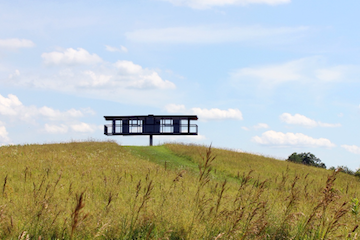
In looking for something in the news that wasn’t depressing on this rainy Friday, I found an article about this delightful piece of art by Alex Schweder and Ward Shelley—a house that spins in the wind and tilts as it occupants move around in it. They built it, then moved into it for five days.

The article about the house in the New York Times includes observations written by the artists during their time living there.

Shelley’s final observation: “We’ve stayed spinning most of this breezy day. Four-and-a-half days in, I can’t say something definitive about this spinning. It is the prime feature, and joy of life inside this machine. I know it could become too much of a good thing. For now, though, it is what I like best.”

Isn’t that a great encapsulation of life?

The spinning is the prime feature and joy of life–the crazy every day whirlwind of school, work, family, friends, sun, snow, and rainbows. The emotional highs and lows as we spin in and out of the metaphorical sunshine are what give life spark and colour. The spinning keeps us on our toes and interested, because the view is ever-changing.

But spin too fast, too out of control, and we’re liable to get dizzy and fall. We won’t know how to step to go in the direction we want to move. We might lose track of where we are altogether.

I would love to see this house in action, and maybe even spend time in it. Alas, I’m unlikely to find myself at the OMI International Arts Center in Ghent, New York in the next two years while the house is on display there. I suppose I’ll have to remain in my own spinning life instead.

Tease

2016-08-03 14.58.18The starlings mutter. The sparrows scold. Magpies warble on the fenceposts.

Daffodils stretch skyward.

I pace the garden, pulling weeds. I finger the newly arrived seed packets.

The goats stand sentinel on the hill, noses quivering with the smell of soil.

Buds swell on the fruit trees.

We are all impatient. Waiting.

The sky is a little bit lighter for a little bit longer than it was yesterday.

The sun, when it shines, is warm.

But we know it is a tease.

Clouds boil to the south, dark and heavy with rain, maybe even snow, if you believe the forecast.

The northerly breath of spring whisks around to the southwest, knife-edged and cold, reminding us that winter still rules.

We bide our time by the fireplace, planning the new season’s garden while rain and sleet lash the window.

Smell of a Memory

2016-07-29 13.55.18I was hanging up laundry early yesterday morning, when I caught a whiff of the past.

I don’t know where the smell came from, or whether it was even real, but there it was—the unmistakable smell of our house when we moved into it eleven years ago.

More than one previous owner ignored maintenance on the house. Today, I can’t believe we were so desperate to have bought it. The owners before us allowed the roof to leak, the toilet to leak, the piles and weatherboards to rot. They covered the smell of rotting carpets with air fresheners and sweet-smelling flowers.

The first thing we did, even before moving in, was to remove the carpets and air fresheners. Then I attacked the highly perfumed (and disgusting to my nose) flowering shrubs by the door.

We quickly improved the smell of the house (and fixed all those leaks and rotted bits), but it made a strong impression on me. On chilly winter mornings like the day we moved in, I can still smell those awful flowers.

Noisy Neighbours

2016-07-27 14.13.35Most city dwellers don’t think of the country as a noisy place, but it can be. Yesterday I was working away at my desk when I heard a deep rumble. My first thought was earthquake, then I thought it must be a milk truck. But the rumble peaked then faded, peaked and faded. I looked out to see the neighbour’s sheep running laps back and forth along our fence line. Several hundred sheep thundering back and forth, for no apparent reason other than it was fun.

It’s a noisy time for sheep, even without running races. It’s lambing season in our neck of the woods, and lambs are noisy. The ewes get noisy, too, as they call back to their bleating lambs.

And there’s no point in telling these neighbours to quiet down—they never listen. 😉

Seeds! Seeds! Seeds!

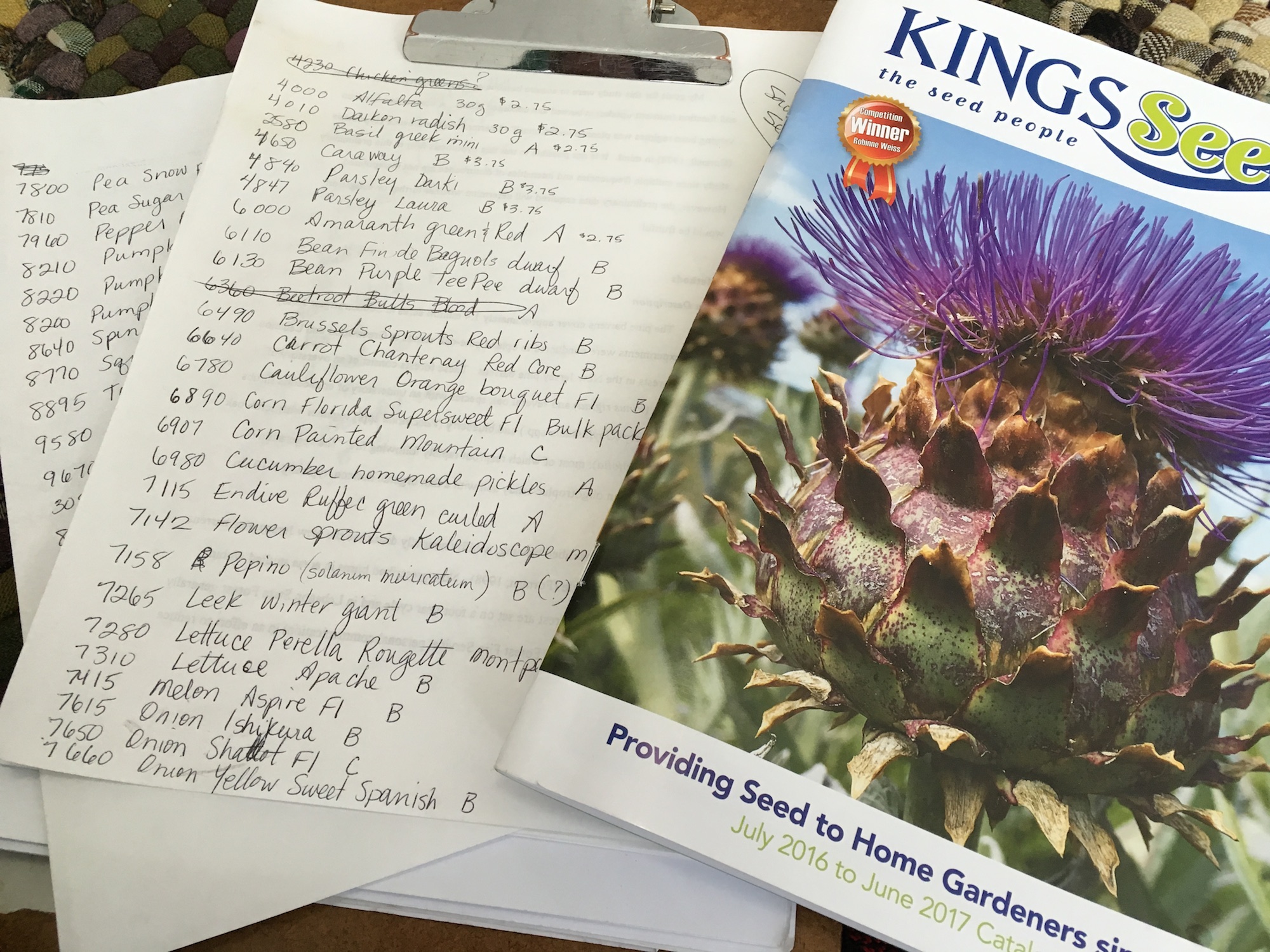
2016-07-23 11.47.41It’s that time of year! The seed catalogue is here, and I’m dreaming of melons, tomatoes and corn.

The garden is all about possibilities at this time of year.

How about an orange sweet pepper?

My favourite squash isn’t available anymore? Well, maybe we’ll get Jade F1 instead?

And maybe an Australian Butter pumpkin, just for something different.

Endive. Definitely endive this year.

Orange cauliflower? Why not?

And I’m sure I can squeeze in this Greek mini basil along with the other three varieties. It’s mini, right?

So many plants, so little garden space…I’m sure that long about October, I’ll wonder what I was thinking back in July when I bought all these seeds. But I also know I’ll fit them in somehow.

July is the month for dreaming big.