Risk

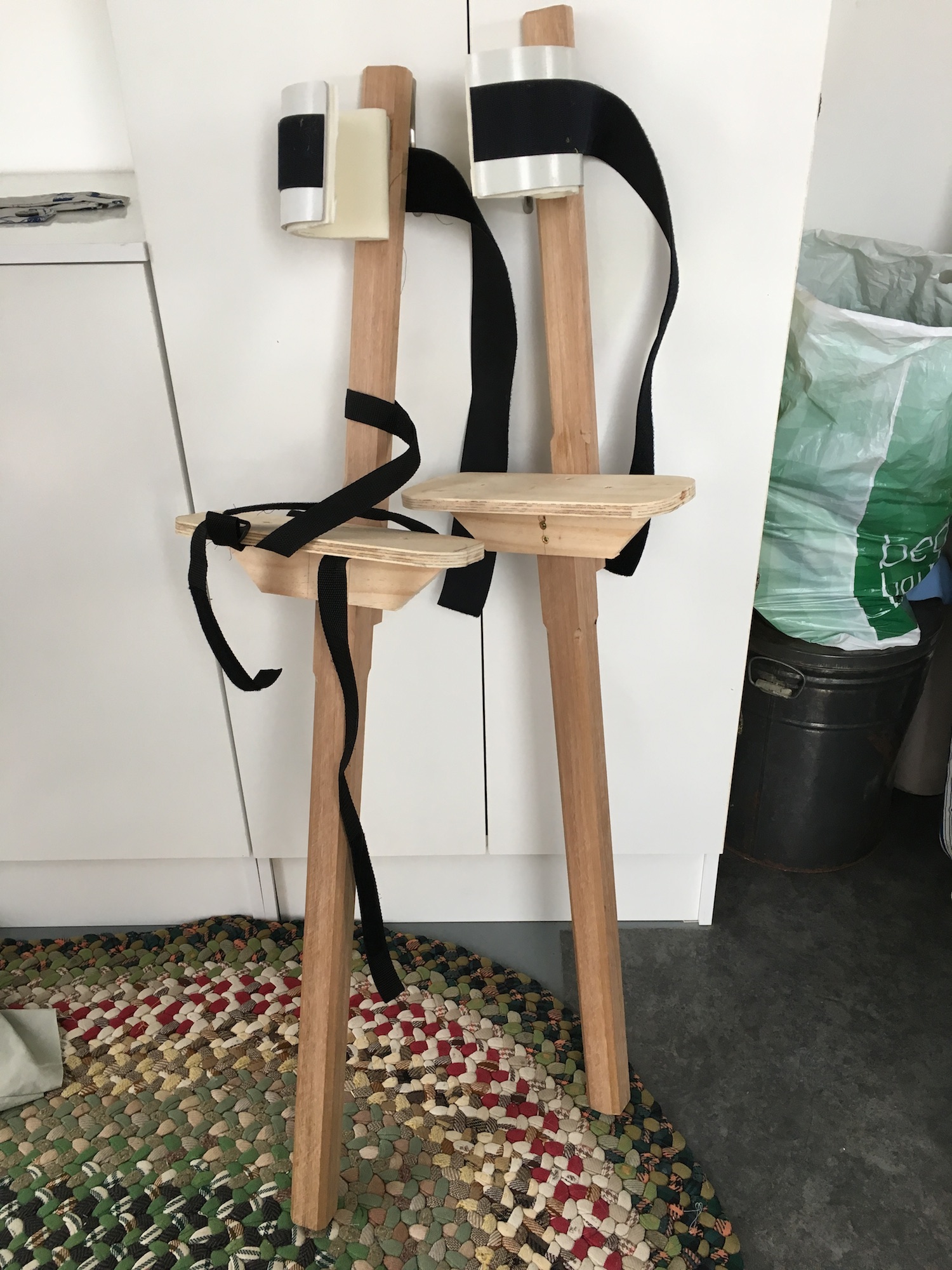
The stilts nearing completion.

The stilts nearing completion.

When I was about ten, my dad built me a high bar in the back yard so I could practice gymnastics at home.

My mom hated it. She refused to watch as I flipped and swung and tumbled through the air, with no crash mat below me. I used that bar a lot. Never once did I injure myself or even come close (the blisters don’t really count).

What mom didn’t know was that before the bar, I did my aerial work in the woods across the road—flipping and swinging around tree branches that bounced and swayed under me, with branches below to whack into if I should fall. I once found two branches that were the perfect distance apart to serve as uneven parallel bars. I couldn’t resist, though the branches were a little to big around for me to get a great grip on them. And they were at least twice as far off the ground as a real set of bars.

I stuck to moves I was comfortable with, but one involved being completely airborne and catching the upper bar.

But that upper branch was just too big. My hands slipped. I only just managed to dig the nails of one hand into the bark and hold on while I scrabbled around with my feet to find the lower branch (at this point, my mother, who reads my blog, is cringing and thinking she should have just locked me in my room instead). I admit that I clung to that branch for five minutes before I could bring myself to let go enough to climb down.

I write this as one who is now the mother of an equally adventurous daughter, not to scare other parents into locking their children away from trees, but to point out that children will find adventures. They will find ways to challenge themselves. By enabling our children’s adventures, we have an opportunity to manage those adventures.

Maybe mom didn’t like the high bar, but it was a heck of a lot safer than the tree branches.

My daughter is currently building herself a set of strap-on stilts, with the help and advice of both her parents. These stilts will replace the ordinary stilts we helped her make years ago, when she felt her first pair of (rather short) stilts weren’t challenging enough anymore. I was terrified by the tall stilts when she first got up on them. She fell again and again, but soon had them on their tallest setting and was playing soccer in them.

Now she wants to be able to juggle while walking on stilts. Her first idea was to tie her regular stilts to her legs. Not a good idea. Her father suggested she make purpose-built strap-on stilts.

I’m worried about the strap-on stilts—the only way to get off them is to fall—but because we are helping her address her need for more physical challenge, we are managing the risk. Elbow, wrist, and knee pads and a helmet will reduce the damage when she falls. Parental guidance on construction will ensure the stilts are strong enough to take the forces she’ll put on them.

It will be tempting to close my eyes the first time she gets up on them. But I owe it to the girl on the high bar to watch.
Spinning House, Spinning Life

Photo: OMI International Arts Center; http://artomi.org/page.php?Alex-Schweder-Ward-Shelley-233

Photo: OMI International Arts Center; http://artomi.org/page.php?Alex-Schweder-Ward-Shelley-233

In looking for something in the news that wasn’t depressing on this rainy Friday, I found an article about this delightful piece of art by Alex Schweder and Ward Shelley—a house that spins in the wind and tilts as it occupants move around in it. They built it, then moved into it for five days.

The article about the house in the New York Times includes observations written by the artists during their time living there.

Shelley’s final observation: “We’ve stayed spinning most of this breezy day. Four-and-a-half days in, I can’t say something definitive about this spinning. It is the prime feature, and joy of life inside this machine. I know it could become too much of a good thing. For now, though, it is what I like best.”

Isn’t that a great encapsulation of life?

The spinning is the prime feature and joy of life–the crazy every day whirlwind of school, work, family, friends, sun, snow, and rainbows. The emotional highs and lows as we spin in and out of the metaphorical sunshine are what give life spark and colour. The spinning keeps us on our toes and interested, because the view is ever-changing.

But spin too fast, too out of control, and we’re liable to get dizzy and fall. We won’t know how to step to go in the direction we want to move. We might lose track of where we are altogether.

I would love to see this house in action, and maybe even spend time in it. Alas, I’m unlikely to find myself at the OMI International Arts Center in Ghent, New York in the next two years while the house is on display there. I suppose I’ll have to remain in my own spinning life instead.

Tease

2016-08-03 14.58.18The starlings mutter. The sparrows scold. Magpies warble on the fenceposts.

Daffodils stretch skyward.

I pace the garden, pulling weeds. I finger the newly arrived seed packets.

The goats stand sentinel on the hill, noses quivering with the smell of soil.

Buds swell on the fruit trees.

We are all impatient. Waiting.

The sky is a little bit lighter for a little bit longer than it was yesterday.

The sun, when it shines, is warm.

But we know it is a tease.

Clouds boil to the south, dark and heavy with rain, maybe even snow, if you believe the forecast.

The northerly breath of spring whisks around to the southwest, knife-edged and cold, reminding us that winter still rules.

We bide our time by the fireplace, planning the new season’s garden while rain and sleet lash the window.

Smell of a Memory

2016-07-29 13.55.18I was hanging up laundry early yesterday morning, when I caught a whiff of the past.

I don’t know where the smell came from, or whether it was even real, but there it was—the unmistakable smell of our house when we moved into it eleven years ago.

More than one previous owner ignored maintenance on the house. Today, I can’t believe we were so desperate to have bought it. The owners before us allowed the roof to leak, the toilet to leak, the piles and weatherboards to rot. They covered the smell of rotting carpets with air fresheners and sweet-smelling flowers.

The first thing we did, even before moving in, was to remove the carpets and air fresheners. Then I attacked the highly perfumed (and disgusting to my nose) flowering shrubs by the door.

We quickly improved the smell of the house (and fixed all those leaks and rotted bits), but it made a strong impression on me. On chilly winter mornings like the day we moved in, I can still smell those awful flowers.

Noisy Neighbours

2016-07-27 14.13.35Most city dwellers don’t think of the country as a noisy place, but it can be. Yesterday I was working away at my desk when I heard a deep rumble. My first thought was earthquake, then I thought it must be a milk truck. But the rumble peaked then faded, peaked and faded. I looked out to see the neighbour’s sheep running laps back and forth along our fence line. Several hundred sheep thundering back and forth, for no apparent reason other than it was fun.

It’s a noisy time for sheep, even without running races. It’s lambing season in our neck of the woods, and lambs are noisy. The ewes get noisy, too, as they call back to their bleating lambs.

And there’s no point in telling these neighbours to quiet down—they never listen. 😉

Seeds! Seeds! Seeds!

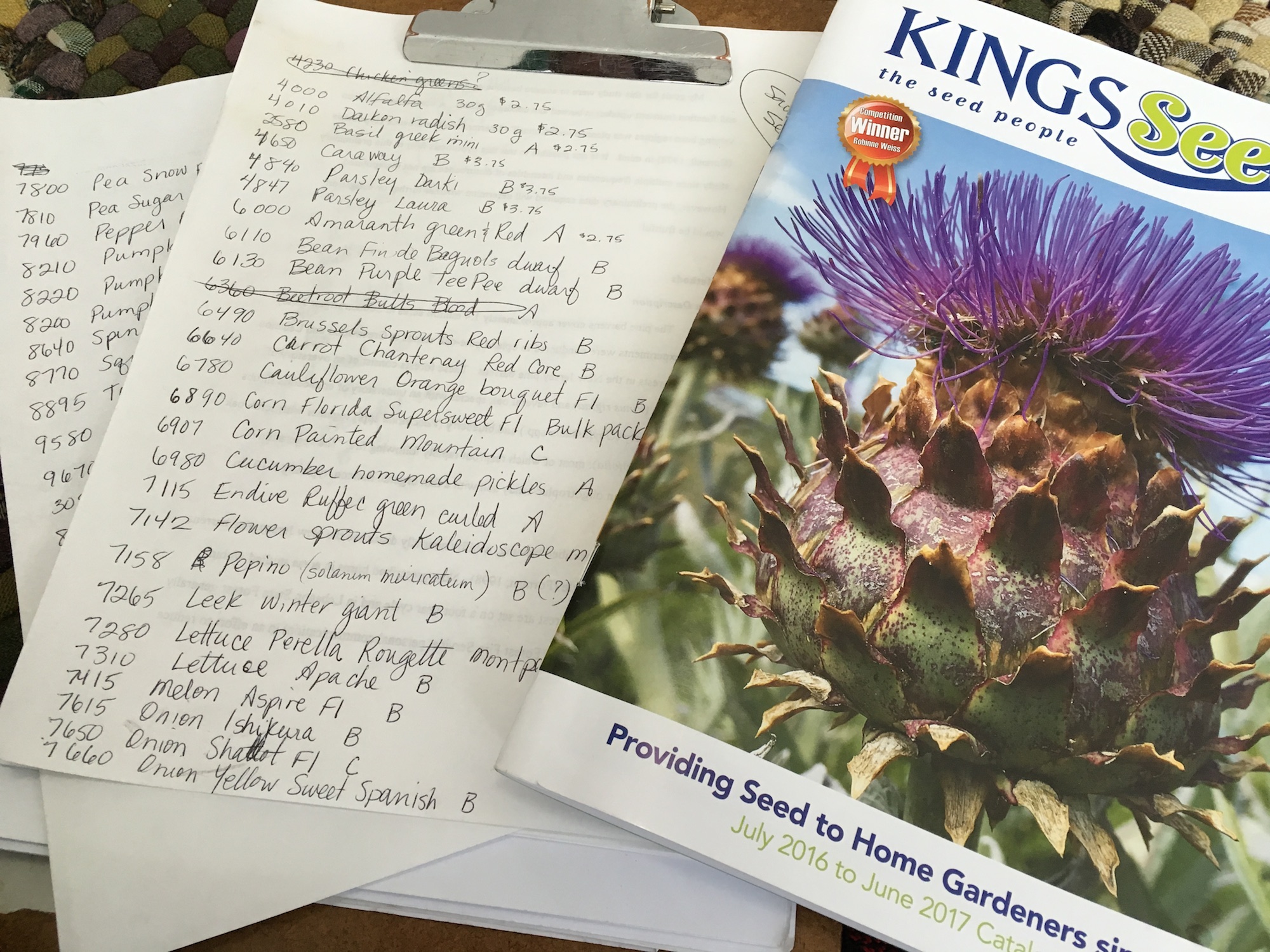
2016-07-23 11.47.41It’s that time of year! The seed catalogue is here, and I’m dreaming of melons, tomatoes and corn.

The garden is all about possibilities at this time of year.

How about an orange sweet pepper?

My favourite squash isn’t available anymore? Well, maybe we’ll get Jade F1 instead?

And maybe an Australian Butter pumpkin, just for something different.

Endive. Definitely endive this year.

Orange cauliflower? Why not?

And I’m sure I can squeeze in this Greek mini basil along with the other three varieties. It’s mini, right?

So many plants, so little garden space…I’m sure that long about October, I’ll wonder what I was thinking back in July when I bought all these seeds. But I also know I’ll fit them in somehow.

July is the month for dreaming big.

Playgrounds of the past


2016-07-14 20.33.37cropsmThough we are back from our visit to the US, there are a few blog posts inspired by the visit still to come over the next few days…

The playgrounds I enjoyed as a child are long gone.

The monkey bars over asphalt have given way to simpler structures over more forgiving surfaces. The high speed pop-your-partner-into-the-air seesaws have been replaced by almost immobile rockers on springs.

Much of this is probably good—I knew more than one kid who broke an arm falling off the monkey bars, and I remember the pain of a finger pinched in the seesaw’s fulcrum.

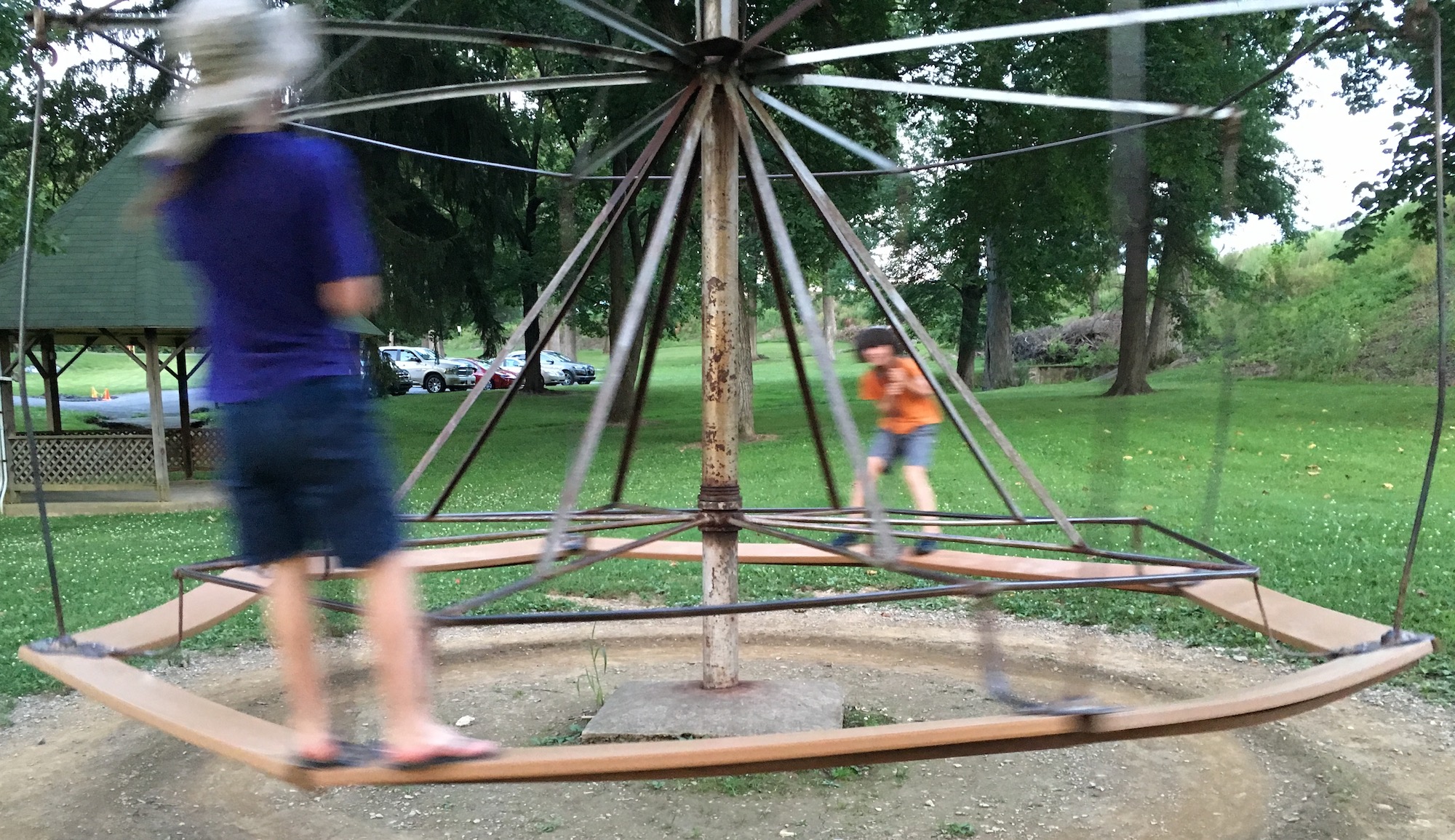
How this merry-go-round has escaped the fate of other aging playground equipment, I don’t know (I shall keep its location secret, lest the safety police go looking to remove it). I remember playing on it as a kid, and my mother does too. By that measure, it must be at least 70 years old.

It still spins, though the ride is rough and squeaky (it was rough and squeaky 40 years ago, too, as I recall). The wooden benches have been replaced…more than once, I’m sure.

But even after 70 years, it’s still fun, as proven by my own kids.

Winter Blooms

2016-07-07 11.00.58 smI miss a good northern winter, with snow, but there is something to be said about the mild winters we have here.

One of the things I appreciate about our winters is the flowers that bloom then.

There aren’t many—allysum, calendula, and pansies flower year-round and grow largely as weeds in my garden (though I usually weed around them, and try to avoid pulling them out).

Camellias and snowdrops bloom in late winter. They provide lovely winter flower arrangements.

And then there’s the mystery iris. This plant wasn’t apparent in the yard until well after we thought we had discovered all the bulbs planted by generations of owners before us. It sprang up in an area we had cleared of plants, and I nearly pulled it out.

I’m glad I didn’t. This beautiful little plant is mostly foliage, but produces short blue flowers all through winter. Another lovely bloom for winter flower arrangements!

Fighting Over Firewood

2016-07-07 10.59.35 smI don’t know whether to count myself lucky, or to be disappointed.

My kids love to split firewood and kindling.

They’ve enjoyed this for several years, but now they’re actually old enough to do a decent job of it. And they jostle with one another to be the one to do it.

The problem is, I enjoy doing it, too. There’s something satisfying about swinging an axe and watching a log split in two under your blow. It warms you up on a cold day, and is appreciated by everyone as we sit by the fire in the evenings.

Now that the kids do the job most days, I have more time to do other things. That’s great, but it leaves me with no excuse to avoid the chores I don’t enjoy doing. It would be much better if the kids would start doing the really lousy chores like cleaning the bathroom, scrubbing the floors, and mucking out the animal sheds. Hmm…wonder how I can get them to do those…

Where Grass is King

IMG_1589 smOne of the things I’m struck with every time I return to the US is the prevalence of the expansive lawn. I don’t know if that’s all of the US, or just Pennsylvania, but there’s a lot more acreage in lawn here than there is back in New Zealand.

I appreciate a good lawn—for picnics and games, nothing beats it. But I also believe in making good use of land, and I believe there is such a thing as too much lawn—especially in Pennsylvania where much of the lawn covers land that was once highly productive farmland.

How much energy and effort are put into the maintenance of vast expanses of grass that no one so much as steps foot on except to mow? What if those expanses were used instead to grow vegetables or were restored to native habitats? How much space in our suburban environments could we use more productively by eliminating the lawn? How much expenditure of fossil fuels and fertilisers could we avoid? How many native plants and animals could we benefit?

I don’t have answers to these questions, but my gut feeling is that in a world with an ever-increasing population, wasting space growing unappreciated Kentucky bluegrass is not sustainable.

At Crazy Corner Farm, we try to make the best use of the entire property, and much of it is devoted to food production or native plantings. We also have a sizeable lawn, but that grassy area is heavily used by the kids for all manner of play. Once the kids are gone, the grass will almost certainly give way to something more productive. We are forever looking to make more efficient use of the space we have. I think in future, we are all going to have to do the same.