Where the Sidewalk Ends

2016-09-29-18-24-21There is a place where the sidewalk ends
And before the street begins,
And there the grass grows soft and white,
And there the sun burns crimson bright
And there the moon-bird rests from his flight
To cool in the peppermint wind.

Many years ago, when my husband and I lived in State College, Pennsylvania, before children, we used to take long walks out of the neighbourhood and into a wild patchwork of agricultural fields and scrubby woods that stretched between the University and the sprawling suburbs of town.

At the edge of the neighbourhood, where the sidewalk gave way to a gravel path maintained only by the steps of those who walked their dogs there, someone had poured a small section of concrete containing a brass plaque inscribed with Shel Silverstein’s famous poem, Where the Sidewalk Ends.

Let us leave this place where the smoke blows black
And the dark street winds and bends.
Past the pits where the asphalt flowers grow
We shall walk with a walk that is measured and slow,
Add watch where the chalk-white arrows go
To the place where the sidewalk ends.

State College has no black smoke, and the streets are bright and lively, but the presence of the poem was magical, the sentiment perfect as one stepped away from the cars and buses and the music booming from student flats, and into the fields beyond, where grasshoppers and bees formed the loudest chorus. Town melted away. We could walk for hours, and always returned calm and refreshed.

When I was a student at the University of Michigan, my most prized possession was my bicycle. It was old and ugly, but it was my ticket out of town. When the streets and noise became overwhelming, I would hop on my bike and ride blindly until I reached the edge—the place where the sidewalk ended. Surrounded by fields of corn and wheat, I would throw myself into the grass at the side of the road and listen to the crickets until I regained my equilibrium, until I could face the city again.

Last year, when my daughter had band practice at an awkward time on a Friday—too early to go home after school, too late to go directly from school—we would take walks, always on the periphery of town, seeking those places where the sidewalk ended. We walked residential streets that gave way to sheep paddocks and parks, industrial zones that melted into agricultural crops.

For me, the place where the sidewalk ends is literal—my place for peace and reflection is invariably outdoors, far from cars, buildings, and other markers of civilisation. But I think Silverstein left the door open for the sidewalk to end in other places—places where moon-birds cool themselves in peppermint winds. The sidewalk can end inside us, too—in imagination, in meditation, in the green space we save for ourselves in our own souls. Wherever the sidewalk ends, our spirits refresh themselves—we reflect, we stroll, we find silence.

Where does your sidewalk end?
A New Oven

2016-09-24-12-46-29

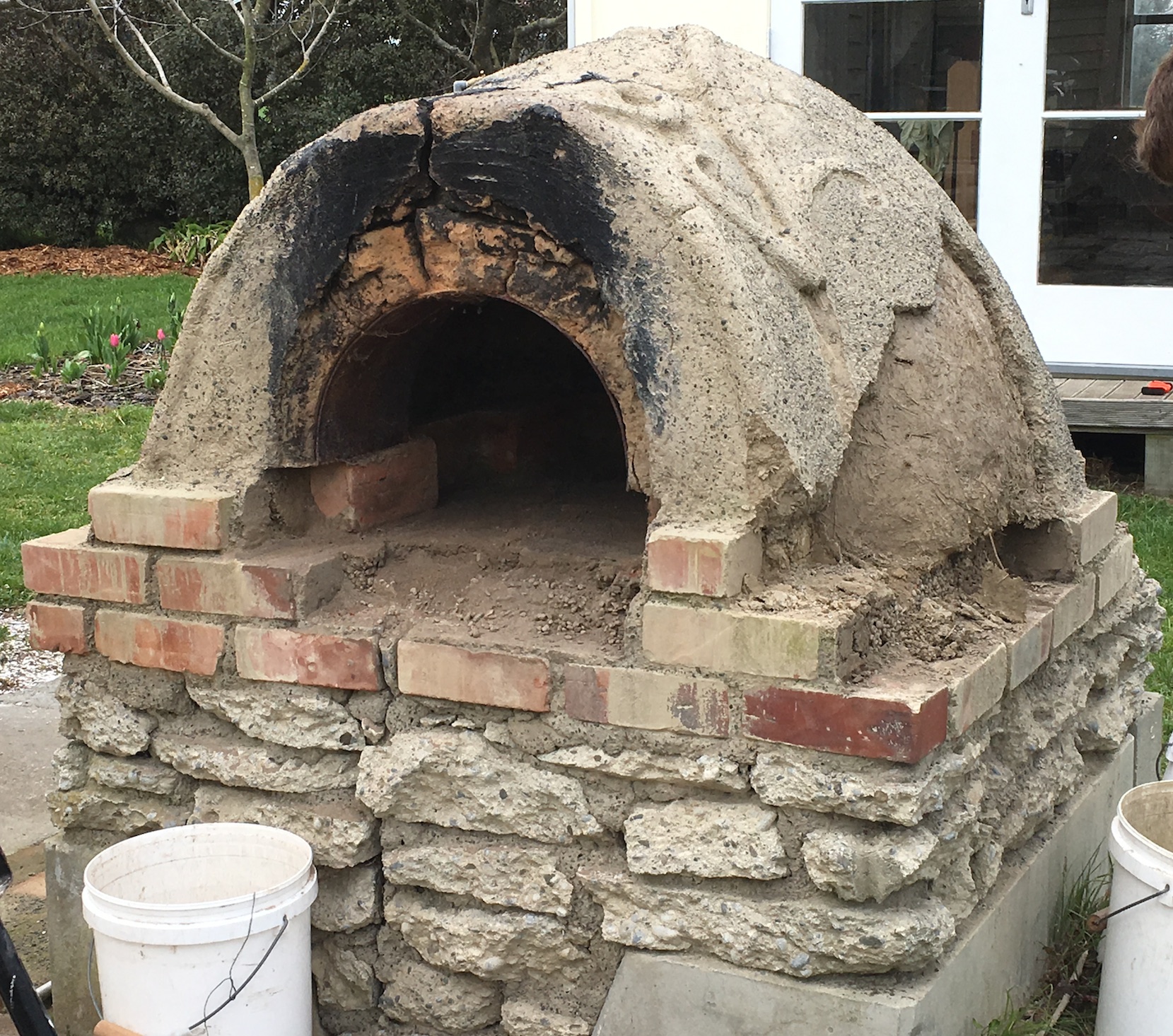
Partly deconstructed old oven.

The old bread oven was almost ten years old. Theoretically, it might have lasted longer, but earthquakes and aging bricks took their toll. A crack split it top to bottom, and we regularly had to pick gravel out of our bread.

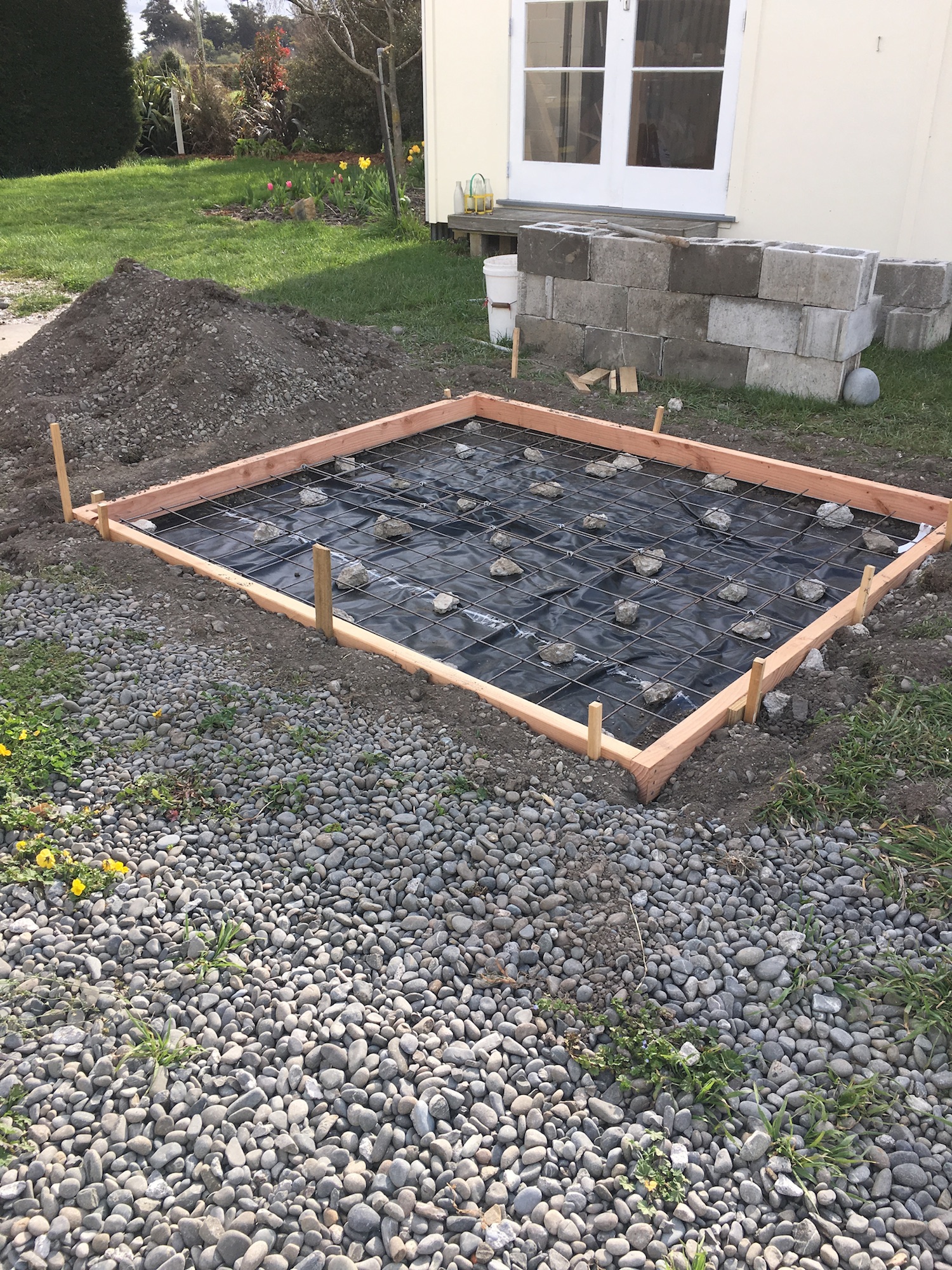
So the kids spent last weekend dismantling the old oven to make way for a new one. This one will be quake-proofed with a reinforced concrete base, and include such luxuries as an ash pit, a chimney, and a roof.

2016-09-28-16-43-21

Ready to pour the new foundation.

The bread oven is my husband’s project—he’s the family builder and the bread baker. But all of us will lend our muscles to the effort. We’ll mix concrete, haul bricks, and provide whatever brute labour is necessary.

And all of us will enjoy the breads, cakes, cookies, and dinners that come out of it.

Mmmm…I can taste them already!

Ruthless

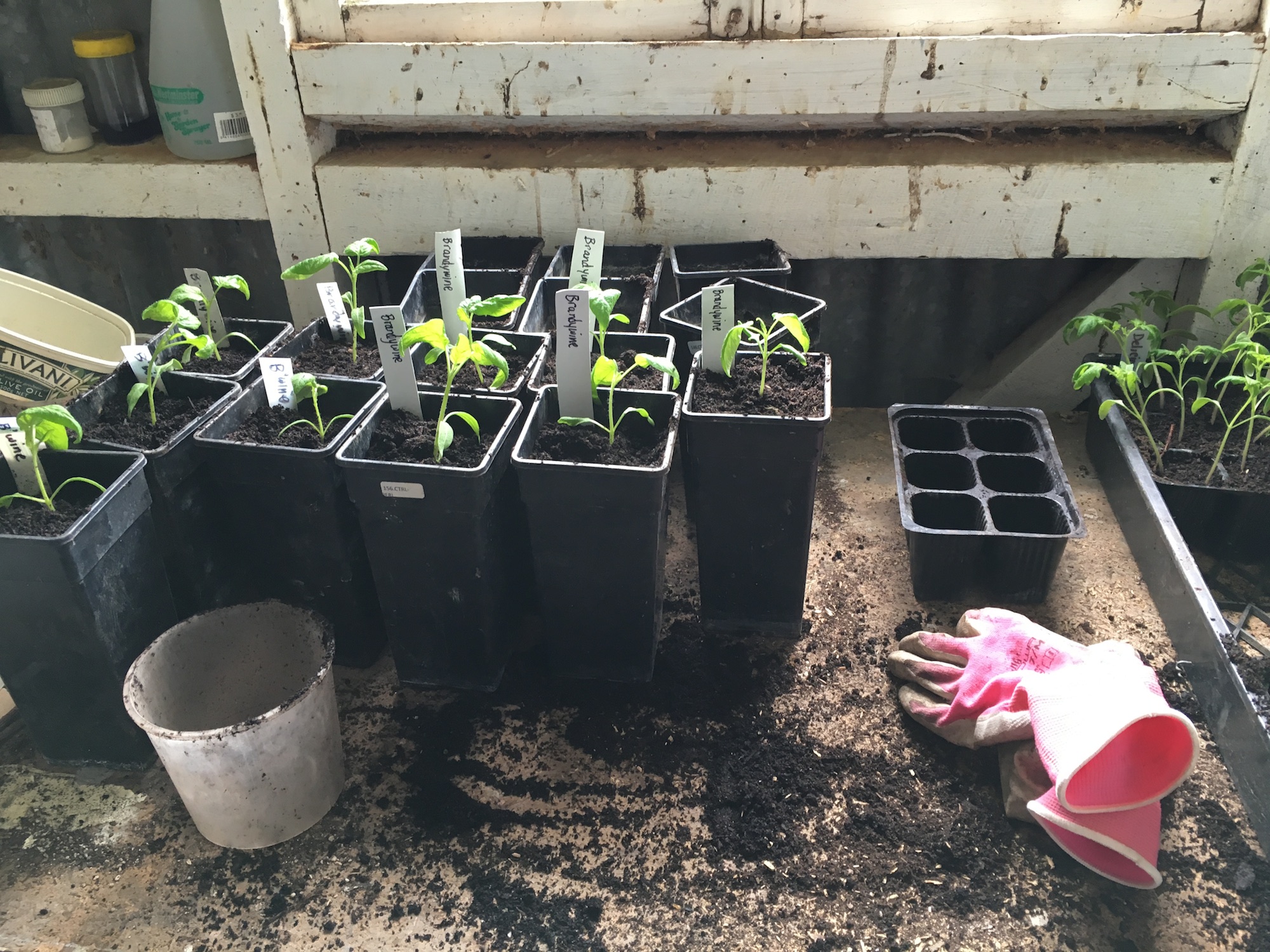
2016-09-26-14-21-42I started potting up the tomatoes today.

I start my tomatoes in six-packs (the plant kind, not the beer kind), planting two seeds per cell, to ensure I get at least six plants out of each six-pack. And truth is that I probably only need six plants out of each six-pack. Having two plants in a cell gives me the opportunity to cull small or weak plants.

Except that, faced with two perfectly fine plants in a cell, I can’t possibly cull one, so I pot them both up separately. I’m just not very good at being ruthless and culling the plants I don’t need.

Which is how I end up, every year, with nearly twice as many tomatoes as I have space for in the garden. I give away quite a few, and always save some to replace the ones that are inevitably killed by a late frost or the neighbour’s overspray. Still, some years I end up throwing a dozen or more on the compost pile after they’ve languished in their pots unplanted until nearly Christmas.

This year, I purposely planted fewer six-packs than I usually do—if the plants aren’t there, I can’t pot up too many, right? But somehow, I still find myself with over a hundred tomato plants. That’s much better than previous years—I have space for 80 tomato plants—but it’s still probably more than I’ll use, even after losses.

With luck, though, I’ll be able to find homes for all the tomatoes, either here or in someone else’s vegetable garden, and I can avoid the annual cull.

Beetsteak

beetsteakI was clearing a garden bed today and pulled out a beet—forgotten in the masses of summer produce—left from last year’s garden. It was the size of an adult’s head, with dozens of sprouts coming from it.

I decided to take it to the goats, who love beetroot. On the way, I showed it to the family—it was impressive, after all.

My husband wouldn’t let me feed it to the goats. He was curious to know just how woody a beet that size would be.

So he made beetsteaks. He used our big pumpkin knife to slice it into giant slabs, then steamed them and grilled them with a spicy marinade.

The result…

Edible…mostly.

But I think I’ll feed any other beets this size to the goats next time.

Order from Chaos

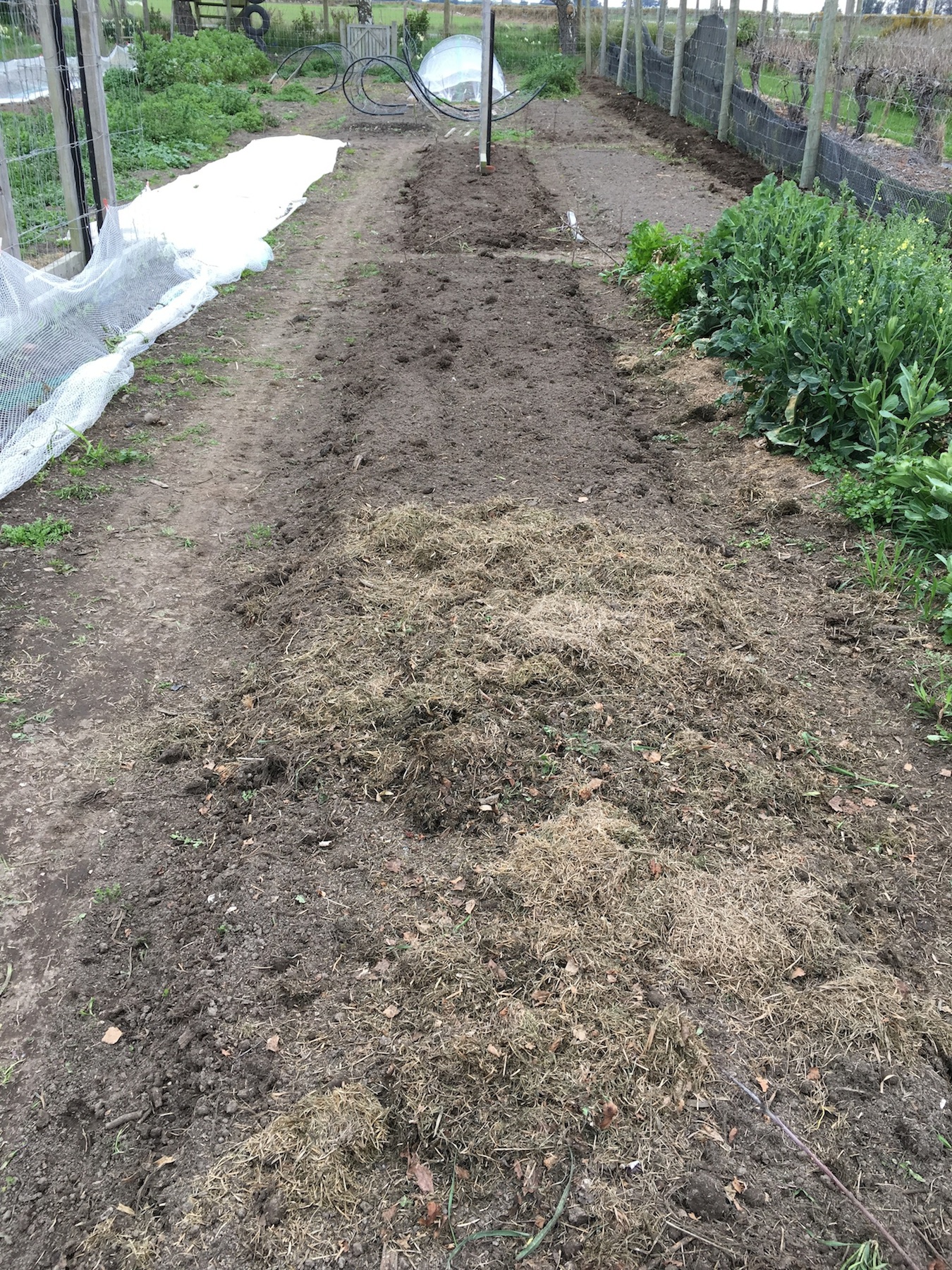
2016-09-24-15-04-00There’s something pleasing about the garden as I start to prepare the beds. I can’t prepare the whole garden at once—it’s simply too big—so I do it bed by bed. Two or four a weekend, until all thirty-two are done.

I’ve planned the garden over winter, so I know what will be planted in each bed. I choose which beds to prepare each weekend based on when each crop gets planted. So I end up with a patchwork of beds—some waist-high in weeds, others beautifully prepared and ready for planting, some already planted. Every weekend, the weeds are fewer and the tidy beds more numerous.

Little by little the work gets done, the garden gets planted, until that magical day in mid-November when it’s all done, and neat rows have replaced sprawling weeds.


Sprouts

2016-09-18-09-18-09It had been years since I grew sprouts. There wasn’t really a reason for my neglect of these easy-to-grow vegetables. I just didn’t do it.

But I was inspired by a poor winter garden and a glossy seed catalogue to try sprouts again. I ordered alfalfa and radishes for sprouting.

The alfalfa is what I remembered—earthy, a bit grassy. Good on a sandwich.

The radishes? They are fabulous! In a salad, on a sandwich, or in a stir-fry they add a crunchy zing. Just like…well…radishes, except they’re ready to eat in a week, and require no cleaning or slicing.

I’m sold. I’m sure, when the spring vegetables start to come in, I’ll forget all about sprouts, but for the moment, I’m making sure we have a regular supply of them.

Walk Away

2016-09-14-07-08-19Working for yourself, you have to develop discipline. You’ve got to be able to knuckle down and do what needs to be done, as though there were a boss standing over your shoulder. You’ve got to clock in at work, and spend the day there.

But sometimes the best way to get something done is to walk away from it.

I spent the first three days of this week on the West Coast, doing some educational programmes for schools. The programmes took up the mornings, but by early afternoon, I was done.

Each afternoon, I thought to myself, “Right. I need to get some writing done now. I need to make use of my time.” And each afternoon, I sat at the computer for a few minutes, then went outside for a long walk.

I hardly wrote a word, and yet…

Those long walks were perhaps a more productive use of my time. I was in places I don’t get to go to very frequently, enjoying an environment wildly different from my office. A different part of my brain was being stimulated on those walks—a part that was more thoughtful, perhaps. More open to emotion and suggestion.

That part of my mind started churning with thoughts and ideas about a novel I wrote last year. I hadn’t thought about the story for months. Though I liked the book, its sequel wasn’t going well, and I had set it aside while I wrote something entirely different. Every time I considered working on it, I felt I was up against a wall. Something wasn’t quite right about my main character. I had missed something, and wasn’t sure what it was.

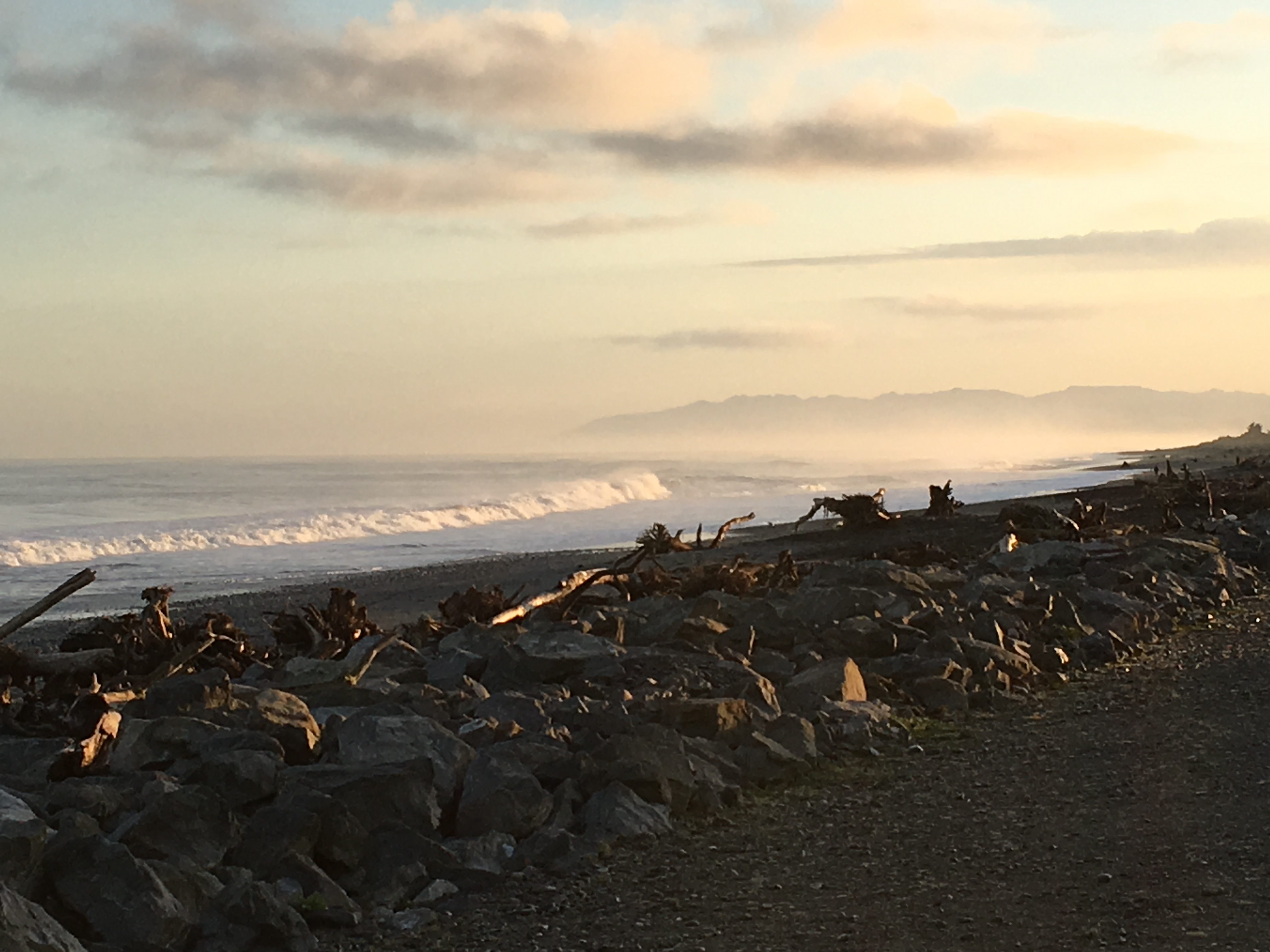
But as I walked the beach, my character walked with me. She told me about her dreams and aspirations. She told me about her childhood, and about what made her become the person she is. She explained to me why she can’t do what I’ve asked her to do in the second book, and why and how she will rebel against my expectations.

I scribbled pages of notes from our ‘conversation’, and I’m looking forward to getting back to her story and finishing it the way it should be finished.

So my ‘wasted’ time was not wasted after all. Had I sat in my hotel room and forced myself to put words on the page, I would never have found the right words for the page.

Sometimes the best thing you can do is walk away.

There and Back Again

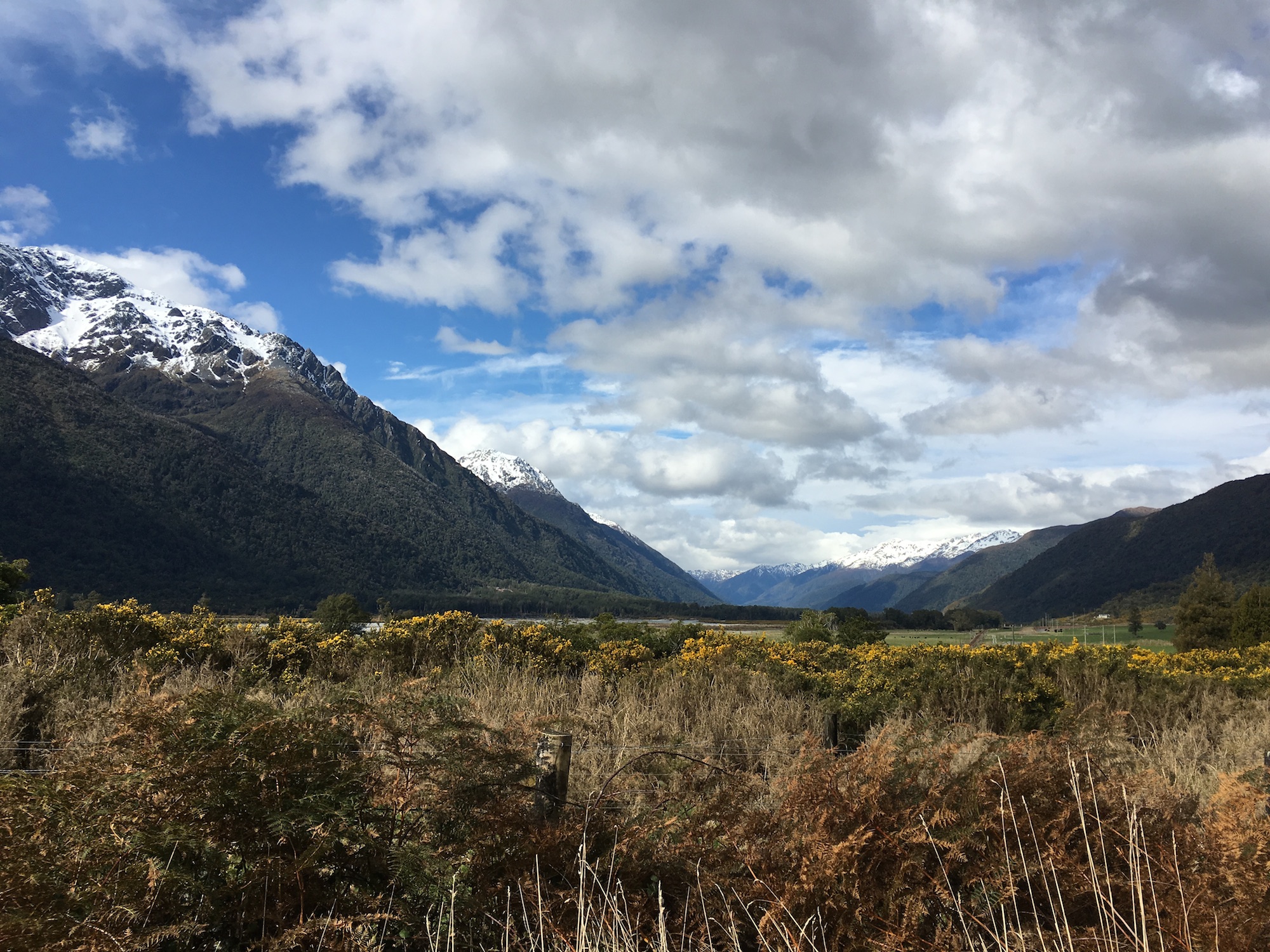
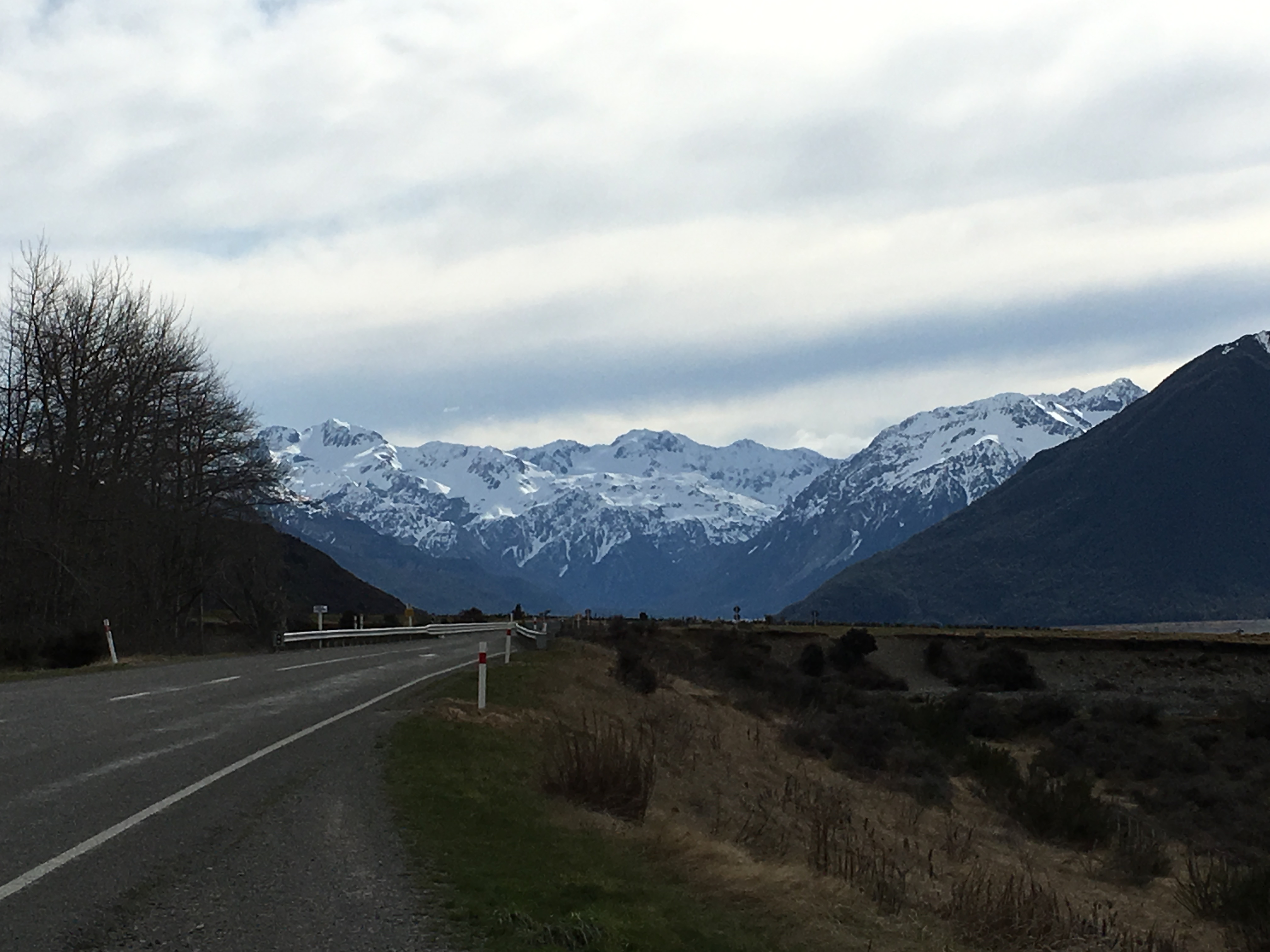
Looking up Otira Valley

Looking up Otira Valley

I slowed into the first curve and began to smile. Within a few short kilometres, the smile had widened to a grin that would remain for nearly two hours.

I will never tire of the drive up and over the Southern Alps. Especially the homeward drive, from Kumara on the West Coast to Springfield on the Canterbury Plains. The first time I made the trip was at night under a full moon that sparkled off the river below and made the snowy peaks shine. How could I not fall in love with it?

I love the first half of the drive, up Otira Valley—the belted galloways grazing in the paddocks on the lower slopes, the rainforest crowding in on the road, the long vistas up-valley to snowy peaks in the distance.

And then, when the road becomes steep and the valley closes in, the craggy peaks loom so close, you have to press your face to the window to see the tops.

And the water! Impossibly long falls coursing down forested slopes, spurting from every little dip and fissure along the roadside, and even soaring out over the road on a concrete sluice.

And then there is the road itself—steep, and as curvy as ribbon candy. There’s the cantilevered half-bridge, and the viaduct that soars out into space over an enormous landslide.

There is the lookout at Death’s Corner, where you can stop and be fleeced by a gang of endangered alpine parrots.

And when you reach the top and plunge down the other side, a whole new set of marvels awaits in the dry, brown, tussock-covered mountains of the eastern ranges.

There are the mountains of scree that look like they’ve been dumped by some enormous gravel truck. There are the limestone outcrops standing like a geologic Stonehenge. There are more snowy peaks, rising out of mounds of alpine tussock. There are lakes hemmed in by massive landslides.

Rear view.

Rear view.

Coming home from the West Coast yesterday afternoon, I was still grinning as I drove through the last of the hills. When I glanced in the rear view mirror, I couldn’t help laughing out loud at the sun glinting off a rank of snow-laden peaks behind me.

Even after nearly twelve years here, I continue to live in wonder at my luck—that I am permitted to call this incredible land home.

Bealey Valley, Arthur’s Pass, New Zealand

2016-09-12-13-06-26-smStop.
Soak up the still silence.

Except that it is neither still
Nor silent.

Wind tumbles
The leaves of the trees.

Overhead in the branches, sounds
The pebble-in-a-still-pool languor
Of the bellbird,
The electric zit-zit
Of the rifleman.

Nearby, a small stream
Hisses over the rocks.
And from farther away
Comes the deep rumble
Of the river
Shaking the stone
As it crashes
Headlong
Down the mountain.