Rain

2016-02-24-20-57-32I wake
To the sound of rain.

It is not morning.

It is the rain
That has dragged me from sleep.

No.

Not dragged.

It has nudged me awake
Accidentally
Like my husband does
When he comes to bed
(Night owl that he is,
And me an early riser).

Like my husband,
The rain has lain down beside me.
A comfort,
Knowing he is there,
Knowing the rain is there
Watering the garden,
Making the grass grow in the paddock,
Tamping down the dust.

The Best Laid Plans…

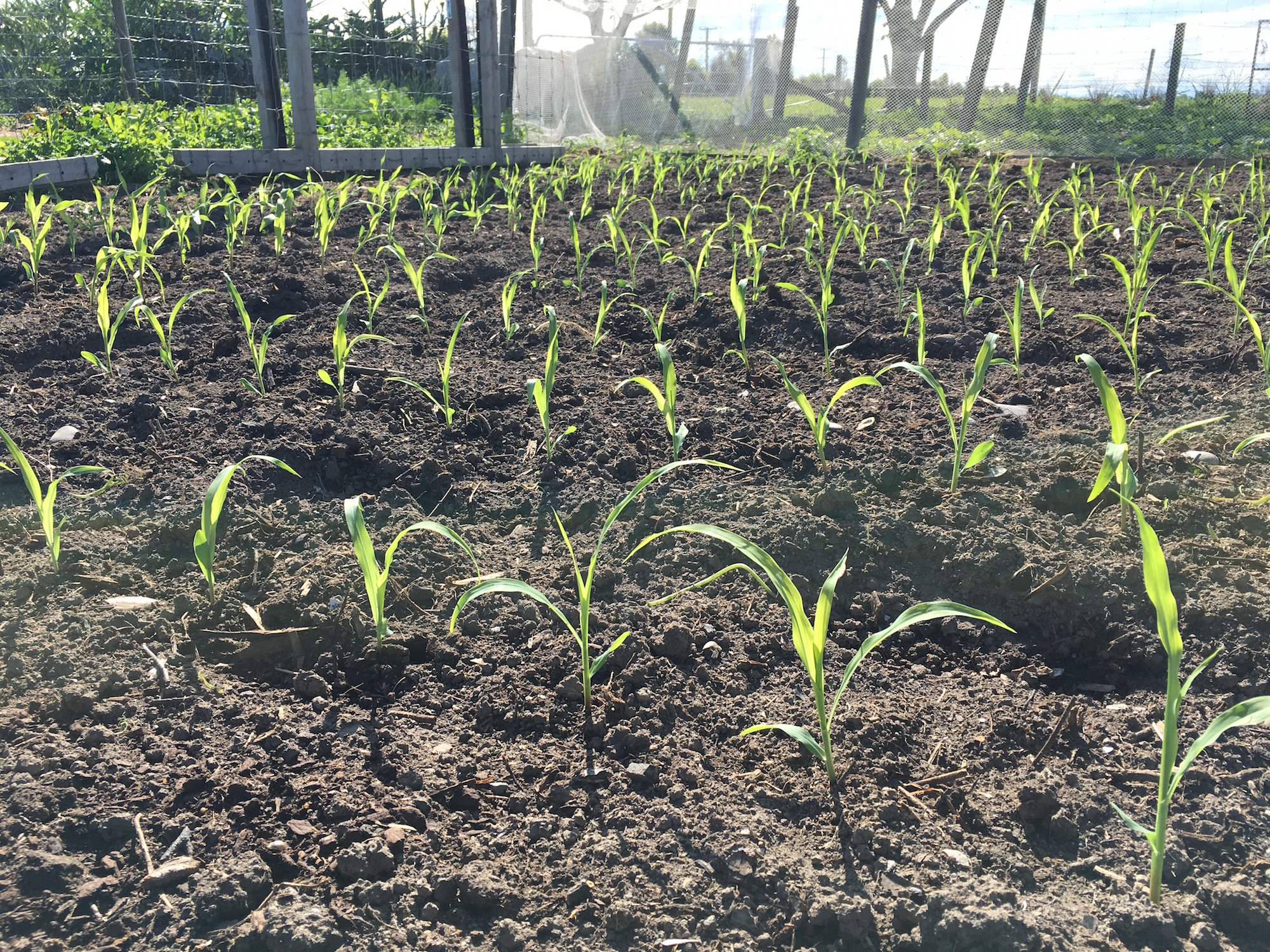
2016-11-05-16-46-35-smBack in mid-August, I blogged about the to-do lists that get me through spring. I make a list and stick to it. That way, everything gets done.

But what if the plants don’t pay attention to the list?

I try to maintain consistency from year to year, and I document planting dates, plant-out dates, potting-up dates. So I know that if I plant my first batch of corn in trays on the 15th of October, it will be just ready to plant out on Canterbury weekend (around the 15th of November).

But this year, the corn was ready to plant out by the 30th of October.

The corn bed wasn’t ready yet. It’s always the last one I prepare, because it’s usually the last one to be planted out. I took the trays of corn seedlings out of my office, so they would have chilly nights to slow down their growth.

It didn’t help. The corn kept growing at a ridiculous rate.

I considered planting the corn in the beds designated for pumpkins, because they were ready. But that would have meant planting pumpkins in the same beds they were in last year. I had a lot of pest problems in those beds last year—I’d be foolish to plant the same crop there again this year.

Last weekend I got frantic. If I didn’t get the corn out to the garden in the next week, it would die in those trays.

Wednesday, I quit work at 2 pm and started preparing the beds. I got them weeded, and the soil turned. Then I realised I was going to need to turn the compost pile in order to get compost for those beds.

Turning the compost pile usually takes at least two weekends of back-breaking work.

This morning, I started on the compost pile around 6.30 am. By the time I’d turned a third of it into the empty compost bay, I was completely exhausted. And I’d only managed to get five wheelbarrow loads of compost for the corn (I really wanted nine).

So I compromised. Five loads of compost would have to be enough. I turned it in, raked the soil smooth and called the beds done. The corn was all in the ground before lunch. Whew!

Of course, it’s a week early. I have learned the hard way not to plant out too early here. My garden sits in a frost pocket. Chances are, the corn will get nipped by frost, but it was either that or watch them die in trays. Crossing my fingers and hoping for warm weather!

A New Gardening Lexicon

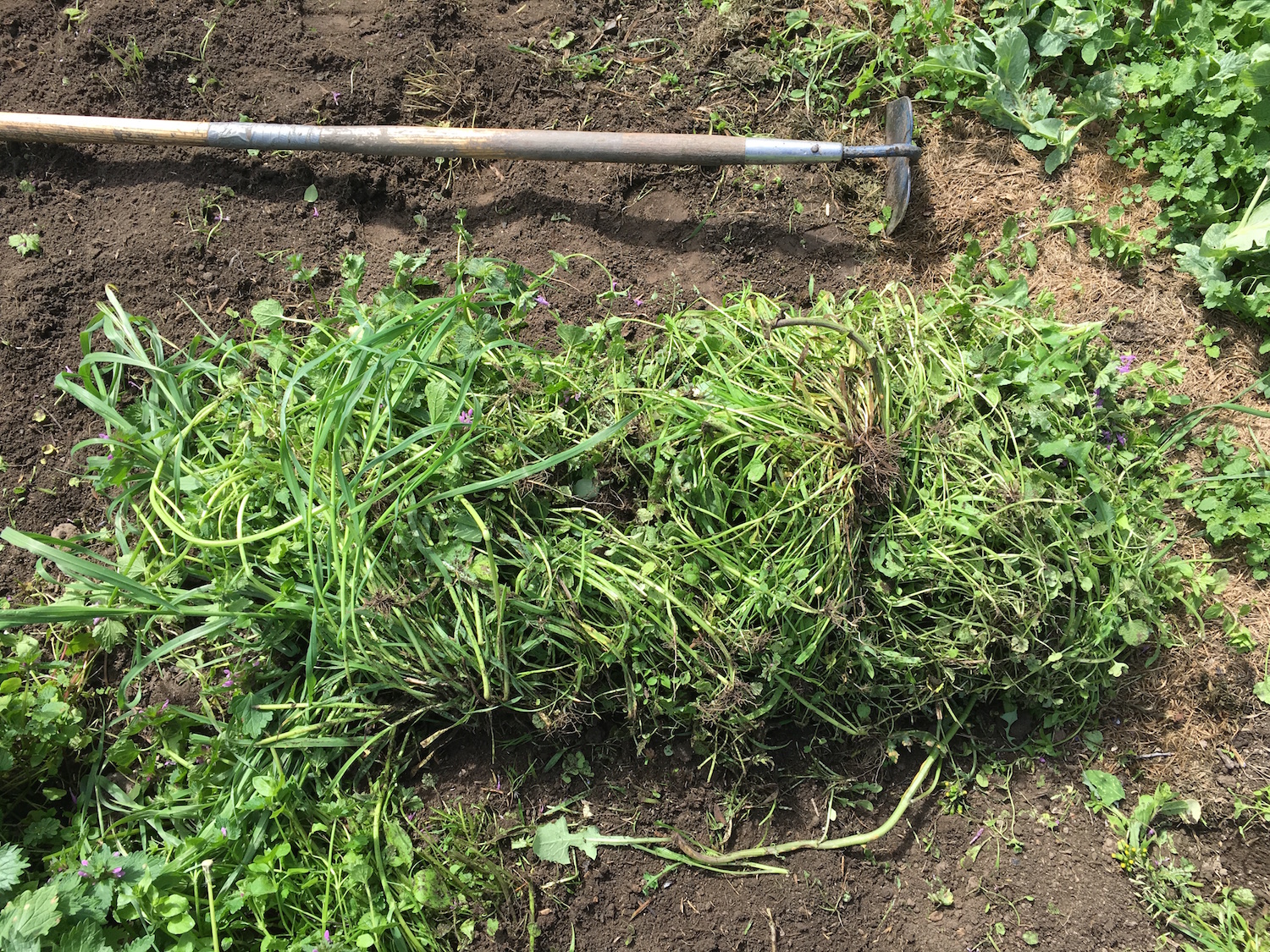
A nice tidy rolag.

A nice tidy rolag.

I’ve noticed that the world of extreme gardening doesn’t have a very good vocabulary. There just aren’t the words to express the particular situations, actions, and states one experiences.

So I’ve developed my own gardening lexicon, to try to fill that gap in the English language. Here are a few of my words:

Chook—verb. To toss something to the chickens. E.g.: Just chook those weeds—they like them.

Chookable—adjective. Suitable for the chickens to eat. E.g.: Those weeds are chookable.

Dinger—noun. A rock in the soil, accidentally struck by a gardening tool.

Goat—verb. To toss something to the goats. E.g.: Goat these branches—they like them.

Goatable—adjective. Suitable for the goats to eat. E.g.: Those branches are goatable.

Grunter—noun. A weed that requires significant effort (and usually a tool) to pull.

Hum-dinger—noun. A particularly large rock in the soil, accidentally struck by a gardening tool.

Pop bead—noun. Insect pest. Name comes from the sound it makes when squished between the fingers.

Rolag—noun. A term borrowed from weaving. Weeds that have been hoed into a tidy roll, ready to be lifted into the wheelbarrow or thrown on the compost heap.

Squeaker—noun. A nest of mice, when overturned accidentally by a shovel or spading fork.

Superman tree—noun. A tree or shrub that looks difficult to cut, but is actually easy to cut, making the cutter feel like Superman. (See also Wonder Woman weed)

Twitch light—noun. Couch grass with unusually fine runners.

Twitch-on-steroids—noun. Couch grass with unusually thick runners.

Twitch-headed—adjective. Having weeded so much that you see weeds when you close your eyes.

Wonder Woman weed—noun. A weed that looks like a grunter, but is actually easy to pull out, and makes the weeder feel like Wonder Woman. (See also Superman tree)


Aquilegia

2016-10-31-19-37-18One of my favourite flowers is blooming—Aquilegia, also known as columbine and granny’s bonnet.

I can’t tell you why I like Aquilegia so much. I’m generally not a fan of frilly flowers. Perhaps I like it because, though the flowers look delicate, the plant is tough as nails. This particular specimen is growing in what used to be the driveway—a hopelessly compacted combination of clay and rock, dry as a desert most of the time—and is all but shaded out by the pittosporum behind it. It thrives, and has even seeded itself into other places in the old driveway.

Or maybe I like it because, in the Eastern US where I grew up, the native columbine, Aquilegia canadensis, attracts hummingbirds and hawk moths. Here, the bumble bees visit it, but little else. Apparently, of the 60-70 species of Aquilegia, several have evolved exclusive relationships with particular pollinators.

Whatever the reason I like them, the flowers make me smile every time I pass them.

Apologies, I’m tired…

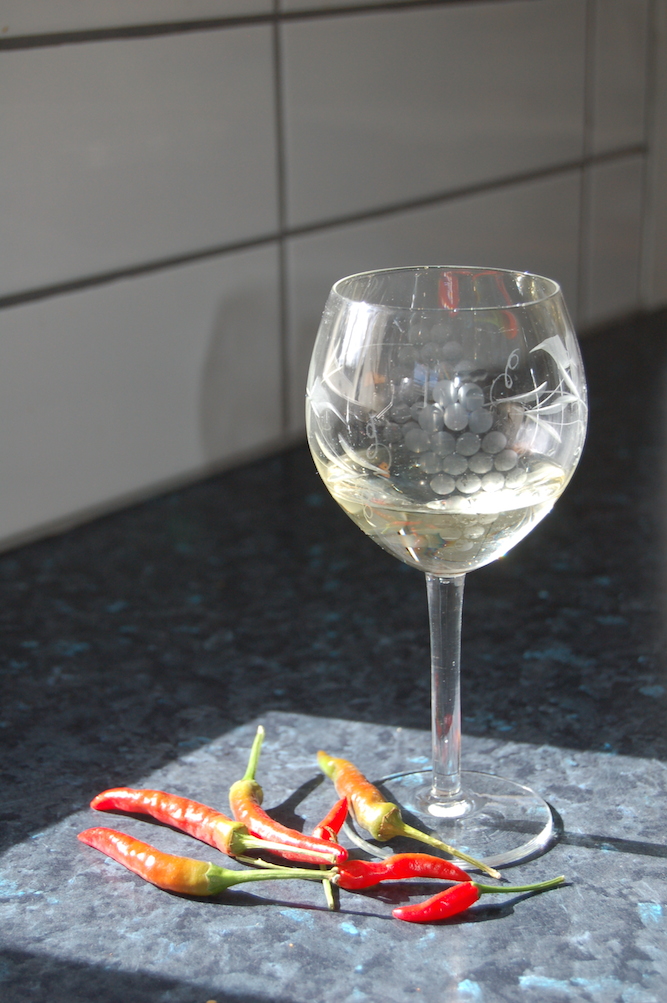
winepeppers-smWhen the day’s work is done
And exhaustion kicks in
And you want to collapse
You know you can’t win.

The blog must be written!
It doesn’t matter
That your hands are all blistered
And your mind is a tatter.

Just put down some words
Your readers won’t care
If you spell a few wrong
No need to rip out your hair.

Just type a few rhymes
They don’t need to be good.
Explain that you’re tired,
You’ll be understood.

Just whip out that blog post
In record time.
Then take a hot shower,
And a nice glass of wine.


You say Iris, I say Orris

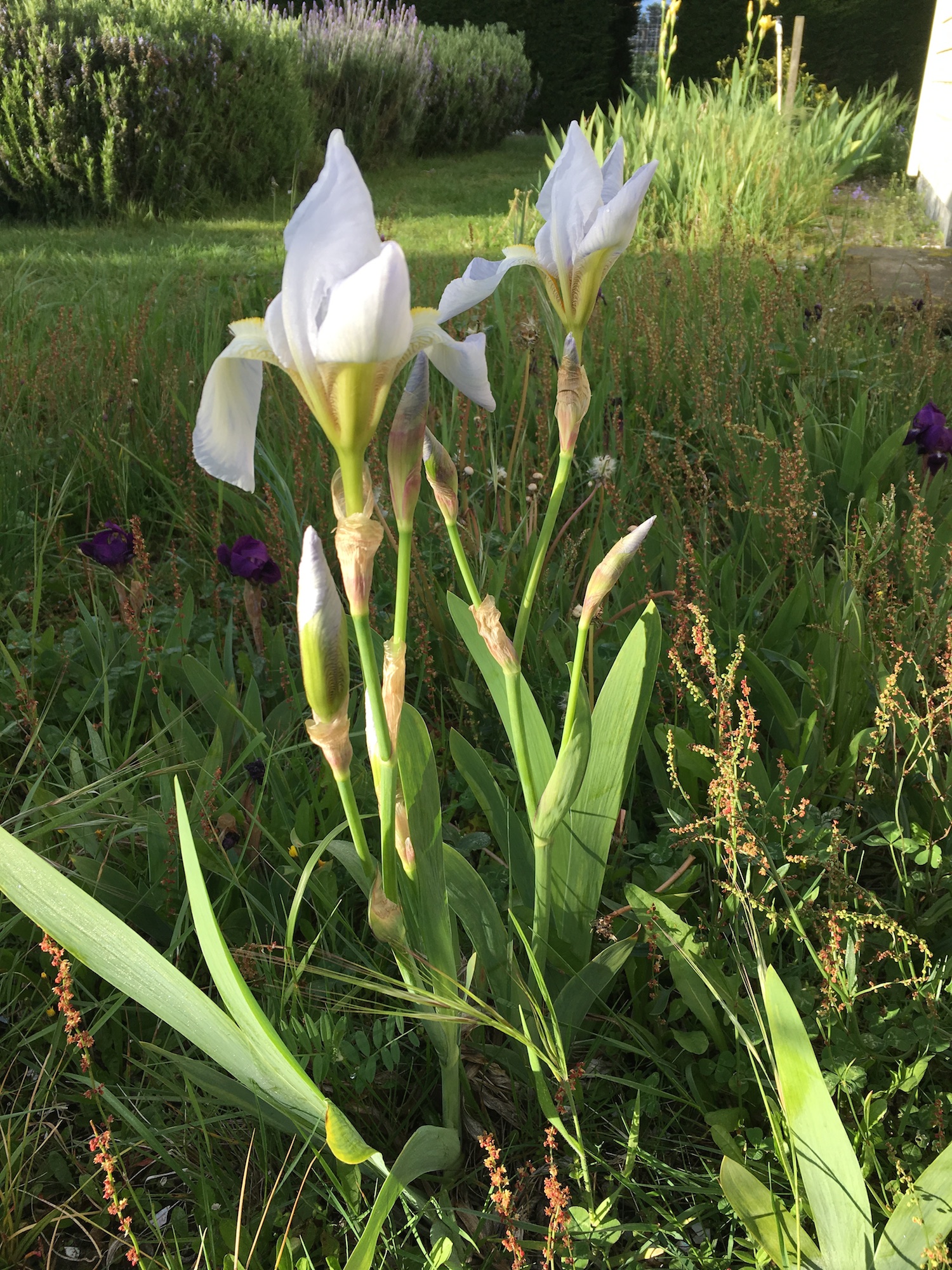
2016-10-28-07-33-39-smWhen we first planted our herb garden, nearly ten years ago, we planted a ‘knot’ of rosemary and lavender. In all the spaces inside the knot, we planted other herbs—a wide range of thymes, oregano, salad burnet, chives, etc. This iris was one of them (though we’ve since rescued it from being smothered in the knot). It is not a herb we ever intended to use—we just thought it was interesting. It is Iris pallida—the iris that is the source of orris root.

Orris root used to be used medicinally, but today its main attraction is its smell. It is used in perfume and potpourri, and in a Moroccan spice mix called Ras el harout.

I love the word orris, because it’s so clearly a case of dialect confusion. Say ‘iris’ with your teeth clenched, and you’ll get ‘orris’.

I can just imagine how it happened…the doctor calls on a patient in a remote village. He examines the man, and asks the family, “What have you done for him so far?”

“We’ve given ‘im a bit of iris root.”

“What? Orris root?”

“Yep, iris.”

“What is orris? I’ve never heard of it.”

“It’s this plant, blue flower, grows down by the creek. I’m sure ye’ve seen it before.”

“Hm.” The doctor scribbles orris root into his notebook, and forever after iris root is known as orris root.


Midnight Flowers

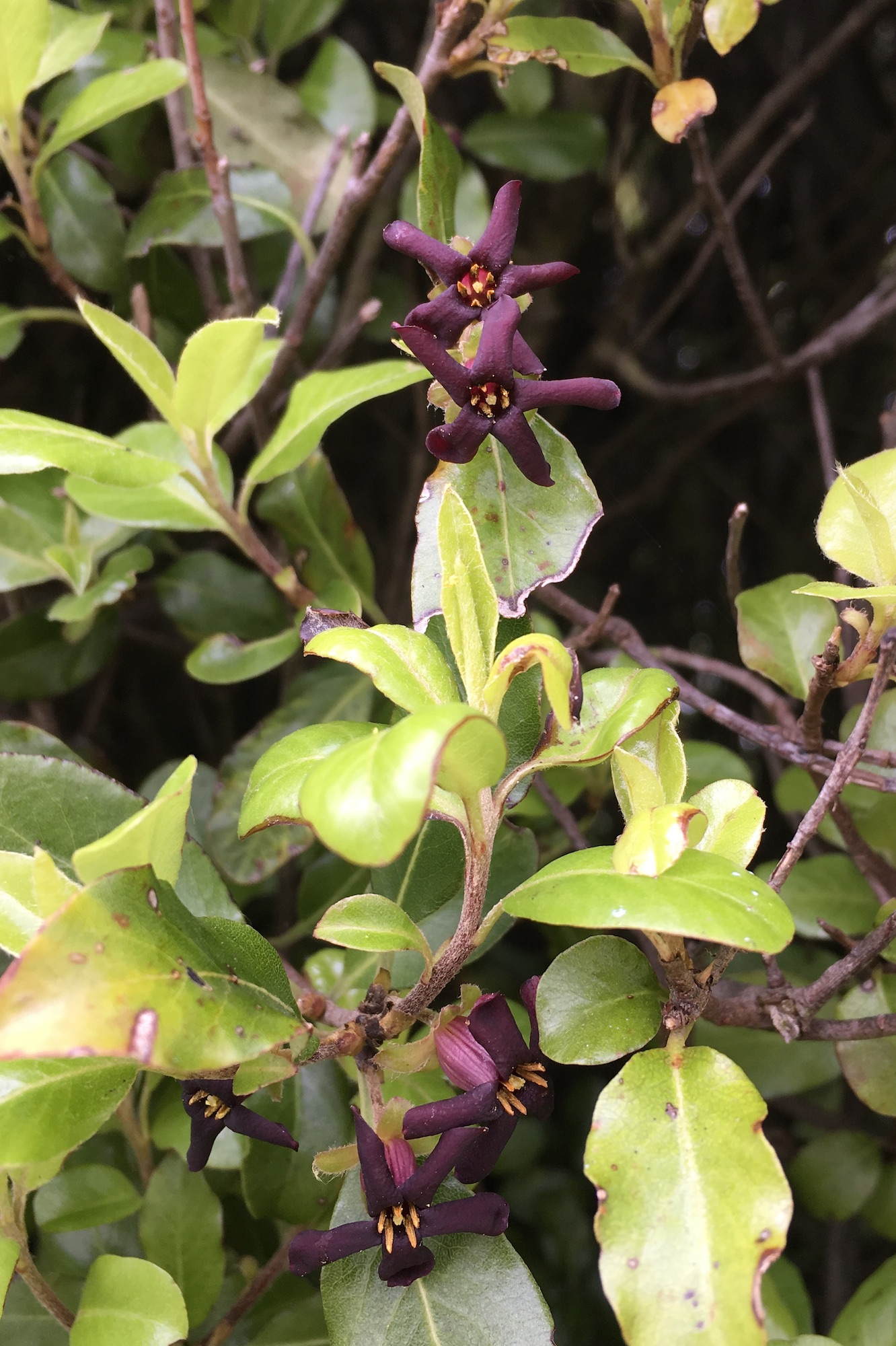
2016-10-26-15-51-31We have several pittosporums around the house, mostly Pittosporum tenuifolium, also known as kohuhu. Kohuhu are nice hedging plants, and form lovely dense shrubs when pruned. They’re a great background plant—like mood music—a lot of nice greenery, but little character.

Until they bloom, that is.

And only at night.

Pittosporum flowers are the kind of blooms that you can walk past a hundred times a day and never see. They’re about the same colour as the branches, and sit nestled among the greenery. They attract no bees or butterflies.

But walk past the same bush in the dark, and you’re practically knocked over by the smell. Heavy and clinging, the smell must attract all the night-flying moths and beetles for miles around.

I’m generally not a fan of smelly flowers, but there’s something marvellously incongruous about pittosporum flowers—so inconspicuous during the day, so in-your-face at night. The smell has become as sign of spring for me, and I always make sure my early-morning chores take me close to one of the bushes at this time of year.


Dolphin Stress Relief

Hectors' dolphin (not today's) in Akaroa Harbour.

Hectors’ dolphin (not today’s) in Akaroa Harbour.

I had a long blog post for today mostly written. I just needed to polish it and find a photo to go with it…

Then we went down to the beach after dinner.

Before we had even crested the dunes, we saw the Hector’s dolphins—a pair of them cavorting just beyond the breakers of an unusually calm sea. By size it was a mother and calf.

What blog post can compete with dolphins?

“You realise this isn’t normal, right?” said my husband to the kids. “Most kids can’t see endangered dolphins on the beach five minutes from home.”

But it is normal for them.

And for that I am so thankful.

We walked the beach, watching the dolphins and picking up colourful stones. The stresses of the day vanished.

I forgot all about that other blog post…

Orb Weavers

2016-10-24-13-39-42Weeding can be tedious, miserable work. Hard on the back, hard on the hands, and downright painful in much of my garden, where nettles and thistles grow exuberantly.

But there are some perks. Weeding brings you close to the vegetation, and gives you a chance to see things you might otherwise miss.

Today I was treated to two native orb weaver spiders—two of my favourite native spiders here.

The first was a bright green, round-bottomed Colaranea viriditas—the green orbweb spider. These little gems are supposedly quite common, but the bright green ‘leaf’ on their backs must do an excellent job of camouflaging them, because I count myself lucky when I see one. Unfortunately, my camera was nowhere close, and this one scurried away before I could catch it.

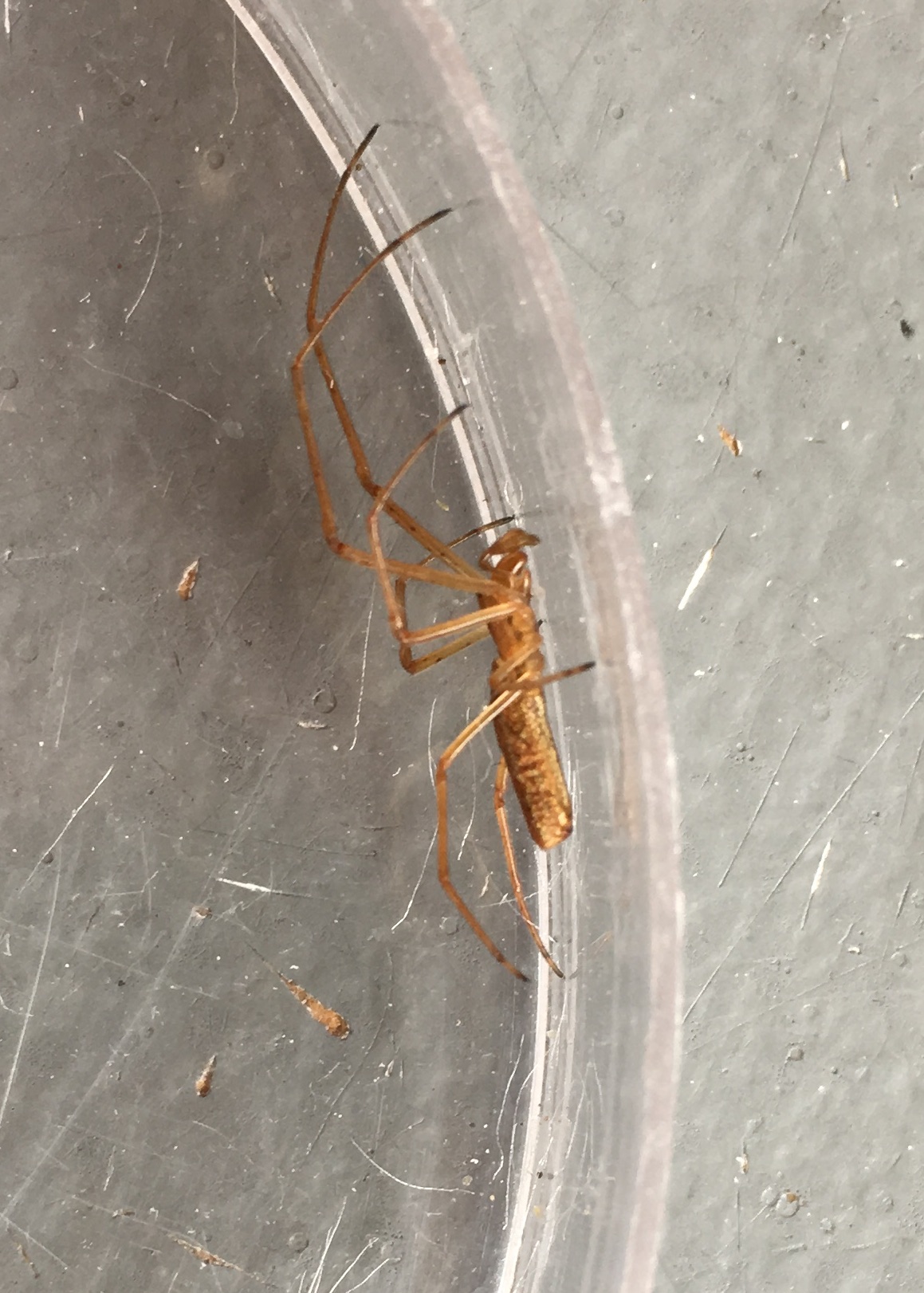
The second orb weaver I saw today is an expert at camouflage. You would be hard pressed to recognise it as a spider at all most of the time. This spider is in the family Tetragnatha—the big-jawed spiders. Tetragnathids have long thin bodies, and sit with their legs stretched out to the front and back, making the spider look like a small twig (I had to poke the one pictured here so it would stand up and look like a spider for the photo).

Tetragnathids are usually associated with wet areas, so I’m not sure what they’re doing in my dry yard, but they’re certainly common here. Though they’re hard to see, you can’t swing a sweep net in the tall grass without coming up with a few of them.

Both these spiders catch flying insects in webs shaped like the classic Halloween spider web—orb webs. Is it a coincidence that I saw them both today, a week before Halloween? Maybe they’re practicing for their big night.

Or maybe it was just my lucky day.

Crowded House

2016-10-21-18-50-54-smLast night the temperature dipped to -1°C. Fortunately, it had been forecast, so I pulled all the tender plants out of the greenhouse and into the heated office for the night.

It was a truly glorious sight—the seed shelves full of just-sprouting cucurbits and corn, and the floor carpeted in tomatoes, eggplants, peppers, and basil plants.

I look forward to getting all those tender plants back out to the greenhouse—I can’t even walk through the office, let alone work in there at the moment—but it was fun to have all the plants together for a photo shoot.