The View from the Compost

img_2929-smI finished turning the compost today—a back-breaking, exhausting job I don’t particularly enjoy. After I added each layer, I climbed on top of the pile to even it out and water it. From my two-metre high perch, I had a lovely view. I admired the neighbour’s seed radishes—wide stripes of white and pink flowers marking the two varieties he is crossing this year. It looked more like a curtain than an agricultural field.

Then I turned to admire my own garden. Well, actually I just turned. I’ll admit that I was a little surprised I found the view so nice.

The early January vegetable garden is always gorgeous—everything is at its peak lushness. I expected to find that attractive. But surveying the entire “production” side of the property from my perch, I was pleased to note that the whole place looked surprisingly lush. The berry beds are dense and tidy. The extra vegetables planted in my “overflow beds” (because 300 m2 (3230 ft2) of vegetables naturally wasn’t enough) are growing well, too. The artichokes look a little sad, and the grass paths are brown, but that is to be expected in the heat of summer.

The overall effect was one of lush productivity. I spent a little extra time on top of the compost pile to enjoy the view. It made today’s brutal job a little bit nicer.

The Backcountry Hut Experience

Black Hill Hut

Black Hill Hut

The hut nestles amidst scrubby sub-alpine vegetation. As you emerge from the trees onto a rocky hillside, you see it across the valley. Dark beech forest laps at the hut on one side, and cliffs rise on the other. A kea calls. A stream rushes far below. You are not the first at the hut—a thin wisp of smoke rises from the chimney. You smile and look forward to warming your hands and drying your socks by the fire.

As each hiker arrives at the hut, they are greeted by those already resident.

“G’day. Did you come of from Sharplin Falls this morning?”

“Going to Woolshed Hut tomorrow, or all the way out?”

“Where are you from?”

“Oh, you’re from Southbridge. My mother lives there. Do you know her?”

“Is this your first visit to New Zealand?”

“Do you do much tramping?”

As afternoon wears on, the hut fills up. Locals, tourists, couples, solo hikers, and families with kids. A dozen or more strangers bunking together, cooking and eating together. There are no cell phones to divide you. You are all present in this place together. You share matches, hot water, chocolate, and reading material. As the evening wears on, a bottle of scotch might be passed around. You talk about your homes, previous travels, and your current aches and injuries. You tell stories. You laugh. You wish each other good night.

In the morning, some carry on downhill while you toil up Others, you know you will see again at the next hut. You bid them all a cheerful farewell, feeling like old friends.


When I first came to New Zealand, I found the idea of backcountry huts a bit odd. I didn’t have to hike with a tent? I’d just bunk with other hikers in a hut provided at just the right spot? I was used to hiking in the US, and for me backpacking (tramping) meant getting away from other people and setting up my tent in a place of complete solitude. I was dubious.

Twelve years and many backcountry huts later, I’m sold on the hut system. Not only is it lovely to not have to carry a tent, I’ve come to enjoy the social aspect of the hut experience.

That’s not to say I enjoy listening to half a dozen strangers snore next to me all night, or that I don’t sometimes wish my hut mates were less talkative, but on the whole, the people I’ve met and the things I’ve learned—about other places, other cultures, and sometimes even about my own neighbours—far outweigh the negatives.

Inspiration for Dinner

2017-01-03-16-33-01“What’s for dinner?”

The daily question I ask my self, and am asked by my kids.

Sometimes I know the answer ahead of time.

Sometimes I have no idea. Maybe I’ve eaten an afternoon snack and am not hungry enough to think about dinner. Maybe I’ve been running around all day and haven’t had a chance to consider what I’m going to make. Maybe I simply don’t feel like cooking. The afternoon wears on, and still I don’t know what’s for dinner.

I don’t panic. At five o’clock, I take a colander and a knife to the garden. I stroll among the plants. What looks good? What needs to be picked? What’s newly ready to harvest?

By the time I return to the kitchen, the colander is stuffed with vegetables, and my mind is full of inspiration.

What’s for dinner?

I don’t know. Let’s cook up some fresh inspiration from the garden!

End of the Pickle Drought

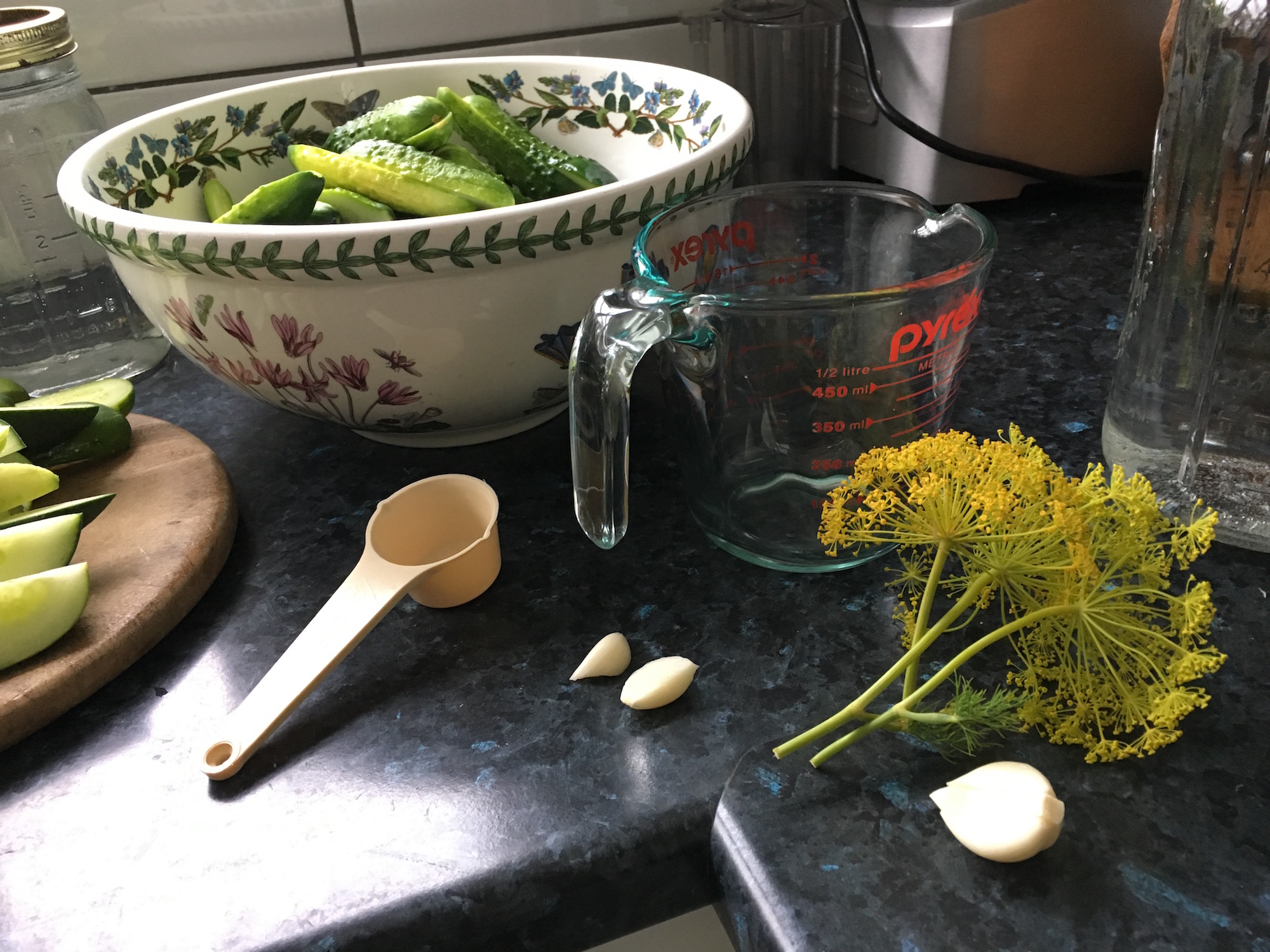
2017-01-02-08-03-25-smI grow pickling cucumbers every other year, in order to avoid becoming the Pickle Lady. Last year’s crop, however, was killed by frost, and we’ve been out of pickles for some time.

This year, the stars have aligned, and I have a beautiful crop of cucumbers coming on. As a bonus, the dill didn’t get completely wiped out by aphids (as it often does), so it’s perfectly timed with the cucumbers. There will be plenty of dill seed heads to flavour the pickles this year.

So it was with joy that I picked the first cucumbers yesterday. There weren’t enough to make a proper batch of pickles—there’s no point in heating up the canner unless I can fill it at least once—but I was fine with that. In fact, I was quite pleased there weren’t more. It meant I could make a batch of fresh pickles to put in the fridge and eat right away. After a long pickle drought, they’re going to taste fabulous!

Mountain neinei

2016-12-28-11-03-04-smMountain neinei (Dracophyllum traversii) is a tree Dr. Seuss would have been proud to call his own. Sparsely branched, with the leaves concentrated in tufts on the ends of the branches and bright red flower spikes on top, it would look right at home in Yertle the Turtle or The Cat in the Hat.

Aside from its goofy look, mountain neinei is an interesting plant. It is endemic to New Zealand (found nowhere else in the world), and inhabits ridgelines from about Arthur’s Pass north. We saw this one (and many others) on the way up Avalanche Peak near Arthur’s Pass last week. Though it is small (no more than 10 metres tall), it can live for up to 600 years, making it New Zealand’s longest-lived small tree.

It’s a useful plant, too. The leaves are used in weaving, the stems have been used to make walking sticks, and there is even an example of a flute made from mountain neinei.

It’s such a neat plant, it makes you want to speak in rhyme.

The ridge was quite steep,
And the day was too hot,
But the neinei were flowering.
We saw quite a lot.

Up rocks we scrambled.
The forest got smaller,
It looked like the top,
But the mountain was taller.

2016-12-28-13-24-57-smHigher and higher
We climbed and we huffed.
Till we reached the peak,
We really were puffed.

Spectacular views
And black jagged rock
Were our reward
For this strenuous walk.

What We Don’t Know

dsc_0009We headed to Tumbledown Bay today, ostensibly to try out the new snorkelling gear Santa brought us for Christmas. The water was murky and absolutely freezing, so it wasn’t exactly the best snorkelling, but it was a great day at the beach, regardless.

The seals were probably the best part of the day. There were lots of them, and they were vocal and active most of the day. A couple of them were even body surfing. They’d catch a wave and leap along with it almost all the way to the shore, then swim out and do it again. It was great fun to watch

The rock pools were great, too, as they always are. We saw some starfish, lots of snails, limpets, and chitons. I never get tired of them. In the sandier pools there were lots of marine isopods (sea slaters). I sat for a while at one pool and watched them. Some were just 3-5 mm long and the colour of sand. Some of the sandy-coloured ones had a white diamond on their backs. One, almost 10 mm long, was rusty orange with a white diamond on its back. The most spectacular was about 8 mm long, and had red and yellow markings, reminding me, oddly, of a European goldfinch.

As I sat there, I realised I had no idea whether I was looking at one species of slater with many colour variations, or twenty species.

A little research at home revealed that I’m not alone in my lack of knowledge of New Zealand’s marine isopod fauna. There are just 211 aquatic isopod species described for New Zealand. Scientists estimate that there are about eight times that many species. It’s not just the deep-water types that are poorly known, but many of the easily seen intertidal species are also undescribed. It seems these common little scavengers have been largely overlooked by science.

So the mystery remains—how many different isopods did I see today? As far as I know, no one can tell me the answer. But rather than disappointing me, the knowledge that we just don’t know excites me.

Anyone who thinks we know everything about planet Earth and the only real frontiers are in space is sorely mistaken. There is so much to be discovered, not just in exotic locations like the Amazon rainforest, but on the beaches that thousands of people visit every year, in the rivers and streams we cross daily on our way to work, even in our own back yards. There is so much about which we understand so little. The scientist in me quivers with excitement.

Did I see one species of isopod or twenty? No one knows. Doesn’t it make you want to go to the beach and peer into tide pools to find out?


New Life for an Old Rug

img_2793

A new garden area with freshly laid rug weed-block. Disguised with wood chips, no one will ever know it’s there.

Nothing lasts forever. Even well-made items eventually come to the end of their useful life.

But that doesn’t mean they’re not useful…in a different way.

Rugs get hard use in our house—there’s an awful lot of traffic in a small space. Add a dose of wool moths and high UV radiation, and it’s no wonder our rugs eventually start falling apart.

But tatty wool rugs don’t need to end up in the landfill. They can serve as excellent weed-blocking mulch in the garden. They last for years and eventually simply rot away. So much nicer than the plastic weed-block that eventually breaks up and stops working, but still needs to be removed and disposed of.

And as an added bonus, out here where there is no rubbish collection, it means we don’t need to haul the old carpet to the tip.

Cabbage Overload

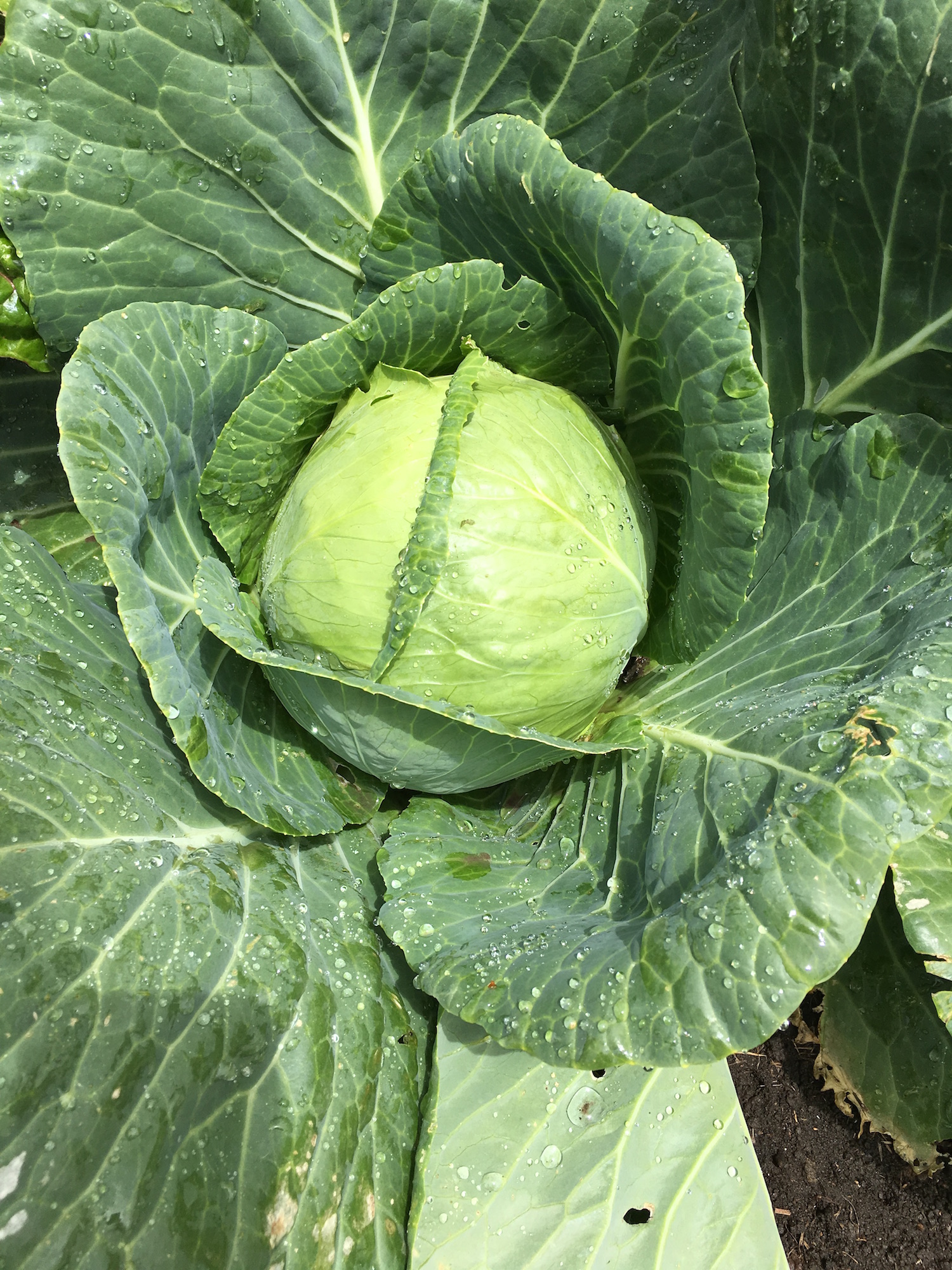
img_2762When my husband and I lived in Panama, we made the trek to the provincial capital, Penonomé, every week or two. The trip involved half an hour of walking to the closest bus stop, then a bumpy forty-five minute ride down the mountain in the back of a pick-up truck. It wasn’t something to do daily.

In town, we would pick up our mail, phone home, and do some shopping. In our village, we could buy rice, beans, and a few other necessities in small quantities from the little tiendas, but we could only get vegetables from town (we were nowhere close to self-sufficient in vegetables there).

With no refrigeration, and tropical heat, fresh vegetables didn’t last long. We ate well for a few days after a shopping run, but by the end of the week, we were usually down to plain rice.

The most long-lasting vegetable we had was cabbage. A cabbage might last an entire week before it was too wilted or rotted to eat. So every trip to town, we bought a cabbage, and for at least two meals a week, we ate cabbage and rice.

At that rate, in our two years of Peace Corps service, we ate about a hundred cabbages. By the time we left, we couldn’t bear to even look at a cabbage. It was several years before we considered eating one again.

Today, we enjoy about a dozen cabbages a year, most in the form of sauerkraut or coleslaw. The idea of cooking up a pot of cabbage and rice is still repulsive, but with cabbage being a year-round crop here, it’s good to be able to make use of it.

When is a zucchini not a zucchini?

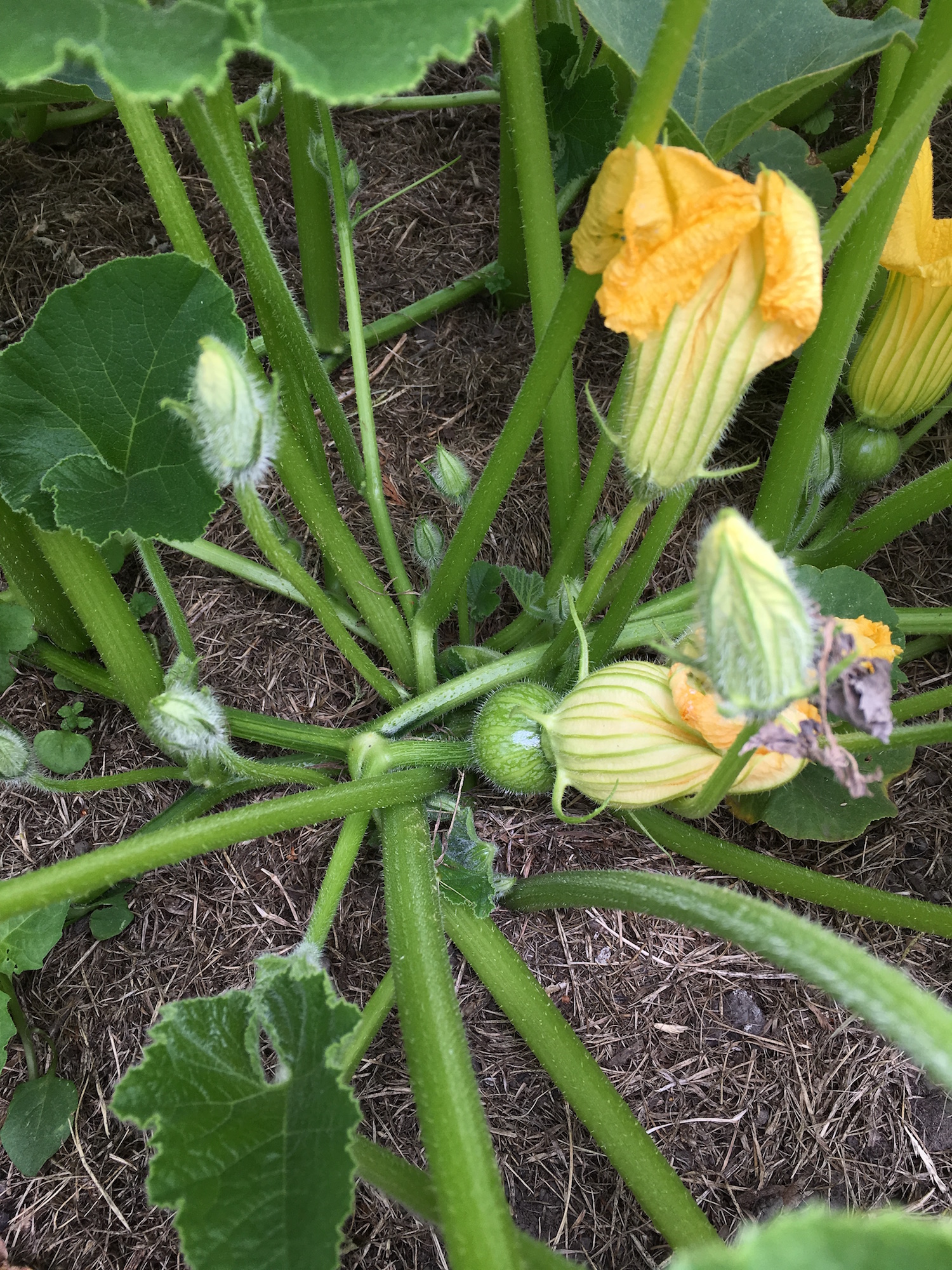
img_2757The zucchinis (courgettes) started producing over a week ago, so I’ve been spending more time among the plants. I noticed that one of the varieties was behaving in a very un-zucchini-like fashion—sending rambling vines out in all directions and forming round fruits. I checked the tag and noted the variety, then looked it up in the seed catalogue. Maybe it was a weird variety I was trying out—I’ve been known to buy some strange plants.

I didn’t find the variety among the zucchinis in the catalogue, and it didn’t take long to realise what I’d done. “Squash” can be winter or summer squash, and when it came time to planting out, “Squash—Jade” sounded like a summer squash. It’s actually a huge sprawling winter squash that replaced my favourite, Kurinishiki, in the seed catalogue this year.

I don’t know whether to be thrilled or annoyed. Winter squash germination was awful this spring, and then the plants got hit by frost. But the summer squash bed escaped the frost. So instead of having none of my favourite pumpkins, I have half a dozen healthy plants. And it also means I have six fewer zucchini plants, which is most definitely a bonus, because I always plant too many zucchinis.

The problem is, they’re growing in the middle of the zucchinis, and I’m going to be tripping over the vines all summer.

*sigh*

The only sensible thing to do is laugh at myself and make the best of it…and write a note on the seed packet, so I don’t make the same mistake next year.

When the pests are cute

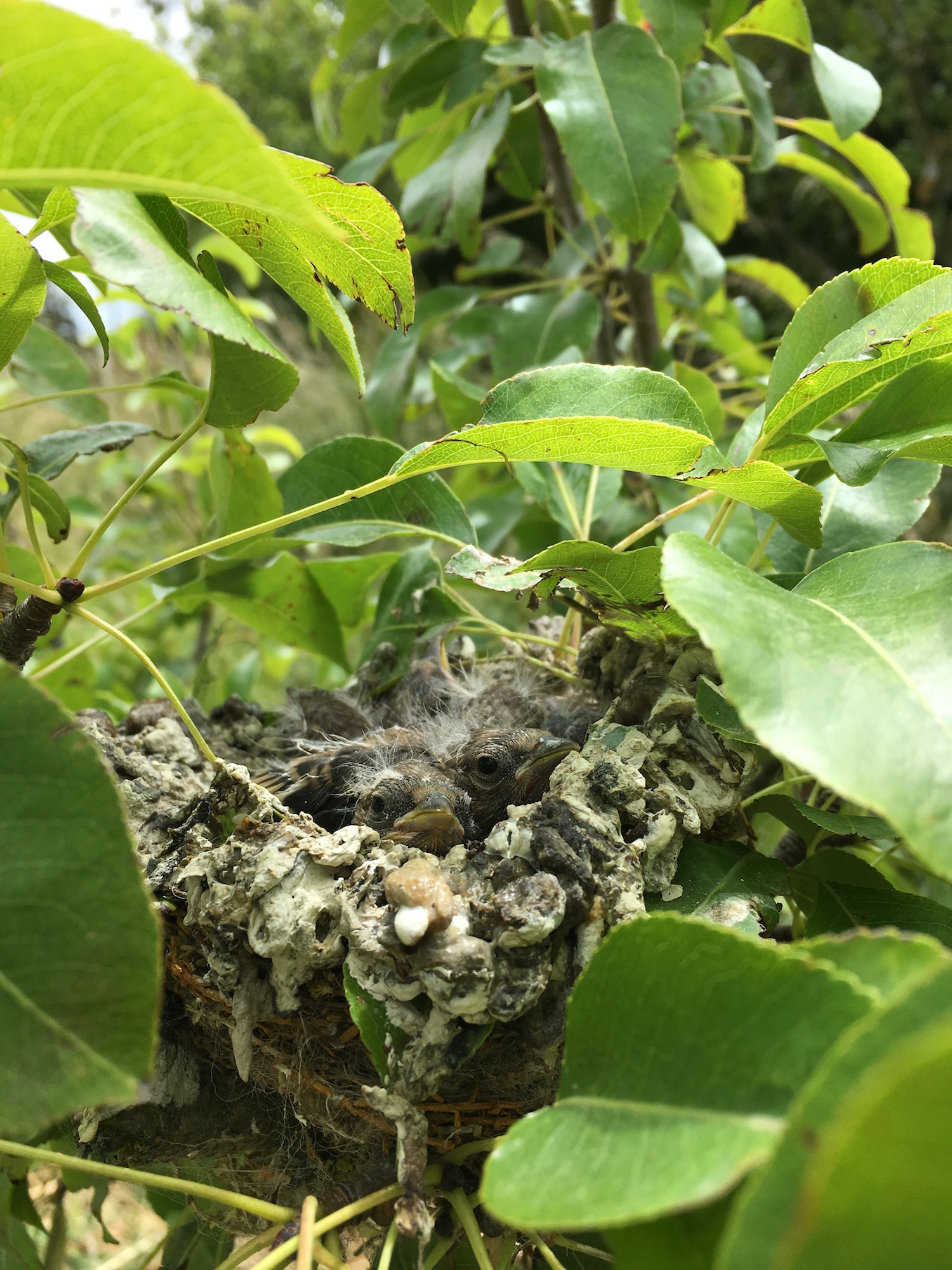
img_2765A month ago, I saw a perfect little bird nest in one of the fruit trees—incredibly tidy, and woven from grass and lichen. It was so pretty, I couldn’t bear to remove it, though I knew it must be the nest of a non-native bird (that’s about all we have here). Starling and house sparrow nests get the heave-ho as soon as I find them. This one…well, I couldn’t possibly disturb something so cute.

I forgot about the nest for several weeks, but today my husband noticed it was chock-full of chicks. Five grey fluffy European goldfinches (Carduelis carduelis)—so ugly they were adorable.

We don’t really need any more goldfinches, but since we don’t grow grain, they’re not much of a pest to us. These five chicks, though, will likely join the flock that descends on the neighbours’ fields in late summer. Sorry, guys. If you’d seen this cute nest of chicks, you’d understand.