Watching the Weather

tomato plants in the greenhouse

October is over so I’m a little obsessive about the weather. Will we have another frost? Will it rain? Will it be warm and sunny? What will the wind be like? Every day is critical for the next two weeks.

I do my best to time indoor seed planting just right, so all the frost tender vegetables are ready to plant out on Canterbury weekend (in mid-November)—the date I can be 90 percent sure of no more frost. The slow-growing peppers and eggplants are first—planted the 15th of August along with all the frost-hardy crops. A week later, I plant the tomatoes and basil. Fast-growing cucurbits and corn wait until late October.

By the beginning of November, the greenhouse is full of plants waiting to be planted out.

Of course, no matter how hard I try, there’s a level of uncertainty. A particularly cold spring can slow down growth so I’m planting out tiny seedlings in mid-November. On the other hand, warm sun can mean my plants are chomping at the bit by the first of the month. Hence, my obsession with the weather.

This year, my tomatoes are at the perfect stage to be planted out now. In two weeks, they’ll be overly tall and leggy. So I’ll be checking the long range forecast to see if I can plant them this weekend instead.

The peppers and eggplants, however, could use another week or so in the greenhouse before being planted out. I’ll coddle them in their pots, urging them to put on some good growth before they’re at the mercy of bugs and birds. I’ll be hoping for good sunny days to kick their growth into high gear.

At the same time, I’ll be watching the early crops already in the garden. They’ll be starting to feel the heat—risking bolting if they get too hot and dry. I’ll be monitoring the weather to know when I have to turn the irrigation on.

In two weeks it won’t matter so much—it will be reliably warm enough, and predictably too dry. All the vegetables will be in the garden, and they’ll all need extra watering.

But for now, I have the weather forecast open on my browser at all times, watching carefully to make the most of what the weather has to offer.

The Little Things–Hakatere Conservation Park

As usual, I spent most of the long Labour Day weekend in the vegetable garden. I weeded, prepared garden beds, and planted my cucurbits in trays.

Lake Clearwater with mountains
Lake Clearwater was a mirror in the morning’s still air.

But as they say, all work and no play … I didn’t want to spend the whole holiday weekend sweating in the garden.

So on Monday my husband and I went to Hakatere Conservation Park and sweated on Mount Guy instead.

The Ashburton Lakes region is a glacially formed landscape dotted with lakes and tarns. The land around the wetlands is largely tussock grassland studded with spiny matagauri bushes. An unforgiving, windswept landscape that can feel downright bleak.

That was my impression the first time I visited. Fifteen years ago, I was hired to develop an interpretation plan for what was then a proposed park only. I had the great fortune to tour the area with a Department of Conservation ranger who had worked in the area for decades and had a great love of the landscape. He showed me the little things—not necessarily obvious at first—that set the region apart. Rare insects (including an aquatic moth!), waterfowl and lizards. Unique and diverse plants. Historical use of the land, and massive changes over geologic time. There’s a lot more than meets the eye.

skink
One of the many skinks we saw.

On Monday, we were treated to a glorious day—sunny and calm at first, with a brisk breeze kicking in just when the day began to feel too warm. We parked at Lake Clearwater and hiked the track to the summit of Mount Guy. On our return, we followed the tussocky ridge down to a saddle where we picked up Te Araroa, following the track back to the edge of Lake Clearwater where we completed our large, loopy circuit of the lake.

mountains and river valley
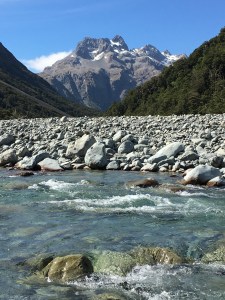
View from near the top of Mount Guy. Mount Sunday is a small mound in the river valley, just to the right of centre in the photo.

The hike afforded stunning views of jagged, snow-capped peaks, and a view of Mount Sunday down in the river valley.

Oddly, out of all the “mountains” in the park, Mount Sunday may be the most famous. The hill was used as the location for Edoras in the Lord of the Rings movies. In the enormity of the surrounding landscape, however, it is an insignificant lump of rock.

Perhaps, like the hidden insects, birds, and plants, it is the little details that are the interesting bits.

Inspiring Landscapes

When I was writing my Dragon Defence League series books, I delighted in placing my characters in some of my favourite places in New Zealand—the mountains of Fiordland, Kahurangi National Park, Waimangu Volcanic Valley, and many others.

But New Zealand’s landscapes infuse my latest book, Fatecarver, even though it is set in a purely fantasy world.

While I was writing Fatecarver, I kept imagining specific places in New Zealand. I sat on a peak near Arthur’s Pass and imagined my characters there. I scribbled down descriptions of real views, storms, trees, and hikes to use in the book.

I took the New Zealand landscapes and mixed and mingled them with favourite places in the United States, Panama, Peru and Bolivia until the Fatecarver world included elements of a lifetime of adventures. 

Many of my fellow authors are adventurers like me. We take inspiration for our writing from dramatic landscapes and other settings we’ve experienced. The landscape becomes a character in its own right, thwarting other characters’ plans, throwing up challenges, or providing aid at a critical moment. Just like real landscapes do.

Natural landscapes play a huge role in my own real life adventures—it’s only natural to include them in my fictional ones.

Spring Cleanout

The equinox has passed and we’re on the sunny side of the year. The greenhouse is filled with vegetable seedlings. Flowers bloom in the yard. Asparagus spears and artichoke buds are popping up to grace our dinners.

Now is the time to scour the cupboards and freezer for what’s left of last summer’s bounty. It needs to be eaten before this year’s crops start to come in and make us forget.

As usual for us, the frozen peas and corn are long gone. The carrots I froze from last year’s bumper crop have been eaten, too. The currants, peaches and strawberries never stand a chance of making it to September—they are like bright sparks for winter’s darkest days.

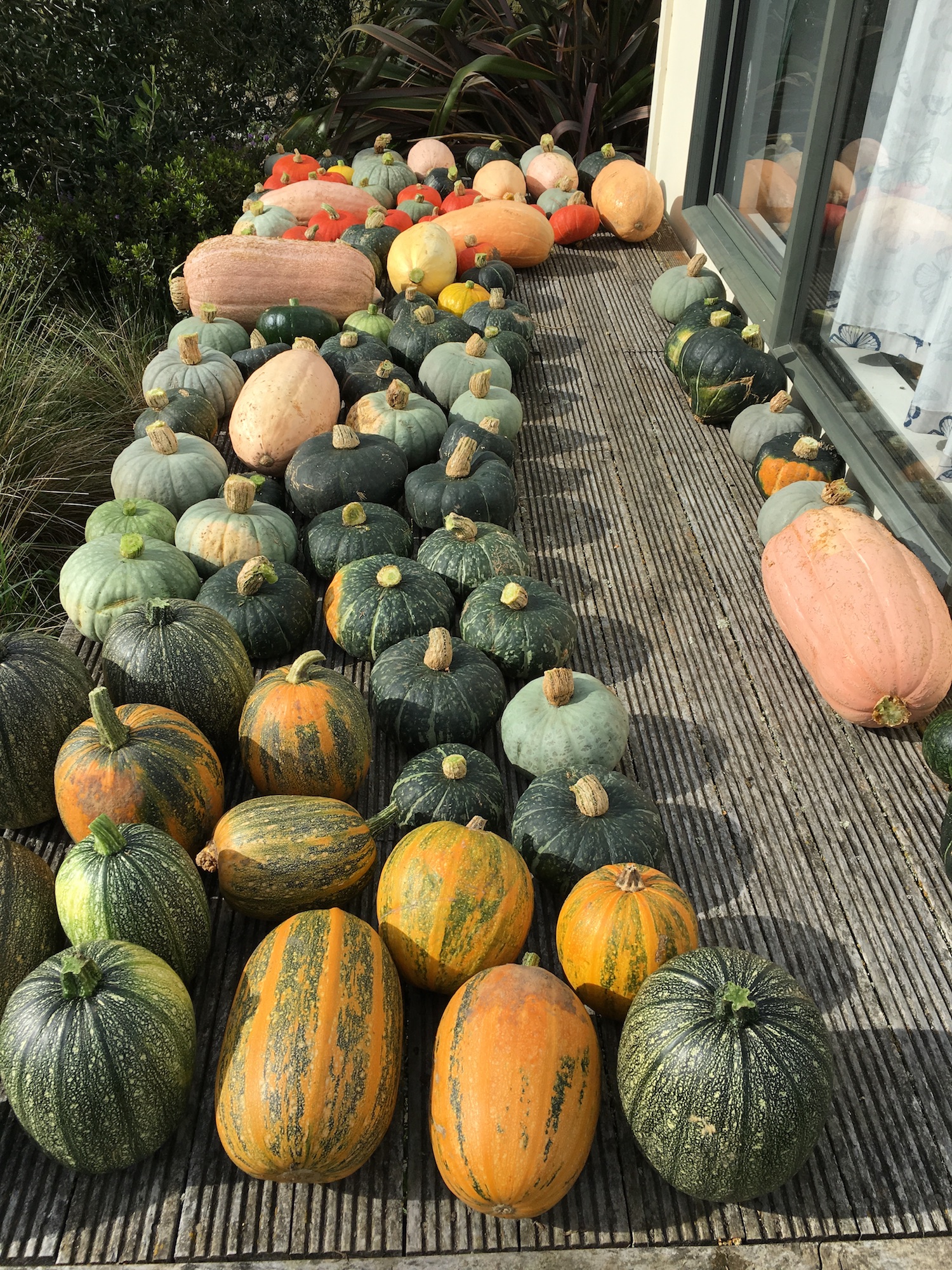
As usual, what remains is pumpkin. Baked and frozen when the fresh pumpkins started to rot back in July, frozen pumpkin has become a staple in our springtime cooking as we scramble to finish it off.

Maybe I should plant fewer?

Except it’s the only vegetable left at this time of year. And maybe pumpkin isn’t traditionally considered a springtime vegetable but pumpkin pie, cake, galette, and pancakes are delicious any time of the year.

So bring on the flowers, the sun and the warmth. And bring on the pumpkin! We’ll enjoy it while it lasts.

pumpkin cake glazed with yogurt frosting
Pumpkin cake … best way to eat pumpkin?

Lichens Rule

Not long ago, I spent a glorious sunny day wandering around Cass Field Station while my husband met with some students there. It was nice to take a solo walk and go at my own pace, stopping at whatever plants, bugs or rocks caught my fancy.

Once nice find was this beautiful lichen, Rhizocarpon geographicum.

Lichens are strange organisms comprised of an alga living within a fungus. The alga provides food through photosynthesis and the fungus provides protection and nutrients for the alga.

R. geographicum is an alpine/subalpine lichen and, like many lichens, is sensitive to air pollution, thriving only where the air is clean. It is not, however, a fragile organism.

In 2005, R. geographicum was one of two lichens launched into space. The lichens were exposed to 14.6 days of open space—vacuum, wide temperature fluctuations, intense UV light and cosmic radiation. Upon return, R. geographicum showed little harm from the experience.

Not only is R. geographicum tough, some individuals in the Arctic are estimated to be 8,600 years old, making them the oldest living organisms on Earth. Their longevity and predictable growth rate make them useful tools for determining when glaciers retreated from an area.

But I didn’t know all this about R. geographicum when I found it on the rocks at Cass. I simply admired its beautiful mottled colours and soft texture. 

Pandemic Poetry–2021 Edition, #21

masks
Masks ready to go for level 2 outings.

New Zealand outside of Auckland got the news we were hoping for yesterday. As of Wednesday, we will move to Covid alert level 2, which means we can all return to work and school. This level 2 is more restrictive than previous level 2s, because the Delta variant is so much more transmissible, but we’re all looking forward to the increase in freedoms.

A shout out to Auckland, which remains in level 4. You are all superstars! Hang in there, and thank you for your mahi. It can’t be easy, and my heart goes out to you all. Kia kaha!

Once again
We reach the end
Of lockdown’s
Boring grind.

We’re headed back
To work and school
For which we all
Have pined.

So vaccinate and
Wash your hands
And over all
Be kind.

Don’t forget
To don your mask
And wear a
Smile behind.

Pandemic Poetry–2021 Edition, #20

daffodils in a vase

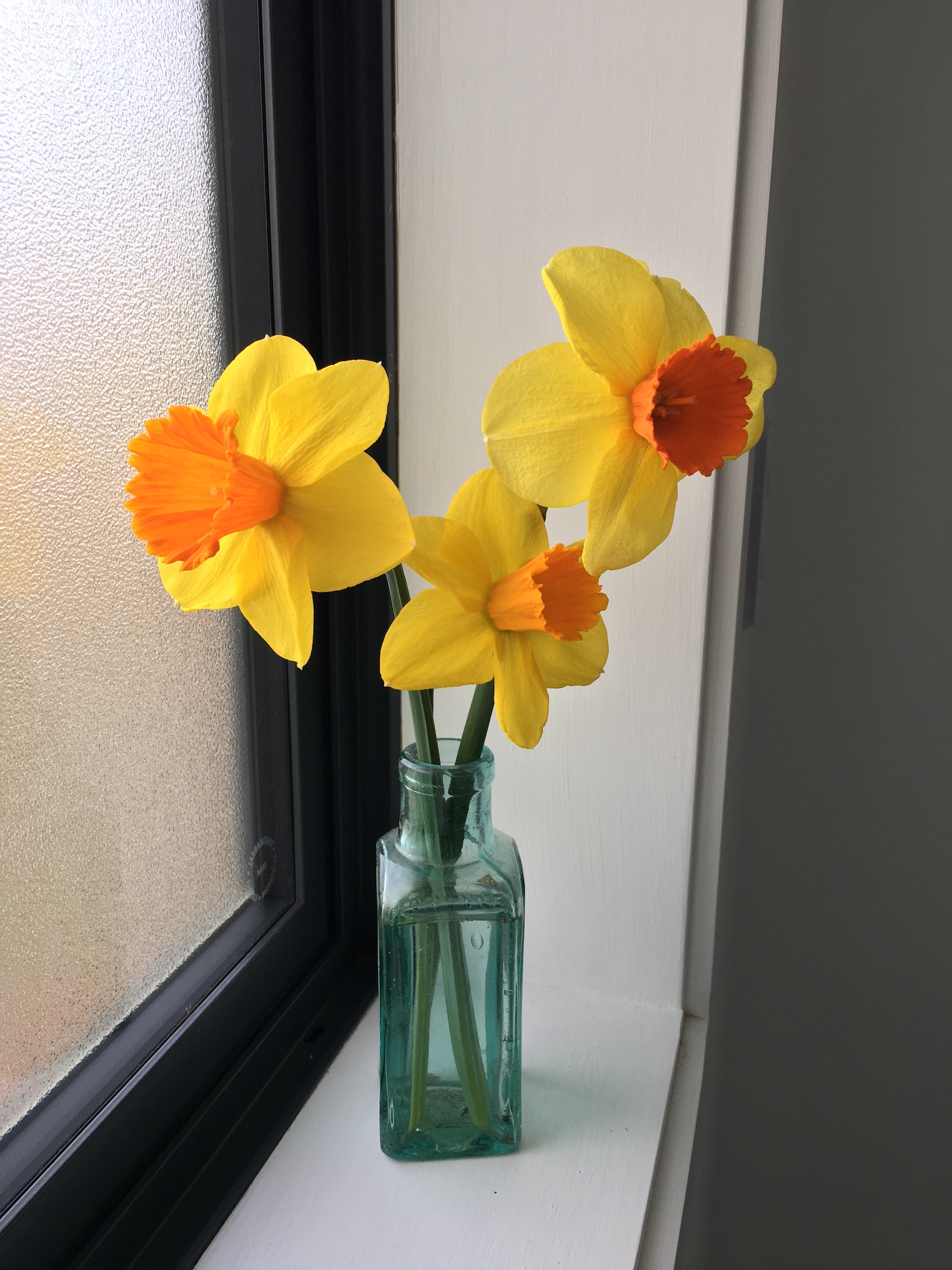
A few days of warm wind, and it seems like the plants have all woken up. The pines across the road certainly have—everything is covered in gritty yellow pollen. 

Springtime’s chorus
The magpies’ warble
A chittering of sparrows
The buzz of bees
Among the pansies
The distant drone
Of a lawnmower
The quiet chirp
Of frogs after dark.

Pandemic Poetry–2021 Edition, #19

notebooks and folders
My notebooks and folders for planning a return to in-person schooling.

I’m lucky to have only one, relatively self-sufficient teen at home for lockdown, but I feel for parents of young children. Good weekend weather will have been a help, but homeschool fatigue will make the coming week difficult.

Desperation grows
As the
Days
Tick
By.

Worksheets that
The school sent out
Make
The kids
Sigh.

We long for
Normal routines:
Work,
School,
Kai.

Desperation grows
As the
Days
Tick
By.

Pandemic Poetry–2021 Edition, #17

Grow little plants!

Hard to be upset about lockdown when the weather is beautiful. In fact, I was a bit disappointed I was asked to go into work today. I would have jumped at the opportunity on a rainy lockdown day, but today … well I would rather have been in the garden.

Spring has sprung
It’s time to plant
Your vegetables and flowers.

The birds are busy
In the trees with
Twiggy nests and bowers.

Hoe in hand
I soon forget
The viral threat we’re under.

With bright warm sun
And growing things
The season’s full of wonder.