Thanksgiving

2016-11-25-18-36-30-smTimed to coincide with the last of the autumn harvest, Thanksgiving is traditionally a celebration of the foods that store through winter—pumpkins, apples, potatoes, corn.

Which is why we don’t really celebrate it here. Not in the traditional culinary sense, at least. Apples and potatoes are wrinkled and old by November. The pumpkins are all gone.

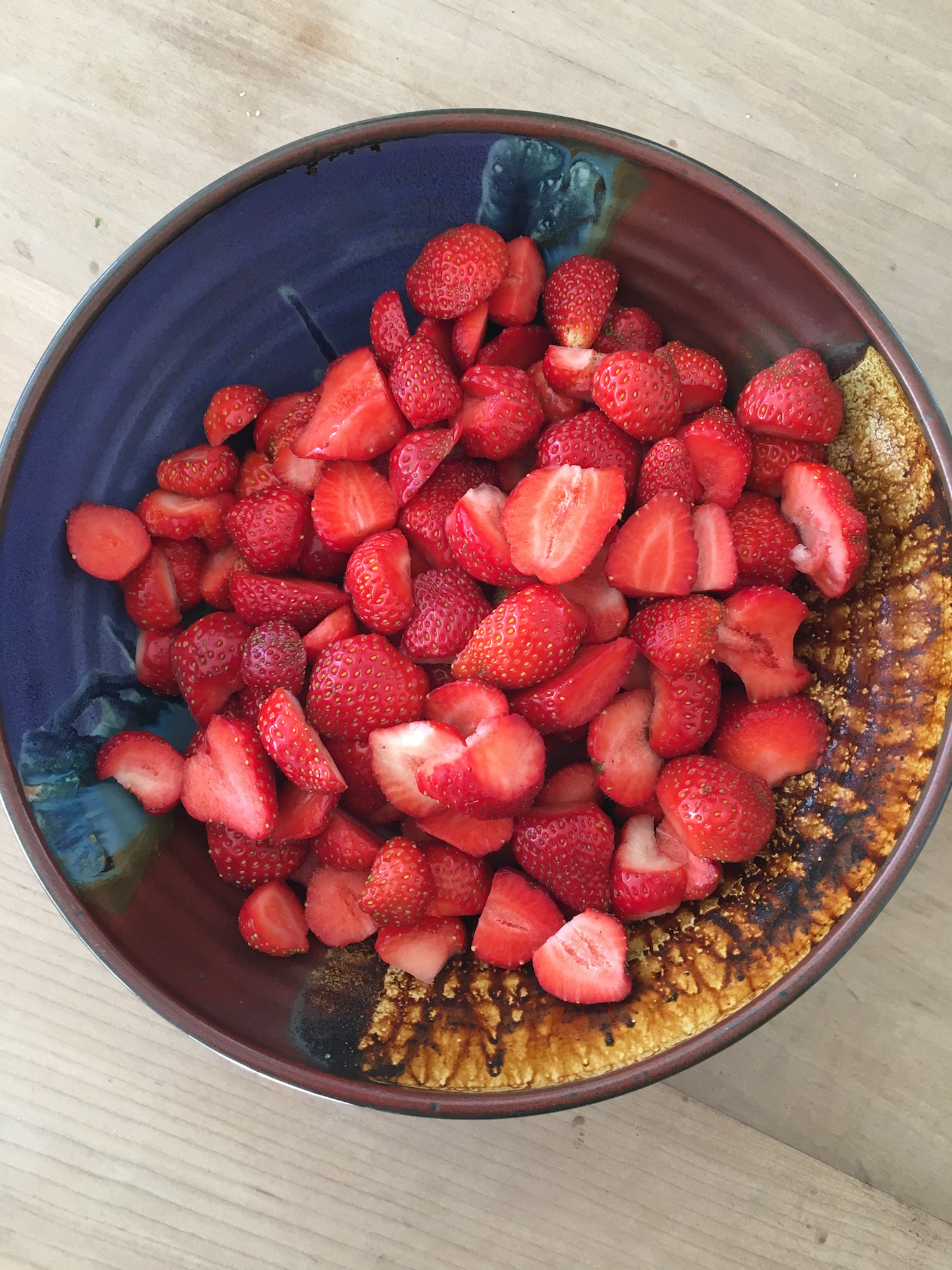
But there is much to be thankful for at the beginning of summer, and our Thanksgiving Day meal reflects this—pasta full of spinach, artichokes, and peas; a fresh green salad; and strawberries for dessert. Indeed, every day is a harvest celebration at our house. Every day, I am thankful for the sun, rain, and soil. I am thankful for our ability to produce much of our own food. I am thankful for my children, who understand and appreciate the amount of work that goes into every bite they eat—who thank the cook and the gardener every day.

I am thankful for the partner with whom I share the daily tasks that provide food for our table. I am thankful for the neighbours who help keep animals and plants alive when we go on vacation.

Yes, I’m sometimes a grumpy farmer—there’s never enough rain, the pests are terrible, the neighbour’s weed-killer has wafted across the fence line again…there’s always something to complain about.

But however much I grumble as I’m pulling weeds or dragging irrigation hoses around, dinner is always a time of Thanksgiving.

Poroporo

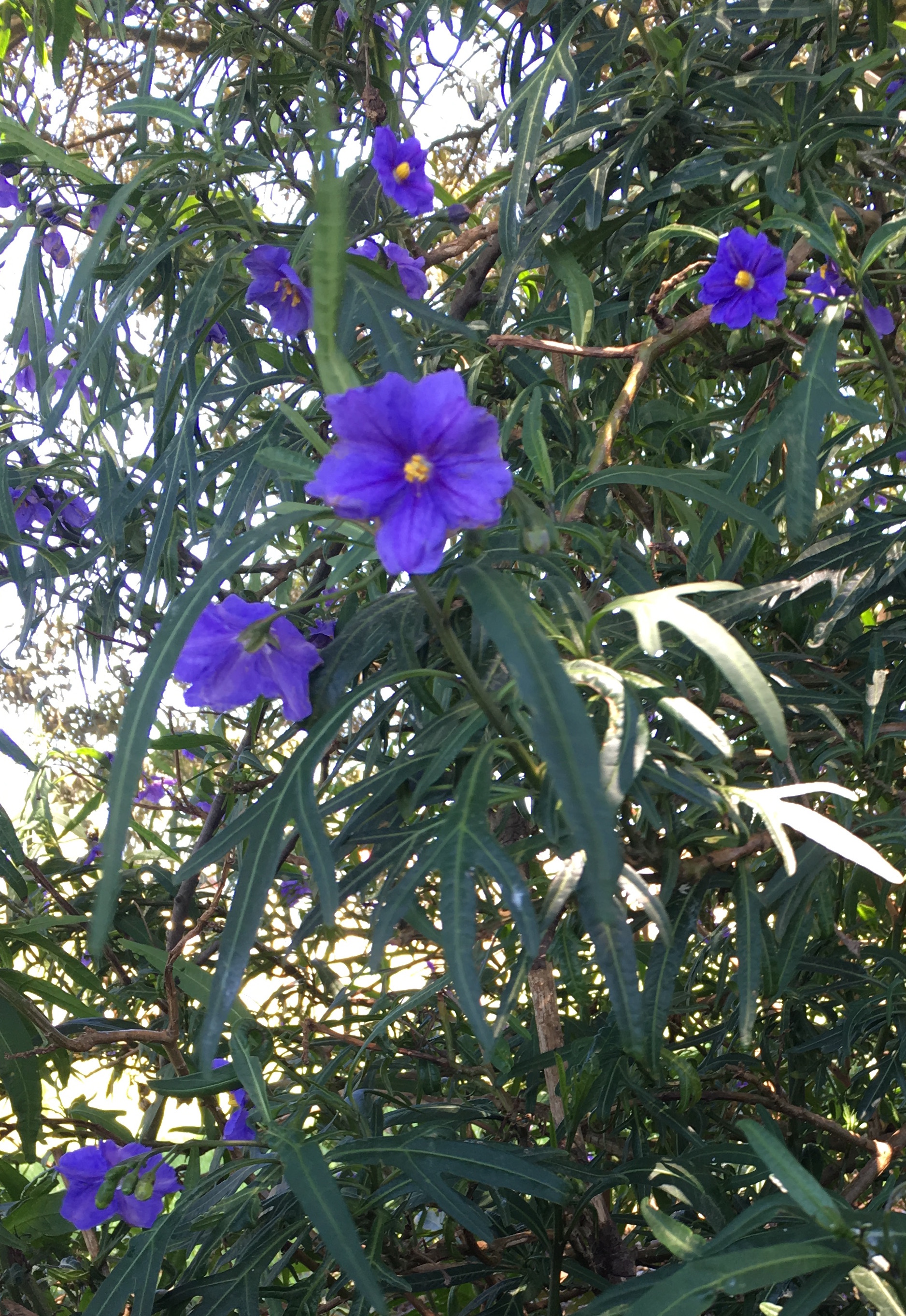
2016-11-22-13-39-04Poroporo (Solanum laciniatum) is a native shrub, and one of our few native plants typically classified as a weed. A few years ago, I noticed a tiny poroporo seedling sprouting under our oak trees—planted, no doubt by some bird roosting (and poohing) in the branches above.

At the time, the chickens were quartered under the trees, so I fenced it with a ring of chicken wire to keep it safe from their scratching.

It has now grown into a huge sprawling bush easily three metres in diameter and as tall as me. It is currently covered in gorgeous purple blooms. Later in the summer, it will drip with teardrop shaped yellow fruits. Weed or not, the plant is eye candy.

Eye candy only—not to be taken internally. Like many of the Solanums, poroporo is poisonous (though apparently the fully ripe fruit is edible…sort of). Fever, sweating, nausea, and abdominal pain are the unfortunate effects of poroporo poisoning.

In spite of its poisonous nature (well, actually because of it), poroporo is grown commercially as a source of steroidal alkaloids used medicinally to make cortico-steroid drugs like birth control and eczema treatments.

A pretty and useful weed!

A Little Too Much Indoor/Outdoor Flow?

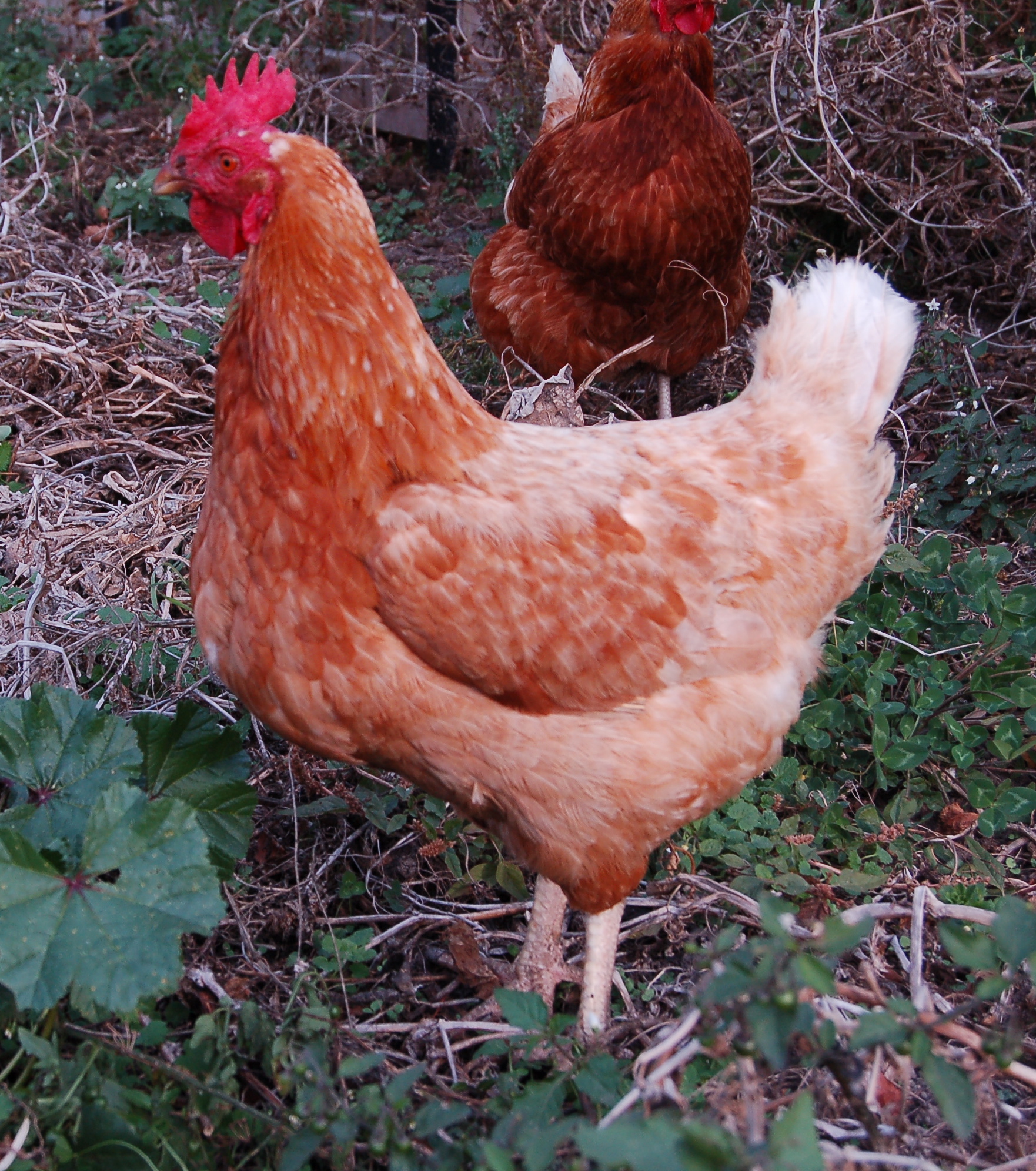
Fine in the paddock, not welcome indoors.

Fine in the paddock, not welcome indoors.

I always assumed, growing up, that window screens and screen doors were there to keep insects out of the house. It never occurred to me that other wildlife would want to get in, too.

Two nights ago, we woke at 2 am to the sound of the rocking chair on the porch thumping back and forth and claws raking the bedroom window. At first, I cursed the cat—who often sits on the rocking chair meowing in the middle of the night—and rolled over. But the raking claws didn’t stop. The cat never claws at the window. I opened my eyes, then had to get up for a closer look, because I couldn’t believe what I saw. An Australian possum was sitting on the back of the rocking chair, leaning out to scratch the window.

What the heck? Was it trying to get in?

It got me thinking about all the non-insect wildlife we’ve had in the house over the years.

In Panama, there were numerous mice, rats, scorpions, whipscorpions, windscorpions, and tailless whipscorpions…naturally. But there also were a few geckoes, and a skink who spent weeks living with us. We started leaving out water for him on the table, and named him Smaug.

There were the bats. Mostly they were small ones, but occasionally we’d get a massive one, with the wingspan of a pterodactyl. They’d swoop in between the top of the wall and the roof, wheel around the house, then swoop out again.

There were regular chicken incursions, even after we evicted the one brooding a clutch of eggs there when we moved in, and there was a cat who came inside and had kittens on our bookshelf.

The largest visitor was probably the dog, who came into the house chasing a rat, then regularly trotted in after that to see if we had more rats for her.

Here in New Zealand, we’ve had mice and rats, including one bold rat who sauntered into the kitchen through the front door while I was washing dishes one day. Sparrows and the odd starling are regular visitors in the summer—they come in, poo a few times, and leave. Chickens and feral cats are occasionally pop in for a visit, too.

For one magical season, we had a piwakawaka, who would flit into the house every day. He would zip around inside, eating flies, then land on a bird mobile hanging from the kids’ bedroom, bobbing up and down like just another wooden bird.

I can only imagine what mayhem that possum would have caused if it had gotten in last night. Earthquakes would probably seem tame to the havoc of a possum indoors. You can bet I’ll be making sure the windows are all closed tonight—I think I’d like to keep that one outdoors.


Dancing in the Moonlight

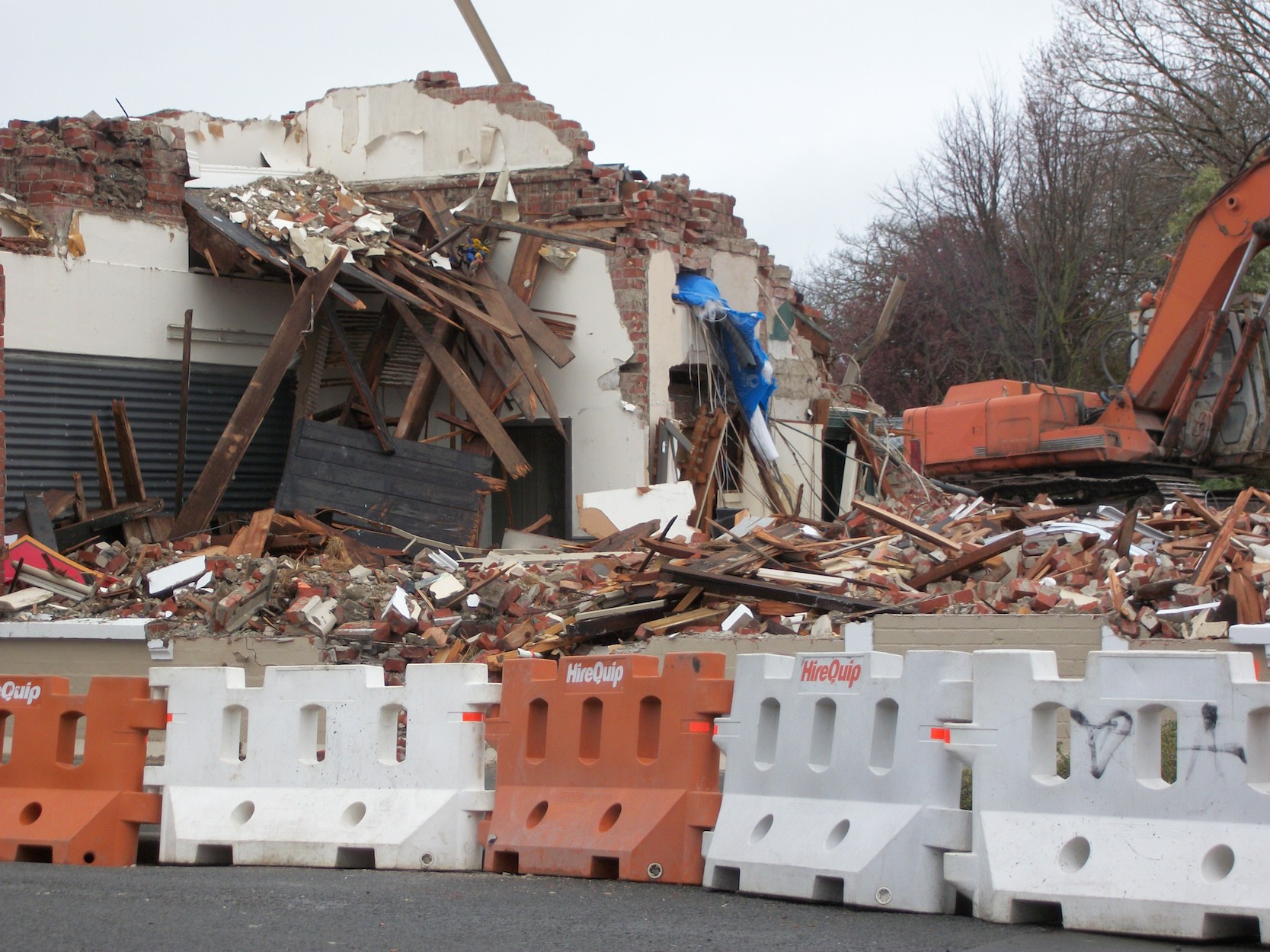
Damage from the 2010 quake.

Damage from the 2010 quake.

It seems strange, on a day we were shaken out of bed by another major earthquake, to blog about food or the garden. But I also feel like I’ve blogged about earthquakes so many times in the last six years, that I have little more to say about the experience.

However, every quake has its own character, and I find each one affects me differently.

This one struck around midnight last night. I must have been half awake, because I remember anticipating it, as though I was listening to it rumble across the plains. It started as they all do, with the jolt of the first shock wave. It built to a powerful roll, then stayed there, rocking the house like ocean swells, for almost two minutes.

I had no need to get out of bed; bed is, after all, one of the safest places to be. But as the shaking continued, my curiosity got the better of me.

It wasn’t enough to experience the quake in bed. I needed to feel it more. To know it better, if it was going to hang around so long. I stood in the bedroom doorway, gazing into the moonlit living room. The door frame swayed under my hand, and I felt as though I were on a ship, a hand on the railing, riding the waves.

There was time to feel each wave as it rolled through the house. Time to anticipate the next roll. I fell into rhythm with the swaying house.

And still the waves came. The house and I moved gracefully with each one, dancing in the moonlight.

And because the quake was distant enough, the S-waves came separately, like the gentle sloshing of a bathtub after you’ve stepped out. Like a long, quiet coda fading into silence.

After the thousands of quakes we’ve experienced in the past six years, we knew that the quake was huge, and farther away than previous ones. We knew that somewhere, people’s lives had just been torn apart. Somewhere, that gentle rocking had been a fierce shaking.

But for me, there had been no fear in that quake. We met, we danced in the moonlight, and then it was gone.

In the morning light, we assessed the damage—there was little. Our water is brown, but that will settle when the aftershocks end. But morning brought the news reports and photos of devastation. My heart goes out to everyone who has lost a home, business or loved one. To everyone stuck in towns surrounded by landslides and broken bridges. To everyone who spent the night shivering on a hilltop listening to the tsunami sirens. To everyone who worked through the night and through the day to clear the mess, help neighbours, and rescue those trapped. To everyone who will spend the next five or ten years clawing their way back to a normal life.

Kia kaha.

Dolphin Stress Relief

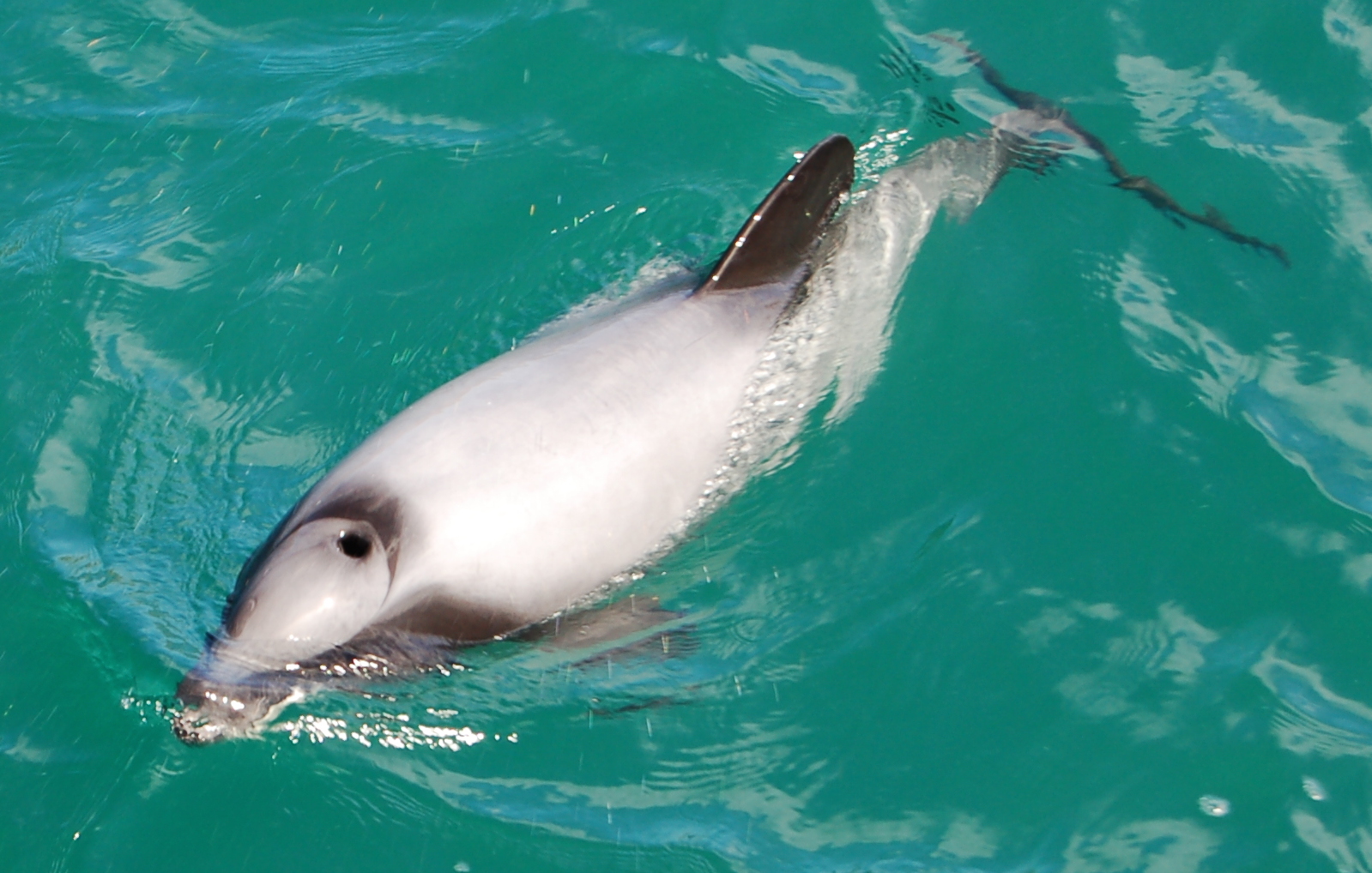
Hectors' dolphin (not today's) in Akaroa Harbour.

Hectors’ dolphin (not today’s) in Akaroa Harbour.

I had a long blog post for today mostly written. I just needed to polish it and find a photo to go with it…

Then we went down to the beach after dinner.

Before we had even crested the dunes, we saw the Hector’s dolphins—a pair of them cavorting just beyond the breakers of an unusually calm sea. By size it was a mother and calf.

What blog post can compete with dolphins?

“You realise this isn’t normal, right?” said my husband to the kids. “Most kids can’t see endangered dolphins on the beach five minutes from home.”

But it is normal for them.

And for that I am so thankful.

We walked the beach, watching the dolphins and picking up colourful stones. The stresses of the day vanished.

I forgot all about that other blog post…

Orb Weavers

2016-10-24-13-39-42Weeding can be tedious, miserable work. Hard on the back, hard on the hands, and downright painful in much of my garden, where nettles and thistles grow exuberantly.

But there are some perks. Weeding brings you close to the vegetation, and gives you a chance to see things you might otherwise miss.

Today I was treated to two native orb weaver spiders—two of my favourite native spiders here.

The first was a bright green, round-bottomed Colaranea viriditas—the green orbweb spider. These little gems are supposedly quite common, but the bright green ‘leaf’ on their backs must do an excellent job of camouflaging them, because I count myself lucky when I see one. Unfortunately, my camera was nowhere close, and this one scurried away before I could catch it.

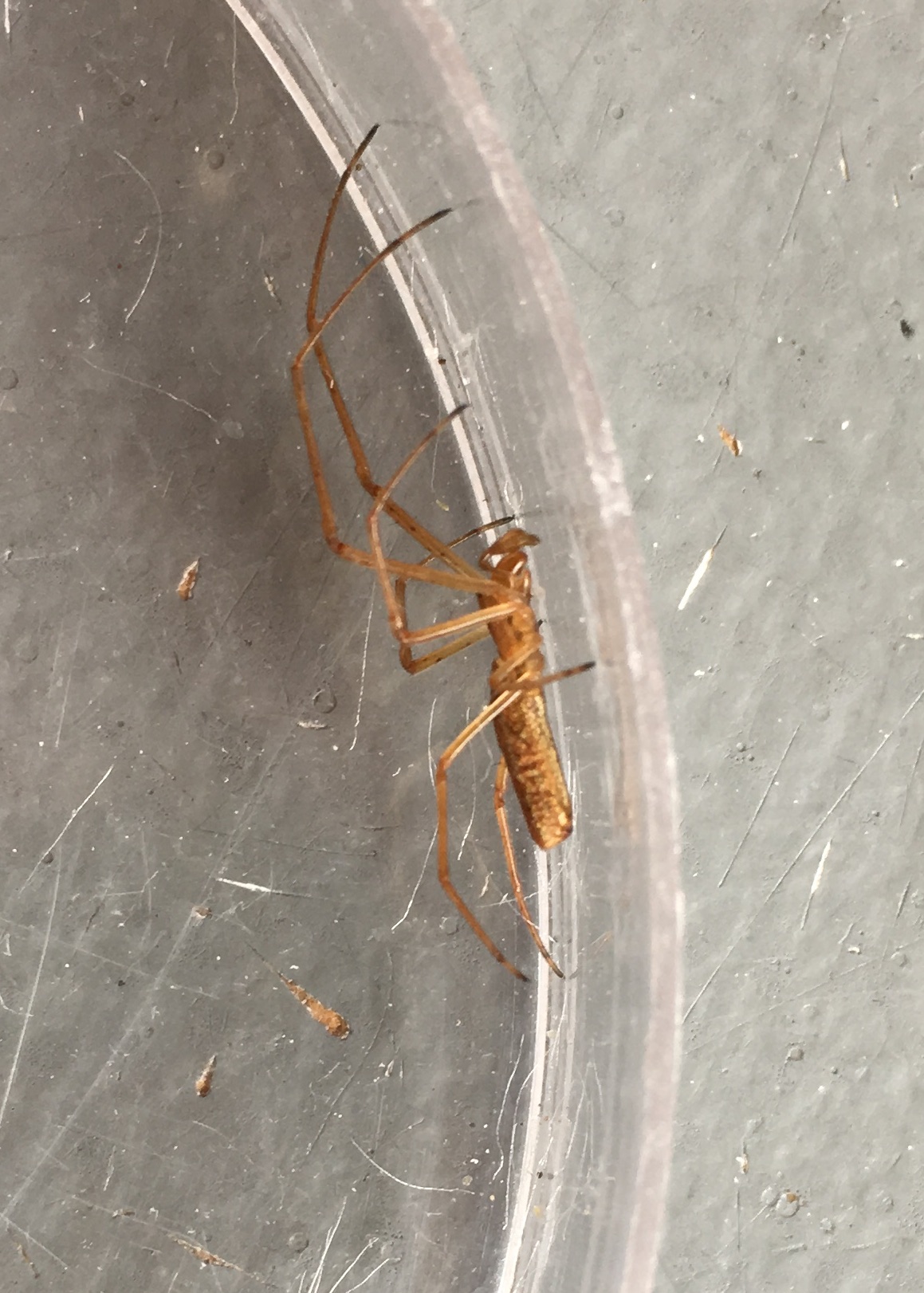
The second orb weaver I saw today is an expert at camouflage. You would be hard pressed to recognise it as a spider at all most of the time. This spider is in the family Tetragnatha—the big-jawed spiders. Tetragnathids have long thin bodies, and sit with their legs stretched out to the front and back, making the spider look like a small twig (I had to poke the one pictured here so it would stand up and look like a spider for the photo).

Tetragnathids are usually associated with wet areas, so I’m not sure what they’re doing in my dry yard, but they’re certainly common here. Though they’re hard to see, you can’t swing a sweep net in the tall grass without coming up with a few of them.

Both these spiders catch flying insects in webs shaped like the classic Halloween spider web—orb webs. Is it a coincidence that I saw them both today, a week before Halloween? Maybe they’re practicing for their big night.

Or maybe it was just my lucky day.

Saturday Stories: Violet

2016-10-10-15-31-17-hdr-cropsmYes, I know it’s Sunday. I meant to post this yesterday and forgot about it!

The bush crowded in on Violet’s cabin. She liked it that way. After Harold died, she had graciously allowed the tree ferns and bracken to reclaim the vegetable patch and most of the lawn. Violet had never been fond of the cabbage and broccoli Harold grew, anyway. And she couldn’t manage the lawnmower anymore.

Violet kept the house up as best she could. She patched the window screens, changed light bulbs, and swept the porch. The place needed painting, and probably a new roof, but Violet reckoned those would be jobs for the next owner. Her son-in-law cleaned out the gutters once a year, because Violet didn’t trust her shaking limbs on a ladder. He threatened to cut down the trees that overhung the roof and filled the gutters with twigs and leaves, but Violet said no, just as she said no to her daughter’s threats to move her to ‘assisted living.’

“Why would I want to go live with a bunch of old people?” she replied.

“Mother, you’re eighty-seven!”

“And living just fine without assistance, thank-you-very-much!”

“Couldn’t you at least move to a nice flat in town? It would be so much less work for you than this old cottage. And more comfortable, too.”

“There’s no such thing as a nice flat in town. Yes, I could live in a flat and listen to my neighbours through the walls—hear them on the toilet, smell their dinner every night.” She harrumphed. “I don’t want to be subjected to my neighbour’s curries or their bodily functions.”

“But neighbours would look out for you. Out here, you’ve got no one. What if something happened to you? It could be a week before anyone noticed.”

“Well, then I’d die in a pleasant place. I won’t move to town, to be watched over by the neighbours.”

Violet knew she depended on her daughter’s help—the weekly visit to do her cleaning and bring her groceries—but she was thankful when it was over.

Her daughter always fussed over Violet—she must be too cold, the house was too damp, the lights too dim. When she left, Violet turned the lights off, let the fire go out, and opened the windows. She preferred the natural light, the fresh air. She was rarely cold, and knew her way around the house, even in the dark.

This evening, in the wake of one of her daughter’s visits, Violet sat in a battered wooden chair on the porch. Harold had painted it white years ago, but most of the paint was long gone. The wide arms were black from years of Harold’s garden-soiled hands. Tonight, Violet set her cup of tea on the right arm, her hand wrapped around the mug.

She sat and listened, as she did every evening. Her eyesight was going, but her hearing was still as sharp as ever.

As the light faded, a bellbird called—its clear, repeated call falling into a rhythm Violet knew well. She tapped a foot as though to her favourite tune.

A tui clanked from behind the house.

He’s a little late tonight, she thought. I wonder if he’s got himself a girlfriend.

She sipped her tea and closed her eyes, waiting for her next visitor. In a flurry of wing beats, a kereru landed in the rata tree hanging over the porch.

Welcome home, my friend, thought Violet to the plump bird.

A fine mist began to fall, hissing quietly on the roof.

The kereru ruffled its feathers and tucked its head under a wing.

The tui fell silent.

The bellbird sang its last note.

Violet’s foot stopped tapping and she let out a sigh.

The rain hissed as her tea cooled, sitting on the arm of the chair. The clouds lowered, wrapping the tops of the trees in a grey blanket.

Violet’s hand, resting lightly against her mug, cooled along with the tea.

Darkness fell.

Somewhere deep in the bush, a kiwi called, its rising trill a question needing no answer.

Violet remained on the porch, eyes closed, a smile lingering on her face.

Moody Skies

Looking up the Waiau River bed toward Franz Josef Glacier

Looking up the Waiau River bed toward Franz Josef Glacier

I’ve been to Westland in brilliant weather—when the sky is clear, the sun is shining, and every snowy peak is visible. It is spectacular when that happens.

But the rainfall on the West Coast is measured in metres. Temperate rainforest covers the lower slopes, and the rivers churn, gushing down the steep mountainsides. Sun is not the normal state of affairs. Clear skies are not what make the West Coast what it is.

More often than not, it’s raining on the West Coast. And if it’s not raining, it’s threatening to rain. So, while blue skies are gorgeous, they’re like a false smile, put on for special occasions. The real skies are brooding, veiling the higher peaks in clouds and the lower ones in misty rain (or pounding rain).

And those moody skies are every bit as spectacular as the blue ones, in my book, and more honest. Just as I appreciate when a friend shows their true colours, I appreciate when the West Coast does, too.

Provided I have a good rain coat, that is…

At the Penguin Spa

2016-10-11-14-40-35-cropIt was a week of endangered species for me. After being bitten by a kea on Monday, I was lucky enough on Tuesday to have a chance to see a Fiordland crested penguin / tawaki at Haast School, where I’d spent the morning teaching.

After lunch that day, a trio of Department of Conservation rangers arrived with a juvenile female tawaki that had been rescued off a nearby beach where she had been found emaciated. She was being nursed back to health in preparation for re-release, and the rangers took the opportunity to share her with the local school.

Tawaki are not quite as rare as kea, but they’re shy and tend not to frequent tourist areas like the kea do. This was the first one I had ever seen. There are about 2500 to 3000 breeding pairs remaining, and they’re one of only three penguin species that nest on mainland New Zealand.

Like many of our native birds, they are threatened by stoats, which eat eggs and chicks, and dogs, which can wipe out entire breeding colonies.

The children at Haast School named this particular penguin Ellen, and they had great fun watching Ellen take a warm saltwater bath. The water needed to be warm because Ellen wasn’t preening and waterproofing her feathers properly (because she was too weak to do so). Without waterproof feathers, she got waterlogged in the bath, rather than staying nice and dry as penguins usually do underwater. After her bath, the DOC ranger wrapped her in a fluffy pink towel to dry off, and put a hot water bottle underneath her.

A full spa experience, I would say.

It wasn’t quite the same as seeing a tawaki in the wild would have been, but it was closer than I’m ever likely to get to one of these birds in the wild.

Ellen will spend about four weeks eating and taking spa baths before she’s ready to fend for herself again. I wish her luck.

Cheeky Parrots

2016-10-10-13-11-37-smIt’s not every day you’re bitten on the bottom by an endangered species.

Yesterday was one of those auspicious days, however. I was travelling through Arthurs Pass, headed to Haast with two colleagues to do a programme at the school there. We stopped to pick up lunch at the Arthurs Pass store, and three kea descended on us.

For those who don’t know, kea are large alpine parrots. Though there are only 2,000 of them left, they are bold and curious animals, unafraid of people. And they’re smart. They understand tourists—how they get so absorbed in taking photos of the parrots that they forget to shut their car doors, or leave a sandwich lying beside them.

They work in gangs—one bird coming in close to pose for pictures, while the others circle in from behind to ransack the vehicle.

We knew this, and had taken appropriate precautions. There were three of us and three of them. We should have been safe.

But, of course, we wanted pictures—you simply can’t not take pictures of them, no matter how many times you’ve seen them. We all crouched down beside the van to snap our photos. That’s when it happened. I was focused on one kea, and another came up behind me and bit me on the bottom. Cheeky bastard!

But I got a photo.