Rangitata

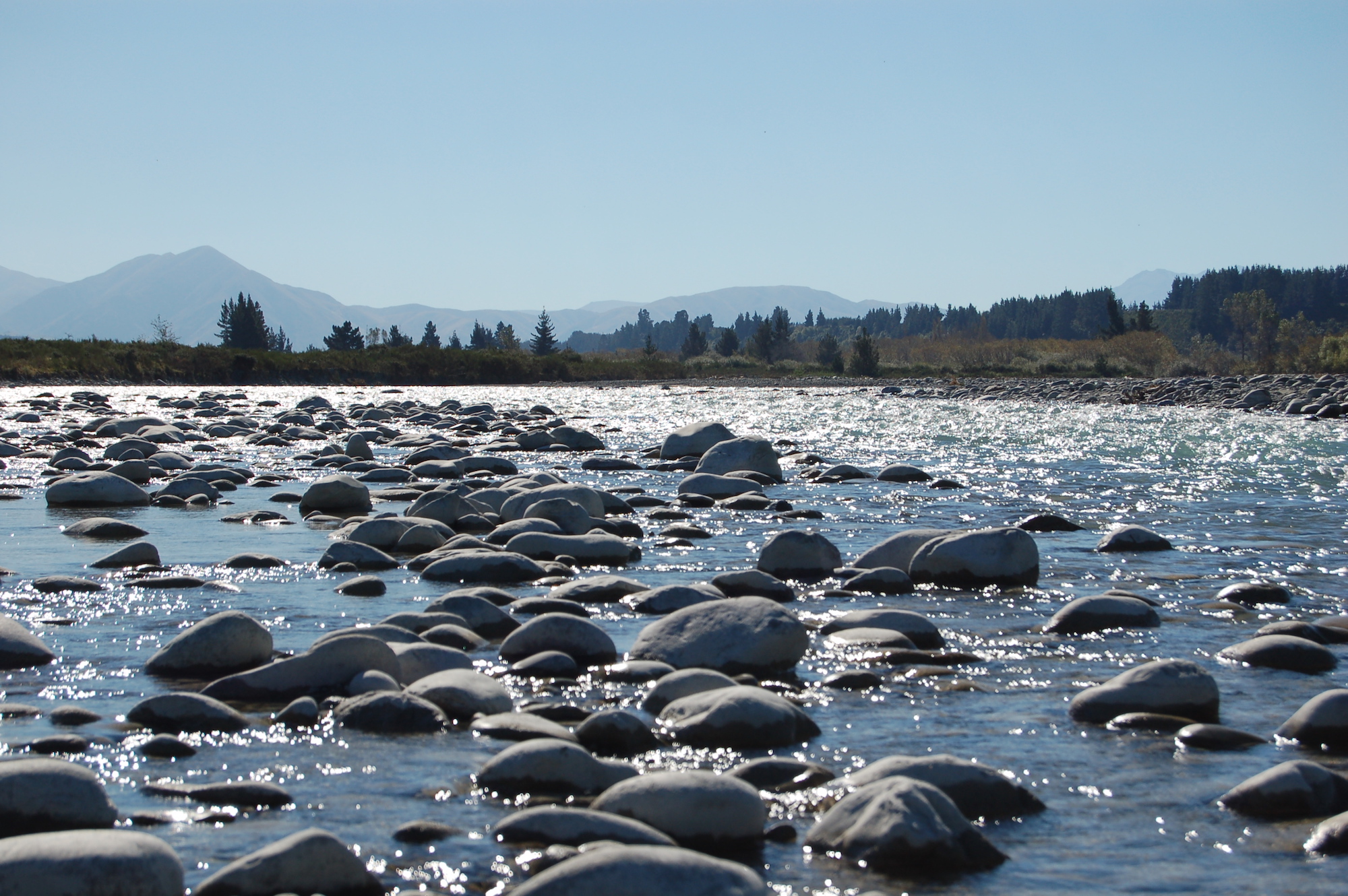
Boulders like
Some great migration of hump-backed
Turtles
Lumber through the shallows.
Wading
Only to the knees.
Wary
Of the laughing burble of
The deep channel beyond.
Their cousins crowd the opposite bank.

Watch.

One will push another in
If you wait long enough.

Losing Soil, Making Soil

img_3148This time of year is always dusty. The soil is dry. The air is dry. Farmers harvest the summer crops and turn the soil to plant the winter’s grass. It’s not unusual for a wind to kick up, sending newly-turned soil into the air.

I don’t know how much soil farmers in Canterbury lose this way (they’re also getting soil from the farms upwind and loess blown off the mountains), but I do know that where my back yard meets the neighbour’s field, my property is significantly higher. At least some of that soil is being lost.

Interestingly, there seems to be a place on the neighbours’ farms where soil is being made.

A hundred and fifty years ago, farmers in Canterbury were planting gorse hedges for shelter and fencing. Many of those gorse hedges remain (indeed, they’re hard to get rid of). The original plants are almost certainly long gone, as gorse is a short-lived shrub, but new plants are continuously growing from seeds cast by the mature plants.

It’s quite possible that my neighbour’s gorse hedges have been here since Joseph Price took up the original 5000-acre run number 79 in 1853.

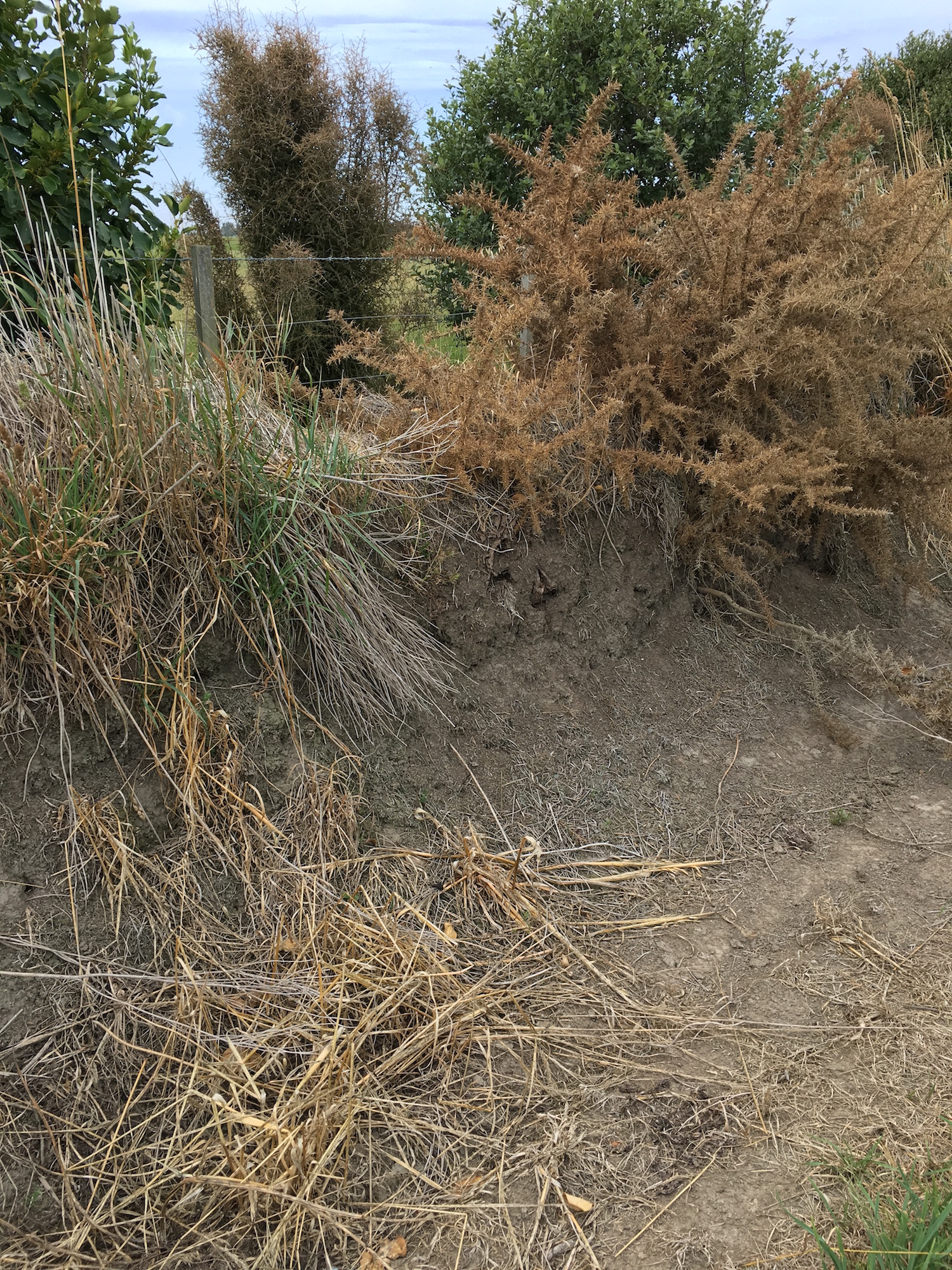
Gorse is dense when pruned into a hedge. New outer growth shades out growth in the middle of the hedge. Thorns and branches fall and form a dense, prickly mass at the base of the plant. Over time, this detritus breaks down and forms soil.

Quite a lot of soil, by the looks of it.

Some gorse hedges were planted on ridges–ditch and dyke, it was called–the farmer dug a ditch to help drain the land, and planted a hedge on the resulting pile of soil scooped out of the ditch. Some hedges were just planted on the level ground. This is how the hedges along my lunchtime walk were planted, but today it looks like they were sown on a tall, narrow wall of soil.

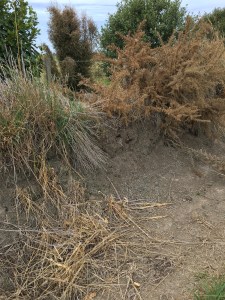
The build-up of soil under the gorse hedges is impressive. In some places, it is as high as my waist. It is most visible where the gorse has been herbicided off to make way for native hedging plants. There you can see how the twisted trunks and branches have caught the detritus and held it in place, even after it has rotted.

How important are these ridges of new soil in a landscape that is losing soil? Probably not terribly important–they cover just a tiny fraction of the landscape–but I find them intriguing, nonetheless. Our agricultural landscapes–as modified, controlled and cultivated as they are–still hold interesting stories.
Technological Stress Relief

Our smoke-red sky

Our smoke-red sky

It’s been a tense day here. For those who don’t pay attention to the New Zealand news (I don’t blame you–one of the top stories today was that a police officer in Queenstown pulled a plastic cup off of a hedgehog who was stuck in it), there have been two bush fires burning in the Port Hills, just outside of Christchurch for the past two days. We’ve been able to see the flames from our house 30 km away–they’re serious fires. Yesterday I worked at a library not far from where the fires were burning, and watched as helicopters with monsoon buckets circled.

Today the wind shifted and is pushing the fire toward the city. As evacuation orders started coming in, my kids were somewhere on a bus, caught up in a snarl of traffic. People fleeing the flames, people trying to get back to their homes from work, people coming to see the spectacle of the hills above town on fire–it was pretty chaotic.

I was safely at home, watching the smoke plume burgeon, listening to the radio. It all felt so familiar–a natural disaster, and I was in one place, and the people I love were in another. We’ve been here before.

The difference was that this time, all four of us own cell phones. Last time, we didn’t know the status of our loved ones until we actually saw them. This time, I knew pretty well where everyone was all afternoon.

It didn’t stop me from worrying–my kids were still too close to the fire and too far from me for comfort–but it prevented me from envisioning the worst.

I admit, there are times when I want to say to at least one of my children (or to myself), “Put down the phone!” But the trade-off of being able to communicate with them on days like today is worth it.

I’ve been accused of being a Luddite, and the accusation has some merit–I don’t like technology for technology’s sake. New technology tends to stress me out. But I certainly appreciated it today–it relieved a great deal of stress.

Salty Pretzels, Shiny Pots

img_3057I love soft pretzels. If I had an unlimited supply of them, I’m certain I would simply eat them until I was sick. So it’s a really good thing they’re basically not available in New Zealand.

They’re easy to make, though, and the kids enjoy shaping them. We make them with some regularity, usually timed so that they’re coming out of the oven at lunchtime. Served with dill pickles, mustard, and a good sharp cheese, they make an excellent meal (if a bit salty).

I love these pretzel meals, but even after the pretzels are gone, they leave a lasting bonus.

A shiny pot.

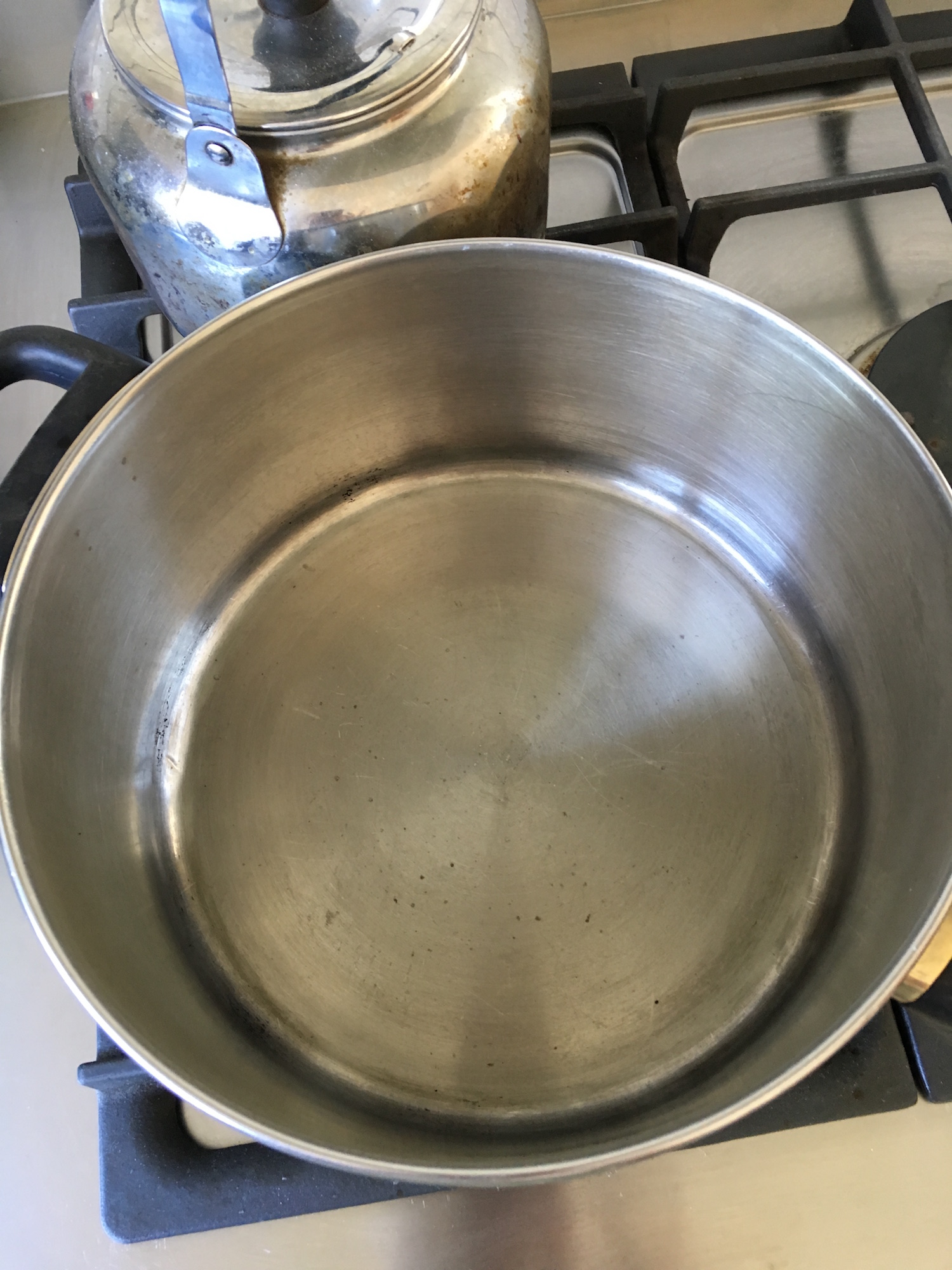
Boiling the pretzels in a baking soda/water mixture loosens all the burnt-on oil from my cooking pots. You know, all those dark spots you chalk up to ‘patina’ because they’re a real pain to wash off. Loosened by the baking soda, they lift right off when you wash the pretzel-boiling pot.

I learned this years ago, and regularly boil water and baking soda in my pots to get them nice and clean. But I never have the patience to boil it long enough–by making pretzels in the baking soda mixture, I leave it boiling long enough to lift the stains.

Pots looking dingy? Maybe it’s time to make pretzels!

The Dragon Slayer’s Son–cover reveal

dragonslayer004d-smI’m thrilled to be able to reveal the cover of The Dragon Slayer’s Son–a middle-grade fantasy set in modern-day New Zealand…with dragons.

Nathan is shocked to learn that his father is dead, and even more shocked to learn that he died in the line of duty as a dragon slayer. Everything he thought he knew about his father was a lie. But he has no time to think about what it means before he is whisked away to the Alexandra School of Heroic Arts to train as his father’s successor.

At school, Nathan and his new friends soon learn:

Dragons are not what they thought.

Neither is the schoolmaster, Claus Drachenmorder.

And Nathan’s dad might not be dead…yet.

Nathan and his friends escape from school and embark on a journey through the mountains to find Nathan’s dad. To succeed, they will need to survive the dangers of the mountains, evade Drachenmorder’s henchmen, seek the aid of the dragons, and unravel an international ring of wildlife smugglers.

Coming soon to an online retailer near you…

Nīkau Palm Gully

img_3044-smWe spent the weekend on the Banks Peninsula. Saturday we kayaked around Akaroa Harbour all day, and today we hiked out to Nīkau Palm Gully.

The track out to NÄ«kau Palm Gully is easy walking, as it follows a farm track. It’s pleasant, but not exactly wilderness. The views out over Akaroa Harbour, however, are spectacular. And at the end of the track is the steep drop down into NÄ«kau Palm Gully.

The gully is a tiny V of land, hemmed in by cliffs, and sporting one of the few remaining remnants of original Banks Peninsula forest.

Most notable among the trees are the palms which give the valley its name. The nÄ«kau palm is the southernmost palm in the world, and New Zealand’s only native palm. It is found in coastal lowland areas, and the Banks Peninsula is as far south as it ranges on this coast. There are nÄ«kau scattered around the Peninsula, but the population of them in NÄ«kau Palm Gully is impressive.

Nīkau palms are slow-growing. They begin as clusters of leaves growing on the forest floor. It may take forty to fifty years before they begin to form a trunk, and up to two hundred years to reach their maximum height of 10-15 metres. There are individuals of all sizes in Nīkau Palm Gully.

People have been visiting the gully for many years. One tree still bears the mark of a visitor who carved the year–1907–onto its trunk. A pair of amusing (to a reader over 100 years later) letters in the Akaroa Mail in 1909 indicate that the gully was, even then, considered a special place. In the first article, a member of the Beautifying Association writes a scathing indictment of the Akaroa Boating Club for having cut down several palms in the gully to use as decoration for an event. In a subsequent issue of the Akaroa Mail, a member of the Boating Club explains that they only removed a few leaves, not whole trees. The letter writer then goes on to accuse the Beautifying Association of removing entire plants (seedlings) from the gully for their gardens.

Thankfully, the landowners whose farm once encompassed the gully understood its significance, and gifted it to the Department of Conservation (in exchange for one 10-cent stamp presented to them on behalf of Her Majesty the Queen). It is now protected as a scenic reserve, and has been linked to other patches of native vegetation through a number of land covenants on adjacent properties.


Greengages

2017-01-25-14-58-09-smWe don’t often get many greengage plums. Our tree is small, and it sits in a windy location, so many fruits blow down before they are anywhere close to ripe. This year wasn’t too bad–we harvested about three kilos of fruit. Plenty to enjoy.

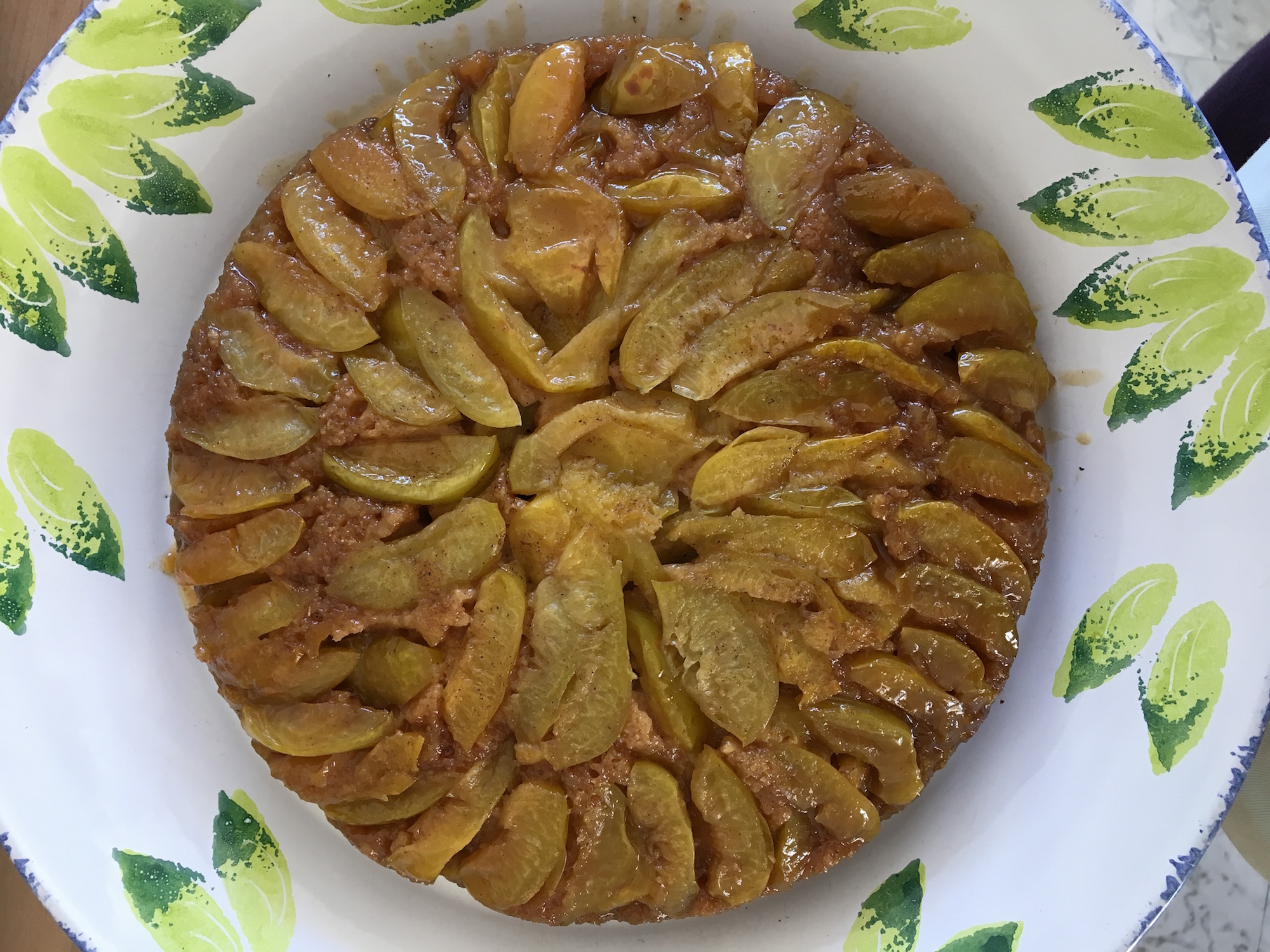
One of my favourite things to do with summer stone fruits is to make upside down cake. Indeed, I’ve blogged about it three times in the past two years. So today I’ll ignore the cake, and mention the plum, instead.

I didn’t know a lot about greengages before coming to New Zealand, where I found a fair number of people had them growing in their yards.

Greengages are named after Sir William Gage, who imported them to England from France in 1724. The cultivar he imported had another name, but apparently the tag was lost in transit (These were the days before anyone considered biosecurity…Importing a strange plant? Whatever). They were popular in America in the 1700s, but fell out of favour in the 1800s.

According to a 2004 article in the New York Times, there’s good reason greengages fell out of favour. The trees take longer to mature than other plums, they fruit erratically (I thought it was just our tree), the ripe fruit is fragile, and they’re prone to cracking and rotting on the tree. Not exactly an easy plum for commercial production.

But the greengage is considered one of the finest plums for flavour. Grown commercially, it fetches a high price. According to the New York Times article, in 2004 fewer than 100 greengage trees were harvested commercially in the United States. They are more common in Europe and New Zealand. New Zealand exports a small quantity of greengages to the US each year, where they are sold in specialty markets.

So I feel much better about my 3 kilo harvest of greengages. They are wonderful, and if they’re a bit finicky to grow? Well, that just makes them all the more special when we have a good year.

Celebrate January

2017-01-24-15-13-32-smThe golden month is nearly over. January is the sweet spot of the year.

The Christmas frenzy is over. The kids are o vacation. much of the rest of the population goes on holiday too.

Even I get a break. By January, the plants in the garden are large enough to suppress weeds, so there’s little weeding to be done. Te early crops are winding down and the summer crops are ramping up. Full-scale bottling (canning) and dehydrating will come later. January is mostly a time to enjoy the garden’s summer bounty.

There is work to do, of course. Peas, pickling cucumbers, and green beans all peak in January, and they need to be processed. But they are relatively quick and easy crops to preserve.

Along with the garden respite usually comes sunny summer weather. We can go camping and backpacking, and take trips to the beach. January is a month of sand, sun and effortless meals.

February will come, with school, work, and a mountain of vegetables to process. The nationwide party mindset will end, and we’ll all settle in for another year at the grindstone.

But there’s still a week left. Enough time for a bit more fun…

Postcard From New Zealand

2016-01-22 14.08.29 smWe spent the day yesterday at the beach (along with the entire population of Canterbury and half a million tourists, judging by the crowds). It was a stellar beach day–hot and sunny. Perhaps a bit too windy at times, but heat and wind are almost inseparable here, so we just go with it. We managed to slip away from the crowds for a while by clambering over the rocks to Little Okains Bay. The water was cold, the sand was hot, the rock pools teemed with cool creatures, and the scenery was stunning, as usual.

The entire day was a full-colour glossy tourism ad for New Zealand. And it was just one of many similar days we’ve experienced recently.

I’m not saying that every day is a vacation–I put in 11-hour workdays (painstaking editing) all last week, and I pull a lot of weeds and have to clean the house and the chicken coop every week–but New Zealand does vacationing well.

All day, I kept coming back to one, glorious, humbling, beautiful thought–this is my home. My family and I are so blessed to have been welcomed into this amazing country. A place where we can stand on the top of a mountain one weekend, and swim in the ocean the next weekend. A place where Christmas/summer vacation lingers through the entire month of January; even once many people are back at work, the vacation mindset remains. A place that embraces a weird and wonderful mix of people from all over the world.

New Zealand has its problems–no human society doesn’t–but I feel honoured to be allowed to make my home here in such an incredibly beautiful place among such incredibly beautiful people.

So you all my Kiwi readers–thank you.

And to all my overseas readers–having a great time. Wish you were here.