Pest Management: Control

Yesterday I wrote about strategies for preventing pest problems. If you’ve taken all the measures you can to prevent pests, but the pests arrive anyway, there are different questions to ask:

Centipedes are predators of many garden pests.
  1. Do I need to worry? Low levels of pests aren’t a big deal. A few aphids, a caterpillar here or there, the odd bite out of a leaf—these things aren’t going to have a big impact on the quality or quantity of your harvest. Just keep an eye on them to be sure the problem doesn’t get worse.
  2. Can I physically remove them? I’m a huge fan of squishing and hosing pests off plants. For example, I have problems every spring with aphids on my roses. If I do nothing, the plants become completely covered, and the blooms are destroyed. So in spring, I keep an eye on the plants, and once the aphids start reproducing, I hose the plants down once a week, knocking off most of the aphids. Usually I only have to do this about three times before the aphids’ natural enemies build up enough to keep them under control without my help.
  3. Can you disrupt a critical part of your pest’s life cycle? Is there a life stage that can be easily killed, or has specific requirements you can disrupt? For example, I keep a close eye on my brassica seedlings, looking out for cabbage white butterfly eggs on the undersides of the leaves. All it takes is a quick swipe of the thumb across the bottom of each leaf to squash the eggs and eliminate future problems with caterpillars. Another example is my recent problems with slaters in my greenhouses. Discovering that the slaters are congregating between cement blocks stacked beside the greenhouse, I’ve started regularly checking and squashing all the slaters in those blocks. (I could also have moved the blocks, to eliminate the slaters’ shelter, but since the population was quite high, I thought squishing a whole lot of them would be more effective for now. Later I will probably move the blocks to make the area around the greenhouse less attractive to slaters). 
  4. Can I make use of them? Pest-covered plants, grass grubs and slugs all get thrown over the fence to my chickens, who turn them into beautiful eggs for me and save me from the disgusting task of squishing the bugs. 
  5. Can I pull out badly infested plants? If there’s a couple of plants badly infested, but the pests haven’t spread much, rip out those infested plants and destroy the pests on them. You’ll lose a few plants, but you’ll protect the rest of your crop.
Pest-gobbling chickens.

In an IPM system, you don’t consider any sort of chemical control until you’d exhausted all the possibilities above. In practice in my garden, I almost never need anything else. Occasionally, if I’ve missed an aphid infestation on a crop that can’t handle a strong spray of water, I’ll use a soap solution to kill aphids. That’s the extent of my chemical control. But if you do need to resort to chemicals, it’s important to choose the right one. The more specific it is to your pest, the better. Many modern pesticides are narrowly focused, and target specific pests, and that’s great. With a narrow target, the pesticide is less likely to kill beneficial insects or harm people and pets. Stay away from broad spectrum pesticides. Also, if you do use pesticides, be sure to follow the label directions carefully, wear protective gear, and dispose of leftover product and empty containers properly. 

Pest Management: prevention

It’s nearly spring, so naturally my thoughts turn to the subject of pests. Our big pest-related project in the garden this year is bird netting a third of the vegetable garden, so we don’t lose most of our tomatoes and peas to the feathered rats.

Aphids–the one on the right is healthy, the one on the left has been parasitised by a wasp, one of the many natural enemies that keep aphids under control in the garden.

As an entomologist whose research focused on Integrated Pest Management, I always have a lot to say about pests. And it’s an important topic—globally, 30-40% of crop yield is lost to pests (interestingly, this figure didn’t change with the advent of chemical pesticides—insect pests are incredibly quick to evolve pesticide resistance). That’s a lot of wasted food!

For home gardeners, fighting pests is a daily task. Every place I’ve gardened has its own unique pest problems. Growing up in Lancaster Country, Pennsylvania, I remember the rabbits munching through the garden. In State College, Pennsylvania it was flea beetles that shot so many holes through my eggplants’ leaves they never had a chance to grow, and the squash bugs that clustered in masses under the leaves of my zucchinis. In Panama, leaf cutter ants could strip a plant bare in no time. 

In my first garden in New Zealand, aphids and rabbits were my main problems. When we first arrived on the property, there were so many rabbits I wondered if I’d be able to grow anything. A rabbit-proof fence was the first garden project there.

In my current garden, birds are my worst enemy—mostly English sparrows and European blackbirds. They strip seedlings bare, eat tomatoes, pull out onions, and scratch away mulch and soil, leaving plant roots to dry out (never mind the amount of chicken feed they snarf down every day!). 

Fortunately for me (and unfortunately for the pests), my masters degree focused on Integrated Pest Management (IPM), so I’m well-armed when it comes to tackling pest problems.

IPM is often called common sense pest control. In IPM, the goal isn’t to eliminate pests, but to minimise the damage pests cause, while choosing the most environmentally-friendly control methods that do the job.

To successfully use IPM, you must first know your enemy. What conditions does it like? What’s its life cycle? What are its natural enemies? How does it find your plants, and how does it travel? Books and the internet can tell you a lot, but careful observation of the pests in your garden is key. The particular conditions in your garden will affect how pests behave, and where their weaknesses are. If you know exactly where pests are and what they’re doing in your garden, you can begin to tackle them more effectively. For example, I know that in my current garden, there are particular varieties of squash the aphids like. By keeping an eye on those particular plants, I can catch aphid infestations early and deal with them before they spread to more plants.

Bird netting protecting pea seedlings

Once you know your pest’s habits, you can begin to consider control methods. Questions to ask:

  1. Can you time your plantings to avoid the damaging stage of the pest’s life cycle? For example, I don’t grow brassicas during the summer here—I have an early spring crop and a winter crop. By avoiding brassicas in summer, I eliminate bad problems with cabbage white butterflies, which tend to reach damaging levels around Christmas. I still have to be on the lookout for butterfly eggs on my seedlings, but once the plants are growing, they easily stay ahead of the caterpillars.
  2. Can you exclude the pests from your crops during critical time periods? For example, psyllids can transmit disease to potatoes and tomatoes, leading to poor growth and damaged tubers. By covering the plants with a fine mesh cloth, I can keep the psyllids out for most of the summer (until the plants are too big for the covers, by which point the psyllids don’t seem to be much of a problem). I do the same for my peas and lettuces—netting out birds until the plants are large enough to handle losing a few leaves. I also net my berry crops and olives before the fruits start ripening, so the birds don’t pick them before I do.
  3. Can you plant varieties the pests don’t like as much? For example, I plant mostly red varieties of lettuce, because the aphids take longer to discover them than they do the green ones. Usually, by the time the aphids find my red lettuces, they’re bolting and ready to pull out anyway.
  4. Can you plant a ‘trap’ crop that the pests like more than your favourite vegetables? I haven’t done this explicitly, but as I mentioned earlier, there are certain varieties of plants I know are particularly tasty to pests, and I closely monitor them and kill the pests on them before they can spread to other crops. A true trap crop is something you’re willing to pull out entirely when it is infested by your pest, in order to destroy the pest.
  5. Can you prevent pests from finding your crop? Interplanting different crops can help disrupt the spread of pests, because they struggle to find new plants to feed on. It can also help you make the most of the space in your garden. For example, I sometimes plant summer lettuces in the shade of my sweetcorn—not only does the shade help prevent the lettuce from bolting, it also seems to hide the lettuce from aphids.
  6. Can I encourage the pests’ natural enemies? Many pest insects are preyed upon or parasitised by the larvae of beetles , flies and wasps. The adults often eat pollen and nectar, so planting herbs and flowers is a great way to encourage many pests’ natural enemies.

All six of the questions above will help you avoid a pest problem in the first place. They are changes in the way you plant or grow your crops that make it less likely you’ll have pest problems. Tomorrow, I’ll look at what you can do once you’ve discovered pests in your garden.

Autumnal Buzz

As an entomologist, I love early autumn. Insect numbers are at their peak, and most insects are adults—their most active and visible life stage.

As a kid growing up in rural Pennsylvania, early autumn nights were nearly deafening with the cacophony of cricket and katydid chirps. Days buzzed with the sounds of cicadas and grasshoppers.

New Zealand is quieter, but autumn still has its distinct voices. Our katydids’ sharp ‘zit zit’ seems to echo from their favourite ake ake trees. Crickets twitter in the grass on sunny days. Cicadas and grasshoppers buzz from trees and bushes.

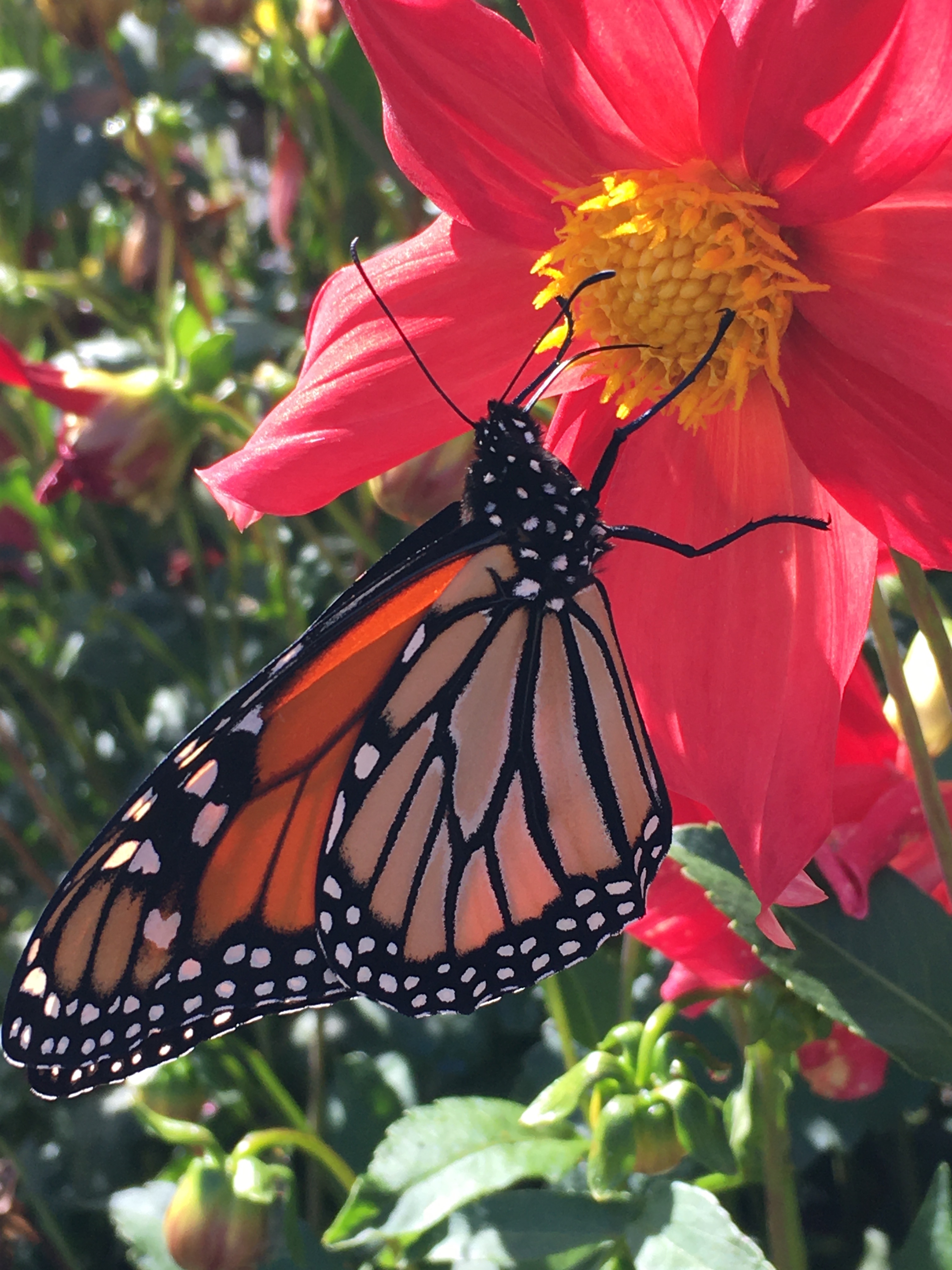
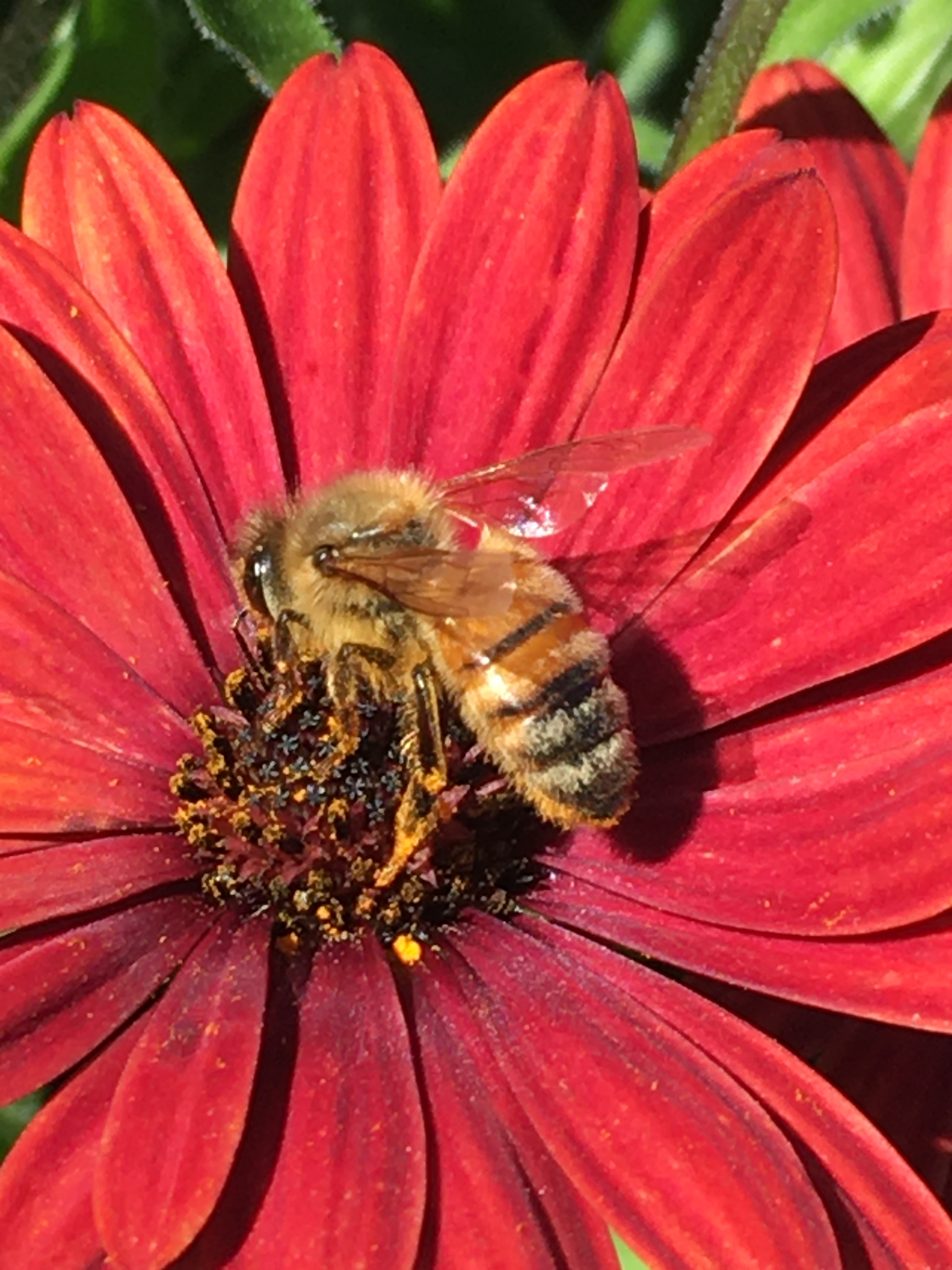
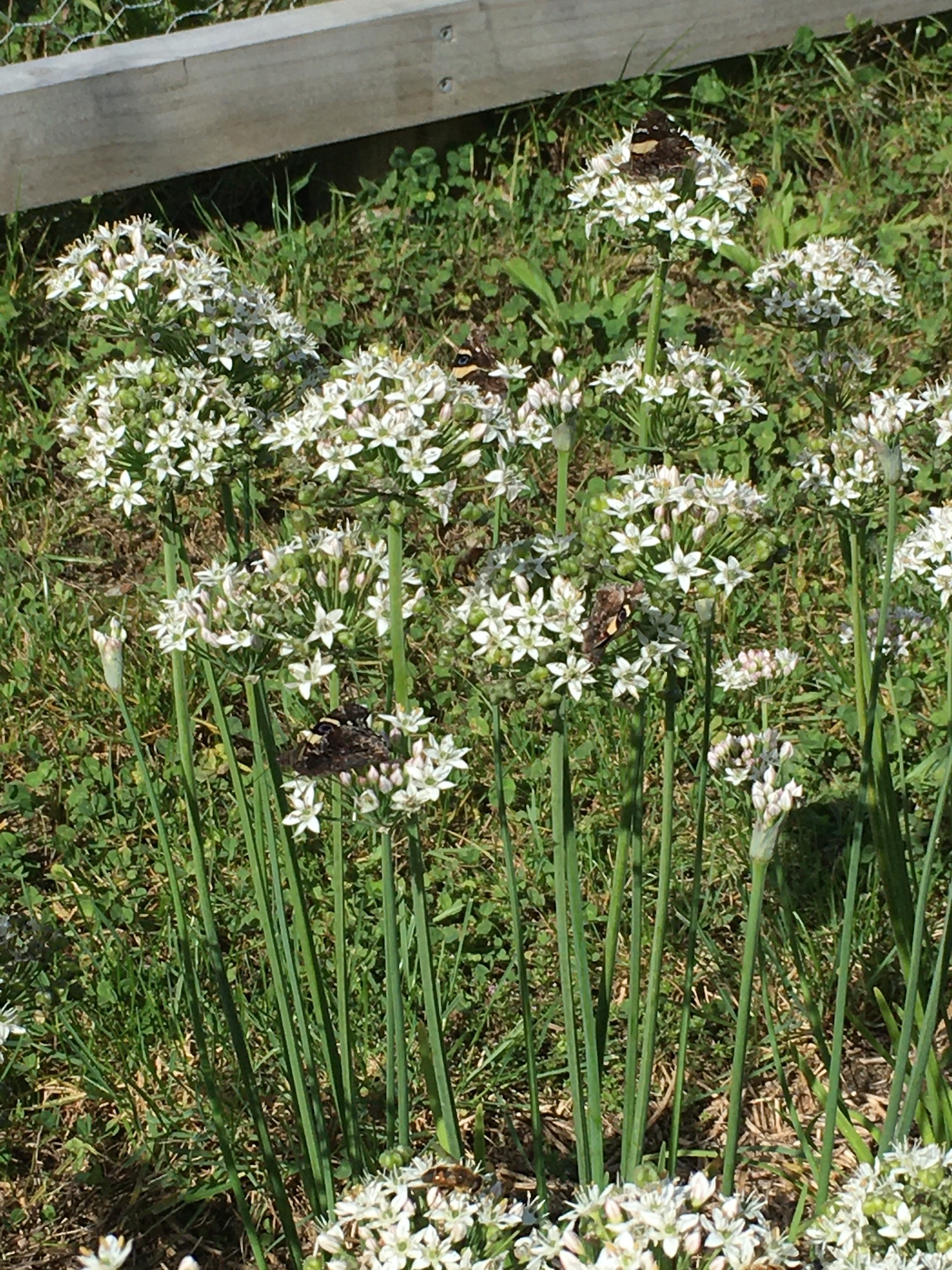
Bees and butterflies are particularly active on autumnal blooms. Many of our showy butterflies overwinter as adults, so they can be seen flitting about on warm days into late autumn.

Of course the clouds of invasive cabbage white butterflies on the brassicas and the German wasps swarming the compost pile aren’t terribly welcome. But still, I enjoy the leggy hum and flutter of the season.

Lichens Rule

Not long ago, I spent a glorious sunny day wandering around Cass Field Station while my husband met with some students there. It was nice to take a solo walk and go at my own pace, stopping at whatever plants, bugs or rocks caught my fancy.

Once nice find was this beautiful lichen, Rhizocarpon geographicum.

Lichens are strange organisms comprised of an alga living within a fungus. The alga provides food through photosynthesis and the fungus provides protection and nutrients for the alga.

R. geographicum is an alpine/subalpine lichen and, like many lichens, is sensitive to air pollution, thriving only where the air is clean. It is not, however, a fragile organism.

In 2005, R. geographicum was one of two lichens launched into space. The lichens were exposed to 14.6 days of open space—vacuum, wide temperature fluctuations, intense UV light and cosmic radiation. Upon return, R. geographicum showed little harm from the experience.

Not only is R. geographicum tough, some individuals in the Arctic are estimated to be 8,600 years old, making them the oldest living organisms on Earth. Their longevity and predictable growth rate make them useful tools for determining when glaciers retreated from an area.

But I didn’t know all this about R. geographicum when I found it on the rocks at Cass. I simply admired its beautiful mottled colours and soft texture. 

Nature Red in Tooth and Claw

Photo: Eric Weiss

It’s not often you witness outright thuggery in nature. Predators hunt prey—they have to, because otherwise they starve. Predation is never pretty, but it is what it is. 

Sitting at my desk, procrastinating … er … writing this morning, I saw brutality, pure and simple. 

A pair of magpies was chasing a starling. They caught it and brought it to the ground. Standing over it, they pecked at its eyes. At first, I thought they were trying to kill and eat it. But after a few minutes, they got bored. The starling managed to fly off. The magpies followed, caught it and brought it back, only to repeat the eye pecking routine. Three times while I watched, they allowed the starling to escape, then brought it back to peck at it. Always at the eyes.

Eventually, they bored of the sport. They wandered away from the hapless starling to forage in the lawn nearby. After a few minutes, starling and magpies flew off in opposite directions.

I suppose it shouldn’t come as a surprise. Australian magpies have a reputation as aggressive, intelligent birds that like to play. They brazenly steal food from the chickens, fighting right back when a chicken lunges at them. And I’ve watched as gangs of juvenile magpies have tormented my cat, swooping low over him as a team, trying to get a peck in while he swats at them. And I’ve been on the receiving end of magpie parents defending their nests with noisy dives at my head.

In general, magpies eat invertebrates—they were originally introduced to New Zealand to help control crop pests. Research on their effects on native birds indicates they only rarely kill other birds, and their aggressive pursuit of larger predators like harriers may even provide some protection to smaller birds.

Still, I can’t help thinking magpies are the bullies of the playground. They’re fine as long as you’re not their target. Fascinating for me as an armchair naturalist, but I’m thankful I’m not a small songbird.

Wild West

On a whim, my husband and I spent last weekend on the west coast. We stayed in our favourite west coast town—Hokitika—and hiked in the mountains nearby.

view from Mt Greenland
The view from the top of Mt Greenland

Having lived in a rainforest for two and a half years, I know I wouldn’t want to live on the west coast (where rainfall ranges from 2 to 11 metres per year), but I love visiting.

On this visit, we hiked up Mount Greenland. The path up is an abandoned road that used to connect the small gold mining settlement of Veronica to the township of Ross. An article in the West Coast Times in 1888 records Veronica as a promising settlement, complete with a hotel and two stores. Even then, the road from Ross was apparently atrocious—other newspaper accounts from the 1880s colourfully describe knee- and waist-deep mud on the way to Veronica.

The mine near Veronica was abandoned in 1940, and the rainforest has been reclaiming the road ever since. The day we hiked it was sunny and cool, but even without active precipitation, the road streamed with water in places. There were a few short stretches without washouts, deep puddles or slips, but only a few. Ferns leaned over the edges of the narrow track, so that in spots, even hikers were forced into single file. It is clear some informal maintenance of the track still goes on, but the forest is doing its best to erase it.

rainforest

And this is probably what I appreciate most about the west coast—nature is in charge, and humans maintain only tenuous grip. The settlement of Veronica has all but vanished under vines and tree ferns. The gold rush of the 1800s left no ghost towns—the forest has swallowed them all up. Other west coast townships, like Franz Josef Glacier, Fox Glacier, and Kumara Junction, feel equally under siege by Mother Nature, as though it would only take a few moments of inattention before the trees would creep down the streets, and the vines snake over the houses.

As apocalyptic as that vision is, it gives me hope. Hope that one day, the planet will erase the scars of our fleeting presence here and carry on in a riot of life.

Weekend Getaway

Carrington Peak

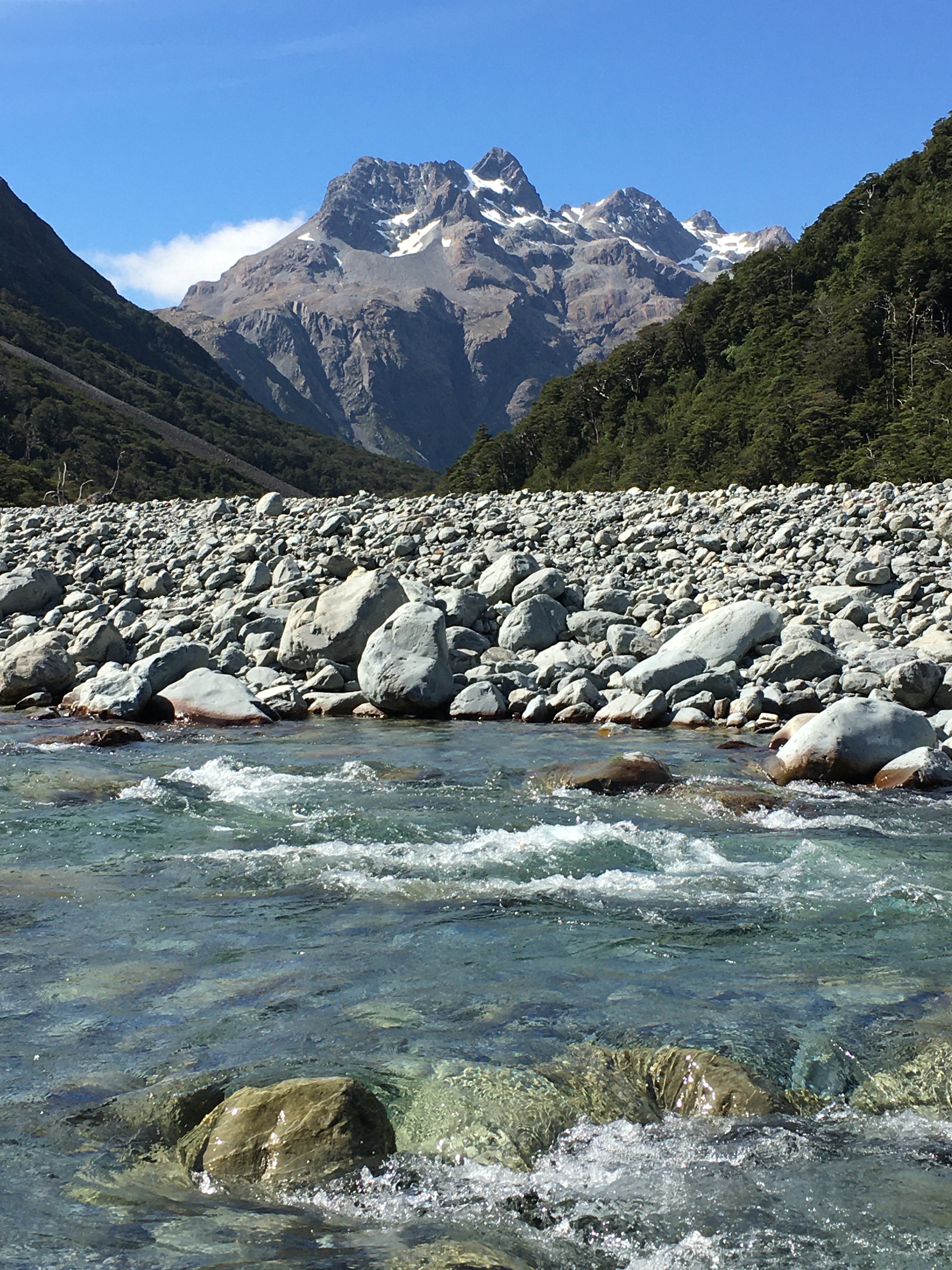
Over the long Waitangi Day weekend, we hiked up the Waimakariri River to Carrington Hut. Using Carrington Hut as a base, we took day walks to Kilmarnock Falls and Waimakariri Falls Hut.

The weather was glorious, and hiking on the riverbed, it was easy to cool off with a quick dip in icy water. The hike to Waimakariri Falls Hut was particularly rewarding: there are two ‘official’ falls on the river, and dozens of smaller streams dropping off the surrounding peaks in spectacular fashion, so you feel as though you’re walking through a watery wonderland.

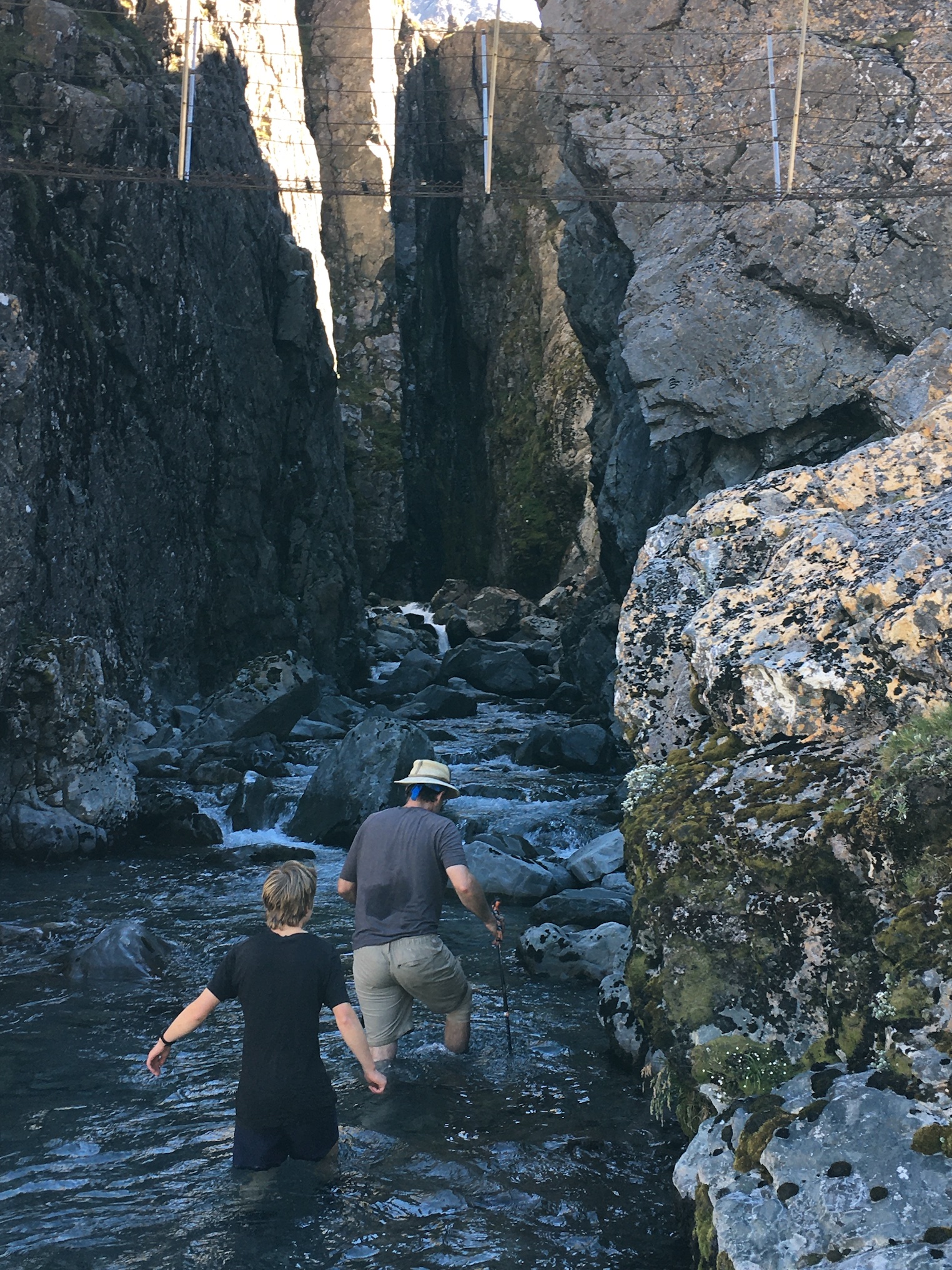
Wading in to see Waimakariri Falls.

The upper falls, just below the hut, are hidden in a deep, narrow fissure in the rock. Waist deep in icy water is the only way to see the water roaring down—great fun, but not something you’d want to do on a cold day. 

Above the falls, the river is narrow enough to jump across with dry feet, and flows through a fabulous alpine landscape. We didn’t hike all the way to the snowfield where the river actually begins, but we were close. 

The fuzzy flower of a South Island edelweiss

My favourite two things on the hike were the South Island edelweiss (Leucogenes grandiceps), which looks like it was made out of felt by someone named Aunty Flo, and the river water itself. The water was crystal clear, yet colourful (the gorgeous turquoise of glacier-fed rivers) and full of substance. I could have watched it flow over the rocks for hours (come to think, I did watch it flow over the rocks for hours).

Waimakariri Falls Hut. The snowfield visible to the right of the hut is the source of the Waimakariri River.

Least favourite part of the hike was Carrington Hut. It’s a great hut in a stunning location, but last weekend, it felt as though everyone from Christchurch was there. Carrington Hut has 36 bunks, but only 1 toilet and 1 sink. With about 40 people in the hut and another 20 or so tenting nearby, it was way over its capacity. As usual, everyone was considerate and did their best to make it work, but it was still unpleasant.

All in all, a lovely weekend getaway, and an easy hike, as long as you’re comfortable with river crossings.

Christmas on the Heaphy Track

Our pre-Christmas tramp this year took us to Kahurangi National Park to walk the Heaphy Track. The trip was simultaneously spectacular and miserable.

The Heaphy Track follows the path of a proposed road, and as such is gently graded—it’s a technically easy walk. So easy it’s almost boring. But it passes through some spectacular landscapes teeming with remarkable flora and fauna.

Day 1 began for us at 5.30 am when we awoke in the Collingwood Campground to our tent being blown flat by the wind and rain. We quickly decamped and retreated to a shelter to wait for the rain to let up before starting our hike.

Unfortunately, the rain outlasted our patience, so we started out under a heavy fall that had us soaked within minutes. The steady climb was largely unremarkable. The rain eventually cleared and we reached Perry Saddle Hut under a sunny sky.

Day 2 was more eventful, with two endangered species sightings by 7 am. The first was a takahe browsing the grasses just outside the hut as we finished breakfast. This critically endangered bird, the world’s largest rail, was presumed extinct for 50 years. Its population now numbers just 445.

Minutes down the track, with rain setting in again, we nearly stepped on our second endangered species of the day—a Powelliphanta snail—a fist-sized carnivorous snail. Without the rain, we never would have seen these nocturnal, moisture-loving animals. We counted ourselves lucky.

Under increasing rainfall, we made our soggy way across Gouland Downs and then the weird and wonderful Mackay Downs. We explored caves and admired huge glacial erratics tossed like giant bowling balls over the landscape. Weka (another endemic rail) with chicks in tow scurried around our legs every time we stopped for a break, waiting for us to let down our guard so they could make off with a snack.

We reached Mackay Hut drenched, but the worst of the rain was yet to come. Half an hour later, the sky opened up and the wind rose. The torrent sheeted down, spilling off the hut roof like someone was tossing buckets of water over the edge. It didn’t let up until nearly 4 am the following day.

Again we set out in the rain, this time into a landscape scoured and still gushing water. But again the rain held delights—another giant snail, sundews lining the track, enormous 700-year-old southern rata trees, waterfalls in all directions, sprays of flowering bamboo orchids dripping from tree trunks, a mistletoe with scarlet flowers … That evening—Christmas eve—drying out in Heaphy Hut, we composed a New Zealand tramping ballad as a family:

T’was the night before Christmas, and all ‘round the hut
I sure wasn’t stirring; I was sitting on my butt.
A cup of tea nestled warm in my hand.
I ate lots of scroggin, expanding my waistband.
Out on the porch, the weka did play,
Hauling our shoes and our stockings away.

When up on the roof there arose such a clatter
I limped from my bench to see what was the matter.
The sun on the roof of the dunny nearby
Made me shade my eyes as I peered up to the sky.
And what to my wondering eyes did appear
But a trio of cheeky, mischievous kea.
With can opener beaks and curious minds
The birds tore apart everything they could find.
When done on the roof they moved on to our packs
Eating their fill of our Christmas Day snacks.

With our stockings all gone and no snacks to eat,
We still had a Christmas that couldn’t be beat.

Christmas morning dawned and the last ragged storm clouds blew away, leaving brilliant blue skies and blooming rata trees for our last leg along the coast under dense stands of nikau palms.

We ended with a quick dip in the Kohaihai River (very quick—it was ice water) and the long drive home. A most enjoyable Christmas!

Mount Somers Adventure

The Two Thumb Range with Aoraki peeking up from behind.

The family’s weekend hike took us to the summit of Mount Somers last week. 

We’ve hiked the Mount Somers Track more times than we can remember. Our first visit to the old coal mine along Woolshed Creek was with both children on our backs. Since then we’ve hiked the whole Mount Somers Track both directions and explored all its side tracks and variations. 

Except the summit track. By the time the kids were old enough to do it, we were all bored of Mount Somers. So it was good to tick the summit track off our list.

The summit track isn’t as popular as the other tracks on the mountain. We learned why when we hiked it. At 1688 metres, Mount Somers isn’t the tallest peak, though its volcanic origin is unusual on the South Island. Striking geometric rhyolite columns form cliffs that make finding a good route up or down a challenge and provide homes for an array of unique native wildlife.

The track rises steeply through beech forest from the Sharplin Falls carpark. The climb is unrelenting, taking you over 1200 metres in elevation into the alpine zone to the summit. We reached the summit in 3 1/2 hours, but it’s rated at 5 hours, and I wish we’d taken our time on the punishing ascent. On a hot early summer day, we’d all drunk most of our water by the time we reached the top. Luckily we were able to refill with snow. 

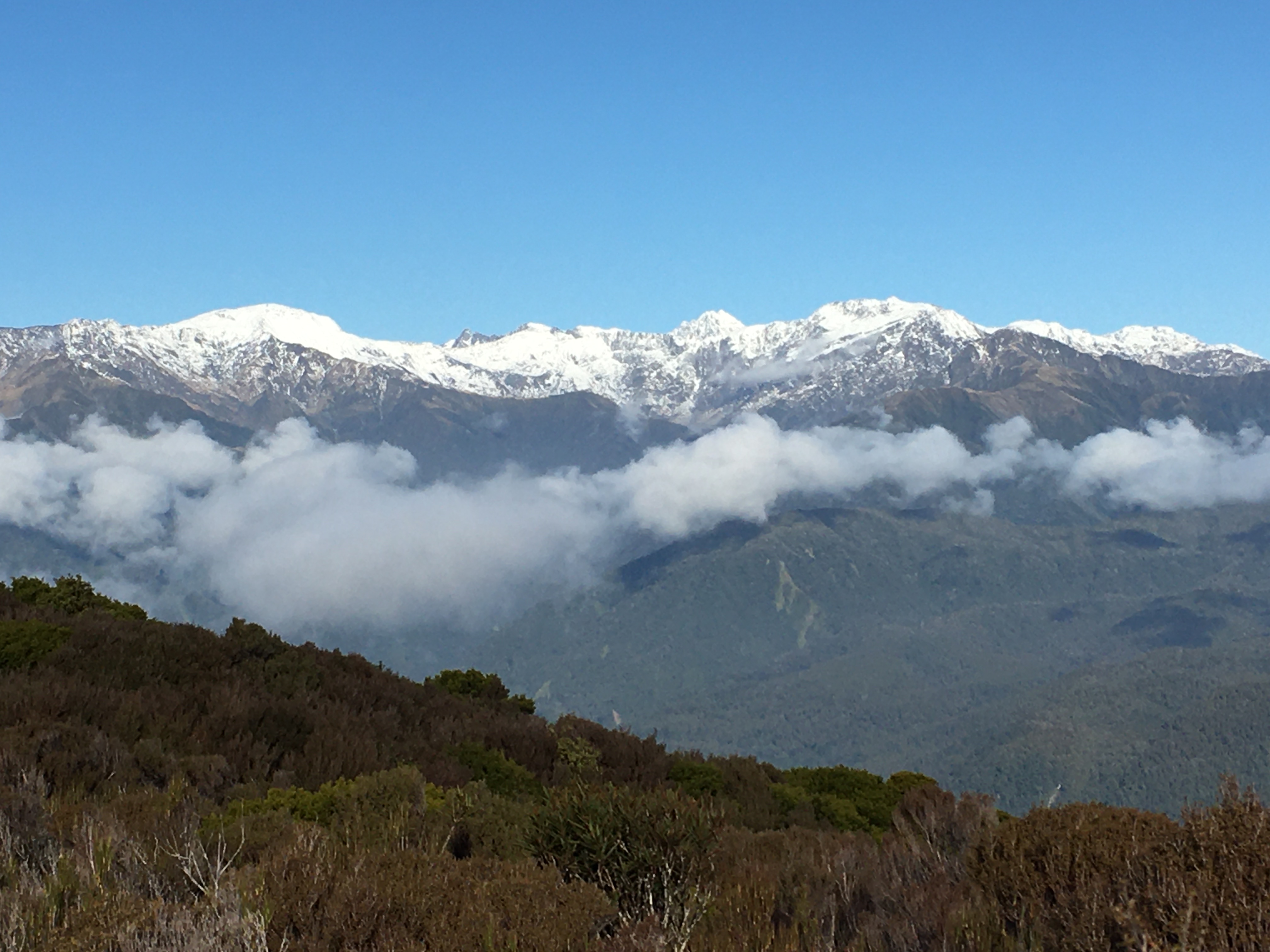
The view from the broad peak was stunning, with the Canterbury Plains spread out on one side, and the Two Thumbs Range jutting into the sky on the other. Aoraki / Mount Cook was visible, looming up behind the Two Thumbs Range.

To make a loop, we took an unofficial route down from the summit following widely spaced cairns to the Mount Somers track’s high point between Pinnacles Hut and Woolshed Creek Hut. It was steep, and involved a fair bit of scree sliding, but it was doable. And once you found the route, there was no getting lost, as you could see the track below.

On the track, we turned toward the Sharplin Falls carpark. An hour’s walking brought us to Pinnacles Hut where we had a welcome rest and chatted to the hut warden.

The track down from Pinnacles Hut follows and crosses numerous streams, and we enjoyed the cool water of the streams and waterfalls on the way. Aside from the relatively short climb over Duke Knob, it’s a gentler way down than the summit track.

All up, it was 8 1/2 hours of pretty steep up and down. Not for the faint of heart, but worth the effort for the views from the top.