Fresh Eyes

Endangered dolphins? Nothing unusual to see...

Endangered dolphins? Nothing unusual to see…

Travelling around this week with friends from the U.S., I am seeing things with fresh eyes. The strange pronunciations, the shockingly changeable weather, the casual acceptance of road closures, spotting endangered species from the roadside…all those things I now just accept as normal. I’m reminded of how foreign they were to me once.

Coming from the land of restaurant chains, they were surprised by the abundance and quality of local cafés. Coming from a place of certainty, they remarked on the number of times I said, “This has changed completely since I was last here.” Coming from a land of freezing winters, they marvelled at fresh vegetables from the garden at the winter solstice.

It has highlighted for me just how much I have ‘gone native’. How much I have accepted, adapted to, and embraced this place. It has become me, and I have become it. There are many times when I still feel foreign, even after ten years here, but having visitors here helps me realise just how much I have come to belong.

Eating Native?

veggiesforgrilling2smI’m currently teaching a biodiversity class at my daughter’s school, so I’ve been thinking a lot about biodiversity in New Zealand. Out here on this island in the middle of the Pacific Ocean, living things have had 65 million years to evolve in isolation. Until humans arrived about 700 years ago, most living things here were endemic—found nowhere else on earth. Three and a half metre tall birds and the giant eagles that preyed on them, flightless parrots, frogs that hatch from the egg fully formed, tuatara that died out everywhere else on earth millions of years ago, crickets the size of mice…

Humans changed things dramatically and rapidly. We brought thousands of other organisms with us, some on purpose, many by accident. Many of those organisms flourished here, at the expense of native organisms. Today, there are few New Zealand ecosystems untouched by the invasion of humans and other non-natives. Some of the most successful invaders have been plants—today there are more introduced plants here than there are natives, and more arrive all the time, in spite of efforts to prevent them.

Many of those invading plants were brought to New Zealand on purpose to provide food, shelter, or medicine. In fact, I can’t think of a single native plant currently cultivated for food, except one seaweed. There are certainly a few edible native plants, but they are few, and they are more of a survival food than something you’d want to eat every day.

No surprise. The crops we eat today have been cultivated for thousands of years—selected by countless generations of farmers to be bigger, tastier, and easier to grow. With only 700 years of history in New Zealand, there’s hardly been time to develop native crops.

The human migrants to New Zealand brought their crops with them instead. Familiar corn and carrots, potatoes and peas. But it’s not just in New Zealand that people mostly eat food native to other regions. People have been carrying their food with them for as long as we’ve travelled, until it’s sometimes hard to know where a food originally came from—classic Italian tomato sauce is made from a plant native to the Americas, the American “wheat belt” has its origins thousands of years ago in Turkey, and cassava domesticated in Brazil is now a staple food throughout tropical areas worldwide. Few people anywhere in the world eat native.

While I would love to be able to magically bring back the moa, Haast eagles, huia, and host of other incredible New Zealand endemic organisms that humans have wiped out here, I will admit I’m terribly fond of my non-native tomatoes, cucumbers, potatoes, eggplants, etc. I am thankful those non-natives are here, and I need not subsist on seaweed and ferns. Does it feel somewhat disingenuous to passionately support the conservation of our native biodiversity while I plant my non-native vegetable garden? Yes, but I’m only human, after all, doing what humans have done for 10,000 years.

First Frost

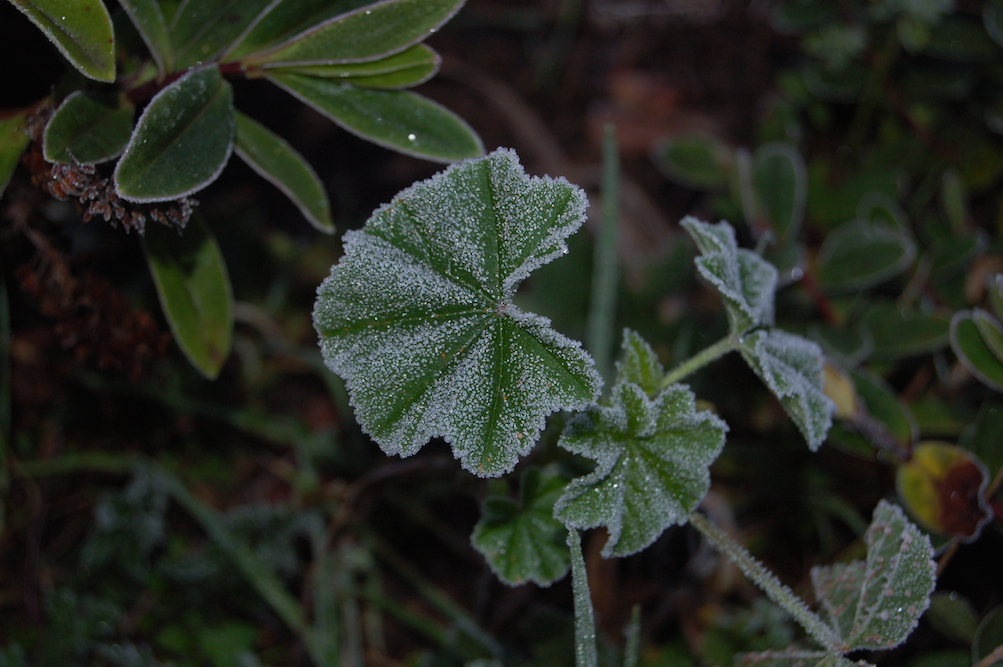
DSC_0006 copyThe grass sparkled in the beam from my headlamp this morning and crunched underfoot—our long-overdue first frost. After such a hot summer, we should have expected a warm autumn, but I was beginning to wonder if it would ever frost; it usually occurs near the end of April.

Of course, even without a frost it’s been too cool for the summer crops outside the greenhouse; they gave up weeks ago. So we’ve been eating as though it has already frosted, but there’s something decisive about the first frost.

First frost gives me permission to haul out the sewing machine after a summer’s interruption to crafts. It encourages me to pull out a good book. It gives me leave to contemplate steaming pots of soup and chunky vegetable stews for dinner. It is a milestone in the year. A time for taking stock, reflecting on the summer’s crops, and enjoying a brief break from most garden chores. Though the garden looks wasted and sad after the first frost, it is a time to savour, like every other event and milestone in the garden year.

Seasonal food

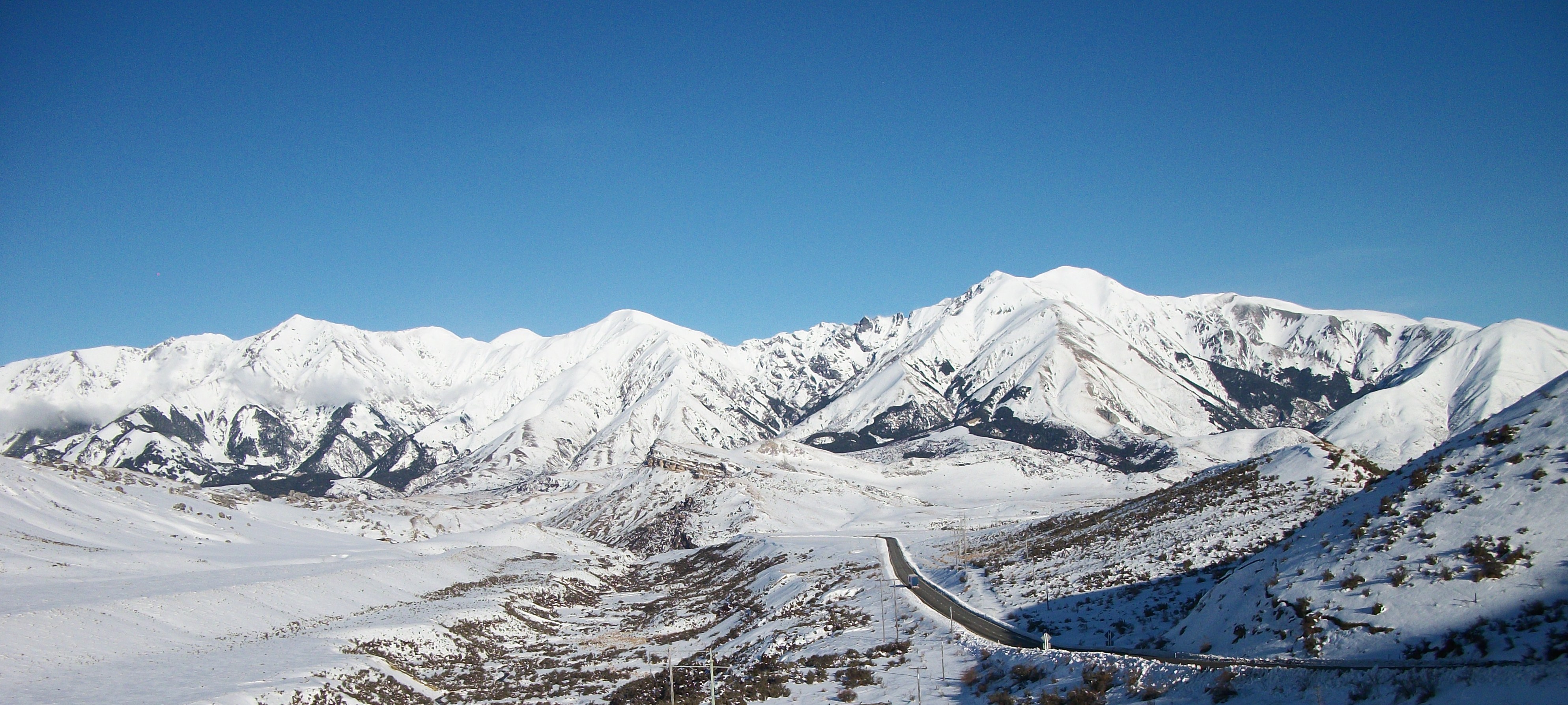
100_0535 cropOvernight, the mountains were cloaked in snow, and this morning they seemed to have leapt closer, looming huge and white where all summer they’d been nothing but distant grey peaks. The wind is cold and keen, and brings driving rain and hail clattering against the windows. The cat stretches out in front of the first of the season’s fires in the log burner.

Overnight, it seems, we have broken from our never-ending summer and have been plunged into winter. And overnight, our meals have changed. Though there are still a dozen cucumbers in the fridge, the thought of a cool cucumber salad is not appealing today. Instead I hunger for potato soup, bread warm from the oven, and hot apple crisp. I eye the pumpkins as I could not on the shorts-and-T-shirt day last week when I harvested them, and I think of gallette, soup, and pie. I am excited by the culinary opportunities the change of seasons presents.

There will be more T-shirt weather, I know. The cucumbers will be eaten. Here in the land of perpetual spring, even winter days can call for iced drinks now and again. But for now, I will enjoy the excuse to eat steaming soup with buttered biscuits, and drink hot tea in the middle of the afternoon.

Step out

I step out of the light and steam of the kitchen,

Away from the hum of the fridge,

From the smell of cake and jam.


Orion hangs overhead in the cool still air.

The moon

Floats with him.

Light, noise and steam are shut in.

Night is out.


One breath.

Two breaths.

The night whispers.

Memory of the day fades

Into inky black sky.


I am caught.

Held.

Soothed.

By velvet silence.


Life as a Squirrel

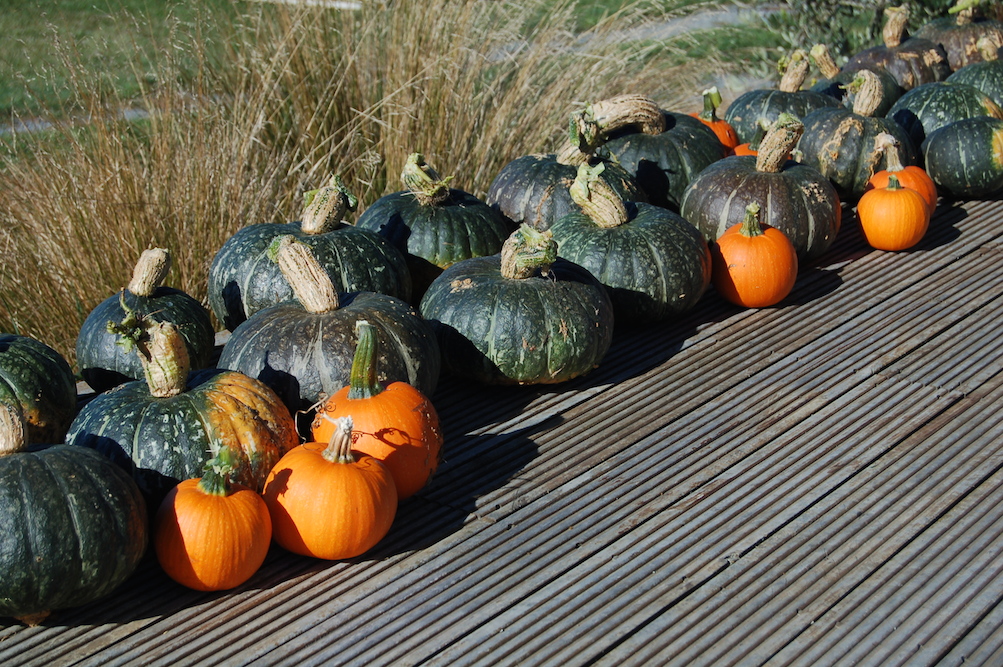
pumpkins2 smHaving recently crossed over into the dark side of the year, I am naturally looking ahead to the winter to come. The days are growing short, the nights cool.

As I sneak a late-night snack of almonds and raisins (though I’m not particularly hungry), I begin to wonder…Am I like a bear, eating extra food, building up fat in order to hibernate all winter?

Then I harvest the beans, corn and pumpkins and store them away in cupboard, freezer and shed, and I believe I am like a chipmunk, filling its larder with autumn’s bounty so I can huddle inside munching on the fruits of my labour all winter.

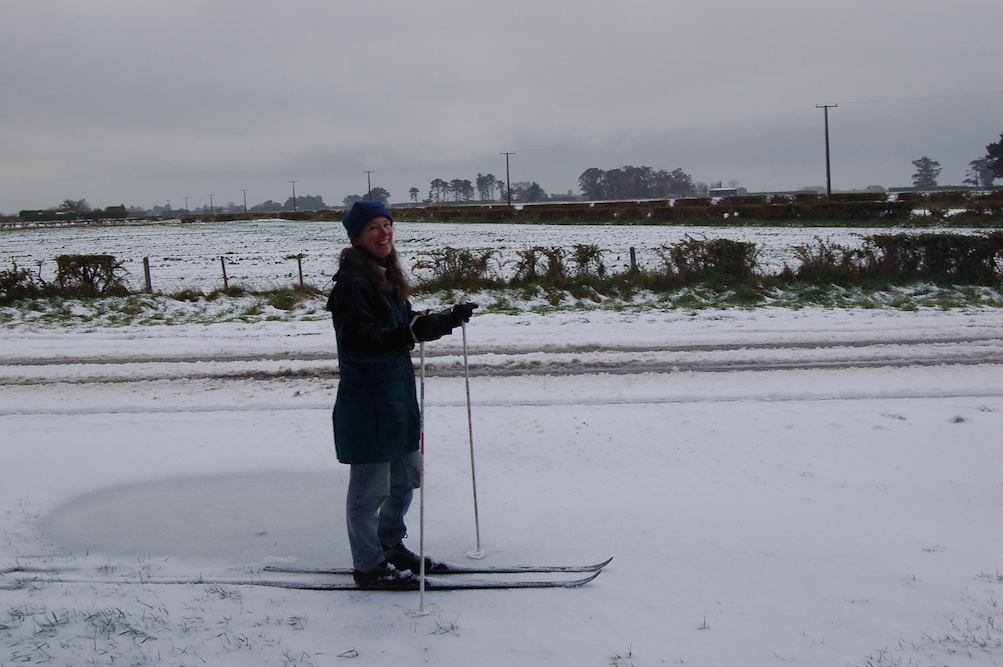
Our last snow--in 2011. We rarely get snow to frolic in, but it's nice to frolic when I can.

Our last snow–in 2011. We rarely get snow to frolic in, but it’s nice to frolic when I can.

But that’s not quite right, either, because I’m truly more like a squirrel. I hunker down in my winter nest during the worst weather, but on fine winter days I like to frolic outdoors, to scamper around searching out the little tidbits I’ve stashed here and there. The chard I left growing on the compost pile, the lettuces in the greenhouse, the last of the potatoes and carrots still in the garden, the cabbage and broccoli that hang on through the cold months. Sometimes, squirrel-like, I forget where I’ve hidden something—the last jar of artichokes, in the back of the cupboard, perhaps, or the leeks, quietly growing without my noticing until one day they are ready to eat.

I’m sure that, for a squirrel, fine winter days are a frantic race to stave off winter starvation, but for me, winter frolicking is just that—a little light weeding, gathering in the meagre winter crops, and enjoying the release from the hard labour of summer.

I still have a month or more to go before I can rest from summer labours, but on this tired end of the year, I look forward to my squirrely winter days, curling up in my nest and eating from my food caches.

Gifts from the Soil

DSC_0001 smAccording to Wikipedia, the price of porcini mushrooms (Boletus edulis) ranges from $20-$80/kg in the U.S., though it’s been known to rise to over $200/kg (wholesale) in years when it is scarce.

Porcini is expensive because of its ecology. It is a mycorrhizal fungus, meaning it lives in association with the roots of plants. This is a mutualistic relationship—the plant provides sugar, and the fungus provides nutrients. Neither one can grow properly without the other. Porcini’s mycorrhizal partners are oak trees. In order to grow porcini, you have to grow oak trees, so it is difficult to cultivate. The result is that porcini is largely collected from the wild, and is subject to wide fluctuations in production.

Sitting down to a picnic lunch today (in a location that shall remain secret), Ian and I picked 730g of porcini. It’s very early in the mushroom season, and quite dry, so we were surprised to see it, though Ian regularly finds it nearby. Ian manages several hundred dollars worth of porcini foraging in the autumn, even calculated by the lowest prices. It’s a delicious and welcome gift that is overlooked by thousands of passersby.

Porcini is a firm and meaty mushroom. Strongly flavoured, a little can go a long way when it needs to. But in autumn when the porcini are fruiting, we need not skimp, and a meal can easily include half a kilo of mushrooms. I dry the excess for use over winter in soups and stews. It goes well with thyme and rosemary, and lends a deep earthy flavour to dishes.

So, thanks to whoever brought these two non-native organisms—oaks and Boletus edulis—to New Zealand. Their presence is a gift to our table.

Starfish for lunch?

Eye candy only.

Eye candy only.

As I was casting about for a blog idea for today, I remembered the rock pool hopping I did with my daughter yesterday. She is doing a school project on echinoderms (starfish, sea cucumbers, sea urchins), and we went looking for them. I know sea cucumbers are eaten in some Asian countries, and sea urchins (kina) are a traditional Maori food, and I was curious whether starfish were edible. The short answer is that apparently some people eat their gonads, but the rest of them is poisonous. Of course! I should have recognised that by their bright colours—those warning colours that so many animals use to advertise their toxicity.

Their poisons include tetrodotoxin, the same neurotoxin found in the infamous puffer fish, and saponins that can cause red blood cells to burst.

And that, of course, explains how these easily spotted, slow moving denizens of shallow rock pools avoid being eaten by the gulls, herons, and oystercatchers that prowl the shore.

So next time you’re at the beach, take your lunch with you and leave the starfish alone.

Zucchini!

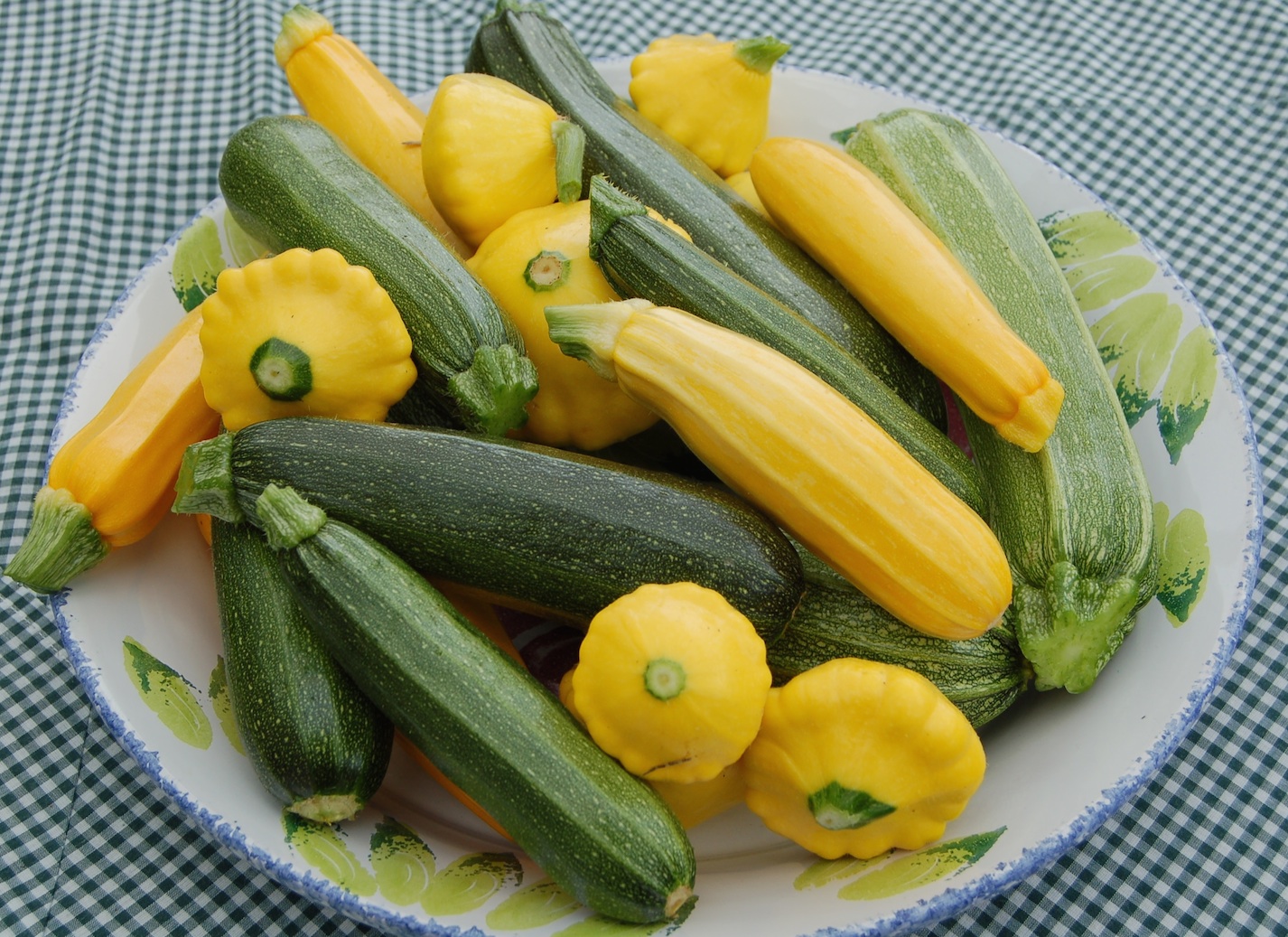
Zucchini4cropsmThe question of what to do with too much zucchini is one that has plagued humankind for millennia. The modern zucchini’s ancestors came from Central and South America, and were part of the local diet as far back as 5500 B.C. (I wonder how you say, “Zucchini, again?” in ancient Mayan?)

Europeans knew a good thing when they saw it, and within 50 years of European invasion of Central America, zucchinis (well, their ancestors, anyway) were being cultivated in Europe. The vegetable we grow today as zucchini was developed in Italy in the 19th century (hence the Italian name we use for it), and it has been overwhelming home gardeners all over the world ever since.

The good news about zucchini is that you really can’t eat too much. It is low in calories (only 18 per half cup), and is full of nutrients like beta-carotene, folic acid, and vitamins C and E. Of course, there really is only so much zucchini one can eat, and because I plant several varieties, we reach the point of zucchini saturation pretty quickly. The overflow goes to the goats, who eat it happily for a while, and then they, too, get tired of it. Eventually, some zucchinis are forgotten in the garden, and grow into giants. My biggest last year was nearly a metre long. I thought that was pretty impressive, until I learned that the longest zucchini ever grown measured 2.39 metres (7 ft 10.3 in)! Now there’s something to aspire to this year!

In the meantime, it’s zucchini for dinner again tonight!

Strawberries

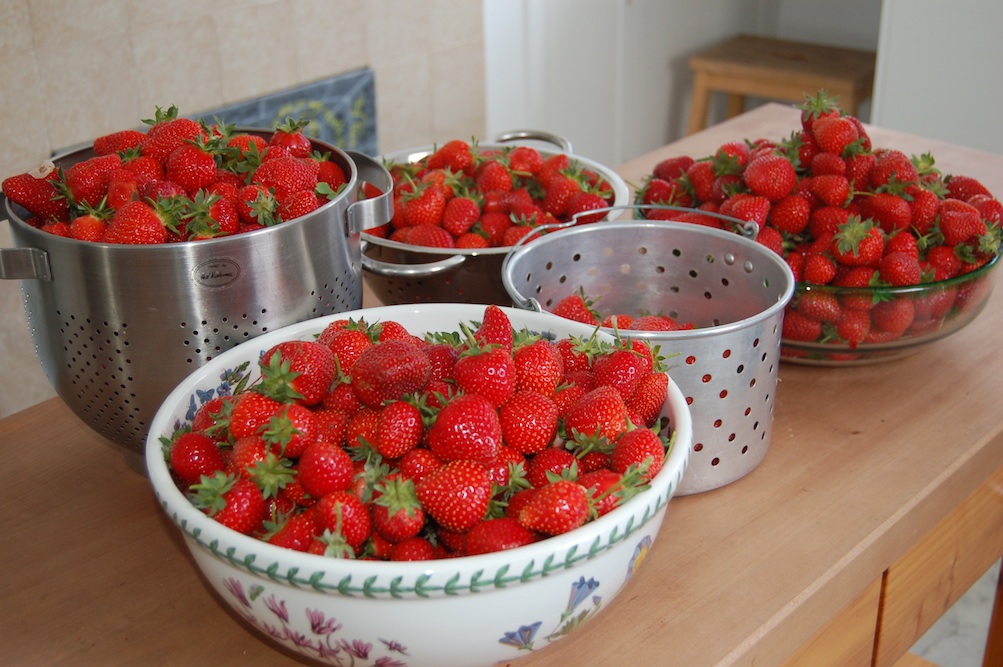
DSC_0003smI have always had an insatiable appetite for strawberries. At some point as a kid, I took over my mother’s strawberry patch—weeding, picking, selling, and eating large quantities of berries every spring. Here at Crazy Corner Farm, I also have a large strawberry patch. The original idea was that strawberries would be my cash crop—I’d sell lots of berries and support my gardening habit that way. It worked fine for a while…until I realised that, actually, we could consume every one of our berries without any problem at all, even when I was bringing in several kilograms every two days. I still sell some, and I give away plenty (they make spectacular Christmas gifts—who doesn’t want a punnet of strawberries?), but mostly we eat them.

The hardy, large-fruited strawberry we know today took many years to develop. Wild strawberries were cultivated in Europe as early as the 1300s, but it wasn’t until two New World species (Fragaria virginiana and Fragaria chiloensis) were imported to Europe that modern varieties were bred. The French accidentally pollinated the Chilean strawberry with the Virginia strawberry, and voila! They got a berry that was large, like the Chilean one, and hardy, like the Virginia one. Well, actually, it wasn’t that easy. After the French did it accidentally, the English spent many years crossing and recrossing these two species to develop a large, hardy strawberry. When these plants were shipped to America, most didn’t survive the colder North American winters, so more crosses had to be made.

Even then, strawberries wouldn’t grow everywhere and had incomplete flowers (only male or female parts), so they needed different varieties to cross pollinate them. It wasn’t until 1851 that James Wilson, from New York, developed a variety that was productive in almost any soil, and had perfect flowers, so it could be grown by itself. The commercial strawberry industry was born.

Since then, hundreds of varieties have been produced, some by professionals, many by amateur breeders who just loved strawberries.

I initially planted several different varieties in my strawberry patch. Those original plants are long dead, but have cross bred and sent out runners, so that today I have an intriguing mix of varieties. I can still identify some—Yolo and Strawberry Sundae are distinctive and easy to pick out. Many plants, though, have a mix of characteristics, and some even produce berries more like their wild ancestors. Every year, I nurture the ones I like and selectively weed out the ones that aren’t so great. Amateur strawberry growers all over the world do the same, I’m sure, giving us a wonderful range of sweet, tart, large, small, white-fleshed, red-fleshed, pointy and round berries. So many different types, I want to eat them all!