Outside In

2016-01-01 16.46.05Window screens are uncommon in New Zealand.

It’s not that there is no need for them. This time of year I struggle to keep the outside out of the house.

Flies, bees, wasps, mosquitoes, and moths all find their way in, to buzz, bite, and generally be a nuisance. Leaves and seeds blow in on the ever-present wind. And the occasional escaped chicken or feral cat wanders in, too.

So why no screens?

It makes sense if we look at why window screens are found elsewhere in the world.

In the United States, window screens were uncommon until the early 1900s, when they were suddenly mandated by local governments all over the country. An important advance of science was the reason for the new laws.

Today, with think of malaria, yellow fever, dengue, and a host of mosquito-borne diseases as tropical. But these “tropical” diseases, especially malaria, used to range all through Europe and North America. The ancient Romans invading Scotland, lost half their soldiers to Scotland’s local strain of malaria. Yellow fever and malaria were common in Boston and London. Philadelphia was decimated in 1793 by a yellow fever epidemic.

The connection between mosquitoes and malaria was discovered by entomologist Ronald Ross in 1897, and by 1900, mosquito control efforts were underway all over the world. Within a few years, window screens were being mandated by law in disease-hit areas. Most of those laws are still in place, as there is nothing preventing those mosquito-borne diseases from returning.

Here in New Zealand, we are remarkably free of mosquito borne diseases. Malaria, and yellow fever have never gained a foothold, though they almost certainly have shown up now and again in the form of sick travellers.

With no mosquito borne disease, the biters that slip in through my windows every night are just a nuisance, so screens haven’t been written into the building code.

But they would be nice to have…
Thrips

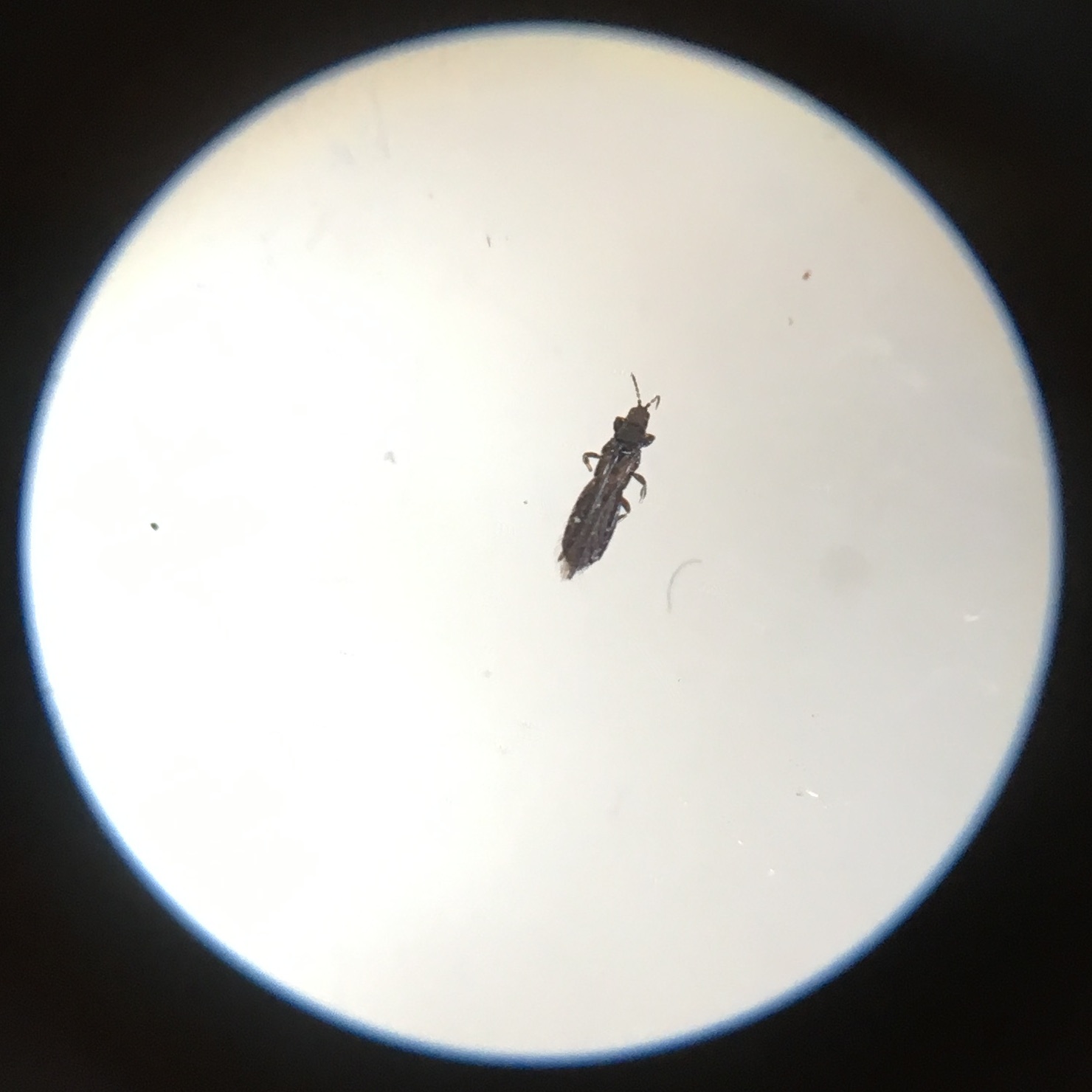
2016-02-12 10.51.28I can’t help but think about thrips at this time of year. They seem to love my office. They crawl everywhere. I’m constantly swiping them off my face and arms, and they end up in drifts on my desk when they die.

Thrips are tiny cigar-shaped insects with hairy wings (the order name, Thysanoptera, means fringe-winged). Most suck plant juices, and they leave characteristic little puncture wounds in leaves. Some transmit plant diseases.

Thrips are fascinating insects for a number of reasons.

Their development from egg to adult is not quite incomplete metamorphosis (in which the young look like the adults, but lack wings), and is not quite complete metamorphosis (in which the young look very different, and go through a pupal stage before adulthood). It’s a mix of both, and differs among species within the order.

Thrips are also left handed. As a south paw myself, I appreciate this. Instead of having a symmetrical mouth, like most other insects, with mandibles on both sides, thrips only have a left mandible. No one knows why this is the case. I like to think it’s because left handedness is just better.

Another thing I find intriguing about thrips is that some species will bite people, though they feed on plant juices. Our thrips, which I believe are Limothrips cerealum, the grain thrips, have this annoying tendency. They don’t bite often, but now and again you’ll feel a little stab and wonder what the insect is playing at.

Even linguistically, thrips are interesting. “Thrips” is both singular and plural—one thrips, many thrips. Thus, in the following poem, I couldn’t rhyme thrip with trip, it had to be thrips with sips…;)


Thysanopteran

Little thrips,

What does it think

As it delicately sips

The juices of plants?


Does it prefer

My prizewinning rose?

Or does the pollen

Tickle its nose?


Does it find

The broccoli sweeter?

And how can it be

Such a big eater?


Mullein

2016-02-07 10.22.37Today we discovered a new weed in our yard—that brings the total tally of weed species on the property to 57. The new plant is mullein (Verbascum thapsus), a native to Europe, and a common weed all over the world. Our specimen was young–just a tiny floret, but during its second year, mullein can send up a flower stalk almost 2 metres tall.

Like many garden weeds, mullein was almost certainly brought to New Zealand on purpose in the early 1800s. It seems to have been used for nearly everything by various peoples at various times in history.

The Romans used the flower stalk dipped in tallow as a torch.

It has been used since ancient times as a remedy for coughs and asthma (in people and livestock), either by drinking a tea made of leaves or flowers, or by smoking the leaves.

It either ensured conception or prevented it, depending upon what place and time you lived.

It’s fuzzy leaves, rubbed on the cheeks, impart a rosy hue, like rouge. Preparations made from the leaves can also soften the skin.

A yellow hair dye can be made from the flowers.

A green dye can be made from the leaves (probably best not to use this on your hair—it’s apparently permanent).

It was supposedly used by witches and warlocks, and was considered a charm against demons.

Its fuzzy leaves can be used as a thermal lining in your shoes.

And, of course, as any Boy Scout knows, it makes fine toilet paper!

Just remember to keep track of which leaves you’ve used as toilet paper, so you don’t use them for tea…;)

Damselflies

2016-01-31 13.44.27 cropTwo years ago, my husband did what he’d been threatening to do for years—he dug a pond. At some point, I’ll write a blog post on the pond itself, but today I want to talk about the damselflies that live there.

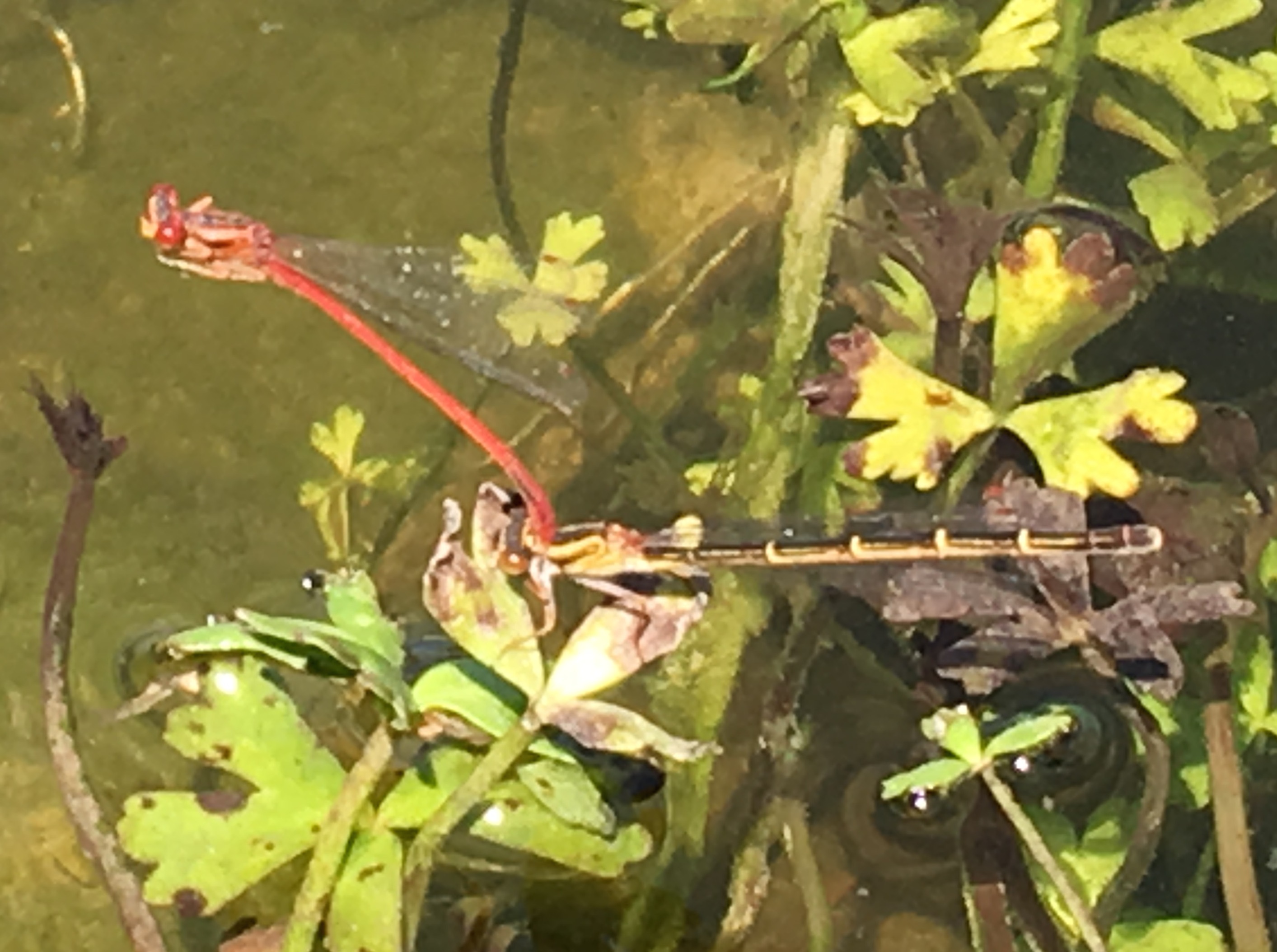
I took a break from my work this morning and spent a few minutes sitting beside the pond. It was swarming with red damselflies (Xanthocnemis zealandica). They were mostly males jockeying for the best territories—chasing and dive bombing each other, all short jabs of snapping wings.

2016-01-31 13.44.40 cropThe females were there, too. Every one I saw was being guarded by a male as she flitted from plant to plant, dipping her abdomen into the water to lay her eggs in the plant’s submerged stem. Damselfly mate guarding is awkward at best—the male grasps the female behind the head with claspers on the end of his abdomen and discourages other males from mating with “his” female. Both insects must beat their wings to keep the pair aloft, and as I watched them, it wasn’t at all clear to me who chooses the spots to stop and lay eggs.

When a pair stops, the male often supports himself entirely with his claspers, tucking in wings and legs and forming a bizarre appendage to the female as she gets down to business. She appears completely oblivious of her escort, resting after laying each egg, as if to say, “If you want to cling there in that ridiculous pose, that’s fine by me, but you’re not going to rush me.”

The eggs these girls lay will hatch in a week or two, and the nymphs will spend nearly a year living in the pond, eating other aquatic invertebrates with a hinged, extrusible mouth that is the stuff of horror movies, before emerging from the water as adults.

I sat and watched the spectacle for a while, and just as I was about to leave, I was treated to the sight of the other damselfly resident in this part of New Zealand—the blue damselfly (Austrolestes colensonis)—a large neon-blue insect that makes the red damselfly look dull.

Unfortunately, he didn’t stick around for a photograph, but I’ll be looking for his nymphs in the water later in the year.

Hedgehogs

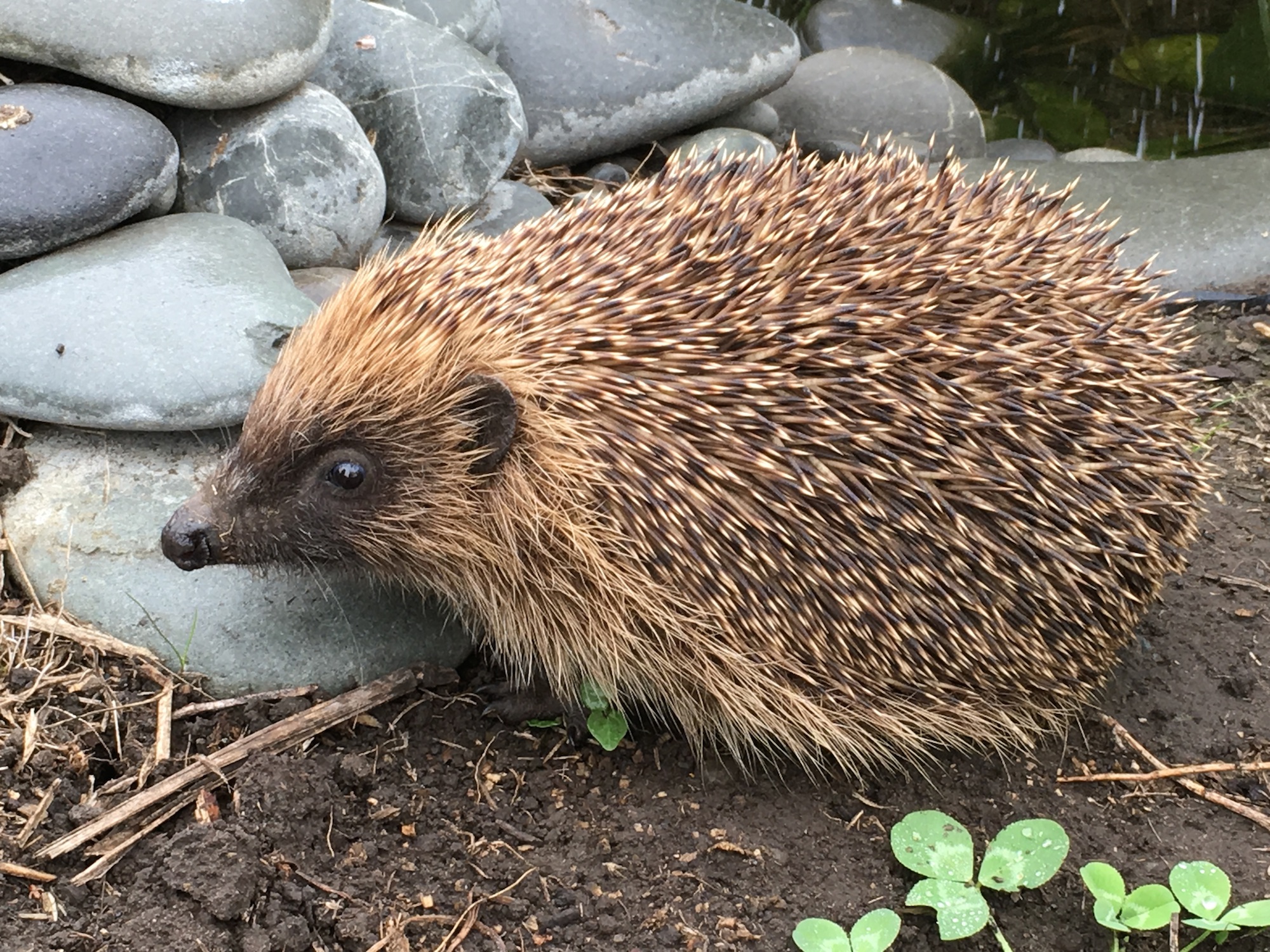
2016-01-26 18.07.41 smThey’re adorable and unafraid of humans. They eat snails, slugs and grass grubs. What’s not to like about hedgehogs?

Unfortunately, a fair bit, here in New Zealand. In addition to eating pests, they also feast on ground nesting bird eggs and chicks, skinks, and many native and endangered invertebrates.

And they’re more common in New Zealand than they are anywhere in their native habitat.

And I think they’re more common in our yard than anywhere else in New Zealand.

Now that the days are getting shorter, I regularly step on them in the dark when I’m out milking and feeding the animals. I certainly wouldn’t walk barefoot through the yard at night here.

They snuffle around the flower beds, snorting and grunting, oblivious to anything non-edible. They spread compost all over the yard.

They also apparently love cucumbers—last year I had to trap one out of the garden after it managed to squeeze in through a hole in the rabbit fencing. It took a bite out of each cucumber—obviously trying to find the perfect one.

They like the apples and peanut butter I bait the possum traps with, and though I don’t aim to kill them, I will admit that I’m not upset when I catch a hedgehog instead of a possum (my trapping seems to have no effect whatsoever on the population of either pest, anyway…). They snatch the eggs of the spur-winged plovers that nest unsuccessfully every year in our paddock, and I’d much prefer plover chicks to hedgehogs in the yard.

It still doesn’t stop me from smiling when I see one trundling along through the grass.

They are adorable after all…

Solanaceae

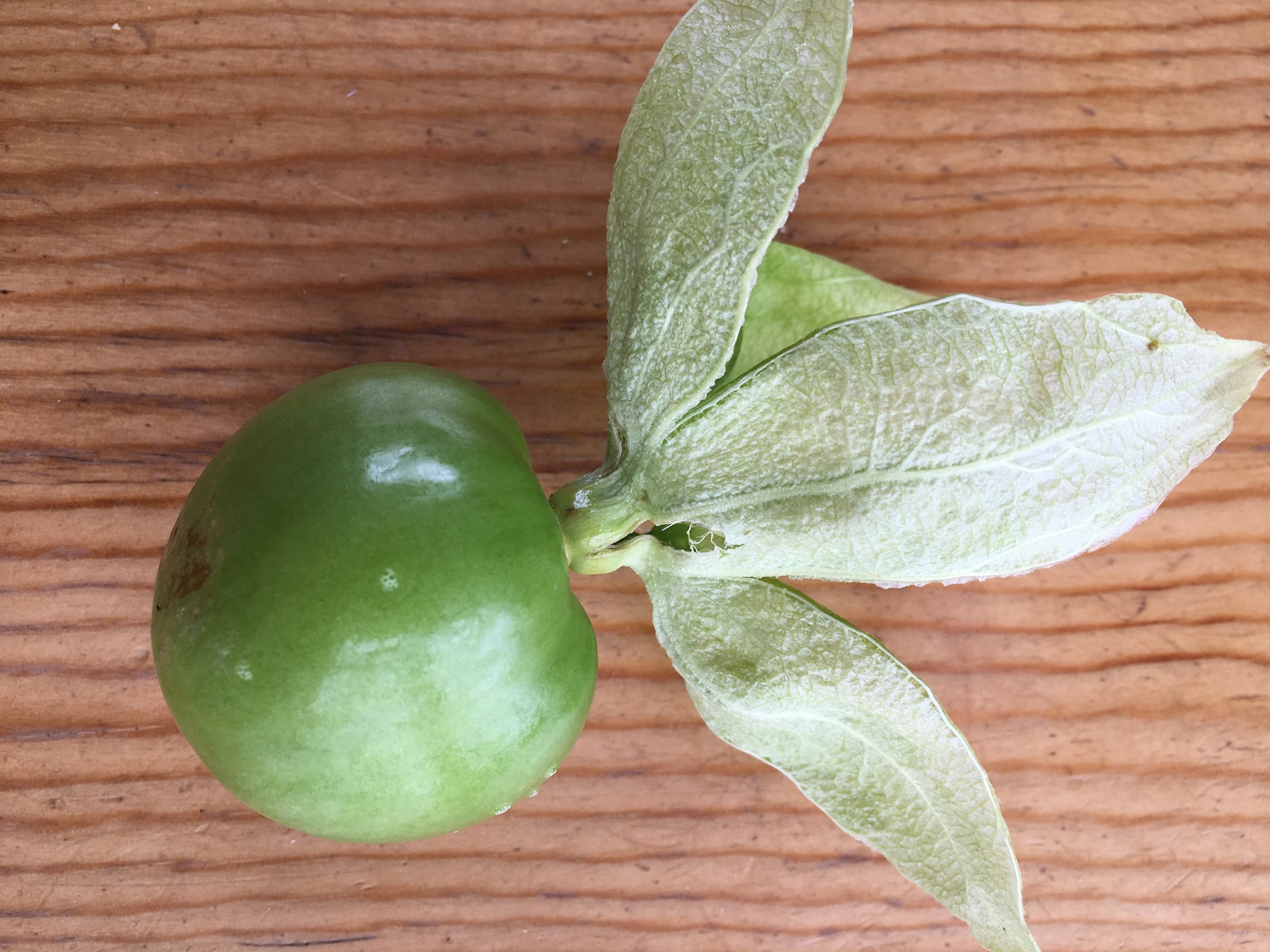
Tomatillo

Tomatillo

Solanaceae—one of my favourite families of plants.

There are more than a few members of this family in the vegetable garden:

Tomatoes, potatoes, eggplants, cape gooseberries, capsicum (peppers), and tomatillos are all solanaceous plants.

Nicotiana

Nicotiana

But they don’t end there. In the flower garden there are petunias and nicotiana, among the perennial fruits are gogi berries, and in the native garden there is poro poro.

And, of course, growing as weeds everywhere are black and hairy nightshade (these don’t get my favourite plant vote).

This diverse and sometimes tasty group of plants also includes many containing medicinal, poisonous or psychoactive chemicals (tobacco, mandrake, and deadly nightshade among them). Indeed, it’s best to be careful with the Solanaceae—even the edible ones contain poisons in the non-edible portions of the plants, or, as in the case of green potatoes, even in the edible parts. Solanine is the culprit in green potatoes—it causes diarrhoea, vomiting and hallucinations, and its bitter taste prevents herbivores from eating the potatoes. Other chemicals in the Solanaceae can have the opposite effect—reducing nausea in chemotherapy patients, and reversing the effects of poisoning by certain pesticides and chemical warfare agents.

And we’re still discovering more uses for these pharmacologically rich plants.

What’s not to like?

To Bee or Not To Bee

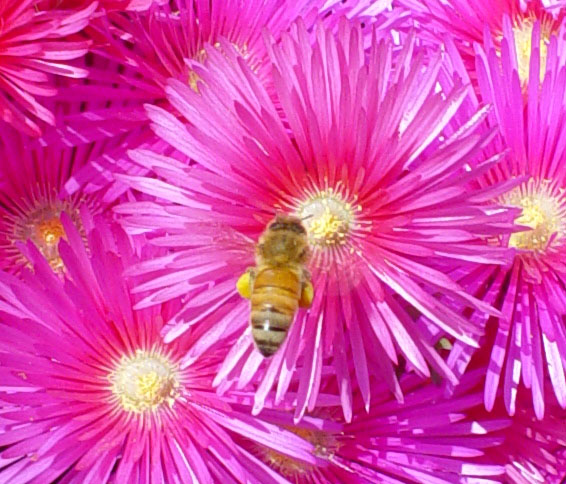
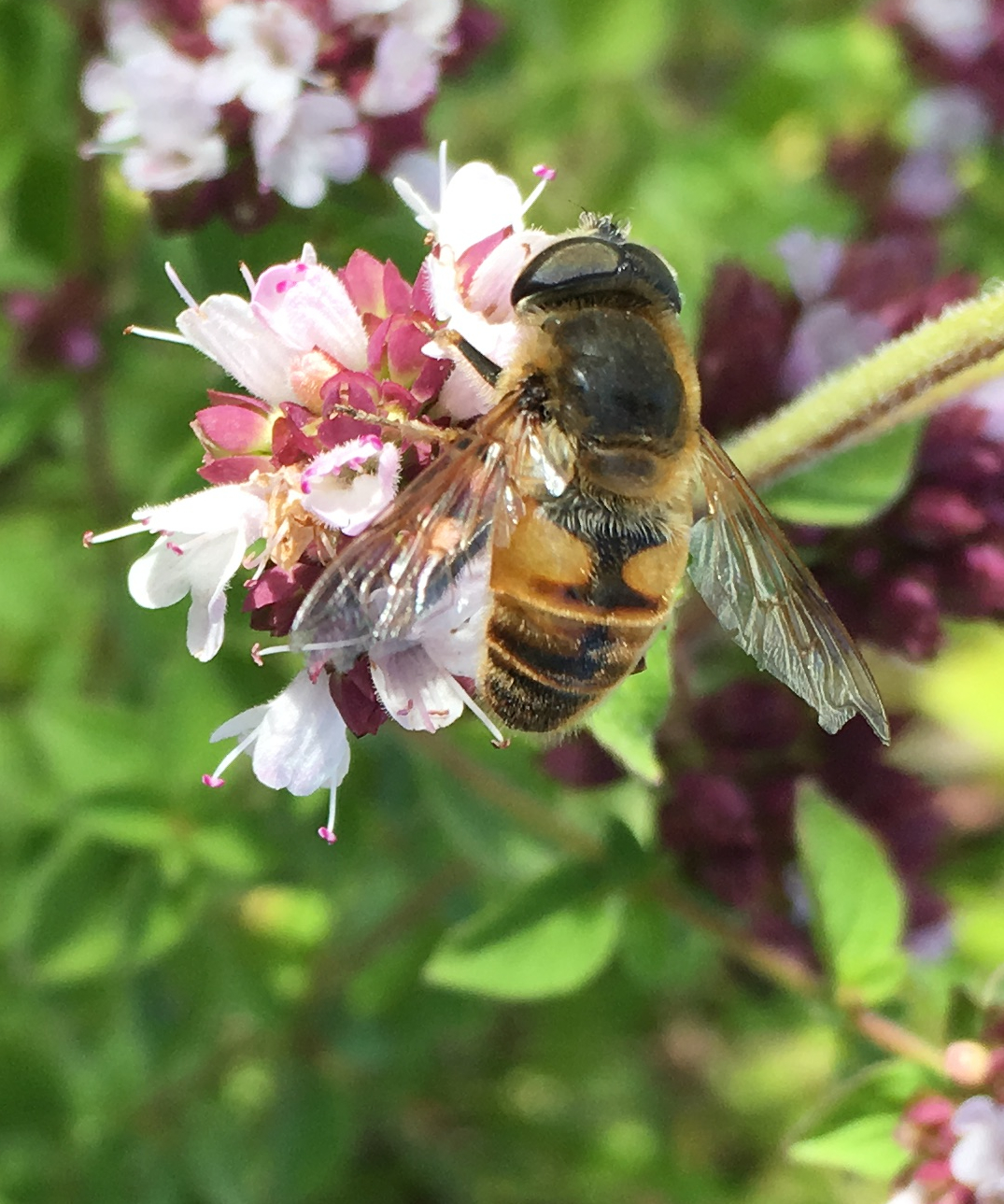
2016-01-14 17.14.44 cropStock photos are terrible things. Not just because they’re often lousy, vapid images, but because they lead to errors of identification. If I had a dollar for every insect misidentified in a stock photo, I’d be a rich woman.

Take this lovely insect (not a stock photo, by the way, but one of my own). Sipping nectar from flowers, black and yellow stripes, must be a bee, right?

Wrong.

Look more closely.

Bees have four wings, flies have two.

Bees have generously sized, usually elbowed antennae. Flies either have long, filamentous antennae, or short bristle-like antennae.

Bees’ eyes never cover their entire head. Flies’ eyes often do.

Bees are usually quite furry. Flies are often hairless.

Yes, this is not a bee, but a fly. This is a narcissus bulb fly—a type of syrphid or flower fly. It is an excellent honeybee mimic. Not only does it look like a bee, but it acts like one, too, down to the pulsing abdomen and the hanging pollen baskets in flight.

The disguise keeps the fly safe—potential predators assume it is a honey bee and leave it alone. Of course, it lacks the sting of a honeybee, so it would make a tasty snack for any predator who can identify it.

Fortunately for the fly, most predators, like most people, won’t give it a second look, and will steer clear of it.

Which gives rise to one of my favourite “party tricks”—grabbing the “bee” in my bare hand, and then releasing it, neither of us harmed.

But of course, now that won’t work on you…

Now you know…

To bee or not to bee?

These Are a Few of My Favourite Things: Preying Mantids

DSC_0025 sm

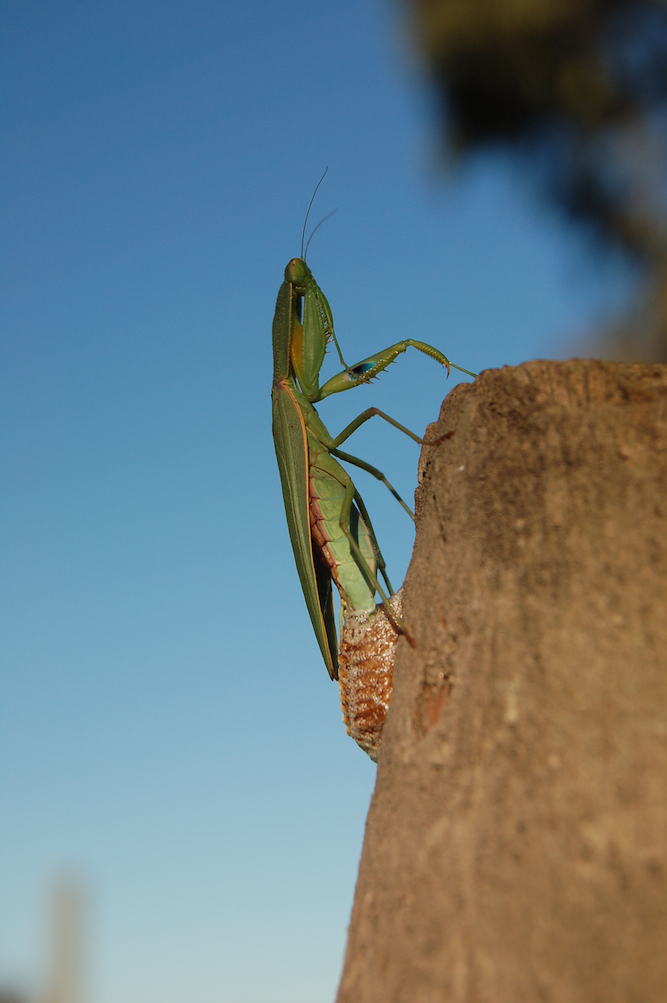
NZ mantis laying eggs

There’s no question why I’ve been known as The Bug Lady most of my life. I have a weakness for anything with more than four legs.

Preying mantids are some of my favourites. Not just because they eat pests in the garden, but because they are simply fun to watch.

How often can you watch a cheetah bring down an antelope in real life? Um…never. But it’s easy to watch a mantis snatch a fly—all the drama of the Discovery Channel, right in your back yard.

Sometimes the drama is a little too close for comfort.

When we lived in Panama, a beautiful 10 cm long green mantid with bright pink hind wings often came to our light at night. It would sit on our table and snatch moths attracted to the oil lamp. It was a cheeky insect, and had no compunctions about perching on our faces or arms to get a better vantage point for its nightly hunting. We laughed that it would follow us to bed some night.

We weren’t quite right, but one morning I slipped on my jeans, only to feel something enormous crawling up my thigh. With a yelp of surprise (and visions of scorpions, which were common in our house) I tore the jeans back off and peered down the leg to find our cheeky mantid scrambling out. It looked distinctly ruffled by the experience, but that didn’t stop it from returning to our light.

But from then on, we trapped it in a jar every night before we went to bed.

We are blessed with a healthy population of New Zealand mantids here at Crazy Corner Farm. Like most mantids, they enjoy hanging out on flowering plants, particularly herbs which attract huge numbers of flies and bees. Sometimes, I sit in the middle of the herb garden with my morning coffee, just to watch the mantids. I’m always surprised and impressed by the size of prey they can take down. I’ve even seen them snatch more than one fly at a time—one in each “hand”. Indeed, they will keep snatching prey as long as it keeps coming—even once they are fully sated and can’t possibly eat any more—their predatory instinct is so strong, they can’t stop themselves.

Of course, everyone has heard that female preying mantids eat their mates, and in species in which the female is much larger than the male, I’m sure it happens. But male preying mantids are just as fierce as the females, and they don’t go without a fight. The female New Zealand mantid is only slightly larger than the male, and I have kept males and females together in captivity. Only once did I see a female try to eat her mate. It was an epic struggle, worthy of the best wildlife documentary. It went on for at least fifteen minutes, and in the end, the male got away.

So turn off the TV. Get outside and watch the drama unfold!

Daddy long-legs

daddylonglegs1cropsmThe name Daddy long-legs conjures images of swift, leggy creatures, but depending on where you live, the image you see in your mind may not be the creature pictured here. The name can refer to a particularly common house spider, a crane fly, or this delightful animal—a harvestman.

Harvestmen are arachnids, and are often confused with spiders—eight legs, roundish body, move quickly—but they are in a separate order from the spiders, and have important differences.

The most obvious distinction is the body shape. Spider bodies are divided into two sections, but harvestman bodies are just one section.

Most people are familiar with the European harvestman (pictured), but most harvestmen are much more fierce-looking than the European ones. They sport vicious-looking spines, oversized pincers, and bizarre body shapes and colours. Perhaps this is where they get their reputation as “the most poisonous spider on the planet”. The truth is that, unlike spiders, none of the harvestmen have poison glands.

Harvestmen are primarily scavengers—eating dead insects, and the occasional tiny, slow-moving live insect (the European ones are said to like aphids). They have no need for poison except in defence, and here they are well-endowed. Most harvestmen have small pores on their backs that exude a smelly substance that repels most predators.

So the worst a harvestman can do is smell bad.

Of course, every kid who’s ever tried to catch a harvestman knows they have another defence mechanism—legs that break off easily. A harvestman’s legs act as a quick get-away mechanism if it is snatched by a predator—the leg snaps off easily in the predator’s mouth, allowing the harvestman to escape. Harvestmen seem to get along quite well with seven, six, even as few as four legs (look closely and you’ll notice the one I photographed has only seven legs).

These shy, gangly creatures are some of my favourites in the garden and in the forest, where hundreds of species abound, many of which are still undescribed by science.