Mountain neinei

2016-12-28-11-03-04-smMountain neinei (Dracophyllum traversii) is a tree Dr. Seuss would have been proud to call his own. Sparsely branched, with the leaves concentrated in tufts on the ends of the branches and bright red flower spikes on top, it would look right at home in Yertle the Turtle or The Cat in the Hat.

Aside from its goofy look, mountain neinei is an interesting plant. It is endemic to New Zealand (found nowhere else in the world), and inhabits ridgelines from about Arthur’s Pass north. We saw this one (and many others) on the way up Avalanche Peak near Arthur’s Pass last week. Though it is small (no more than 10 metres tall), it can live for up to 600 years, making it New Zealand’s longest-lived small tree.

It’s a useful plant, too. The leaves are used in weaving, the stems have been used to make walking sticks, and there is even an example of a flute made from mountain neinei.

It’s such a neat plant, it makes you want to speak in rhyme.

The ridge was quite steep,
And the day was too hot,
But the neinei were flowering.
We saw quite a lot.

Up rocks we scrambled.
The forest got smaller,
It looked like the top,
But the mountain was taller.

2016-12-28-13-24-57-smHigher and higher
We climbed and we huffed.
Till we reached the peak,
We really were puffed.

Spectacular views
And black jagged rock
Were our reward
For this strenuous walk.

What We Don’t Know

dsc_0009We headed to Tumbledown Bay today, ostensibly to try out the new snorkelling gear Santa brought us for Christmas. The water was murky and absolutely freezing, so it wasn’t exactly the best snorkelling, but it was a great day at the beach, regardless.

The seals were probably the best part of the day. There were lots of them, and they were vocal and active most of the day. A couple of them were even body surfing. They’d catch a wave and leap along with it almost all the way to the shore, then swim out and do it again. It was great fun to watch

The rock pools were great, too, as they always are. We saw some starfish, lots of snails, limpets, and chitons. I never get tired of them. In the sandier pools there were lots of marine isopods (sea slaters). I sat for a while at one pool and watched them. Some were just 3-5 mm long and the colour of sand. Some of the sandy-coloured ones had a white diamond on their backs. One, almost 10 mm long, was rusty orange with a white diamond on its back. The most spectacular was about 8 mm long, and had red and yellow markings, reminding me, oddly, of a European goldfinch.

As I sat there, I realised I had no idea whether I was looking at one species of slater with many colour variations, or twenty species.

A little research at home revealed that I’m not alone in my lack of knowledge of New Zealand’s marine isopod fauna. There are just 211 aquatic isopod species described for New Zealand. Scientists estimate that there are about eight times that many species. It’s not just the deep-water types that are poorly known, but many of the easily seen intertidal species are also undescribed. It seems these common little scavengers have been largely overlooked by science.

So the mystery remains—how many different isopods did I see today? As far as I know, no one can tell me the answer. But rather than disappointing me, the knowledge that we just don’t know excites me.

Anyone who thinks we know everything about planet Earth and the only real frontiers are in space is sorely mistaken. There is so much to be discovered, not just in exotic locations like the Amazon rainforest, but on the beaches that thousands of people visit every year, in the rivers and streams we cross daily on our way to work, even in our own back yards. There is so much about which we understand so little. The scientist in me quivers with excitement.

Did I see one species of isopod or twenty? No one knows. Doesn’t it make you want to go to the beach and peer into tide pools to find out?


Think Like an Entomologist

2016-12-21-12-45-56We went to the beach today. It was the perfect beach day—hot, and not too much wind (not at the beach, at least). The waves were big and great for body surfing and boogie boarding, and as usual, we ran into friends who also happened to be there, and had a good catch-up.

But the very best part of the beach today was the bees.

Thousands of native bees on the dunes just above high tide line. Swarming in the air, just 30 cm off the soil surface. I couldn’t help but watch, and I was rewarded with a fantastic show.

The bees almost all had loaded pollen baskets, and at first I wondered if they were feeding on something on the sand, because they would dip down to the surface, take a few steps, then fly away. I watched dozens of bees do this, but still couldn’t tell what they might be collecting.

2016-12-21-12-48-28Then I saw it. A bee landed, then quick as a flash, dove head first into the loose sand. It took her only a moment, and she had vanished, leaving nothing but a slight divot in the sand to show where she’d gone.

Then I knew. They were burrowing into the sand, provisioning nests for their larvae. They had dug the burrows earlier, and the brief touchdowns on the sand were to locate the right burrow. I watched for a long time, and saw several bees dive into their burrows. I even saw one go part way, decide she had the wrong spot, and scramble back to the surface to try again.

Then I saw another insect in the crowd—a wasp. It, too, was hovering over the sand and dropping down now and again to the surface. I surmised that it was a parasite, looking for the hidden bee burrows. I guessed it would enter a burrow and lay an egg on the bee larva, and the wasp larva would eat the bee.

These were all guesses based on my observations. I really didn’t know if there were dune-nesting bees here, or if they were parasitised by wasps.

At home, I was able to confirm my observations. My bees were the native Leioproctus metallicus, and they are parasitised by a gasteruptid wasp that lays its own eggs in the bee burrows.

I was pleased to have pieced together this puzzle by watching bees on the beach. (The only part I couldn’t see was that the bees try to fool the wasps by digging many burrows, not all of which contain larvae.) Entomologist Tom Eisner once wrote, “There is a saying that ‘5 minutes in the library can save you weeks in the laboratory,’ which has considerable merit. I prefer the naturalist’s version, which says that ‘weeks in the field can save you minutes in the library.'”

I’m with Eisner on that one. Watching those bees and trying to piece together what was happening was pure magic.

Bugs in Your Food

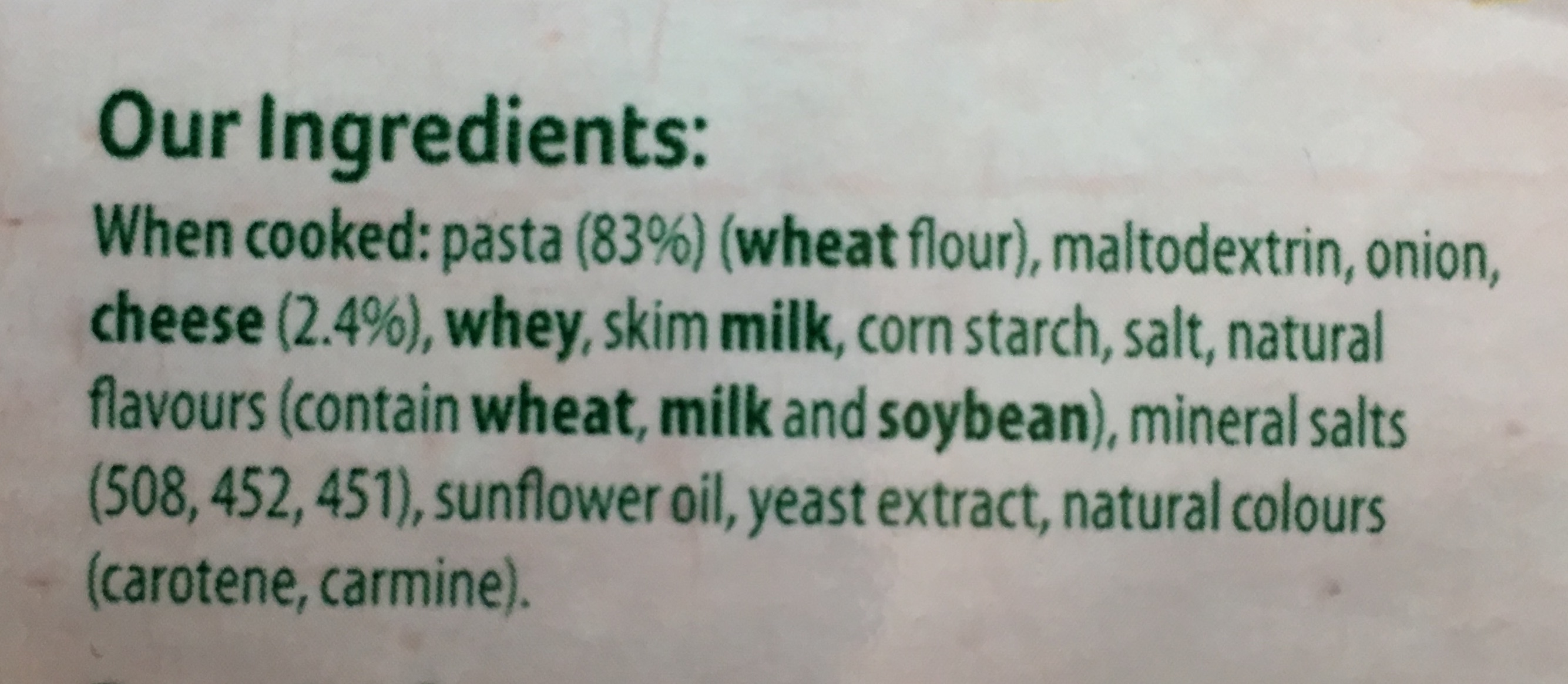
2016-12-18-06-46-58Can you find the insects in this ingredient list?

Yep, that’s it, at the very end—carmine—an all-natural food-safe red colouring made from the crushed bodies of the cochineal scale insect (Dactylopius coccus).

I don’t buy much processed food, so I rarely eat carmine, but I was excited to find it listed as an ingredient in the packaged macaroni and cheese I recently bought for a backpacking trip.

The cochineal scale is native to Central and South America, and lives on prickly pear cactus. It has been used as a dye since at least the 15th century, when it was used primarily to colour textiles. For three hundred years, it was one of our only red food-safe dyes. In the late 19th century, synthetic dyes began to replace carmine.

Until the 1820s, Mexico was the sole commercial supplier of carmine to the world, despite efforts to grow the insect elsewhere. At least one of those attempts ended in an environmental disaster. The British tried to establish carmine production in Australia to supply red dye for military uniforms in the 1700s. The insects died, but the cactuses thrived and eventually took over 259,000 square kilometres (100,000 square miles) of the country before being brought under control in the 1920s by the introduction of a moth that eats the cactus.

Carmine production is labour intensive. The insects need to be protected from predators and severe weather, then have to be brushed off the plants by hand at harvest. The insects are dried, crushed, and mixed with various substances to make a range of colours from bright red, to pink, to purple. It takes 80,000-100,000 insects to produce 1 kg of carmine.

Concerns over the safety of synthetic food colouring has led to a resurgence in the use of carmine in recent years, and it’s not unusual (though still not common) to find it included on the ingredient lists of food packages. In fact, you might be surprised how many products on the supermarket shelf contain carmine. Though it is more expensive than synthetic red dyes, it shows up in various cosmetics, candies, alcoholic drinks, fruit juices, sauces, cheese, meat, preserves, and desserts. In the US, the ingredient list is required to say ‘cochineal extract’ or ‘carmine’. In the EU, it might be labelled additive E120, and here in New Zealand, it is usually listed as colouring 120.

Poem on Moose

What happens when I let my daughter decorate Christmas cookies.

What happens when I let my daughter decorate Christmas cookies.

Literary ungulate
In gingerbread.

This poem is either
On a moose,
Or on moose,
Or both.

Your palmate antlers,
Distinctive,
Tell me you’re a bull.
They beg to be bitten off.

Then you would be a cow
Only your drooping nose
And your beard
Giving away your moosy nature.

But why a poem
On a moose
(Or on moose)?

I do not recommend
Writing poems on moose
(or is it mooses?)
Unless they are of the gingerbread variety.
The icing tickles
And moose (meece?) snort when they laugh.

But if you try,
I suggest a stepladder.

Watching My Babies Grow

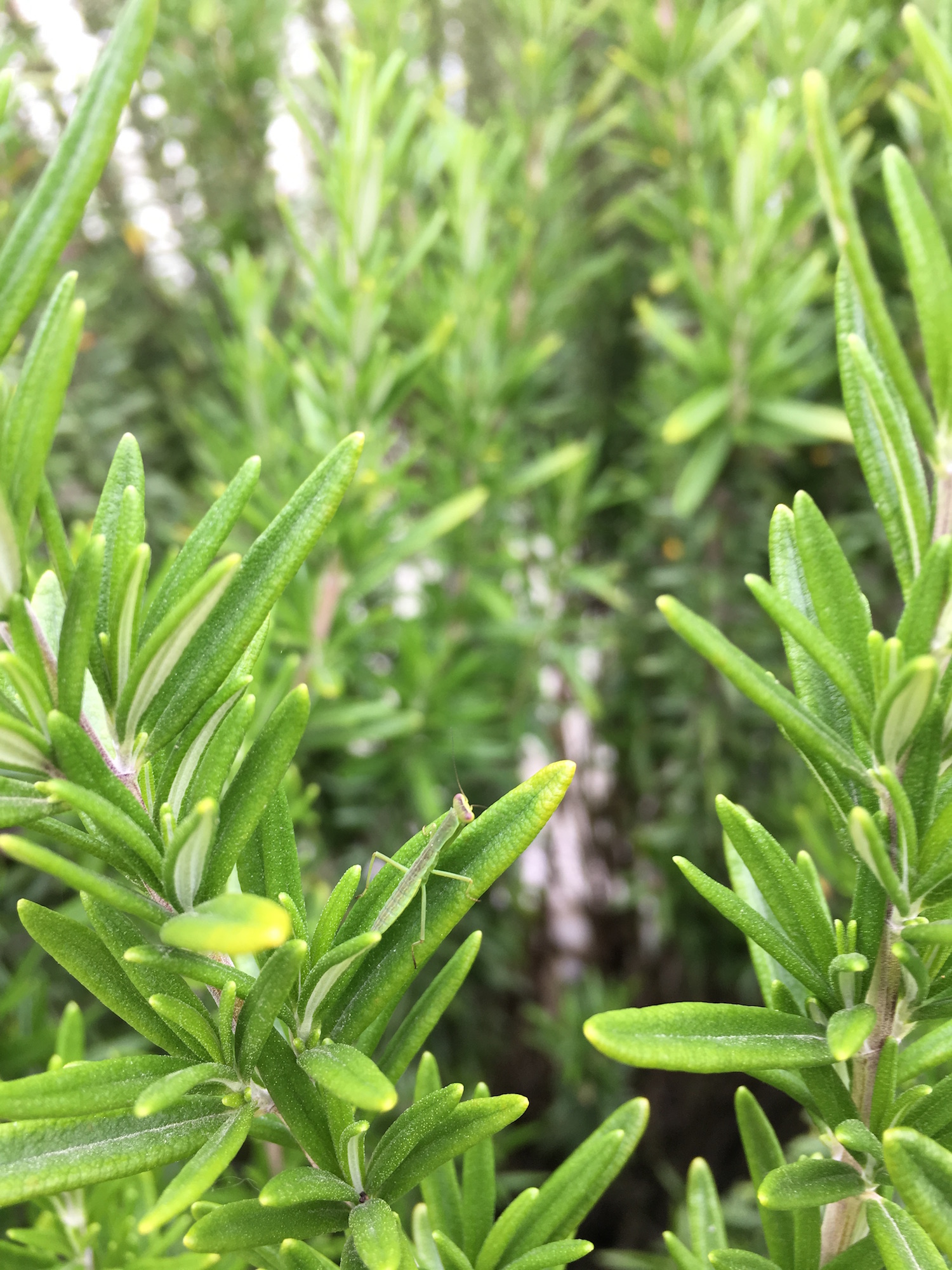
Recently hatched mantids--can you see them both?

Recently hatched mantids–can you see them both?

All winter I kept an eye on the eggs.

Now the preying mantids have all hatched, and I can’t help but watch them grow and develop.

They don’t tend to wander far, so it’s easy to keep tabs on them. Sometimes it takes a few minutes of staring before I see one, but then they start popping out at me until I’ve counted dozens of them.

I’m happy to report that they appear to be doing well. I’m sure that some are looking fat and sassy because they’ve eaten their brothers and sisters, but that’s the way it goes in the mantid world. Live by the raptorial front legs, die by the raptorial front legs.

This one is a bit older and easier to see.

This one is a bit older and easier to see.

Sometimes I wonder at myself, that I can watch this year after year, and still be excited as each new egg case hatches. I hope I never lose that wonder and joy.

Crane Flies

2016-11-29-07-27-59The crane flies are the largest family of flies in the world. There are over 15,000 species worldwide, with 1600 species in North America and 600 species in New Zealand.

The Māori name, matua waeroa, means ‘king mosquito’. You could be forgiven for thinking crane flies are giant mosquitoes—their body shape is similar. But crane flies cannot bite. The adults of many species don’t eat at all, and those that do sip nectar.

Crane fly larvae are sometimes called leatherjackets, because their exoskeletons are thick and leathery. They are aquatic or live in wet soil or rotting vegetation. Most feed on dead plants, though there are a few predators among the aquatic larvae.

When we moved to Crazy Corner Farm, and I turned the vegetable garden for the first time, I found the wet end of the garden teeming with crane fly larvae. Hundreds and hundreds of them. Every shovelful of earth came up with at least ten larvae. It was truly impressive, and the chickens loved me for the handfuls of larvae I tossed to them that year. The larvae must not like cultivation, though, because I don’t find them in the vegetable garden anymore.

I find crane flies endearing—awkward and gangly, they remind me of teenage boys who’ve just gone through a growth spurt and aren’t quite comfortable with their larger dimensions. The analogy might not be so far off. Crane fly larvae are legless and live in confined spaces. When they become adults, they suddenly have six impossibly long legs, and are airborne. It must be terribly confusing.

I spotted this beauty on my office door this morning, sitting on the glass with the white curtain behind it. I couldn’t resist photographing it.


Poroporo

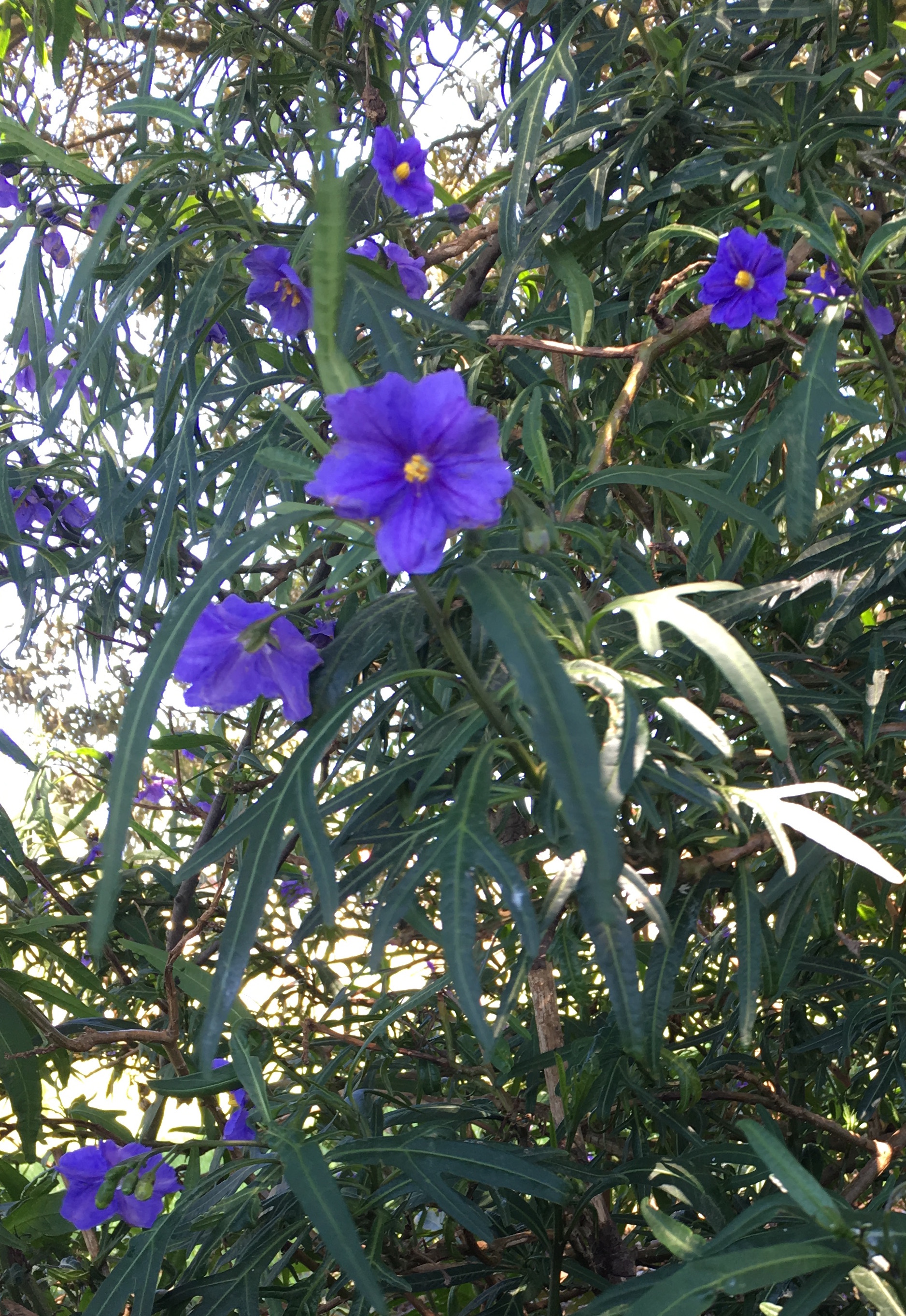
2016-11-22-13-39-04Poroporo (Solanum laciniatum) is a native shrub, and one of our few native plants typically classified as a weed. A few years ago, I noticed a tiny poroporo seedling sprouting under our oak trees—planted, no doubt by some bird roosting (and poohing) in the branches above.

At the time, the chickens were quartered under the trees, so I fenced it with a ring of chicken wire to keep it safe from their scratching.

It has now grown into a huge sprawling bush easily three metres in diameter and as tall as me. It is currently covered in gorgeous purple blooms. Later in the summer, it will drip with teardrop shaped yellow fruits. Weed or not, the plant is eye candy.

Eye candy only—not to be taken internally. Like many of the Solanums, poroporo is poisonous (though apparently the fully ripe fruit is edible…sort of). Fever, sweating, nausea, and abdominal pain are the unfortunate effects of poroporo poisoning.

In spite of its poisonous nature (well, actually because of it), poroporo is grown commercially as a source of steroidal alkaloids used medicinally to make cortico-steroid drugs like birth control and eczema treatments.

A pretty and useful weed!

Ripgut Brome

2016-11-08-16-14-49Ripgut brome. How can you not be curious about a plant named ripgut brome?

I was certainly curious, after it took over my yard this spring. I’ve hauled countless wheelbarrow loads of ripgut brome to the compost pile, and I’m still finding it everywhere.

Ripgut brome (Bromus diandrus) is an annual grass native to the Mediterranean region. It probably arrived in New Zealand as a contaminant in grain, or in the wool of imported sheep. It’s a tall, sprawling plant, and seems to spring up overnight to suddenly form a dense thicket anywhere that isn’t regularly mown or grazed.

The leaves of ripgut brome are rough, and feel like sandpaper on bare legs and arms. They leave countless, fine scratches like paper cuts on the unwary weeder.

But the worst part of ripgut brome is the seed. Sharp, and covered in little hooks, the seeds catch and burrow into animals’ fur, eyes, skin, feet and intestines (I assume that’s where the name ripgut comes from).

And like all good weeds, it produces copious seeds (over 3000 per plant), aggressively outcompetes other plants, and is drought tolerant. It has also evolved herbicide resistance in some areas.

There’s only one thing for it on our property—to pull it up before the seeds mature. The good news is, that it’s got a shallow root system, so it’s not difficult to pull. The bad news is that it covers almost every inch of our acre and a half.

Sisyphus had it easy…

Aquilegia

2016-10-31-19-37-18One of my favourite flowers is blooming—Aquilegia, also known as columbine and granny’s bonnet.

I can’t tell you why I like Aquilegia so much. I’m generally not a fan of frilly flowers. Perhaps I like it because, though the flowers look delicate, the plant is tough as nails. This particular specimen is growing in what used to be the driveway—a hopelessly compacted combination of clay and rock, dry as a desert most of the time—and is all but shaded out by the pittosporum behind it. It thrives, and has even seeded itself into other places in the old driveway.

Or maybe I like it because, in the Eastern US where I grew up, the native columbine, Aquilegia canadensis, attracts hummingbirds and hawk moths. Here, the bumble bees visit it, but little else. Apparently, of the 60-70 species of Aquilegia, several have evolved exclusive relationships with particular pollinators.

Whatever the reason I like them, the flowers make me smile every time I pass them.