One of the first things we did when we bought our new property, even before we built the house, was to establish native plantings. Those plantings have grown spectacularly well, and many of the trees are four metres tall already.
Invertebrate life on the property has increased with the growth of our gardens. Our lush akeake attract katydids, the herb garden is alive with butterflies, native bees, and hover flies. Preying mantids stalk the flowers, snatching up prey. Jumping spiders of several species prowl among the foliage and rocks. And web-building spiders festoon the branches of nearly every plant.
But there are some notable absences. Species that aren’t good at dispersal.
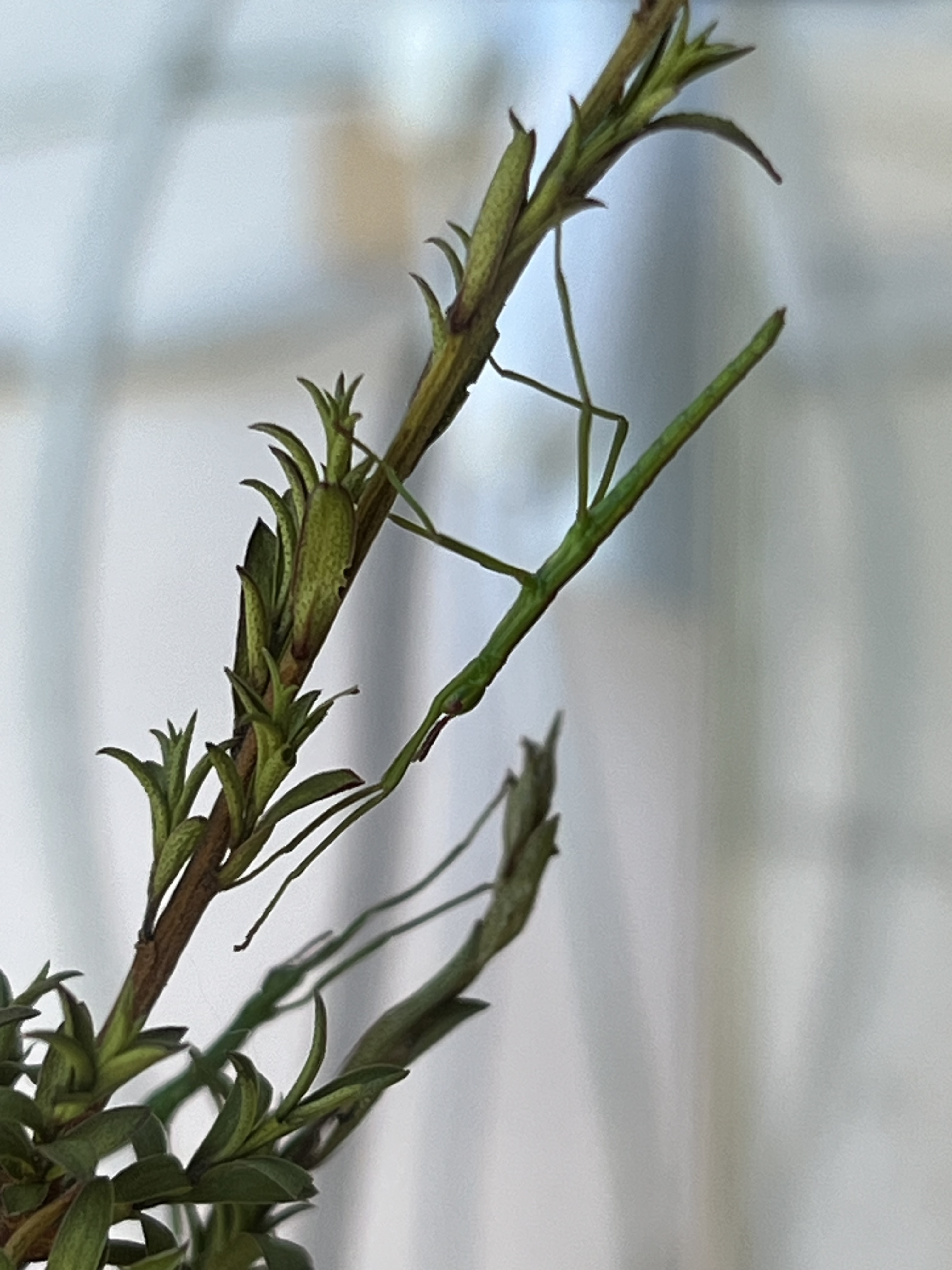
One of those absences is stick insects. Our common native species here in Canterbury are particularly fond of kānuka and mānuka. The kānuka we planted in our gardens has grown beautifully, but is completely devoid of stick insects.
But not for long …
I was recently gifted some stick insect eggs from a researcher who is studying them. I set them up in an aquarium with some kānuka branches and eagerly awaited their hatching. The researcher warned the eggs were a bit old and might not hatch, but over the course of a few days, seven successfully emerged (a few more died in hatching).
The seven stick babies are now happily munching kānuka in captivity. I’ll release them into our garden when they’re a little older and I’m more confident they’ll survive. For now, I’m enjoying watching them in their tank on my desk.
Stick insects are some of my favourite bugs. I love their improbable shape. I love their crypsis-enhancing behaviours—sitting with their forelegs stretched out in front to make them look even more stick-like, and swaying in the ‘wind’ when disturbed.
I also love the fact that many species are parthenogenic—the females can lay fertile eggs without mating with a male. In fact, there are some species of stick insect for which we’ve never found males.
This parthenogenesis is the result of a strange relationship many insects have with the reproductive parasite Wolbachia. Wolbachia is a genus of bacteria that is passed from female insects to their offspring. Because Wolbachia’s spread is only through the females of its host species, it’s in the bacterium’s best interest to eliminate males. It does this by a variety of methods, depending upon the strain of bacteria and the host species. The result is insects in which males are rare or nonexistent and females can reproduce parthenogenically. Its a cool and complex relationship that I find fascinating.
I look forward to establishing stick insects on our native trees. Hopefully my seven lovely babies will grow into a thriving population.
My husband and I spent Canterbury weekend on the West Coast. We stayed in Hokitika, because I had a market there on Sunday, but on Saturday, we drove down to Franz Josef Glacier.
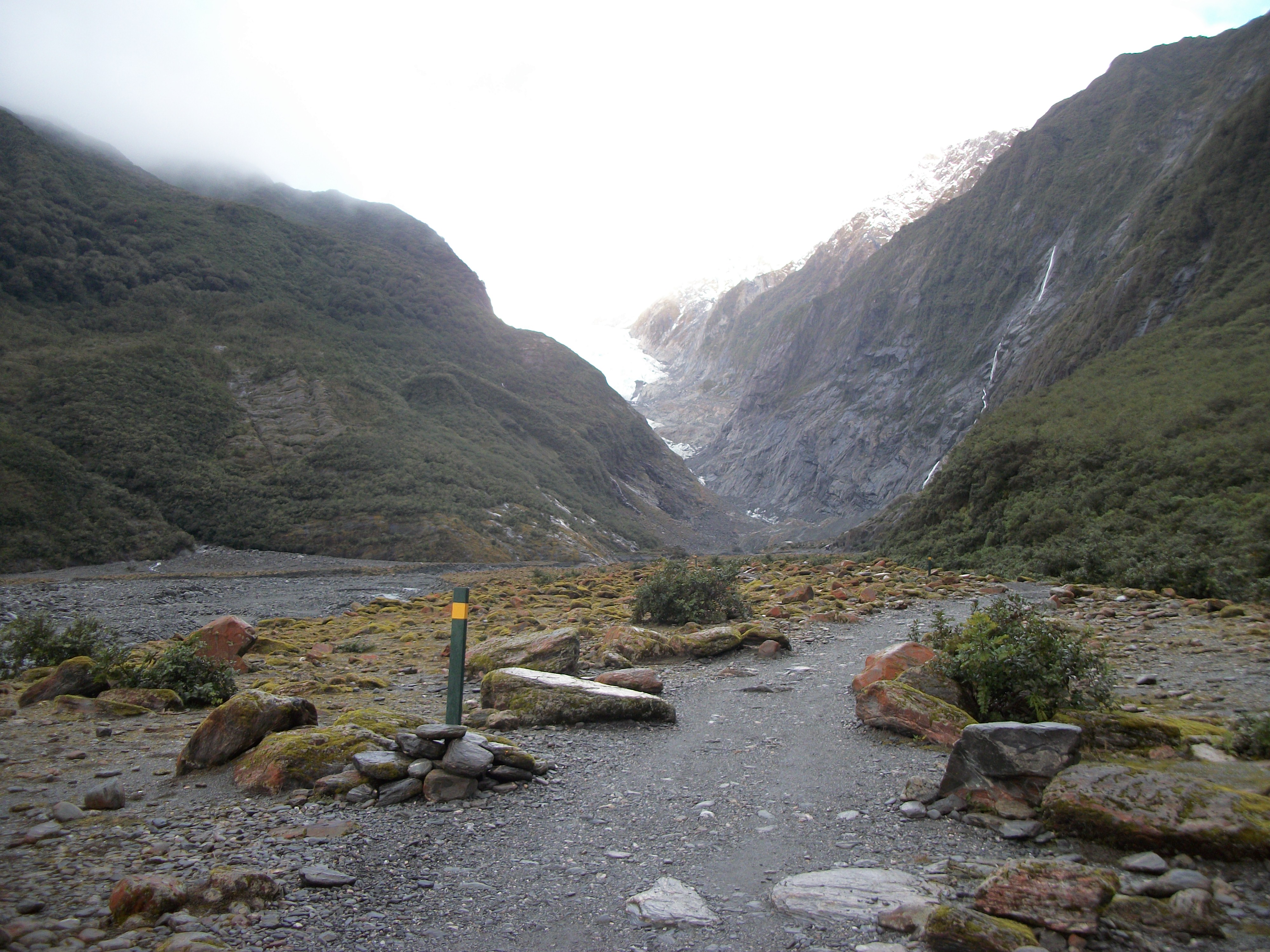
Franz Josef Glacier in 2009.
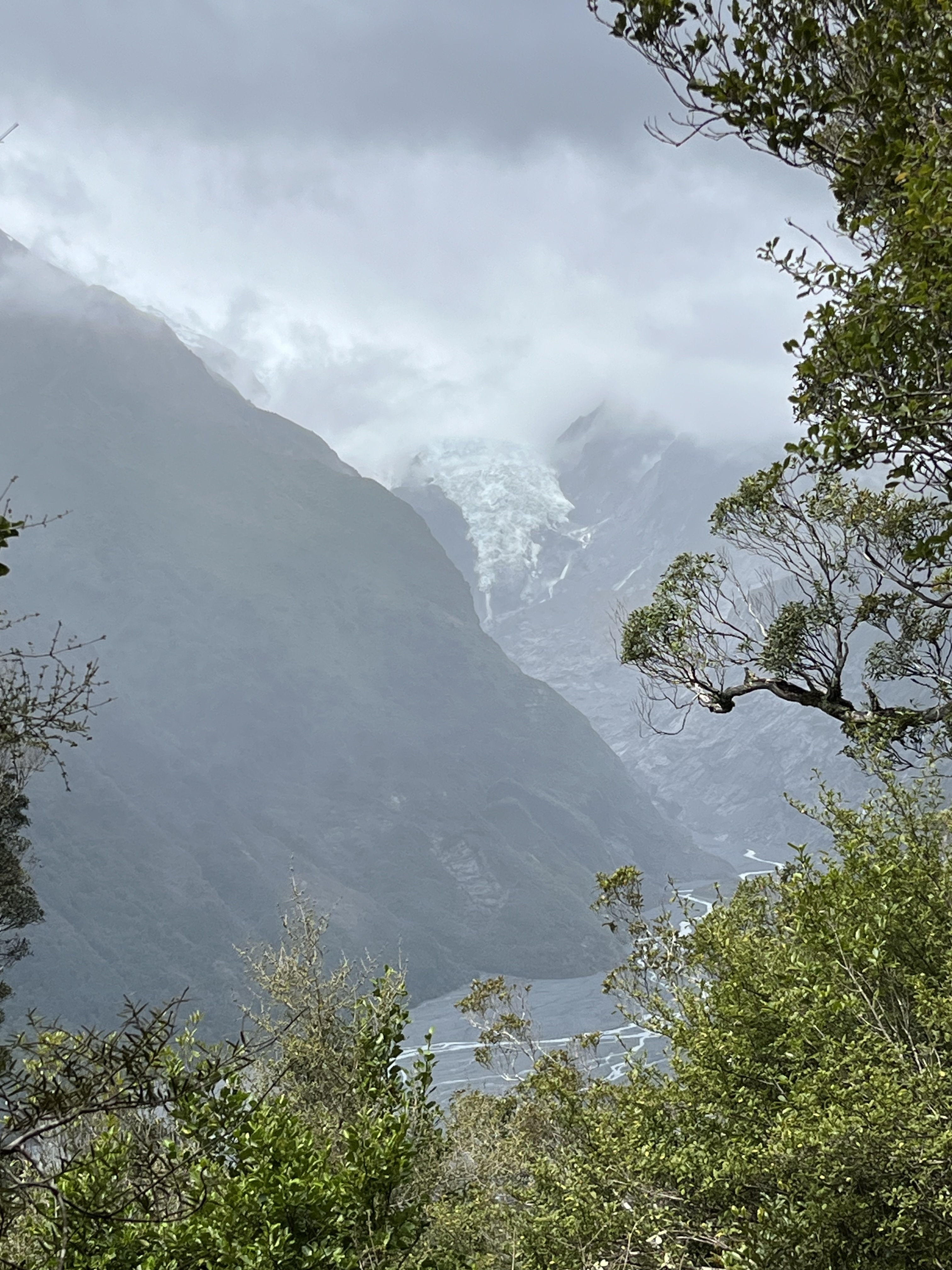
We hiked up to Alex Knob. This 17 km hike is a steady, occasionally steep climb of about 1000 metres. It’s not technically difficult, but it’s a good hike. It’s rated as 8 hours return, but we did it in about 5 1/2—it’s easy to speed on the way down. On our way up, we got glimpses of the glacier. Unfortunately, by the time we reached the top, where the view should have been spectacular, the whole top of the knob was in cloud, and a fierce wind was driving snow into our faces. Despite the wind, snow and cold, we tucked ourselves behind a tussock and had a snack, enjoying the sheer wildness of the weather, before driving hail hurried us down.
It’s been ten years since I’ve been to the glacier. What I saw on this visit was heartbreaking.
Sixteen years ago, I did some interpretation work for the Department of Conservation, researching and writing text for interpretive panels at Franz Josef Glacier and Fox Glacier. I also did some research around visitor behaviour at the glaciers and the effectiveness of various warning messages. At the time, the glaciers were easily accessible on foot. They were advancing and dropping deadly chunks of ice on visitors who ignored warning signs and crossed barrier ropes to get up close.
Franz Josef Glacier in 2015
Today, Franz Josef Glacier has retreated so far, it is not possible to walk to it. Ironically, the only way to visit the glacier these days is by helicopter—further spewing the greenhouse gases that are killing the glaciers.
There were thousands of tourists in Franz Josef Township last weekend, and the glacier carpark and tracks were crowded. Many of these tourists were here for the lure of New Zealand’s spectacular glacial landscape. New Zealand used to be the only place on earth where you could see glaciers reaching down into temperate rainforest. Today the glaciers come nowhere close to the forest, and soon there will be no glaciers left at all.
Franz Josef Glacier in 2025
There are many other wonders on the West Coast—the rainforest, the mountains, wildlife and beaches—but the loss of the glaciers is tragic, not just because of their natural beauty, but also because of their role in water storage and release. Their loss will have long term consequences for all of New Zealand.
It may be another decade before I go to Franz Josef Glacier. I hope there is still a glacier to see when I get there.
Anyone who knows me knows how much I love spiders. One of my favourite story books as a child was Be Nice to Spiders by Margaret Bloy Graham (never mind the subtle misogyny in this 1967 publication). Growing up, we called the big hairy jumping spiders in the basement “friend ‘pider”.
When I was bitten as a teen by a large wolf spider who’d taken up residence in one of my sneakers, my main concerns were: was the spider okay? (Yes, she appeared unharmed by me squishing my foot into ‘her’ shoe), and was wolf spider venom strong enough to do anything to humans? I was fascinated to find that, yes, my pinky toe, near the site of the bite, was paralysed for about fifteen minutes. Cool, right?
Having lived in Panama, a place with spectacular spiders, the relatively small and harmless New Zealand spider fauna was initially disappointing. But Aotearoa has some fun and quirky spiders. And though none of them rival the tarantulas and golden silk spiders in Panama, New Zealand wins the prize for the sheer volume of spiders. They seem to inhabit every nook and cranny here.
I’ve recently started a wee project to document the spiders on our property. Last Friday, I spent my morning tea break photographing a few.
One of the more common spiders I found on my stroll was the sooty orbweaver (Salsa fuliginata). Despite the name, these dainty arachnids are beautiful creatures, and quite variable in appearance. The three individuals in these photos were hanging out within 50 centimetres of one another—one brown, one rosy, and one yellow-hued. I always find them among the broad beans, capitalising on the heavy insect traffic around the aromatic blossoms.
The sooty orbweaver is native to Australia, and likely arrived in New Zealand from there around 2000.
As though they know What I need When winter returns On the eve of bud burst, Magpies warble On fence posts In the dark.
Spring comes! Spring comes!
Ten years ago I posted a blog titled, It Ain’t Over ’Til the Magpie Sings. The post was prompted by the first morning that a magpie warbled for an hour before dawn. At the old house, where the windows weren’t double glazed, the magpies were my alarm clock in spring and summer, warbling an hour or so before sunrise, urging me up to do the milking and make the most of the day. It’s harder to hear them in our new house, where the double glazed windows deaden outdoor sounds, but I’ve been tuning into the magpies for years.
And I’ve discovered that the magpies are remarkably predictable. Ten years ago, I heard the first pre-dawn magpie song on August 8th. Today (the 8th of August) I heard the first pre-dawn magpie song of the year.
And just like that day a decade ago, the first magpie song was followed by a winter lashing reminding us that, while spring was on its way, winter was still in charge. Today’s weather forecast shows the temperature dropping from a 4 am high (a balmy 12.3℃) all day, to 3℃. We can expect rain and icy wind for the next couple of days.
Last weekend I had the pleasure of participating in a mini bioblitz at the University of Canterbury’s Cass Mountain Research Station.
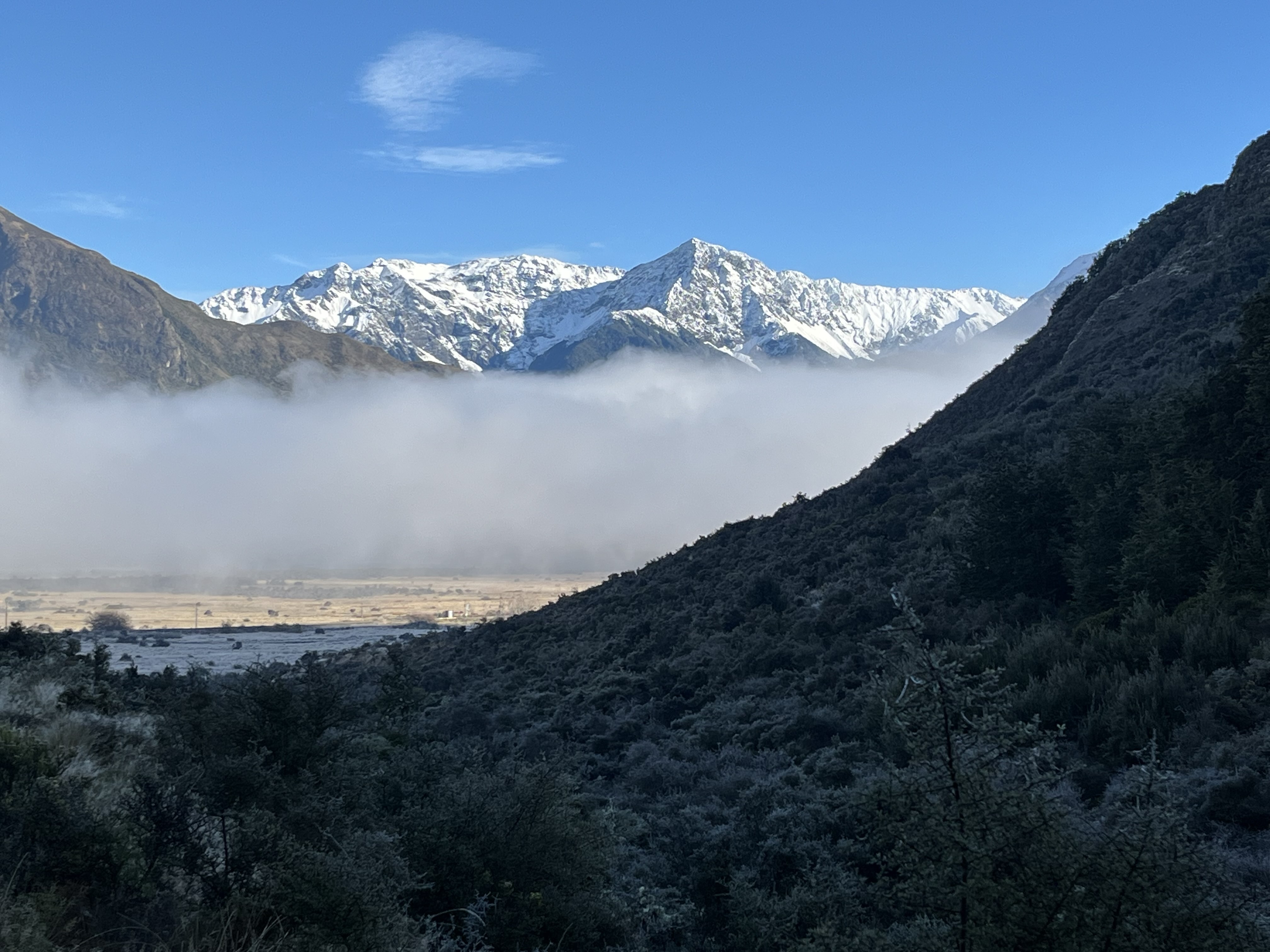
Eleven of us descended on the station on the frosty Saturday morning. Fog enshrouded the mountains, but blue sky above promised a glorious day.
We set a goal for the weekend of increasing the number of iNaturalist observations at Cass to 4,000 and the number of species observed there to 800. Then we embarked on forays into the bush and across the outwash fan to search for life.
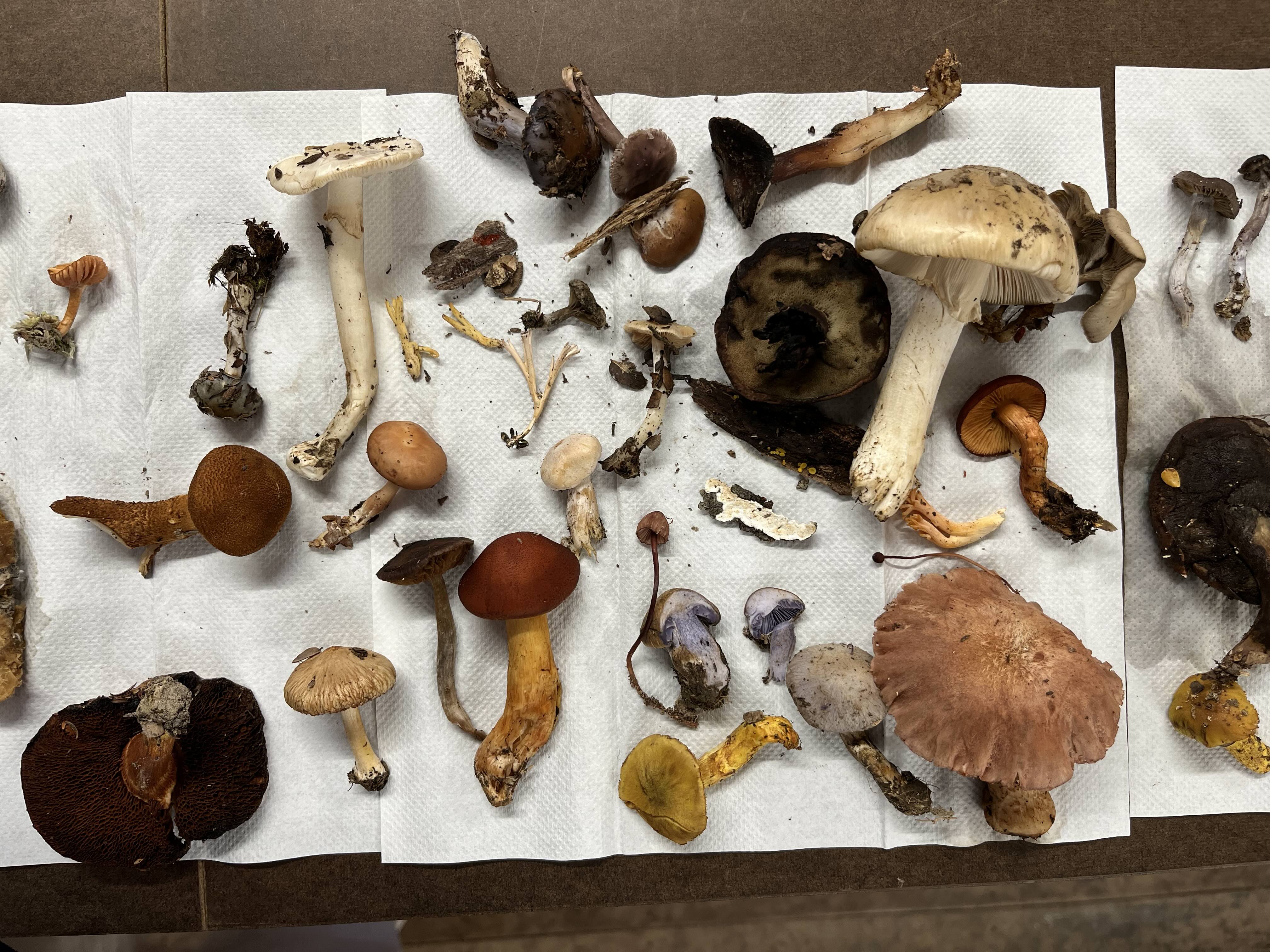
I was stuck near the station, because my knee hadn’t yet healed from the previous week’s tramp. But my geographical constraints didn’t prevent me from plenty of discoveries. Instead, it forced me to focus on the small and overlooked species. Mites, springtails, slugs … all manner of life abounds nearby and underfoot.
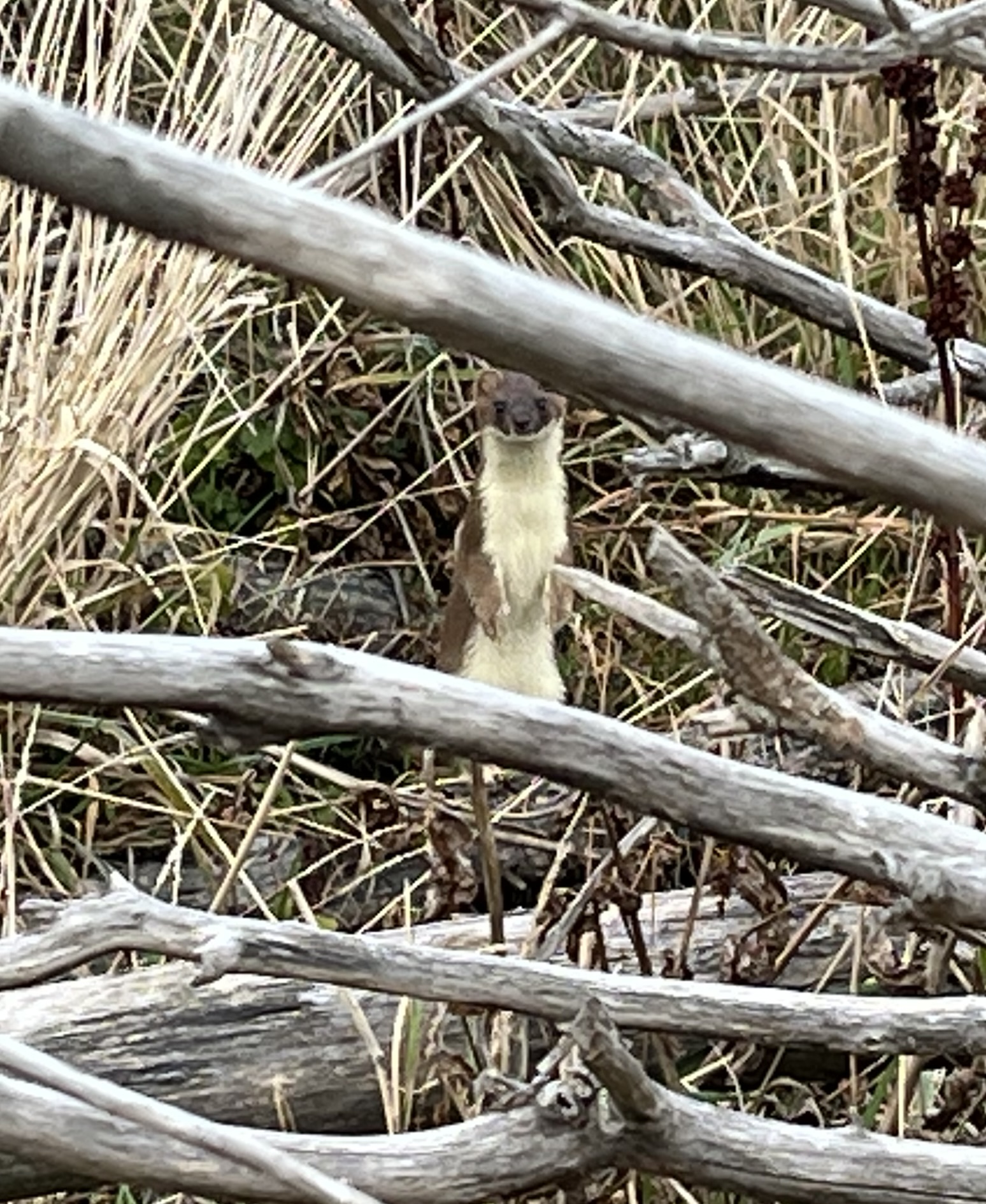
And because I was spending much of my time quietly turning over stones and picking apart rotting logs, larger organisms came to investigate me, including a pair of curious stoats who spent five minutes scurrying around me and popping up out of the vegetation to spy on me. In spite of the fact stoats are terrible pests here, and I would happily kill them, the encounter was pure magic.
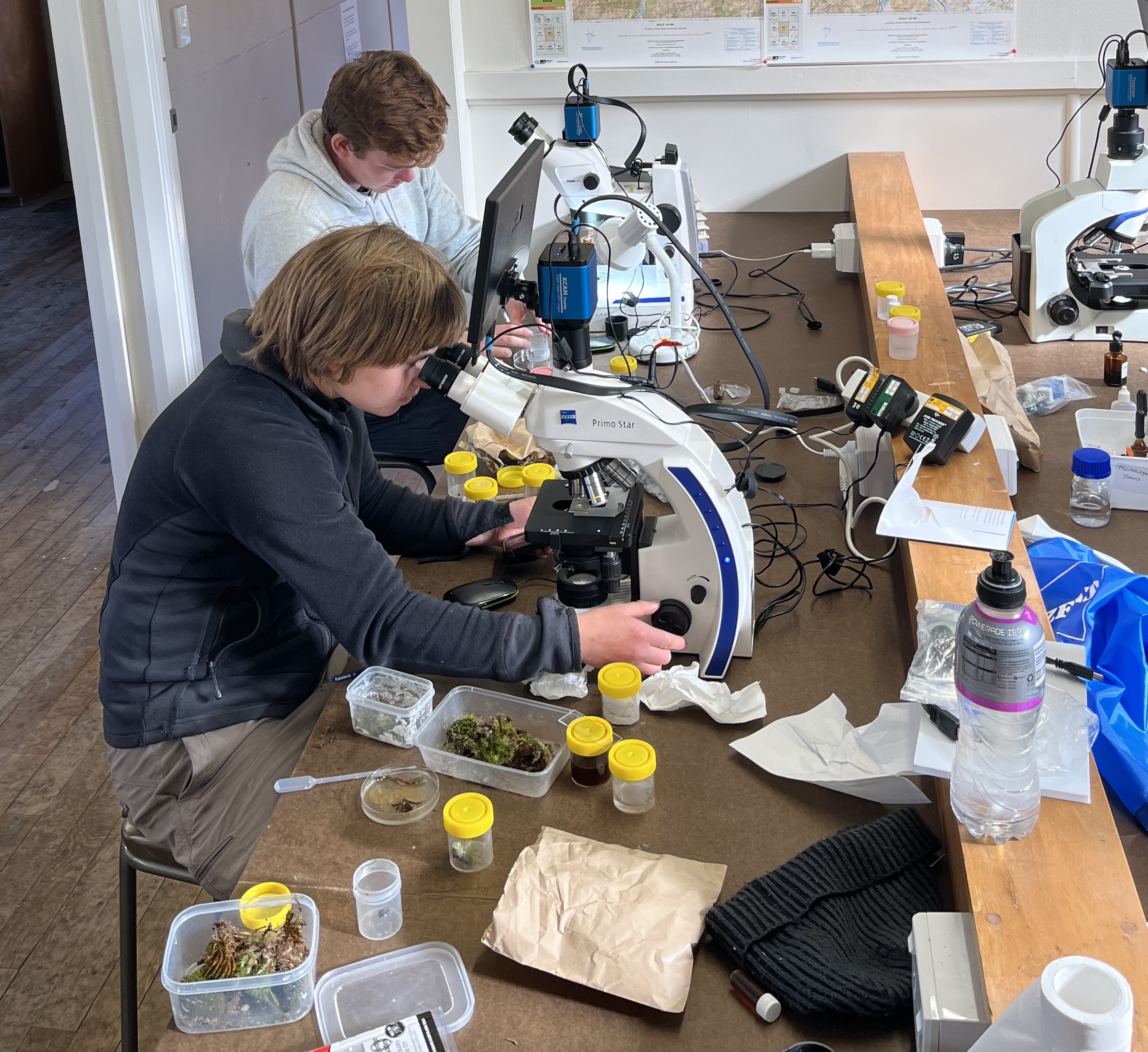
As people returned to the station laden with stories, photos and samples, we moved to the microscopes in the lab, where the geek factor was cranked to 11.
“Oh wow! Look at this!” was a common refrain, as we crowded around the microscopes to examine the smaller finds. As dusk fell, we set up light traps for flying insects, to be checked later in the night.
On Sunday, a group ventured into the bush in search of the giant springtail, which was found at last year’s bioblitz. The quest was successful, and although it didn’t add a new species to the list, it was a highlight of the weekend for many.
In early afternoon, after a busy morning, and a lunchtime spent uploading observations to iNaturalist, we headed home, where we continued to upload our observations from the weekend.
When all was done and dusted, the 11 participants made 871 observations of 321 species. Almost 1 out of 3 observations were of organisms new to the Cass list, bringing the totals for Cass Research Station to 4484 observations of 869 species! An amazing result from a spectacular weekend!
The event reminds me again how important university field stations are for fostering science in general. The people at the two bioblitzes I’ve attended at Cass might never have collaborated or shared ideas in their everyday research life, but the research station brought them together in an atmosphere that fosters collaboration. The research station is a place where scientific curiosity can flourish, where scientists can explore the connections among disciplines and research projects. What an incredible asset for the university!
Last weekend, my husband and I got out for a tramping trip in the Two Thumb Range, in Te Kahui Kaupeka Conservation Park. We parked on Rangitata Gorge Road at Forest Stream, then slogged two hours up the road to Bush Stream—not a very exciting start, but better then than at the end of the tramp. We followed Bush Stream Track up the stream to Crooked Spur Hut. The stream flows through some pretty spectacular scenery, and you ‘get’ to cross the stream quite a few times before a steep climb to the hut.
Crooked Spur Hut is one of several historic musterer’s huts in the area. It’s old and the walls are full of holes and rats. We opted to sleep in the tent, but we hung out in the hut, since we had it all to ourselves.
Kea on a cold tin roof.
On the approach to the hut, a kea came to investigate, watching us climb the hill. It must have invited its friends later, because shortly after dark, while I was reading in the tent, I heard the thump-thump-thump of a couple of kea bouncing around outside. I shooed them away, knowing their penchant for mischief, and eventually they got the hint and left.
But by morning the kea had mustered reinforcements. They started about 4 am, thumping around outside the tent, plucking at the tent strings, and calling loudly right by our heads. By 5 am, we were up out of a sense of self-preservation, retreating to the hut to start our day.
When I stepped out of the hut a few minutes later, there were three kea, each one working on pulling out a tent stake, and more calling in the darkness beyond. We quickly took down the tent in the dark, before the kea tore it to shreds.
We got the billy boiling to the sound of kea on the tin roof. They seemed to have multiplied. The noise was deafening, and grew louder as dawn approached. Our trips out to the loo were accompanied by no less than three kea, who then sat on the loo roof, peering in through the skylight to watch the show.
Returning from the loo, I counted fifteen kea, most of them on the hut roof, picking at the roofing nails (which thankfully had been replaced with non-leaded ones, because the old lead nails kill kea), and sliding down the tin. It was the most kea I’d ever seen at once. And as obnoxious as the cheeky buggers are, it was the highlight of the trip.
Leaving the kea behind, on day two, we hiked up from the hut through frosty tussocks to a scree-covered saddle where we were treated to some new spectacular scenery—tussock, scree and craggy peaks all around. At Swamps Stream we scared up a herd of 28 tahr—a non-native pest, but cool to see nonetheless. We arrived at Stone Hut at lunchtime, and had a lovely meal next to the stream before carrying on to Royal Hut.
Interior of Royal Hut.
Royal Hut is similar in age and condition to all the old musterer’s huts, but has the distinction of having been visited by royalty. The accounts I’ve found differ in the details—it was either in the 1960s or in 1970, and the royals involved were either Prince Charles and Princess Anne, or Prince Charles and Princess Diana (Diana being highly unlikely, given the date range suggested for the event).
In any case, it is said the royals zipped in by helicopter for a ‘brief’ visit. I doubt they spent the night. With mice scrabbling over our packs within 15 minutes of our arrival at the hut, we opted for the tent again.
Frost heave on the track, with 4 cm-long ice needles.
The morning of day three was fine and frosty (with frost inside the tent!). The DOC signage indicated we had an 11-hour hike to the road, and with daylight only being 11 hours or so long at this time of year, we made an early start, as soon as it was light enough to see the track.
We warmed up quickly, with the first leg of the day being a climb to Bullock Bow Saddle.
By the time we reached the saddle, I knew I’d pushed too hard over the previous couple of days—my left knee was stuffed, and hurt with every step.
It was a loooong 14 or 15 km from there to the road—the first few kilometres steeply downhill, then a long slog down the Forest Creek riverbed.
Still, we made it to the car well before dusk, and enjoyed more spectacular scenery (and a few more river crossings) along the way.
Overall, a fun long weekend! Spectacular views, awesome wildlife, and some real character huts. And the weather couldn’t have been better.
Our daughter wanted to go to the west coast for professional reasons (to photograph mosses for a project she’s doing), so my husband and I happily agreed to accompany her for a weekend getaway.
We left Friday evening, stopping at Lake Pearson (Moana Rua) for a lovely picnic dinner, and then carrying on over the mountains to camp at Goldsborough Campsite near Kumara. We pulled into the campsite around eight o’clock and set up camp. With the light already fading, we decided to wander up one of the tracks that followed old gold mining tracks through the bush.
Old mining water race tunnelling through the hillside
We started up German Gully Track, thinking we’d just go up a little ways, then return. The track passed an old mining water race that looked like a cathedral-shaped tunnel as it snaked steadily up the hill. Soon we were close enough to the end of the track that, of course, we had to finish.
We popped out onto a broad, modern gold mining road. The sign at the road indicated that we could either return to the track the way we came (30 minutes, according to the sign), or return via Goff’s Track (65 minutes). It was 8.55 pm. To take Goff’s Track would, theoretically, have us arriving back at the campsite at 10 pm. After ascertaining we all had our head torches with us, we powered up the road towards Goff’s Track.
German Gully track–an old mining road
The west coast was unusually dry, for which I was glad as we picked our way down Goff’s Track in the gloom—while most of the track was easy going, the steeper sections would have been slick and no fun in low light.
Knowing we were racing the light, we kept the pace up, and didn’t even need to use our torches, arriving back at the campsite around 9.30. A nice little evening hike!
The following day, we got an early start and hiked up Mount French, near Lake Brunner. None of the track descriptions have much to say, except that the hike is a steady climb of over 1000 vertical metres. Telling, however, are the listed track length and times: 7 km return, 8 hours return. That’s a walking speed of only 875 metres per hour.
View from the top of Mount French towards the Tasman Sea
We did slightly better, making the 3.5 kilometre trip to the summit in 3 hours forty-five minutes, for a walking speed of 933 metres per hour. Most of the hike up is through dense west coast rainforest, so other than the forest itself, there’s not much to see. When we hit the alpine vegetation near the top, the views opened up and it was spectacular. At first we were a little worried we’d struggle to find our way across the multiple false peaks to the actual summit, because clouds obscured the tops. In hindsight, I’m glad the cloud was there, because when it did clear and we finally got a view of the summit, I was disappointed at how far away it still was. LOL! Though the elevational change from the bottom to the top is officially a bit over 1000 metres, there are several significant dips along the ridge, so I suspect the actual amount of climbing you do to reach the summit is more like 1200 metres.
Looking back down the ridge from the summit of Mount French
But we made it, and by the time we were on the summit the clouds had cleared entirely. We had stunning views to the Tasman Sea on one side, and to the mountains on the other. Lake Brunner glittered in the sun far below us.
We had lunch on the peak and spent a good bit of time enjoying the view and exploring the plants and insects at the top before tackling the descent.
Lake Brunner seen from the summit of Mount French
Going down was faster than going up, and we reached the car shortly after 3 pm, hot and sweaty and ready for a swim. After a quick dip in Lake Brunner, and a change of clothes, we headed to Hokitika for dinner and a short stroll on the beach.
All of us were in bed and asleep early Saturday night.
Sunday, we packed up camp and headed to Lake Kaniere to hike the Lake Kaniere walkway. We’ve done part of this walk several times. It’s a mostly flat, well maintained track that follows the entire western edge of the lake. There are multiple stony beaches to stop at along the way, and amazing lowland rainforest vegetation.
A reflective early morning Lake Kaniere
On Sunday, it was also really hot (28 degrees by early afternoon). And even on the flat, we were sweating. My husband turned back about a third of the way into the hike, in order to drive the car to the end of the one-way track. My daughter and I continued on, stopping for a quick skinny dip at Lawyer’s Delight beach, before meeting my husband walking back towards us from the far end, about a kilometre from the end of the track.
Carové’s giant dragonfly at Dorothy Falls
We had lunch, a stop a Dorothy Falls, and another swim in Lake Kaniere, then headed home.
The entire weekend on the west coast was hot and sunny, so it was a bit of a shock to hit Porter’s Pass and drive into drizzle and 12 degrees. It was a chilly 15 at home under overcast skies. Poor Canterbury—this summer has been anything but summery here. It’s no wonder the west coast was absolutely packed with vacationing families.
And now I have one week left before returning to the day job. My summer to-do list is getting shorter, but I will definitely not accomplish everything on it. But it’s been a good summer for getting out and hiking, so I can’t complain. Now I just need to knuckle down and get some writing in while I can.
I’m part of a local group of keen vegetable gardeners who meet fortnightly throughout the growing season. Each meetup involves a tour around someone’s garden, and then a cup of tea, while we discuss our gardens and gardening, complain about the weather, and generally catch up with each other.
Our most recent gathering was at a garden just 200 metres down the road from our house. Bev’s been gardening there for over 20 years, and the property is beautifully sheltered by large hedges and mature plantings.
And even though we live only a three minute walk away from one another, our gardens grow remarkably differently.
Bev’s is almost always a week or two ahead of mine. And not just because she plants earlier than I do—her tree and berry crops leaf out, bloom and fruit before mine do. She plants out her tomatoes before I do, her carrots germinate more rapidly and grow more quickly, her peas outstrip mine within weeks of germination, her green beans produce pods a week ahead of mine. The differences are remarkable.
We are so close to one another, the temperature and rainfall on our two gardens is all but identical. But Bev has created an amazing microclimate for her plants with rich soil and excellent shelter.
Other women in the group have done similar wonders on their properties, creating striking pockets of abundance by carefully manipulating the microclimate in their gardens. In fact, my garden is sometimes behind other group members’ gardens in colder locations.
It’s something to aspire to. Having started with a bare paddock with no topsoil four and a half years ago, we’ve come a long way on our property, but we also have a long way to go. We are incredibly fortunate to have amazing gardeners nearby to inspire us to keep working towards our own pocket of abundance.
The natural microclimate of our property is apparently perfect for dandelions, because they are abundant and healthy everywhere.We haven’t managed a good microclimate for citrus yet, except in the greenhouse.We do manage to grow great broad beans!
I enjoy winter hiking—I enjoy the crisp air, the opportunity to hike without sweating too much, the snow on the peaks.
One of my favourite winter phenomena is frost heave. This is when moisture in the soil freezes. Since water expands when it freezes, the ice crystals push soil and rocks upward. We get frost heave at home, but in the mountains, where there is both more water and colder temperatures, the phenomenon can be spectacular.
On a cold Matariki morning a few weeks ago, I snapped a photo of five-centimetre-long ice needles near Foggy Peak. Each needle was topped by gravel—the whole top centimetre or more of the sloping surface lifted. As the sun rose and melted the ice, every rock fell a few centimetres downhill from where it started. I imagine this process happening daily all through winter—a slow-motion conveyor belt shifting the mountain downhill.
Meanwhile, higher up on the mountain, water seeping into the cracks in rocks and then freezing shatters them day by day into smaller fragments to be added to the icy conveyor belt.
It is such a small thing, frost heave. But its slow action has a big effect.
The Southern Alps are rising at a rate of 10 to 20 millimetres per year—some of the fastest rising mountains in the world. If no erosion had ever occurred, the mountains would currently stand over 20 kilometres tall. Our tallest mountain, Aoraki Mount Cook, is 3754 metres tall.
Of course, when we think of erosion, we think of the big events like landslides and rock avalanches. These events can be spectacular.
On 14 December 1991, a rock avalanche on Aoraki lowered the summit by 10 metres over the course of a few hours. Fourteen million cubic metres of rock and ice tumbled down the mountain at speeds of up to 300 kilometres per hour. The shock waves from the landslide were recorded on seismographs as far as 58 kilometres away.
But without frost heave, the 1991 Aoraki rock avalanche might never have happened. Frost heave slowly weakened the rocks, slowly snapped them into smaller and smaller pieces, slowly shifted their weight. Centimetre by centimetre, those little ice needles brought the mountainside down.
I like to think of frost heave as a metaphor. Each of those tiny ice crystals, by itself, can move a pebble, and together they bring down mountains.
As my regular readers all know, I spend a lot of time in the garden. I also spend a lot of time thinking about gardens, looking at gardens, planning gardens …
The bare paddock: former forest, future garden
I am fortunate to be part of a local group of keen vegetable gardeners. Of course, we don’t just grow vegetables—everyone has perennial food crops like fruit trees and berry bushes, and ornamental plants as well. All of us take pleasure in planting and maintaining our gardens, as well as relaxing in and enjoying them. Some of us are in the early stages of establishing our gardens, and others have spent decades cultivating one place. But we’re all focused on the future.
I’m reminded of the quote I copied years ago from the book 1491: New Revelations of the Americas before Columbus, by Charles C. Mann:
“Gardens are fashioned for many purposes with many different tools, but all are collaborations with natural forces. Rarely do their makers claim to be restoring or rebuilding anything from the past; and they are never in full control of the results. Instead, using the best tools they have and all the knowledge that they can gather, they work to create future environments.
If there is a lesson it is that to think like the original inhabitants of these lands we should not set our sights on rebuilding an environment from the past but concentrate on shaping a world to live in for the future.”
I look at the 3000 square metres of land my husband and I own. For thousands of years, this land was covered in forest and periodically scoured by the Waimakariri River, which deposited around 300 metres of rock and clay here on top of the bedrock. When Māori arrived in the region, they burnt the forest to flush out moa and other game birds. European settlers later brought in sheep and cows and planted European pasture grasses. From the mid 1800s to 2019, our little block of land was used to pasture sheep, and later, dairy cows. When it was subdivided to develop as residential housing, the topsoil was scraped off, leaving bare, highly compacted clay studded with rocks. Even weeds grew poorly (in places where we have done nothing to improve the soil, there are still bare patches, where nothing has been able to grow in the past 5 years).
Flaxes provide food for native birds, currents provide food for us.
There was no restoring or remaking what was once here, but when we bought the land, we envisioned a place rich in native plants that might attract native lizards, birds and insects. We envisioned a place full of plants that would provide food—an orchard, berry crops, nuts, herbs and vegetables. We envisioned a place that was beautiful, and bright with flowers.
A volunteer lancewood.
We cannot erase the fact that the soil here has been sorely abused for nearly two hundred years. We can’t erase the fact that we sit over an old river bed full of rock and clay. Not everything we plant flourishes, and other plants have done so well, they’ve become weeds. Some insects and birds have returned, but glaring absences remain, and non-native pests still dominate.
But like all gardeners, we look to the future, our imaginations filling the gaps in what we see today. We do our best to collaborate with the natural forces at work here in order to shape a little pocket of plenty for ourselves and others.






 Robinne Weiss