Pleasing Spaces, Pleasing Spouses

I’ve been gardening with my husband for almost 33 years now. Over the years, we’ve created many different garden spaces together. And even after all these years, we have different ideas about what our garden should look like. Each garden we’ve created has been a push and pull of our ideas, a creative collaboration, better for the different ideas we bring to the task.

I tend towards tidy, functional. My husband tends towards whimsical, aesthetic. I think about how I’m going to get a wheelbarrow into a space, how I’m going to weed it. He thinks about seating and art, lines of sight, and how we will enjoy the space. We joke that he builds gardens and I weed them.

The end result is beautiful gardens that are relatively easy to maintain. The end result is a garden that feeds us, but is also a place we regularly stroll with a glass of wine in hand, just to enjoy the beauty of it. The end result is beautiful spots to eat lunch, read a book, or write a blog post. The end result is a space that meets our physical, emotional and spiritual needs. 

And I can’t help but suspect that the collaborative act of gardening is one of the reasons we’ll be celebrating our 33rd anniversary next month. A lifetime of what are essentially team building activities can’t be bad for a relationship.

In fact, I see the same in many of the couples in our local garden group—spouses acting as teams, collaborating with one another to create spaces to nurture each other. I love to see the beautiful, supportive relationships between spouses in that group, and I have to believe that gardening together is a strengthening factor in those relationships.

One more reason (if you needed one) to get out there and garden—but do it with your partner.
Technology Woes

It’s been a difficult week for me and technology. On day two of my two-week break from my day job, my ten-year-old laptop died. I’d hoped to finish the first draft of the novel I’m working on during my break. No such luck.

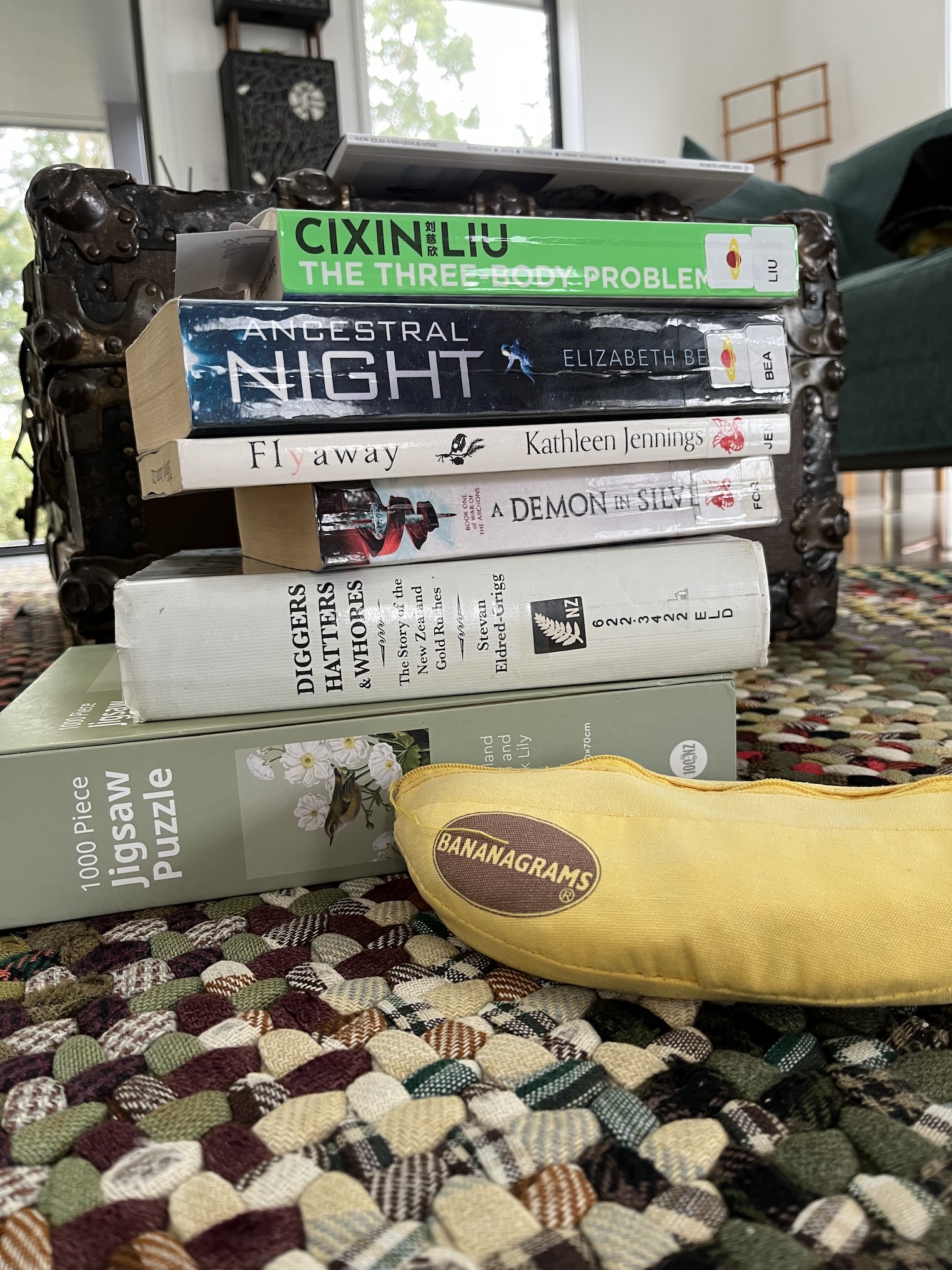
This week’s entertainment.

On the same day that my laptop died, my phone had to be recharged four times, because the battery was draining completely every couple of hours, even when I wasn’t using it.

So it’s been a very expensive and frustrating week, and now I have a new phone and a new laptop. I will admit it is nice to not have to carry an extra battery for the phone with me all the time, and it’s nice to have a computer with a fully functioning keyboard, but the upgrades have been quite disturbing, too.

Having not updated my devices for a decade, all my apps were old versions. The new ones have a zillion more features than I’m used to. Almost none of the new features increase the apps’ functionality. The ‘upgrades’ are primarily aimed at urging me to consume more advertisements on my device and making it easier for me to spend money. I find it quite depressing.

The rebellious part of me has decided that, in response to the upgrades, I’m going to do my best to spend even less time on my devices. The computer is pretty well unavoidable, because of my occupation, and I’ve never been one to spend personal time on the computer. But the phone tends to be what I grab during my leisure time. I admit, I have six different e-reader apps on the phone, and I read tons of ebooks, which is what occupies most of my phone time. But I also play a couple of games on the phone, and I read the news. I’m easily sucked into social media on the phone, too. So there’s lots of room to limit my phone use.

First job was to delete the games. I’d already deleted one, several weeks ago, because I realised I was using it to procrastinate, and I didn’t even really like it. I haven’t missed it at all. So the other two games have now gone.

Then, while I was out and about this morning, I stopped by the library. I checked out an armload of books, and also a jigsaw puzzle. Books are fantastic, but I do need the brain rest that those games on the phone or scrolling social media provide. Jigsaw puzzles will serve the same purpose, with the bonus that a jigsaw comes without advertisements and auto-play videos, and invites others to join in the fun. 

I also need to remember my love of playing solitary Bananagrams. It’s not as fun as facing off in a frenetic game with my daughter, but I enjoy coming up with different challenges. Last night I tried making the densest board I could, with nearly every letter forming part of two words. Way more rewarding than scrolling through Facebook trying to find posts by my actual friends between drifts of advertisements.

Will I still read the newspapers on my phone? Yep. And I’ll still carry it with me, in order to stay in touch with my family and take photos. And I’ll maintain my presence on social media (not that I use it much in the first place). But I reject my new apps’ insistence that I share more information with them so they can feed me advertisements. I reject Apple Pay. I reject the notion that my phone is there for the purpose of selling me more and more and more things I don’t need. I reject the assumption that I will blindly agree to be nothing but a source of income for corporate executives.

My entertainment is going analog.

Will my stand have any impact on the Mark Zuckerbergs of the world? Nope. But it will have an impact on me.

The Stories We Live By

I’ve been thinking a lot lately about the stories we tell ourselves.

Specifically, the stories we tell ourselves about ourselves. 

I’ve listened to a lot of friends’ and family members’ stories recently, and it’s got me thinking about the power of the narratives we build about ourselves in our own minds. Those stories can turn almost anything into the truth, because we live the life we believe to be true about ourselves.

That’s a lot of power to give a story.

I’ve seen that power at work in my own life. There have been times when I’ve spun a narrative about myself in my head that was true, but depressing. It’s easy to find those sorts of stories to tell ourselves, because of course, bad things have happened to all of us, we’ve all made bad decisions, we’ve all experienced loss. 

But by focusing on the victim/fool/bereaved narratives in our lives, we give power to those stories. Those stories become who we are. 

As a survivor of multiple sexual assaults whose career has been derailed over and over by the classic forces of gender bias in our society, I could narrate a bitter and dissatisfied story for myself. Sometimes I’ve fallen into that trap, and it has led only to anger, depression and despair. It has given immense power to those negative experiences of the past.

It is better by far to narrate a story of resilience, support, love, and surprising opportunities. Because those things have been a part of my life too, and they make a much better story to live in. By building a positive story in my mind, I wrest power away from the negative. I actually increase my happiness and my strength by reminding myself that it’s always been there, even at the worst of times. My internal narrative can include those bad things, but focus on how they helped me grow, how I used the negative as inspiration for change, how the negative highlights the positive in life.

It’s not that I believe we shouldn’t tell those stories of injustice or pain in our own lives. As a society, we can’t shove that stuff under the rug and not address it. We can’t pretend it doesn’t happen.

But as an individual, I can acknowledge all the shit of life and still build a positive narrative to tell myself about myself. 

Is it easy? No, not always. But it’s easier if I focus on the present. It’s easier if I look to the future. It’s easier if I focus on the things that are within my scope of influence. It’s easier if I refuse to label myself in any way—labels so often come with negativity or expectations that we may or may not want to meet. Labels encourage defeatism—oh, I’m just X, so there’s nothing I can do about it.

So in my story about myself, I am not a middle-aged woman. I am not a mother. I am not a wife. I am not a writer. I am instead, a person with certain skills, likes and dislikes who engages in many different activities which bring me joy. I am a person who is still learning and growing, and my story focuses on my core values and how I live them. 

And every morning I get up and live my story.

What story do you tell yourself about yourself?