Mānawatia a Matariki

Today is Matariki, and like new year celebrations all around the world, it’s a day for assessing the past and planning the future. It’s a day to spend with family and friends. It’s a day to remember and honour our connections with other people, the seasons, and the land.
Spending time with whānau wasn’t an option for me today, so I thought I’d celebrate my connections to the seasons and the Earth instead. Before dawn I drove to Porter’s Pass and hiked up towards Foggy Peak. It was dark when I began the ascent, with just a hint of light to the east. I hiked the first 40 minutes or so with my head torch, before it was light enough to see the track.

Being midwinter, I expected it to be cold. It was actually surprisingly warm to start—the air temperature was above freezing. But the wind was stiff, and the temperature was still falling. Thankfully, there was no problem staying warm on the uphill. 
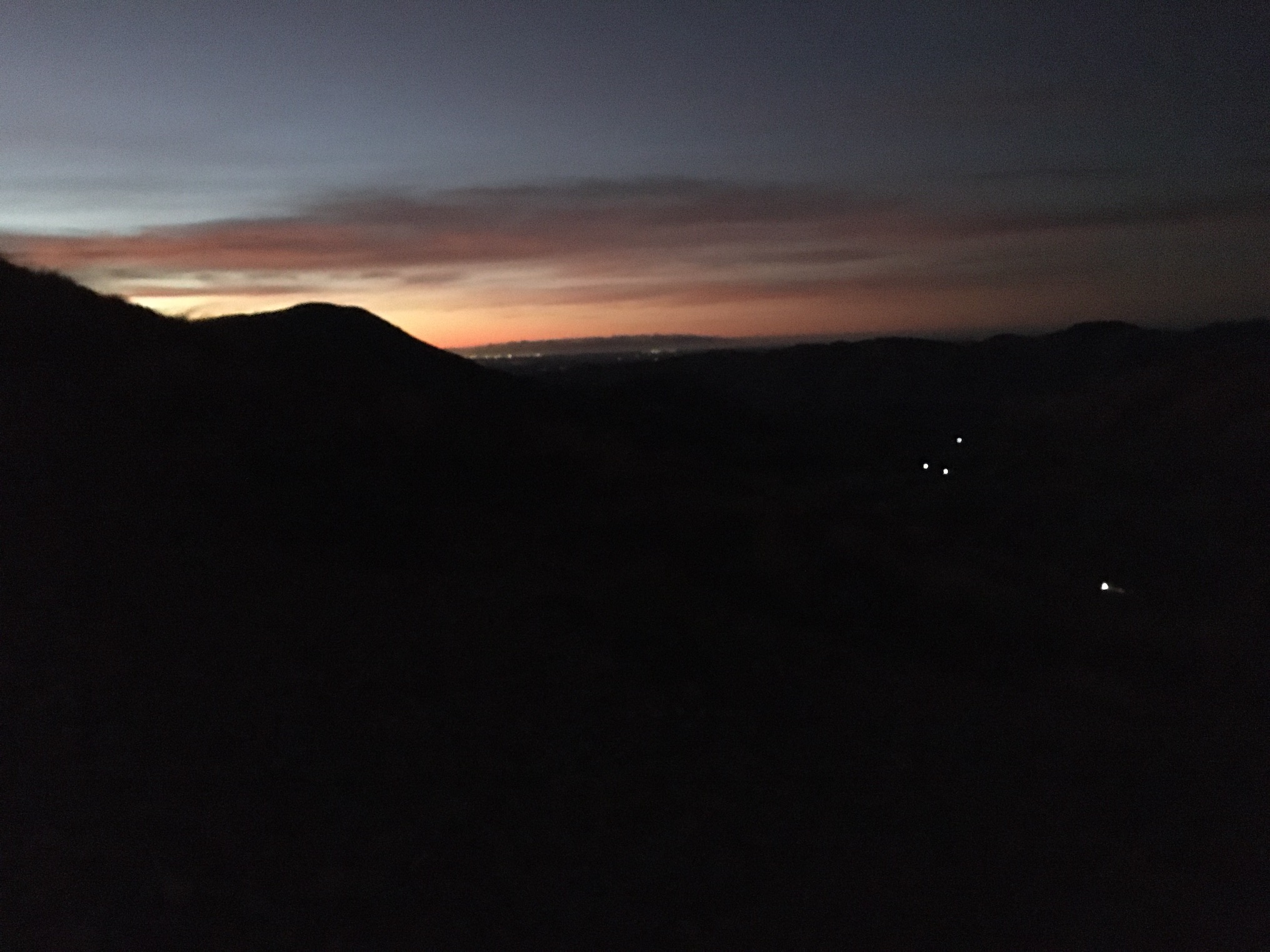
But the wind grew more fierce the further up I went. I stopped frequently to enjoy the beauty of dawn in the mountains, to gaze back at the bright smudges of towns dotting the plains, the pinpricks of light from the cars crawling up the mountain to Porters Pass. I never stopped for long, though.

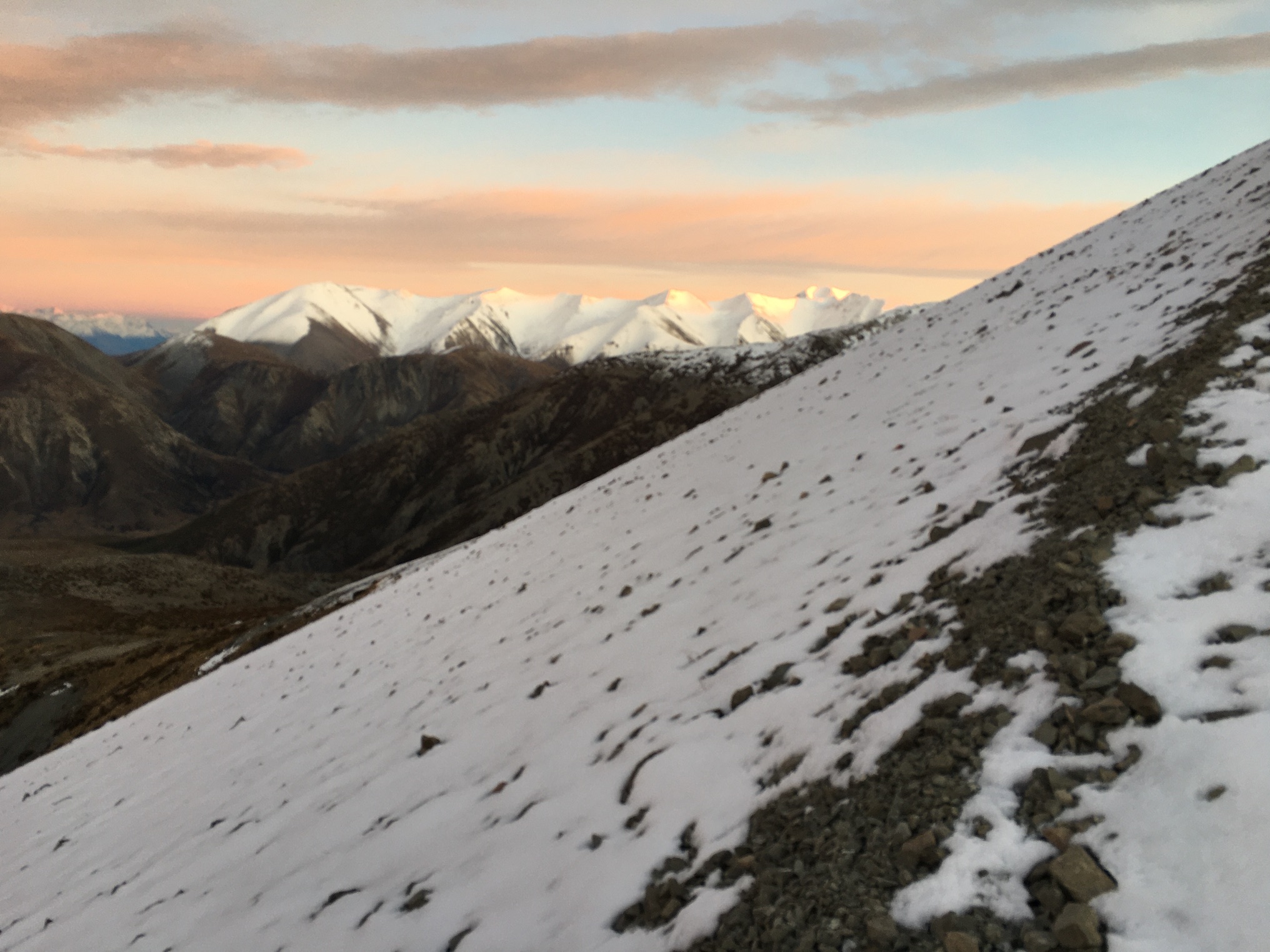
I’d hoped to catch the sunrise from the summit of Foggy Peak, but as the scree gave way to icy snow, my progress slowed, and I wished for crampons. I watched sun strike the snowy peaks of the Craigieburn Range and decided that that would have to be good enough—I could push on to Foggy Peak, but I wasn’t going to sit there with a cup of tea and watch the sun rise as I’d hoped. Even if I’d been in time, it was too windy and cold.

So I had my tea in a sheltered spot lower down, where I could sit and enjoy the view. It wasn’t the summit, but it was a beautiful way to start the new year.

Mānawatia a Matariki! Happy Matariki!
The New Year Begins in Darkness

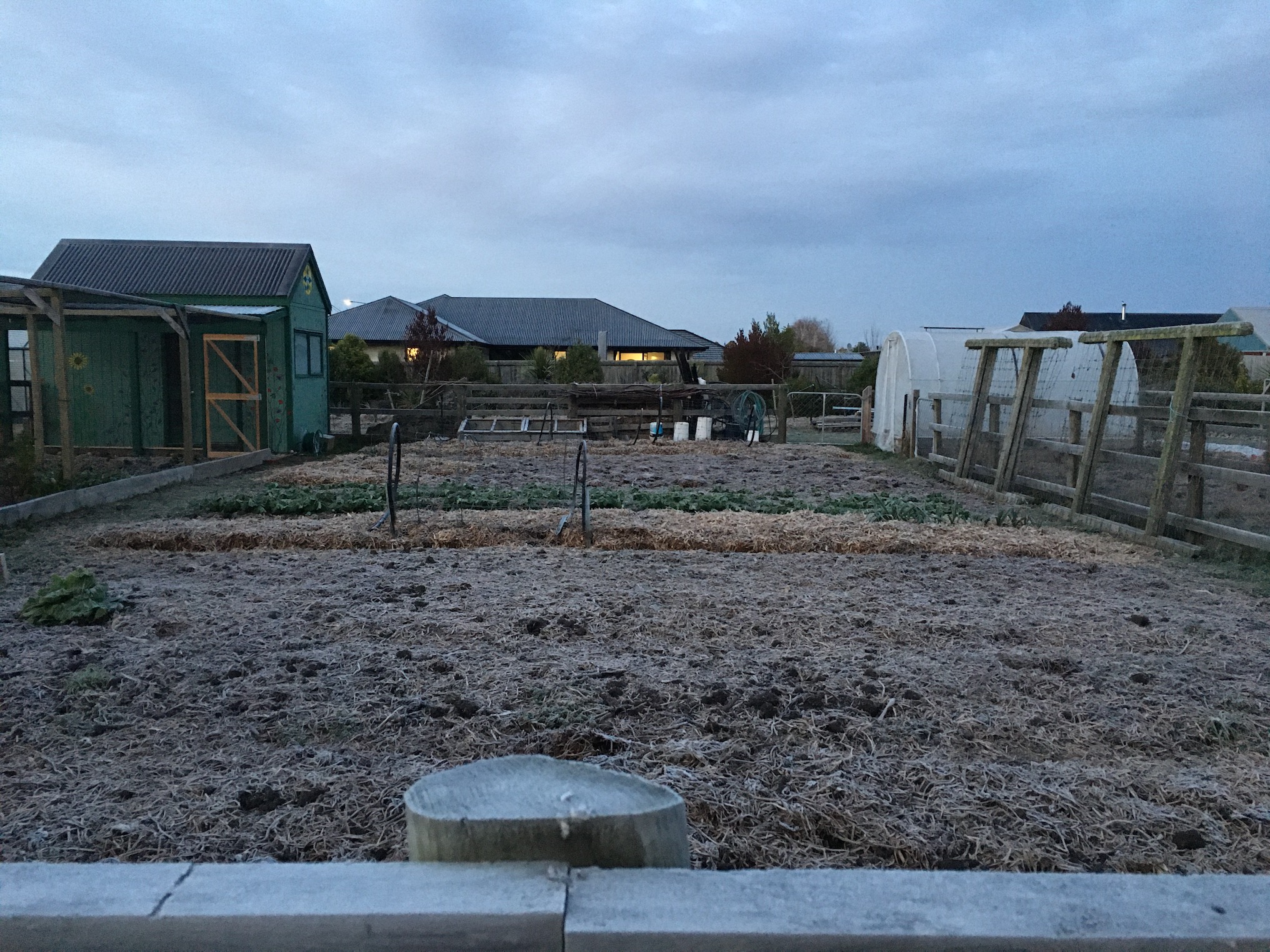
Frost on the winter garden.

Seven o’clock in the morning and it is still dark outside. Indeed, it is darker now than it was at two, when the moon hung high in the sky, bright enough to cast shadows.

It has been an unusually dry start to winter, so here at the winter solstice the darkness feels less oppressive than it sometimes does. There will be sunshine today, at least briefly.

More importantly, there will be summer’s bounty to eat, even in the darkness. 

Just a few years ago, shortly after we’d moved into the new place, I blogged about eating the last of the black currants on the winter solstice. This year on the solstice, the cupboard and freezer still groan with summer fruits and vegetables—a testament to how far the garden has come in a short time.

And because it has been dry, I’ve spent more time in the garden in May and June than I normally would. Summer’s dead plants have been cleared away, the fruit trees and berry bushes have been pruned, and the view of the garden on a frosty morning is one of tidy rest, of anticipation.

I am already thinking about spring. The autumn-planted broad beans are lush—sitting quietly in these short, cold days, but ready to burst into growth as the days grow longer in the coming weeks. I can already smell the musty scent of their September blossoms.

In the kitchen, every meal is a gift from the summer garden, from the summer me, who spent long hours picking and processing vegetables. It is hard not to feel guilty for how easy it is to prepare dinner in winter—heat a jar of vegetable soup, toss a jar of pasta sauce over noodles, thaw some frozen corn and peas … But maybe the guilt is not because I barely have to work for a meal in winter, but because I didn’t appreciate summer’s bounty enough when it was fresh. 

Here in the dark of winter, vegetable soup is a blessing, frozen sweet corn is ambrosia, and homemade tomato sauce is a more potent antidepressant than Prozac. 

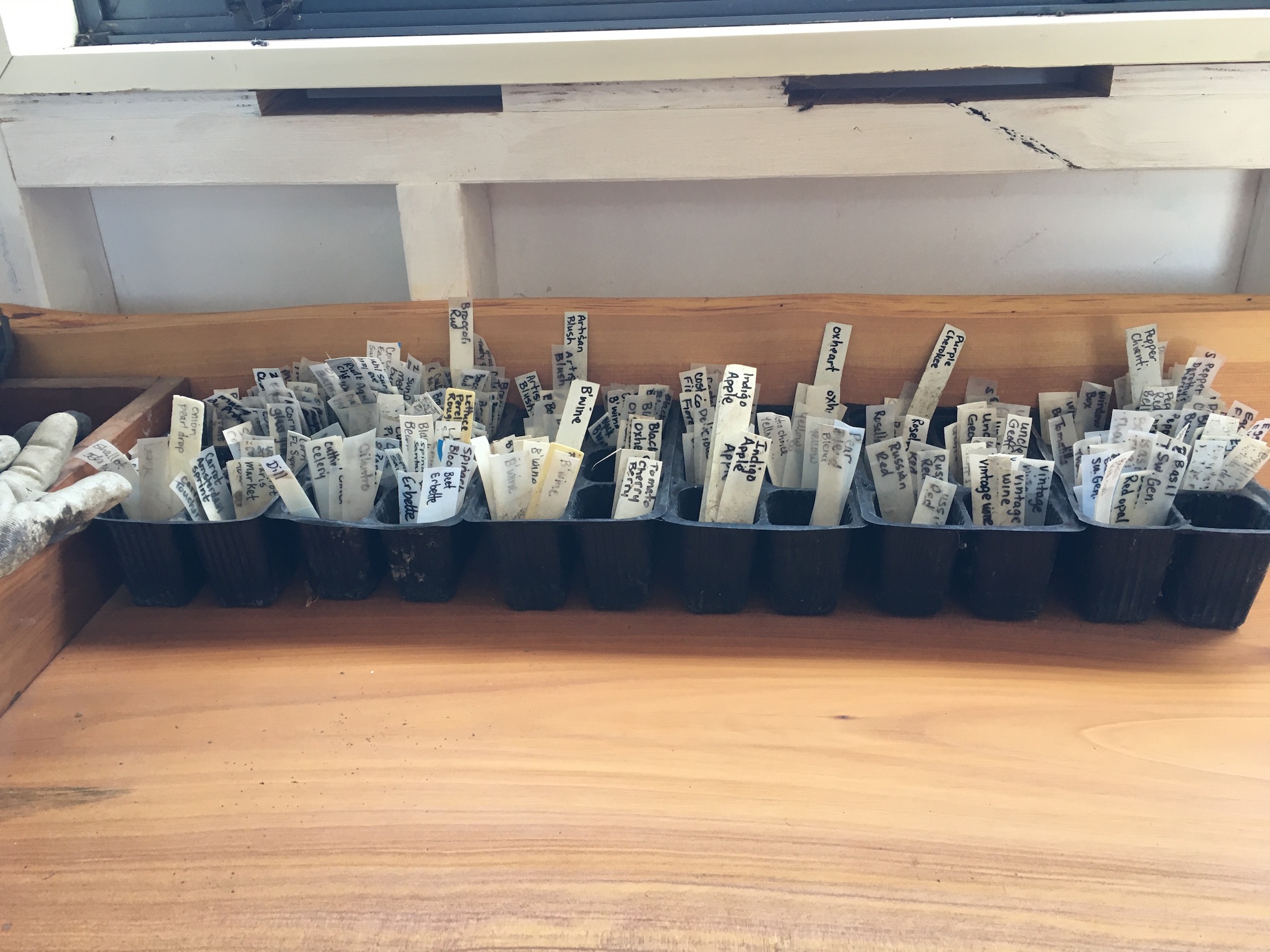
Plant tags ready for spring.

And so, there is joy and pleasure, there is the flavour of sunshine, even in the darkness.

And next week, the days will be a little longer. Next week I will take stock of my seeds and begin planning next summer’s crops. Next week we will celebrate Matariki, the start of a new year.

Matariki Lights

Photo by Klemen Vrankar on Unsplash

On the eve of Matariki, I woke to an empty house, which meant I didn’t have to tiptoe around being quiet until my husband woke. 

The morning being dark and cold, I decided to start the day with music, and because we’re so close to Matariki and the promise of longer days to come, I searched up music with the word light in the title.

So my day started with Phil Collins’ song, Dance Into the Light, Lorde singing Green Light, Light (My Time Has Come) by Madison Ryann Ward, Nu Aspect’s Light, and One More Light by Linkin Park.

What a great way to start the day, to start the new year, to celebrate all that has passed and all that is to come.

Whatever your plans for celebrating Matariki this weekend, I hope it is full of the light cast by people you love and things that make you happy. 

And as I look forward to the coming growing season, the challenges and opportunities that the coming year has in store, I’m going to try to inject more music into my mornings.

So come on, dance into the light with me. Here’s a little poem I scribbled down on the solstice—it’s equally pertinent for Matariki.

On the darkest day
We turn to the light,
Hope for a ray to warm our cheek.

On the darkest day
We look to the stars,
Imagine constellations
To guide our stumbling steps.

On the darkest day
We light a fire,
Praying the kindling
Is still dry.

On the darkest day
We gather our whānau,
Tell stories of sunlight.

On the darkest day
We find comfort in the night,
In the slow circle of the seasons,
The dance of faraway suns
Across a black sky.

On the darkest day
We recall deeds of light,
Sun-dappled paths,
And warm sand.

On the darkest day,
Even on the darkest day
There is light.

Celebrating Matariki–making new traditions

This year is the first year Matariki is an official holiday here in Aotearoa New Zealand. It’s about time. 

Matariki is the Māori New Year celebration. The holiday is named after the Matariki star cluster (also known as the Pleiades), which disappears from our night sky for a time, and reappears in late June, around the winter solstice. 

Matariki is a time to celebrate autumn’s harvest, remember friends and family who have died the previous year, and plan for the new year.

This year, my husband and I will celebrate the harvest with pizza topped with vegetables from the garden, and pie filled with fruit from our berry bushes.

I will remember my grandmother, who passed away in May, just a few days shy of her 97th birthday. Rugs braided by her hands will warm my feet during the chilly days of Matariki.

I will plan for the new year by assessing my seed stock and drawing the 2022-2023 garden map. Although I won’t plan my planting around how the stars of Matariki look when they first appear in the sky, as Māori used to (just as I never planned by Punxsutawney Phil and his Groundhog Day predictions), but I am pleased to note the sky has been crystal clear for the past few days—clear, bright Matariki stars signify an early planting season. Just as a shadowless groundhog used to make me hope for an early spring, bright Matariki stars do the same.

Celebrating Matariki feels natural and right here in Aotearoa. When the children were young, we always celebrated the winter solstice. I made special solstice cakes, decorated to celebrate darkness or welcome the soon-to-be-lengthening days. We’d give the kids little gifts—a flashlight, or some winter-appropriate craft supplies. We made candle holders and dipped beeswax candles. We had a special dinner in the light of the candles we’d made. It wasn’t a huge celebration—just something to mark the season and look forward to during the short, dark winter days.

As the kids grew older, they weren’t interested in candle making or other crafts. We still enjoyed candlelight dinners on the solstice, but most of the other parts of our celebration fell away. Now that Matariki is an official holiday, I expect some of our solstice celebration will make its way into our Matariki celebrations.

Like us, many New Zealanders will be creating new traditions this year, mapping out what Matariki looks like today, mixing traditional Māori celebrations with the myriad cultures that make up modern day New Zealand. I hope as we all move forward with our celebrations, we can resist the commercialisation that has plagued other holidays and remain focused on the deeper meanings behind Matariki and its intimate connection to the land.

Christmas Baking Makeover

I grew up in North America, with all the traditional Christmas things—snow, dark days and long nights, crackling fires, Christmas lights, cookies, pies, hot drinks—Norman Rockwell might have painted my childhood Christmases.

Nearly 17 years ago, we moved to New Zealand, to summertime Christmases. Here, strawberries, cherries, and long summer days herald the season. 

I always loved the baking aspect of Christmas in North America—Mum amassed dozens of types of cookies in the freezer in the weeks leading up to Christmas. The kids always got involved in the baking, and we’d gorge on cookies through the holidays.

I still love baking, but I struggle to dredge up much enthusiasm for Christmas cookies here. With fresh early summer fruits in season, it seems ridiculous to bake cookies that capitalise on stored foods like dried fruits, nuts and chocolate. What I crave is strawberry tarts, black currant pie, and gooseberry crisp. Or better yet, fresh fruit salad—forget the baking altogether.

Out of a sense of nostalgia, I’ve continued to bake a few Christmas cookies every year, alongside the fruit desserts, but 2021 might be the year that changes.

As everyone has experienced this year, supply chains are disrupted worldwide. It has led to shortages of various items from foods to electric cars. A few weeks ago, most of the brown sugar in New Zealand was recalled, because of lead contamination that occurred during shipping. We all dutifully threw away our brown sugar, and wanted to buy more. Of course, there was none. There’s still none, weeks after the recall.

It looks like a staple of Christmas baking will be unavailable this year.

I admit I’m not terribly upset by it. I’ve been wanting to move more toward using locally produced honey instead of imported sugar, and this looks like the perfect opportunity to break the brown sugar habit. Also, it gives me an excuse not to make Christmas cookies, but to focus instead on enjoying the fruit that is already ripening in the garden.

This might be the year that my baking finally makes the switch to the Southern Hemisphere.

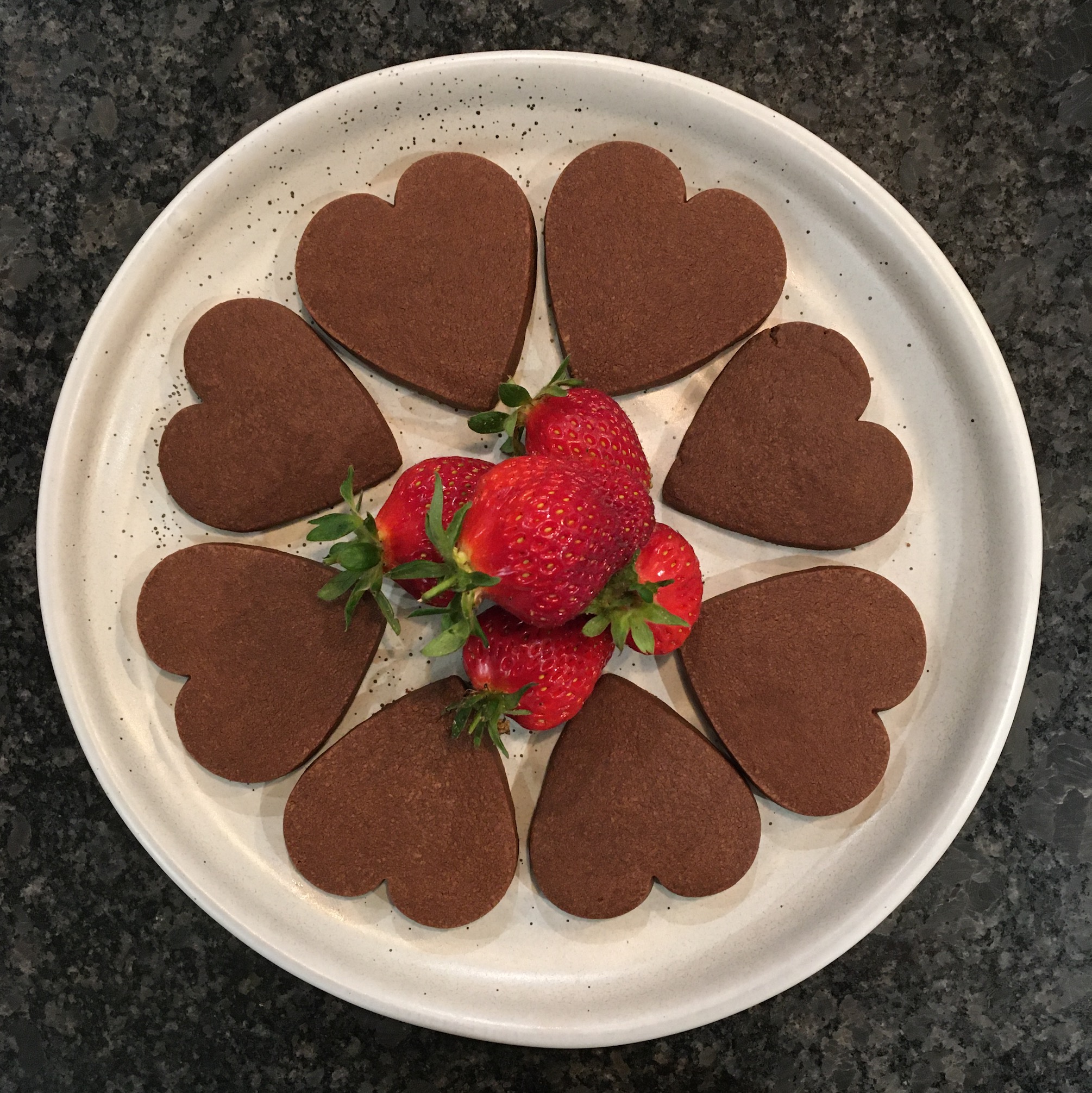
To make it even more tempting to go full Kiwi, Matariki has finally been made an official holiday. The Māori new year happens near the winter solstice in June—the perfect time for eating cookies and enjoying hot chocolate. I may have to start making Matariki cookies instead of Christmas cookies. I will enjoy them so much more at Matariki.

So bring on the fruit, some icy lemonade, and the sunscreen! Hold the brown sugar—I won’t be needing it. Christmas baking is getting a makeover.