Jewels in the Garden

groundbeetlesmDigging potatoes for dinner yesterday, I came across one of my favourite New Zealand insects—the metallic green ground beetle.

When I teach about this insect, I always tell the kids it’s magical because at first glance it appears to be just a large black beetle. A closer look, however, reveals shimmering green around the edges.

Some individuals are more spectacularly green than others, and the one I found yesterday was one of the most vibrant I’ve seen.

Metallic green ground beetles are welcome in the garden. As larvae and as adults they eat slugs, grass grubs, and caterpillars—some of my worst pests.

But I think that what makes metallic green ground beetles most special is that they are endemic, not just to New Zealand, but to the Canterbury region. That means they are found nowhere else on Earth but in this little region of New Zealand.

They aren’t rare or endangered—they thrive in nearly every environment. They have close relatives nearby. But I appreciate the fact they are our own unique jewels.


Fire!

2016-02-17 08.58.04 smPreying mantises were leaping out of the flames, scaling the fence and jumping on my face in panic.

And rightfully so. The neighbour (the one who harvested yesterday) burned off the stubble today to prepare the field for replanting.

I have to say, that though I hate the practice of burning off stubble—it mostly ends up sending nutrients into the air as pollution, rather than back into the soil—I still love to watch a good burn-off. Something about fire…

I had extra incentive to watch this one, as the fire was lit five metres from our fence line, and the wind was blowing towards our property.

It was while I watched that the preying mantises began landing on me. I’m sure there were other insects (and probably a whole lot of mice) fleeing the fire, but I only noticed the mantids.

It won’t be long, though, before they’re back in the neighbour’s field. By this afternoon, it will be planted in grass, to provide winter grazing for his sheep. In a week, you’ll hardly be able to tell it was burnt.

Water gardens

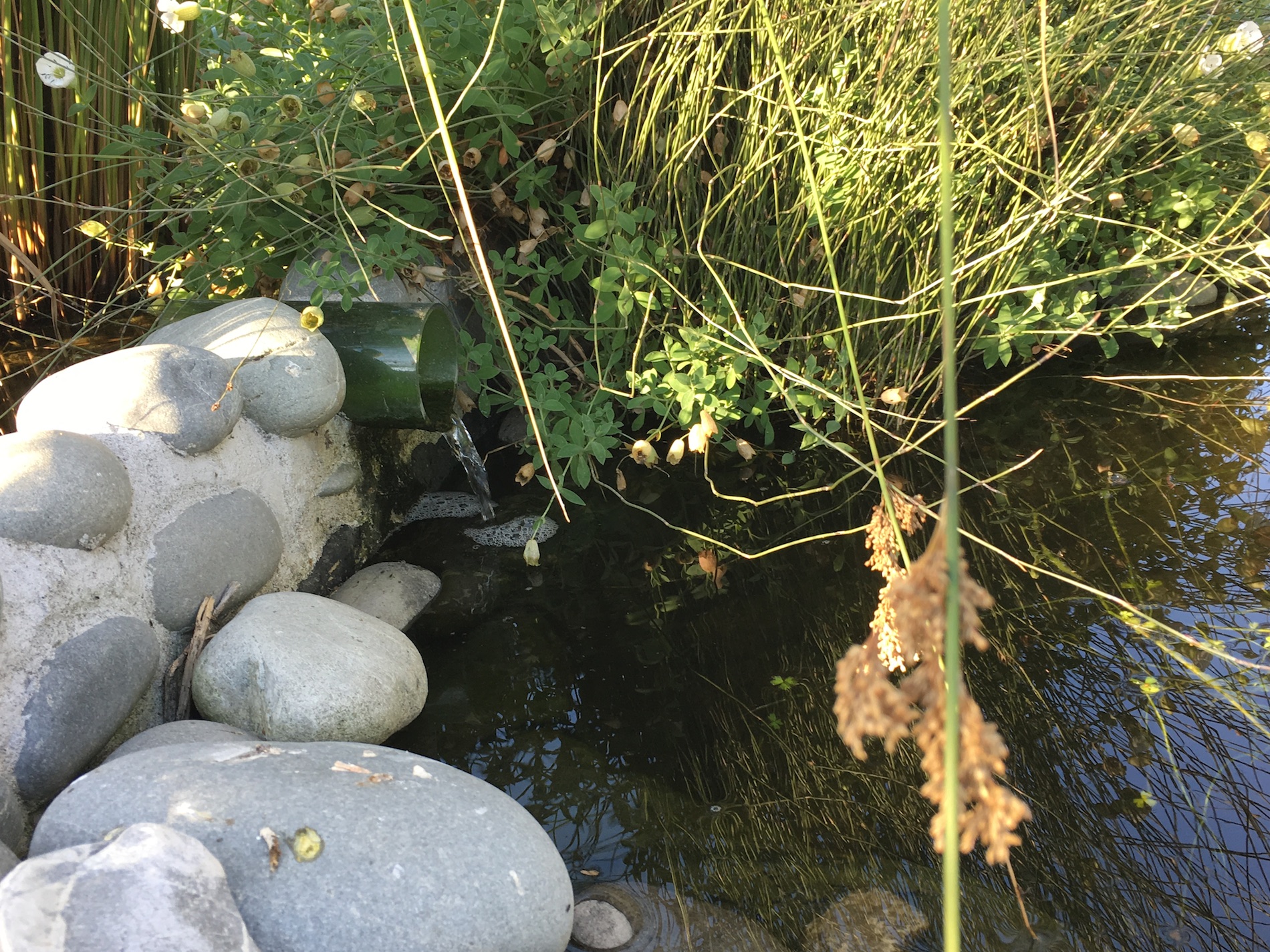
2016-02-15 18.46.03 smMy husband always wanted a water garden. In our pre-children days when we rented, he put a tiny fountain in a half-barrel, but it didn’t really satisfy him.

Within minutes of moving in here, he was scheming a “real” water garden.

It took about eight years for him to get to it. It was necessarily lower on the to-do list than re-piling the house, replacing weatherboards, remodelling the kitchen and bathroom, creating a third bedroom, and a host of other tasks.

And then when he started it, it took a lot of planning, digging, refilling, and digging again to get the basic structure right.

Then there were countless trips to the beach to collect the rocks to line it and complete the landscaping around it.

Then two years to kill off the twitch around it so he could even think about planting perennials there.

2016-02-15 18.48.44 smAdd dozens of broken wine bottles in his attempts to create the little waterfalls coming down the hill toward the pond.

A solar pump to keep the water flowing, nine goldfish (now blossomed to a standing population somewhere around 40), two bridges, and a whole lot of plants, and it’s looking quite settled into place.

We all enjoy the garden. I could sit for hours watching the fish and the invertebrates in the water. The birds love to bathe in it, and the cat loves to prey on the birds bathing in it (he likes to drink from it too—must taste fishy). Herons come and snare fish, and the plovers hang out around it in springtime.

The pond garden has become something of a potager, too, with fruit trees, herbs, vegetables, and annual flowers nestled together with an eclectic mix of native and non-native perennials. A lovely change from the rank grass that filled the space for the first eight years we lived here!

Sounds of Summer

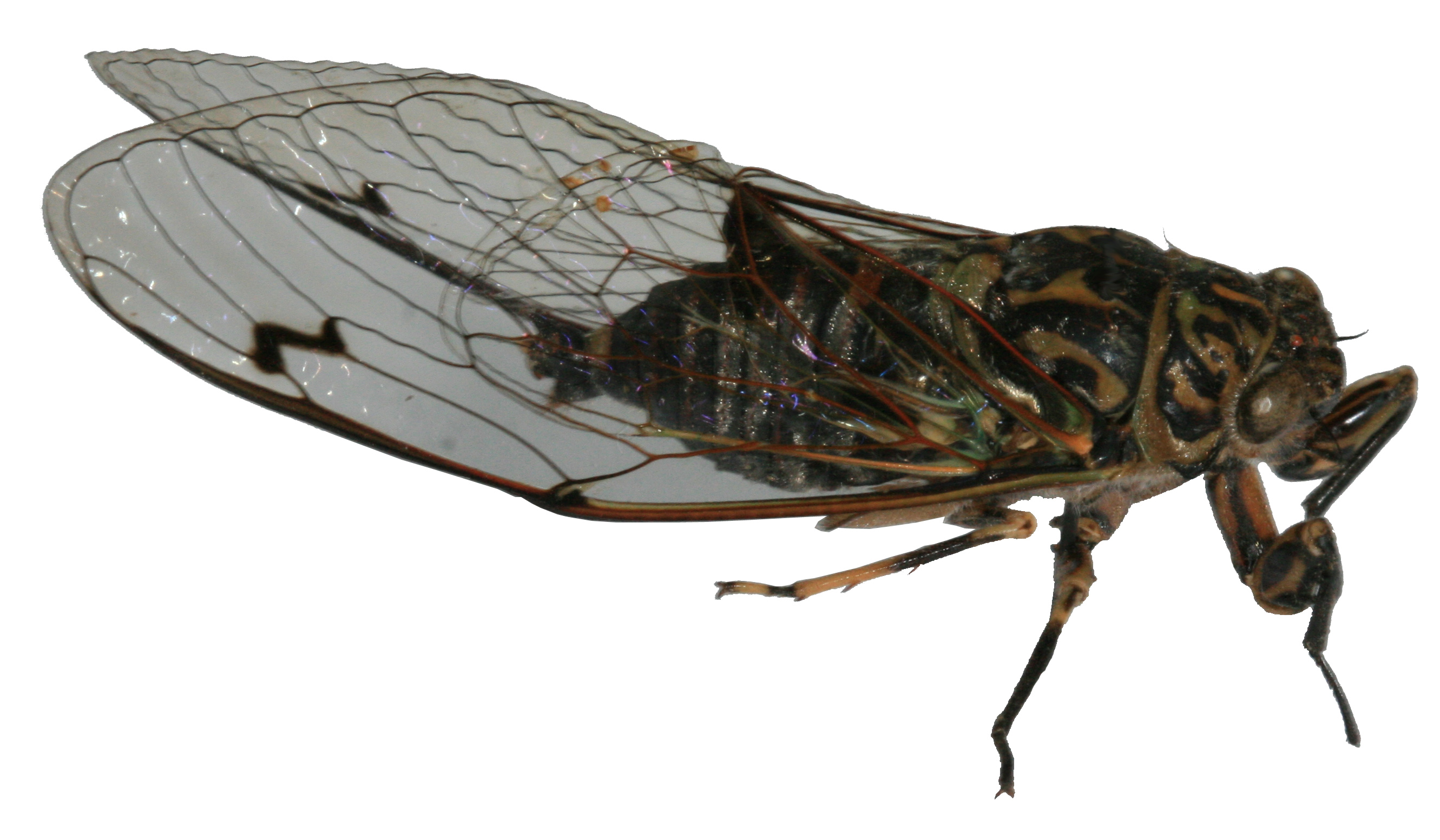
cicada2As we drove to the beach this afternoon, we passed out of the agriculturally blasted plains to the slightly less blasted Banks Peninsula. As we drew closer to the remnants of bush on the Peninsula, the decibel level outside the car rose dramatically. The culprit was the chorus cicada/kihikihi wawā (Amphipsalta zealandica). Wawā means roaring like heavy rain, and it’s an excellent description of the noise the males make en masse from every bush and tree. In some places, they are so loud, that conversation is completely impossible.

But their chorus is summer here. The season hasn’t really arrived until the cicadas start calling in January. As my husband noted today as we drove, “It just feels warmer when the cicadas are calling.”

And for as long as they call, we will believe it is summer. For as long as they call, we will feel we are on vacation, and the work week is simply a temporary interruption between trips to the beach.

Outside In

2016-01-01 16.46.05Window screens are uncommon in New Zealand.

It’s not that there is no need for them. This time of year I struggle to keep the outside out of the house.

Flies, bees, wasps, mosquitoes, and moths all find their way in, to buzz, bite, and generally be a nuisance. Leaves and seeds blow in on the ever-present wind. And the occasional escaped chicken or feral cat wanders in, too.

So why no screens?

It makes sense if we look at why window screens are found elsewhere in the world.

In the United States, window screens were uncommon until the early 1900s, when they were suddenly mandated by local governments all over the country. An important advance of science was the reason for the new laws.

Today, with think of malaria, yellow fever, dengue, and a host of mosquito-borne diseases as tropical. But these “tropical” diseases, especially malaria, used to range all through Europe and North America. The ancient Romans invading Scotland, lost half their soldiers to Scotland’s local strain of malaria. Yellow fever and malaria were common in Boston and London. Philadelphia was decimated in 1793 by a yellow fever epidemic.

The connection between mosquitoes and malaria was discovered by entomologist Ronald Ross in 1897, and by 1900, mosquito control efforts were underway all over the world. Within a few years, window screens were being mandated by law in disease-hit areas. Most of those laws are still in place, as there is nothing preventing those mosquito-borne diseases from returning.

Here in New Zealand, we are remarkably free of mosquito borne diseases. Malaria, and yellow fever have never gained a foothold, though they almost certainly have shown up now and again in the form of sick travellers.

With no mosquito borne disease, the biters that slip in through my windows every night are just a nuisance, so screens haven’t been written into the building code.

But they would be nice to have…

Thrips

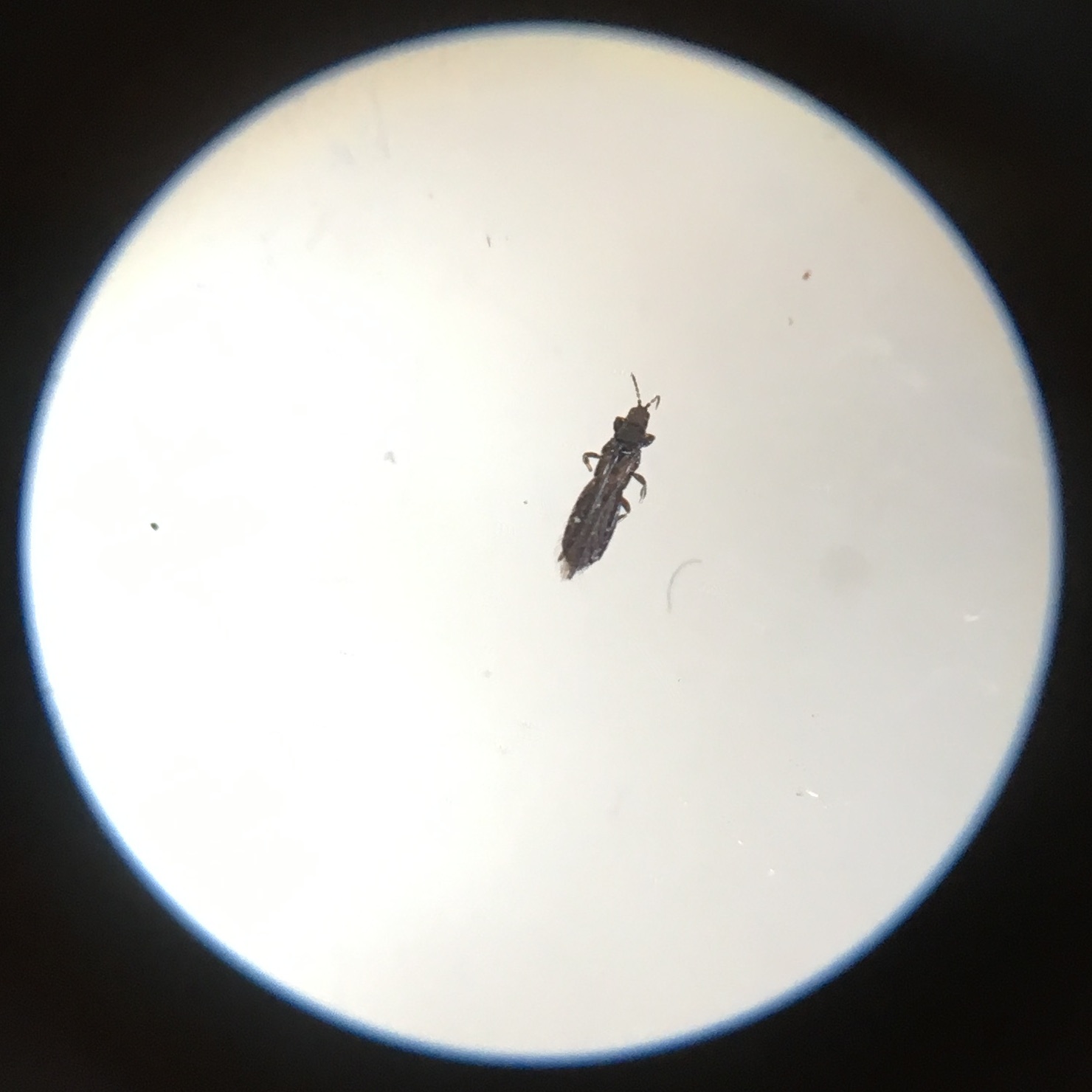
2016-02-12 10.51.28I can’t help but think about thrips at this time of year. They seem to love my office. They crawl everywhere. I’m constantly swiping them off my face and arms, and they end up in drifts on my desk when they die.

Thrips are tiny cigar-shaped insects with hairy wings (the order name, Thysanoptera, means fringe-winged). Most suck plant juices, and they leave characteristic little puncture wounds in leaves. Some transmit plant diseases.

Thrips are fascinating insects for a number of reasons.

Their development from egg to adult is not quite incomplete metamorphosis (in which the young look like the adults, but lack wings), and is not quite complete metamorphosis (in which the young look very different, and go through a pupal stage before adulthood). It’s a mix of both, and differs among species within the order.

Thrips are also left handed. As a south paw myself, I appreciate this. Instead of having a symmetrical mouth, like most other insects, with mandibles on both sides, thrips only have a left mandible. No one knows why this is the case. I like to think it’s because left handedness is just better.

Another thing I find intriguing about thrips is that some species will bite people, though they feed on plant juices. Our thrips, which I believe are Limothrips cerealum, the grain thrips, have this annoying tendency. They don’t bite often, but now and again you’ll feel a little stab and wonder what the insect is playing at.

Even linguistically, thrips are interesting. “Thrips” is both singular and plural—one thrips, many thrips. Thus, in the following poem, I couldn’t rhyme thrip with trip, it had to be thrips with sips…;)


Thysanopteran

Little thrips,

What does it think

As it delicately sips

The juices of plants?


Does it prefer

My prizewinning rose?

Or does the pollen

Tickle its nose?


Does it find

The broccoli sweeter?

And how can it be

Such a big eater?


Sunflowers

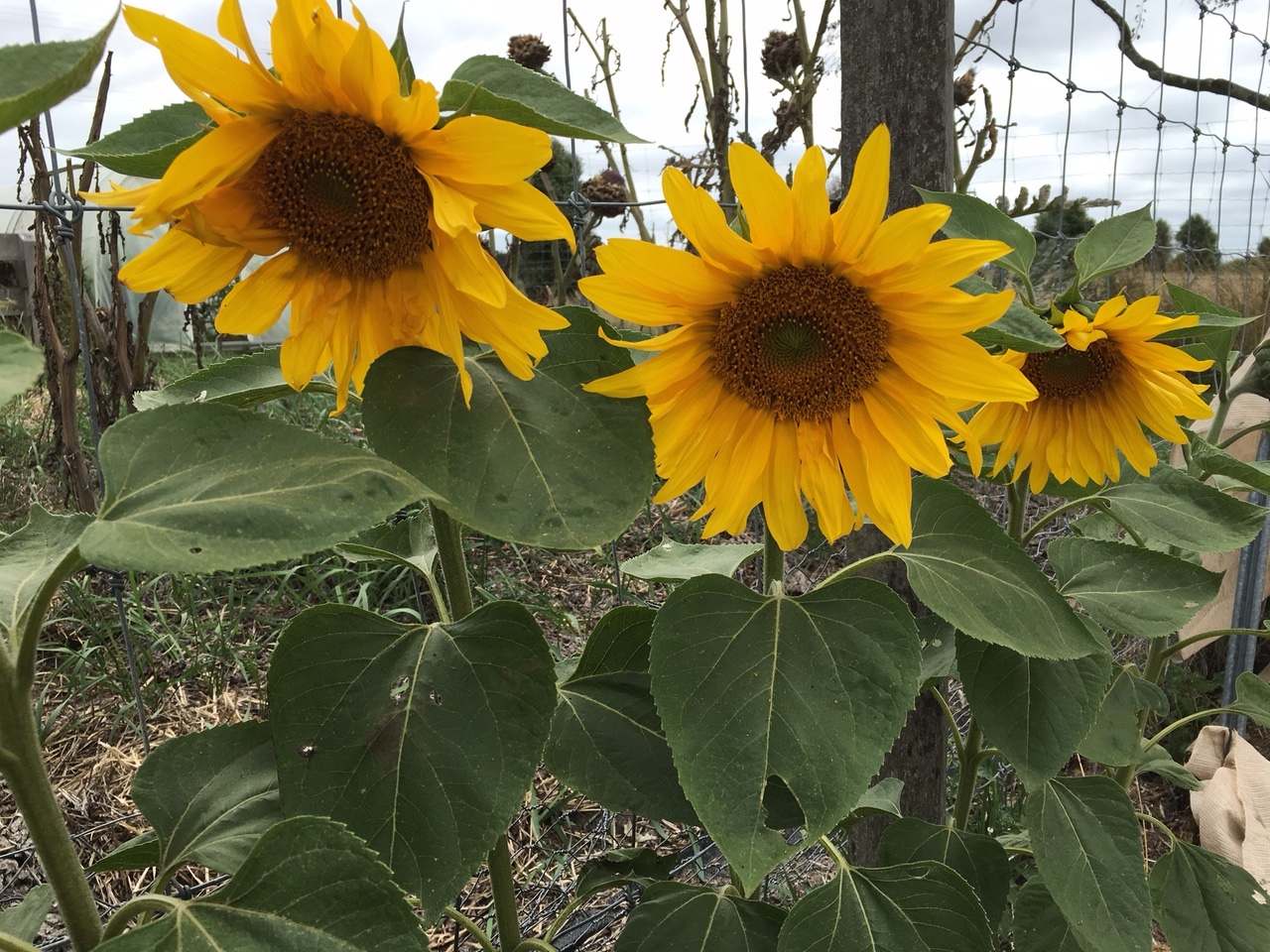
sunflowersI am of the opinion that you can never have too many sunflowers.

I have Golden Toasted sunflowers in the vegetable garden, with big fat seeds for eating, and I have half a dozen other varieties of sunflower in other places around the property.

Sunflowers don’t like the wind here, and they tend to grow short and stocky or to fall over unless they’re staked or well protected from the wind. Still, I plant them wherever I can.

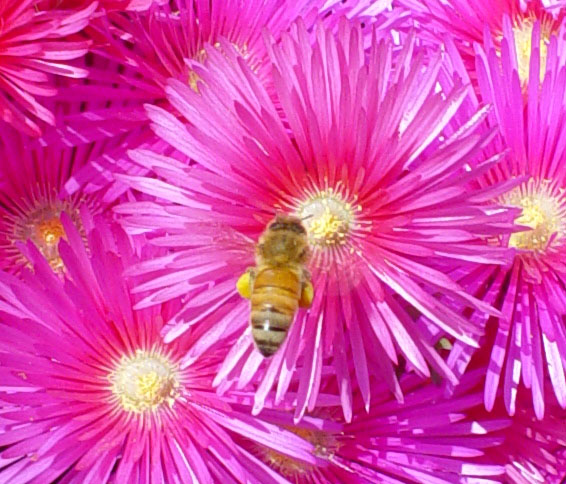
Sunflowers serve many purposes in my garden, beyond the seeds for eating. The blooms look great in the garden—pale yellow through orange to deep russet—and make stunning cut flowers, too. They also attract lots of insects. Though there are many pollenless varieties, I steer toward the varieties that produce copious pollen, because they are more attractive to insects. Pollen provides important protein for—bees flies, parasitic wasps, beetles, ants, and many other insects.
2016-01-22 07.43.48 cropThe pollen attracts some insects, and they, in turn attract others. Preying mantises regularly visit my sunflowers.

When autumn comes and the blooms are spent, the sunflowers (the entire plant), make a nutritious snack for the goats.

Beauty, food for me, food for my livestock, and food for the wildlife—what more can you ask of a plant?


That Gunk on Your Car

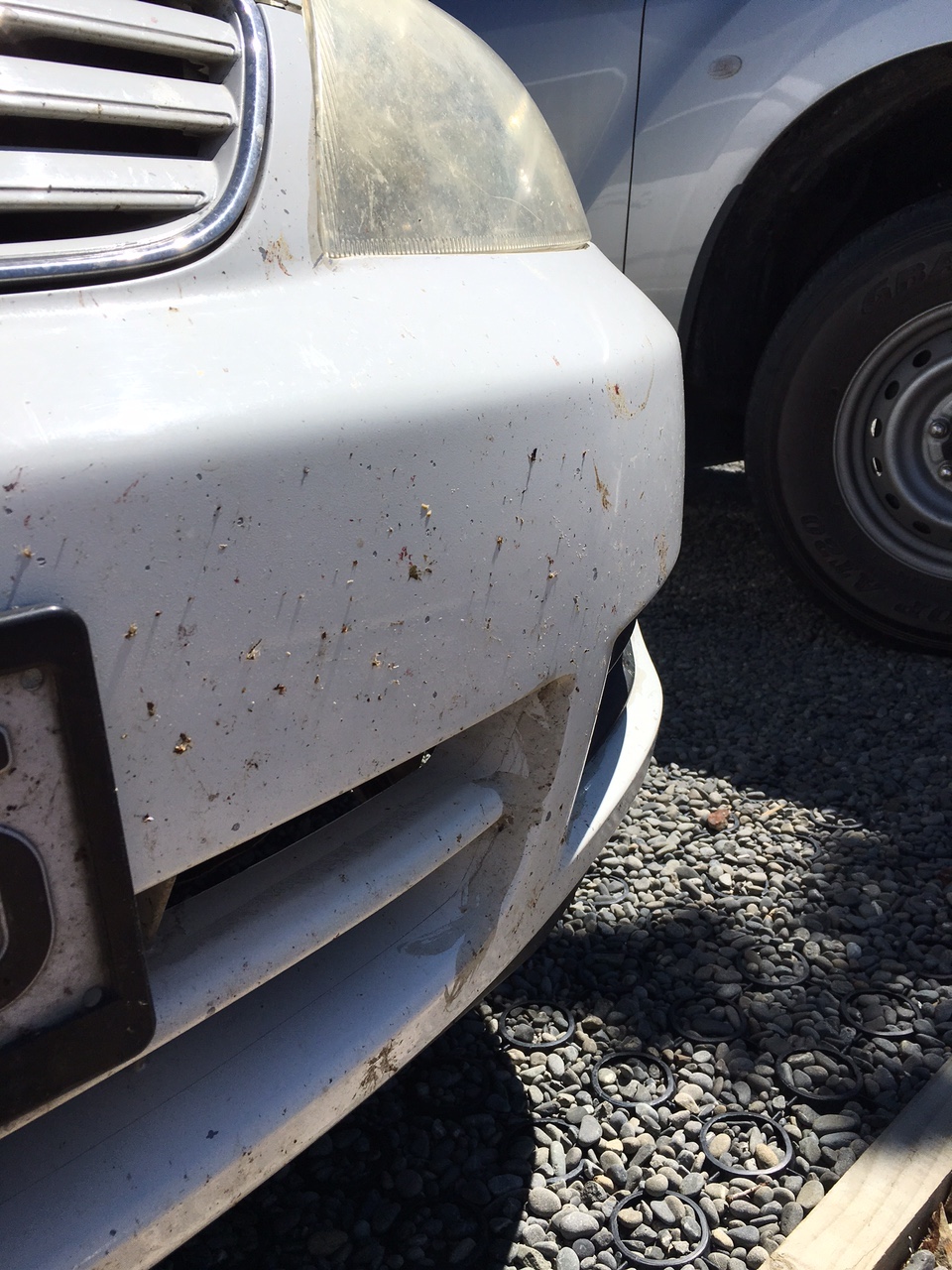
IMG_0514Back in 1997, entomologist Mark Hostetler published the book That Gunk on Your Car, a serious and funny identification guide to the flattened bodies you might find on your front bumper in the southeastern U.S.

I think there needs to be a companion book to Mark’s—The Ecology of That Gunk on Your Car.

Why?

This morning, I sat and watched sparrows descend upon cars in a carpark, picking off splatted insects. How these birds discovered that cars are a great source of protein, I don’t know, but they were certainly enthusiastic. They flitted into crevices to pick out tasty bits—a gooey abdomen here, a crunchy thorax there.

It made me wonder how important car-splat insects were in their diet. Birds inhabiting an urban environment are likely to have difficulty finding insects to eat—the bodies carried in by cars could be incredibly important to them. What other species make use of car-splats? How much nutrient flow is there between rural and urban areas, just on the front ends of cars? Do these nutrients affect the populations of urban pests like sparrows? How does a good mass-transit system affect the flow of nutrients into the urban environment?

So many questions, so few answers! How little we really know about the world around us!

Jewellery

2016-02-01 15.47.45I don’t wear jewellery.

No earrings—they irritate my ears—the last time I wore them was at my sister’s wedding twenty-three years ago, and that was the first time in years.

No necklaces or bracelets—they hang down and catch on things as I’m working.

And rings are hopeless. I lost the stone from my engagement ring twice—knocked out by some violent motion—before I gave up on wearing that. I even regularly threaten to remove my wedding band, as it catches in tools and branches.

Frankly, no jewellery stands a chance of survival on me.

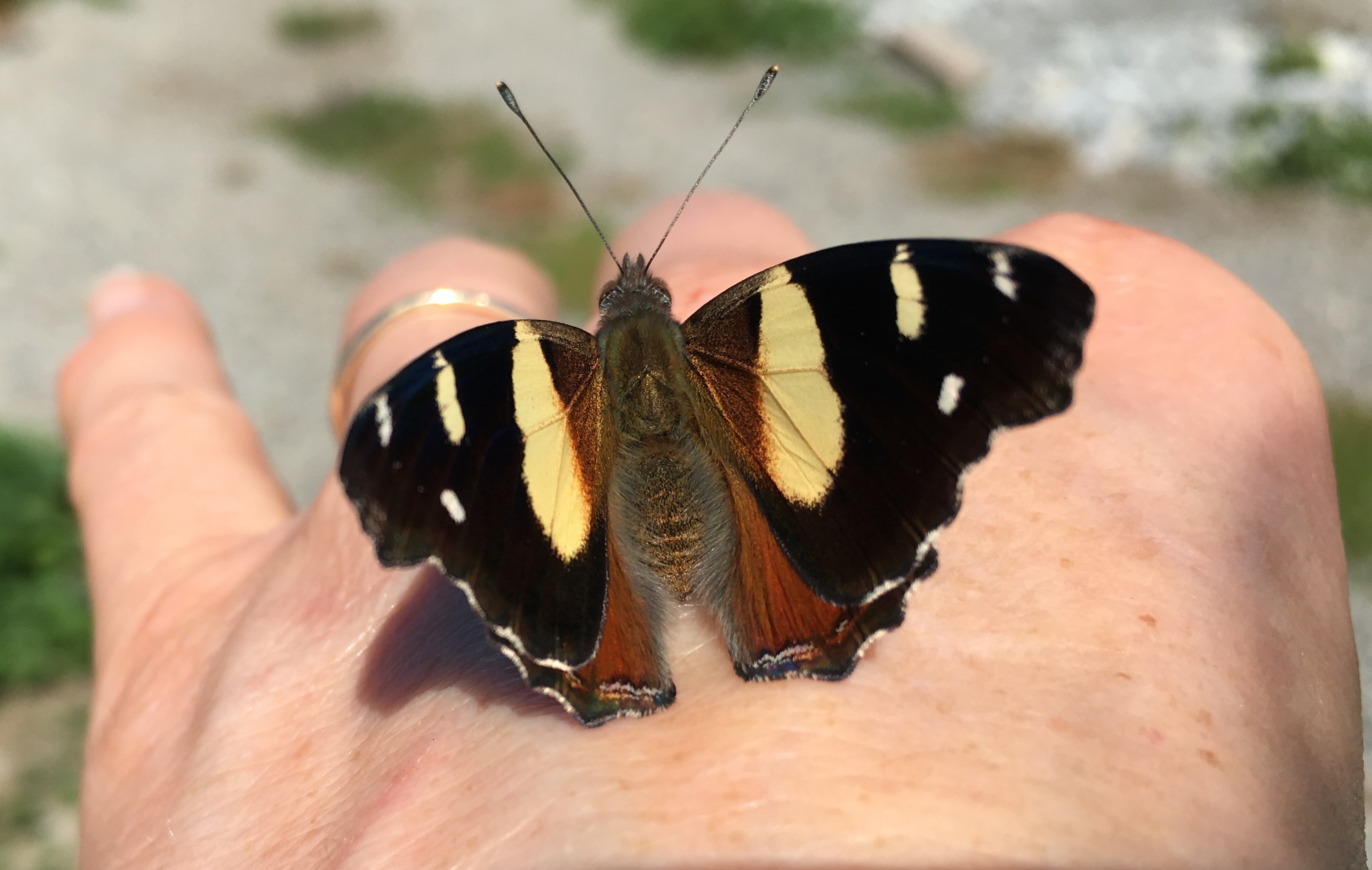
But when this gorgeous ornament (a yellow admiral) landed on my hand today, I stopped what I was doing. I ignored my work for as long as it was content to stay there. This sort of jewellery, I’ll wear.