Literary Transitions

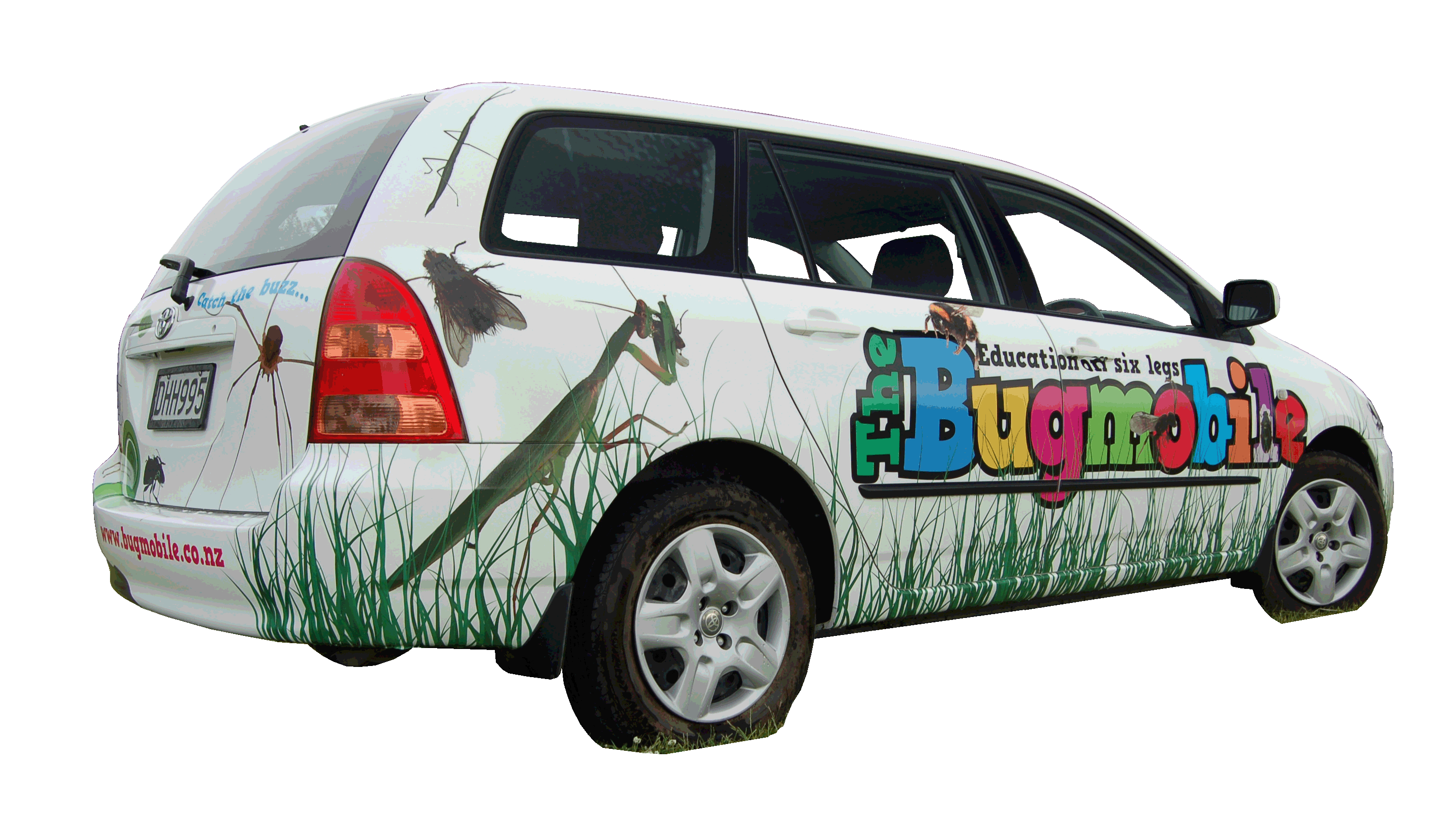
The Bugmobile, before being turned into the Boringmobile.

The Bugmobile, before being turned into the Boringmobile.

When I took the sign writing off the Bugmobile, the kids dubbed it the “Boringmobile”. A plain white station wagon, like every other plain white station wagon in this land of millions of plain white station wagons.

I promised to do something to try to reclaim a little of the Bugmobile’s former glory, and decided that insect poems meandering around the edges of the windows would be easy and fun to do, and would be a sort of bridge between the Bug Lady who was, and the writer who is.

It has been a year and a half, but I’m finally getting around to the job. Here is the first of the poems for the new, literary Bugmobile.

Butterfly and dragonfly,
Honey bee on clover.
Thrips upon the flower heads,
And syrphid flies that hover.

Mantids hunting in the grass.
Crickets in the garden.
Caterpillars’ silk cocoons,
And beetle wings that harden.

Sparkle, glitter, flutter wing.
Bugs that hop, and bugs that sing.

All these wonders
Here to see.
A gift for you.
A gift for me.

The Best Laid Plans…

2016-11-05-16-46-35-smBack in mid-August, I blogged about the to-do lists that get me through spring. I make a list and stick to it. That way, everything gets done.

But what if the plants don’t pay attention to the list?

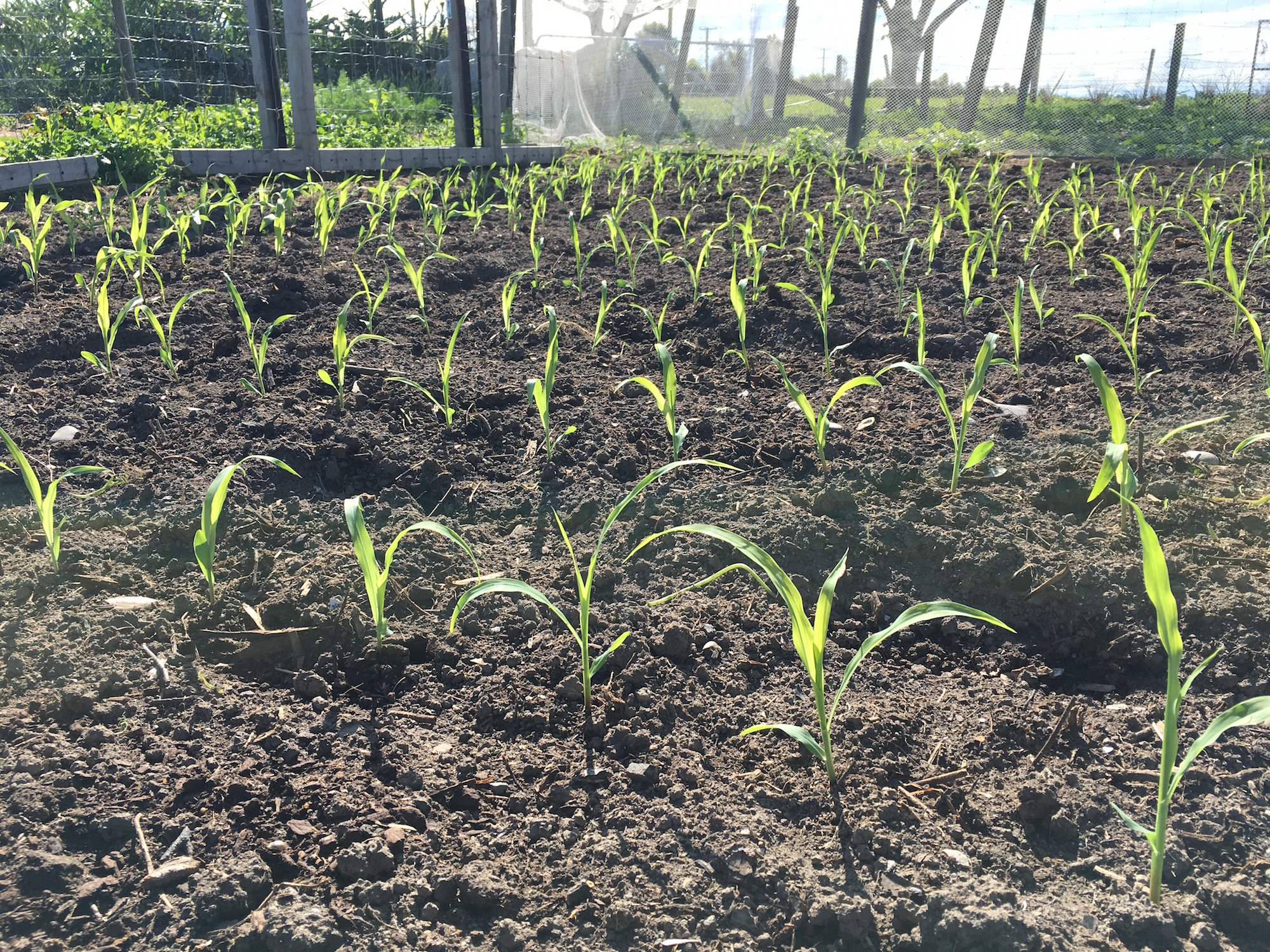
I try to maintain consistency from year to year, and I document planting dates, plant-out dates, potting-up dates. So I know that if I plant my first batch of corn in trays on the 15th of October, it will be just ready to plant out on Canterbury weekend (around the 15th of November).

But this year, the corn was ready to plant out by the 30th of October.

The corn bed wasn’t ready yet. It’s always the last one I prepare, because it’s usually the last one to be planted out. I took the trays of corn seedlings out of my office, so they would have chilly nights to slow down their growth.

It didn’t help. The corn kept growing at a ridiculous rate.

I considered planting the corn in the beds designated for pumpkins, because they were ready. But that would have meant planting pumpkins in the same beds they were in last year. I had a lot of pest problems in those beds last year—I’d be foolish to plant the same crop there again this year.

Last weekend I got frantic. If I didn’t get the corn out to the garden in the next week, it would die in those trays.

Wednesday, I quit work at 2 pm and started preparing the beds. I got them weeded, and the soil turned. Then I realised I was going to need to turn the compost pile in order to get compost for those beds.

Turning the compost pile usually takes at least two weekends of back-breaking work.

This morning, I started on the compost pile around 6.30 am. By the time I’d turned a third of it into the empty compost bay, I was completely exhausted. And I’d only managed to get five wheelbarrow loads of compost for the corn (I really wanted nine).

So I compromised. Five loads of compost would have to be enough. I turned it in, raked the soil smooth and called the beds done. The corn was all in the ground before lunch. Whew!

Of course, it’s a week early. I have learned the hard way not to plant out too early here. My garden sits in a frost pocket. Chances are, the corn will get nipped by frost, but it was either that or watch them die in trays. Crossing my fingers and hoping for warm weather!

A New Gardening Lexicon

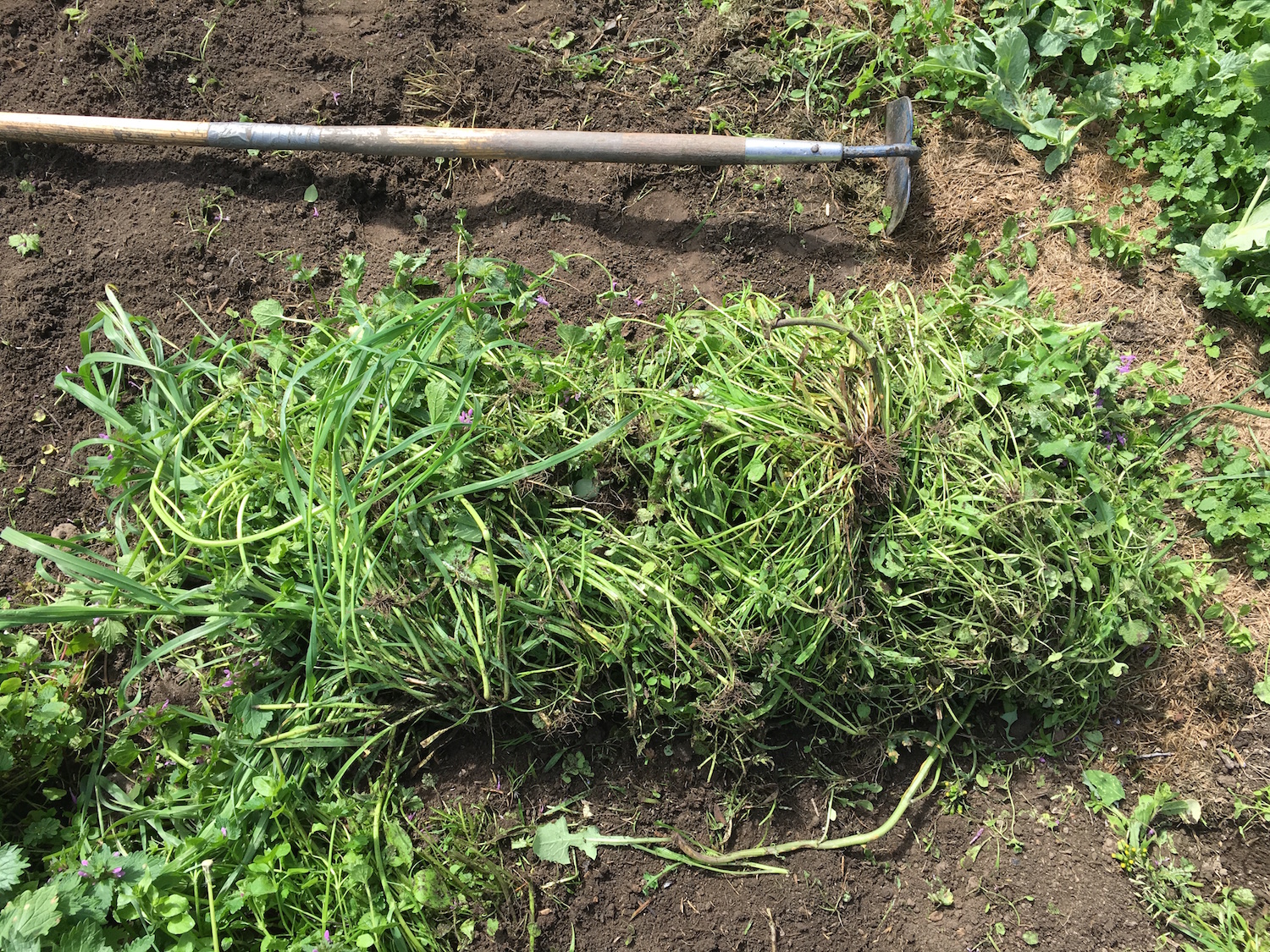
A nice tidy rolag.

A nice tidy rolag.

I’ve noticed that the world of extreme gardening doesn’t have a very good vocabulary. There just aren’t the words to express the particular situations, actions, and states one experiences.

So I’ve developed my own gardening lexicon, to try to fill that gap in the English language. Here are a few of my words:

Chook—verb. To toss something to the chickens. E.g.: Just chook those weeds—they like them.

Chookable—adjective. Suitable for the chickens to eat. E.g.: Those weeds are chookable.

Dinger—noun. A rock in the soil, accidentally struck by a gardening tool.

Goat—verb. To toss something to the goats. E.g.: Goat these branches—they like them.

Goatable—adjective. Suitable for the goats to eat. E.g.: Those branches are goatable.

Grunter—noun. A weed that requires significant effort (and usually a tool) to pull.

Hum-dinger—noun. A particularly large rock in the soil, accidentally struck by a gardening tool.

Pop bead—noun. Insect pest. Name comes from the sound it makes when squished between the fingers.

Rolag—noun. A term borrowed from weaving. Weeds that have been hoed into a tidy roll, ready to be lifted into the wheelbarrow or thrown on the compost heap.

Squeaker—noun. A nest of mice, when overturned accidentally by a shovel or spading fork.

Superman tree—noun. A tree or shrub that looks difficult to cut, but is actually easy to cut, making the cutter feel like Superman. (See also Wonder Woman weed)

Twitch light—noun. Couch grass with unusually fine runners.

Twitch-on-steroids—noun. Couch grass with unusually thick runners.

Twitch-headed—adjective. Having weeded so much that you see weeds when you close your eyes.

Wonder Woman weed—noun. A weed that looks like a grunter, but is actually easy to pull out, and makes the weeder feel like Wonder Woman. (See also Superman tree)


Aquilegia

2016-10-31-19-37-18One of my favourite flowers is blooming—Aquilegia, also known as columbine and granny’s bonnet.

I can’t tell you why I like Aquilegia so much. I’m generally not a fan of frilly flowers. Perhaps I like it because, though the flowers look delicate, the plant is tough as nails. This particular specimen is growing in what used to be the driveway—a hopelessly compacted combination of clay and rock, dry as a desert most of the time—and is all but shaded out by the pittosporum behind it. It thrives, and has even seeded itself into other places in the old driveway.

Or maybe I like it because, in the Eastern US where I grew up, the native columbine, Aquilegia canadensis, attracts hummingbirds and hawk moths. Here, the bumble bees visit it, but little else. Apparently, of the 60-70 species of Aquilegia, several have evolved exclusive relationships with particular pollinators.

Whatever the reason I like them, the flowers make me smile every time I pass them.

Midnight Flowers

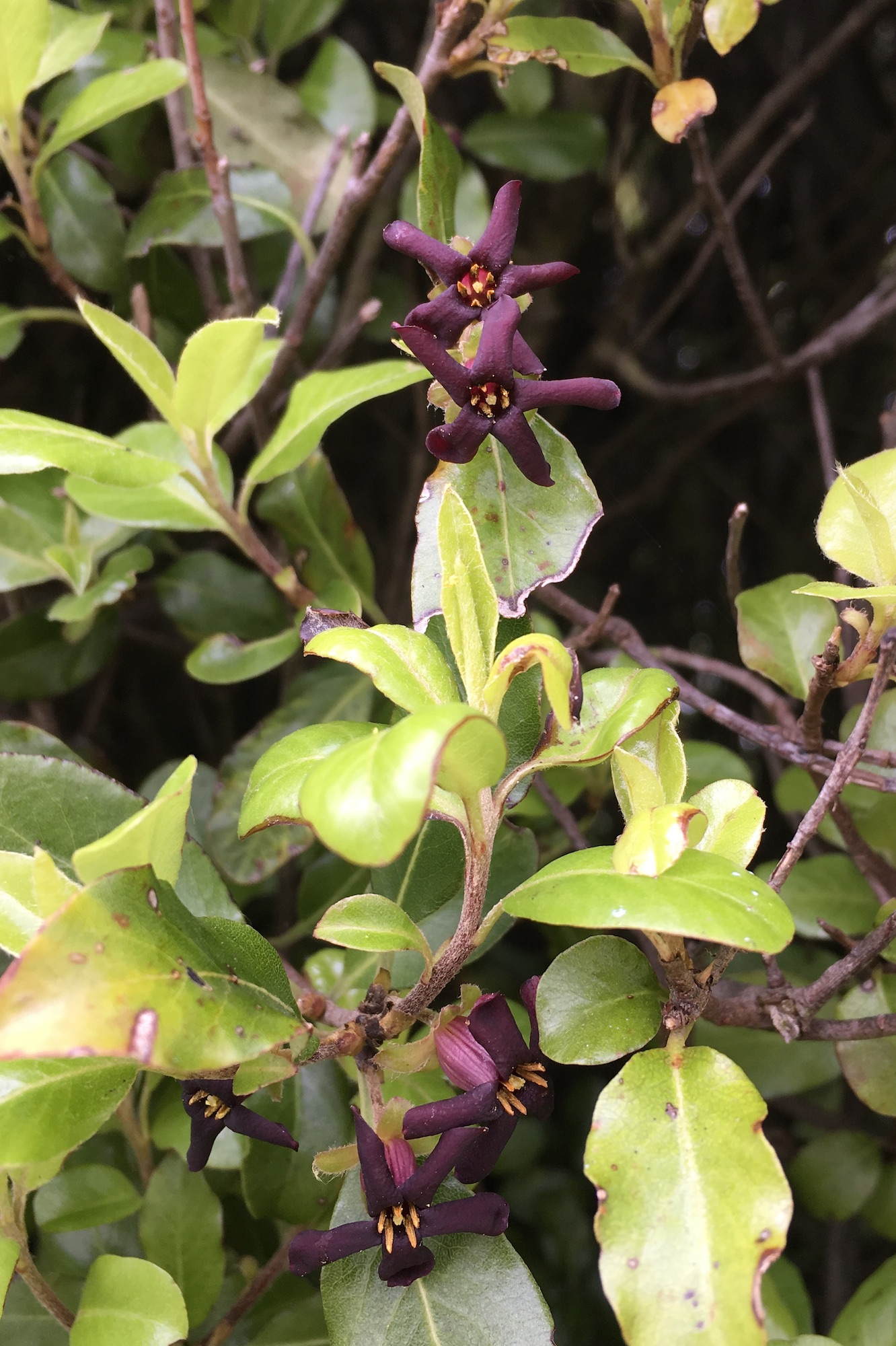
2016-10-26-15-51-31We have several pittosporums around the house, mostly Pittosporum tenuifolium, also known as kohuhu. Kohuhu are nice hedging plants, and form lovely dense shrubs when pruned. They’re a great background plant—like mood music—a lot of nice greenery, but little character.

Until they bloom, that is.

And only at night.

Pittosporum flowers are the kind of blooms that you can walk past a hundred times a day and never see. They’re about the same colour as the branches, and sit nestled among the greenery. They attract no bees or butterflies.

But walk past the same bush in the dark, and you’re practically knocked over by the smell. Heavy and clinging, the smell must attract all the night-flying moths and beetles for miles around.

I’m generally not a fan of smelly flowers, but there’s something marvellously incongruous about pittosporum flowers—so inconspicuous during the day, so in-your-face at night. The smell has become as sign of spring for me, and I always make sure my early-morning chores take me close to one of the bushes at this time of year.


Orb Weavers

2016-10-24-13-39-42Weeding can be tedious, miserable work. Hard on the back, hard on the hands, and downright painful in much of my garden, where nettles and thistles grow exuberantly.

But there are some perks. Weeding brings you close to the vegetation, and gives you a chance to see things you might otherwise miss.

Today I was treated to two native orb weaver spiders—two of my favourite native spiders here.

The first was a bright green, round-bottomed Colaranea viriditas—the green orbweb spider. These little gems are supposedly quite common, but the bright green ‘leaf’ on their backs must do an excellent job of camouflaging them, because I count myself lucky when I see one. Unfortunately, my camera was nowhere close, and this one scurried away before I could catch it.

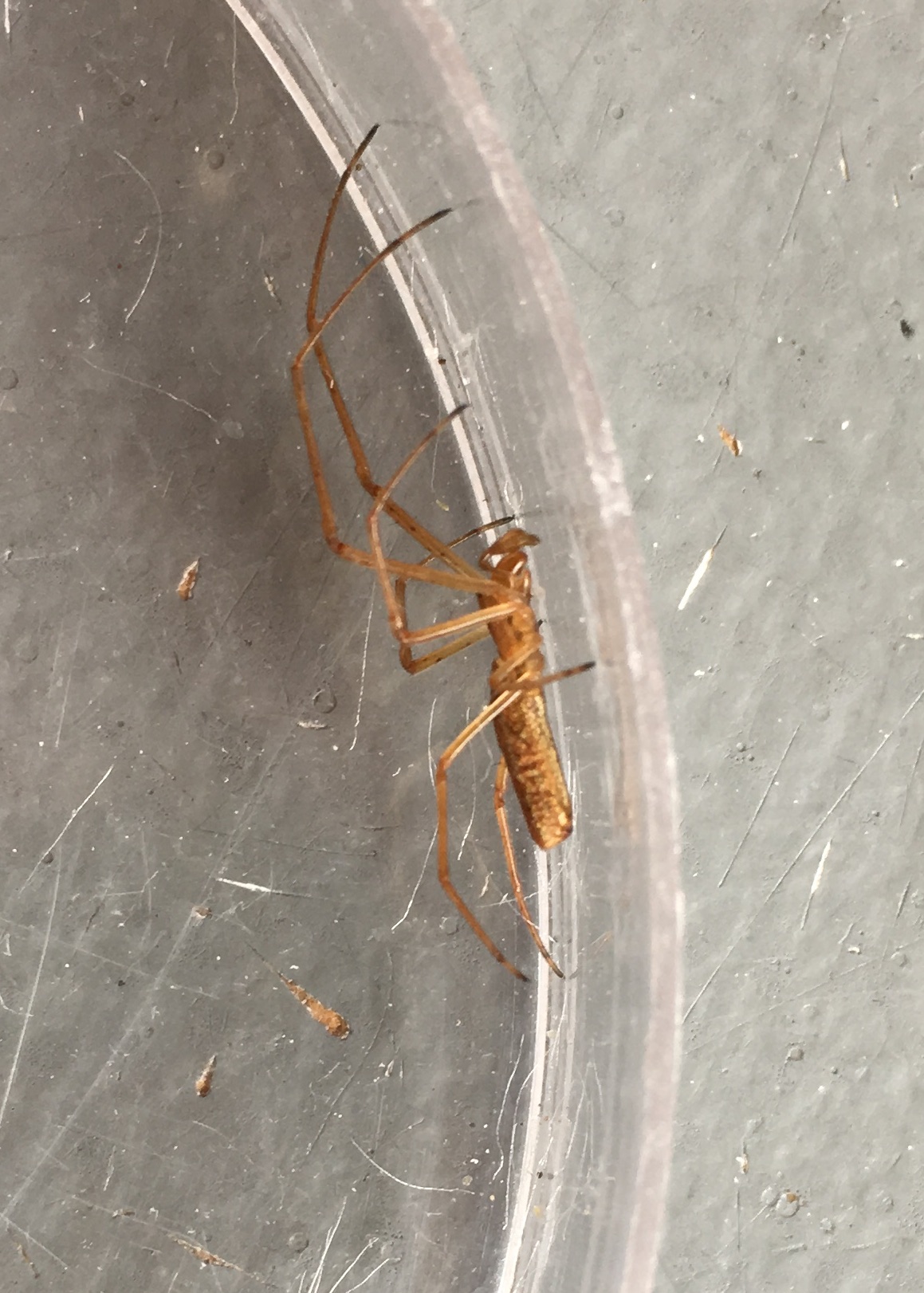
The second orb weaver I saw today is an expert at camouflage. You would be hard pressed to recognise it as a spider at all most of the time. This spider is in the family Tetragnatha—the big-jawed spiders. Tetragnathids have long thin bodies, and sit with their legs stretched out to the front and back, making the spider look like a small twig (I had to poke the one pictured here so it would stand up and look like a spider for the photo).

Tetragnathids are usually associated with wet areas, so I’m not sure what they’re doing in my dry yard, but they’re certainly common here. Though they’re hard to see, you can’t swing a sweep net in the tall grass without coming up with a few of them.

Both these spiders catch flying insects in webs shaped like the classic Halloween spider web—orb webs. Is it a coincidence that I saw them both today, a week before Halloween? Maybe they’re practicing for their big night.

Or maybe it was just my lucky day.

Time for Thyme

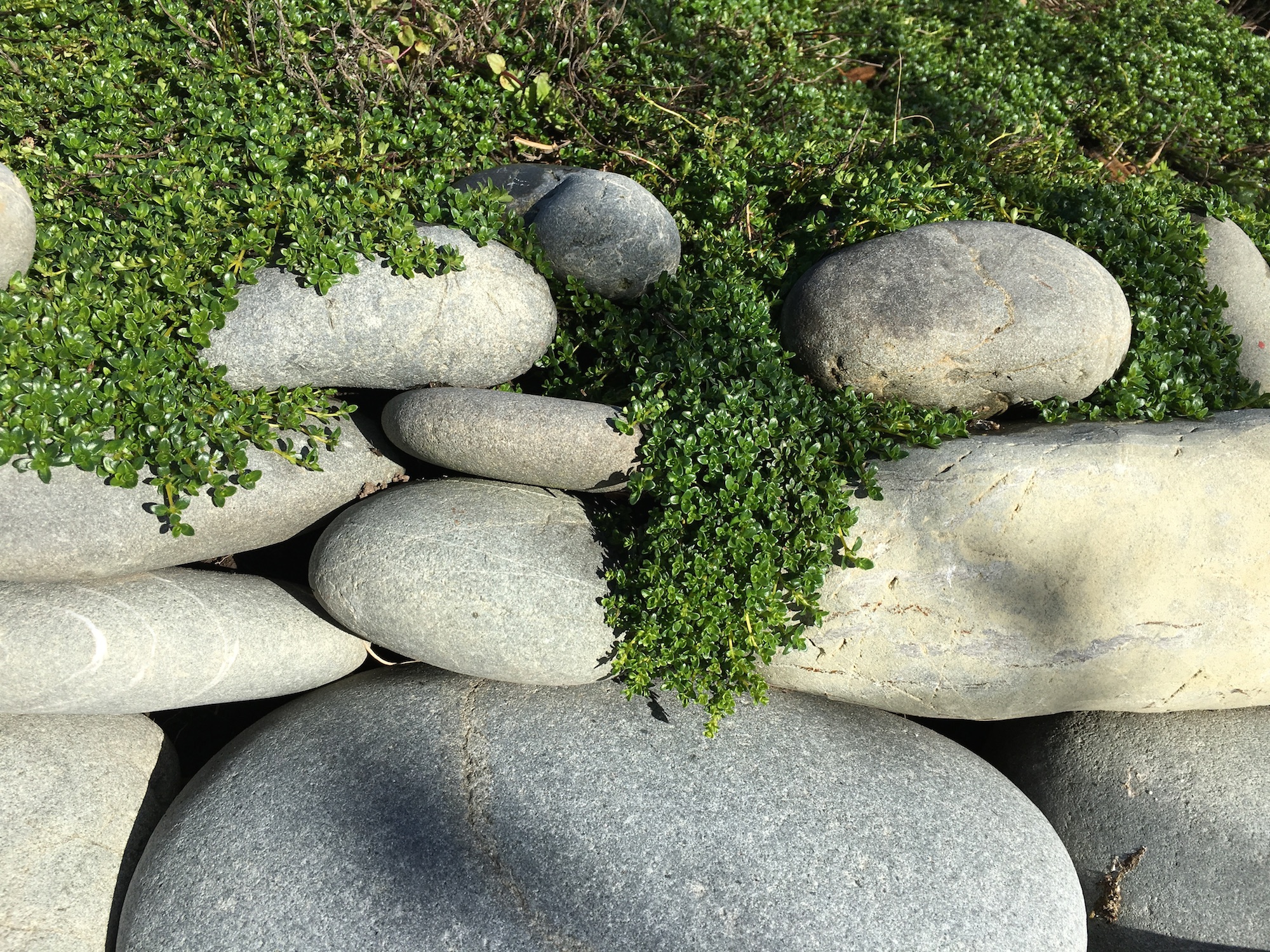
2016-10-10-09-15-06Thyme is one of my favourite herbs. In spring, its lush new growth encourages me to put it in almost everything. Nearly everything is better with thyme, but it is especially good with braised carrots, eggs, pumpkin, and mushrooms. Mixed with good olive oil, also makes an excellent marinade for bocconcini—little mozzarella balls.

It’s one of those herbs that we plant more of than we need for culinary use, because it’s so pretty in the garden. There are around 400 varieties of thyme. Some are more culinary, others are more ornamental. Some grow into 30 cm tall shrubs, others creep low to the ground.

Thyme is a tough little plant. It puts up with hot dry conditions, and recovers from even the most aggressive pruning. The low-growing varieties can even be used as a fragrant lawn (though at our house, there’s no stopping the couch grass coming up through it).

Its white, pink or purple flowers are attractive to a wide range of insects. On ours, we regularly have honey bees bumble bees, flower flies, and butterflies—and the preying mantids that eat them.

Truly, you can never have too much thyme.

Humming Rosemary

There isn’t much in bloom at this time of year around our place. Daffodils, crocuses, a few early daisies and other weeds in the lawn.

And the rosemary.

Rosemary is perennial here, and grows into a large shrub unless regularly trimmed. The rosemary in the herb knot in the front yard is kept quite small, but two bushes by the side of the house are allowed to range more widely. They’re about two metres tall, and almost as wide. Right now they are in full bloom.

And they are absolutely filled with bees. I swear, there’s an entire hive there right now. The hum is audible from five metres away.

I love to watch bees on rosemary. Not only are they incredibly enthusiastic about the nectar, but they collect the purple pollen, which looks really cool in their pollen baskets.

We’ve been talking about re-envisioning the plantings at the side of the house. The new plan doesn’t have giant rosemary plants in it. Watching the bees enjoy the blooms in early spring, though, we might just have to rethink that.

Cricket Flour

IMG_1784I was running errands in town today, and called in to Bin Inn for some flour and cornmeal.

I was excited to find this sitting on the shelf next to the rice flour and barley flour. It was the first time I’ve seen commercial insect products that admit to being insect products sold in an ordinary store (there are plenty of things you’ve probably bought that contain insect products, but manufacturers generally don’t advertise that).

It’s nice to see insects showing up on the grocery store shelves. I am a proponent of entomophagy, even though I am a vegetarian. If you’re going to eat meat, insects are probably the most environmentally sound way to go.

Being cold-blooded, insects convert feed into body mass much more efficiently than our warm-blooded livestock. You can raise a kilo of crickets on just 1.7 kilos of feed. Compare that to chicken at 2.5 kg of feed per kilo of chicken, or cows at 10 kg of feed per kilo of cow. Adjust these numbers for percentage of the animal that’s edible, and they favour insects even more—80 percent of a cricket is edible, whereas only 55 percent of a chicken and 40 percent of a cow is.

It still takes resources to produce insects. Though they convert feed into food more efficiently, insects need to be kept warm—warmer than you need to keep a cow, because they can’t keep their own bodies warm. There is an energy cost in that.

Of course the biggest problem with farming insects is getting people in Western countries to eat them. Most of the world’s people actually do eat insects, but our modern Western culture had separated us so much from our food, that we even get squeamish when we can identify the animal that our cuts of meat came from.

Consumers generally don’t want to actually see the animal when they’re preparing dinner. I’m sure cricket flour goes over better than, say pickled whole crickets (sort of like sliced ham vs. pickled pigs feet).

It will take a change in our attitude toward insects before Westerners will agree to bar nuts that include roast, salted crickets (which are delicious, by the way). When preschoolers learn that a cricket says “chirp, chirp” along with the cow says “moo”, we’ll be on our way. When we begin to view insects, not as enemies to be beaten, but as fellow organisms on Earth, we’ll be on our way. When we stop seeing insects as dirty, but rather recognise that they carry fewer potential human pathogens than our close relatives the cow and pig, we’ll be on our way.

As a vegetarian and a gardener, I value the insects that come into the kitchen on my vegetables. I don’t get enough vitamin B12, because it is only found in animal products. Insects are full of vitamin B12. So, I’m casual about cleaning the insects off our organically grown vegetables. We eat a lot of aphids, and quite a few caterpillars, I’m sure. And that’s great—it gives us all the nutrition we need, without any extra effort on our part (less, in fact).

Indeed, though I support insect farming, I’m afraid I will probably never buy any insect products–there are so many wonderful insects out there free for the taking, I couldn’t see spending $120 per kilo (and that’s half off!) for cricket flour.

Besides, I prefer my crickets whole—the best part about them is the crunch, after all.

Saturday Stories: Glint

GlintCoverNEWI’m afraid I’m too tired and jet-lagged to muster a blog post today. So, here’s an excerpt from the beginning of A Glint of Exoskeleton for today’s Saturday Stories.

The Girl Who Talked to Insects

Four

Crick peered into her dollhouse, though she didn’t much like dolls. She was looking for something.

“Oh, there you are!” she exclaimed in her sing-song, four-year-old voice. “You don’t have to hide. I won’t hurt you.”

The object of her attention crept cautiously out from under the loose carpet in what Crick called the yellow bedroom. Its antennae waved busily in Crick’s direction. Crick cocked her head to one side and furrowed her brow.

“Are you some sort of beetle?”

“Not a beetle. I’m a cockroach. An American cockroach.” The animal had a raspy voice like an old transistor radio with bad reception, but the scratchy sound was cheerful and friendly.

“Hi Mister Cockroach! My name’s Crick. That’s short for Cricket, and that’s short for Christina Marie Stolzfus, which is my real name. But you can call me Crick. What’s your name?”

“Pleased to meet you, Crick. I’m Periplaneta americana. I suppose you could call that a nickname, too.”

“What’s your real name?”

“It’s hard to say. Cockroach names are actually smells.”

“Smells?” Crick laughed. “That’s weird!”

“Not for us. We have very sensitive noses, and not so good ears. Smell is easier for us.”

“Oh! Well, I think I’ll call you Peri.”

Peri chuckled. “That would be fine.”

“Do you like my dollhouse?” Crick asked. “I saw you in it yesterday.”

“Yes, it’s quite nice, particularly this loose yellow carpet.”

Crick frowned. “I don’t really like it. I’d rather have a hamster, but mom says I’m not allowed. She says they stink and remind her of rats. Gramma gave it to me for my birthday. That’s when I turned four!” she continued proudly. “How old are you?”

“Well, I’m a lot older than four!” chuckled Peri. “I’ve been alive since 1943. That makes me…let’s see…fifty-three years old.”

“Whoa! That’s old,” replied Crick gravely. Then her brow furrowed. “I didn’t know insects lived that long.”

“Most of us don’t, but I’m…special.”

“How?”

“I’m a leader for my species—something called an über. It’s a bit like a…like a president.”

“Are presidents really old, too?”

“Compared to most insects they are. But insect leaders don’t get old like other insects. We just keep on living.”

“You won’t ever die?”

“I can be killed—I’m not invincible. But I won’t die of old age.”

Just then, Crick’s bedroom door opened and her mother poked her head in.

“Who are you talking to, dear?” she asked. “Oh! You’re playing with your dollhouse! That’s nice.”

“Well, not really. I was talking to my new friend, Peri. He’s going to live forever,” she said brightly, “unless he’s killed. He lives in the dollhouse. He likes the yellow room ‘specially.”

“That’s nice,” responded her mother, a little uncertainly. “Which one of your dolls is Peri?”

“Oh, he’s not a doll. He’s a cockroach.”

Within minutes, Crick’s mother had hauled the dollhouse out onto the lawn and sprayed it with fly spray. Crick kicked up such as fuss about it, screaming and crying, that her mother had to lock her in her room until the deed was done. Crick was screaming and pounding on her door so loudly, it was several minutes before she heard Peri’s voice.

“Crick! Crick! Don’t worry. No harm done. I’m over here.”

“B…b…but you were in the dollhouse,” she sniffed, tears streaking her face.

“I scuttled out as soon as you mentioned I was a cockroach.”

“Why?”

“I’ve been around long enough to know that when most people hear the word cockroach, they don’t react well.”


The dollhouse was returned to Crick’s bedroom a few days later, but Peri didn’t return to the yellow room. Crick made a house for him from an empty cereal box and hid it under her bed. Peri declared it to be the nicest house a cockroach could want.