 Lepidoptera
Collector’s delight
How many times
In your fluttering flight
Have you heard the faint whoosh
Of a butterfly net
And wondered aloud
If your maker you’d met?
Lepidoptera
Collector’s delight
How many times
In your fluttering flight
Have you heard the faint whoosh
Of a butterfly net
And wondered aloud
If your maker you’d met?
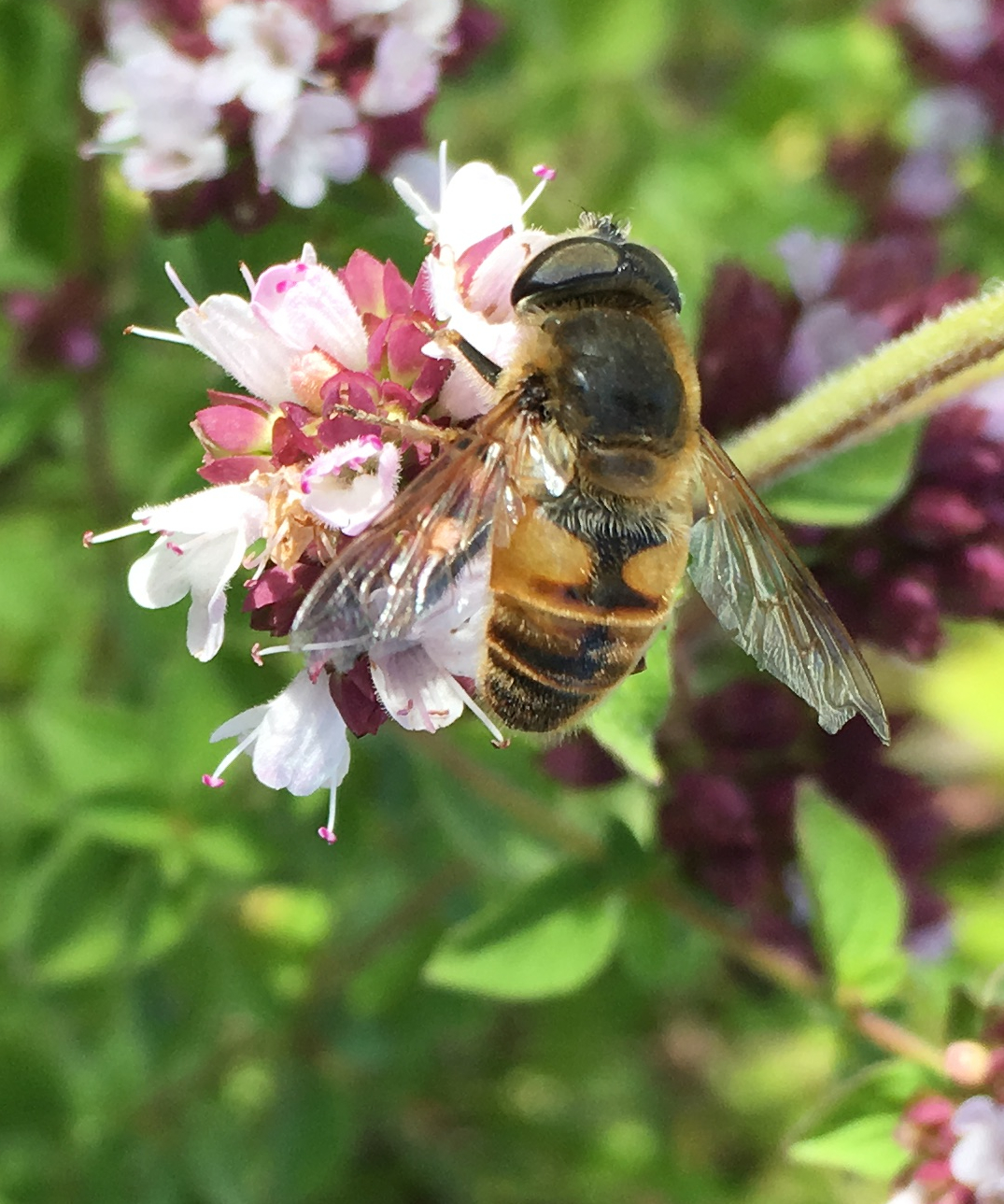 Stock photos are terrible things. Not just because they’re often lousy, vapid images, but because they lead to errors of identification. If I had a dollar for every insect misidentified in a stock photo, I’d be a rich woman.
Take this lovely insect (not a stock photo, by the way, but one of my own). Sipping nectar from flowers, black and yellow stripes, must be a bee, right?
Wrong.
Look more closely.
Bees have four wings, flies have two.
Bees have generously sized, usually elbowed antennae. Flies either have long, filamentous antennae, or short bristle-like antennae.
Bees’ eyes never cover their entire head. Flies’ eyes often do.
Bees are usually quite furry. Flies are often hairless.
Yes, this is not a bee, but a fly. This is a narcissus bulb fly—a type of syrphid or flower fly. It is an excellent honeybee mimic. Not only does it look like a bee, but it acts like one, too, down to the pulsing abdomen and the hanging pollen baskets in flight.
The disguise keeps the fly safe—potential predators assume it is a honey bee and leave it alone. Of course, it lacks the sting of a honeybee, so it would make a tasty snack for any predator who can identify it.
Fortunately for the fly, most predators, like most people, won’t give it a second look, and will steer clear of it.
Which gives rise to one of my favourite “party tricks”—grabbing the “bee” in my bare hand, and then releasing it, neither of us harmed.
But of course, now that won’t work on you…
Now you know…
To bee or not to bee?
 I hate thistles.
California thistles infest my garden. Their underground runners are impossible to remove, and every time I pull one, two spring up in its place.
Leave them laying on the ground once you’ve pulled them and they either re-root and have to be pulled again, or they dry into vicious prickly brown masses, ready to stab any exposed flesh in the garden.
But thistles have another side.
Artichokes (a thistle) provide us delicious food in early spring, when little else is available in the garden.
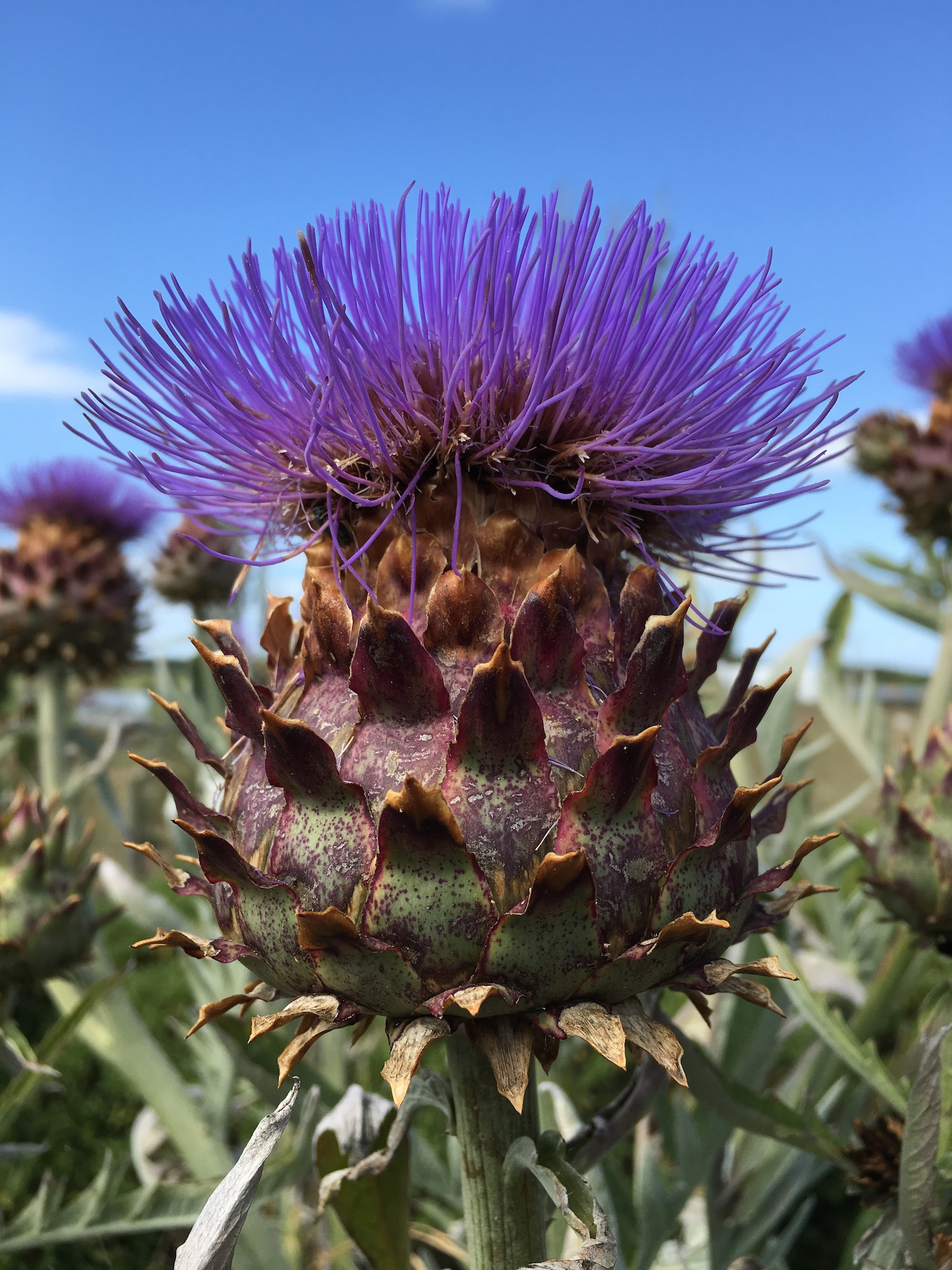
Cardoons (the artichoke’s poor wild cousin) produce stunning fist-sized purple blooms. Even the @!#!*&$*!%# California thistles have beautiful flowers if I don’t manage to pull them quickly enough. Those flowers attract bees by the dozen, and I love to watch the bees tumbling around in the giant flowers.
At this time of year, I’ve usually managed to get on top of the California thistles and prevented them from flowering, but the cardoon—a centrepiece of the flower garden—puts on a gorgeous display. Standing two metres tall and topped with dozens of giant purple flowers, you can be forgiven for forgetting that the plant is a thistle.
Just don’t make me try to pull that thing out…
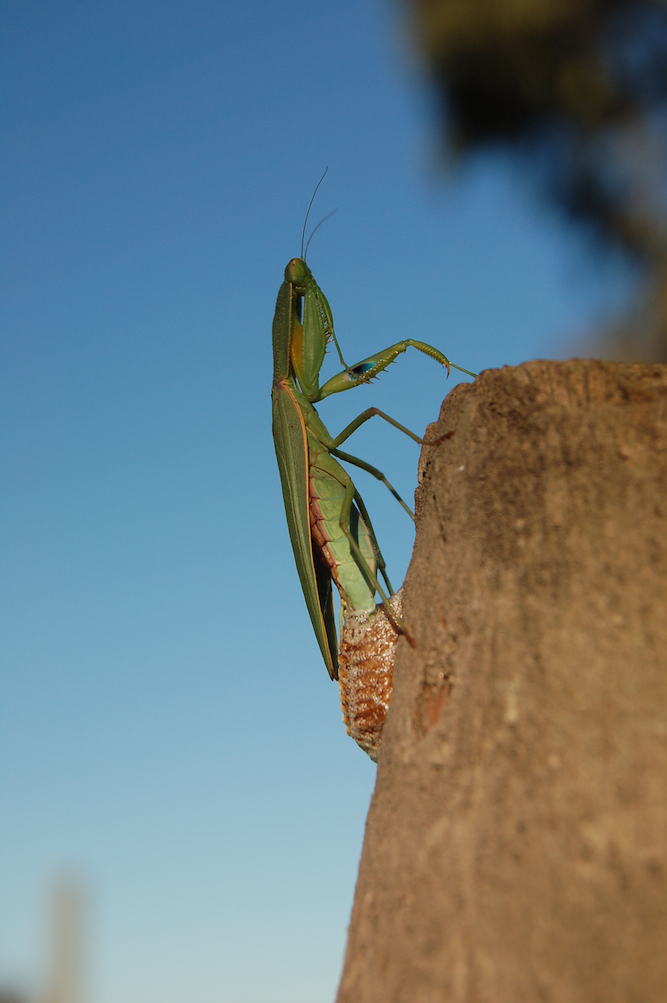
NZ mantis laying eggs
There’s no question why I’ve been known as The Bug Lady most of my life. I have a weakness for anything with more than four legs.
Preying mantids are some of my favourites. Not just because they eat pests in the garden, but because they are simply fun to watch.
How often can you watch a cheetah bring down an antelope in real life? Um…never. But it’s easy to watch a mantis snatch a fly—all the drama of the Discovery Channel, right in your back yard.
Sometimes the drama is a little too close for comfort.
When we lived in Panama, a beautiful 10 cm long green mantid with bright pink hind wings often came to our light at night. It would sit on our table and snatch moths attracted to the oil lamp. It was a cheeky insect, and had no compunctions about perching on our faces or arms to get a better vantage point for its nightly hunting. We laughed that it would follow us to bed some night.
We weren’t quite right, but one morning I slipped on my jeans, only to feel something enormous crawling up my thigh. With a yelp of surprise (and visions of scorpions, which were common in our house) I tore the jeans back off and peered down the leg to find our cheeky mantid scrambling out. It looked distinctly ruffled by the experience, but that didn’t stop it from returning to our light.
But from then on, we trapped it in a jar every night before we went to bed.
We are blessed with a healthy population of New Zealand mantids here at Crazy Corner Farm. Like most mantids, they enjoy hanging out on flowering plants, particularly herbs which attract huge numbers of flies and bees. Sometimes, I sit in the middle of the herb garden with my morning coffee, just to watch the mantids. I’m always surprised and impressed by the size of prey they can take down. I’ve even seen them snatch more than one fly at a time—one in each “hand”. Indeed, they will keep snatching prey as long as it keeps coming—even once they are fully sated and can’t possibly eat any more—their predatory instinct is so strong, they can’t stop themselves.
Of course, everyone has heard that female preying mantids eat their mates, and in species in which the female is much larger than the male, I’m sure it happens. But male preying mantids are just as fierce as the females, and they don’t go without a fight. The female New Zealand mantid is only slightly larger than the male, and I have kept males and females together in captivity. Only once did I see a female try to eat her mate. It was an epic struggle, worthy of the best wildlife documentary. It went on for at least fifteen minutes, and in the end, the male got away.
So turn off the TV. Get outside and watch the drama unfold!
 I knew I would be picking strawberries later in the day, so this morning when I was baking I made a simple vanilla cake, because it would go well with the berries.
But why do we consider vanilla simple, plain?
Vanilla is an exotic spice, made from the bean of a tropical orchid. Like most orchids, it has evolved a close relationship with it’s pollinator, and is only pollinated by one genus of bees. Outside its native Mexican range, vanilla must be hand pollinated. Though vanilla was introduced to Europe in the 1500s, it was more than 300 years before a viable hand-pollination technique was developed, allowing vanilla to be grown throughout the tropics.
To make vanilla even trickier to cultivate, it cannot germinate without the presence of specific mycorrhizal fungi.
Add to that the fact that it grows in regions prone to hurricanes and cyclones (which regularly wipe out regional production), and it’s not surprising that vanilla is the second most expensive spice after saffron.
So, why do we think of vanilla as ordinary and plain?
Perhaps it comes from the fact that vanillin, the artificial vanilla flavour that is used in 95% of “vanilla” flavoured products is made from lignin, a by-product of the papermaking industry. That makes artificial vanilla much cheaper than real vanilla—cheap enough to use in everything. Unfortunately, vanillin is only one of 171 different aromatic compounds found in the real vanilla bean, which is why artificial vanilla tastes so…well…plain.
This lovely, exotic spice has been rendered plain by its cheap imitation.
I use only real vanilla.
It’s not plain.
But it goes great with strawberries!
 It’s aphid season here. Lettuce, strawberries, dill, parsley, and roses are covered in the little green girls.
I used to fret about aphids—they can certainly cause a great deal of damage, particularly to young plants. But I’ve learned to live with them. Here are a few of my aphid strategies:
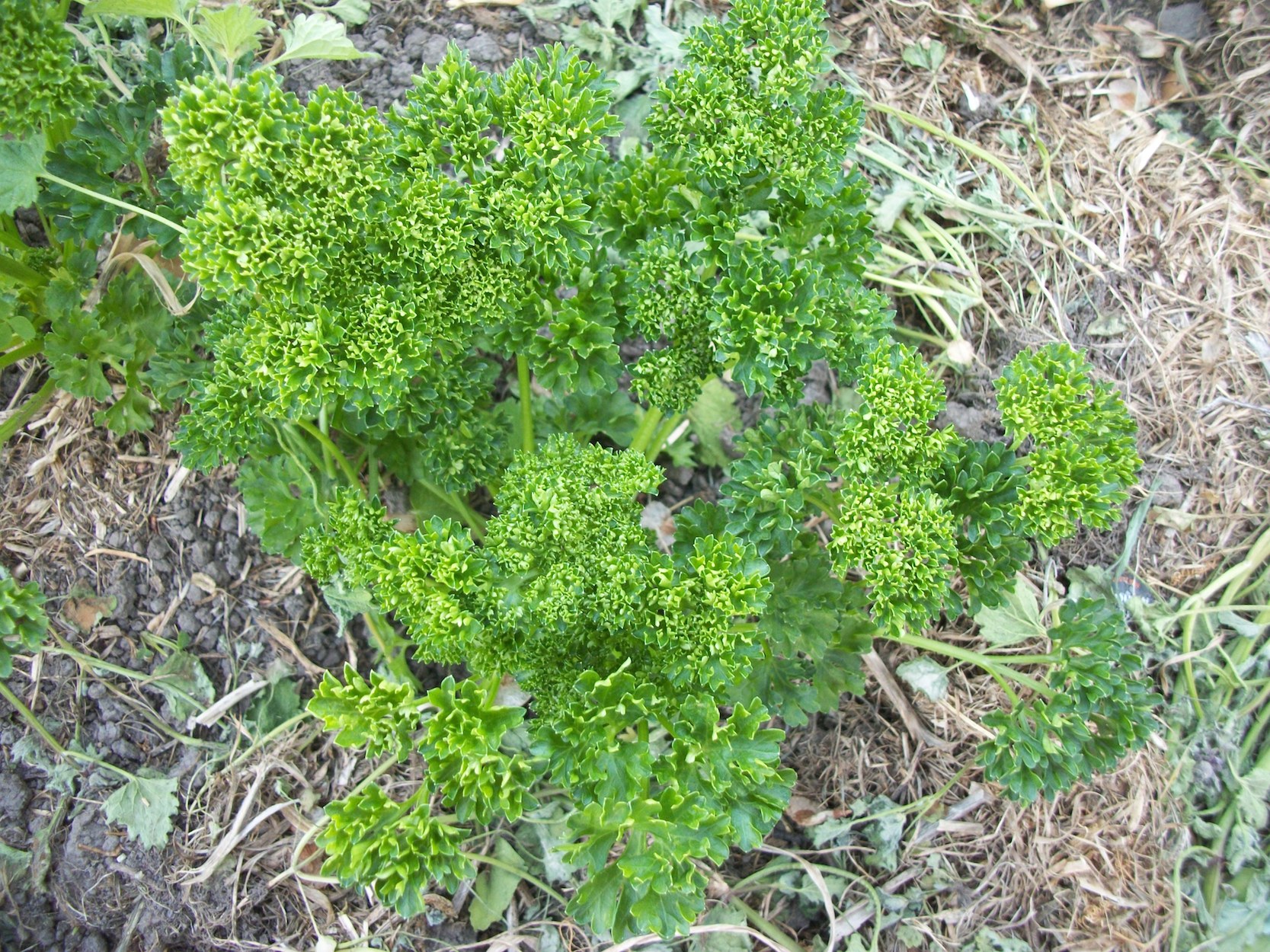 Parsley is a ubiquitous herb, easy to overlook, easy to undervalue.
It is said its seeds must go to the devil and back seven times before germinating. I don’t think it takes quite that long, but parsley is slow to germinate.
Once up, though, parsley is tough and long-lasting. The plants I start in August will survive spring frosts to flourish through the heat and drought of summer, and continue flourishing through the cold wet winter, to be finally pulled out in October of the following year, when they begin to bolt, to make room for new plants.
We eat parsley by the handful (none of this Tablespoon stuff), and love it in risi e bisi, soup, potatoes, and gratins.
We grow both the Italian flat-leaf and the curly varieties (because, why not?), and enjoy the flat-leaf parsley fresh in salads (or just standing up in the garden as we pass by). We also enjoy parsley mixed with other fresh herbs to make a non-basil pesto that is lovely on pasta or as a topping for polenta crostini.
Of course, the best reason to grow parsley in much of the world is to attract the beautiful swallowtail butterflies, whose caterpillars specialise on parsley and related plants, incorporating the toxins from the plants into their exoskeletons to serve as defence. Unfortunately, we have no swallowtails in New Zealand, but the flowers of parsley attract bees, flies, and our native butterflies in large numbers.
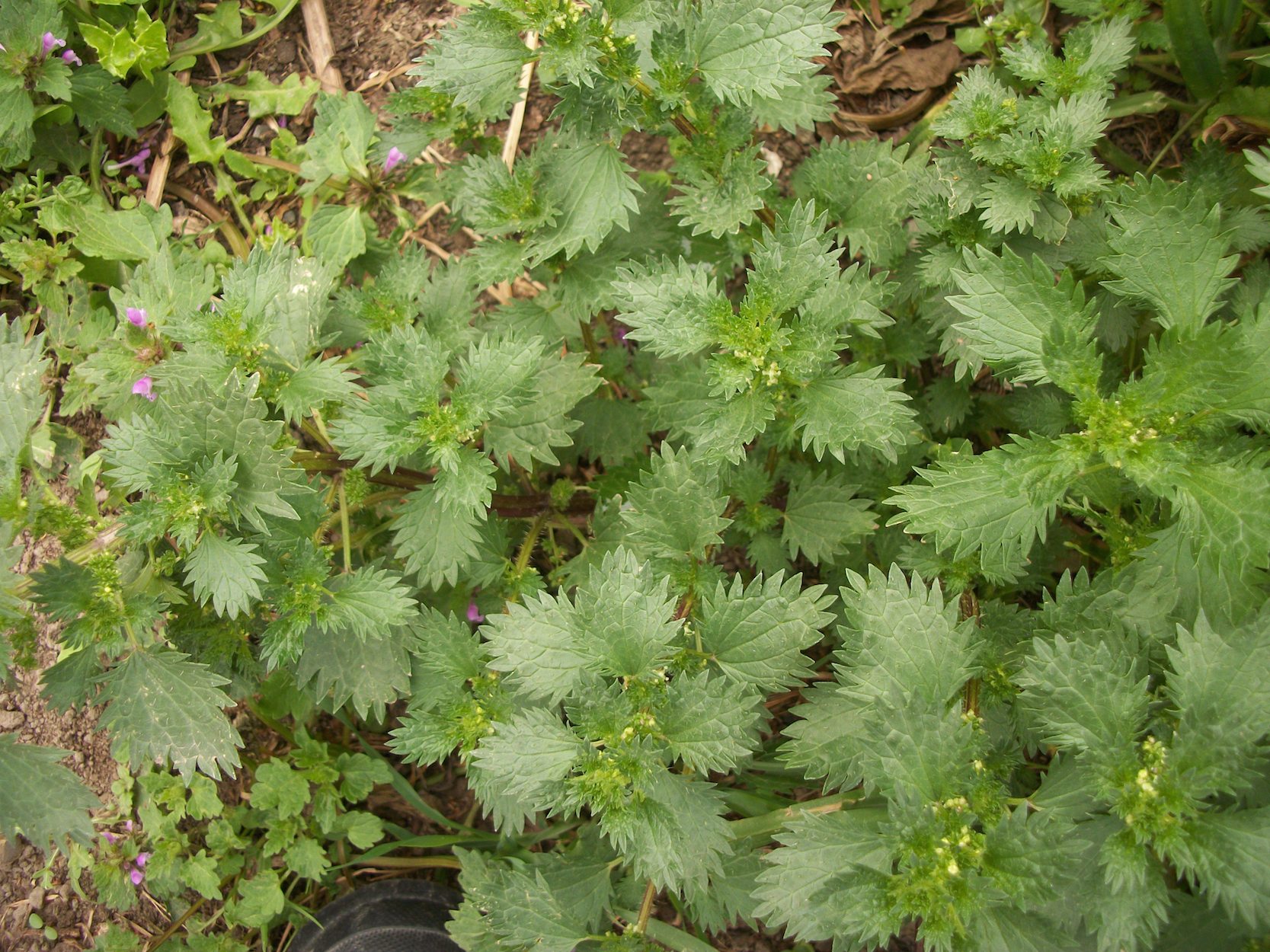 My garden is blessed and cursed with an abundance of nettles. Blessed because they are the larval food plants for two attractive native butterflies—the red and the yellow admiral. I love watching the butterflies flit around the garden!
Blessed because nettles only thrive in good soil, and mine are the most vibrant and robust nettles anywhere.
Cursed because…well…they’re nettles. Careful as I may be, I can’t avoid being stung on a regular basis.
But like all problems, meeting them head-on is the best tactic. As they say, grasp the nettle. A nettle that brushes gently against your skin as you’re trying to avoid it will almost always sting. But grab a nettle firmly, even with bare hands, and you can usually pull it out without pain.
It really is a good metaphor for life (even if most people have no idea what it means).
And so I dive into the nettles of life like I dive into the ones in the garden—grappling them bare-handed and pulling them out with a quick, confident tug.
At least, that’s the theory, anyway…
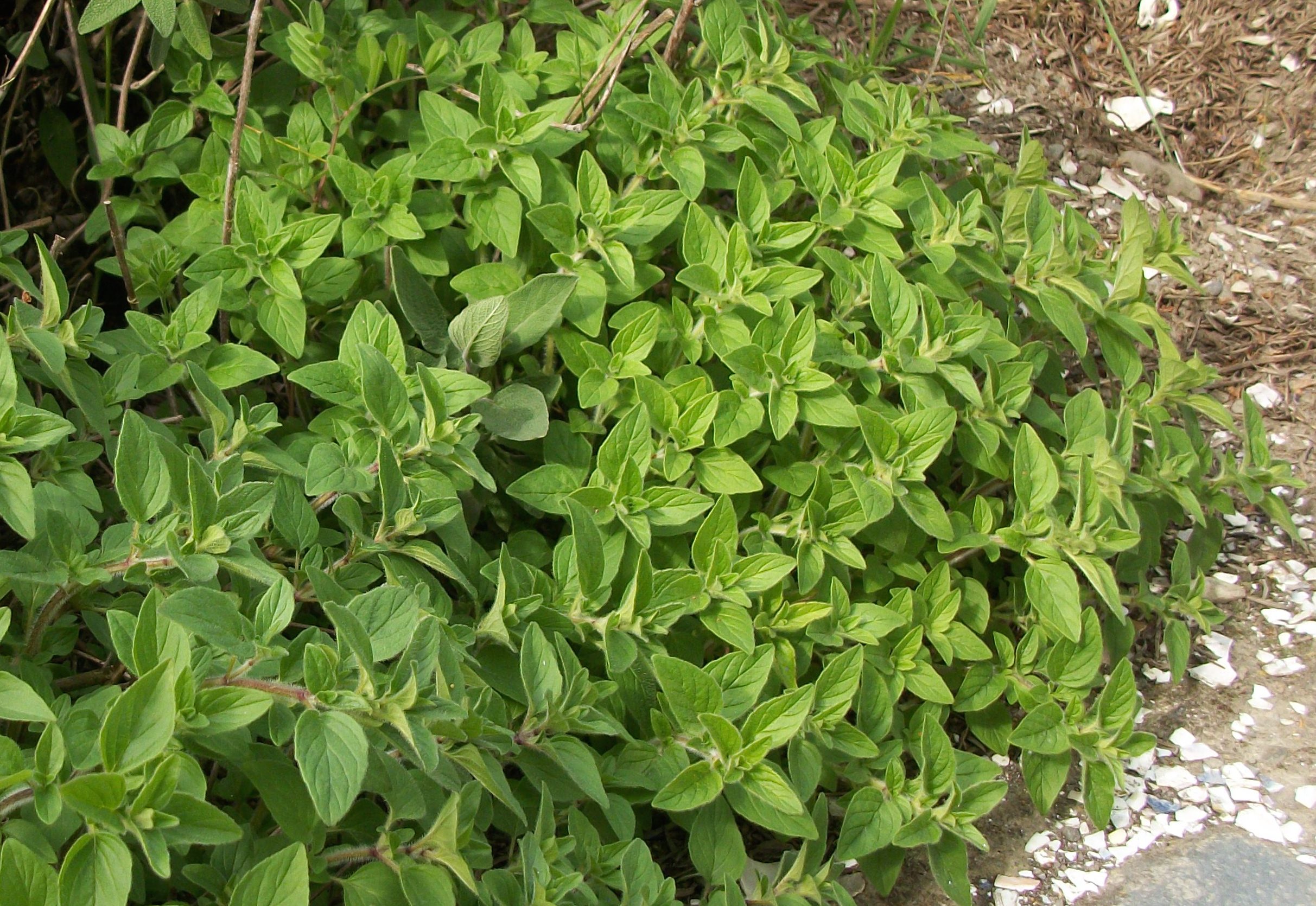 Oregano is marjoram’s wild cousin, and as such, is pungent and weedy. It seeds in all over the garden, and thrives even in the dry, rocky former driveway-turned-flowerbed. It is the first plant ready for harvest and storage each spring, and some years I miss it because I’m so busy planting everything else.
A woody perennial, oregano is available fresh almost all year in our mild climate, but the classic oregano flavour we all love on pizza comes only from the dried herb.
In winter, I cut the plants back nearly to the ground; the scraggly stems that have already flowered would survive and sprout new growth in the spring, but oregano needs an annual “haircut” to look good.
Early in spring, the trimmed plants send up a beautiful green cushion of new foliage. This fresh, even growth is easy to harvest and dry, and the plants will reward me with another crop when the first is shorn.
But for me, the best thing about oregano is its flowers. They aren’t particularly showy or pretty, but they attract a huge array of insects—bees, butterflies, hover flies—and those in turn attract preying mantids and spiders. When the oregano is flowering, I often take my lunch into the herb garden, just to watch the insects.
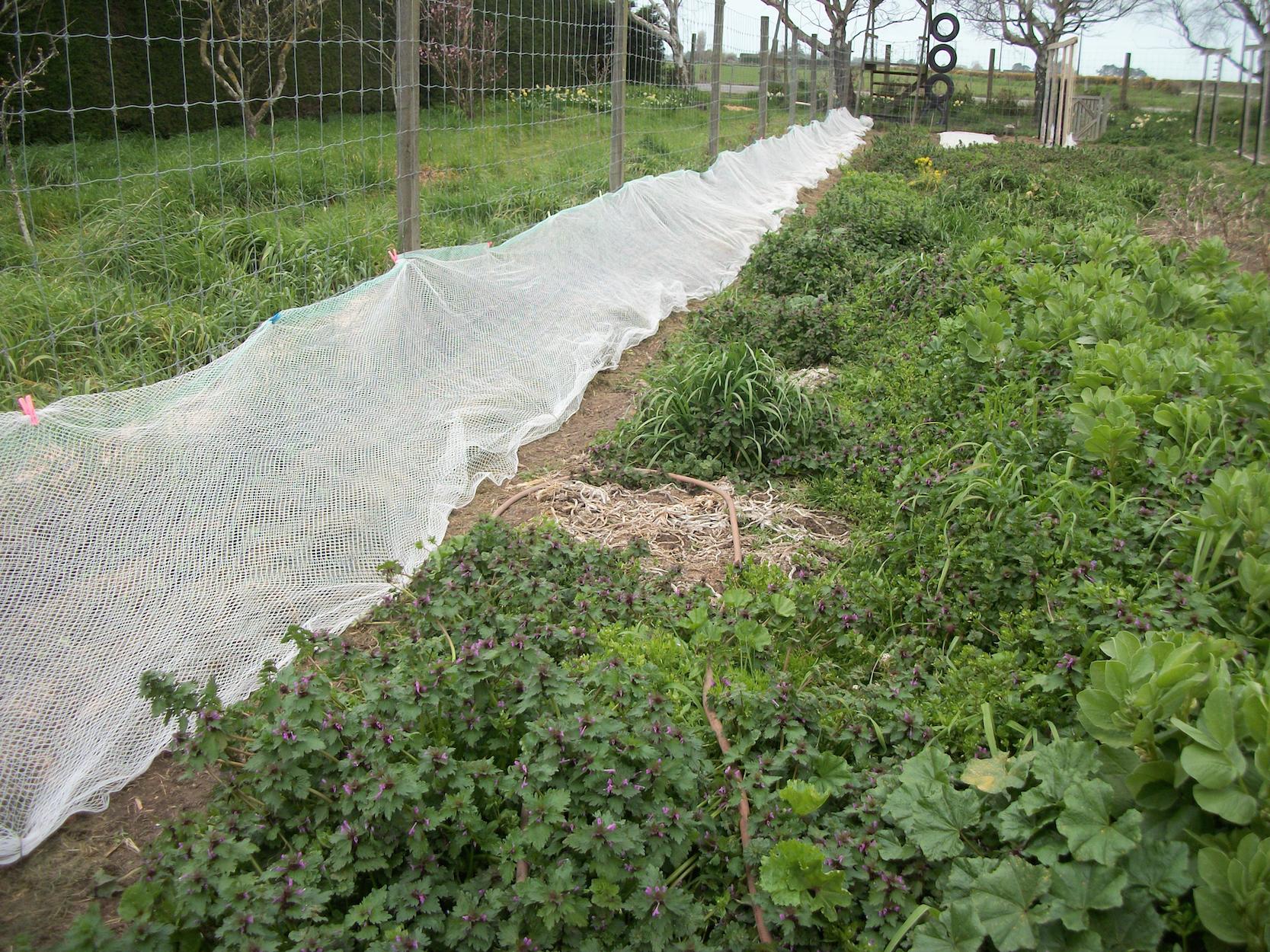
Netting covering newly-planted pea seedlings
Pests are always a concern for me—rats and mice get into my animal feed, hedgehogs eat my cucumbers, brush-tailed possums strip the bark off trees, slugs devour the strawberries, aphids infest the lettuce—but springtime is the worst season for pests.
And English sparrows are perhaps the worst pest I deal with.
Sparrows are a problem year round. In autumn and winter, they roost in the sheds, covering everything with their droppings. They rummage through the compost pile, spreading kitchen scraps everywhere. In spring and summer, they nest in the gutters, causing rainwater to back up into the house instead of going down the drains. Or they nest the sheds, where they make an even bigger mess than they did roosting there all winter.
But the most annoying thing the sparrows do is eat seedlings. They sit in the trees and watch as I plant out my peas and lettuces, then descend upon the garden and gobble them up as soon as my back is turned. Nothing is safe from them until it is at least 30 cm tall.
Until a few years ago, the damage was minimal. The neighbour used to poison the sparrows, and their population was relatively small. Since he retired and sold his farm, however, the sparrow population has increased dramatically. The new owner doesn’t poison the birds…which I’m happy about on one hand, because it is not a humane death (I hated finding dying birds on the property–horrible to watch). On the other hand, the sparrow population has reached plague proportions.
Which means spring planting is an exercise in pest control.
Everything I plant has to be covered with bird netting for a few weeks or it is eaten to the ground. And once I remove the netting, I’m sure to lose some plants as the birds strip half the leaves within a day of the covers coming off.
I suppose I should take the Panamanian approach to planting—three seeds in each hole—one for me, one for God, and one for the pests.
 Robinne Weiss