Zucchini!

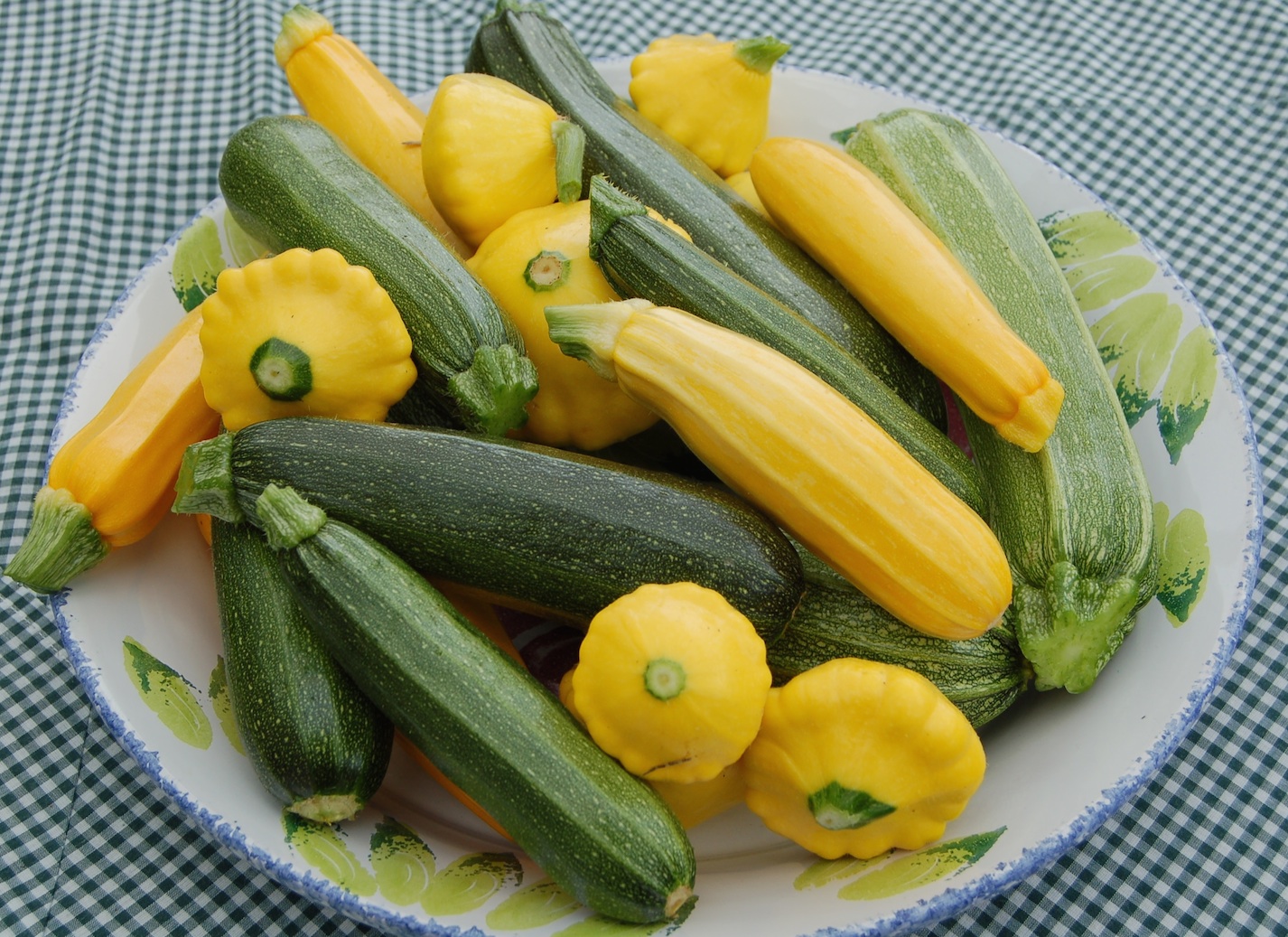
Zucchini4cropsmThe question of what to do with too much zucchini is one that has plagued humankind for millennia. The modern zucchini’s ancestors came from Central and South America, and were part of the local diet as far back as 5500 B.C. (I wonder how you say, “Zucchini, again?” in ancient Mayan?)

Europeans knew a good thing when they saw it, and within 50 years of European invasion of Central America, zucchinis (well, their ancestors, anyway) were being cultivated in Europe. The vegetable we grow today as zucchini was developed in Italy in the 19th century (hence the Italian name we use for it), and it has been overwhelming home gardeners all over the world ever since.

The good news about zucchini is that you really can’t eat too much. It is low in calories (only 18 per half cup), and is full of nutrients like beta-carotene, folic acid, and vitamins C and E. Of course, there really is only so much zucchini one can eat, and because I plant several varieties, we reach the point of zucchini saturation pretty quickly. The overflow goes to the goats, who eat it happily for a while, and then they, too, get tired of it. Eventually, some zucchinis are forgotten in the garden, and grow into giants. My biggest last year was nearly a metre long. I thought that was pretty impressive, until I learned that the longest zucchini ever grown measured 2.39 metres (7 ft 10.3 in)! Now there’s something to aspire to this year!

In the meantime, it’s zucchini for dinner again tonight!
Strawberries

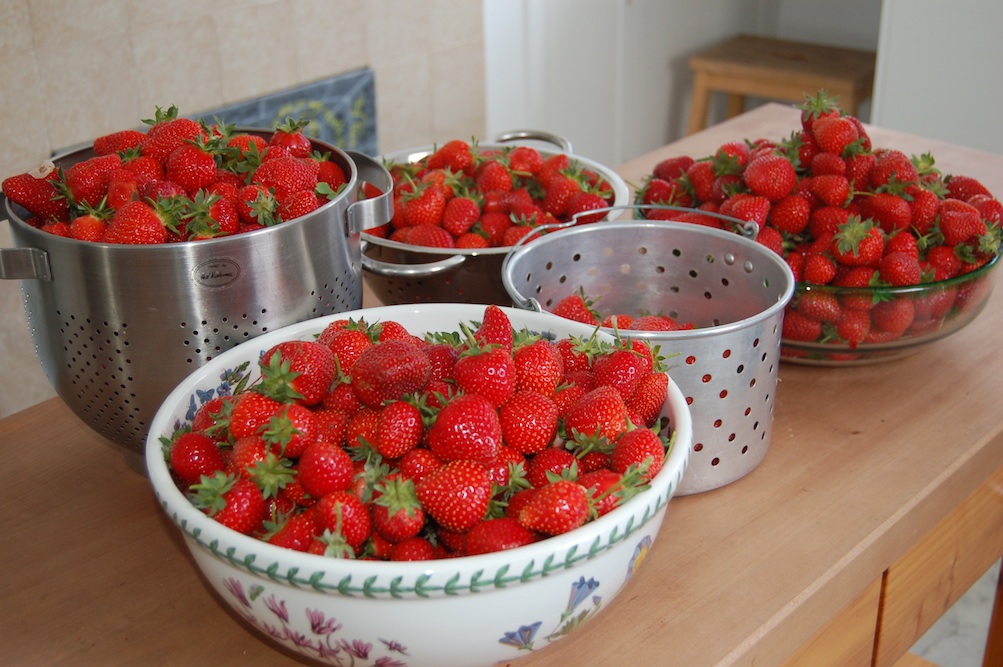
DSC_0003smI have always had an insatiable appetite for strawberries. At some point as a kid, I took over my mother’s strawberry patch—weeding, picking, selling, and eating large quantities of berries every spring. Here at Crazy Corner Farm, I also have a large strawberry patch. The original idea was that strawberries would be my cash crop—I’d sell lots of berries and support my gardening habit that way. It worked fine for a while…until I realised that, actually, we could consume every one of our berries without any problem at all, even when I was bringing in several kilograms every two days. I still sell some, and I give away plenty (they make spectacular Christmas gifts—who doesn’t want a punnet of strawberries?), but mostly we eat them.

The hardy, large-fruited strawberry we know today took many years to develop. Wild strawberries were cultivated in Europe as early as the 1300s, but it wasn’t until two New World species (Fragaria virginiana and Fragaria chiloensis) were imported to Europe that modern varieties were bred. The French accidentally pollinated the Chilean strawberry with the Virginia strawberry, and voila! They got a berry that was large, like the Chilean one, and hardy, like the Virginia one. Well, actually, it wasn’t that easy. After the French did it accidentally, the English spent many years crossing and recrossing these two species to develop a large, hardy strawberry. When these plants were shipped to America, most didn’t survive the colder North American winters, so more crosses had to be made.

Even then, strawberries wouldn’t grow everywhere and had incomplete flowers (only male or female parts), so they needed different varieties to cross pollinate them. It wasn’t until 1851 that James Wilson, from New York, developed a variety that was productive in almost any soil, and had perfect flowers, so it could be grown by itself. The commercial strawberry industry was born.

Since then, hundreds of varieties have been produced, some by professionals, many by amateur breeders who just loved strawberries.

I initially planted several different varieties in my strawberry patch. Those original plants are long dead, but have cross bred and sent out runners, so that today I have an intriguing mix of varieties. I can still identify some—Yolo and Strawberry Sundae are distinctive and easy to pick out. Many plants, though, have a mix of characteristics, and some even produce berries more like their wild ancestors. Every year, I nurture the ones I like and selectively weed out the ones that aren’t so great. Amateur strawberry growers all over the world do the same, I’m sure, giving us a wonderful range of sweet, tart, large, small, white-fleshed, red-fleshed, pointy and round berries. So many different types, I want to eat them all!

Once and Future Food

DSC_0006sm9.2 cubic metres.

7,000 kilograms.


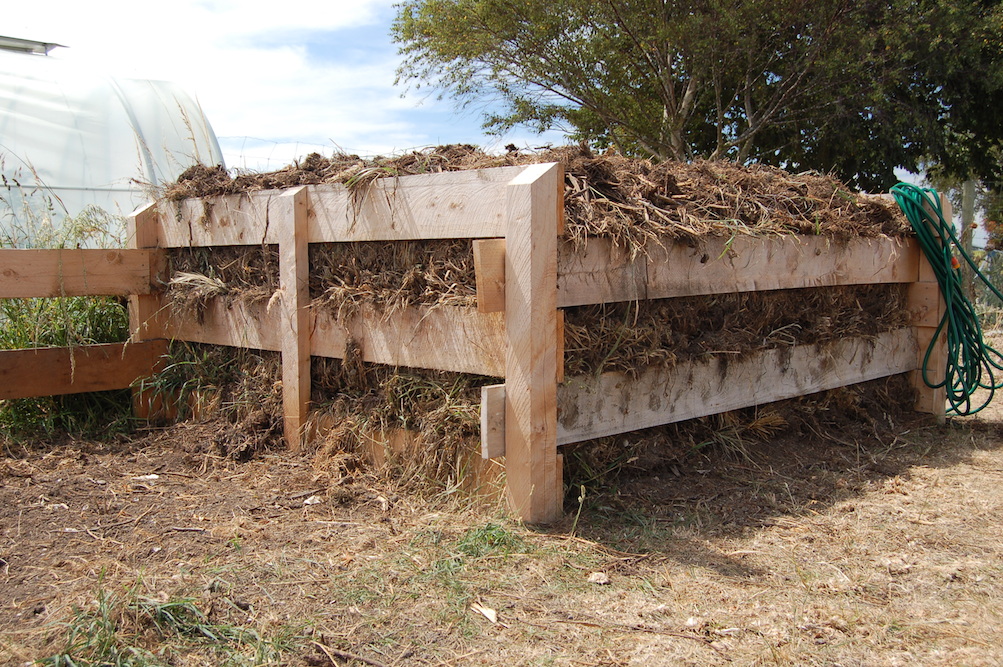
That’s how much compost I moved over the past two days. Carting it from the old compost area to the new compost bins my husband made for me. Turning the compost is an annual ritual—a compost pile that isn’t properly made and watered here turns into a dry mummy of weeds and kitchen scraps. This year’s turning was more difficult than usual, having to lift each forkful of weeds once into the wheelbarrow, then once more onto the new pile (rather than just tossing it next to the old pile). I dread the job every year—it’s one of those tasks I imagine exists in the level of Hell designed specially for gardeners (weeding thistles out of the gooseberry patch is another one of those jobs…I did that one earlier in the week).

But the job does have its moments. Uncovering a small pile of walnut shells—remembering the bag of walnuts our dentist gave us last April (also an avid gardener, we exchange produce at every dental appointment, and he once exchanged a filling for a block of homemade cheese). Bringing up the strata of last year’s tomatoes—salivating over the prospect of ripe tomatoes in less than a month. Yanking out a bean vine wrapped around jute—Liadan’s beautiful teepee of King of the Blues runner beans that fell over in a late summer storm. And finally, reaching last year’s broad bean plants, cut down a year ago, just after the last turning of the compost—remembering the final broad beans of this season, eaten just last week.

That mummified pile of plants represents the whole year in the garden. Turned and watered, it will soon become the food for next season’s crops. It fed us once, and will feed us again and again, as long as I keep turning that compost every year.