Old Farmers

My winter goat feed was delivered yesterday afternoon by the same father/son pair who delivers it every year. “Dad” isn’t a day under 90, and his son is in his late 60s. I always leap to help when they arrive. They would happily unload all the hay and stack it in the shed for me, but I can’t watch these two elderly gentlemen hauling hay bales while I do nothing.

Truth is, many of the neighbouring farmers could trade their tractors in for walkers. They work until their bodies give out, or until an accident or death claims them.

You might wonder why. Most of these guys are sitting on a fortune of land. They could sell out and retire in style instead of working themselves to death.
Paths wide enough for a walker?

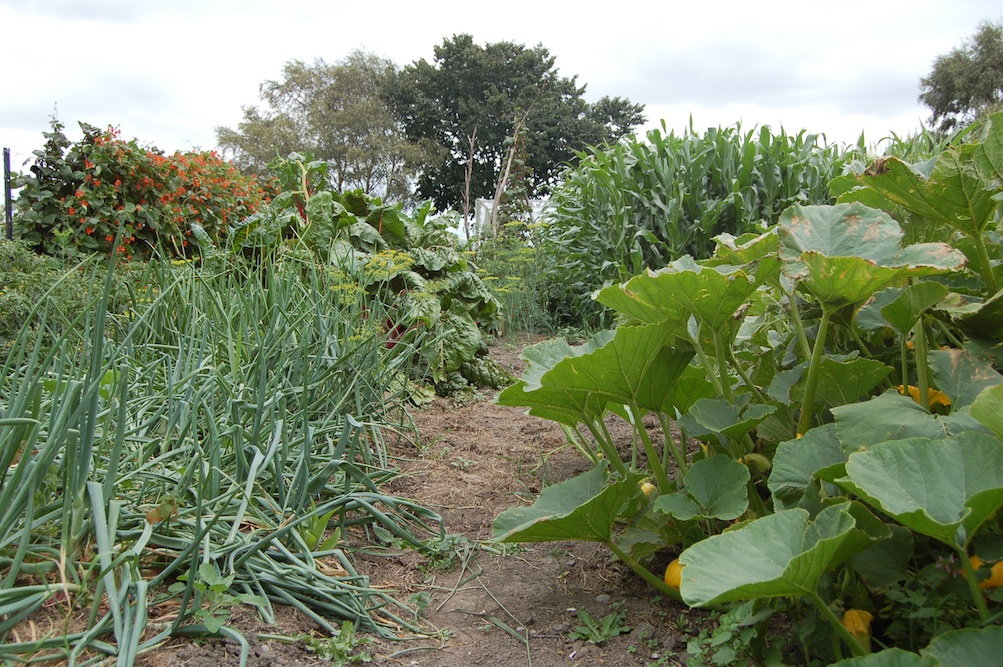
Paths wide enough for a walker?

I understand, though. Will I give up gardening as long as I can drag myself to the garden? No. It’s who I am. Even injury can’t keep me away—I’ve been known to do my gardening on hands and knees when a back injury prevented me from standing. Farmers are the same. Farming isn’t a job; it’s an identity. To retire is to lose oneself. The 90 year-old who delivers my hay every year is cheerful and spry for his age. He will always be a farmer. One day he’ll stop working, but not until he stops breathing.
Gardeners make good neighbours

Anyone need zucchini?

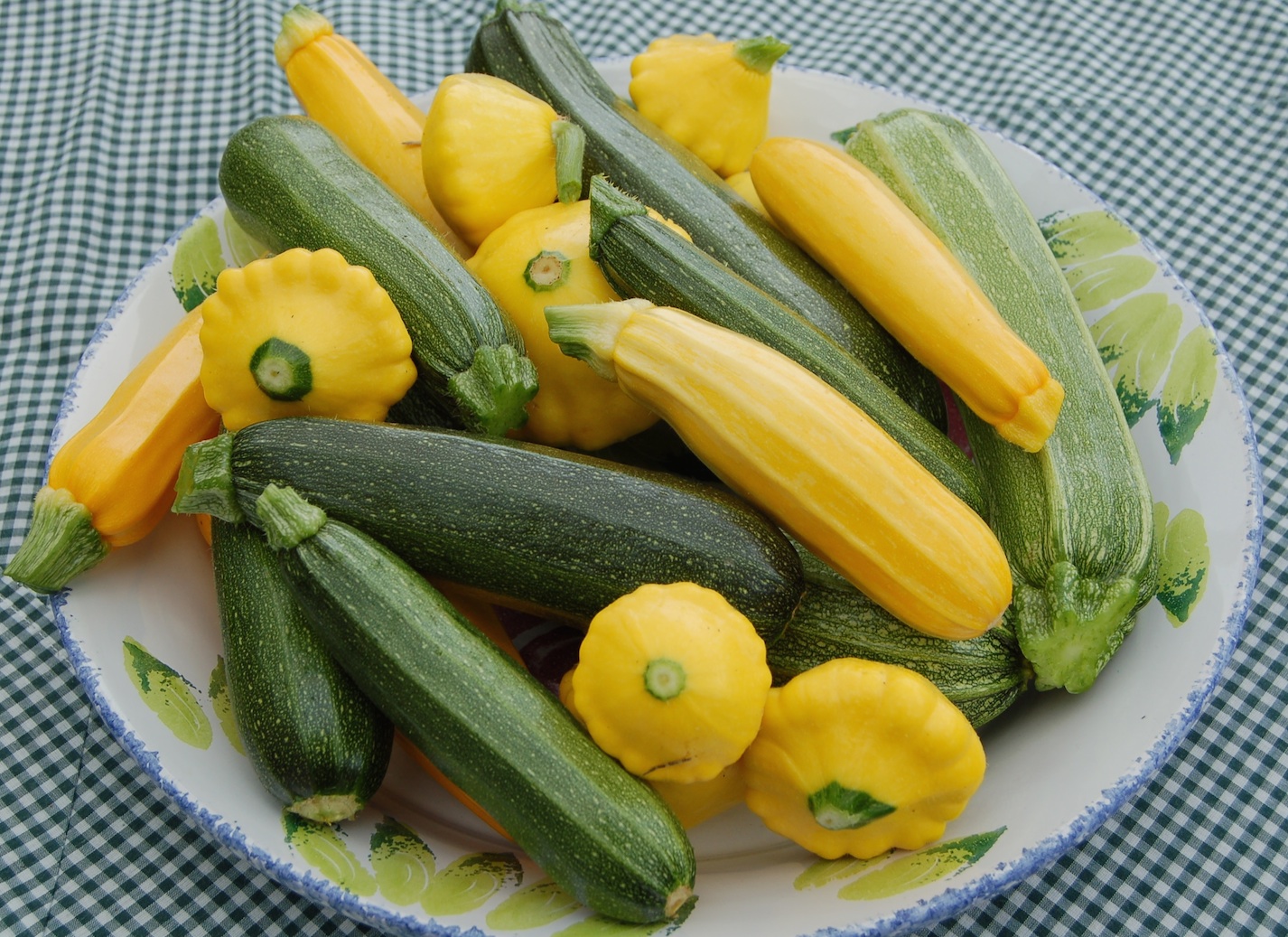
Anyone need zucchini?

In our little rural community, there is a thriving barter economy, driven in large part by gardeners. Everyone’s garden is different, so everyone has different resources to trade, and different needs. I might have an excess of green beans, and can trade them for my neighbour’s excess tomatoes. This exchange of vegetables isn’t always explicit or immediate. I might provide eggplant today, and my neighbour might bring me broccoli in six months. It’s also not confined to the exchange of vegetables. A neighbour took care of my animals while I was on vacation over winter. In return, I provided her with vegetable seedlings in spring. I’ve exchanged cheese for olives, honey and peaches; and vegetables for hay and the loan of tools.

I’ve even exchanged cheese for dental work. My dentist is an avid gardener, and we exchange vegetables at every visit. I also occasionally bring him a block of goat cheese. A few years ago, he took a cheese making class and realized how much work it is to make. The next time I brought him cheese, he offered a free filling in recognition for the time he knew it took to make the cheese. He deemed it a good trade—though it would have cost me $300, the filling only took him 15 minutes to do, whereas I’d spent 5 hours on the cheese. Both of us left happy.

This free exchange of whatever each of us has in abundance makes for a supportive community. The old communist slogan, “From each according to his abilities, to each according to his needs” really does fit the “garden economy”. It makes me think that, if everyone could just grow a little patch of vegetables, the world would be a better place.

The Food Year

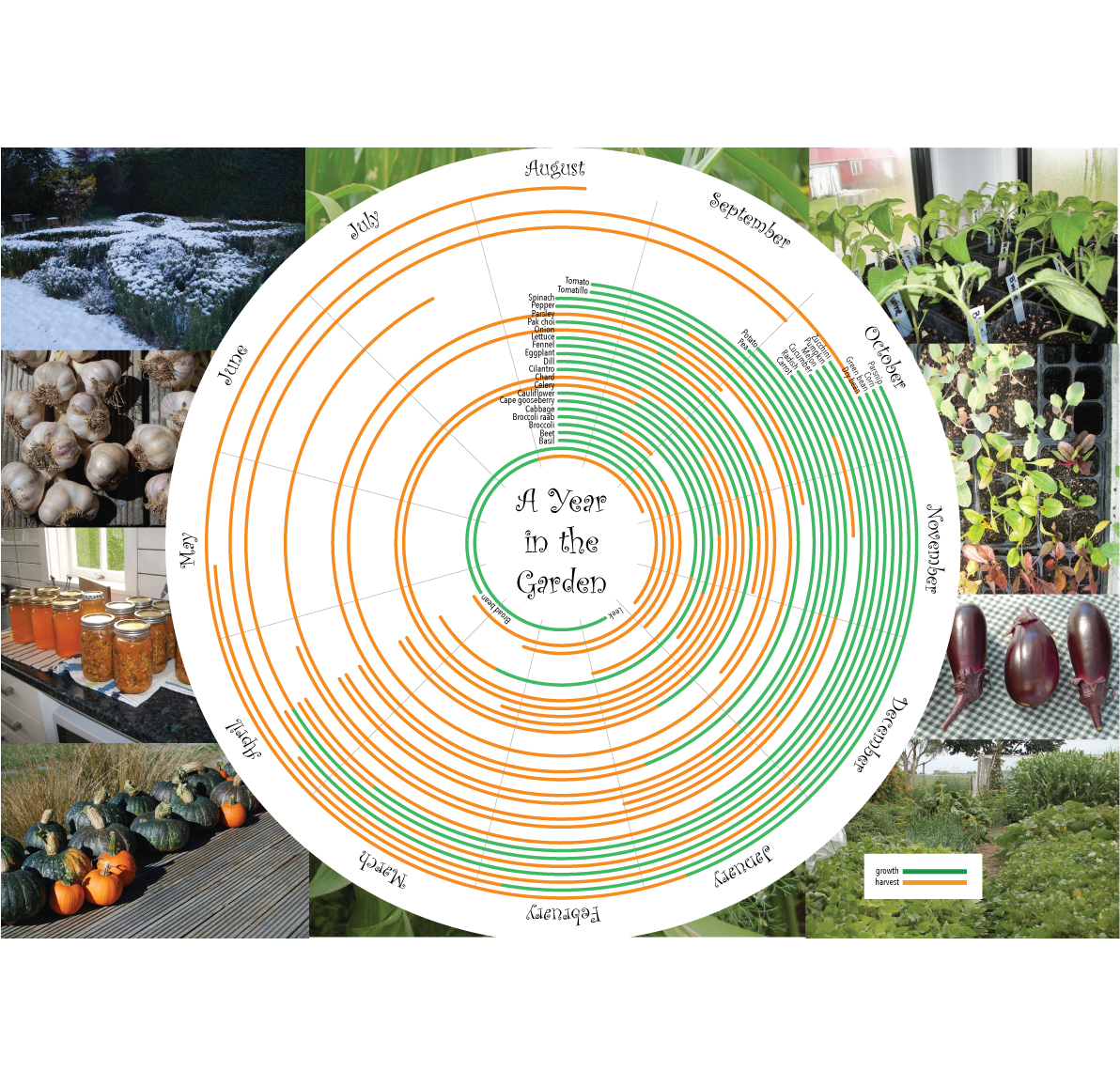
GardenYearThe modern food system, with international trade and refrigerated transport, ensures that fresh tomatoes, cucumbers and other summer crops are always available, even in Maine in February. Want eggplant parmesan for New Year’s dinner? A special cucumber salad for Valentine’s day? Even in Maine, it’s no problem—you’ll find the ingredients in the supermarket.

A gardener’s food year is more seasonal. Some might say having year round supplies of summer fruits and vegetables is a great thing, and I don’t deny its appeal. But there is something to be said for seasonality. Nothing tastes sweeter than the first strawberry of the year, when you’ve been dreaming of strawberries for months. Nothing is more poignant than the last tomato, knowing it heralds winter, and eight months wait for the next juicy bite. Absence makes the heart grow fonder. Vegetables herald, define, celebrate, and farewell seasons and annual events.

It’s difficult to capture the essence of seasonality in the garden. There is the early spring scrounge for anything still alive and edible, while you madly plan and plant for the future. There is the overwhelming abundance of summer, when the question shifts from “what is there to eat?” to “what needs to be eaten?” There is the frantic preserving of late summer, when you realise it all has to end. There is the calm of autumn, when the larder is full, and you know you can curl up like a chipmunk in your well-provisioned nest when the winter winds blow.

I tried to capture some of the garden year’s seasonality in this little graphic. It includes most of the annual crops we grow, though some are lumped together and others left out to minimise clutter. None of the perennial crops are included. But I hope it gives you an idea of what’s in and coming out of the garden at different times of year.

Special thanks to Ian for writing the R code to create this nifty little graphic.

The (not so) Humble Onion

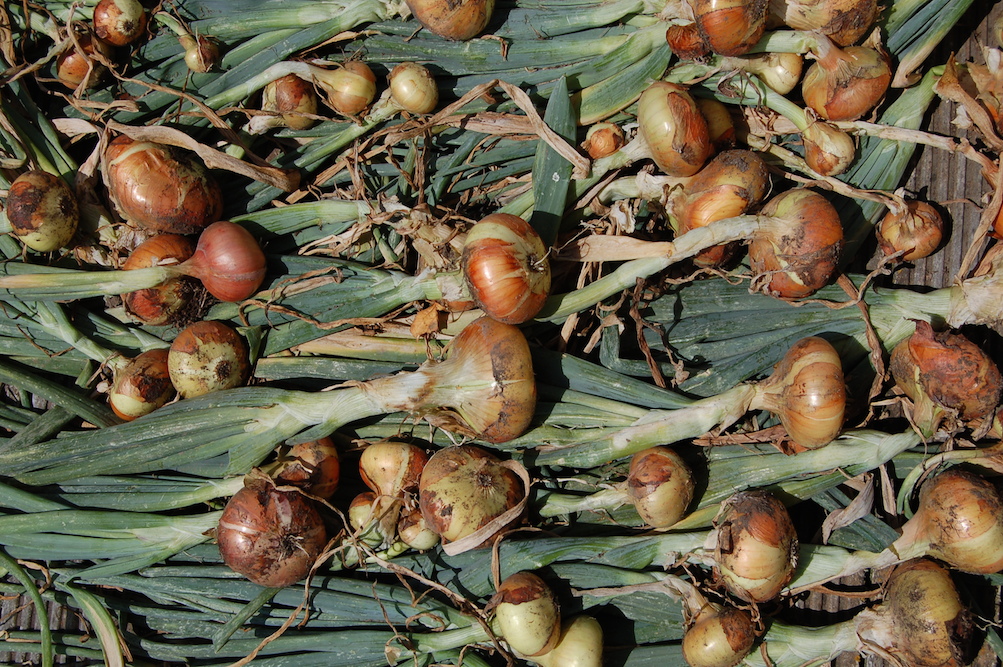
DSC_0010smI never thought much about onions until I tried to grow a year’s supply of them. Onions were just onions—a necessary component of most nights’ dinners, but not a feature. In fact, onion was probably my least favourite vegetable. My first attempts to grow enough for the year were abject failures. Onion was such a mundane vegetable, I just assumed it would be easy to grow.

I was wrong. First, the tiny seeds didn’t like to germinate in the garden, so I learned to start them indoors, and transplant the seedlings. Then I discovered that onions are very sensitive to drought, and I needed to improve my watering regime or they would never get larger than a walnut. I also quickly learned that they hate competition and I needed to keep the onion bed scrupulously weed free. Finally, I found they were heavy feeders and liked a generous helping of good quality compost in their bed. Such finicky tastes for a vegetable I assumed was little more than a weed!

I did eventually get it right, and can now keep us supplied with onions year round. As with most vegetables, I gained a greater appreciation for subtle differences among varieties when I started seriously growing onions. One of my best “discoveries” has been red onions. The first time I grew them, I cured and stored them like the others, with poor results. They never properly dried, and rotted or sprouted within a month of harvest. What I’ve since realised is that they should be eaten fresh. And when eaten fresh, they are like an entirely different vegetable—so sweet and succulent, that even I like them raw in salads. Now we start eating the red onions as soon as the first bulbs swell. They fit nicely in the food year, between the last spring onion and the storage onion harvest.

The best thing about them is they’ve taught me to better appreciate a vegetable I was never overly fond of before. I think about the times I’ve had French onion soup and didn’t like it. Was it because it was made with the wrong variety of onion? Did I spend the majority of my life unenthusiastic about onions because all I’d eaten were the store bought varieties? Seems I’m going to have to do some more research and try some new varieties. There are dozens to choose from in the seed catalogues!

Gardens are Like Kids

DSC_0013Wednesday was a brutal one in the garden. Temperatures neared 30°C (86°F) and 125 kph (78 mph) wind whipped up billowing clouds of dust and flattened plants. There was nothing I could do but hope I’d watered enough last week and tied up the tall plants well enough that they could recover afterwards. When the sun set and the wind died down, I ventured out to survey the damage. As I feared, the plants were limp and battered. I watered them well overnight, and most looked refreshed by morning, ready to face another day of sun and wind.

It’s a lot like sending the kids off to school each day. It’s a harsh environment—they have to navigate school work, buses, and relationships with peers and teachers. They need these challenges to grow, just as plants need the sun and air, but some days the wind blows too hard. A new teacher, a friend who has moved away, a taunt in the lunch room…as a parent, you know these things will happen, and there is nothing you can do except hope you’ve given your children enough love and support to recover afterwards. They come home flat and battered, and you give them some extra TLC so they’re ready to go back and face it again the next day.

There’s only two things that money can’t buy…

DSC_0033 smTrue love and home grown tomatoes—the only two things that money can’t buy, according to singer Guy Clark. I could add a few other foods to that list, but he’s definitely right about the tomatoes.

Home grown tomatoes are the only ones we’ll eat any more. Life’s too short to eat the store bought ones. I plant 6 or 7 varieties every year—a couple of new ones, and a bunch of old favourites. Each variety has different uses.

Brandywine is without a doubt, the best tasting tomato on the planet. So good that I plant it every year, even though the summers are really too short and cool for it here. For raw eating, nothing beats a Brandywine.

Delicious is almost as good as Brandywine. It’s my insurance policy; it grows better in cool weather than Brandywine does. I’m sure to get some Delicious, even if the Brandywines don’t give well, or they all get eaten by the birds (they think Brandywines are best, too, and even eat them green).

Amish Paste is robust and prolific. Unlike many other paste tomatoes, it manages well with erratic watering. Fleshy and dry, it makes great sauces.

Russian Red is my prolific, hardy workhorse tomato. It has small fruits with a fine, but not stellar flavour. Its value lies in its ability to flourish in cold weather, ripening fruits long after other varieties have succumbed to frost.

Suncherry is a lovely red cherry tomato that not only fills lunchboxes with juicy goodness, but also dehydrates well, providing us with lovely sweet/tart dried tomatoes all through winter.

Of course, the best way to enjoy a tomato is standing up in the garden, but here’s one of my favourite tomato dishes. This is straight out of Vegetarian Cooking for Everyone, by Deborah Madison. Make it with the best tomatoes you have, and don’t use an iron skillet or the tomatoes will taste tinny.

Tomatoes Glazed with Balsamic Vinegar

1 ½ pounds tomatoes

2 tablespoons butter

3 tablespoons balsamic vinegar

1 plump shallot, finely diced

salt and pepper to taste

Cut tomatoes into wedges about 1 ½ inches across at the widest point. In a skillet large enough to hold the tomatoes in a single layer, heat the butter until it foams. Add the tomatoes and sauté over high heat, turning them over several times, until their colour begins to dull, about 3 minutes. Add the vinegar and shallot and shake the pan back and forth until the vinegar has reduced, leaving a dark, thick sauce. Season with salt and plenty of pepper.

Pest Control

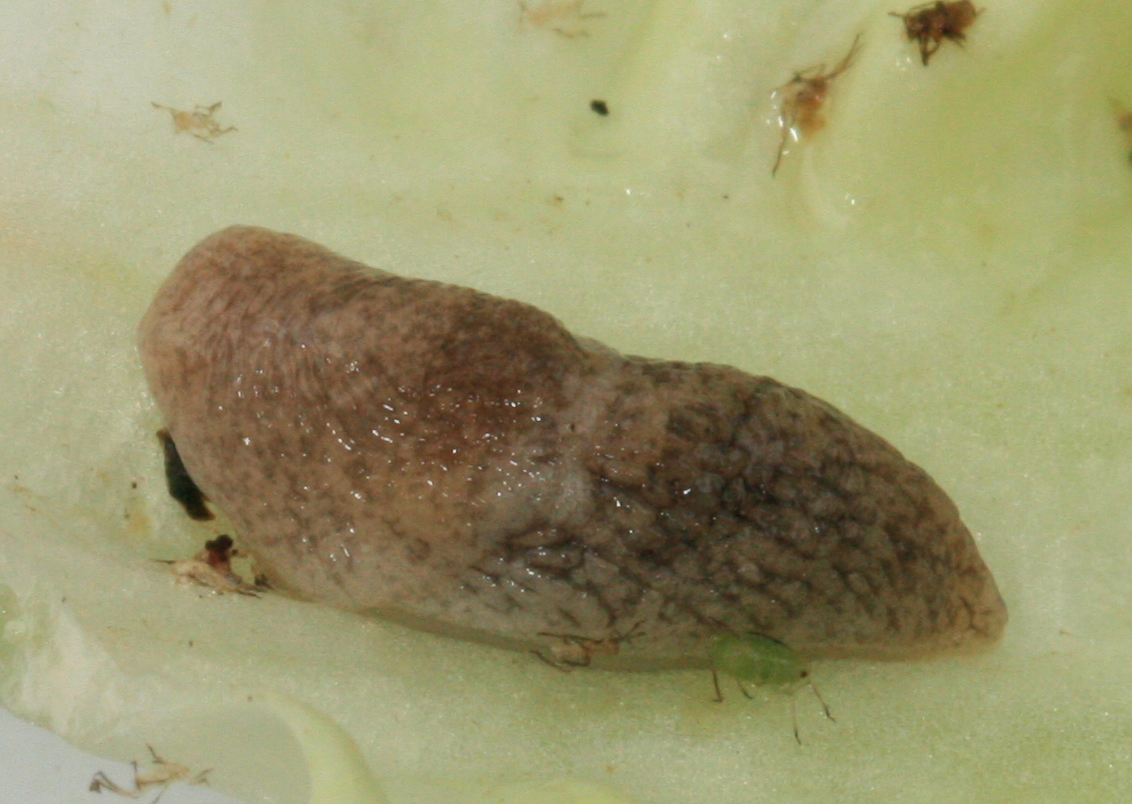
slug1cropAs an entomologist, I’m often asked, “How do you deal with (insert pest name here)?” What people really want to know is how they can kill said pest, so I usually give a two-part answer that goes something like, “Well, you can use (insert name of some agent of death), but what I do is…”

What I do is a reflection of my philosophy about humans’ place in the ecosystem, and how I believe we should treat fellow living things. If I had to boil it down to basic pest control strategies, it would be these:

1) Know thine enemy. Learn the life history and ecology of your pests. When do they emerge? How do they feed? How do they home in on your crops? Where do they overwinter? When you understand the pest, you can modify your garden to minimise trouble. For example, I’ve found that our aphids prefer green lettuce, so I plant mostly red ones, and get an extra month or more of pickings before the aphids get to them. I avoid cabbage white caterpillars by planting my broccoli as early as I can in spring. By the time the caterpillars infest the plants, they’re almost done giving anyway.

2) Don’t be squeamish. You can do everything right and still sometimes be overrun by pests. Before you reach for a bottle of some toxic brew, take the time to squish some bugs. Aphids are easily crushed with a swipe of the fingers along a leaf. Beetles make a satisfying pop when squeezed (Don’t try it with slugs, though—ick!) It’s amazing how easily you can knock pests back by hand, especially if you catch the infestation early. I apply the same principle to my vertebrate pests—though it’s more gruesome for me dealing with the bodies, a quick death in a trap is more humane than a slow death by poison. Also, don’t be shy about killing your beloved plants. If one plant is covered in pests, and the others aren’t, sometimes the best thing you can do is sacrifice the infested plant before the pests spread.

3) Share. You learned it in kindergarten, and it’s just as important in the garden. You are growing delicious food, and others will want some too. Be prepared to give a little, and accept that you will have some pests. In Panama, the farmers understood this. They planted three seeds in each hole—one for God, one for the pests, and one for themselves.

The Smell of Summer

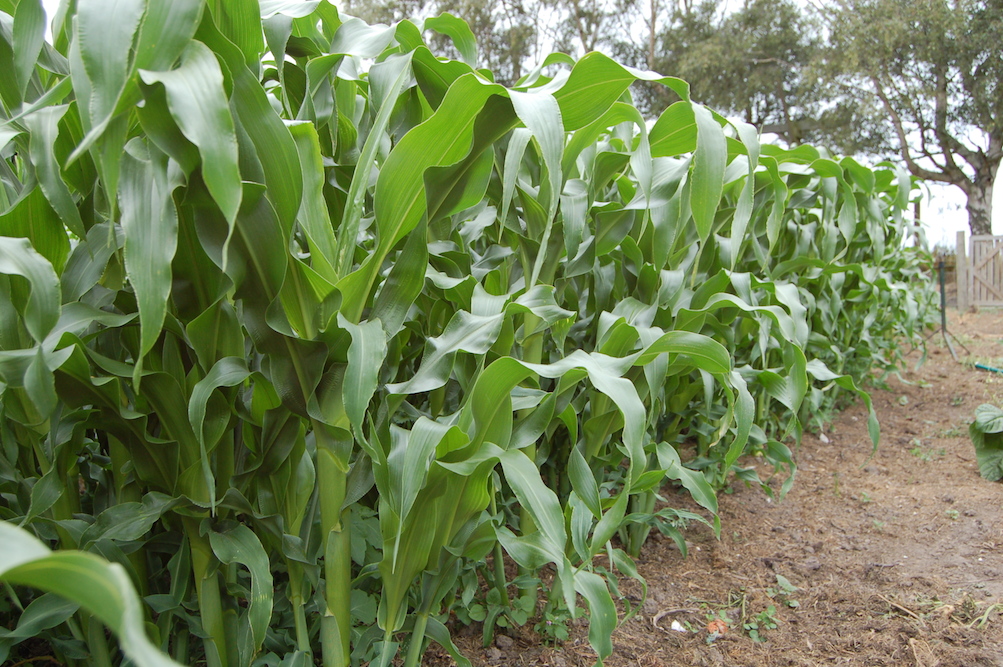
DSC_0021 copyThis time of year can be stressful, with birthdays, a new school year, endless vegetables that need to be picked and processed, milking to be done, and cheese to be made. By 8pm each day, when I’m finally getting out to pick vegetables, I’m exhausted and grumpy.

But the corn is flowering, and all I have to do is inhale deeply that unmistakable fragrance to be transported back to my childhood, catching fireflies in my nightgown in the back yard on hot summer nights. Stress and fatigue fade with every breath. Life is good and I am at peace. I could stand there inhaling that memory of childhood summers for hours. In fact, I sometimes sneak out there with my morning coffee, just to stand in the middle of the corn, breathing. It is the smell of hot summer days and humid nights, skinned knees, grasshoppers and cicadas, and wild games of tag among the corn rows. It is the smell of freedom from school, schedules, and other obligations. It is the smell of childhood wonder and possibilities. With every breath, some of that wonder, some of those possibilities become real again.

Cheating the system

Oyster mushrooms1smMy husband cheats. No, not in that way. He cheats to beat the unwritten rule of summer: if we didn’t grow it, we can’t have it.

In summertime, there is so much food coming out of the garden, we don’t allow ourselves to buy treats like mushrooms. All summer long, we eat like kings, but keep thinking, “Boy, this is great, but it would be even better with some mushrooms.”

But this year, we can have mushrooms without feeling guilty about not eating our own produce. A couple of months ago, Ian and the kids “planted” mushrooms.

Hanging in the pump shed, like sides of beef in the butcher’s back room is a row of plastic sleeves stuffed with straw, inoculated with oyster mushrooms. They require no weeding, no watering, no pruning. They don’t take up space in the vegetable garden. We just go out there and harvest beautiful mushrooms—feels like cheating.

Grilled, sautéed, stir fried…doesn’t matter how they are prepared, these delicious little fungi put the crowning touch on our summer menu.

Popcorn!

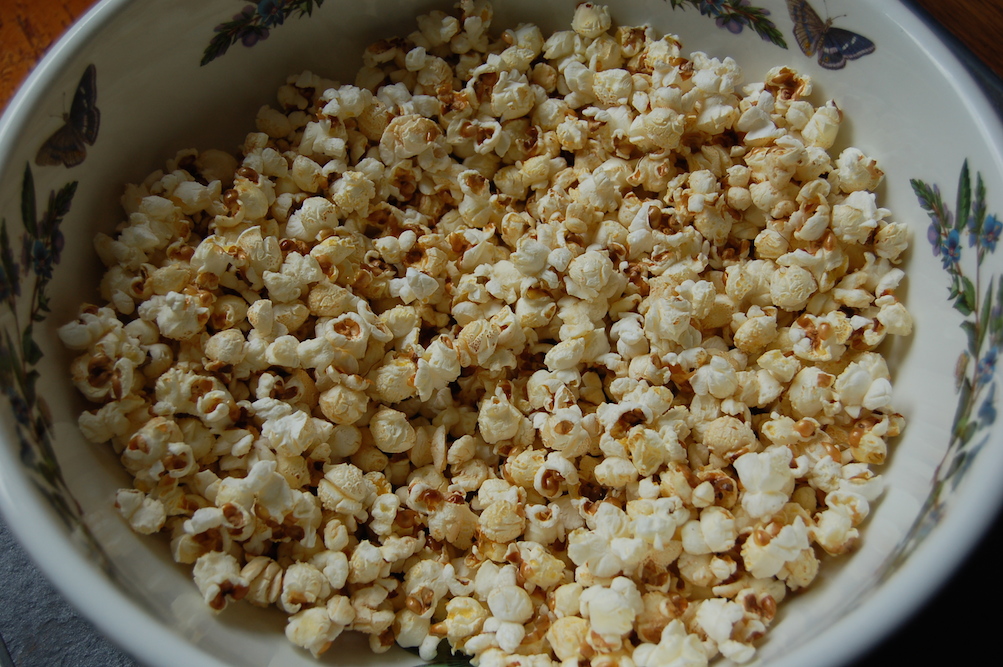
DSC_0034 smPopcorn makes any day special. Have you noticed that? Here at Crazy Corner, we make our popcorn the old fashioned way. First we plant the seeds. We water and weed. We wait and wait and wait. When the plants tassel, we ooh and aah over the beautiful burgundy silk. Then we wait and wait and wait some more. Long about April, the plants dry off, and we harvest the tiny, perfect ears of corn. We set them in the sun, letting the kernels dry, testing them regularly until they pop well.

The loose kernels sit in a jar in the kitchen waiting for a day like today. A day that needs something special. A bored kid, a game of Hunters and Gatherers, and a big bowl of popcorn.

We heat the oil in a glass lidded pot, so we can watch the action. A few minutes of popping and shaking the pan over the burner, a generous drizzle of melted butter, and a sprinkle of salt…and suddenly the blah afternoon sparkles a little.

Our home-grown popcorn isn’t the large-kernelled vapid stuff Orville Redenbacher sells. It’s one of many heirloom varieties. The dainty white puffs are flavourful enough they hardly need butter, and the texture is less like Styrofoam and more like a dry meringue. A real treat on any day!