Soy: The Asian/Pennsylvania Dutch Cultural Conundrum

soycropI grew up thinking soy beans were an ordinary garden vegetable. Every year, my mother planted soy from seeds purchased at the tiny general store in Mastersonville. It wasn’t until I was 21 and finally living in a “real” house on my own (not in the university dormitories) that I realised the rest of America didn’t even know what soy beans were. My attempts to find fresh soy beans in 1990 in Ann Arbor, Michigan failed. In fact, the only soy product I could find were “soy nuts”—roasted, salted soy beans—at a health food store. They were stale and mealy, and so hard they nearly broke my teeth.

It seemed that no one outside of Lancaster, Pennsylvania ate fresh soy beans as a vegetable. Everyone thought I was nuts. I started asking my mother to send me a packet of seeds every spring, from the store in Mastersonville.

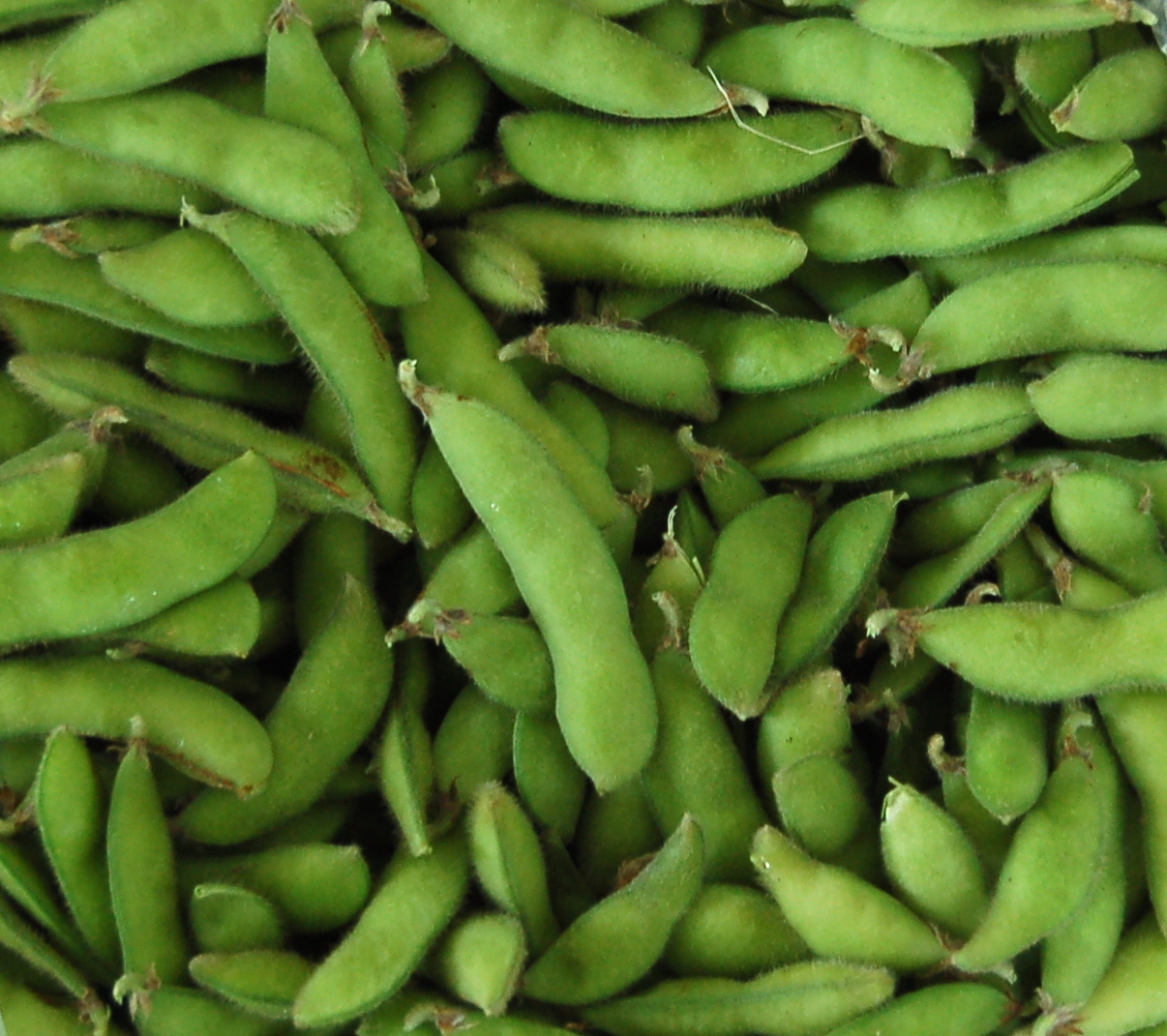
Many years later, I learned about Japanese edamame and recognised it as the fresh soy beans of my youth. Fresh soy beans have been eaten since at least the 1200s in China, Japan and other Asian countries, and are apparently popular bar food in Japan, served steamed and salted in the pod to be snacked on alongside your beer.

Soy beans arrived in the American Colonies in 1765, but were mostly used as a forage crop. When and why the people in south eastern Pennsylvania began to eat fresh soy is unclear. And why no one else in America did is even more unclear, since soy’s sweet, nutty flavour beats the socks off of other beans Americans commonly eat fresh (I’m thinking about those mealy lima beans…).

Soy beans as garden vegetable only arrived in New Zealand in the past 6 years or so. I was unable to get seeds when we first arrived, and when I first contacted an Asian seed supplier to enquire about them, I was told they were still building up their stock, and couldn’t sell them yet.

Even now, though I can get soy bean seeds, I have been unable to locate the appropriate bacterial inoculant for them, and they grow poorly here. Still, I grow them–my garden feels incomplete without them. However it came to be, I feel a cultural connection to soy beans—that Asian/Pennsylvania Dutch fusion food. Go figure.
Come out and play

DSC_0001smSometimes

Words do not want

To come out and play.

They stick

Somewhere

Behind my eyes.

Behind the pounding in my head.

Foiled by

My son’s maths homework

(to be checked by a parent)

My daughter’s permission slip

That needs signing.

Confined by

The clock ticking on the wall.


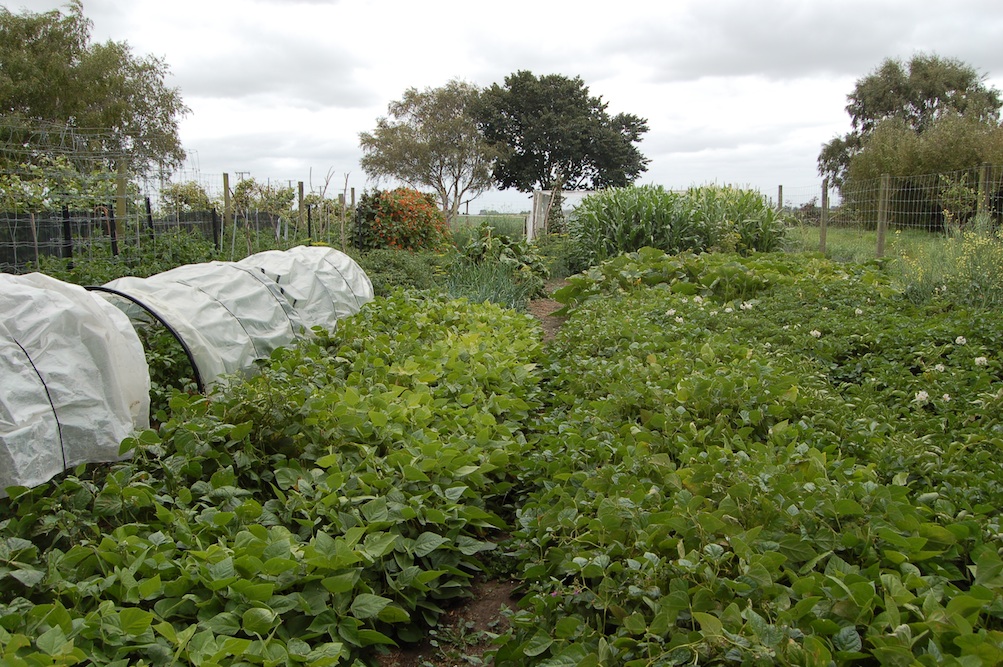
So I take the words outdoors

To the garden,

To feel the rain and wind.

I let them get dirty.

I let them pick vegetables

And contemplate a spicy curry.


After dinner,

Fed and rested,

Perhaps

They will creep out

Cautiously

To frolic on the page.

City Mouse, Country Mouse

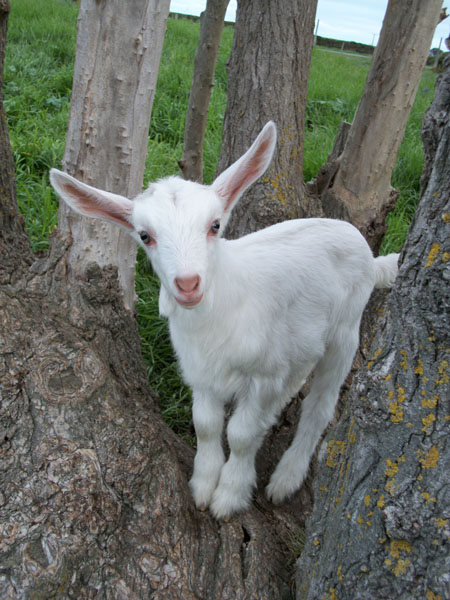
See a beautiful goat kid? Beauty belies the truth: manually pulled from her mother, bottle fed because she was two weak to stand, then put down at 3 months old because of an injury.

See a beautiful goat kid? Beauty belies the truth: manually pulled from her mother, bottle fed because she was too weak to stand, then put down at 3 months old because of an injury.

I glanced down at my shirt as I got out of the car. Damn. Frayed on the hem, and stained with something dark—blood, probably. I sighed. Once again I would be the worst dressed parent at school—the country mouse among city mice.

It was easy when the kids were at the local rural school. Most of the parents showed up in manure-splattered gumboots and dirty coveralls there. But now that the kids are at school in the city, I feel a vast cultural divide between myself and the other parents.

They walk in wearing impeccable make-up, high heels, and dry clean-only clothes. They sport jewellery and labour-intensive hairstyles. Meanwhile, I’ve thrown on my least decrepit pair of blue jeans, hiking boots, and a t-shirt of dubious cleanliness. If I’m lucky, I’ve combed the hay out of my hair.

When these city parents find out I live on a lifestyle block in the country, they wax lyrical about how someday they want to live “the good life” in the country. I look at them dubiously. Those high heels wouldn’t work well in a muddy paddock. If they persist, I describe for them my daily routine, beginning at 5 most mornings. I enumerate the hours of hard labour in the garden, the DIY vetting (not for the faint of heart) that comes with owning livestock, the never ending struggle to maintain a rotting 125 year-old house.

It’s worse when city folk come to visit. Of course, other than at kidding time (see Worst Hostess of the Year), when visitors arrive, work stops. We make sure the garden is weeded, the grass trim, and the usual mess of half-finished projects is cleaned up before visitors come. We serve the fruits of our labour—homemade cheeses, fresh fruit and vegetables. We relax with a glass of wine. Visitors get the impression it is always like this.

The truth is much dirtier and sweatier, and it’s visible in our clothing. No matter how careful I am, eventually I find myself trimming hooves, treating an abscess, or tying up tomatoes in my “city” clothes. I sweat every day. I am regularly splattered with blood—my own or a goat’s. None of my shoes is reliably without manure on the soles.

So while the city folk see only the romance of rural subsistence farming, we live the reality. Are there moments of romance? Yes. In the silence of early morning milking. In the evening strolls around the property, when the day’s work is done. In the daily sweep through the vegetable garden to pick dinner. In the frolicking play of goat kids in the paddock. But it takes long, hard work to create those moments of romance, and the romance probably isn’t worth it unless you also enjoy the work. And, of course, if you don’t mind being the worst dressed parent at school.

The French Potager

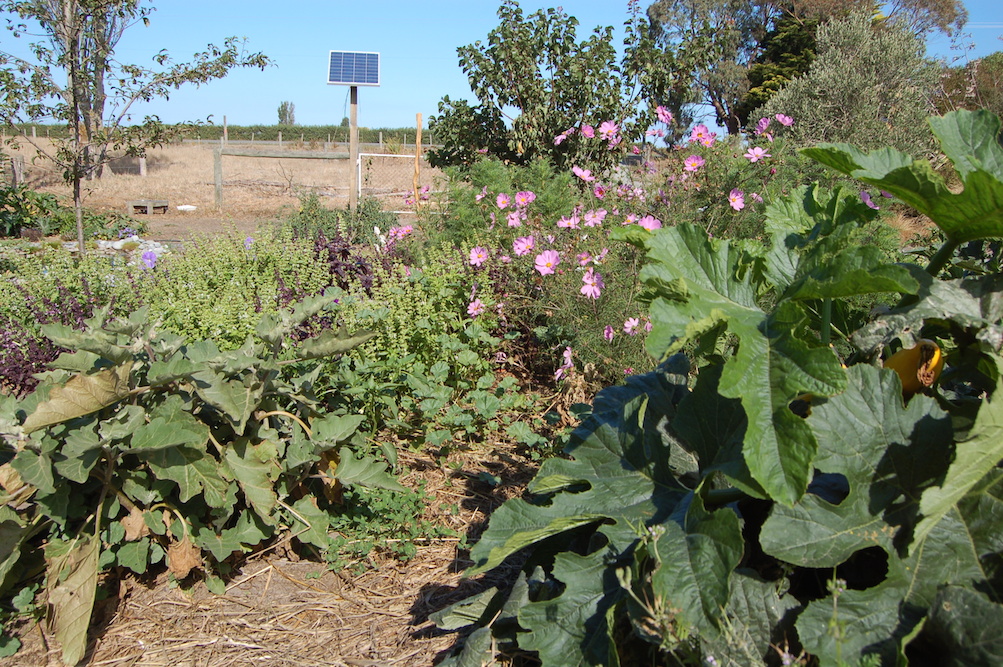
Zucchini, eggplant, basil and cosmos nestle happily together.

Zucchini, eggplant, basil and cosmos nestle happily together.

I love the idea of the French potager—the small garden densely planted with a mix of flowers, herbs, and vegetables. When we lived in St. Paul, Minnesota with a yard the size of a postage stamp, we had a delightful potager in raised beds near the house, and flowing down rocky terraces to the sidewalk. Showy okra flowers competed with cosmos and marigolds for the most beautiful plant award. Eggplants nestled next to thyme, corn formed a backdrop for zinnias, and colourful lettuces marched in a neat border around the whole arrangement.

Now that we have more than enough space, the vegetables are segregated and confined to the vegetable garden, where I can be sure they are well watered and mulched, and I don’t worry about a few spent, ugly plants hanging around. I’ve also found that here in the land of pernicious twitch (couch grass), planting perennials and annuals together is usually a recipe for disaster—annuals don’t compete well with twitch, and the perennials harbour fragments of twitch among their roots, providing an endless source of the weed.

But this spring, Ian was looking for temporary plantings for his new pond garden—plants he wouldn’t mind killing off along with the weeds in the fall when he plants the perennials he wants there. He picked up a few flats of annual flowers, took all my leftover vegetable plants, and created a delightful potager bursting with colour, fragrance and flavour. It’s a lovely reminder that you don’t need a “vegetable garden” to grow food, and that vegetable plants are beautiful, too.

The Caprine Composter


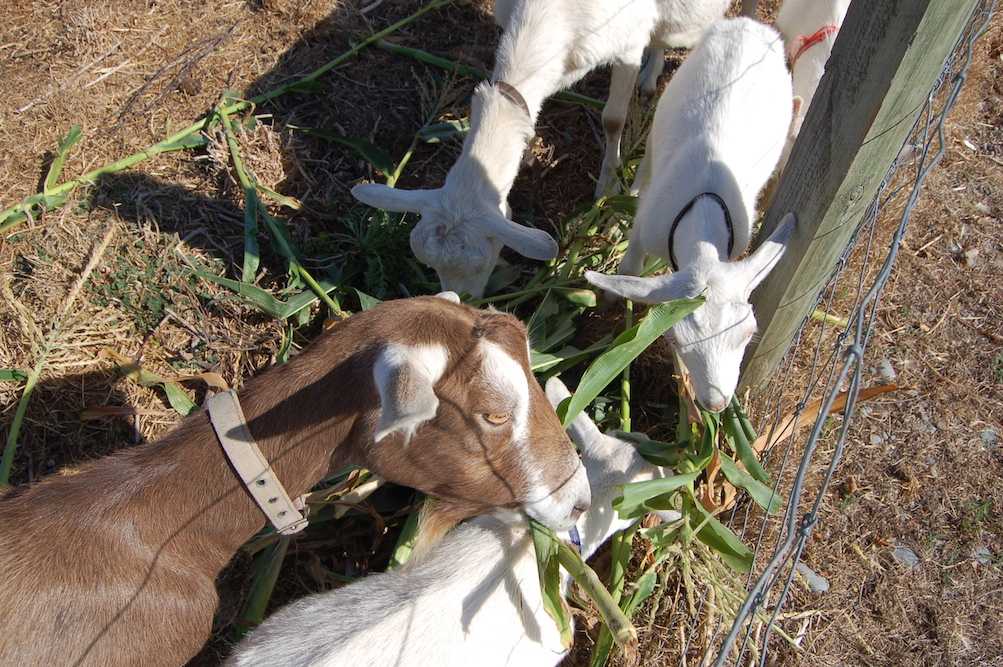
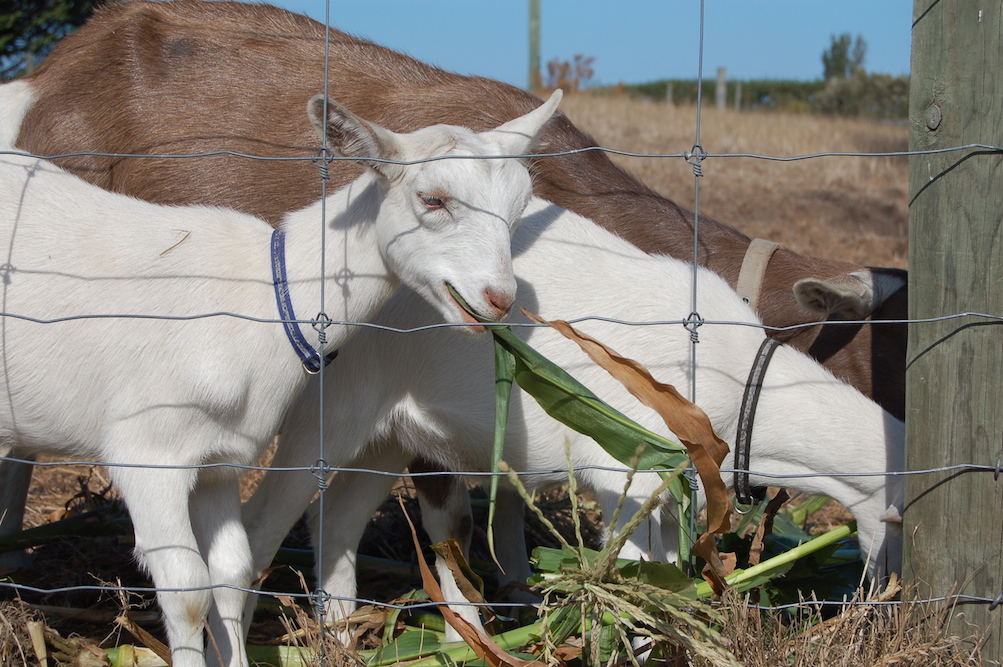
Caprine Composters at work on tough corn stalks.

Caprine Composters at work on tough corn stalks.

There are dozens of ways to compost. There are barrels that rotate, rocket-shaped bins with handy doors on the bottom for extracting the finished compost, clever bokashi buckets, and worm bins. Then, of course, there are the non-commercial composting systems like sheet or pit composting, and my personal favourite, throw-it-in-a-pile-and-ignore-it composting.

None of these systems works well for large, woody items, though—small branches, corn stalks and the like. These things linger (or don’t even fit) in most composting systems.

For these woody items, I prefer the Caprine Composting System. This effective and efficient composter takes large woody plant material, and reduces it to convenient, pelletised fertiliser in just 24 hours. No tedious chopping and waiting on your part, just throw it over the fence, and the Caprine Composter does the rest!

Bonus! The Caprine Composter is adorable, too!

Bonus! The Caprine Composter is adorable, too!

Comes in fashionable and discrete colours like white, brown and black. No assembly required.

Caution! The Caprine composter is highly efficient, and can compost valuable trees, shrubs, and other plants if not properly operated and restrained. Read all instructions before operation. Use with care!


The Harvest Hangover

The morning after

The morning after

I woke this morning with a headache. It was one I recognised—the Harvest Hangover. It’s a combination of fatigue and dehydration that comes after a day of picking and preserving vegetables.

Back in the years B.C. (Before Children), I used to lose 10 pounds during harvest season. I’d forget to eat and drink as I picked and processed mountains of tomatoes, zucchini, eggplant, beans, etc. Ironic, eh? After a night of canning, I’d wake with a Harvest Hangover. I’d stumble to work grumpy and groggy, as though I’d been out carousing all night.

As I age, I’m more moderate in my preserving. Instead of weeks of late-night canning sessions, I do two or three a year. It helps that I can’t grow the quantity of tomatoes I used to during the hot summers in Pennsylvania, but I’ve also rationalised my preserving. Here, where winters are mild, I can grow cool-weather crops year round, so winters aren’t the fresh vegetable desert they are in a harsher climate. If I don’t have 50 quarts of tomatoes in the cupboard for winter, it doesn’t matter—we can eat something else instead. I preserve only what I know we’ll eat, so I’m not throwing away old canned goods every summer. I’ve learned to better manage my planting so that I’m not completely overwhelmed with any one crop (usually). And I allow myself to simply give away extra produce when I am overwhelmed.

Perhaps it’s a sign of aging that I don’t wake with Harvest Hangovers very often any more, but I like to think of it as a sign of wisdom. As they say, know your limits!

Summer Soup

There’s no set recipe, but this year it went something like this…

After a hearty breakfast, assemble the family. Equip half with knives and cutting boards in the kitchen. Send the other half to the garden with buckets, colanders and knives to pick vegetables and ferry them in to the cutting crew. Pick and chop the following:

1 head garlicDSC_0027 copy

12 ears sweet corn

7 onions

8 sweet peppers

8 jalapeño peppers

5 Thai hot peppers

3 large beets

12 carrots

3 cups fresh shelled soy beans

8 stalks celery

8 quarts tomato

10 bay leaves

3 cups herbs (basil, parsley, rosemary)

8 cups green beans

12 small boiling potatoes

5 medium zucchini

5 oyster mushrooms

As you chop, put all the good stems, peels, and over mature vegetables into a pot. Top with water and put on a back burner to simmer for stock.

Take a break for lunch, then send the kids outside to play.

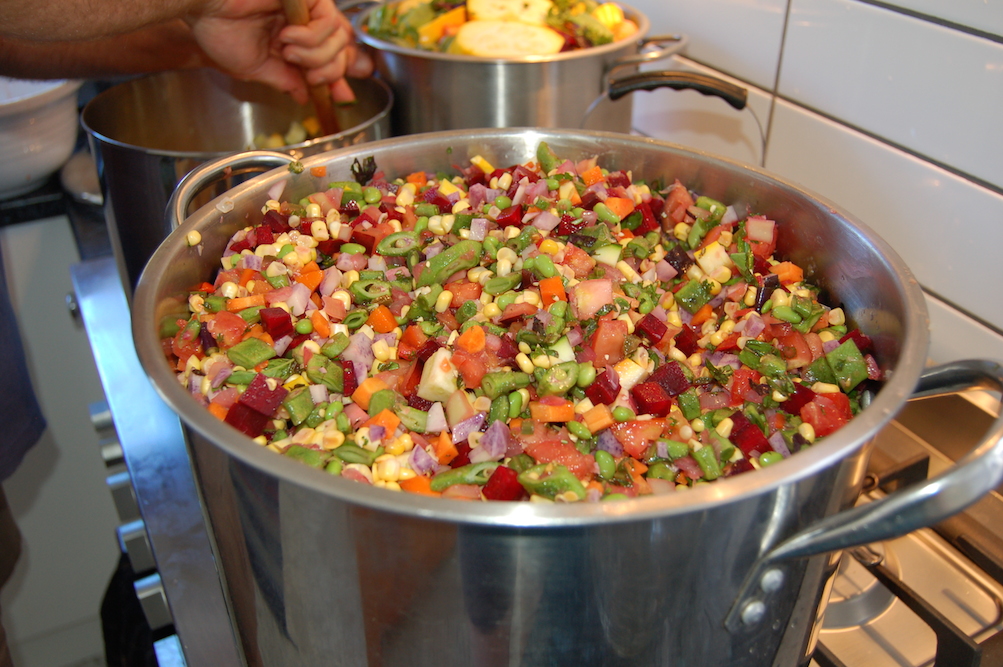
DSC_0035 copyIn an enormous pot, sauté onion, peppers and celery until onion is translucent. Add garlic and cook another couple of minutes. Add remaining ingredients and enough water to call it soup. Bring to a boil. Meanwhile, prepare 24 quart jars and the pressure canner.

Separate off enough soup for dinner. Boil the rest 5 minutes.

Send your husband outside to play.

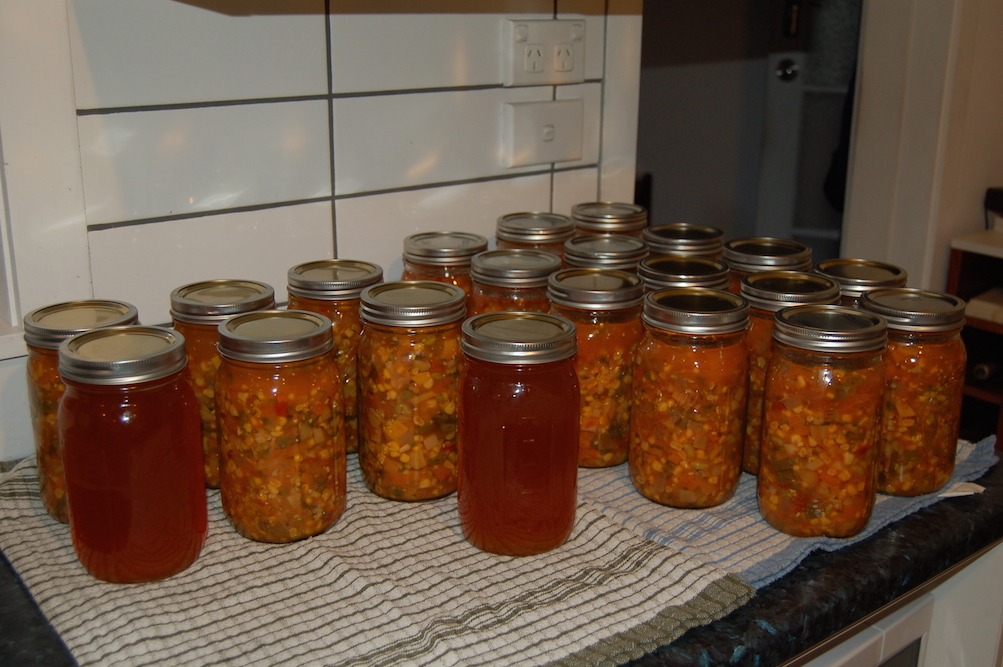
Pressure can the remaining soup. Strain the stock and can it, alongside the soup. Plan on 4 canner loads. While the third batch is in the canner, reheat the soup for dinner.

Sit down to soup for dinner, but don’t forget to keep an eye on the canner.

While the last batch is processing, pour a glass of wine, and blog.

Almost done...just a few more jars in the canner.

Almost done…just a few more jars in the canner.

Pull the last batch out of the canner at 9.30 pm.

Go to bed and dream of all the wonderful canned summertime lined up in jars in the kitchen, waiting for those dark winter days when everyone comes home late and hungry.


Changing Perspectives

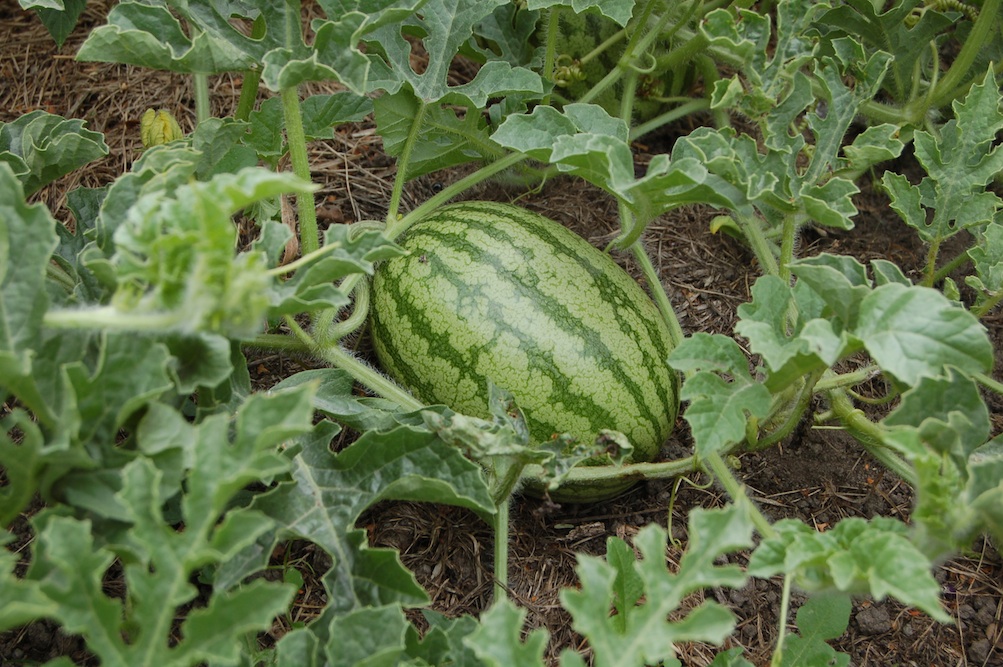
DSC_0019smWhen I first mentioned to a neighbour years ago that we were enjoying home grown watermelon, she was incredulous.

“Watermelon!? In Canterbury?!”

It’s true, melons are a hit-and-miss crop here. Summers are just too cold for these heat-loving plants. My first attempts were mediocre at best—we were lucky to get anything before frost killed the plants. Year after year, they failed. Since then, I’ve learned to start my seeds early in a heated room, and let the plants get nice and big before putting them out. They never go out into the garden until the end of November, and I try to tuck them into one of the more sheltered beds so they don’t have to deal with cold winds. With a bit of coddling, they do reasonably well.

Reasonably well for Canterbury, New Zealand, that is.

My standards for melons have changed dramatically in the last decade. If I were still gardening in North America, I would be sorely disappointed in my melon crop. The fruits are small and few—no giant rattlesnake watermelons or big fat cantaloupes here! Only the most rapidly maturing varieties give at all, and even on these varieties, most fruits don’t make it to maturity before the growing season ends.

But the few, small melons we do get are incredibly sweet and juicy. Even more so, because we shouldn’t be able to grow them at all here. Each one is a blessing and a marvel.

The Price of Food

DSC_0022I went for groceries today. Because of other errands, I ended up at a different store than usual—a more upscale store. I wasn’t surprised, but I was appalled at how much I spent on my normal shopping run. It got me thinking about what I spend on food, both in cash and in time. I did a few back-of-the-envelope calculations, and found that I spend about $5,500 per year on food I don’t grow myself. I then calculated that I spend 980 hours per year producing food (not counting cooking). At my professional charge out rate, that’s nearly $69,000 of my time. I never grumble about how much time I spend on gardening, yet in cash value, I spend twelve times more in the garden than I do in the grocery store.

Why do I not mind spending a fortune in the garden? I value local food, self-sufficiency, and quality ingredients. Paying more at the store might get you more local food, but it doesn’t guarantee higher quality, and leaves you just as dependant on others for food. But spending more time in the garden provides high quality local produce, and doesn’t rely on an uninterrupted supply chain. Besides, who wouldn’t rather be in the garden than in the grocery store? So I’m willing to pay a little more in order to “shop” in the garden.