Repeating Myself

2016-10-01-16-25-02-hdrThree quarters of the way through the second year of daily blogging, I begin to feel that I’m repeating myself. Yesterday I took a couple of photos of the beautiful asparagus coming up in the garden, and was all set to blog about it. But when I looked at the photo, I realised I blogged about asparagus last year. I did the same with artichokes last week.

Which is, of course, one of the joys of gardening. There is a rhythm to it. Its seasonality is guaranteed. Spring always follows winter, and spring brings asparagus and artichokes, lettuce and spinach, daffodils and tulips. Spring will eventually mature into summer, with eggplant, peppers, and zucchini. Summer will fade to autumn pumpkins and the last ears of sweet corn. And winter will bring cabbages and broccoli, and an excuse to stay indoors and bake cookies.

There is uncertainty, of course—there are hail storms, drought, and pests—but the fundamental rhythm is the same from year to year.

There is comfort in that. Though it means I may repeat myself from time to time on the blog, it is something I can count on. Life changes from day to day—the kids grow up, jobs change, we may move half way across the world—nothing is certain. But I always know where I stand in the seasons—always changing, but always predictable.
 

Ruthless

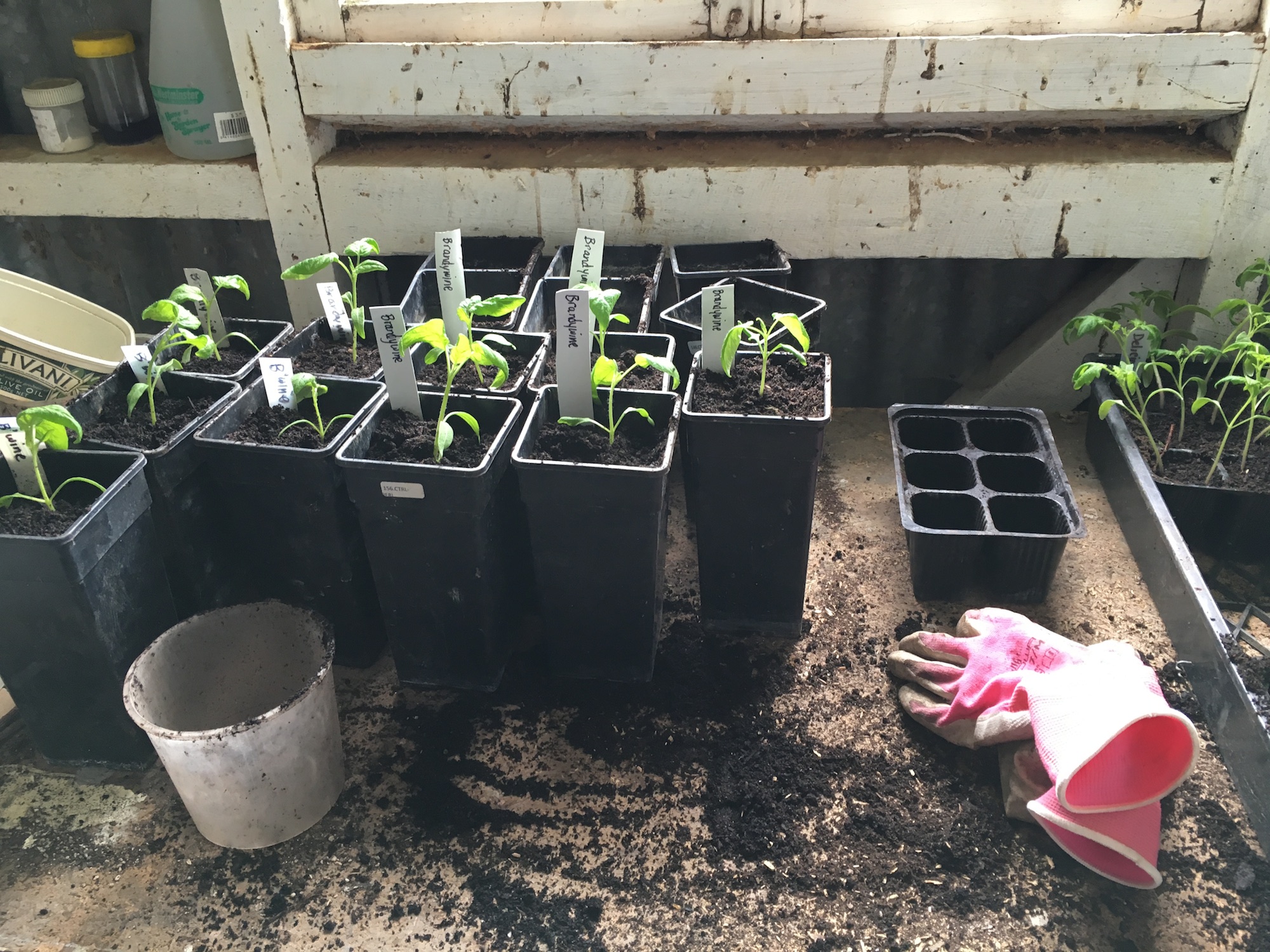
2016-09-26-14-21-42I started potting up the tomatoes today.

I start my tomatoes in six-packs (the plant kind, not the beer kind), planting two seeds per cell, to ensure I get at least six plants out of each six-pack. And truth is that I probably only need six plants out of each six-pack. Having two plants in a cell gives me the opportunity to cull small or weak plants.

Except that, faced with two perfectly fine plants in a cell, I can’t possibly cull one, so I pot them both up separately. I’m just not very good at being ruthless and culling the plants I don’t need.

Which is how I end up, every year, with nearly twice as many tomatoes as I have space for in the garden. I give away quite a few, and always save some to replace the ones that are inevitably killed by a late frost or the neighbour’s overspray. Still, some years I end up throwing a dozen or more on the compost pile after they’ve languished in their pots unplanted until nearly Christmas.

This year, I purposely planted fewer six-packs than I usually do—if the plants aren’t there, I can’t pot up too many, right? But somehow, I still find myself with over a hundred tomato plants. That’s much better than previous years—I have space for 80 tomato plants—but it’s still probably more than I’ll use, even after losses.

With luck, though, I’ll be able to find homes for all the tomatoes, either here or in someone else’s vegetable garden, and I can avoid the annual cull.

Beetsteak

beetsteakI was clearing a garden bed today and pulled out a beet—forgotten in the masses of summer produce—left from last year’s garden. It was the size of an adult’s head, with dozens of sprouts coming from it.

I decided to take it to the goats, who love beetroot. On the way, I showed it to the family—it was impressive, after all.

My husband wouldn’t let me feed it to the goats. He was curious to know just how woody a beet that size would be.

So he made beetsteaks. He used our big pumpkin knife to slice it into giant slabs, then steamed them and grilled them with a spicy marinade.

The result…

Edible…mostly.

But I think I’ll feed any other beets this size to the goats next time.

Order from Chaos

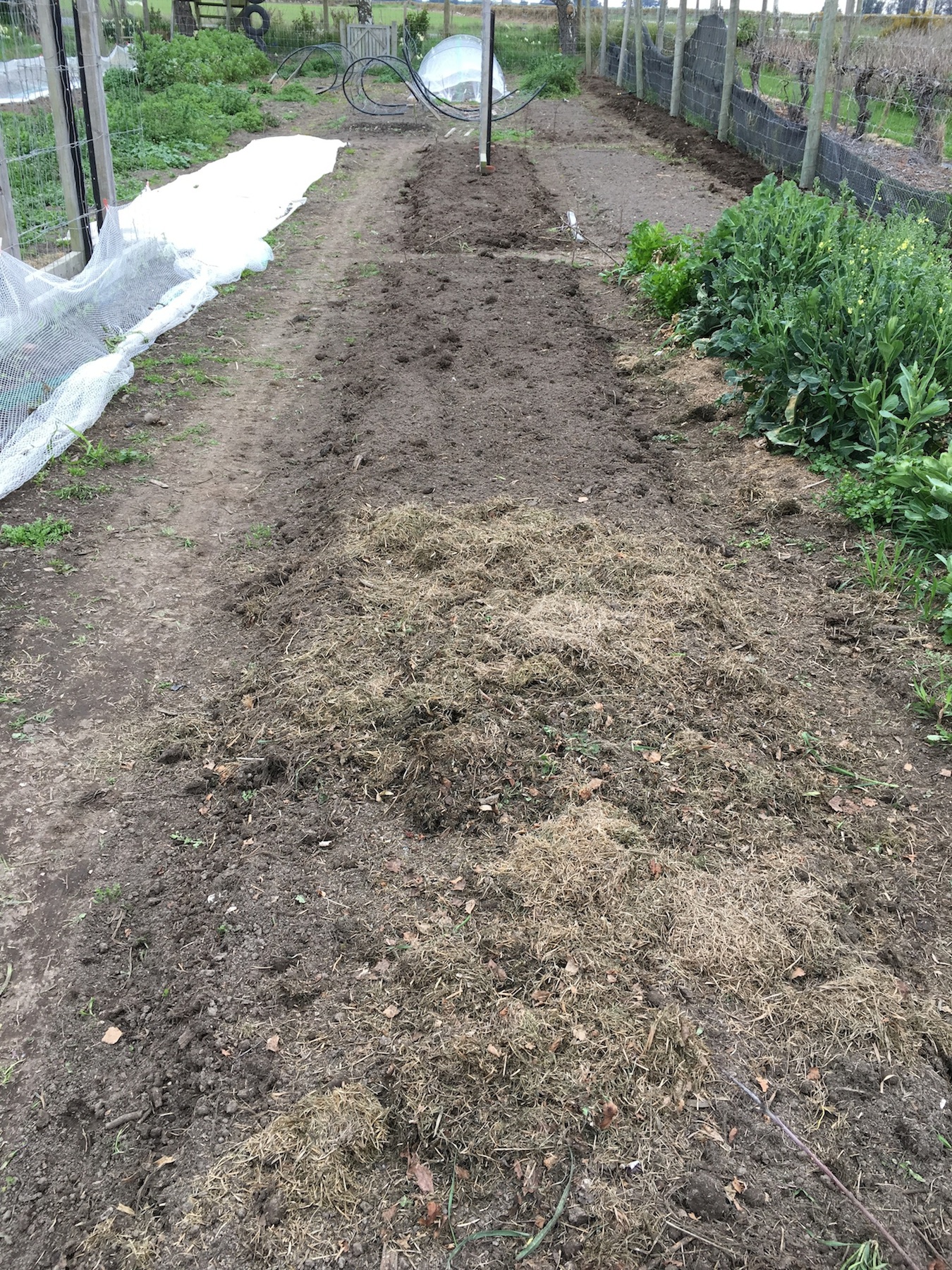
2016-09-24-15-04-00There’s something pleasing about the garden as I start to prepare the beds. I can’t prepare the whole garden at once—it’s simply too big—so I do it bed by bed. Two or four a weekend, until all thirty-two are done.

I’ve planned the garden over winter, so I know what will be planted in each bed. I choose which beds to prepare each weekend based on when each crop gets planted. So I end up with a patchwork of beds—some waist-high in weeds, others beautifully prepared and ready for planting, some already planted. Every weekend, the weeds are fewer and the tidy beds more numerous.

Little by little the work gets done, the garden gets planted, until that magical day in mid-November when it’s all done, and neat rows have replaced sprawling weeds.


North African Salted Lemons

Salty lemons and sweet lemon curd...mmmmm.

Salty lemons and sweet lemon curd…mmmmm.

My husband brought home a grocery bag full of lemons yesterday—a gift from a colleague with a prolific lemon tree.

When life gives you this many lemons, you have to be more creative than lemonade.

The first thing I did was make lemon curd, which is one of my favourite uses of lemon.

But when I was done with that, you couldn’t tell I’d taken any lemons out of the bag.

So I searched around and found a few recipes for salt-preserved lemons.

I was intrigued. We’ve been using more and more lemon in our savoury cooking, and salted lemons should be perfect for that.

It is perhaps the most bizarre recipe I’ve ever made.

Cut the lemons lengthwise into quarters, but not all the way through, so they fan out like a flower. Sprinkle salt on the fanned quarters, then juice them before stuffing the juiced lemon into a jar and pouring the salty lemon juice over it. Repeat with as many lemons as will fit in the jar. Let sit in a warm place for a month, then store in the fridge for up to a year, pulling out lemons as needed.

I’m very curious how they taste, and how we will end up using them.

And now I’m on to baking lemon cake and lemon scones, because I still have half a bag of lemons left…

Sprouts

2016-09-18-09-18-09It had been years since I grew sprouts. There wasn’t really a reason for my neglect of these easy-to-grow vegetables. I just didn’t do it.

But I was inspired by a poor winter garden and a glossy seed catalogue to try sprouts again. I ordered alfalfa and radishes for sprouting.

The alfalfa is what I remembered—earthy, a bit grassy. Good on a sandwich.

The radishes? They are fabulous! In a salad, on a sandwich, or in a stir-fry they add a crunchy zing. Just like…well…radishes, except they’re ready to eat in a week, and require no cleaning or slicing.

I’m sold. I’m sure, when the spring vegetables start to come in, I’ll forget all about sprouts, but for the moment, I’m making sure we have a regular supply of them.

A List of Garden Don’ts

2016-01-16 17.22.14 HDR smAs I head into spring, I always try to bear in mind my list of garden don’ts…

  1. Don’t put the compost pile next to the greenhouse. The rats and mice go straight from the compost to the greenhouse, where they devour everything in sight.
  2. Don’t plant so many zucchinis. No. I mean it. One zucchini plant can feed a small village. Just don’t do it.
  3. Don’t put the pumpkins near a path. You don’t need to do anything to them until long after all the other crops are finished, so tuck them away from heavy traffic areas. Otherwise, they’ll take over your paths. Same goes for potatoes, melons, and broad beans.
  4. Don’t take zucchini to every social function you attend. See point number 2. Even your friends can’t eat all that zucchini.
  5. Don’t plant corn where it will shade the tomatoes.
  6. Don’t freeze your extra zucchini. See point number 2. If you must freeze zucchini, grate it first, and don’t freeze more than what you can use in two batches of zucchini bread.
  7. Don’t plant horseradish. Anywhere. For any reason. It’s fine if you love horseradish. But don’t plant it. Get it from a friend who made the mistake of planting horseradish once ten years ago.
  8. Don’t save extra zucchini in the fridge. See point number 2. There will be more tomorrow, and you won’t eat the ones in the fridge. Get a pig or goat instead and feed the zucchini to it.
  9. Don’t water before you weed. It makes for unpleasant working conditions.
  10. Don’t worry. Your local food bank probably accepts zucchini.

Captive

100_3654 smThe siren song of spring has taken me outdoors
Against my will…
Or not.

And so, I will not write today
I am in the garden.

I will not post a blog
I am weeding the strawberries.

I will not sweep the floors or clean the bathroom
I am turning soil.

I am unlikely, even
To worry about what to cook for dinner
Until it is too late to do anything
But the simplest meal.

I am in the clutches of sunshine
Lured away by birdsong
Captured by the earth.

Happy Spring!

I don’t need the calendar to tell me it’s spring. I know it’s spring because…

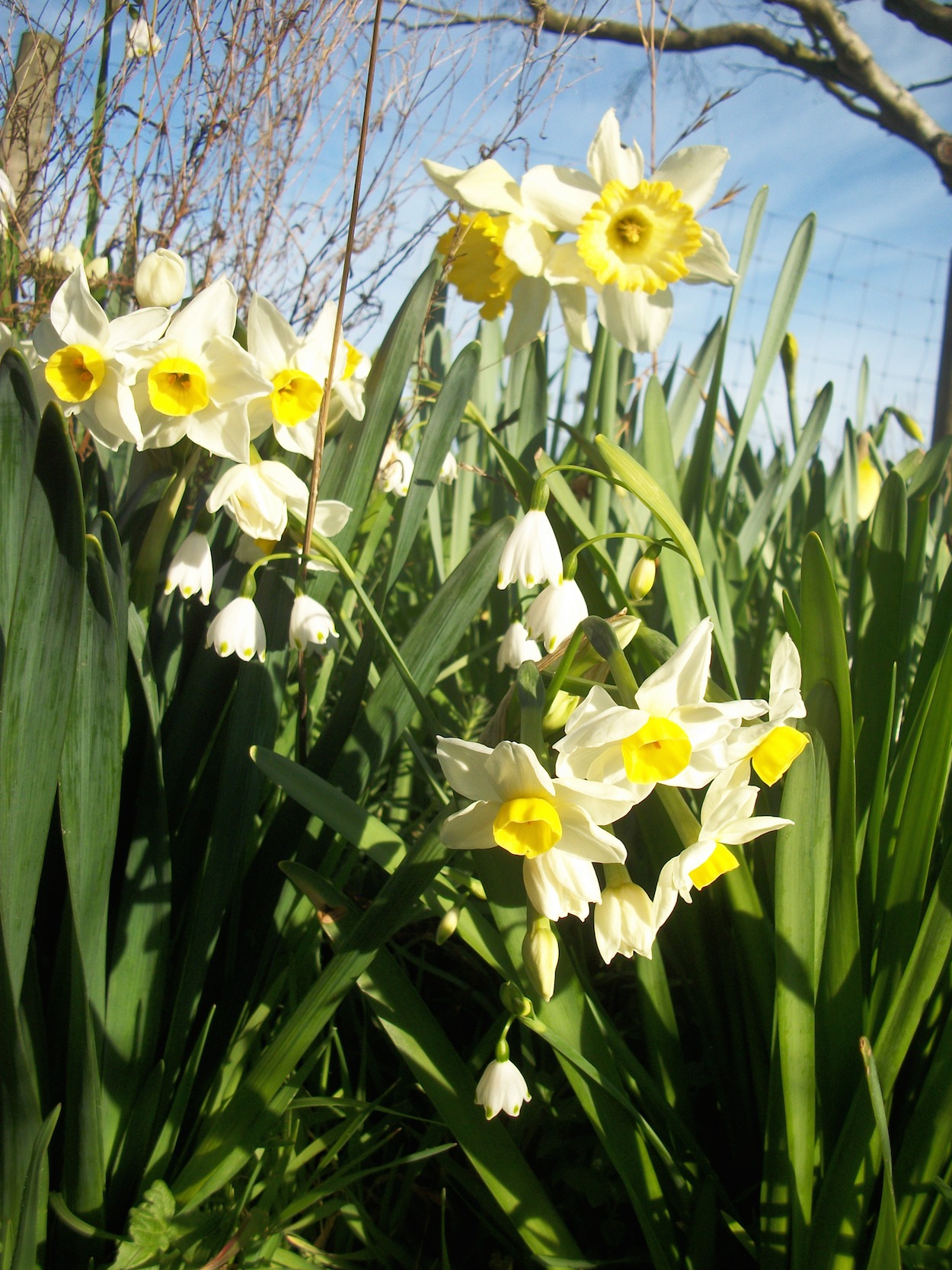
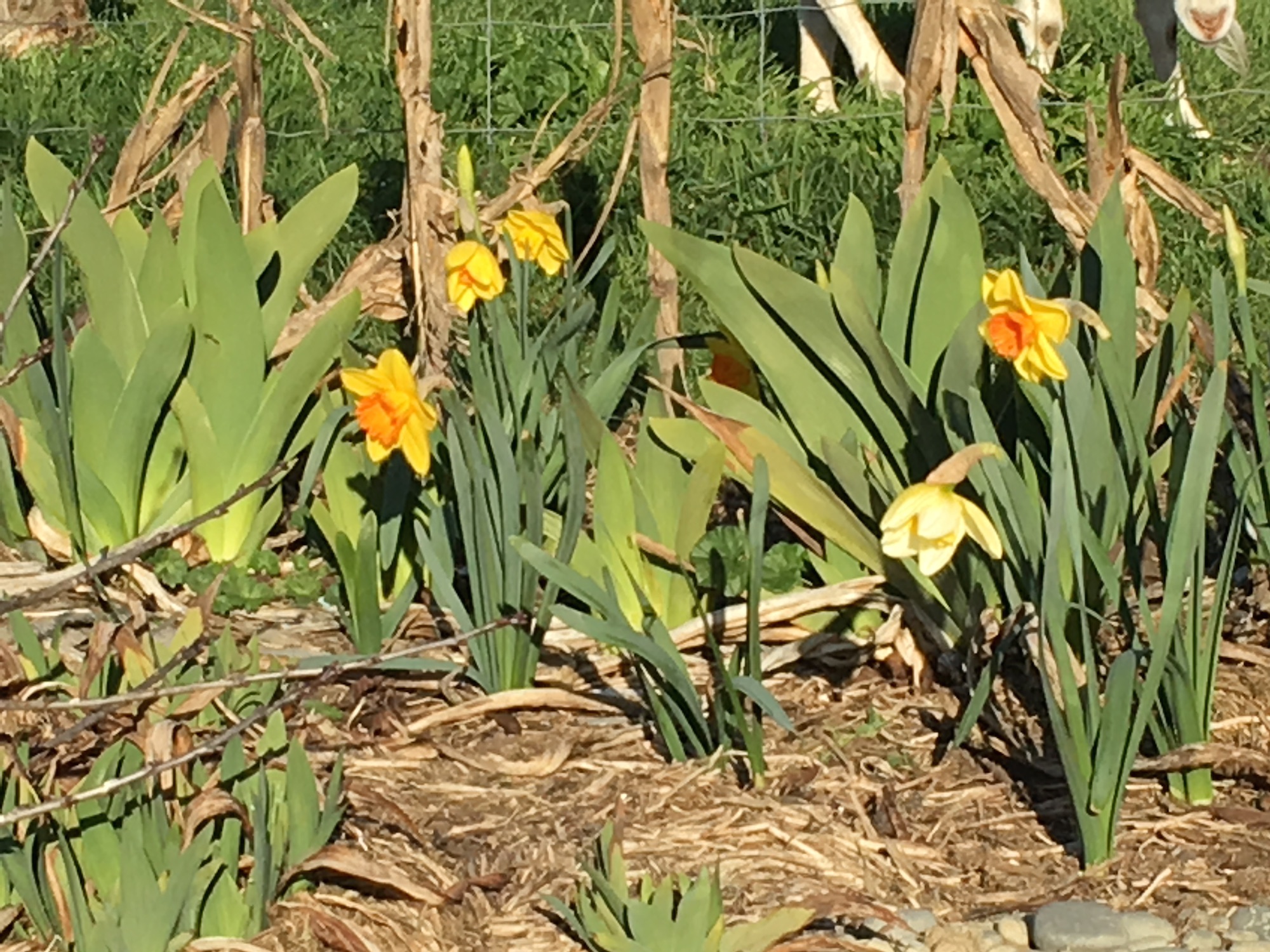
The daffodils are blooming.

The daffodils are blooming.

The office is full of plants.

The office is full of plants.

The fruit trees are budding up.

The fruit trees are budding up.

Artichokes!

Artichokes!

The grass needs mowing.

The grass needs mowing.

The weeds are out of control.

The weeds are out of control.

The wind blows hard from the northwest.

The wind blows hard from the northwest.

The dandelions are blooming.

The dandelions are blooming.

When Summer Meets Winter

2016-08-21 10.36.07Early spring is an awkward time in my office. The office is used, not just for work, but also for sewing, crafts, and as a heated greenhouse.

In springtime, it can get awfully crowded in there.

I do a lot of sewing over winter, when the garden doesn’t demand so much of my time, and it’s not particularly pleasant outside. In summer, I do almost none—I have little free time, and my hands are so garden-rough that working with fabric is a lesson in frustration.

But in springtime, the two often overlap. My winter sewing list is always longer than I have time for, and I try to squeeze as many projects in as possible before I run out of time. That means I’m usually still frantically trying to finish the last project when it’s time to start vegetable seeds. The plant shelves go into the office and are filled with seedling trays while the sewing machine and iron are still set up.

It’s crowded, fabric invariably gets dirty, pins and scissors end up getting dropped on fragile seedlings.

Some day, maybe I’ll have a dedicated, heated greenhouse so that sewing and gardening can be separate. Until then, winter will rub shoulders with summer for a few weeks every year.