Fruity Experiments

The freezer is packed with early summer fruits—raspberries, gooseberries, red currants, and black currants. Seriously, if we don’t make a good effort to eat it, we’ll still have fruit left when summer rolls around again.

Black currant scones before baking–colour unusual, but okay…

So I’ve been experimenting with new and interesting ways to incorporate fruit into baked goods.

Two weeks ago I made a cookie bar that is supposed to be filled with chocolate fudge. I filled it with black currant puree instead, making a wonderful tart-sweet flavour bomb.

There was thawed black currant puree left over from the bars, so for Sunday breakfast I took my favourite lemon barley scone recipe (which I’ll have to blog about someday …) and substituted black currant puree for the liquid ingredients. The results were … mixed.

The flavour was good, but of course I love black currant, so I expected that. The colour, on the other hand, was more of a conversation piece than a bonus—dingy purple. The scones didn’t rise as well as they usually do either, and the texture was heavier than I would have liked.

So I’d say the scone experiment was inconclusive and needs more testing.
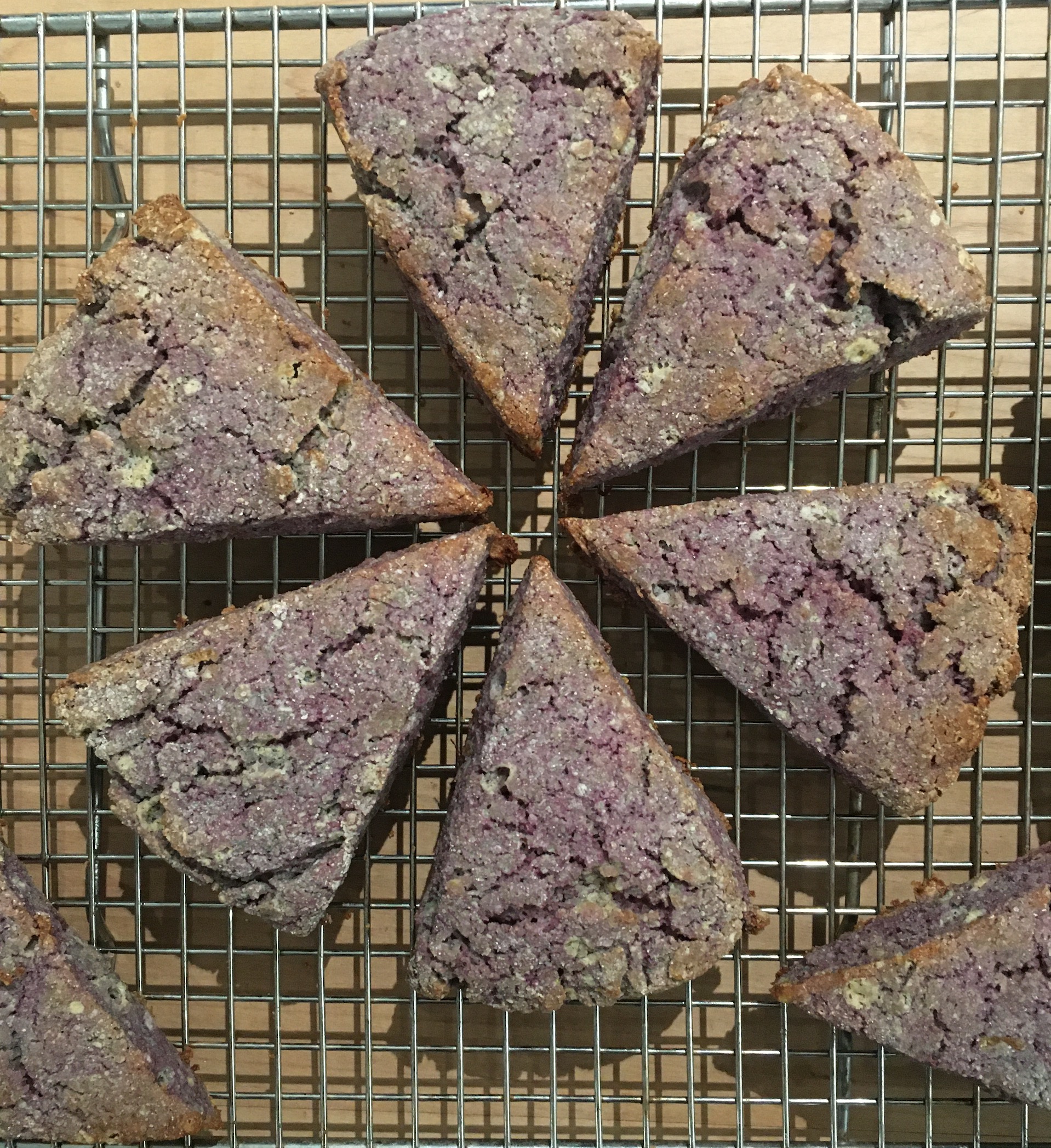
Black currant scones after baking–colour a bit disturbing…

I also made raspberry crisp and lemon pound cake studded with red currants over the past two weeks, and these were resounding successes. They, too, require replication.

And there’s plenty more fruit for additional studies! I don’t think it will be too much of a hardship to work our way through the frozen fruit.

Do I have to eat it?

Nance is a small yellow fruit popular in Panama. When my husband and I first arrived there, chicha de nance (a drink made from crushed nance fruit) was something we could barely choke down out of politeness to our hosts. The flesh of nance fruits is oily, gritty, acidic, and has a funky cheesy flavour. If you think too much about it, chicha de nance is reminiscent of watery vomit.

So you’ll understand why we didn’t like it.

But during nance season (and for several months afterwards, because people store it in bottles of water—yeah, don’t even think about what grows in those bottles) it’s impossible to avoid nance. Everyone you visit serves chicha de nance. Neighbours give you bottles filled with nance fruit.

You learn to drink it without grimacing. Before long you’re drinking it without even thinking about vomit. It’s a slippery slope from there, and next thing you know, you’re looking forward to nance season and wondering if you can trade some eggs for a bottle of nance from your neighbour.

I’m thinking about nance today as I contemplate the feijoas dripping from our tiny feijoa bushes. This is the plants’ first year producing fruit and I am amazed and a little terrified at their productivity.

I’m terrified because I hate feijoas. I don’t even like the smell. Simply walking past the fruit bowl when there are a few ripe feijoas in there makes me wrinkle my nose in disgust. I find it hard to breathe around them. Eating one makes me shudder—I swallow quickly to avoid tasting it too much.

Fortunately for me this year, my husband has been keeping up with the feijoas—he loves them. But those feijoa bushes are only going to get bigger. Next year I will have no excuses—I’ll have to eat them. 

So I’m thinking about nance. If I could learn to love a fruit that tastes and feels like vomit, surely I can learn to love feijoas, right?

They say a child needs to try a food up to 15 times before they’ll eat it. That’s a lot of feijoas …

Black Currant Icing

bowl of black currant icing

I made chocolate cupcakes yesterday and wanted to make use of some of the last of the fresh back currants in them. Instead of tossing a handful of black currants into the batter (which would have been lovely), I used the fruit to make a black currant icing—tart, sweet, and shockingly pink! 

You could do this with frozen currants, too, and it’s not difficult. The result is worth the bit of extra work.

100 g softened butter
3/4 cup fresh black currants
1 cup icing sugar

Place the black currants in a sauce pan and cook until soft—3-5 minutes. Press them through a sieve to remove seeds and skins. Set the puree aside to cool to room temperature.

Beat the butter until fluffy. Add 3 tablespoons of the black currant puree and beat until uniformly mixed. Sift the sugar over the butter mixture and beat until smooth. Adjust by adding more sugar or puree until the icing is spreading consistency.

Frangipane Frenzy

plum frangipane tart

I don’t often use almonds, because I can’t get them locally grown (they are grown here in NZ, but it’s hard to get hold of them, as demand outstrips supply). Instead, I tend to use locally grown walnuts or hazelnuts when I’m baking.

So when I do splurge on almonds, it’s a real treat.

A few days ago, while I was rummaging around in the freezer for a container of frozen black currants in order to make a pie, I came across some frozen damson plums I’d completely forgotten about. When the fresh plums were given to me mid-summer, there was so much fresh fruit around, I couldn’t possibly use them, so I froze them, dreaming of plum tart.

So instead of black currant pie this week, I opted for a plum tart. The quantity of plums I had was smaller than I would have liked, so I looked for a recipe that would bulk them up a bit. When I came across a recipe for plum frangipane tart, I was hooked. 

I had some ground almonds left over from my last almond splurge, so I whipped up some frangipane and spread it in my tart crust, layering plum halves on top, and sprinkling them with just a tablespoon and a half of brown sugar. 

The resulting tart is a flavour sensation, the sweet almond filling contrasting with the sharp tang of the plums on top. It’s rich and flavourful enough that you should cut it into thin wedges and savour it slowly, but it’s so delicious, you really want to cut a big slab and gobble it down.

I’m doing my best not to inhale the entire tart. And while I’m contemplating when I can justify another piece, I’m scheming. Could I make the same nutty frangipane by substituting walnuts or hazelnuts for the almonds? Of course I could (I’m sure it’s been done, and probably has a name). How would a walnut frangipane with apple slices on top taste? Or hazelnuts with apricots? What nut frangipane would go best with the black and red currants still in the freezer?

The possibilities are tantalising. I’d better finish off this plum tart quickly so I can try something new …

Winter Baking

Anytime of year is a good time for baking, as far as I’m concerned. But winter baking is probably my favourite.

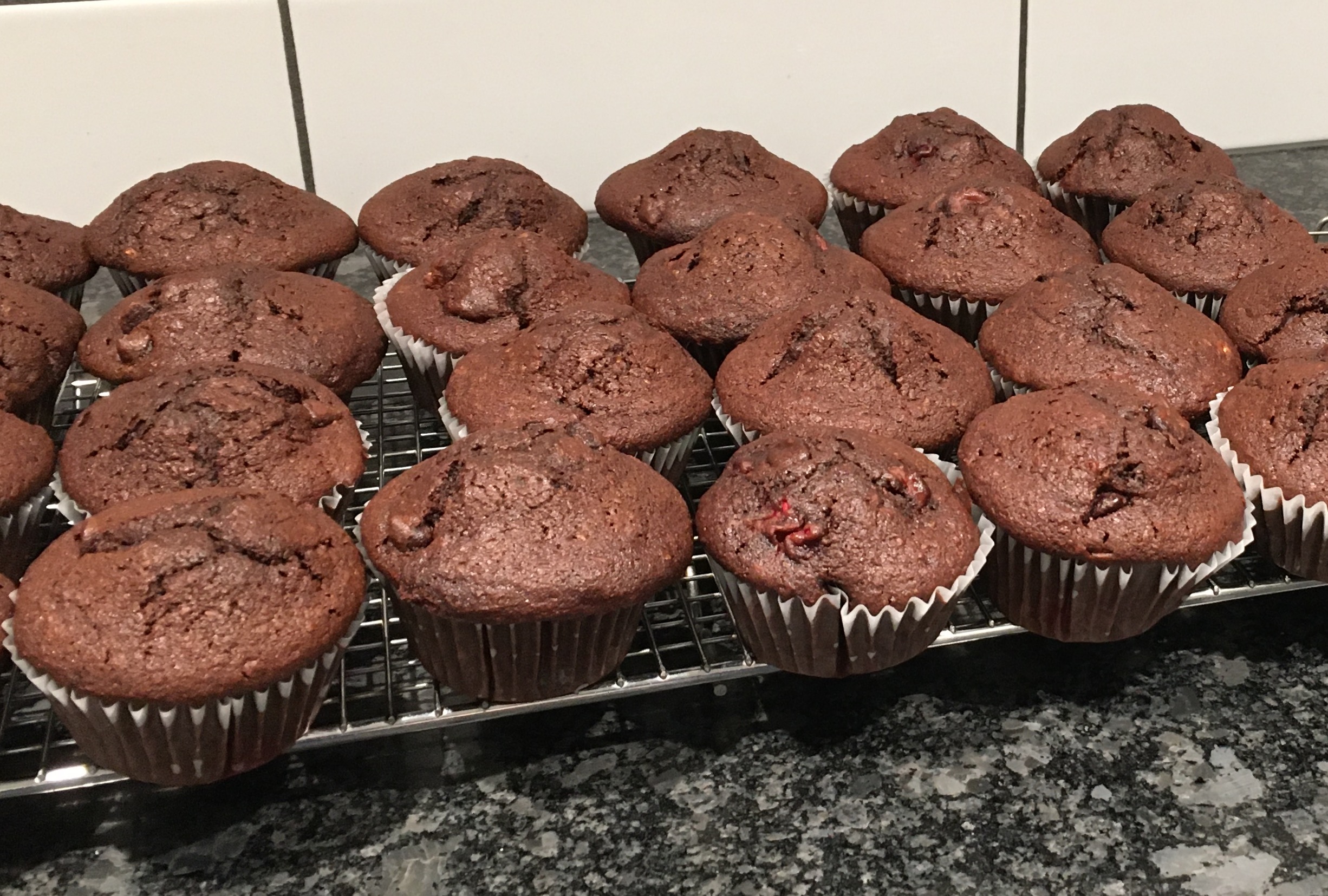
Chocolate raspberry cupcakes
Chocolate Raspberry Cupcakes

First, it’s dark out. I can start baking after dinner on a weeknight and not feel like I’m missing out on valuable garden time, because it’s pitch black out.

Second, who doesn’t feel the need for a few extra calories on those cold winter days? We can all justify eating that extra cupcake in order to stay warm.

Third, with the house closed up, the glorious smells of cinnamon, chocolate and butter linger in the house. If you bake on Monday evening, you can still smell those delicious cookies the next morning. You don’t lose those scents out the open windows.

But possibly the best thing about winter baking is the opportunity to revisit the other seasons by using the fruit stored up during the rest of the year. 

apple pie
Apple Pie

Monday night I made chocolate raspberry cupcakes using the last of the raspberries frozen at the height of summer—that fresh taste is so welcome in mid-winter when berry fruits are little more than a memory. 

Last week I made apple pie with apples frozen during autumn. The aroma of fruit and cinnamon evoked those marvellous days of plenty. 

Next week, for the solstice and Matariki, I’ll pull out the frozen currents and make my very favourite winter treat—current pie. Its tart flavour is the taste of summer. It reminds me that the long days of December are only six months away.

So I will bake my way through June, July and August, dreaming of warmer days past and planning for warmer days to come.

currant pie
Care for a slice of currant pie?

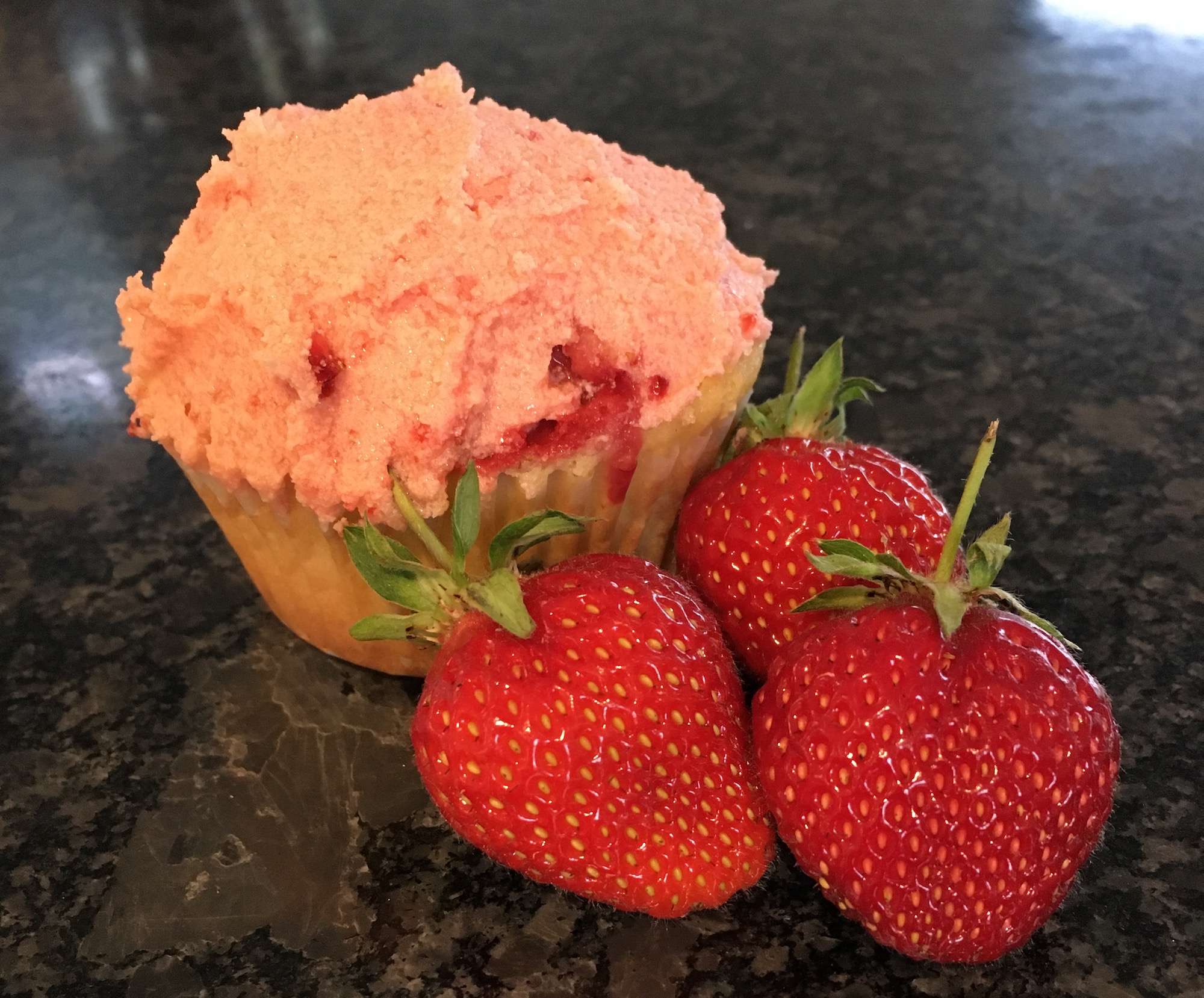
Strawberry Cupcakes

Every now and again, you come across something that is as delicious as it is easy. The other day I wanted to make a cake involving strawberries, because it’s that time of year. I looked at lots of recipes online that involved making a strawberry reduction first, but it seemed like an awful lot of work. I was really looking for simple. 

So, ignoring everything I’d seen online, I modified a basic vanilla cake recipe from the Mennonite Community Cookbook, adding sliced fresh strawberries, and whipped up a quick strawberry icing. I baked the cake as cupcakes, as I often do to keep our portion sizes down (because you know I can’t resist cutting a huge slice of cake …).

The result is exactly what I wanted—an easy cake that highlights fresh strawberry flavour. I’ll definitely be making this one again.

Strawberry Cupcakes

3/4 cup butter, softened
1 1/2 cups sugar
3 eggs, separated
3 cups all-purpose flour
1/2 tsp salt
3 tsp baking powder
1 cup milk
1 tsp vanilla
1 1/2 cups fresh strawberries, sliced

Cream the butter. Add sugar gradually and beat until fluffy. Add egg yolks and beat until well incorporated. Sift flour, salt and baking powder together in a separate bowl. Add flour mixture alternately with milk and vanilla, beating well after each addition. Fold in stiffly beaten egg whites, then fold in the strawberries.

Fill cupcake papers, and bake at 175ºC (350ºF) for 25 minutes. Allow to cool completely on a rack before frosting.* Makes 24.

Strawberry Frosting **

60 g (1/4 cup) butter, softened
1 cup icing (confectioners) sugar
1/2 tsp vanilla
3 Tbsp pureed fresh strawberries
Puree strawberries in a blender (I had to puree about a cup and a half of berries in order to have enough volume for the blender to work with—just save the extra puree. There are hundreds of delicious uses for it). Cream the butter. Sift the sugar over the butter and continue to beat. Add vanilla and strawberry puree and beat until well blended. Adjust the icing by adding more sugar or strawberries until it is a spreading consistency. 

* It was a warm day, and I was a little worried my strawberry icing would weep if it sat at room temperature with the cupcakes. Instead of frosting them all, I frosted only what we were going to eat right away, storing the remainder in the fridge, to spread on the cupcakes as we eat them. Alternately, you could store your iced cupcakes in the refrigerator. Mine is currently stuffed full of zucchini and green beans—no room for cake.

** Double this frosting recipe if you want to ice all 24 cupcakes. I put half the cupcakes in the freezer unfrosted, since I haven’t got kids at home to devour them at the moment, so I only made a small batch of frosting.