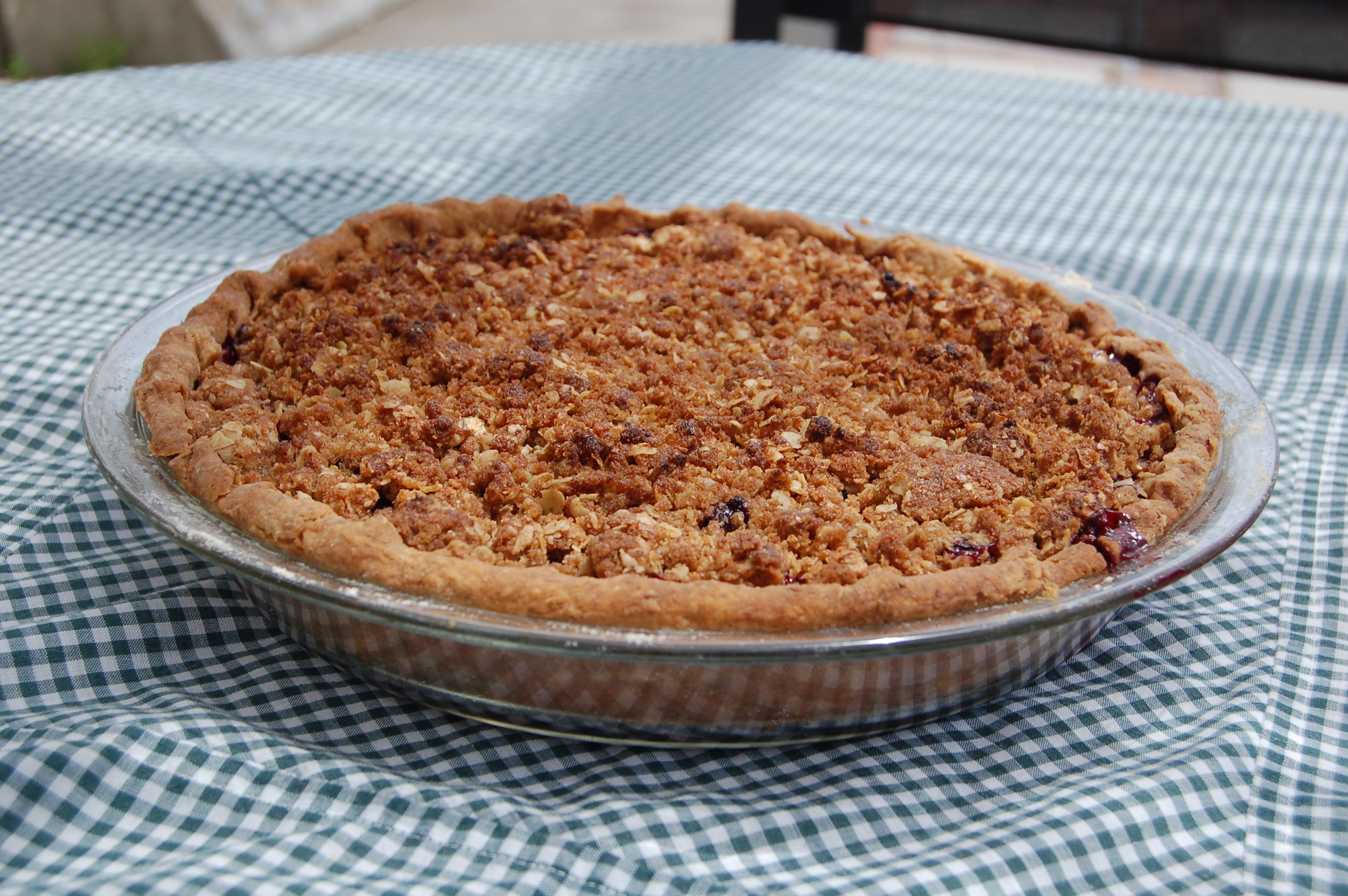
Black Currant Pie

I have blogged about black currant pie before, but it’s worth doing again. This year’s black currant harvest was overwhelming, not just because it came in the two weeks on either side of Christmas, but also because it was huge. It didn’t help that the red currants also gave a hefty crop at precisely the same time. For two weeks, I felt like all I did was pick and process currants.

Well, and eat them, too.

We use currants in ice cream, crisps, cobblers, fruit salads, and smoothies, but my favourite way to eat them is in pie.

Black currant pie is not for the sour-averse—it is a full-bodied, knock-your-socks-off type flavour. To me it is the flavour of summer. And because it works equally well with frozen berries, I always try to save enough so I can make black currant pie on the winter solstice and dream of long summer days in the chill and dark of winter. 

So revel in the intense flavours of summer and enjoy a slice of black currant pie. You can download a pdf of this recipe here.

Crust:
¾ cup all purpose flour
¾ cup wholemeal flour
¼  tsp salt
60 g butter
60 g Olivani
3-4 Tbsp ice water

Filling:
4-6 cups black currants
½ cup sugar
2 Tbsp flour

Topping:
2/3 cup flour
2/3 cup finely chopped walnuts (or rolled oats)
2/3 cup brown sugar
1 tsp cinnamon
75 g butter, melted

Crust:
Whisk together the flours and salt in a medium bowl. Cut in the butter and Olivani with a pastry knife until the largest chunks of butter are the size of small peas. Sprinkle the ice water over the flour mixture and combine with a fork until evenly moistened. Knead lightly, just until it forms a coherent dough (it will be crumbly). refrigerate while you prepare the filling and  topping.

Filling:
Combine sugar and flour in a small bowl. Mix with stemmed, washed black currants and set aside.

Topping:
Combine the flour, walnuts, sugar and cinnamon in a medium bowl. Stir in the butter with a fork until evenly moistened and crumbly.

Roll out the crust and place in a 23 cm pie pan. Pour the filling into the pan and sprinkle evenly with the topping. Bake at 200°C for 30 minutes, then reduce the heat to 170°C and bake another 30 minutes.

Serve with a generous dollop of whipped cream.

Summer Fruits

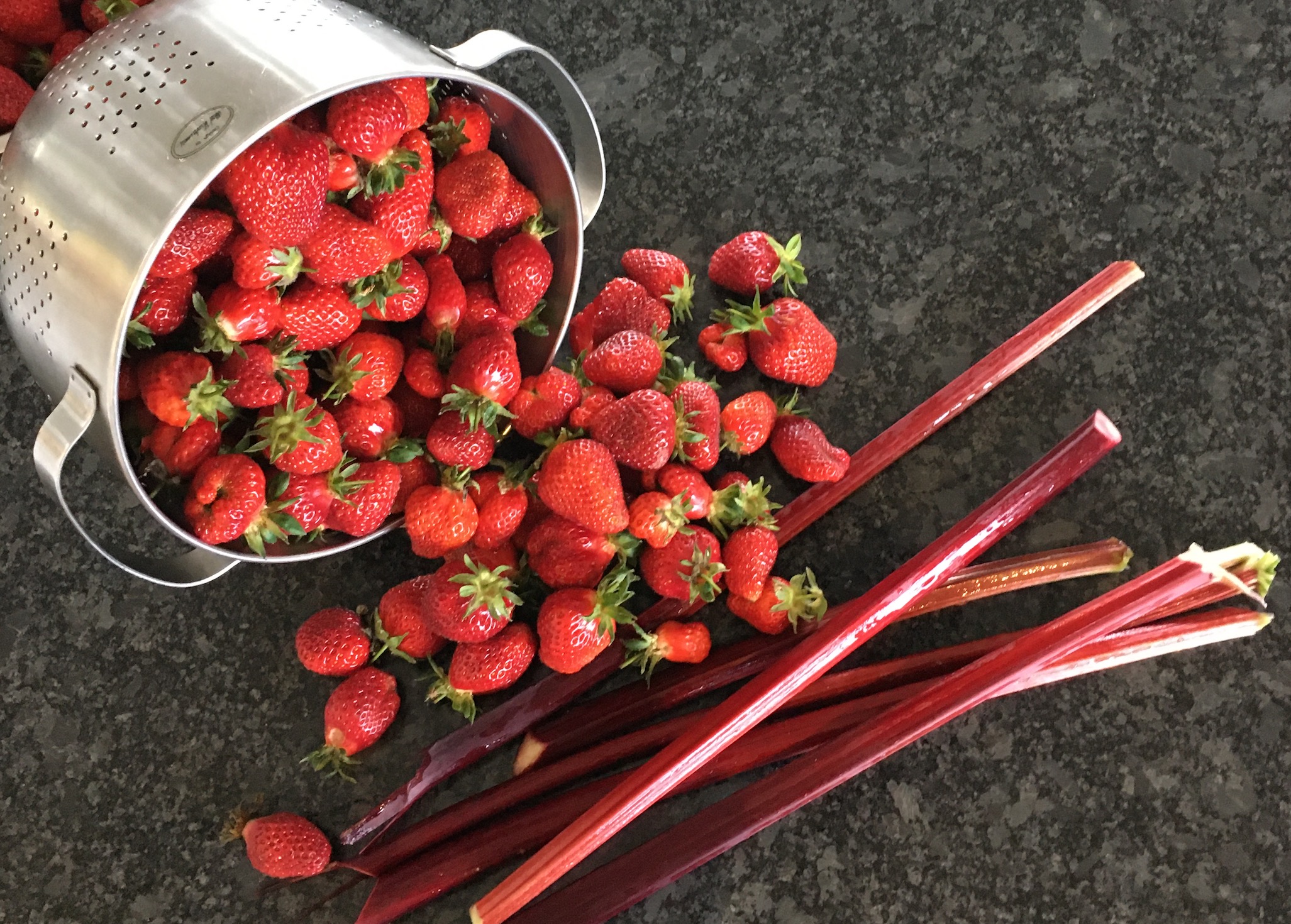
strawberries and rhubarb

Before our house was even staked out on the ground, we knew where the vegetable garden and berry fruits were going to be planted. We began preparing the garden months before the builders arrived. We took cuttings from berries at the old house, and were planting well-rooted currants and gooseberries as we finalised the design for the house. We tried to avoid mistakes we made at the last house—just one, not two, rows of bushes per bed, to make picking easier, and fewer plants overall. No need to be overwhelmed with fruit.

Last year, we harvested a handful of fruit from the currants, gooseberries, raspberries and boysenberries. The strawberries gushed fruit for the better part of the year. For barely established plants, they did well. 

This year, with most of the plants well established, we’re inundated with berries—so much for not being overwhelmed. The week before Christmas was a frenzy of fruit processing—we froze fresh fruit and fruit puree, made several batches of jam, and ate a whole lot of fruit pie, trifle and fresh berries.

Upon our return from our Christmas trip, there were even more berries ready to pick. We made more jam, preserved more whole fruit, made more pie, and have been eating fruit five times a day. The cupboard is once again packed with jam, and the freezer is stuffed with frozen berries. Thankfully, the currants and gooseberries are nearly done producing, but the raspberries and boysenberries are still going strong. The strawberries are finished with their first heavy crop, but should maintain a level of output we can easily eat for the next few months. I’m thankful the grapes are only in their first year and the blueberries aren’t doing as well as the other berries—not that I don’t want grapes or blueberries, but I’m worried about freezer and cupboard space.

lemon raspberry cake
Lemon raspberry cake

At least the fruit trees are still young—we got a handful of cherries, and will have a few pears, apples, and peaches if we’re lucky, but shouldn’t be overwhelmed.

It’s a lovely problem to have. With the summer vegetables coming on strong, too, there is a real sense of abundance in the house—a great way to start the new year.

Fruits of the Season

strawberries and rhubarb

I made strawberry rhubarb jam last weekend, marking the beginning of the Christmas season. Currants, raspberries, blackberries, boysenberries, gooseberries, and blueberries are also beginning to colour up.

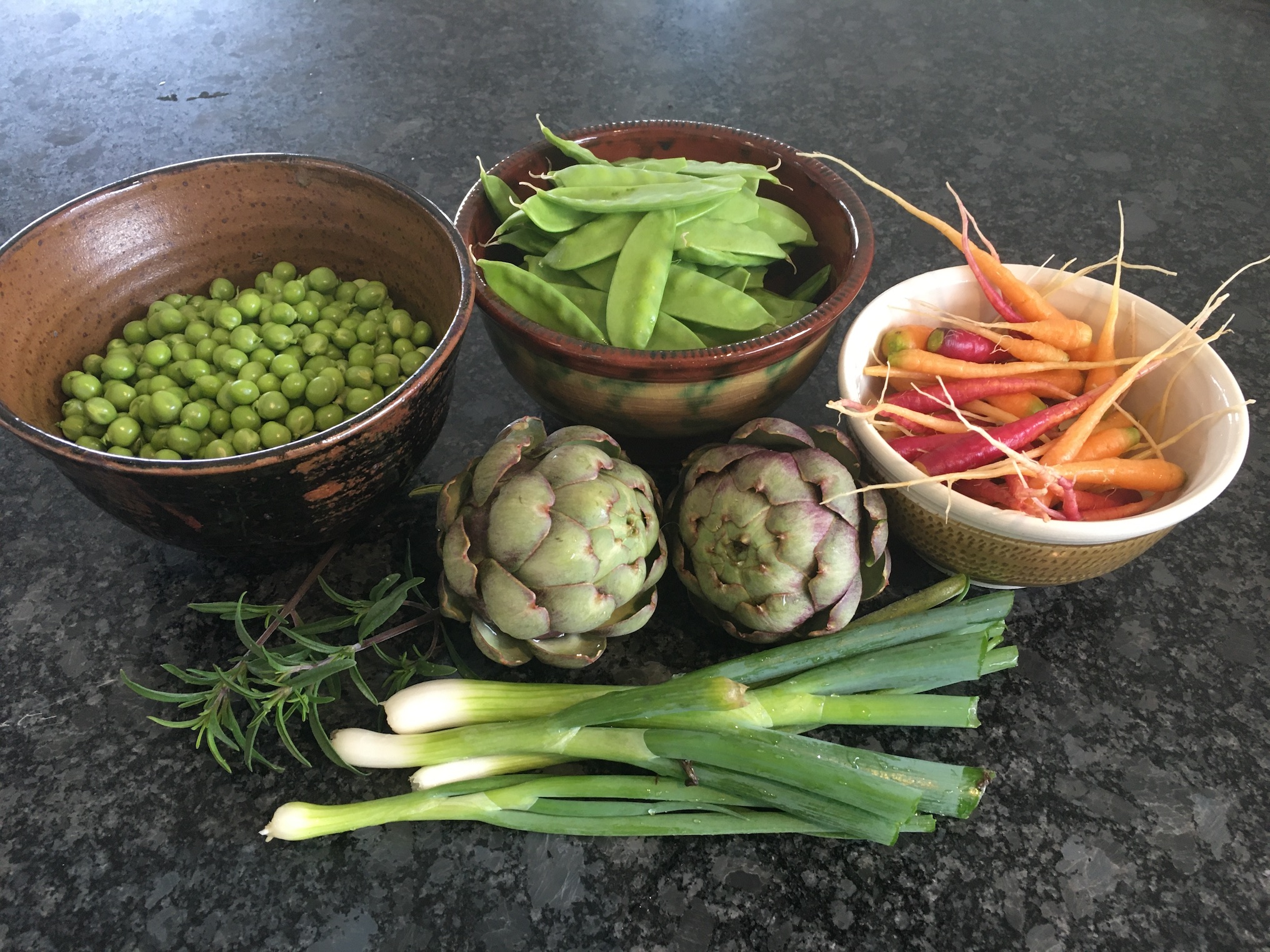
The peas are filling out so fast it’s hard to keep up with them, and every broccoli plant is sporting a ready-to-eat flower head. Carrots and onions are just hitting picking size, adding crunch and colour to meals.

The cabbages are bulking up, promising to be ready for sauerkraut making on Christmas eve (our ‘traditional’ sauerkraut making day). And the broad beans are all ready to eat, and coming to their glorious end.

In short, the summer cornucopia is filling up and spilling over.

We will host fourteen people for dinner tomorrow, and I hardly have to hit the grocery store to feed everyone. Some alcohol and cheese is all I need to supplement what’s in the garden (need being a loosely applied term here, of course). It’s what I love most about a summertime Christmas—the sense of abundance that accompanies the celebrations.

vegetables from the garden

Of course, the garden’s abundance also means there’s an extra pile of holiday work picking and preserving, weeding and watering all that produce. But there’s something festive about the work when you can hum Christmas carols while you’re at it. The piles of fresh vegetables and summer fruit in the kitchen are the reward for every tired muscle and late-evening preserving session. And thankfully, we’ve got long summer days in which to get all the work done.

Christmas Baking Makeover

I grew up in North America, with all the traditional Christmas things—snow, dark days and long nights, crackling fires, Christmas lights, cookies, pies, hot drinks—Norman Rockwell might have painted my childhood Christmases.

Nearly 17 years ago, we moved to New Zealand, to summertime Christmases. Here, strawberries, cherries, and long summer days herald the season. 

I always loved the baking aspect of Christmas in North America—Mum amassed dozens of types of cookies in the freezer in the weeks leading up to Christmas. The kids always got involved in the baking, and we’d gorge on cookies through the holidays.

I still love baking, but I struggle to dredge up much enthusiasm for Christmas cookies here. With fresh early summer fruits in season, it seems ridiculous to bake cookies that capitalise on stored foods like dried fruits, nuts and chocolate. What I crave is strawberry tarts, black currant pie, and gooseberry crisp. Or better yet, fresh fruit salad—forget the baking altogether.

Out of a sense of nostalgia, I’ve continued to bake a few Christmas cookies every year, alongside the fruit desserts, but 2021 might be the year that changes.

As everyone has experienced this year, supply chains are disrupted worldwide. It has led to shortages of various items from foods to electric cars. A few weeks ago, most of the brown sugar in New Zealand was recalled, because of lead contamination that occurred during shipping. We all dutifully threw away our brown sugar, and wanted to buy more. Of course, there was none. There’s still none, weeks after the recall.

It looks like a staple of Christmas baking will be unavailable this year.

I admit I’m not terribly upset by it. I’ve been wanting to move more toward using locally produced honey instead of imported sugar, and this looks like the perfect opportunity to break the brown sugar habit. Also, it gives me an excuse not to make Christmas cookies, but to focus instead on enjoying the fruit that is already ripening in the garden.

This might be the year that my baking finally makes the switch to the Southern Hemisphere.

To make it even more tempting to go full Kiwi, Matariki has finally been made an official holiday. The Māori new year happens near the winter solstice in June—the perfect time for eating cookies and enjoying hot chocolate. I may have to start making Matariki cookies instead of Christmas cookies. I will enjoy them so much more at Matariki.

So bring on the fruit, some icy lemonade, and the sunscreen! Hold the brown sugar—I won’t be needing it. Christmas baking is getting a makeover.

Garden Transformation

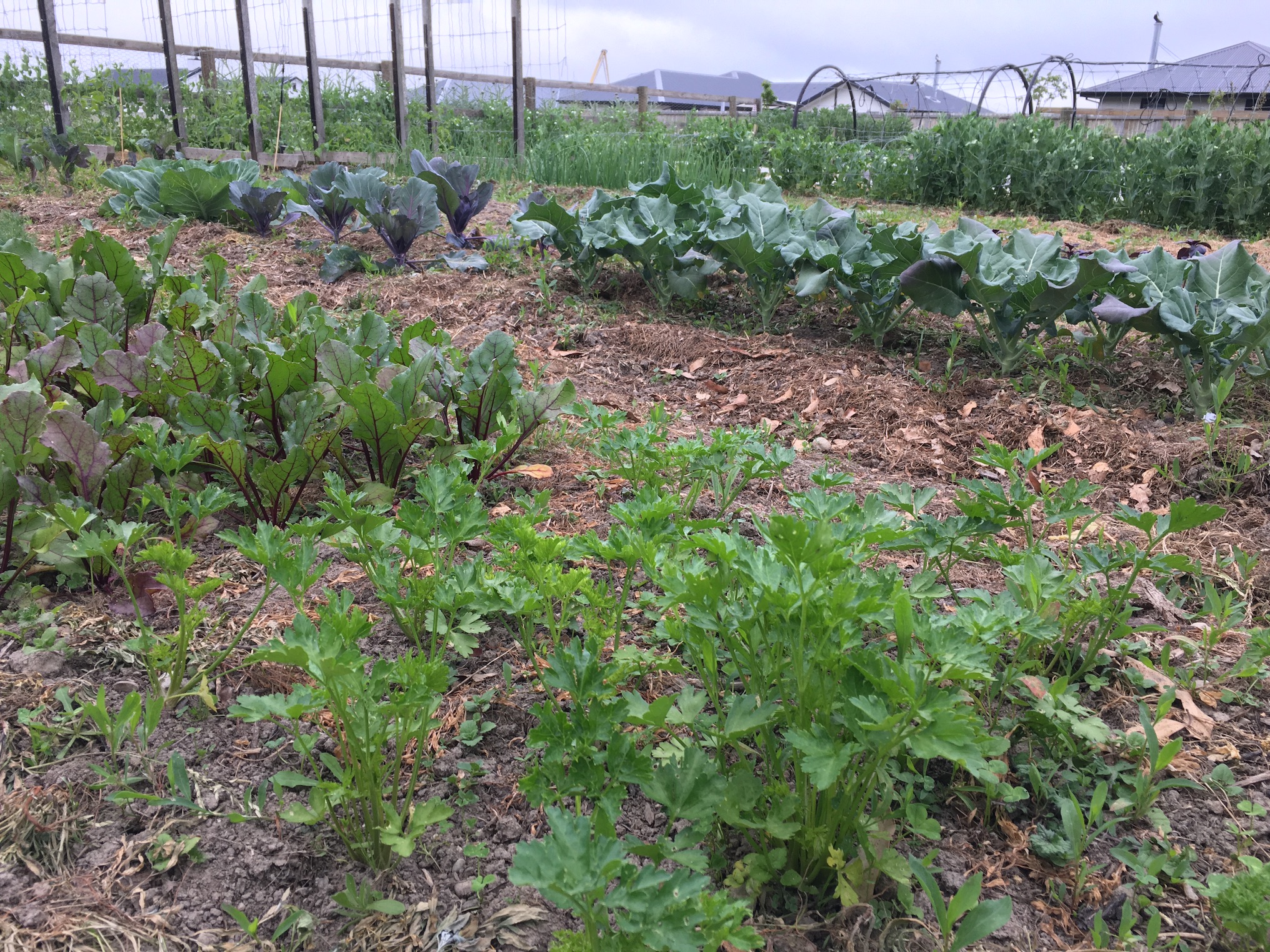
vegetable garden

The weather forecasts have been good and the garden beds are all prepared, so in the evenings after work this week, I’ve been planting out vegetable seedlings.

On Tuesday, as I left the garden at dusk, I turned to close the gate behind me. I smiled as my gaze swept the scene. My work had transformed the garden from a weedy patch sporting a few vegetables to a vegetable garden with a few weeds. The transformation had taken months, but my shift in perception was like a switch being thrown.

The coming long weekend will complete the transformation, with all the remaining seedlings filling in the gaps. But the switch in my perception means the weekend planting will be an enjoyable challenge. It won’t feel like an insurmountable hurdle.

This is where my obsessive-compulsive garden planning pays off. All the tasks I’ve crossed off my list since mid-August come together this weekend in a tidy, fully-planted garden with the potential to feed us for the year.

People ask if I have plans for the long holiday weekend.

“Just gardening,” I answer. 

They think it’s work. And no doubt I’ll spend long hours on my knees. I’ll sweat. My back will ache. My feet will protest the hours encased in gumboots. 

But the work I will do this weekend is more a celebration than a chore. At its end is a sense of accomplishment and well-being nothing else can provide.

And as every gardener knows, at its end is the beginning of a new set of tasks—the weeding, watering, and other ongoing care that fills the summer calendar.

So this weekend I will plant and celebrate, and next weekend I will weed.

Springtime Companions

I like to make the most of my garden space. No matter how big the garden is, I never seem to have enough. 

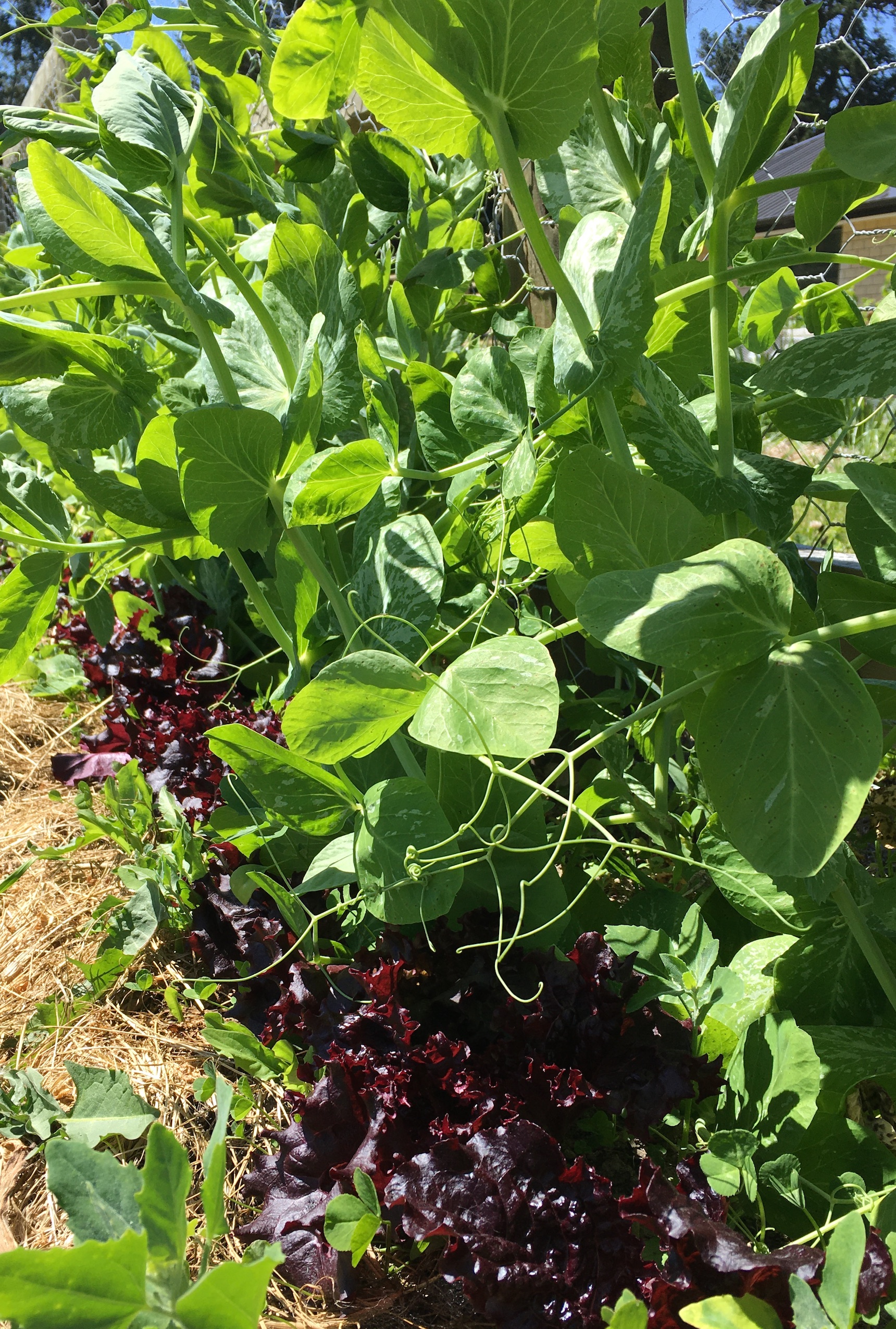
lettuce and peas planted together

I also enjoy having fresh salad greens all year, but lettuce has a tendency to bolt in our dry, warm summers.

I tackle both problems, and keep weeds at bay with companion planting. 

I plant most of my peas along the fence surrounding the vegetable garden, using the fence as a trellis for the tall varieties. The bed I prepare for them is 50 cm wide, and since I want them to climb the fence, the peas sit at one edge of the bed, leaving plenty of room for weeds to grow.

Instead of letting the weeds take over, I plant my lettuces and spinach in front of the peas. These low-growing plants quickly cover the soil, smothering weeds and naturally mulching the soil, protecting it from the drying sun. The taller peas provide shade to the salad greens for much of the day, preventing them from getting too hot and bolting early.

Both peas and lettuces finish around the same time mid-summer, so it’s easy to pull them all out at once and chop them up in place to thickly mulch the garden edge, preventing weeds from taking over.

And if I’m really thinking, I plant big rangy late crops in the beds nearby—pumpkins, cucumbers, melons or potatoes. They creep across the path and take over the space vacated by the peas and lettuce, making sure the garden space is used continuously all summer.

Watching the Weather

tomato plants in the greenhouse

October is over so I’m a little obsessive about the weather. Will we have another frost? Will it rain? Will it be warm and sunny? What will the wind be like? Every day is critical for the next two weeks.

I do my best to time indoor seed planting just right, so all the frost tender vegetables are ready to plant out on Canterbury weekend (in mid-November)—the date I can be 90 percent sure of no more frost. The slow-growing peppers and eggplants are first—planted the 15th of August along with all the frost-hardy crops. A week later, I plant the tomatoes and basil. Fast-growing cucurbits and corn wait until late October.

By the beginning of November, the greenhouse is full of plants waiting to be planted out.

Of course, no matter how hard I try, there’s a level of uncertainty. A particularly cold spring can slow down growth so I’m planting out tiny seedlings in mid-November. On the other hand, warm sun can mean my plants are chomping at the bit by the first of the month. Hence, my obsession with the weather.

This year, my tomatoes are at the perfect stage to be planted out now. In two weeks, they’ll be overly tall and leggy. So I’ll be checking the long range forecast to see if I can plant them this weekend instead.

The peppers and eggplants, however, could use another week or so in the greenhouse before being planted out. I’ll coddle them in their pots, urging them to put on some good growth before they’re at the mercy of bugs and birds. I’ll be hoping for good sunny days to kick their growth into high gear.

At the same time, I’ll be watching the early crops already in the garden. They’ll be starting to feel the heat—risking bolting if they get too hot and dry. I’ll be monitoring the weather to know when I have to turn the irrigation on.

In two weeks it won’t matter so much—it will be reliably warm enough, and predictably too dry. All the vegetables will be in the garden, and they’ll all need extra watering.

But for now, I have the weather forecast open on my browser at all times, watching carefully to make the most of what the weather has to offer.

Asparagus, Asparaguses, Asparagi?

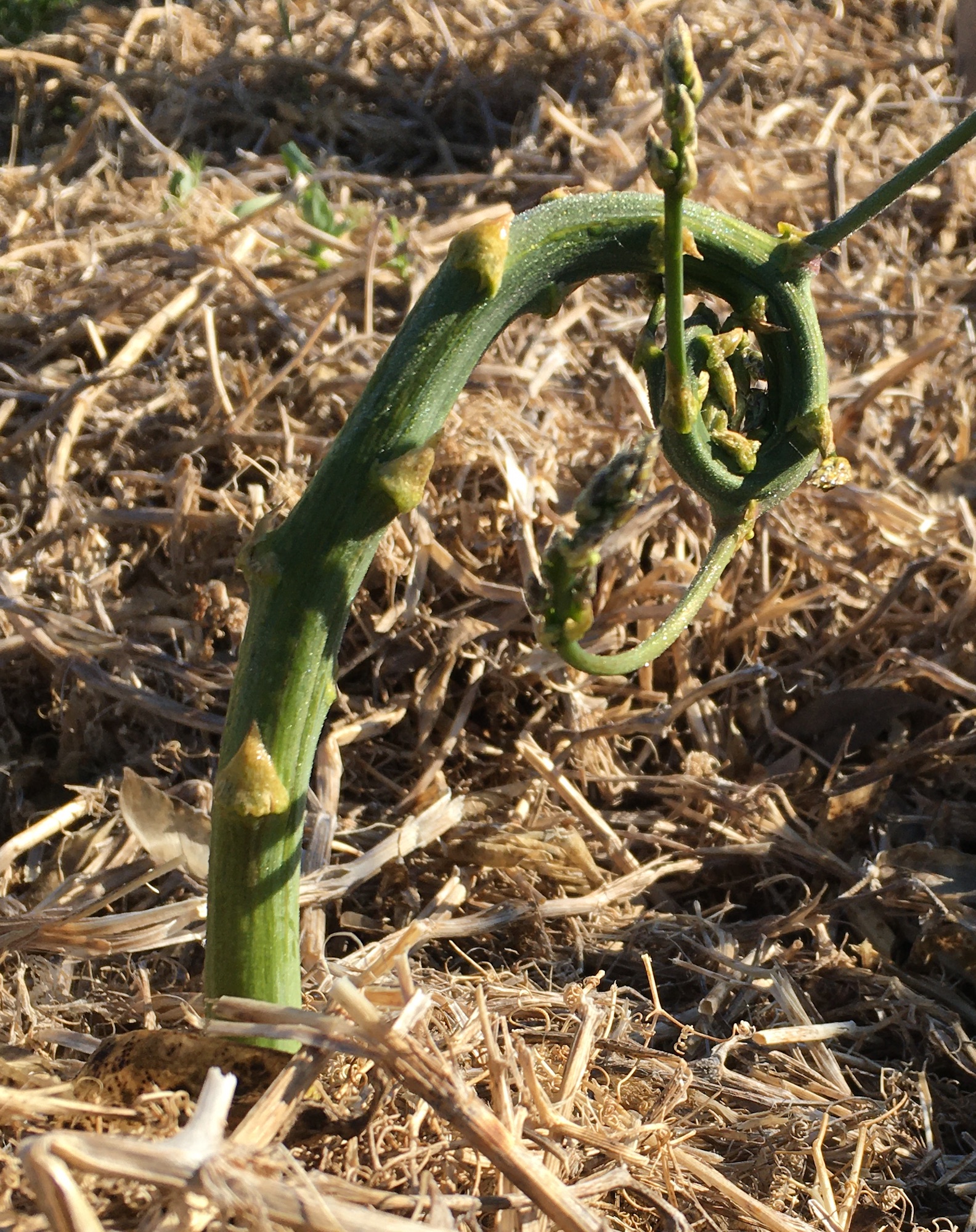
asparagus spear infected with phytophthora
Asparagus spear infected with phytophthora

It’s asparagus season, and we are enjoying spears from our own plants, though not as many as we’d like.

We moved crowns from our old house to the new, and have had rather mixed luck. Some didn’t survive transplant. Others grew poorly last year, and did not show their faces this year. Still others sprouted this year, but have been succumbing to phytophthora infection—a new challenge for us.

Phytophthora asparagi is an oomycete. Its long-lived spores overwinter in the soil and infect asparagus roots and spears. Phytophthora infection interferes with water transport in the stem, causing shrivelling and a ‘shepherd’s crook’ curl to the spears.

Oomycetes were once thought to be fungi, because their growth forms can be similar. They are, however, genetically distinct and are now known to be more closely related to kelp than fungi. Many oomycetes are plant pathogens, and some, like late potato blight, sudden oak disease, and Phytophthora asparagi are of economic importance.

We never had trouble with phytophthora at the old place—our well-drained soil with excellent nutrient levels kept it at bay. But at the new property, the heavy clay soil devoid of nutrients provides perfect conditions for phytophthora growth. 

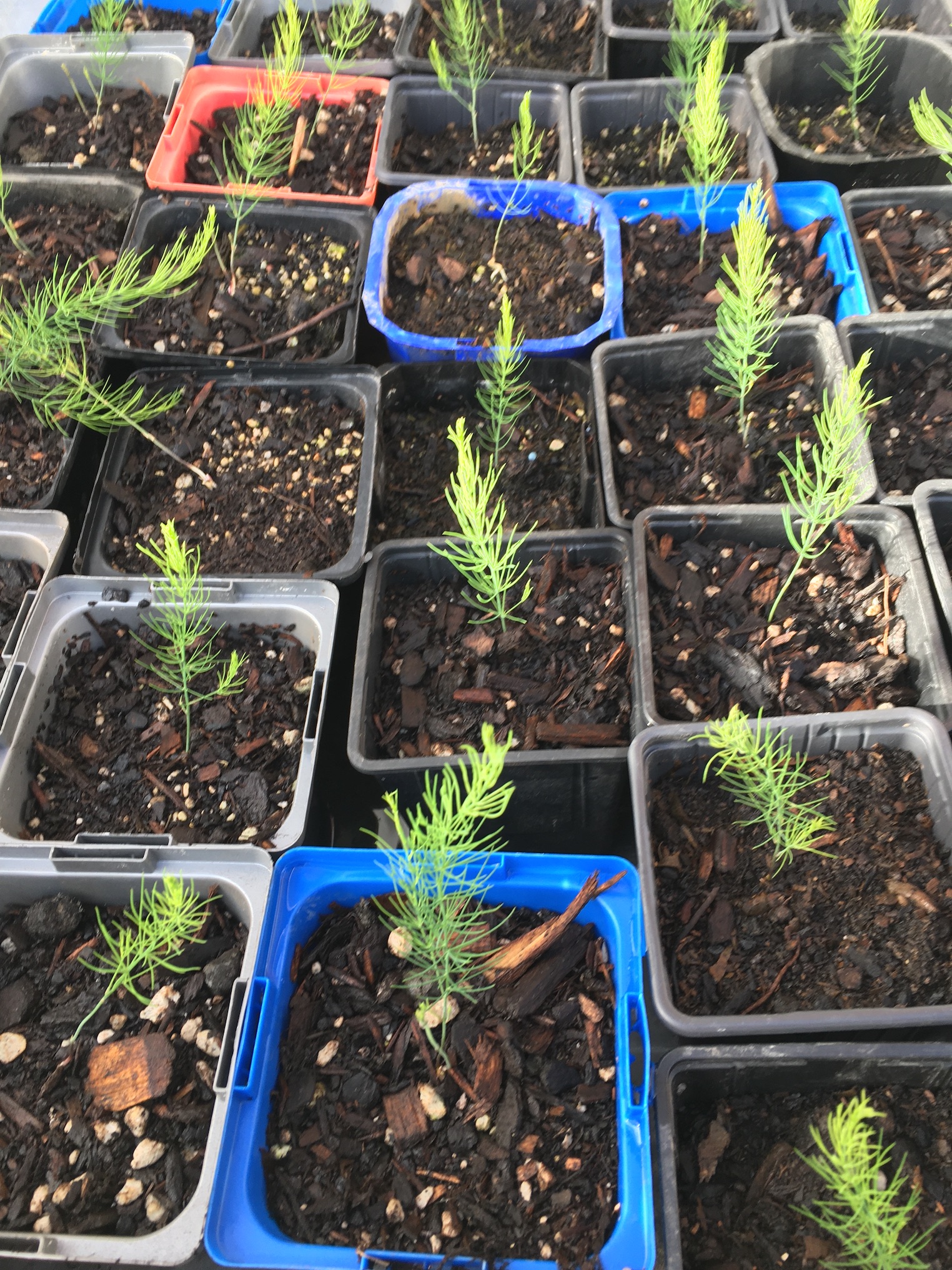
Two months ago, before we’d identified phytophthora, I planted a packet of asparagus seed. I wanted to fill in the gaps in the asparagus bed, where our transplanted plants had died. Now, with 38 beautiful asparagus seedlings in the greenhouse, I’ve got a different plan for them.

Michigan State Extension recommends fungicide and careful selection of planting site to control phytophthora. I’d like to avoid the fungicide, but I can manage the soil, at least a little.

asparagus seedlings

My little seedlings will need about 18 months in pots before I can plant them out. That’s plenty of time to prepare a special raised bed for them, filled with compost, sand, and soil for high-nutrient, well-drained growing conditions. In the meantime, we’ll enjoy the asparagus we are getting, and do our best to keep the old plant alive until the new ones can be harvested.

And, just so you know, the plural of asparagus is asparagus.

Sunshine in a Teacup

I woke up to the sound of rain today. Not an unwelcome sound—the seedlings in the garden will appreciate it. Still, a rainy day inspires a certain amount of decadent self-care to banish the mental chill (even if it is perfectly comfortable indoors). 

My decadence this morning came in the form of pulling out a Sunday teacup for my coffee. 

We bought two of these cups at Driving Creek Railway in the Coromandel a few years ago—a Christmas gift to ourselves, and a real splurge. They’ve become our special occasion coffee mugs—used on Sunday mornings and Christmas Day only. In my mind, they’re associated with relaxation, holiday, and decadence.

So on this rainy morning, with a day of intense work on the next novel ahead of me (and no sunny-day excuses to get me out of it), I thought I needed a little motivation in the form of a special vessel for my coffee. A tiny thing, but it has made my day sunny, despite the rain outside.

Spring Cleanout

The equinox has passed and we’re on the sunny side of the year. The greenhouse is filled with vegetable seedlings. Flowers bloom in the yard. Asparagus spears and artichoke buds are popping up to grace our dinners.

Now is the time to scour the cupboards and freezer for what’s left of last summer’s bounty. It needs to be eaten before this year’s crops start to come in and make us forget.

As usual for us, the frozen peas and corn are long gone. The carrots I froze from last year’s bumper crop have been eaten, too. The currants, peaches and strawberries never stand a chance of making it to September—they are like bright sparks for winter’s darkest days.

As usual, what remains is pumpkin. Baked and frozen when the fresh pumpkins started to rot back in July, frozen pumpkin has become a staple in our springtime cooking as we scramble to finish it off.

Maybe I should plant fewer?

Except it’s the only vegetable left at this time of year. And maybe pumpkin isn’t traditionally considered a springtime vegetable but pumpkin pie, cake, galette, and pancakes are delicious any time of the year.

So bring on the flowers, the sun and the warmth. And bring on the pumpkin! We’ll enjoy it while it lasts.

pumpkin cake glazed with yogurt frosting
Pumpkin cake … best way to eat pumpkin?