My Favourite Cookbooks

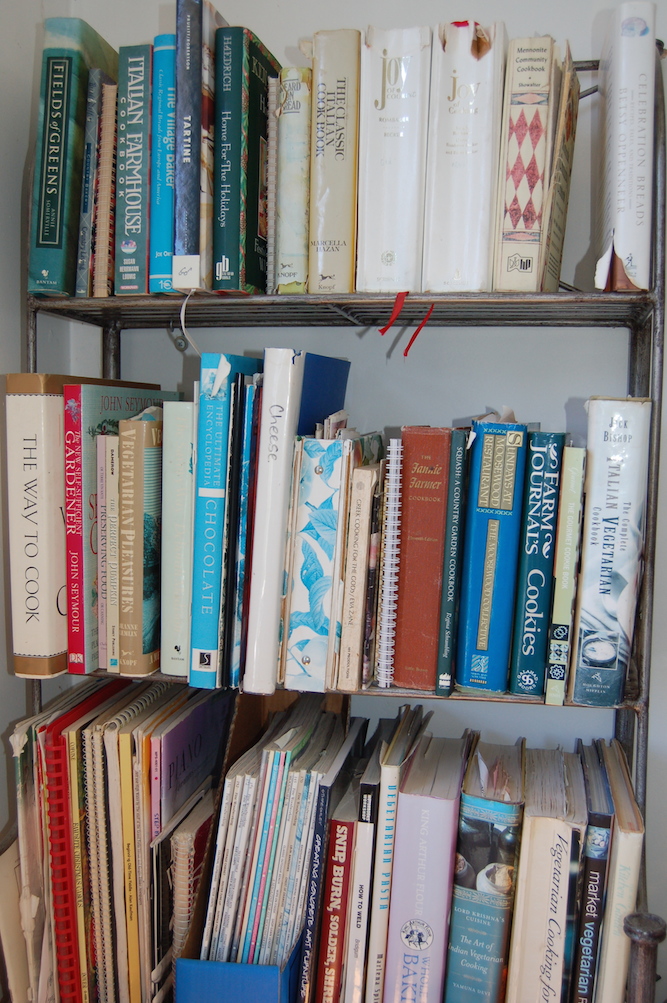
cookbooks smWondering what to have for dinner this evening, I went to my cookbooks for inspiration. As I glanced over the titles I realised a couple of things. First, we have a lot of cookbooks. I’m not sure how we accumulated so many, but there they are, filling a bookshelf in the bedroom, because there isn’t enough room for them in the kitchen. Second, I realised that we use many of the cookbooks on the shelf for just one recipe—the one gem in the book. Those books are in pristine condition, though some are well over 20 years old.

Then there is the handful of books we use over and over again. Their spines are cracked, their pages greasy and smeared with chocolate, turmeric, and unidentifiable globs of dough. Joy of Cooking (both the 1975 and the 1997 editions) is one of those well-loved books. We destroyed our first copy of Joy of Cooking in Panama. Of the 50 pounds of stuff we were allowed to take, three were afforded to this indispensable book. By the end of two and a half years in the tropics, the book was completely ruined. We proceeded to purchase and destroy a second copy, but when we went to get a third, we found it was a new edition, and significantly different from the old one. So we bought it, but kept the old one. Now both copies are so well used, I had to write “old” and “new” on the spines so I could tell them apart.

The well-used cookbooks are ones I can recognise by feel in the dark on Sunday morning when I’m planning the weekly cooked breakfast. I’ve memorised the page numbers of my favourite recipes, too. Page 281 in the Mennonite Community Cookbook is the best brownie recipe ever, and the same page in The Art of Indian Vegetarian Cooking is one of our weeknight staples, green bean and potato charchari. Page 932 of the “new” Joy of Cooking includes Texas chocolate sheet cake, a super easy cake for those times you need baked goods on short notice; and cornbread is found on page 627 in the “old” Joy of Cooking, but I make that enough, I don’t need the recipe any more.

These books are like old friends, each full of inspiration and advice. Though I know I could simply pull up a recipe off the internet, it’s just not the same flipping through a good cookbook.

What’s your favourite cookbook?
South Lea Olive Oil

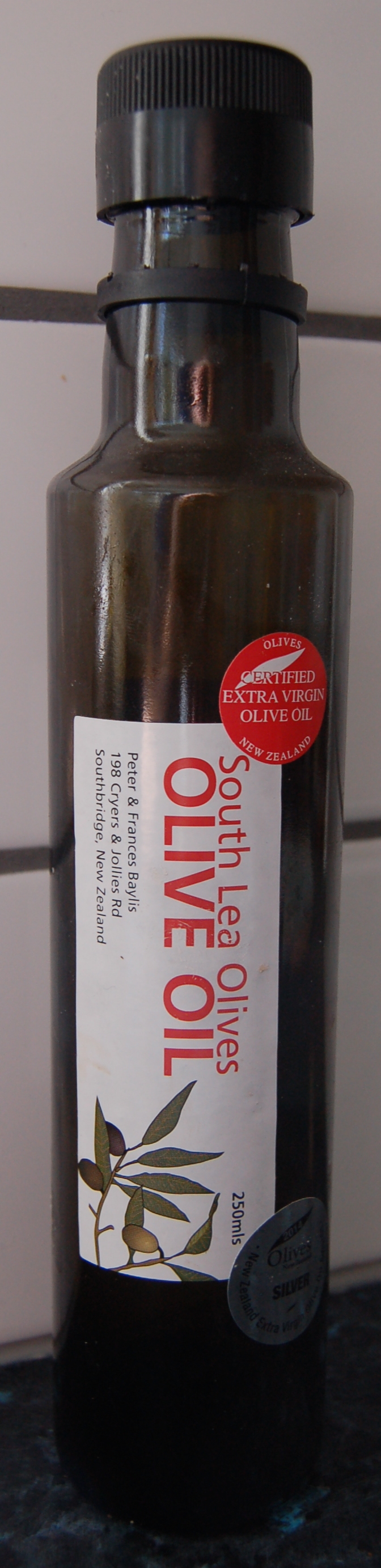
South Lea oliv oilA few days ago, we ran out of the expensive, gourmet olive oil we use on salads. It was OK, though, because I needed to get petrol anyway.

Yes, that’s right; we get our high-end olive oil at the local service station.

It just so happens that the owners of the petrol station, Peter and Frances Baylis, also own an olive farm. It’s a small operation. I don’t know how much they produce every year, but it’s not much. At olive harvest time in June and July, I make sure to ask Peter how the harvest has been (while I’m filling up the car). That way I know if there will be a shortage later in the year (last year I managed to get the very last bottle available). What they lack in volume they more than make up for on quality. Last years’ oil won a silver medal from Olives NZ (http://www.olivesnz.org.nz/awards/), and it wins our seal of approval every year.

One of the gals who works in the petrol station is always curious when I pick up a bottle of olive oil with my petrol.

“You really like this stuff, eh? What do you use it for?”

The way I like it best is mixed with fresh thyme and homemade bocconcini (bite-sized mozzarella balls). It’s also good on salads, drizzled on fresh bread.

In addition to just being really good, I like the idea I’m eating something produced locally by people I know. I’ve walked through the rows of the South Lea olive grove, and I know that the oil has travelled just a few short kilometres to my table. It’s almost as good as growing it myself (maybe better, because it’s less work).

What is your favourite local product?

You Win Some, You Lose Some

I bought agar last week so I could make a vegetarian fondant icing for the upcoming birthday cakes. It’s the first time I’ve thought far enough in advance to have the time to search out agar, and it’s a technique I’ve wanted to try for a long time. Besides, Lia did a school project on seaweed last term, so it was only fitting that we use seaweed in her cake. Once I had the agar in the house, I began to wonder about using it for other things. When I mentioned to the kids that it might be able to be used for marshmallows, their eyes lit up. Sure enough, we found a recipe for vegetarian marshmallows using agar in place of the gelatine, and this morning we tried it out. After an inordinate amount of beating, we finally poured the marshmallow foam into a tray to set. We licked the beaters.

“Blech!”

“Tastes like seaweed.”

“That’s completely inedible.”

“Should we…?”

“Throw it out.”

Looks like seaweed, smells like seaweed, I suppose we should have known it would taste like seaweed. I’m just glad we tried making marshmallows today, rather than discovering (when it was too late) that I’d wrapped the kids’ birthday cakes in the flavour equivalent of sugared sushi.

We’ve discovered some great foods by trying weird things. It’s not often something fails so miserably, but it’s always a risk trying something new. You win some, you lose some. Have you had a memorable kitchen disaster using a new ingredient or trying a new recipe?

Red Beet Eggs

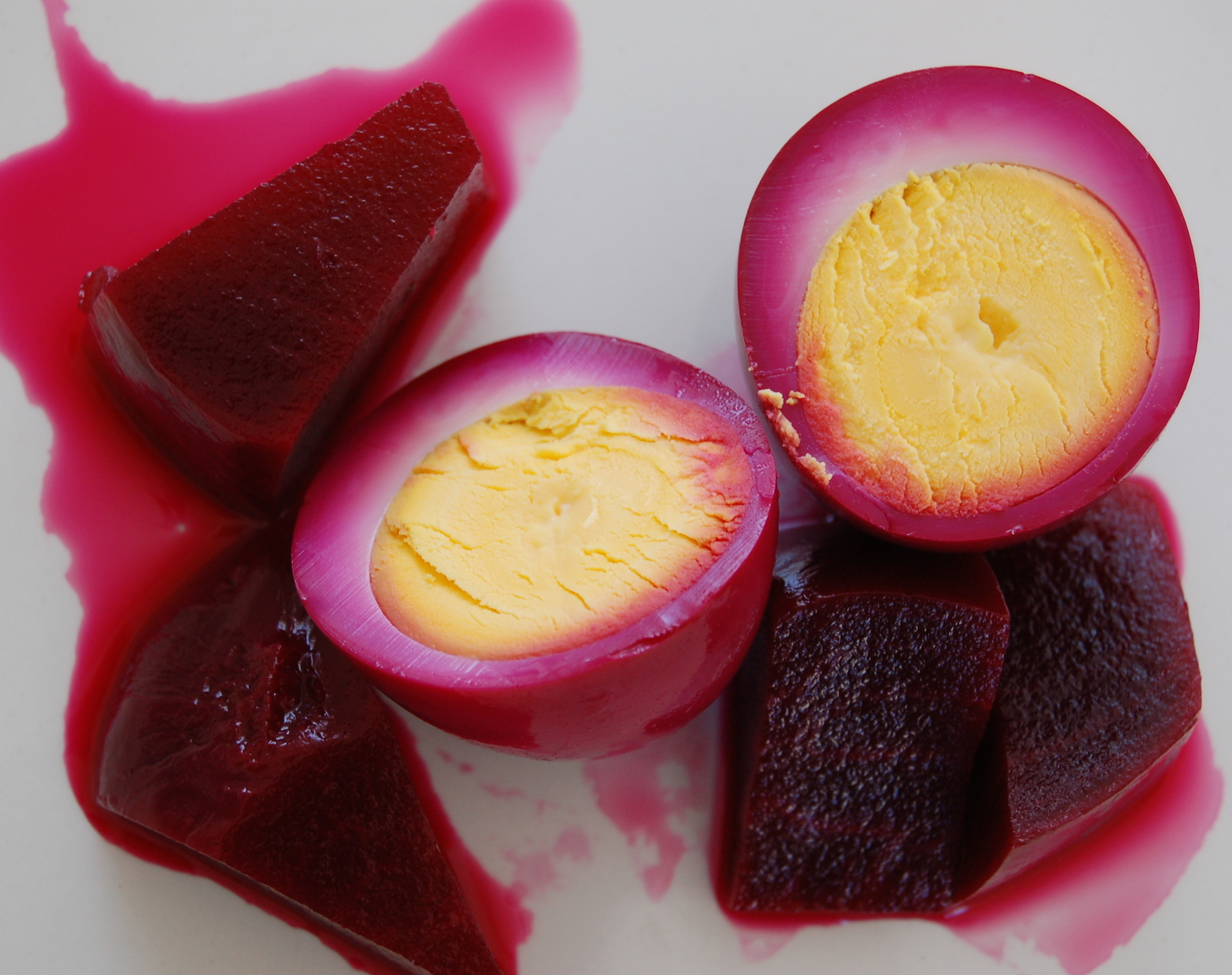
redbeedeggcropsm“Can you give me your recipe for red beet eggs?” I asked.

“What?” my mother replied. “There really isn’t a recipe.”

I suppose a good Pennsylvania Dutch girl would have been born knowing how to make them, or have learned as a young child by watching by her mother’s side. And I certainly might have, if I hadn’t been out catching frogs instead. But I had to ask as an adult, and I did manage to extract a vague recipe from my mom.

Red beet eggs are an acquired taste, like Chinese tea eggs (for which I can’t seem to acquire a taste). My daughter likes them, my husband humours me, and my son refuses to eat them. For me, though, they all but define summer. Their improbable colour, rubbery texture, and sweet/sour flavours, along with the pickled beets (which I actually prefer to the eggs themselves), always hit the spot on a hot summer day.

And I know they are memorable. My husband’s grandfather apparently spent some time in Pennsylvania as a young child. When I met him in his 90s, he still remembered the red beet eggs. (I almost said he “fondly” remembered them, but I really don’t know if it was a fond memory or not—as I said, they are an acquired taste).

A quick Google search turns up dozens of red beet eggs recipes, all of them different. Some include onion, pickling spices, cinnamon or cloves to add flavour. Some specify cider vinegar, others specify white. Some use white sugar, others brown. I like to believe that what my mother told me is true—there really isn’t a recipe. Red beet eggs are simply a cultural phenomenon—there’s no explaining them, no defining them. You either know how to make them or you don’t.

A Long-term Relationship with Food

grilled veggies meal3 smDieting websites and the media like to talk about our “relationship” with food–how and why we eat, how we use food to modulate our mood or to fill emotional needs. They tell us that if we can identify our eating habits, we can change them to become thinner or more healthy.

A gardener’s relationship with food encompasses far more than eating. It is more than a late-night ice cream binge; it is a long-term affair. I plan the garden, till the soil, plant the seeds, water, weed, squish pests, and do a hundred other tasks before finally harvesting, preparing and eating the food. For some foods, the relationship lasts well over a year, from planting to eating (or many years, if you consider the fruit trees).

A gardener’s relationship with food revolves about the seasons. A vegetable out of season tastes wrong, leaves me unsatisfied. Likewise, when a food is in season can become a key part of my relationship with it. For example, artichokes have become a comfort food for me, because they reliably produce during the early spring gap when there’s almost nothing to eat in the garden.

Do I love you because you're beautiful?

Do I love you because you’re beautiful?

A gardener’s relationship with food includes feelings about different varieties of plant. For example, I absolutely adore Brandywine tomatoes, so much so that I insist on planting them, even though they prefer a much hotter, longer summer, and don’t do well here. And I’ve grown very fond of Russian Red tomatoes, because they keep on producing until they are pounded down by repeated frosts, long after other varieties have given up.

A gardener’s relationship with food includes how a food is harvested and stored. Pumpkins make me feel surrounded by loved ones, because the family often helps pick, sort and store them. Hot peppers and garlic become special because of the care needed to string and braid them for storage, and their beauty as they hang in the kitchen waiting to be used.

A gardener’s relationship with food includes how it is prepared. For example, a jar of soup heated quickly for dinner when we all come home late is one of the most satisfying meals I know, because the soup was made by the whole family in an all-day team effort at the end of summer.

100_2519smMost importantly, I believe, a gardener’s relationship with food is a mutual one—I nurture the food, and the food nurtures me and my family. I walk through the garden and am fed. And when the family sits down to a meal, we thank not only the cook, but the gardener and the plants for the bounty before us.

Summer Simplicity

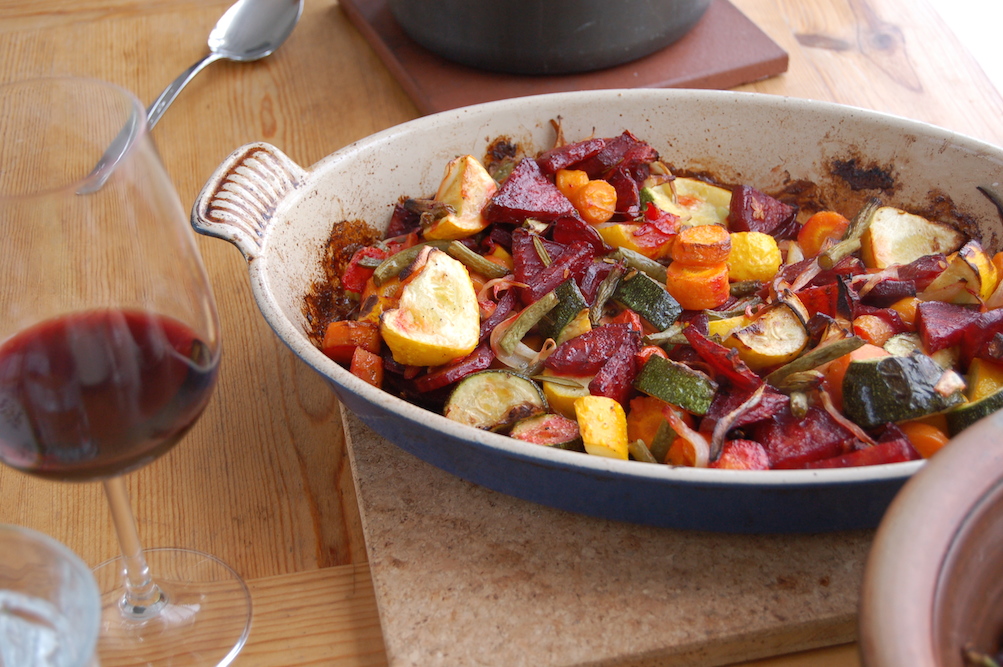
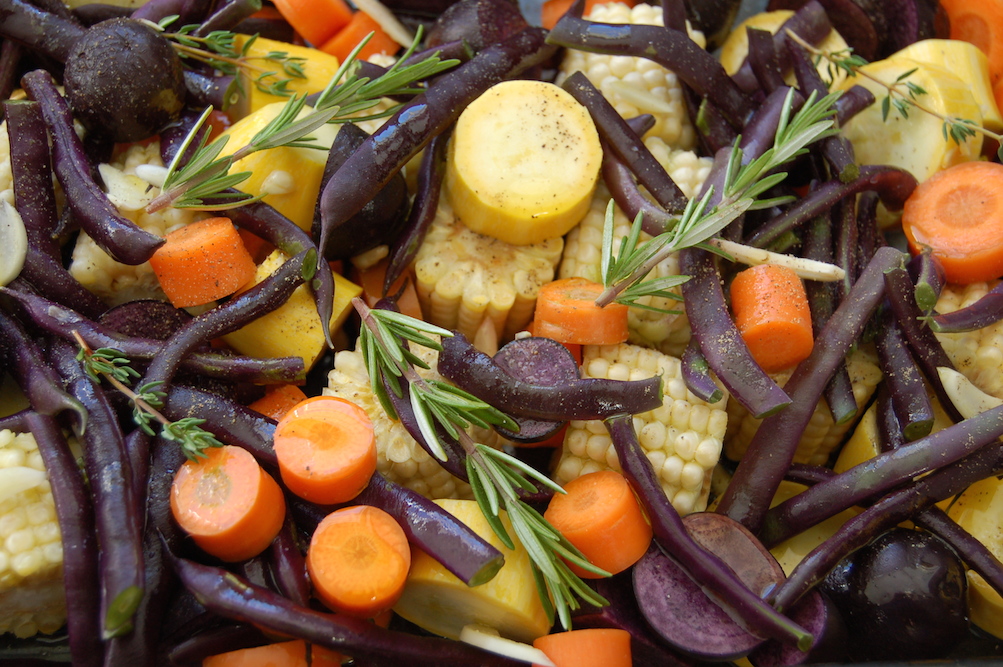
Roast veggies3smIronically, it’s when the garden is absolutely bursting with vegetables that I least feel like cooking. Hot summer days make me want to stay outside until dark. I don’t want to go inside to stand over a hot stove. I’d be happy to walk through the garden “grazing” instead of sitting down to a meal.

The good thing is that with so many vegetables at their best, summer cooking need not be elaborate. Simply prepared, and lightly cooked, fresh summer vegetables are at their best. Here is my absolute favourite simple summer meal. Though this dish does heat the kitchen, it’s quick to prepare and doesn’t need watching, so you can sit on the porch with a cool drink while it bakes.

Roast Vegetables

Chop a selection of vegetables into large chunks. Any of the following do nicely:

Carrot

Zucchini/courgette

Eggplant

Tomato (whole cherry tomatoes are especially nice)

Green beans

Potato

Sweet corn (still on the cob, cut each ear into about 4 chunks)

Sweet pepper/capsicum

Beets/beetroot (sliced to about 3mm so it cooks fully)

Mushrooms

Put the vegetables into a wide baking dish, along with 2 cloves of sliced garlic, a few sprigs of fresh rosemary and/or thyme, and salt and pepper to taste. Drizzle a generous amount of olive oil over the vegetables, and toss until evenly coated. Bake at 230°C (450°F) for about 30 minutes, stirring once after 15 minutes. Serve hot or at room temperature.


In Praise of a Cooking Spouse

I painted the living room today. There were lots of other things on my to-do list, but they didn’t happen. After a 40-minute trip to Leeston for a new paint tray, because the roller handle I bought yesterday (to replace the one that broke last week) was the wrong size for our paint trays, and then a 2 ½ hour trip to the city because the white paint I was sold last week wasn’t actually white paint (it was dark base, which looks white in the can, but actually doesn’t cover anything), I finally managed to make some headway on the job. Then I remembered I was supposed to milk my neighbour’s goats, so I dashed around cleaning up, grabbed my milk pot, and headed over…only to discover that it’s NEXT week she needs me to milk for her. At this point, it was 6:30 pm, the living room was still unfinished, and I hadn’t even thought about making dinner yet. I was ready to have beer and pretzels and call that a meal.

“Can I make you a nice meal?”

My marvellous spouse allowed me to continue painting while he grilled vegetables and polenta (and even poured me a glass of wine, never mind how the trim painting gets a little wobbly…).

I cook most weekday evenings, just because I’m the first one home. On weekends, we usually cook together. So it was delightful to have someone cook for me. What a wonderful gift!

The Pickle Lady

dilled beans7 smWhenever I think of my great grandmother Sturgis, I think of pickles. Now, she died when I was just a young child, so I’m certain my memory of her is wildly inaccurate, so I offer my sincere apologies to anyone who knew her. What I remember about her is hundreds and hundreds of jars of pickles—way more than an elderly married couple ever needed or could possibly consume. I remember a basement lined with shelves laden with dusty jars of all types of pickle–chunks, bread and butter slices, whole sweet pickles, dill spears… I imagine her an avid gardener who just couldn’t bring herself to rip out those cucumber plants once she’d put up enough pickles for the year. I know the temptation. The cucumbers are there. Pickles are good. You wouldn’t want those cucumbers to go to waste, would you? Pretty soon, the pantry shelves are groaning under the weight of pickle jars, you’re buying vinegar by the case, and you’re sending every guest home with a selection of half a dozen types of pickle. Before you know it, you’re known as “The Pickle Lady”. Neighbourhood children sneak around the house, daring each other to peek through the windows for a glimpse of the reinforced steel shelving stacked with pickles. Guests feign cucumber allergies. Family members drop hints about obsessive compulsive disorders their “friends” have. Your husband threatens to move out unless you remove the stacks of pickle jars from the bedroom.

This is why I only plant pickling cucumbers every other year. I can easily make two years’ supply of pickles with one planting (and still have cucumbers left over for the neighbours who like to make their own pickles). And it reduces the risk of becoming The Pickle Lady.

Of course, other vegetables can be pickled…

If you can’t beat ‘em…

Weeds. Gardeners hate them.

But weeds are just plants. And the weeds in my garden here in New Zealand are almost identical to the weeds I had in my garden in Pennsylvania, and the one in Minnesota, and even my garden in Panama.

So what are these weeds? They’re the plants that European colonists couldn’t do without. Food, medicine, pest control—it’s all there in those common garden weeds. Back when my husband and I lived and worked at residential camps and couldn’t have a garden, we used to forage for weeds to supplement the nutritionally suspect camp food we were served. Dandelions were one of our favourite early spring salad greens. Picked at the right time (before the flowers emerge), they are nutty and pleasantly bitter.

I took a walk around my garden today, and found the makings of a lovely meal among the weeds.

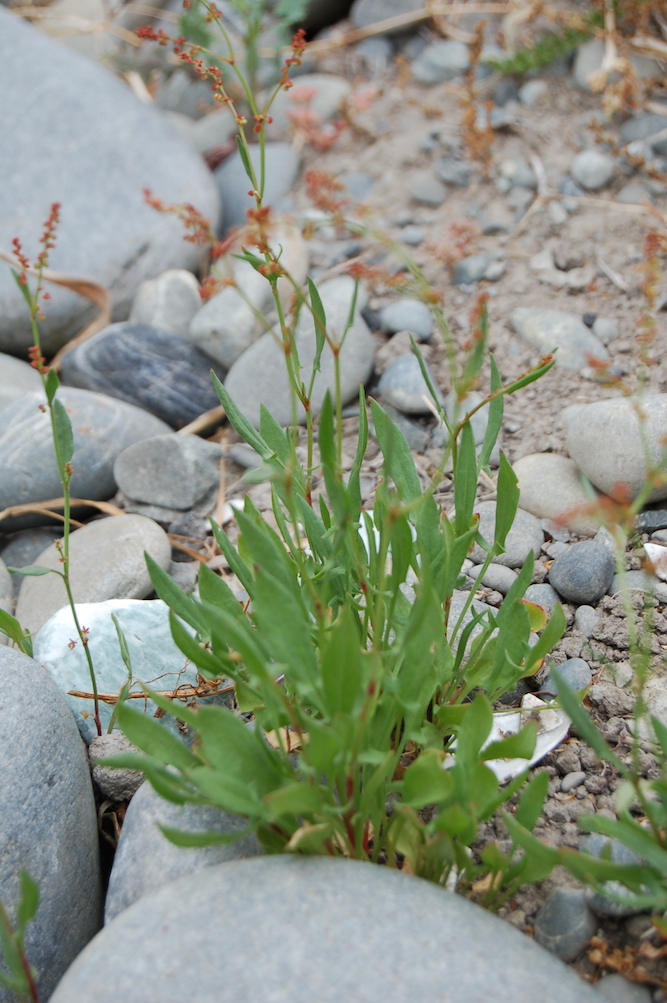
You'll be happy to eat pernicious sheep sorrel, just so the @#$&* things don't resprout.

You’ll be happy to eat pernicious sheep sorrel, just so the @#$&* things don’t resprout.

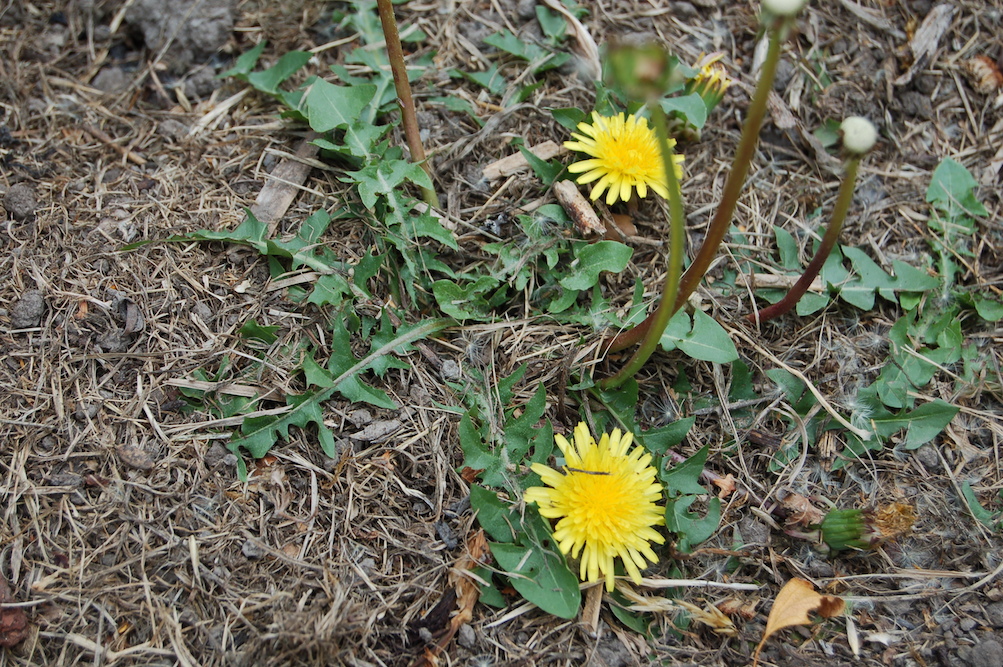
Dandelion greens make a delicious, nutty early spring green. Pick them before they flower or they'll be bitter.

Dandelion greens make a delicious, nutty early spring green. Pick them before they flower or they’ll be bitter.

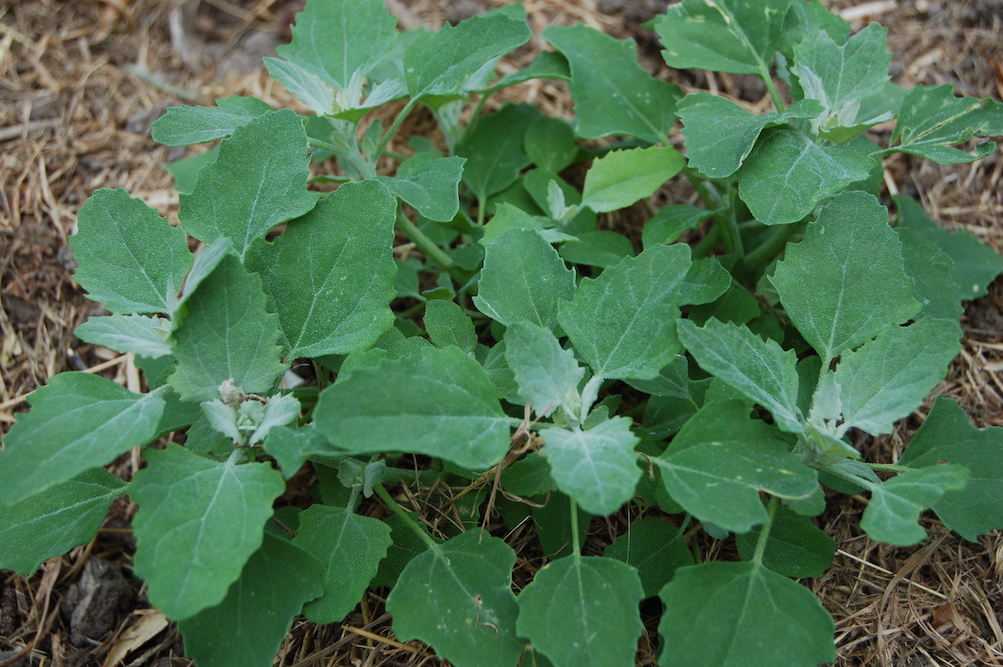
Lambs quarters, or henbit is a nice salad green all summer. The chickens love it, too.

Lambs quarters, or henbit is a nice salad green all summer. The chickens love it, too.

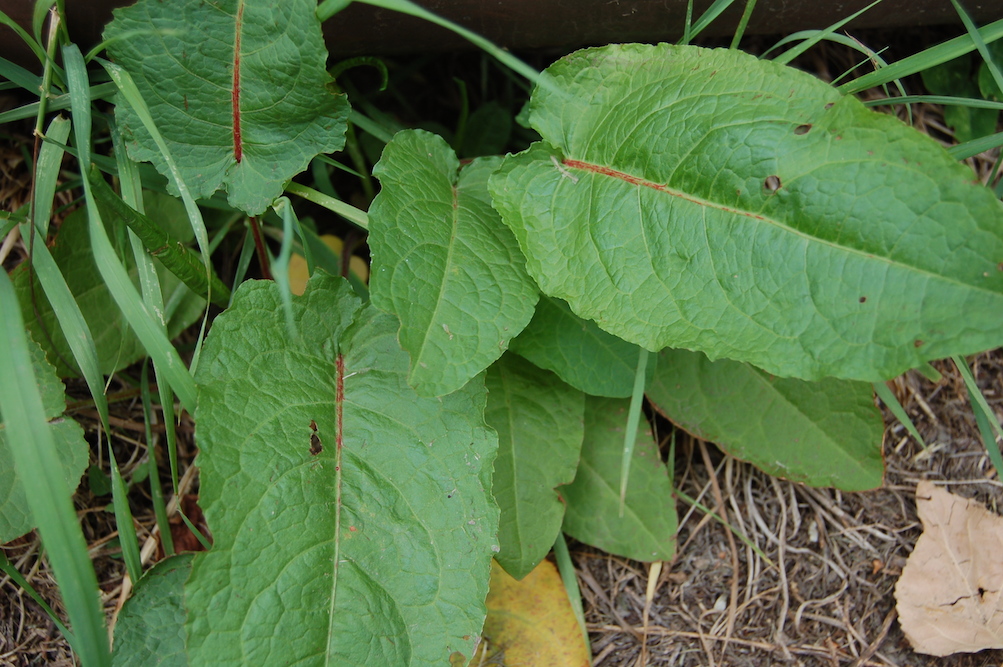
Cook up some dock greens as a side dish.

Cook up some dock greens as a side dish.

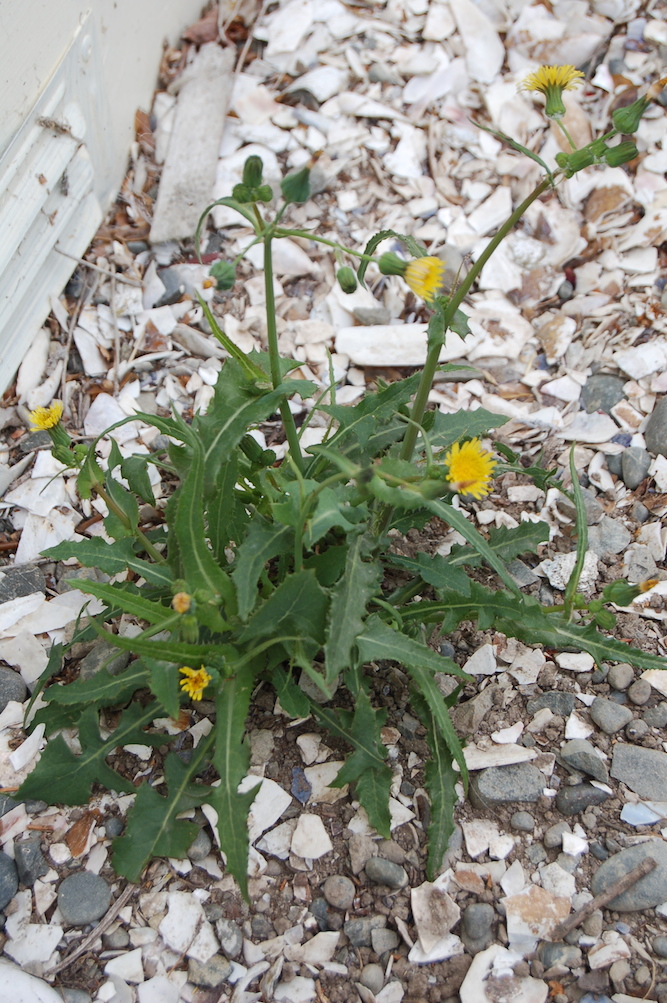
Even prickly sow thistle can be cooked and eaten.

Even prickly sow thistle can be cooked and eaten.


So next time you pull out a handful of weeds, remember—if you can’t beat ‘em, just eat ‘em!

Coffee

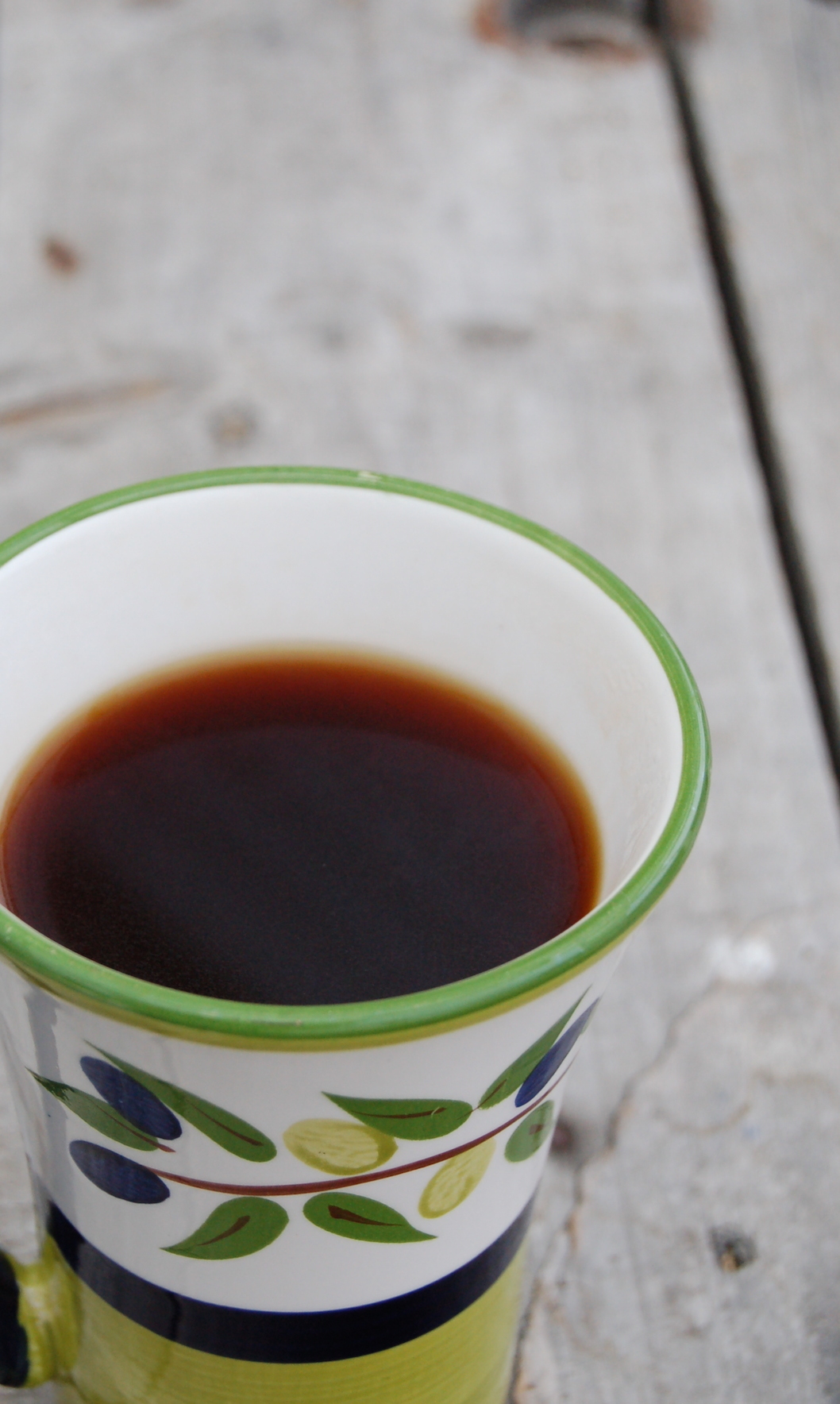
Coffee3 crop2 smI don’t know what his real name was; everyone called him Tio Chon (Uncle Chon). And everyone knew Tio Chon—he made the best coffee in El Valle.

When I say made here, I really mean it. He grew the beans, roasted them and ground them. He mixed his coffee with an ethereal combination of spices—anise, cloves, a hint of cinnamon, and who knows what else (he sold his coffee, but wouldn’t divulge his secret spice mix). I don’t like “flavoured’ coffee, but Tio Chon’s was truly magical.

Coffee was an important drink in Panama, though we didn’t agree with Panamanians on how it should be prepared. Coffee in Panama is almost saturated with sugar. Indeed, it’s so sweet, it attracts ants, which die in the hot liquid and float on the surface of every cup. You learn to strain them out with your teeth, and always toss the last ant-laden splash on the ground.

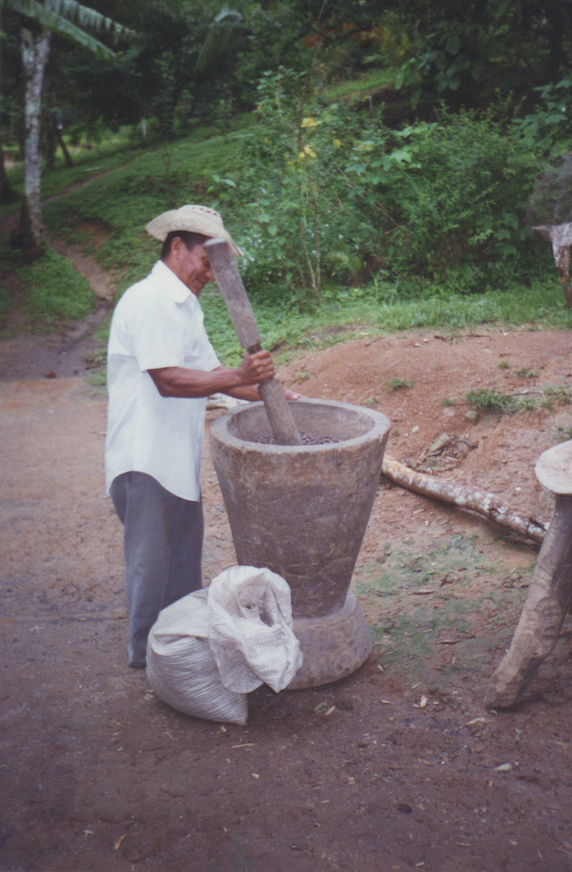
Julian grinding coffee.

Julian grinding coffee.

Our landlord and friend, Julian, was a frequent evening visitor. He always accepted a cup of coffee, and he always laughed at me when I added the sugar. “More! More!” he would say. “I don’t know how you drink it without sugar. It’s so plain!” (he actually used the Spanish word simple here, for which there isn’t a good English translation—plain, boring, flavourless, without character, lacking pizzazz—the word encompasses all these ideas). Julian was amused by our cultural differences.

Coffee illuminated some of those differences. The farmers we worked with believed that you shouldn’t drink a cold drink when you are hot—it would make you sick, they said. So instead of taking water to the fields, they took coffee, which they considered a refreshing drink after hot work. I accepted the coffee, but carried a water bottle with me, too.

Though we tend to think of coffee as an adult beverage, in Panama everyone drinks it, adults and children alike. And, surprisingly, kids don’t tend to drink hot chocolate. I only had hot chocolate once, prepared for me by our neighbour, Maria, from her own cacao pods. It was oily and bitter; it’s no wonder the kids prefer coffee.

I learned to drink coffee in Panama, and I can’t drink it without thinking of the people and places we left behind there—the laughter and conversation always accompanied by a cuppa. Coffee is one of the few links left to that incredible time and place.