The French Potager

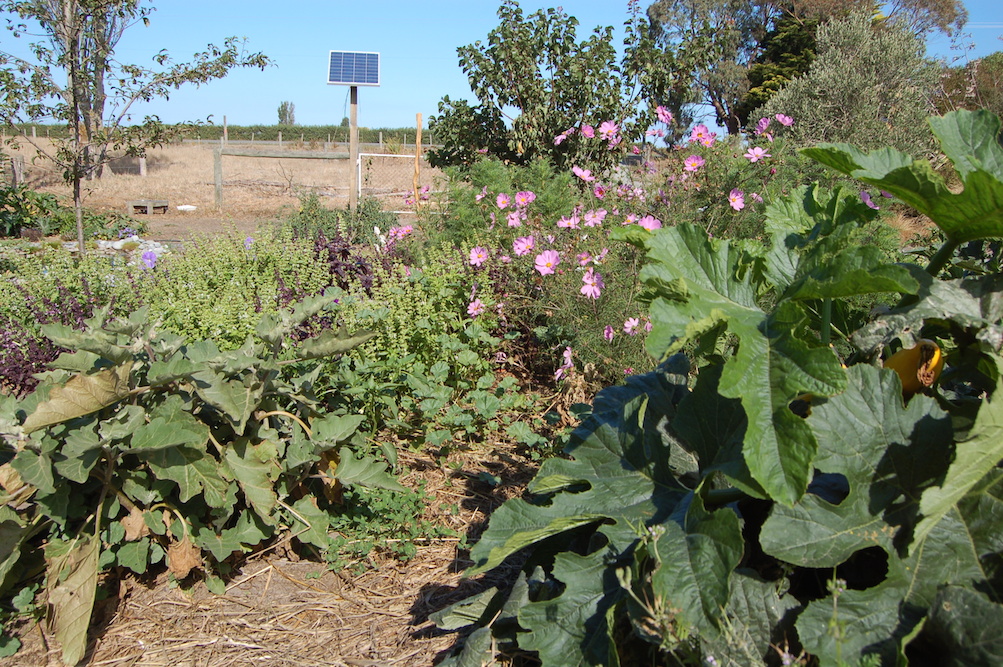
Zucchini, eggplant, basil and cosmos nestle happily together.

Zucchini, eggplant, basil and cosmos nestle happily together.

I love the idea of the French potager—the small garden densely planted with a mix of flowers, herbs, and vegetables. When we lived in St. Paul, Minnesota with a yard the size of a postage stamp, we had a delightful potager in raised beds near the house, and flowing down rocky terraces to the sidewalk. Showy okra flowers competed with cosmos and marigolds for the most beautiful plant award. Eggplants nestled next to thyme, corn formed a backdrop for zinnias, and colourful lettuces marched in a neat border around the whole arrangement.

Now that we have more than enough space, the vegetables are segregated and confined to the vegetable garden, where I can be sure they are well watered and mulched, and I don’t worry about a few spent, ugly plants hanging around. I’ve also found that here in the land of pernicious twitch (couch grass), planting perennials and annuals together is usually a recipe for disaster—annuals don’t compete well with twitch, and the perennials harbour fragments of twitch among their roots, providing an endless source of the weed.

But this spring, Ian was looking for temporary plantings for his new pond garden—plants he wouldn’t mind killing off along with the weeds in the fall when he plants the perennials he wants there. He picked up a few flats of annual flowers, took all my leftover vegetable plants, and created a delightful potager bursting with colour, fragrance and flavour. It’s a lovely reminder that you don’t need a “vegetable garden” to grow food, and that vegetable plants are beautiful, too.
There Will Be No Blog Today…

DSC_0001 copy4.26 pm.

I sit, finally, to blog.

Do I blog of the cheese I made this morning, pressing on the kitchen counter? Do I describe the magical beauty of liquid milk congealing to a smooth, firm solid? The hours of tedious stirring? The firm, almost live feel of a new cheese?

Do I blog of the ten quarts of tomatoes, onions, peppers, tomatillos and spices I boiled down into ketchup today? Do I write of the bees that swarmed the kitchen when the vinegar was added, inexorably drawn to the sharp, spicy smell?

Do I blog of the corn and soybeans still awaiting me in the garden? Of the hours of steaming pots, and dirty dishes that still await me today?

No. I am weary of the kitchen. I am sick of its tantalizing fragrances and its steamy dishwater. I am irritated by the bees, who, once inside, can’t find their way out, and force me to watch every step for fear of ending my day with a trip to the hospital.

So there will be no blog post today, of the lingering smell of cloves and allspice, no detailed description of the art of cheese, no reminiscing of childhood afternoons shelling soy with my sister.

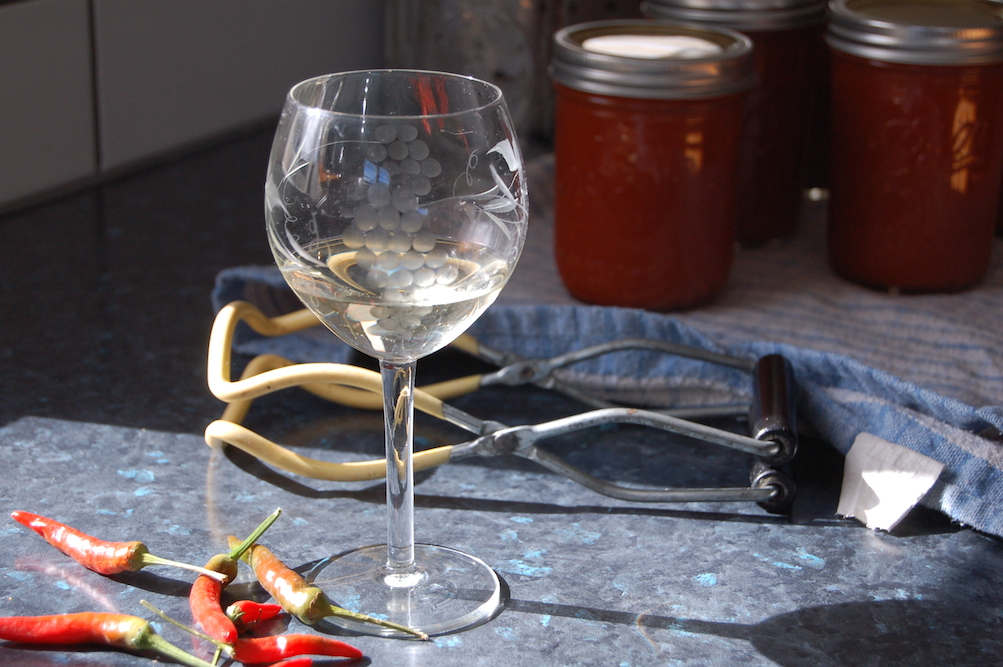
No. Instead, there will be 15 minutes of rest. A glass of wine. And then back into the fray.

The Exuberant Kitchen

messykitchensmMy kitchen is a mess.

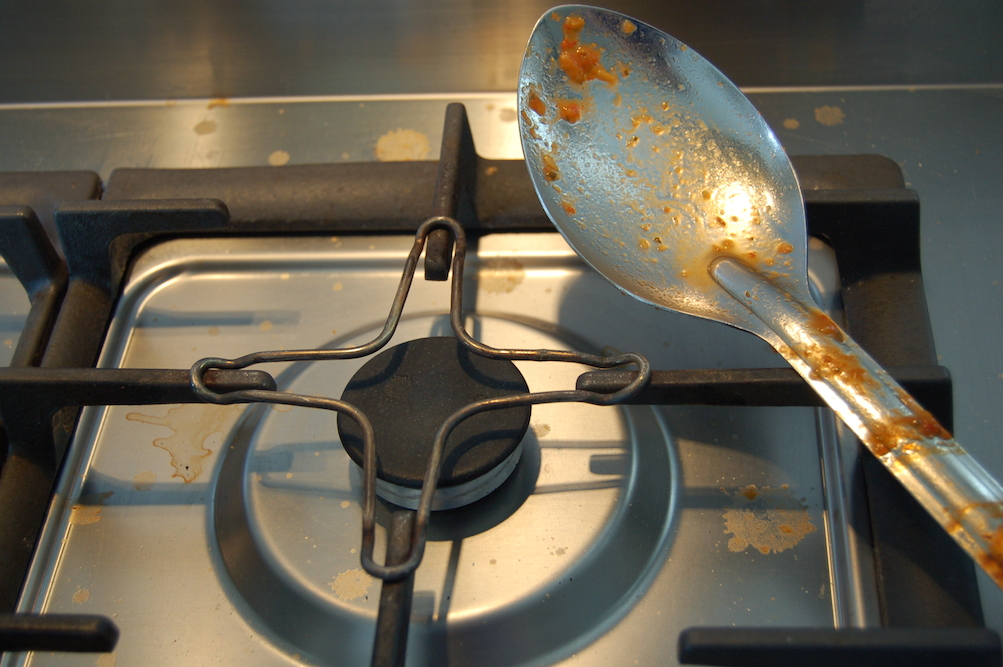
The stove, and the wall behind it is splattered with tomato sauce. The floor is littered with bits of onion skin, lost basil leaves, and sesame seeds. The backsplash behind the sink is splattered with dirt.

It’s not that I don’t clean. In fact, I’m a bit obsessed with cleaning. I’ve been accused (rightly, I’m afraid) of preferring to stay home and mop the floors rather than go out on a Friday night.

But I can clean constantly, and still have a messy kitchen, because the kitchen is in near-constant use. It’s a working space, and I’ve learned to accept it as such. Right now there is a vat of pasta sauce boiling down on the stove, and an hour ago, the kitchen was the scene of a massive vegetable preparation operation. There will necessarily be dirt, vegetables and tomato sauce everywhere. Earlier, it was being used for pasteurising the morning’s milk and for making mayonaise. Later, it will be covered in flour as I roll out homemade pasta.

Flipping through a Home and Garden magazine, you could be forgiven for thinking that kitchens are meant to be gleaming, spotless backdrops for perfect flower arangements. Ours, however, is usually a grubby setting for a pile of dirty dishes.

Our kitchen works hard. All five burners on our stove are regularly going at once, and some days, I swear we wash every pot, bowl and spoon twice. A space hosting so much activity can only be truly clean for brief moments—say, between midnight and 2 am on every fouth Tuesday.

But a kitchen like ours is also a scene of laughter, life, and love. It is steeped in delicious odours, and tantalizing flavours. It is where the produce of the garden is transformed into the fuel for our bodies and the treats for our celebrations. It’s not a messy kitchen, it’s an exuberant one.

Cultural Icons

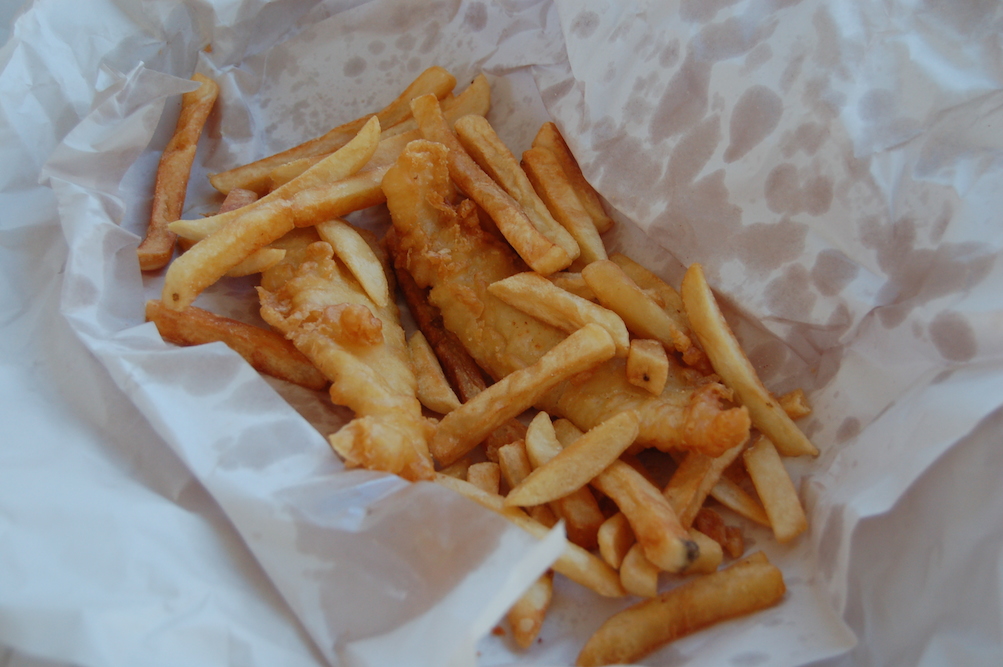
fishnchipssmWhat does it take to become a Kiwi? An appreciation for the uses of number 8 wire? The ability to pronounce Whangaparaoa without stumbling? Knowing the culturally acceptable way to pass a mob of sheep on the road? Understanding that a statement like “I wonder if you should move your car out of the way?” actually means “MOVE YOUR F#*&%^ CAR OUT OF THE WAY!” An ability to converse coherently about rugby?

All these things are certainly important. Equally important is an understanding of New Zealand food icons.

Food is central to cultural identity. Apple pie and hot dogs are quintessentially American, a Panamanian festival wouldn’t be complete without ojaldre, and Costa Ricans would lose their sense of self without black beans.

Wherever I’ve travelled, I’ve tried to experience the local, iconic foods so as to fully experience the culture. I try not to let my own dietary choices prevent me from these experiences, so among other things, I’ve eaten spicy chicken salteñas from a street vendor in Bolivia, and titi (muttonbird) traditionally caught and preserved by local Maori. These experiences haven’t always been positive—the spicy salteña tasted a lot worse coming back up an hour later in a public park—but they’ve always taught me something.

Modern Kiwi culture is culinarily represented by pavlova (a meringue topped with fresh fruit), kiwi fruit, and fish and chips. Determined that our kids not be culturally and socially handicapped by vegetarianism, we’ve made a point of occasionally picking up fish and chips at our local shop. We don’t do it often—maybe 3 times a year—so it’s a rare treat for the kids (as greasy, salty fried food probably should be), but it has worked. Though they still speak with an American accent, and have no interest in rugby, they can connect with their peers over the cultural icon of fish and chips. And I can think of no better way to fit in than around the dinner table.

Unnecessary kitchen gadgets

Everyone has a drawer in the kitchen—the junk drawer. In it goes all the little things that don’t quite fit into a neat category—corkscrews, melon ballers, garlic presses, vegetable peelers, the odd rubber band.

In every junk drawer, there’s probably a selection of effective but completely unnecessary kitchen gadgets. Gadgets useful for exactly one thing. I had a rummage through ours today and found these gems.

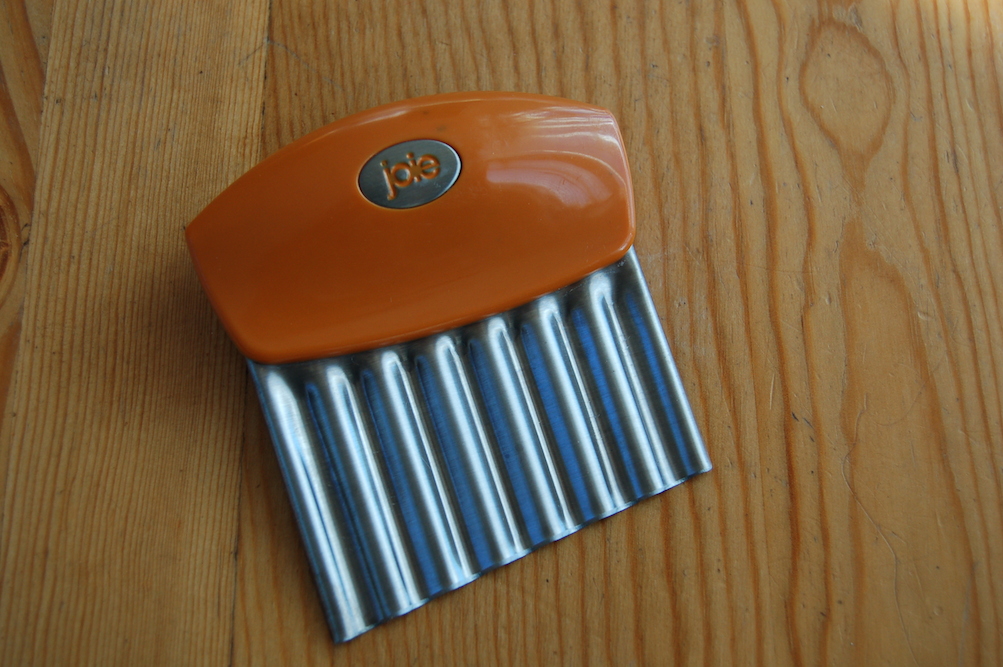
DSC_0010 smThe crinkle cut knife—This truly does make awesome French fries, but it’s shorter than your average potato, and who wants to sit there and carefully line up the little wavy lines so your fries look nice?


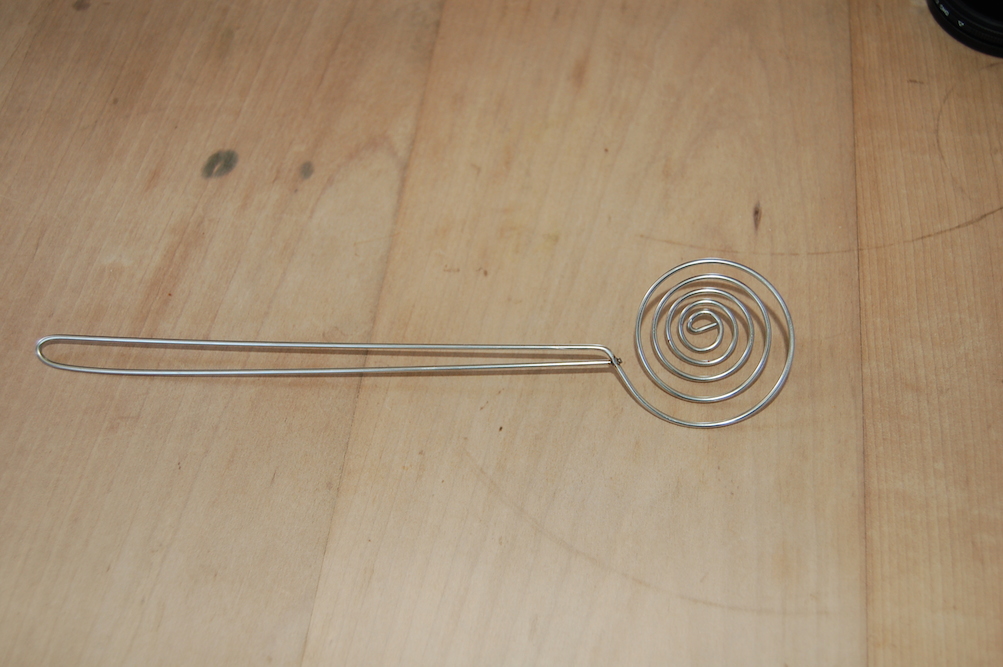
DSC_0012smThe candy dipper—If this worked as well as a fork, I might pull it out when I dip truffles. It certainly looks really cool. Unfortunately, an ordinary fork is easier to use.


DSC_0001 sm

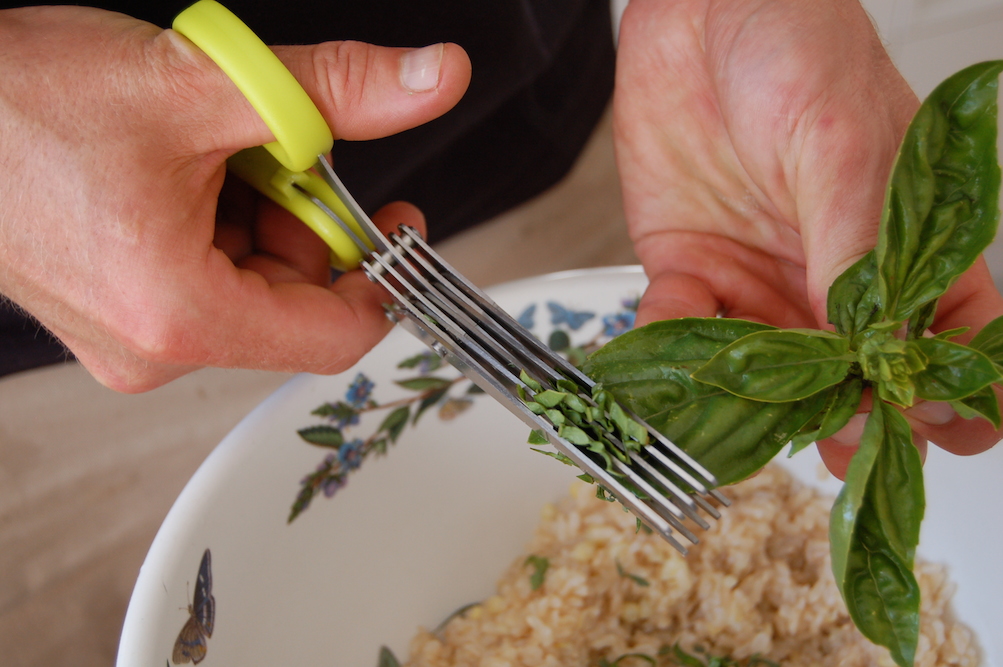
The herb scissors—These are all the rage right now here; every kitchen store has them. I took one look at them and thought, “Cute, but you’d never get them clean.” Ian took one look at them and thought, “Great stocking stuffer for Robinne!” We pull them out occasionally for the humour value, but I find a knife works just as well, and is easier to clean.

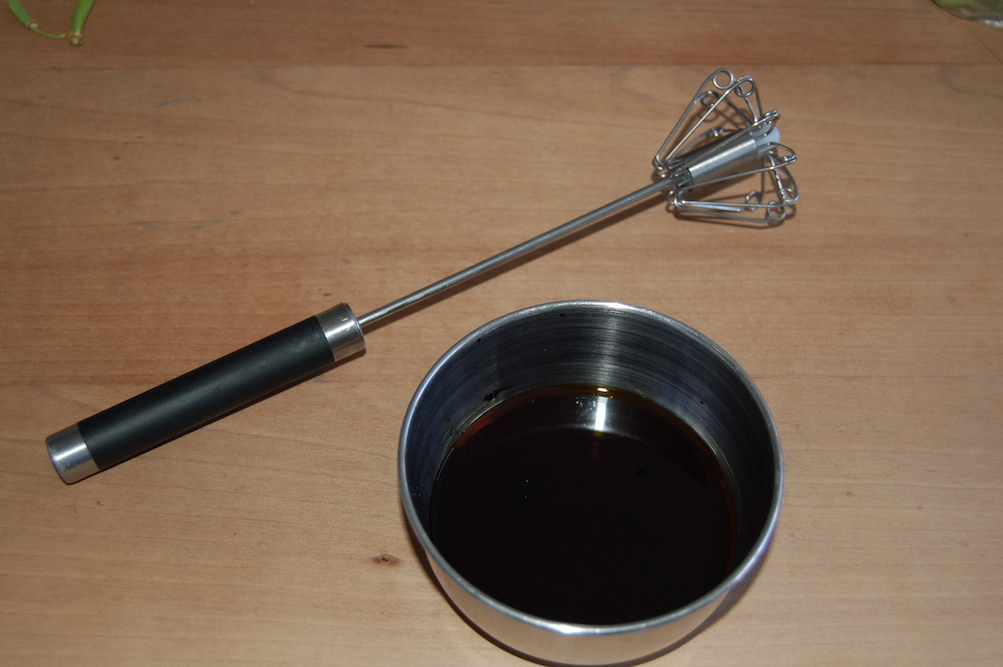
whisk2 smThe spring-loaded whisk—I don’t even really know what to call this gadget. Press down on the handle, and the whisk spins. For small quantities of vinaigrette, it does a fine job, but give it anything more, and it can’t manage. Even for stuff it could manage, I still tend to reach for a fork instead.

What unnecessary kitchen gadgets are in your junk drawer?


The (not so) Humble Onion

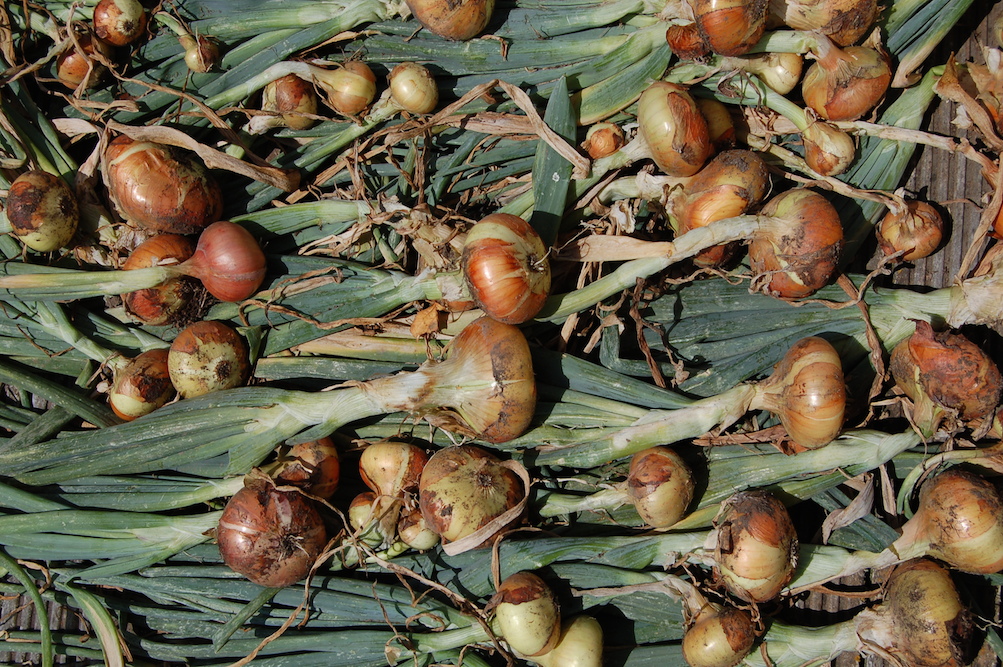
DSC_0010smI never thought much about onions until I tried to grow a year’s supply of them. Onions were just onions—a necessary component of most nights’ dinners, but not a feature. In fact, onion was probably my least favourite vegetable. My first attempts to grow enough for the year were abject failures. Onion was such a mundane vegetable, I just assumed it would be easy to grow.

I was wrong. First, the tiny seeds didn’t like to germinate in the garden, so I learned to start them indoors, and transplant the seedlings. Then I discovered that onions are very sensitive to drought, and I needed to improve my watering regime or they would never get larger than a walnut. I also quickly learned that they hate competition and I needed to keep the onion bed scrupulously weed free. Finally, I found they were heavy feeders and liked a generous helping of good quality compost in their bed. Such finicky tastes for a vegetable I assumed was little more than a weed!

I did eventually get it right, and can now keep us supplied with onions year round. As with most vegetables, I gained a greater appreciation for subtle differences among varieties when I started seriously growing onions. One of my best “discoveries” has been red onions. The first time I grew them, I cured and stored them like the others, with poor results. They never properly dried, and rotted or sprouted within a month of harvest. What I’ve since realised is that they should be eaten fresh. And when eaten fresh, they are like an entirely different vegetable—so sweet and succulent, that even I like them raw in salads. Now we start eating the red onions as soon as the first bulbs swell. They fit nicely in the food year, between the last spring onion and the storage onion harvest.

The best thing about them is they’ve taught me to better appreciate a vegetable I was never overly fond of before. I think about the times I’ve had French onion soup and didn’t like it. Was it because it was made with the wrong variety of onion? Did I spend the majority of my life unenthusiastic about onions because all I’d eaten were the store bought varieties? Seems I’m going to have to do some more research and try some new varieties. There are dozens to choose from in the seed catalogues!

There’s only two things that money can’t buy…

DSC_0033 smTrue love and home grown tomatoes—the only two things that money can’t buy, according to singer Guy Clark. I could add a few other foods to that list, but he’s definitely right about the tomatoes.

Home grown tomatoes are the only ones we’ll eat any more. Life’s too short to eat the store bought ones. I plant 6 or 7 varieties every year—a couple of new ones, and a bunch of old favourites. Each variety has different uses.

Brandywine is without a doubt, the best tasting tomato on the planet. So good that I plant it every year, even though the summers are really too short and cool for it here. For raw eating, nothing beats a Brandywine.

Delicious is almost as good as Brandywine. It’s my insurance policy; it grows better in cool weather than Brandywine does. I’m sure to get some Delicious, even if the Brandywines don’t give well, or they all get eaten by the birds (they think Brandywines are best, too, and even eat them green).

Amish Paste is robust and prolific. Unlike many other paste tomatoes, it manages well with erratic watering. Fleshy and dry, it makes great sauces.

Russian Red is my prolific, hardy workhorse tomato. It has small fruits with a fine, but not stellar flavour. Its value lies in its ability to flourish in cold weather, ripening fruits long after other varieties have succumbed to frost.

Suncherry is a lovely red cherry tomato that not only fills lunchboxes with juicy goodness, but also dehydrates well, providing us with lovely sweet/tart dried tomatoes all through winter.

Of course, the best way to enjoy a tomato is standing up in the garden, but here’s one of my favourite tomato dishes. This is straight out of Vegetarian Cooking for Everyone, by Deborah Madison. Make it with the best tomatoes you have, and don’t use an iron skillet or the tomatoes will taste tinny.

Tomatoes Glazed with Balsamic Vinegar

1 ½ pounds tomatoes

2 tablespoons butter

3 tablespoons balsamic vinegar

1 plump shallot, finely diced

salt and pepper to taste

Cut tomatoes into wedges about 1 ½ inches across at the widest point. In a skillet large enough to hold the tomatoes in a single layer, heat the butter until it foams. Add the tomatoes and sauté over high heat, turning them over several times, until their colour begins to dull, about 3 minutes. Add the vinegar and shallot and shake the pan back and forth until the vinegar has reduced, leaving a dark, thick sauce. Season with salt and plenty of pepper.

The Smell of Summer

DSC_0021 copyThis time of year can be stressful, with birthdays, a new school year, endless vegetables that need to be picked and processed, milking to be done, and cheese to be made. By 8pm each day, when I’m finally getting out to pick vegetables, I’m exhausted and grumpy.

But the corn is flowering, and all I have to do is inhale deeply that unmistakable fragrance to be transported back to my childhood, catching fireflies in my nightgown in the back yard on hot summer nights. Stress and fatigue fade with every breath. Life is good and I am at peace. I could stand there inhaling that memory of childhood summers for hours. In fact, I sometimes sneak out there with my morning coffee, just to stand in the middle of the corn, breathing. It is the smell of hot summer days and humid nights, skinned knees, grasshoppers and cicadas, and wild games of tag among the corn rows. It is the smell of freedom from school, schedules, and other obligations. It is the smell of childhood wonder and possibilities. With every breath, some of that wonder, some of those possibilities become real again.

Dwarf Cakes

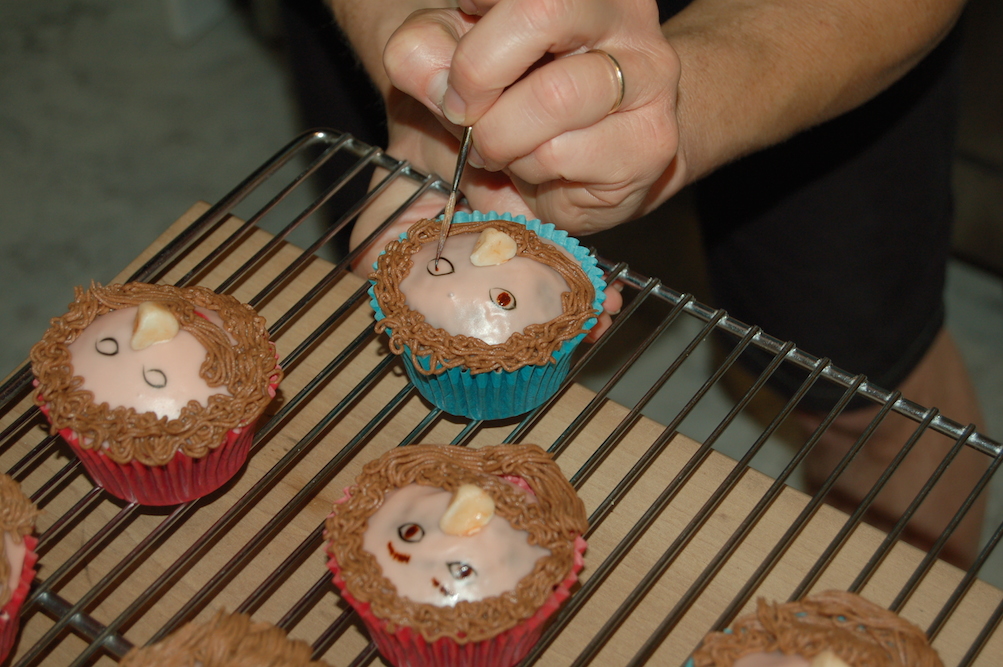
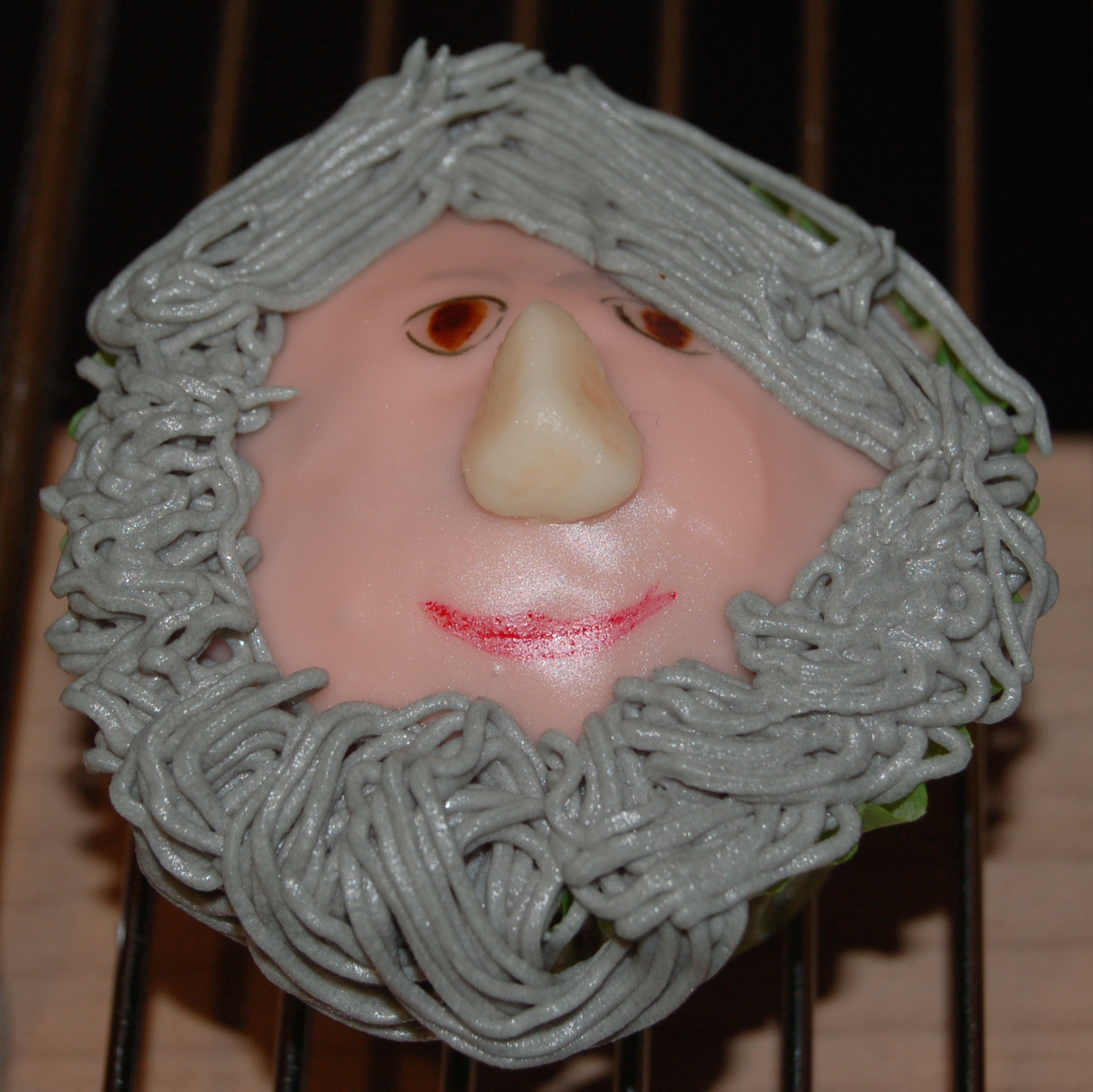
dwarves2smOver the school holidays, we saw the final Hobbit movie on the big screen, so I suppose it’s no surprise the kids wanted Hobbit themed cakes this year for their birthdays. The joint birthday party this year was held at Okain’s Bay—a weekend on the beach with a few friends. The party cake had to be able to travel, so a big elaborate confection like last year’s Smaug cake wasn’t going to work. I suggested decorated cupcakes instead, and the kids immediately decided they had to be dwarf faces.

So I pored over the cast photos from the Hobbit, made dozens of marzipan noses, and agonized about how to create braided icing. Some ideas worked, and some didn’t. Here are the results.dwarves4sm dwarves12 Dwarves13 dwarves16 dwarves17 dwarves18 dwarves19 dwarves20 dwarves21 dwarves22

Cheating the system

Oyster mushrooms1smMy husband cheats. No, not in that way. He cheats to beat the unwritten rule of summer: if we didn’t grow it, we can’t have it.

In summertime, there is so much food coming out of the garden, we don’t allow ourselves to buy treats like mushrooms. All summer long, we eat like kings, but keep thinking, “Boy, this is great, but it would be even better with some mushrooms.”

But this year, we can have mushrooms without feeling guilty about not eating our own produce. A couple of months ago, Ian and the kids “planted” mushrooms.

Hanging in the pump shed, like sides of beef in the butcher’s back room is a row of plastic sleeves stuffed with straw, inoculated with oyster mushrooms. They require no weeding, no watering, no pruning. They don’t take up space in the vegetable garden. We just go out there and harvest beautiful mushrooms—feels like cheating.

Grilled, sautéed, stir fried…doesn’t matter how they are prepared, these delicious little fungi put the crowning touch on our summer menu.