Soy: The Asian/Pennsylvania Dutch Cultural Conundrum

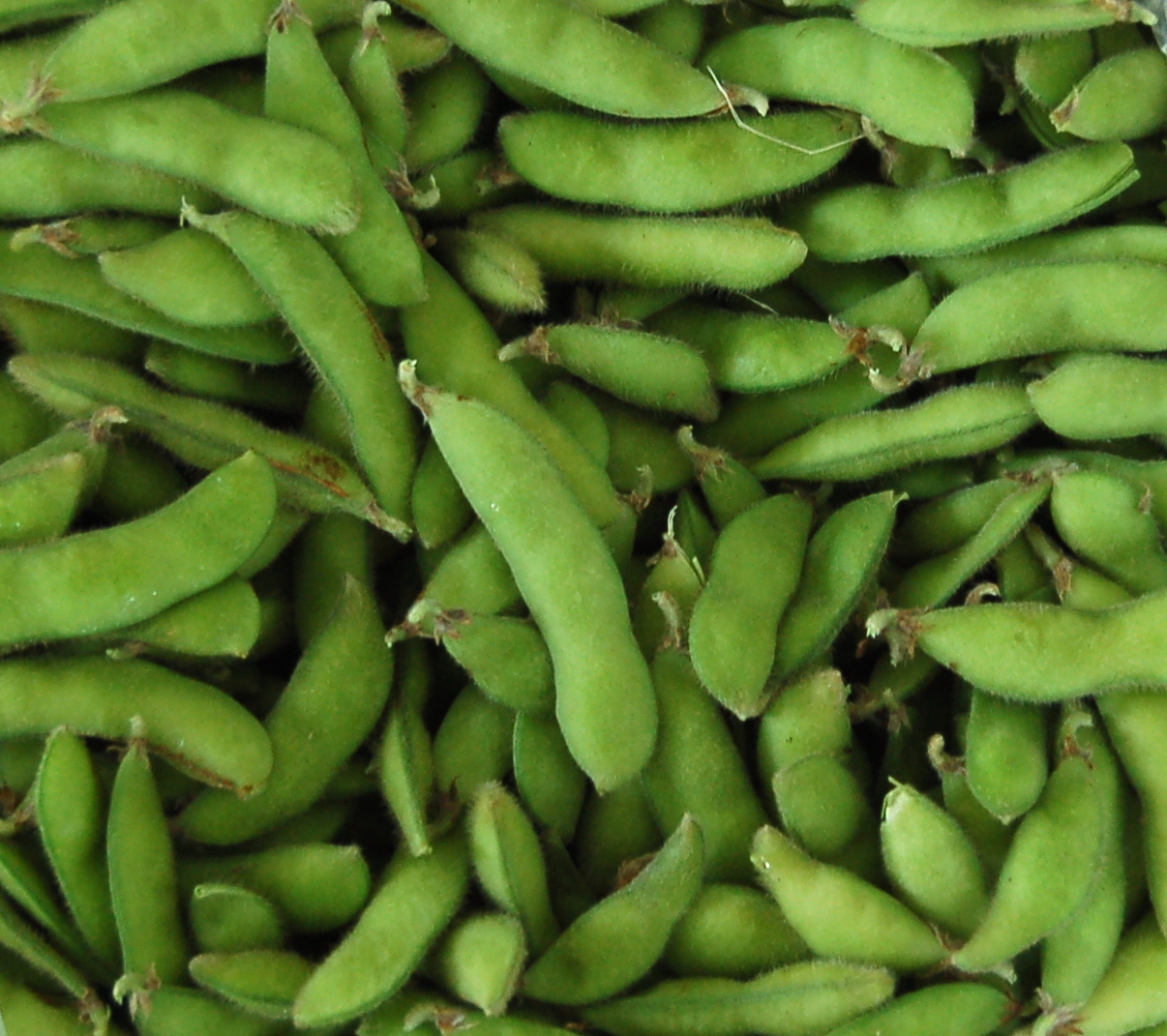
soycropI grew up thinking soy beans were an ordinary garden vegetable. Every year, my mother planted soy from seeds purchased at the tiny general store in Mastersonville. It wasn’t until I was 21 and finally living in a “real” house on my own (not in the university dormitories) that I realised the rest of America didn’t even know what soy beans were. My attempts to find fresh soy beans in 1990 in Ann Arbor, Michigan failed. In fact, the only soy product I could find were “soy nuts”—roasted, salted soy beans—at a health food store. They were stale and mealy, and so hard they nearly broke my teeth.

It seemed that no one outside of Lancaster, Pennsylvania ate fresh soy beans as a vegetable. Everyone thought I was nuts. I started asking my mother to send me a packet of seeds every spring, from the store in Mastersonville.

Many years later, I learned about Japanese edamame and recognised it as the fresh soy beans of my youth. Fresh soy beans have been eaten since at least the 1200s in China, Japan and other Asian countries, and are apparently popular bar food in Japan, served steamed and salted in the pod to be snacked on alongside your beer.

Soy beans arrived in the American Colonies in 1765, but were mostly used as a forage crop. When and why the people in south eastern Pennsylvania began to eat fresh soy is unclear. And why no one else in America did is even more unclear, since soy’s sweet, nutty flavour beats the socks off of other beans Americans commonly eat fresh (I’m thinking about those mealy lima beans…).

Soy beans as garden vegetable only arrived in New Zealand in the past 6 years or so. I was unable to get seeds when we first arrived, and when I first contacted an Asian seed supplier to enquire about them, I was told they were still building up their stock, and couldn’t sell them yet.

Even now, though I can get soy bean seeds, I have been unable to locate the appropriate bacterial inoculant for them, and they grow poorly here. Still, I grow them–my garden feels incomplete without them. However it came to be, I feel a cultural connection to soy beans—that Asian/Pennsylvania Dutch fusion food. Go figure.
Cleaning Up: Why I Don’t Need a Dishwasher

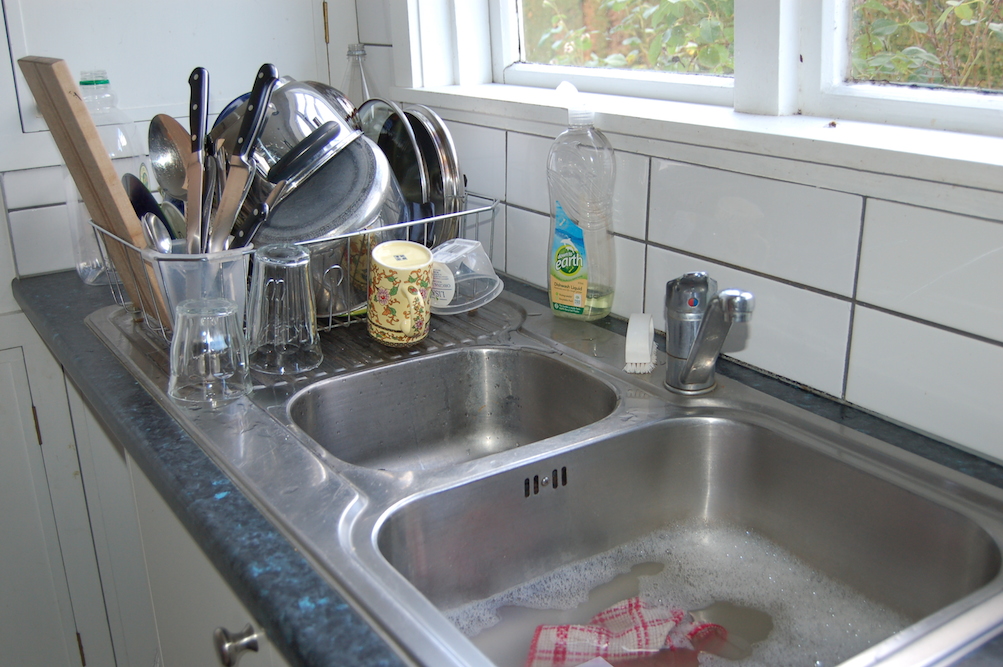
DSC_0004 copyI have lived 42 of my almost 45 years without a dishwasher. I remember washing dishes with my siblings as a child. In my memory, it was done willingly, but I’m sure we bickered over it as much as my kids do. Who will wash? Who will dry? Do we have to wipe down the table and kitchen counters, too? But, as with my own children, I know that once we’d finally settled the details and gotten down to the job, washing the dishes was full of laughter, silliness, and playing with bubbles.

It was a lesson in fairness, in being part of a team—the cook shouldn’t have to also clean up, everyone should have to do some of the work to feed the family, clean up tasks should be shared by all.

It was, and still is, also a time for communion with one another. As kids, it was a time to share jokes and plan the next great tree fort. As adults, it’s a time to debrief the day and discuss the future.

I find doing the dishes particularly satisfying after a party—the time you might least expect to enjoy washing up. When the last guest leaves, and the kids have gone to bed, we’ll start gathering up dishes—the wine glasses left on the windowsills, the plates scattered about the lawn, empty serving dishes, and crusty pots and pans. We heap the dirty dishes on the kitchen counter, fill the sink with hot, foamy water, and get to work. While we work we talk, and after a party, there is plenty to talk about. Though we were both present, each of us heard different news. We compare notes and observations. We discuss who is contemplating divorce, who is newly pregnant (but doesn’t want anyone to know yet), whose children are struggling at school, who just accepted a prestigious job overseas. The conversation wanders, and we compare our relationship to our friends’ marriages, taking lessons from all we’ve seen and heard, giving thanks for the solid relationship we have. We talk about the food—who liked what, how many people went back for seconds or thirds, how we might do things differently for the next party. We wander further into discussion of our lives and careers, ranging far and wide to talk about love, life and happiness.

Before we know it, the mountain of mess is tidy. The dishes are clean, dry and put away. The counters are clean, and we have assessed, evaluated, and repaired our lives.

All through the simple task of washing dishes.

Do I occasionally wish for a dishwasher? Yes, but only rarely. The daily chore of washing dishes is a daily opportunity for laughter and reflection that a dishwasher cannot give.

Come out and play

DSC_0001smSometimes

Words do not want

To come out and play.

They stick

Somewhere

Behind my eyes.

Behind the pounding in my head.

Foiled by

My son’s maths homework

(to be checked by a parent)

My daughter’s permission slip

That needs signing.

Confined by

The clock ticking on the wall.


So I take the words outdoors

To the garden,

To feel the rain and wind.

I let them get dirty.

I let them pick vegetables

And contemplate a spicy curry.


After dinner,

Fed and rested,

Perhaps

They will creep out

Cautiously

To frolic on the page.

These are a few of my favourite things…

DSC_0015 copyI just had to share last night’s dinner. Ian and I spent all day in the kitchen yesterday, he making bread, and I making a vat of spicy tomato sauce. Most of the bread and sauce was squirreled away for later, but there was no reason not to enjoy them with dinner. The result was nothing less than a feast: bread sticks and Parmesan-crusted zucchini dipped in spicy tomato sauce, with edamame (fresh soy beans) and watermelon. So many of my favourite summer flavours, all together on one plate!

The Parmesan-crusted zucchini sticks are a delicious way to eat zucchini, and easy to make, too. Cut the zucchinis into generous sticks (small ones can be just quartered lengthwise) Mix up a breading of:

½ cup bread crumbs

½ cup grated Parmesan cheese

1-2 tsp rosemary (fresh or dry), finely chopped

½ tsp salt

black pepper and cayenne to taste

Dredge the zucchini sticks in beaten egg, then in breading, and set on a greased pan. Bake at 210°C (400°F) for about 15 minutes, flipping the sticks once during that time.


Sitting ‘Round the Cauldron

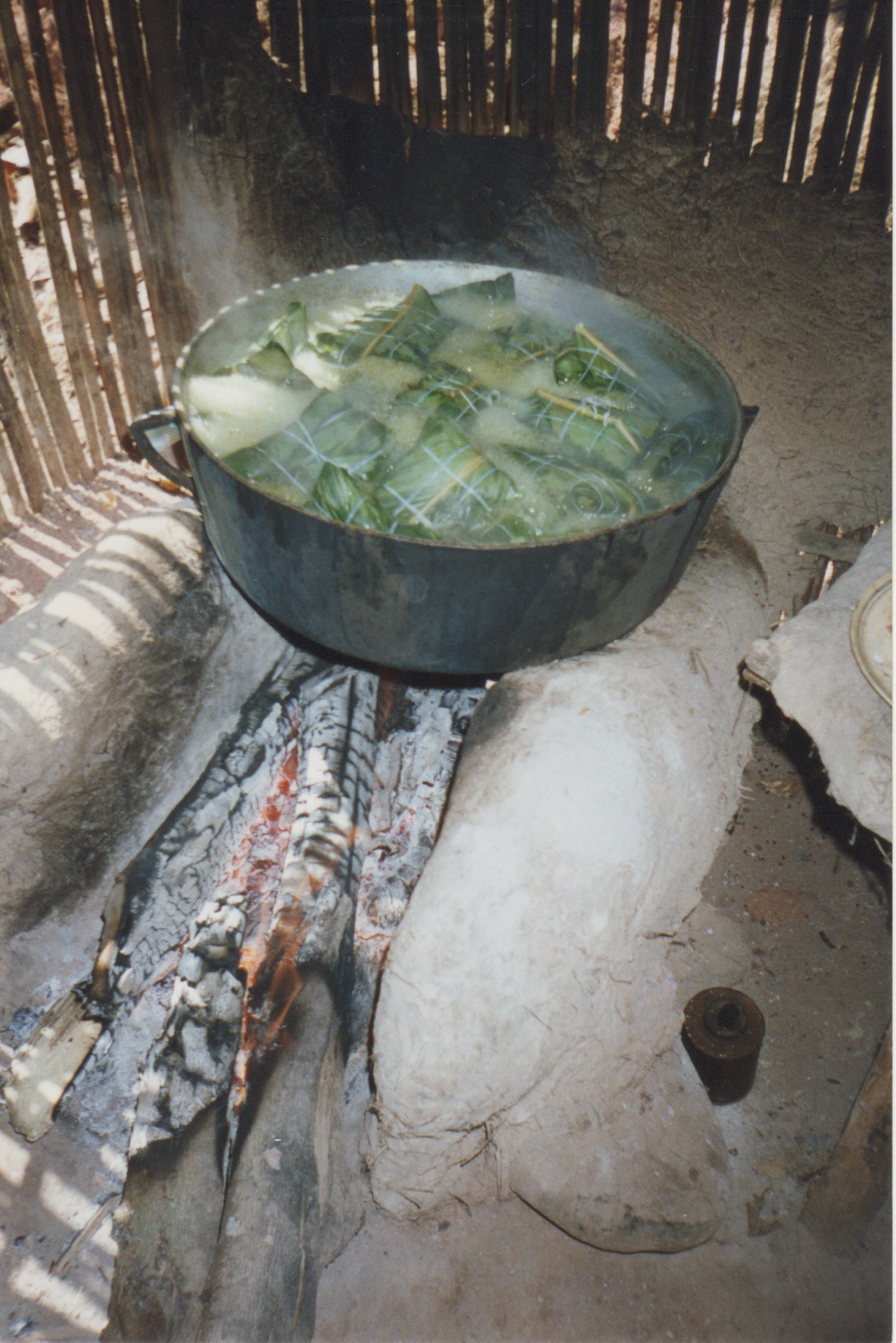
tamalesboilingBubble, bubble, toil and trouble

Fire burn and cauldron bubble!

It’s the third weekend in a row I’m standing over my 20 litre stock pot filled to the brim with something to be canned or frozen. Maybe I need a proper cauldron…

The women I worked with in Panama had incredible cauldrons. Cauldrons that made my 20 litre stock pot look like a mere saucepan. The big cauldrons didn’t necessarily get used every day, but they came out for the making of tamales when the corn was ready.

MakingtamalesAnaMagallonandLaurianaSoto'sdaughterPaulaTamales were a favourite fundraiser for the Amas de Casa group I worked with. We’d gather at one of the women’s houses, each bringing ingredients. We’d spend the whole day grinding corn, plucking chickens, cutting vegetables, and forming the tamales. Tamales are a mixture of meat, onions, and “guisos” (flavourful things like celery and cilantro), surrounded by a thick corn mash. The mass is wrapped in a leaf and boiled to set the corn into a dense, polenta-like cake. That’s where the making tamalesSebastianagiant cauldron came in. We’d cook dozens of tamales at once in one of those vast pots, set over a raging fire.

Once the tamales were finally in the pot, one of the women would produce a small bottle of seco (distilled from cane sugar, and clocking in at 70 proof), and pass it around. It was the only time I ever saw the women drink—sitting around watching the big cauldron boil.

Hmm…now there’s an idea! Sure would make stirring this tomato sauce more pleasant…

Granola

granola2 smThe kids laugh at me, because I eat the same breakfast almost every day. It’s not that I don’t appreciate breakfast, but I guess I’ve found what works for me. Why change? True, I’d rather be eating pancakes, scones and muffins every day for breakfast, but who has time to bake every morning? I usually eat breakfast standing up in the kitchen while I pasteurize milk, make lunch, and wash dishes, so it’s got to be something easy.

Homemade granola fits the bill perfectly. Top it with unsweetened yogurt or whole goat milk, and just a little bowl can get me through the whole morning. It took me years to come up with the perfect granola. It was the addition of puffed grain that made the difference for me—before, I always felt my granola was too heavy, like I may as well have been munching on the grain I feed the goats.

So here it is, my daily breakfast granola. This recipe makes a lot—keeps me going for weeks, but it stays fresh in a tightly closed container.

6 cups old fashioned rolled oats

4 cups puffed wheat (unsweetened)

1 cup sunflower seeds

1 cup barley flakes (rolled barley)

1 cup rye flakes (rolled rye)

1 cup shredded or flaked coconut (unsweetened)

1 cup walnuts, chopped

¼ cup vegetable oil

½ cup honey

1 cup dates, chopped

1 cup raisins

Mix oats, puffed wheat, sunflower seeds, barley, rye, coconut and walnuts in a large bowl. Combine oil and honey, and microwave for 30 seconds (I measure them directly into a glass measuring cup that I can microwave in), no need to actually mix them, just warm them. Pour oil and honey over the grains and mix well. Spread into two jelly roll pans and bake at 180°C (350°F) for about 30 minutes, stirring every 5 minutes or so, until the grains are lightly browned. When the pans come out of the oven, while still hot, sprinkle dried fruits on top. When completely cool, store in an airtight container.

City Mouse, Country Mouse

See a beautiful goat kid? Beauty belies the truth: manually pulled from her mother, bottle fed because she was two weak to stand, then put down at 3 months old because of an injury.

See a beautiful goat kid? Beauty belies the truth: manually pulled from her mother, bottle fed because she was too weak to stand, then put down at 3 months old because of an injury.

I glanced down at my shirt as I got out of the car. Damn. Frayed on the hem, and stained with something dark—blood, probably. I sighed. Once again I would be the worst dressed parent at school—the country mouse among city mice.

It was easy when the kids were at the local rural school. Most of the parents showed up in manure-splattered gumboots and dirty coveralls there. But now that the kids are at school in the city, I feel a vast cultural divide between myself and the other parents.

They walk in wearing impeccable make-up, high heels, and dry clean-only clothes. They sport jewellery and labour-intensive hairstyles. Meanwhile, I’ve thrown on my least decrepit pair of blue jeans, hiking boots, and a t-shirt of dubious cleanliness. If I’m lucky, I’ve combed the hay out of my hair.

When these city parents find out I live on a lifestyle block in the country, they wax lyrical about how someday they want to live “the good life” in the country. I look at them dubiously. Those high heels wouldn’t work well in a muddy paddock. If they persist, I describe for them my daily routine, beginning at 5 most mornings. I enumerate the hours of hard labour in the garden, the DIY vetting (not for the faint of heart) that comes with owning livestock, the never ending struggle to maintain a rotting 125 year-old house.

It’s worse when city folk come to visit. Of course, other than at kidding time (see Worst Hostess of the Year), when visitors arrive, work stops. We make sure the garden is weeded, the grass trim, and the usual mess of half-finished projects is cleaned up before visitors come. We serve the fruits of our labour—homemade cheeses, fresh fruit and vegetables. We relax with a glass of wine. Visitors get the impression it is always like this.

The truth is much dirtier and sweatier, and it’s visible in our clothing. No matter how careful I am, eventually I find myself trimming hooves, treating an abscess, or tying up tomatoes in my “city” clothes. I sweat every day. I am regularly splattered with blood—my own or a goat’s. None of my shoes is reliably without manure on the soles.

So while the city folk see only the romance of rural subsistence farming, we live the reality. Are there moments of romance? Yes. In the silence of early morning milking. In the evening strolls around the property, when the day’s work is done. In the daily sweep through the vegetable garden to pick dinner. In the frolicking play of goat kids in the paddock. But it takes long, hard work to create those moments of romance, and the romance probably isn’t worth it unless you also enjoy the work. And, of course, if you don’t mind being the worst dressed parent at school.

Cheese Magic

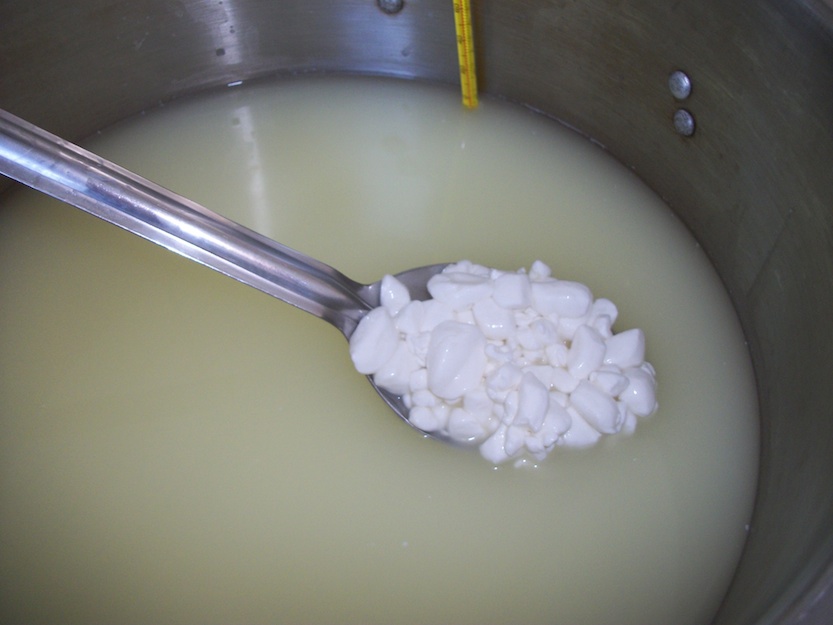
Curds and whey

Curds and whey

To be honest, until I had dairy goats, I don’t think I knew at all how cheese was made. Oh, I knew it was made from milk, but beyond that, I had no clue. I loved cheese, and I ate quite a lot of it, but how it came to be on the supermarket shelves, I didn’t know.

Truth is, cheese making is magic.

Well, OK, not really. It’s a simple matter of coagulating proteins, and the whole process is governed by the laws of chemistry. But it feels like magic.

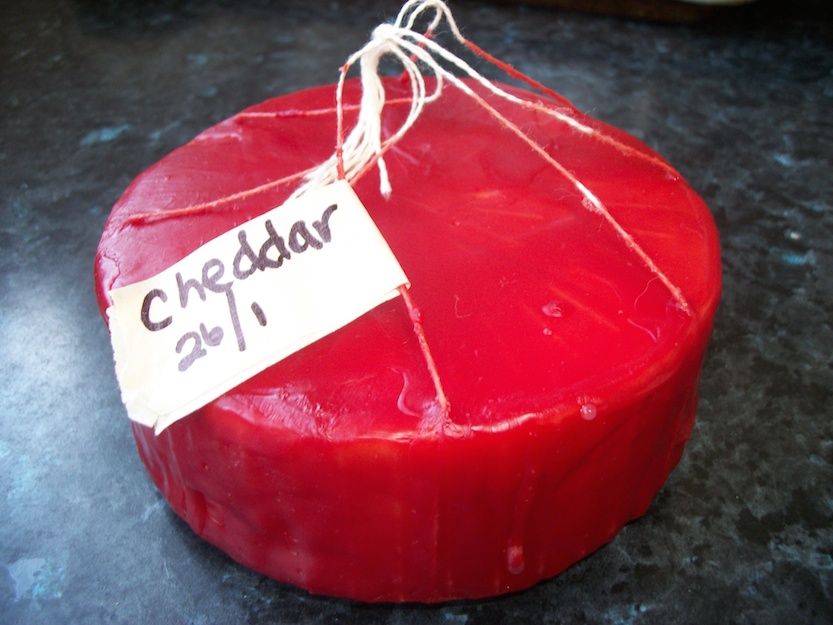
Slow and painstaking magic, that is. Ignore for a moment the six months of planning and animal husbandry required to produce the milk itself, and let’s focus on the actual cheese making process. The process to make a simple farmhouse cheddar, one of the least time-intensive hard cheeses I make, usually starts at about 6.15 am. Two hours of heating the milk and adding cultures and rennet, and the first of the magic happens—liquid milk becomes a solid mass of cheese curds. I carefully cut the curd into small cubes, marvelling at its beautiful silky firm texture. Then I tediously stir for almost an hour and a half while I heat the milk to expel liquid from the curds. The curds finally go into the press at about 10 am. The “green” cheese doesn’t come out of the press until 11 pm. A week later, once the surface of the cheese has dried, it is waxed, and left to age for at least 4 weeks.

cheddarsmSo, the fastest of cheeses is almost 5 weeks in the making. Other cheeses require much more active processing, and a much longer aging period (parmesan needs a minimum of 10 months, and is best after a year). Some cheeses aren’t waxed, and need daily or weekly washing for their entire aging period to avoid mould.

But once a cheese is ready, the second bit of magic happens, and it is my favourite part of cheese making–opening a new cheese. Only at this point do I know for certain how the cheese making months before actually went. Is it the right texture? Is it properly salted? Has it aged enough? Was I able to prevent unwanted mould growth? The whole family is drawn to the opening of a cheese. Everyone gets a slice, and weighs in on how good it is. This magical moment, standing around in the kitchen with the family is worth all the tedious stirring and waiting.

More Cake!

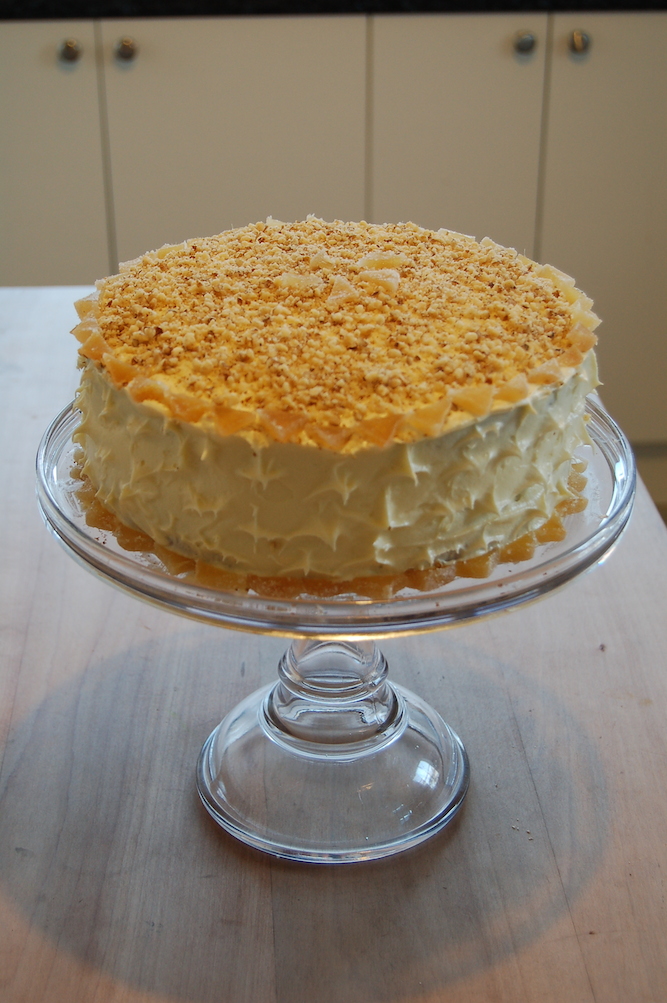
DSC_0008 copyLast but not least! Ian’s cake ends my obsession with cake each year (well, OK, I obsess about cake most of the year, it’s true). Though I enjoy making the kids’ cakes, turning food to fantasy, I appreciate the opportunity to focus as much on flavour as presentation on Ian’s. (No, he didn’t ask for Smaug, or a Hobbit hole, or an ork, or anything else…) For many years, he requested cheesecake, but lately he’s been asking for carrot cake. It almost seems like a cop out to make such a simple cake for a birthday cake, but carrot cake dresses up well. Of prime importance to Ian is the cream cheese frosting. He’s not a fan of sicky sweet frosting, so the tart cheesiness of cream cheese frosting is perfect. I’ve been tweaking a recipe that calls for four cups of confectioner’s sugar, and have it down to 1 ½ cups. That’s about half a cup more than is necessary for flavour, but on a warm summer day, I needed the extra sugar to stiffen the icing.

In fact, in the cake, too, I reduced the sugar by half. It’s not that I worry about too much sugar in our food—we’re already on the low end of sugar consumption, so I don’t fret about the occasional treats. But I find too much sugar dulls the other flavours in cakes and other baked goods. Lightening up on the sweeteners allows the subtle flavours of nuts, fruit, and whole grain flours to shine through. This is especially important in a cake like carrot cake—so full of complex flavours it would be a crime to smother them with too much sugar.

I suppose that’s what my kitchen philosophy comes down to. A lot of people think I’m some sort of health nut, but the truth is I just enjoy flavours. Fresh ingredients, a light touch with sugar and salt, few highly processed foods…these choices are all about flavour.

So, let them eat cake!